Pressure Rises on Journalists in the Balkans

Weakening EU and US influence in the Balkans and increased Russian influence, as well as growing political and economic pressures on journalists, have created a harsher environment for Balkan media, BIRN’s biennial meeting heard.

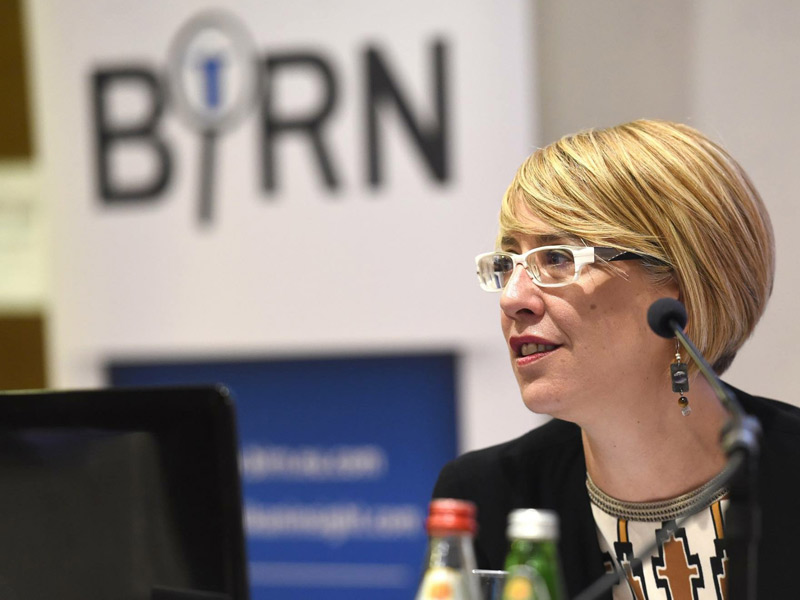
At the biennial meeting of the Balkan Investigative Reporting Network on Saturday, Ana Petruseva, director of BIRN Macedonia, said the situation facing the media in the Balkans “seems to be going from bad to worse”.

In addition to the usual political and financial pressures, she said, the media is seeing new types of pressure – the labelling of reporters and media outlets as spies and foreign mercenaries, as well as the opening of a large number of fake news websites.

Petruseva said the flood of fake news was “creating a media noise” in which it is becoming difficult for the public to distinguish between real and fake information, as a result of which confidence in the media in general is declining.

“People are losing trust in the media, and start to see everything as propaganda and promotion,” Petruseva said at the BIRN meeting on Saturday in Kopaonik, Serbia, referring to the new challenges facing the Balkan media.

Wolfgang Petritsch, a BIRN Board member and the president of the Austrian Marshall Plan Foundation, warned the Balkan countries not to always count on EU support, as many in Brussels saw “stability as the priority” over reforms.

“The EU position has weakened owing to its internal problems. As long as it does not finish the process of internal reforms, there will be no strong EU role in the region,” he said, noting that while the promise of EU enlargement is fading, authoritarian regimes in the region are strengthening.

“Since no system has been established of how to handle enlargement, the situation will remain in the ‘twilight zone’,” Petritsch said.

Political analyst for The Economist and Balkan expert Tim Judah said the policy of “stabilitocracy”, whereby the EU and the US appear to tolerate authoritarian Balkan leaders who deliver stability, is essentially a pragmatic response.

“It means dealing with the leaders that we have, and dealing with the Balkans in the way that they are,” he said.

Judah said that while Western influence had decreased, Russian influence had grown, but that Moscow saw setbacks in recent months – giving the example of Macedonia, where Prime Minister Nikola Gruevski has been ousted, and Montenegro, which joined NATO on June 5 despite Russian opposition.

“What is Russia’s interest? It is simple, they want to create within the region pro-Russian or neutral territories,” Judah said.
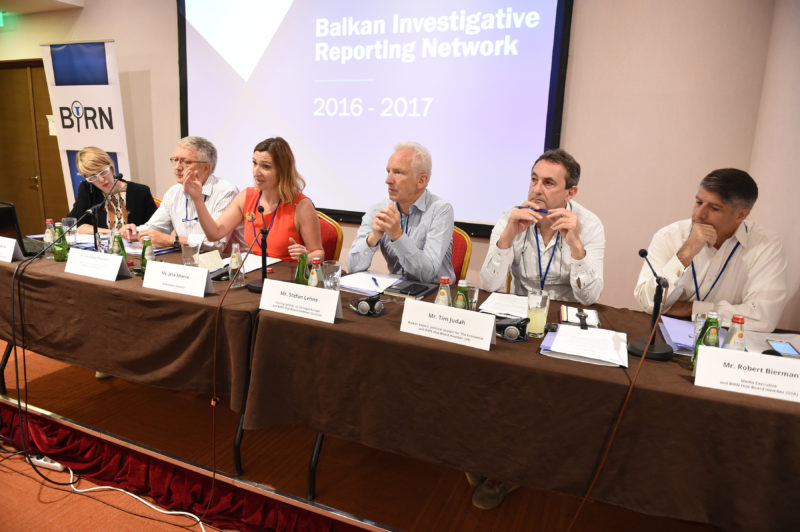
BIRN Board member and visiting scholar at Carnegie Europe Stefan Lehne said the Balkan countries could move closer towards EU membership in different ways.

“Parallel to the very, very slow and very boring and complicated enlargement process there could be some process of horizontal enlargement. The Balkans countries should not join only country by country, but policy by policy,” Lehne said, listing Balkan countries’ participation in the Energy Community as an example of this.

BIRN board member and media expert Robert Bierman spoke of the recent experience of the media in the United States, where the administration of President Donald Trump has been targeting the press.

“Any weakness in the media will be pointed at. It doesn’t matter if two things are wrong and 98 are right, those two things become the most important in the world. It doesn’t matter that the administration is doing 98 things wrong and two things right,” Bierman said.

However, he added more optimistically that Americans appear more ready now to pay for editorial content, adding that the media are also continuing to do their job.

Before the panel, BIRN Regional Director Gordana Igric presented the results of the BIRN network’s projects in the last year, noting that the network had directly reached over five million people.

“In the past year, this number increased by over half a million people,” Igric said, adding that milestone stories had tackled such major issues as corruption, problems with public procurements and concessions. As a result of these investigations, officials have been removed and criminal charges filed.

Igric said that BIRN currently operates 16 websites in various languages, and has produced over 100 TV reports and films and held 50 training courses during the past year.

According to Igric, BIRN’s articles have been republished or cited in many respected foreign media, including The Guardian, the BBC, and Bloomberg. BIRN has also been very active in advocating the prosecution of war crimes and in participative budgeting activities.

The biennial BIRN network meeting continues until June 10 on Mount Kopaonik in Serbia.

Sarajevo Panel: Transitional Justice is a Global Challenge

The implementation of transitional justice mechanisms represents the only way to secure stability and respect for human rights in Bosnia and Herzegovina and in other places around the world, concluded participants in a panel discussion held as part of the WARM Festival in Sarajevo on June 29.

The discussion on ‘Conventional and unconventional approaches to transitional justice’ dealt with lessons from the Balkan region and their implementation in areas throughout the world where attempts are being made to deal with the consequences of conflicts.

Denis Dzidic, editor at the Balkan Investigative Reporting Network Bosnia and Herzegovivna, said Bosnia’s biggest failure was in the field of compensation for victims, adding that there was also still no law governing the rights of torture victims.

“We, in Bosnia and Herzegovina and the region, have never gone through an institutional reform,” Dzidic said, adding that the country’s Transitional Justice Strategy was an excellent document, but it had not been implemented.

Tanya Domi of Columbia University in New York said the key issue was how to involve victims in reconciliation processes, how to give them a voice and ensure that they are satisfied with the process of justice.

Myles Wallingford of the Post-Conflict Research Center said his organisation focused on making sure that victims have access to justice and that it uses multimedia projects for memoralisation processes.

Samantha Owens of the Art Works Projects Chicago said her project attempted to expand the lessons learned in Bosnia, Congo and Columbia to the United States, where the racial gap was getting more pronounced.

Speaking on behalf of the Sarajevo Film Festival, Masa Markovic said that last year’s festival presented a programme on ‘Coming to terms with the past’.

She said she wanted films from the region that cover conflict-related topics to reach a broader audience.

BIRN BiH Addresses ICTY Legacy Event in Sarajevo

Balkan Investigative Reporting Network Bosnia and Herzegovina (BIRN BIH) editor Erna Mackic was one of the speakers at a side event at a three-day conference reflecting on the legacy of the International Criminal Tribunal for the former Yugoslavia (ICTY) and how others can build upon its achievements.

Mackic spoke at an event called “How NGOs use ICTY findings and document”.

She reminded the audience about the problems that the Bosnian public have with the State Court and Prosecutor’s Office, not being able to receive indictments and convictions, and explained how they could be more open in their work.

“The situation in BiH is very specific and very often the facts established by the Hague Tribunal have been denied, both by state institutions and the public”, Mackic said.

She also spoke about the importance of ICTY Outreach program:

“We had the opportunity to organise the training of journalists who were at the Hague Tribunal and got acquainted with its work. In different ways we were trying to help ordinary citizens to learn more about the work of the Hague Tribunal,” she said.

More than 300 people attend the ICTY conference in Sarajevo from June 22-24, including judges and staff of the ICTY, stakeholders at the local level, as well as international experts and scholars.

A significant number of the participants were from the former Yugoslavia, including associations of victims, youth, lawyers, politicians, NGOs, academics, media representatives and the general public.

Media against Hate Workshop in Poland

Mirna Buljugic, executive director of Balkan Investigative Reporting Network in Bosnia and Herzegovina, BIRN BiH, took part in a Media Literacy Training session organized by the Community Media Forum Europe, CMFE, at the University of Warmia and Mazury, in Olsztyn, Poland, from June 7th to 9th.

The focus was on freedom of expression and respect of human rights, specifically of Muslims, in the media, including discussing the portrayal of Muslims in the European media and highlighting the main issues and recommendations for improvement.

At several workshops, journalists learned more about how to recognize hate speech and become aware of the legitimate boundaries between freedom of expression and human rights.

Buljugic shared her own experience in the Bosnian media, talking about biased news coverage in which reporting still reflects national and religious identity.

A growing problem in BiH, she noted, is hatred that is spread via the online media, especially in the comments sections of online news portals, since no adequate mechanisms exist either to prevent or sanction such abuses from occurring.

Haris Rovcanin

Haris has worked with BIRN Bosnia and Herzegovina since September 2016.

He started working as a journalist in 2006. He   worked for the daily Oslobodjenje for three years before joining Dnevni List, where he worked for seven years, reporting on local crimes and the work of the judiciary dealing with organised crime, terrorism, corruption and, partially, war crimes.

He won   the   second   Fetisov   international   award   for   2021   in the “Outstanding Contribution to Peace” category for a series of four articles. In 2023 he was awarded the regional “Srdjan   Aleksic” award for contributions to the community for his work on the Database of Judicially Established Facts about the war in Bosnia and Herzegovina.

Semir Mujkic

Semir Mujkic is managing editor for BIRN Bosnia and Herzegovina. He joined BIRN in April 2017 and has worked as a journalist and deputy editor for BIRN BiH website Detektor.ba where he is managing editor as of October 2019.

He was awarded Second prize at EU Investigative Awards in 2019 for investigative series Corruption in Public Procurements; the Best multimedia investigation into corruption by Anticorruption network in Bosnia and Herzegovina in 2018; and a UNICEF prize for journalistic contribution for the protection and promotion of child rights in print media in 2016.

Semir has attended advanced training courses in journalism, Reuters’ training of trainers and a one-month training course on economic and political reporting in London and Berlin, as well as the BIRN Summer School of Investigative Reporting.

He graduated in journalism from the Faculty of Political Sciences in Sarajevo and has worked as a journalist since 2006, for Magazine Start and Online magazine Zurnal.

Association of Prosecutors of FBIH

PARTNER
The Association of Prosecutors of the Federation of Bosnia and Herzegovina is a non-profit association established under Bosnian law for the purpose of providing support and education for the prosecutors of the Federation of Bosnia and Herzegovina, FBiH, and protecting their interests.

The Association is member of the justice Network developed under the USAID JSDP II project. The Association of Prosecutors of FBiH provides professional support to BIRN’s advocacy efforts for its Transparency of Judiciary and Responsibility of Media project.
Web: http://utfbih.ba/

British Embassy – Bosnia and Herzegovina

DONOR
The British Embassy in Sarajevo is the official representation of the United Kingdom of Great Britain and Northern Ireland in Bosnia and Herzegovina. It is responsible for developing and maintaining relations between the UK and Bosnia.

The Embassy works proactively with international and local partners to implement a range of development projects supporting the Foreign and Commonwealth Office (FCO) priorities.

The Embassy administers several funds that assist Bosnia and Herzegovina in the most challenging areas of the transition process. EU accession related reform is the main focus of our programmes including projects in Justice and Home Affairs, political transparency and good governance.

The British Embassy in Bosnia and Herzegovina has previously supported BIRN’s TV Justice Project.

Web: http://ukinbih.fco.gov.uk/en/

Civil Rights Defenders (CDR)

DONOR
Civil Rights Defenders is an independent expert organisation founded in Stockholm, Sweden in 1982, with the aim of defending people’s civil and political rights. Their work stretches from their own backyard to countries and regions all over the world.

One of the CRD’s main tasks is to empower its partners – brave human rights defenders, who often put themselves at great risk through their engagement for other people’s rights.

BIRN Albania

Civil Right Defenders, through the Swedish International Development Cooperation Agency, has supported BIRN Albania since July 2014, to conduct a study on self-censorship in the Albanian media.

BIRN Bosnia and Herzegovina

Civil Right Defenders through the Swedish International Development Cooperation Agency has supported BIRN BiH since October 2011, providing funding for the implementation of the Justice Series Programme.

Web: www.civilrightsdefenders.org

The Swedish International Development Cooperation Agency (Sida)

DONOR
The Swedish International Development Cooperation Agency (Sida) is a government agency working on behalf of the Swedish parliament and government, with the mission to reduce poverty in the world. Through their work and in cooperation with others, they contribute to implementing Sweden’s Policy for Global Development (PGU).

They work in order to implement the Swedish development policy that will enable poor people to improve their lives. Another part of their mission is conducting reform cooperation with Eastern Europe, which is financed through a specific appropriation. The third part of their assignment is to distribute humanitarian aid to people in need of assistance.

Sida carries out enhanced development cooperation with a total of 33 countries in Africa, Asia, Europe and Latin America. The selection of cooperation countries is based on political decisions made by the Swedish government.

Sida’s mission is to allocate aid and other funding. Their operations are managed by the government’s guidelines, describing the goals for each year’s operations and the size of the development aid budget.

Three thematic priorities determine the direction of Swedish development cooperation and all interventions should relate to them. Those are democracy and human rights, environment and climate, and gender equality and women’s role in development.

In the period 2015-2019 Sida provides core support to BIRN Hub for implementing cross-regional programmes and enhancing the capacity of the Network.

Web: http://www.sida.se/English/