It also highlights the instances in which BIRN’s work had a strong political and social impact, showing that—despite difficulties—professional journalistic reporting can conclude in tangible results.
The whole report is available here [link].
Balkan Investigative Reporting Network
The report shows what the organisation did to offer high quality journalistic work and to provide citizens with reliable, timely and in-depth reporting as well as BIRN’s contribution to improving media freedom and openness of public institutions.
It also highlights the instances in which BIRN’s work had a strong political and social impact, showing that—despite difficulties—professional journalistic reporting can conclude in tangible results.
The whole report is available here [link].
Audience and market concentration distorts the Albanian media market. The resulting lack of plurality can be detected in television and radio but also with the printed press. This is one of the results of the three-months-long investigative research that the Balkan Investigative Reporting Network in Albania (BIRN Albania) and Reporters Without Borders (RSF) have jointly carried out.
The results of the “Media Ownership Monitor Albania” are presented in Tirana in March 2018. They shed light on the Albanian media market by disclosing who owns and ultimately controls mass media.
The results of the project are accessible in Albanian and English on albania.mom-rsf.org. The site offers comprehensive information about the media landscape in the country, including a database of major media outlets, companies and their owners, as well as their economic and political interests, to the general public.
A regional comparison of how media report on cases of organized crime and corruption in Bosnia, Kosovo and Serbia analysing the main obstacles faced by reporters.
BIRN’s project “Exercising the Freedom of Expression and Openness of State Institutions in Bosnia and Herzegovina, Kosovo and Serbia” supported by the German Federal Foreign Office Stability Pact fund, was a regional, 10-month long project with aim to contribute to professionalizing media reporting on legal proceedings related to organized crime and corruption.
The project also intended to increase public awareness on the issues of access to justice and contribute towards more transparent and more responsive institutions in Bosnia and Herzegovina, Kosovo and Serbia.
The project resulted with three unique country-based and one cross-regional analysis, the first of its kind offering a regional perspective on this topic.
Aside from the looking at how media report on the topic, the study also sought to unpack why media report on organized crime and corruption in the way they do. Specifically, the study sought to identify the challenges and constraints faced by media organizations across the region when it comes to reporting on organized crime and corruption.
Download reports in English
Bosnia and Herzegovina country report
Download reports in Albanian
Download reports in BHS
E-book entitled ‘Ratko Mladic: From Battlefield to Courtroom’ was published in November 2017, ahead of former Bosnian Serb military commander Ratko Mladic’s war crimes verdict.
The book is downloadable free of charge, contains all BIRN’s reports on the case. The e-book contains more than 500 articles and runs to more than 600 pages. Mladic’s trial, which began in 2011, lasted for 530 days and heard evidence from 591 witnesses, of whom 377 appeared in court.
The Balkan Investigative Reporting Network has published an e-book about the Kosovo Specialist Chambers, aiming to increase understanding about the newly-established court that will try ex-guerrillas for crimes during and after the war.
BIRN’s e-book, entitled ‘Kosovo Specialist Chambers: From Investigations to Indictments, published on October 31, 2017, includes expert analysis, interviews and archive reports that trace the history of the Kosovo Specialist Chambers from the initial Council of Europe investigation into wartime and post-war crimes by Kosovo Liberation Army fighters to the establishment of the new court to try them in The Hague.
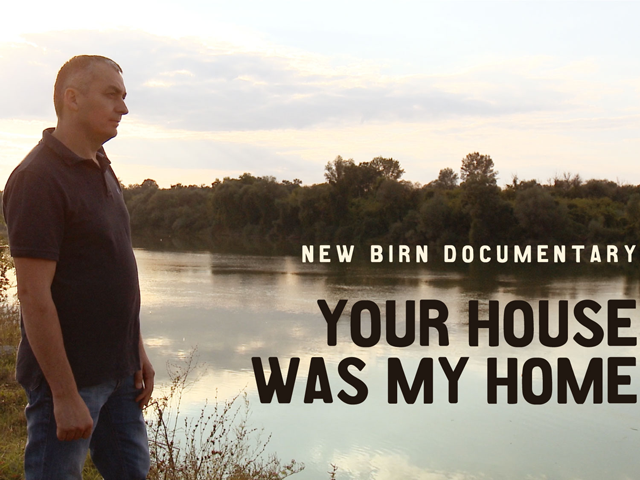
Documentary ‘Your House was My Home’, which tells how Serbs and Croats from Kula in Croatia and Hrtkovci in Serbia swapped houses and moved to each other’s villages after the outbreak of war in 1991, had its television premiere on Al Jazeera Balkans in September 2017.
The half-hour documentary follows the stories of two of the villages’ residents – Goran Trlaic, who left Kula for Hrtkovci, and Stjepan Roland, who left Hrtkovci for Kula. Before the 1990s conflict, Kula was predominantly populated by Serbs, while the majority of the people in Hrtkovci in Serbia.
Since the end of World War II, they had lived peacefully together – until the first multi-party elections in 1990, when nationalists came to power and minorities were not welcome in either republic anymore.
A series of threats and violent incidents started a chain reaction as increasing numbers of inhabitants of Kula and Hrtkovci exchanged properties so they could escape to safety.
This was described by officials as ‘humane relocation’, but it was actually a forced population exchange in the midst of a war.
The personal recollections in ‘Your House Was My Home’ show how this forced population exchange had a devastating long-term effect on the lives and relationships of ordinary people from both villages, said Baljak.
See more information about the film here.
Research by BIRN and the German branch of Reporters without Borders, presented in June 2017, highlights the extent to which the Serbian media space has become dominated by a handful of broadcasters and media companies.
The biggest threats to media pluralism in Serbia are the concentration of audience and political influence over the media.
BIRN and Reporters without Borders also launched the website, which contains the database with information about media ownership and audience shares.
According to the research, 62.35 per cent of the audience in Serbia is shared between four broadcasters that own seven channels.
Serbian media outlets’ economic weakness means journalists are vulnerable to pressure on their reporting, suggests research conducted as part of a project involving BIRN, the Independent Journalists’ Association of Serbia and the Slavko Curuvija Foundation.
Serbian media’s economic unsustainability and dependence on the authorities for advertising, combined with a poor professional culture and a lack of protection and financial security for journalists, allows politicians to exert control over media organisations, according to the research.
According to the findings of the research, conducted by the Slavko Curuvija Foundation as part of a project with BIRN and the Independent Journalists’ Association of Serbia, pressure usually comes from the authorities and political parties, then from editors, and then advertisers.
Of all the journalists polled, 69 per cent said they encountered at least one form of pressure from the authorities. Over half of them – 56 per cent – encountered pressure from political party representatives.
Editorial pressure was experienced by 47 per cent; 41 per cent faced pressure from management, a third from the advertisers and 30 per cent from the media owners.
Follow this link to find out more.
BIRN Kosovo court monitoring report paid particular attention to trials related to corruption but also addressed several other problems that were observed during fieldwork.
The Balkan Investigative Reporting Network in Albania has published an online court and crime reporting manual which aims to strengthen the capacities of local journalists to report on complex cases from local courts and law enforcement institutions.
The manual was written by Flutura Kusari, an international expert on media law, Albanian media expert Elira Canga and Dorian Matlija from the Res Publica legal centre in Tirana. The drafting and publication of the manual, entitled ‘Reporting of Court and Criminal Cases in the Media’, was supported by the Rockefeller Brothers Fund and the USAID-funded ‘Justice for All’ project.
Published in the Albanian language, the manual is an online resource for reporters, journalism students, researchers and people who have an interest in how the media reports on criminal cases and court cases which are of legitimate public interest.
The manual was drafted to give journalists and media practitioners, but also to the wider public, an understanding of the institutions and the hierarchy of the judicial system in Albania and the path that civil, criminal and administrative cases follow.
The manual also aims to serve as a resource for journalists who report from the courts and on criminal cases on daily basis, in order to better understand their rights and responsibilities, the regulations and self-regulation of the media, the right to information and access to public court documents as envisioned in the local legal framework, as well as best international practices.
Published with the goal of being periodically updated, the manual also provides ample tip sheets for journalists who report from courts and on crime cases, as well as advice on how to protect sources and whistleblowers.