Journalist for BIRN Albania Wins Reporting Award

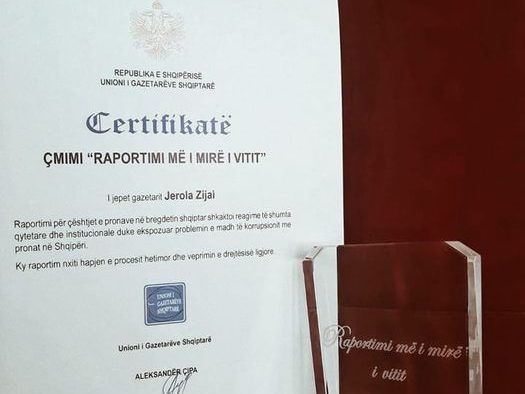
Journalist Jerola Ziaj has been awarded the best reporting award by the Albanian Union of Journalists for 2021.

Ziaj was recognised for her hard-hitting investigative stories about property issues non Albania’s southern coast.

“Her reporting about the property issues on Albania’s southern coast caused numerous reactions from the public and institutions and exposed the problem of corruption related to property issues in Albania, which has led to a criminal investigation,” said the Albanian Union of Journalists.

Ziaj is a reporter for A2 CNN TV in the city of Vlora and a frequent contributor to BIRN Albania’s site Reporter.al, on which she has published a number of investigations into property fraud on Albania’s southern coast.

She has worked as a correspondent for various national TV stations and online media since 2009.


Albanian Investigative Journalist Wins Award

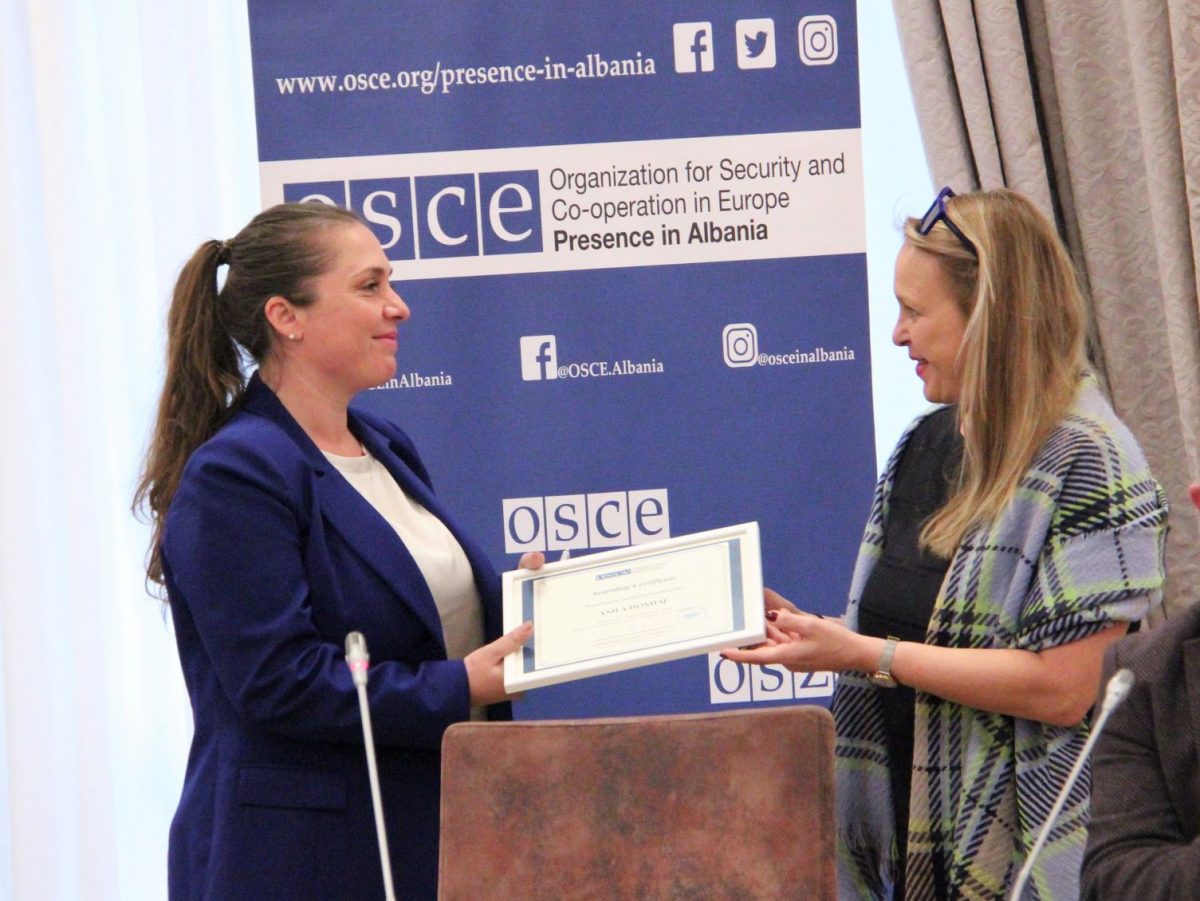
Albanian journalist Anila Hoxha has been named as the winner of an investigative journalism competition organised by the OSCE Presence in Albania for the article ‘PPP Sterilisation Contract Costs Healthcare System Dearly’.

The investigation shed light on how doctors in Albania struggle to save patients’ lives while keeping costs under control due to a problematic public-private partnership contract for the supply of surgical instruments that was signed with a health consortium that has political ties.

The article was November in December 2020 by BIRN Albania’s online publication Reporter.al, as part of BIRN Albania’s mentorship scheme for local journalists, which aims to nurture quality investigative reporting.

Hoxha is an experienced court and crime journalists with Albania’s Top Channel TV. The award was presented during the 7th annual Media Development Forum organised by the OSCE Presence in Albania.


BIRN Albania Opens Call for Investigations on Public Finances

The Balkan Investigative Reporting Network in Albania launched a call for investigative stories on November 30, offering grants for three journalists to produce articles on topics related to public finances.

The call is part of the project “Exposing Corruption Through Investigative Journalism,” which is financially supported by the National Endowment for Democracy, NED.

The call is based on topics suggested by two dozen civil society activists and journalists during a joint roundtable held on November 25 in which they concluded that topics related to public finances should be investigated.

Those suggested in the roundtable included:

  • Arrears from public contracting for works and services
  • Lack of competition and corruption in public procurement
  • The use of secret contracts in the security sector to hide corruption,
  • Corruption and mismanagement of public companies
  • Nepotism and undue influence in selection of members of regulatory bodies and boards,
  • Use of public resources for political propaganda
  • Mismanagement in Albania’s oil sector, and state capture.
  • The problems with the delivery of services by local government entities
  • The lack of transparency of political party finances

The journalists will have around three months to dig deeper and research their ideas, and will also have the opportunity to work with experienced editors as mentors to guide them through the process of writing in accordance with BIRN standards.

The call only applies to journalists from Albania and closes on December 25.

Click here for more information (in Albanian) about the application procedure.

Click here to download the application form (in Albanian).


Meet the People Behind BIRN: Matteo Mastracci

Each month, BIRN introduces you to members of its team. For November, meet Matteo Mastracci, our new Digital Rights Researcher.

Matteo, 35, is from Italy and studied International Law and Human Rights. He joined BIRN’s multinational team in October.

“One great thing to be a researcher at BIRN is working in a big and multi-skilled team, and this means there is always a lot to learn from everyone,” says Matteo.

In November, BIRN introduced its new focus page, COVID-19 Crisis Tech Response Livefeed, a unique tool to track and map the use of technology and digital solutions (both good and bad) in Central and South-East Europe amid the ongoing health crisis. “Our goal is to keep revealing wrongdoings, trends and connections that would otherwise remain hidden in order to help civil society organisations and media respond more quickly and efficiently to future crises,” says Matteo.

We live in an era in which digital rights matter more than ever, he explains. “We are now living much more online than before. In a way, our protection and presence on the net is guaranteed by digital rights,” adds Matteo.

He says that BIRN wants to continue to expose the effects of digital violations. “Our programme will also have a special focus on gender-based violence occurring in the digital environment. We will also publish a new report on digital rights which will cover violations recorded from August 2020 to August 2021,” he says.

BIRN’s monitoring platform, BIRD, already covers six countries in Southern and Eastern Europe, and will soon expand to include cases from other two countries, Montenegro and Kosovo, he adds.

“Finally, we have also launched a biweekly review on Balkan Insight – Ongoing Tensions in Fragile Environments is the newest one – in which we update readers on the latest digital rights violations recorded in the region,” Matteo says.


BIRN Kosovo Holds Training with High School Students in Gjakova

On November 26, BIRN Kosovo held the fifth training session with students of the “Hajdar Dushi” high school in the municipality of Gjakova as part of the EU funded project “Solidifying the Resilience of Kosovo’s Current and Future Journalists”.

The training was aimed at students of Kosovo’s state-run high schools that are interested in undergoing training in media production, media literacy and tackling fake news.

The program aims to nurture young talent by mentoring students in the production of videos, photos and articles in order to achieve the main goal of the activity: to create a path for increased independence, transparency, accountability and civic engagement.

A total of 33 students from the social sciences department of the “Hajdar Dushi” high school participated, 29 of whom were women.

At the end of the training session, youngsters pitched their journalistic ideas, which the BIRN team will collect and thoroughly analyse before selecting the articles and other materials that will be published on the online platform KallxoRinia (Kallxo Youth). The production of all of these articles will be overseen by a team of BIRN Kosovo editors.


BIRN Kosovo Holds Fourth Training with High School Students in South Mitrovica

On November 25, BIRN Kosovo held the fourth training session with students of the “Frang Bardhi” high school in the municipality of South Mitrovica as part of the EU funded project “Solidifying the Resilience of Kosovo’s Current and Future Journalists”.

The training was aimed at students of Kosovo’s state-run high schools that are interested in undergoing training in media production, media literacy and tackling fake news.

The program aims to nurture young talent by mentoring students in the production of videos, photos and articles in order to achieve the main goal of the activity: to create a path for increased independence, transparency, accountability and civic engagement.

A total of 27 students from the social sciences department of the “Frang Bardhi” high school participated, 20 of whom were women.

At the end of the training session, youngsters pitched their journalistic ideas, which the BIRN team will collect and thoroughly analyse before selecting the articles and other materials that will be published on the online platform KallxoRinia (Kallxo Youth). The production of all of these articles will be overseen by a team of BIRN Kosovo editors.


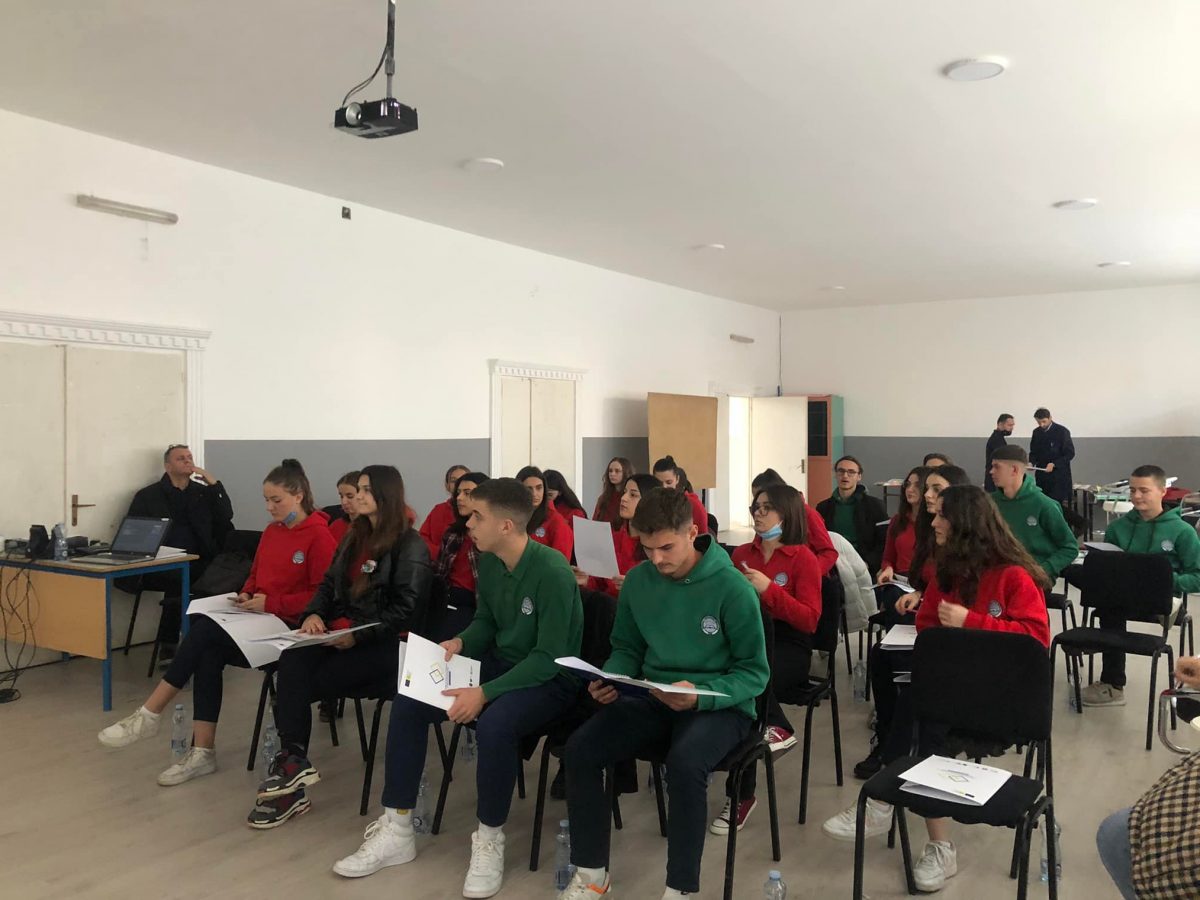
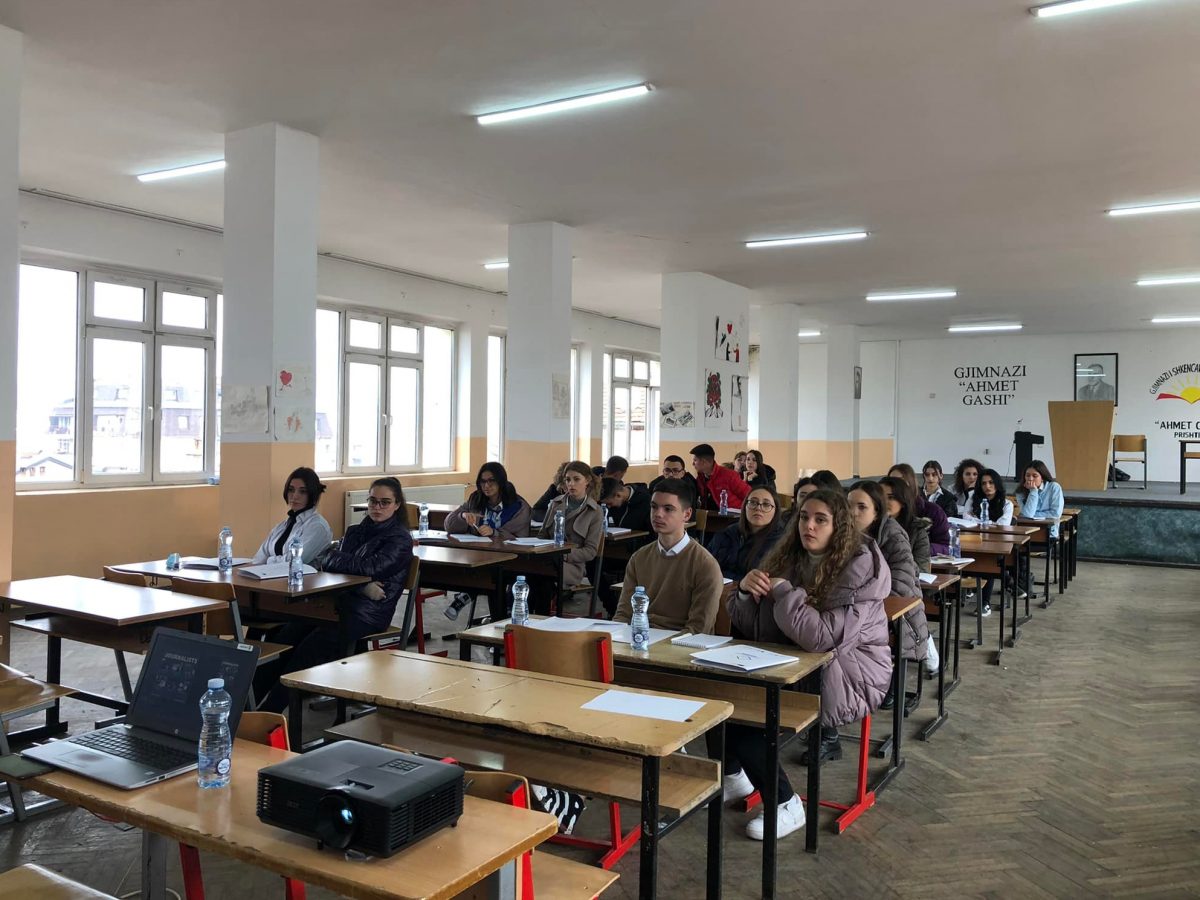
BIRN Kosovo Holds Third Training with High School Students in Prishtina

On November 25, BIRN Kosovo held a third training session with students of the “Ahmet Gashi” high school in the municipality of Prishtina as part of the EU funded project “Solidifying the Resilience of Kosovo’s Current and Future Journalists”.

The training was aimed at students of Kosovo’s state-run high schools that are interested in undergoing training in media production, media literacy and tackling fake news.

The program aims to nurture young talent by mentoring students in the production of videos, photos and articles in order to achieve the main goal of the activity: to create a path for increased independence, transparency, accountability and civic engagement.

A total of 25 students from the social sciences department of the “Ahmet Gashi” high school participated, 17 of whom were women.

At the end of the training session, youngsters pitched their journalistic ideas, which the BIRN team will collect and thoroughly analyse before selecting the articles and other materials that will be published on the online platform KallxoRinia (Kallxo Youth). The production of all of these articles will be overseen by a team of BIRN Kosovo editors.

BIRN will hold a total of 10 training sessions at the Social Studies department of high schools from across Kosovo with a total of 200 students, as part of the project.


BIRN Albania Holds Workshop on Media Monitoring in Elections

The Balkan Investigative Reporting Network in Albania held a workshop for experts and civil society on November 9 in Tirana on media and social media monitoring during the elections.

The workshop was greeted by the British Ambassador in Tirana, Alastair King-Smith and the State Commissioner for Elections, Ilirjan Celibashi.

During the last election campaign in April, BIRN Albania piloted new social listening technologies and sound quantitative and qualitative methodologies to monitor for the first time the political discourse in the online and social media.

The findings of the monitoring were shared with experts from Central Electoral Commission, the Audiovisual Media Authority and civil society experts.

The objective of the workshop was to discuss methodologies used and findings of mainstream and alternative media monitoring, but, most importantly, to focus on lessons learned from these pilot studies and recommendations drafted for future legislative and procedural improvements related to the monitoring of media and political party finances.


BIRN Albania Holds Roundtable on Public Finances

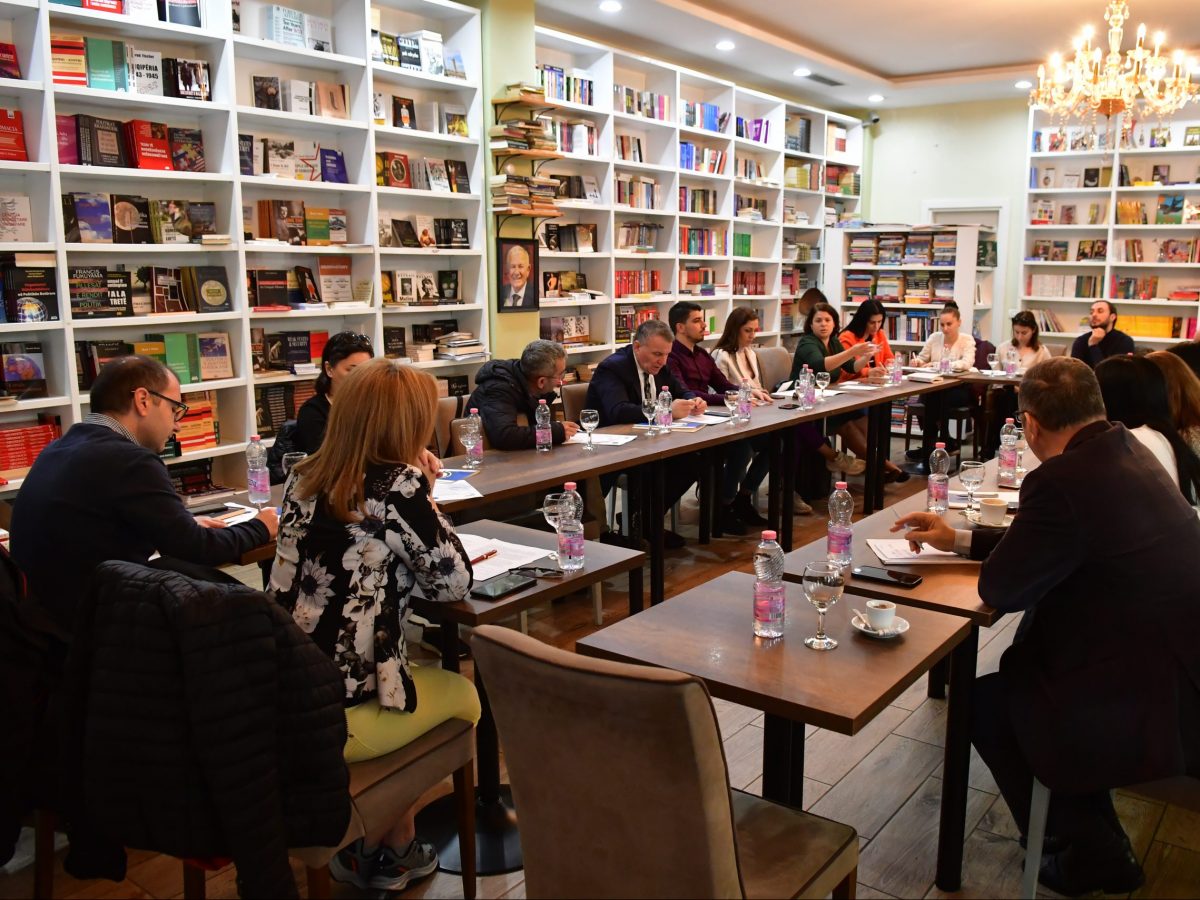
The Balkan Investigative Reporting Network in Albania held a roundtable on public finances on Wednesday November 24 in Tirana.

A total of 23 journalists, experts and civil society representatives attended the roundtable, in order to identify and discuss topics that journalists could investigate.

The roundtable was moderated by the business journalist and anchor for Albania’s Scan TV, Dafina Hysa. The event also aimed to build cooperation between civil society representatives and reporters covering an array of topics linked to public finances.

The roundtable was part of the project “Exposing Corruption Through Investigative Journalism,” supported financially by the National Endowment for Democracy, NED.

Experts called on journalists to dig deeper in to the ways public finances in Albania are mismanaged – both on a central and local government level, suggesting a number of topic that should be investigated. They included arrears from public contracting for works and services, lack of competition and corruption in public procurement, the use of secret contracts in the security sector to hide corruption, corruption and mismanagement of public companies, nepotism and undue influence in selection of members of regulatory bodies and boards, use of public resources for political propaganda, mismanagement in Albania’s oil sector, and state capture.

The participants from civil society organisations also urged reporters to investigate the delivery of services by local government entities and political party finances, while offering their expertise and resources for reporters that wish to engage in these stories.

The topics discussed at the roundtable will inform BIRN Albania’s upcoming open call for investigative stories on public finances.


Workshop in Bosnia on Humanitarian Approaches to Reporting on Missing Persons

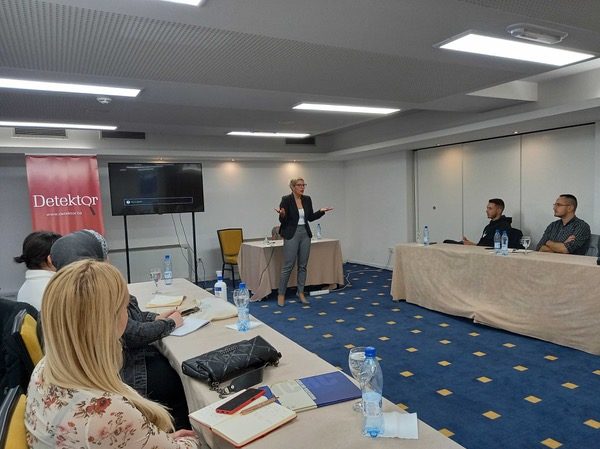
With the aim of improving media reporting on missing persons with a focus on a humanitarian approach, as well as on war crimes and transitional justice, a six-day training for journalists and journalism students from all parts of Bosnia and Herzegovina was held in Sarajevo from Friday 12 November till Wednesday 17 November 2021.

Balkan Investigative Reporting Network in Bosnia and Herzegovina, BIRN BiH, in cooperation with the International Committee of the Red Cross, ICRC, and the UN Development Programme, UNDP, held the training for 15 journalists and journalism students.

During the first part, editors and journalists from BIRN BiH,  and ICRC representatives discussed with participants taking a humanitarian approach to reporting on missing persons, as well as on how to interview families of the missing and report on the subject in a professional and ethical manner.

Representatives of the ICRC, the Missing Persons Institute of BiH and International Commission on Missing Persons familiarized the participants with the work of those institutions, providing insight into information and ways of collaboration with a view to achieving a better quality of investigations into the missing.

Journalists were informed about BIRN standards in reporting on the missing persons, and on experiences and challenges in the field, with a special emphasis on the way the COVID pandemic has further delayed the finding of missing persons.

The participants also talked to some families of missing persons, learn how to report on war crimes from courtrooms and what topics they could cover during their work.

Representatives of the Prosecution of Bosnia and Herzegovina, as well as attorneys representing war crime defendants before state and local courts, spoke about the role of parties to the proceedings and the right to defence.Research on “How the Media in BiH Report on Missing Persons” was also presented.

As part of the training, the journalists also visited the state court to follow war crime trials and apply in practice what they had learnt during the workshop.

The first part of the workshop covering reporting on missing persons with a special focus on a humanitarian approach was organised with the help of the ICRC while UNDP helped organize the training on war-crimes reporting.