Public Interest Overcomes Private Interests

The application of the existing Law on Free Access to Information of Bosnia and Herzegovina vary from one institution to another. One third of institutions respond to requests for access to information in accordance with the Law, while some do not respond at all.

When journalists request information, PR officers often ask them: “Why do you need it?; I do not understand what you want to receive from us; We have not received your request; I must ask my boss if I can give you an answer”.

After insisting on getting the information, which lasts for months in some cases, journalists manage to obtain the requested information from institutions, but it does not happen within the legally set deadline of 15 days.

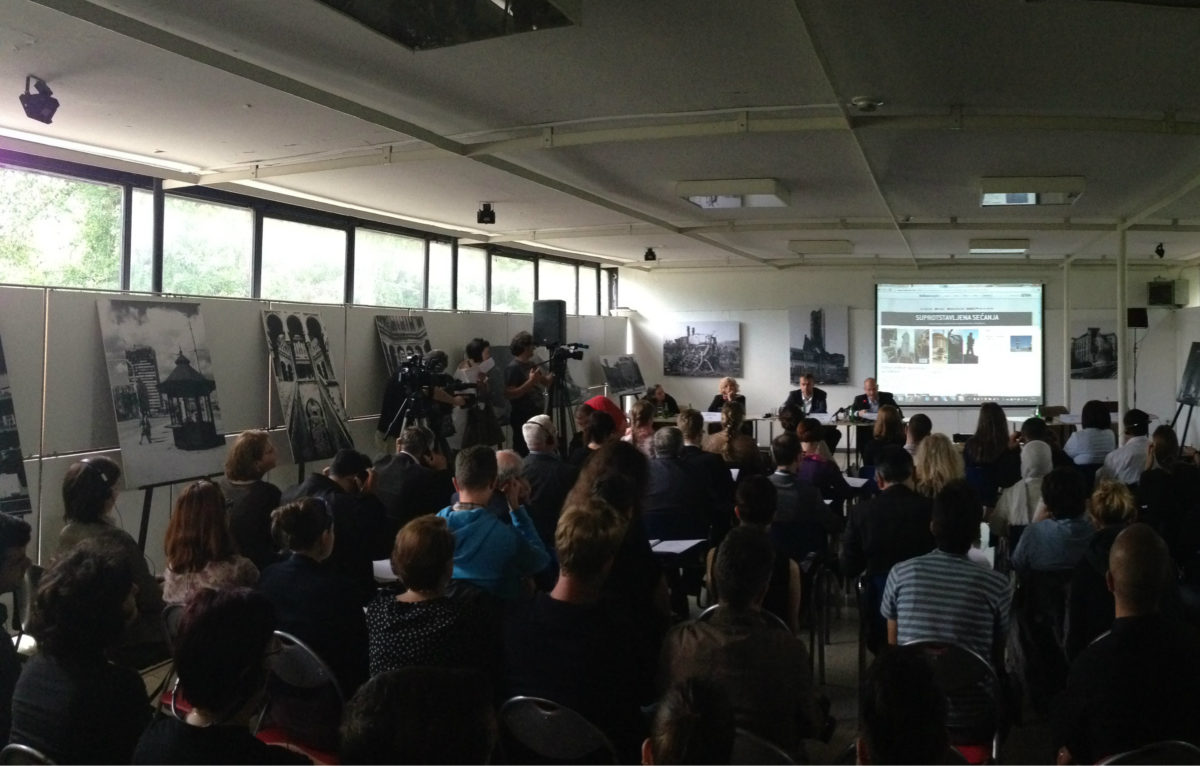
These are some of the results of the application of the Law on Free Access to Information, which were presented at a conference organised by the Ombudsman of Bosnia and Herzegovina with support from the OSCE Mission in BiH.

Although their opinions are not harmonised, the Ombudsman noticed that the right to free access information was violated by the anonymisation of court decisions by the Court of Bosnia and Herzegovina.

As said by judge Hilmo Vucinic, the Court of Bosnia and Herzegovina is exposed to criticism by the media, as well as experts and international officials, for implementing the anonymisation decision, which includes using initials instead of first and last names of indictees.  

Vucinic said that, for this reason the Court embarked on introducing revisions and amendments to its Rulebook on co-operation with the community.

“When the institution estimates that a court decision is of general interest for the public, it will allow its publishing. This means that verdicts of interest for the public and legal practice will be published. This certainly includes war crimes, organised crime, terrorism etc.,” judge Vucinic said.

Personal identification numbers, ID card numbers, drivers’ licence numbers and other documents’ numbers, as well as racial origin, political opinion, membership in a political party, sexual affiliation etc., contained in those verdicts, will not be published.

Vucinic said that the revisions to the Rulebook had still not been adopted, but the Court of Bosnia and Herzegovina would do it in the upcoming period, because it had concluded that “public interest should overcome private interests”.

Anisa Suceska-Vekic, Director of BIRN in Bosnia and Herzegovina, said that verdicts had been anonymised for more than a year and that this had already had a harmful effect when it came to war crimes trials.

A provision, saying that court decisions in cases of general public interest, such as war crimes cases, organiaed crime cases and so on, which, according to an assessment by the relevant public body, were of general public interest, has become an integral part of the proposed revisions and amendments to the Law on Free Access to Information in Bosnia and Herzegovina.

In terms of the proposed changes, a question arose as to whether the public bodies would be able to realistically assess what was of public interest and what was not.

Following a detailed discussion at the conference, it was concluded that it was necessary to strike a balance between the protection of privacy and public interests and the conduct training of information officers.  

“Nobody is against the improvement of the Law on Free Access to Information, if such a need exists. However, we call on the authorities to respect the international standards,” said Jasminka Dzumhur, Ombudsman in Bosnia and Herzegovina.

The conference participants raised a question on publicity of trials for the media. According to the Criminal Code, all trials are public unless a decision is rendered to exclude the public due to protection of witnesses or similar measures.

Representatives of the Court of Bosnia and Herzegovina say that they issue ten-minute audio or video recordings to public in order to prevent witnesses from using statements contained in those recordings to prepare for their own testimonies.

Dzumhur pointed out that trials were public and that, in addition to testifying at trials, witnesses also gave statements during investigations. She said that trial chambers should determine whether a witness had changed his/her statement or not. 

The entire show is available to watch here: http://www.federalna.ba/bhs/vijest/66205/dnevnik-2-13062013

The entire show is available to watch here:

Court Acquits Defendants in BIRN Kosovo Case

A court has acquitted five defendants accused of staging a hate campaign in the media against BIRN director Jeta Xharra.

A mixed panel of Kosovo and EULEX judges found five defendants not guilty of threatening Xharra and violating her rights in May and June 2009.

They were the former mayor of Skenderaj, Sami Lushtaku, the former owner of Infopress, Rexhep Hoti, the former editor-in-chief, Avni Azemi, and two former journalists, Rizah Hajdari and Qani Mehmeti.

In 12 articles published by Infopress, Xharra was called a “Serbian spy”, a “professional bomb”, an “embassy slut” and subjected to other insults, the indictment said.

It said a campaign against Xharra was launched after Radio Television Kosovo, RTK, aired an edition of BIRN’s TV programme, “Jeta ne Kosove” (“Life in Kosovo”,) dealing with alleged mismanagement in Skenderaj/Srbica where Lushtaku was mayor at the time.

The court on Wednesday ruled the articles did not pose a threat to Xharra even if they damaged “her honour and reputation”.

“We did not find that the content of the articles were a coded threat,” Judge Vladimir Micula said.

Referring to threatening emails that Xharra and the BIRN office in Pristina received after the programme was aired, the EULEX judge said that “no link was found between the articles and those acts”.

The prosecution said it was unhappy with the verdict and would appeal. “It is necessary for a democratic society like Kosovo to do everything it can to protect the precious right of freedom of the press and punish those who undermine it,” EULEX prosecutor Maria Bamieh said.

“The threats and the defamation made against her had a clear goal. The accused wanted to scare Jeta Xharra and her team,” she added.

“They wanted to humiliate her and… get a critical and credible journalist off the table who had dared to criticize the political achievements of Mr Lushtaku, a very powerful politician and social figure indeed in Kosovo,” she continued

Xharra said of the verdict that she “never thought it would be easy but we won’t give up”, adding: “I encourage you [in the media] not to give in, to have a better media environment compared to what there is now.”

Xharra has already filed a libel case, seeking compensation from the former defendants.

Arianit Koci, lawyer for Lushtaku, described the verdict as “just and legal”.
“It was a legal and professional battle,” he said. “Our arguments were stronger and it was proven that Sami Lushtaku did not threaten Jeta Xharra.”

The trial started in March.

Macedonian Health Issues Put in the Frame

About a dozen journalists and representatives of civil society organisations that treat health issues on June 12 in Skopje discussed priority concerns and problems in this field in Macedonia.

The debate, entitled “Health and rights of the patients”, was organized by Balkan Investigative Reporting Network Macedonia in partnership with the Center for Civil Communications.

Participants from civil society agreed on the need for cooperation between media and the NGO sector, especially on informing the patients and on raising awareness in the population about health problems, prevention, overcoming taboos and informing people about risks.

NGO representatives also said that the interest in the media in health issues had seriously declined in the recent period.

Journalists on the other hand said that some NGOs, especially those working with patients’ rights, were hard to reach and not open enough for cooperation.

The NGO sector suggested designing or developing a form of continuous contact between the media and journalists and a database that will gather all the analysis and activities of the non-governmental organisations.

The debate was organized as part of the “Project for Investigative Journalism and Cooperation between Media and Civil Society.”

It was the ninth in a series of 10 debates organized as part of the project funded by the USAID Programme for strengthening the independent media in Macedonia.

The subjects were selected at a meeting between journalists and NGOs in mid-April.

Other topics include ethnic relations, education and youth, human rights, EU integration, cultural policy, environmental issues, good governance, quality of life and marginalized groups.


BIRN Macedonia Puts Focus on Ethnic Relations

About 20 NGO representatives and journalists on June 7 discussed priority issues, problems and challenges in the field of inter-ethnic relations in Macedonia.

The debate organized by BIRN Macedonia in partnership with the Center for Civil Communications was held in the “Libraria E Çarshisë” (Old Bazaar Library) in Skopje’s Old Town, a place where all the main ethnic communities in the country interact.

The participants agreed that while ethnic relations have been top news items in the last couple of years, they are rarely addressed properly.

Journalists and NGO representatives agreed that bad news should not be the only news, and that good and positive examples should be followed and covered.

A more systematic and continuous approach is missing in this field, as is the political will to make needed changes in education, it was noted.

One of the most important issues spotted in the current year is hate speech as well as inappropriate and offensive chanting at sports events based on ethnicity.

The debate was organized as part of the “Project for Investigative Journalism and Cooperation between Media and Civil Society.”

It was the eighth in a series of 10 debates organized as part of the project funded by the USAID Programme for strengthening the independent media in Macedonia.

The subjects were selected at a meeting between journalists and NGOs in mid-April.

Other topics include health, education and youth, human rights, EU integration, cultural policy, environmental issues, good governance, quality of life and marginalized groups.

Macedonian Cultural Policy Put Under Spotlight

BIRN Macedonia in partnership with the Center for Civil Communications brought together journalists, NGO representatives and artists to talk about Macedonian cultural policy on June 4.

The panel discussion was aimed at detecting common issues between journalists who write about culture and NGOs working in the same sector.

It was organized as part of the “Project for Investigative Journalism and Cooperation between Media and Civil Society.”

The panel was the seventh in a series of 10 organized as part of the project funded by the USAID Programme for strengthening the independent media in Macedonia.

The subjects were selected at a meeting between journalists and NGOs in mid-April.

Other topics include health, education and youth, human rights, EU integration, ethnic relations, environmental issues, good governance, quality of life and marginalized groups.

Dozens of different issues were discussed with journalists as potential investigative stories.

NGOs called for a more analytical and in-depth approach to cultural issues, urging the media not to focus only on positive-sounding articles.

Journalists and NGOs use different language and expressions, it was noted, an issue that should be tackled to improve the relationship and make cooperation more efficient.

Panelists concluded that although some topics might be off limits for publication in some media, journalists should cooperate with NGOs to find ways to open up those topics and reach the public through different, alternative channels.

BIRN Macedonia Debate Tackles Education and Youth

Several dozen representatives of NGOs and journalists debated priority issues in the field of education and youth on May 30 in Skopje.

The panel discussion was organized by BIRN Macedonia in partnership with Center for Civil Communications.

Education and youth was the fifth panel discussion organized as part of the “Project for Investigative Journalism and Cooperation between Media and Civil Society”.

The project is funded by the USAID Programme for Strengthening Independent Media in Macedonia.

The NGOs tried to explain the problems they face in their bids to reach audiences important to their work, and highlighted the difficulty of increasing interest in the media in these topics.

The journalists noted, and all participants agreed, that NGOs should focus on cooperation with those journalists that they already established, and not to spend time and effort on changing the mindset of the media at large.

It was also noted that the traditional press conference is no longer an efficient tool of communication and other means of bringing the results of the work of NGOs should be used.

The panel was the sixth in a series of 10 organized as part of a project for investigative journalism and cooperation between media and civil society.

The subjects were selected at a meeting between journalists and NGOs in mid-April.

Others include health, cultural policy, education and youth, human rights EU integration, inter-ethnic relations, environmental issues and marginalized groups.

BIRN Macedonia Holds Debate on Human Rights

The human rights situation in Macedonia was the topic of the fifth debate organized on May 28 by BIRN Macedonia in partnership with Center for Civil Communications in Skopje.

The debate was organized as part of the Project for Investigative Journalism and Cooperation between Media and Civil Society funded by the USAID programme for strengthening independent media in Macedonia.

About 20 NGO representatives and journalists talked about possibilities and ways to cooperate on human rights, which are a priority in Macedonian society.

NGO representatives highlighted the fact that the media are not as interested as they might be in some of the issues that non-governmental organizations are working on.

They suggested that NGOs and journalists should help each other more in promoting and developing important stories.

Journalists outlined some of the key topics that interest them and asked how best to develop these topics into media stories.

The debate was the fifth in a series of 10 organized as part of the project on investigative journalism and cooperation between media and civil society.

The subjects were selected at an earlier meeting between journalists and NGOs in mid-April.

Others include health, cultural policy, education and youth, human rights, EU integration, ethnic relations, environmental issues and marginalized groups.

Kosovo, Serbia Experts Duel over Trepca Mine

Economists from Kosovo and Serbia debate the future of the disputed Trepca mine complex, in the new episode of the TV debate series “Tema”, produced by Internews Kosovo and BIRN.

Two economists from Kosovo and two from Serbia debated the economic potential of the disputed Trepca mining complex, which according to estimates could be exploited profitably for decades to come.

Panelists agreed that only dialogue can resolve the differences between Serbia and Kosovo over the half-defunct mine and restore production.

Radoman Rabrenovic, director of the Institute of Geology of Serbia, said the reserves of metal resources in Kosovo merit particular attention.

However, according to Rabrenovic, many political questions currently impede the revitalization of Trepca.

Trepca today shares the same fate as the nearby divided town of Mitrovica. In the south, the socially owned enterprise is managed by the authorities of Kosovo.

Assets in the north are managed by an administration installed by the government of Serbia.

The ethnic Albanian former director of Trepca, Nazmi Mikullovci, said that it would take less than 200 million euro to revitalize the company that he managed back in the 1980s.

“To produce metal, Trepca needs 174 million euro, according to a study we conducted in 2005. But the problem is not with money but rather the administrative division between the south and north,” he said.

“We need to overcome this this division and have Trepca function as one entirety; the investment funds are the least of problems,” he added.

 The Trepca complex comprises an 80km-long and 30km-wide network of dozens of active and inactive mines, which are estimated to hold at least 50 million tons of exploitable ore.

Both sides agree that the revival of this industrial behemoth would benefit both economies, regardless of how the current political and administrative problems are resolved.

The deputy president of the Chamber of Commerce of Serbia, Mihajlo Vesovic, said the risk of inappropriate and irrational exploitation of the resources should unite the interests of both Serbia and Kosovo.

According to him, low production levels in the company caused more trouble to Serbia than to Kosovo, as Serbian industry relied heavily on metals produced in Trepca.

Vesovic said the demand for lead and zinc, the two main ores in Trepca, was much greater in Serbia than in Kosovo.

The President of the Chamber of Commerce of Kosovo, Safet Gerxhaliu, said the impact of revitalization would be felt more in Kosovo than Serbia, as it would create at least 10,000 new jobs and exports worth around 300-500 million euro per year.

“In addition to 10,000 new jobs as a direct effect, there would be indirect employment as well, generating roughly over 20,000 jobs. This would have a very positive effect over the next 10-20 years in Kosovo,” he added.

The programme also discussed the economic interdependence between Kosovo and Serbia, where the two chambers of commerce challenged each other on the obstacles facing businessmen in the two countries.

Tema is produced by Internews Kosova in partnership with BIRN in Kosovo and Serbia and supported by the United Kingdom’s Foreign and Commonwealth Office.

The episode will be aired this Saturday, May 25, 2013, at 7pm on TV PINK 2.

BIRN Macedonia Holds Debate on Good Governance

About 20 journalists and representatives from civil society held a debate on May 21 in Skopje on good governance in Macedonia.

The debate was organized by the Balkan Investigative Reporting Network Macedonia in partnership with the Center for Civil Communications, part of the Project for Investigative Journalism and Cooperation between Media and Civil Society funded by the USAID programme for strengthening independent media in Macedonia.

Journalists and NGO representatives agreed that the topic good governance is broad and that there are dozens of priorities for Macedonian society, such as corruption, quality of the public services and accountability of institutions.

Participants agreed that journalists and NGOs should help each other and use the tools that each has as its disposal to detect and giving bigger visibility to the problems.

The debate was the fourth in a series of 10 being organized as part of a project for investigative journalism and cooperation between media and civil society.

The subjects were selected at a meeting between journalists and NGOs in mid-April.

Others include health, cultural policy, education and youth, human rights EU integration, inter-ethnic relations; environmental issues; and marginalized groups. 

BIRN BiH Joins Transitional Justice in Universities Project

BIRN Bosnia and Herzegovina’s deputy editor Denis Dzidic participated in a Helsinki Committee for Human Rights in Republika Srpska education session in Bijeljina this week, an event being held from May 20-24 under the banner ‘Transitional Justice in Universities’. 

Seventeen students from political science and philosophy faculties in Banja Luka, Tuzla, Sarajevo, Mostar and Istocno Sarajevo attended the Bijeljina seminar.

It was the third such seminar organised by the Helsinki Committee for Human Rights in Republika Srpska and funded by the Norwegian government.

Dzidic gave the opening lecture, an introduction to transitional justice. He discussed the four pillars of the concept – the right to justice, truth, reparations and institutional reforms – and talked with the students about why all of them had a vital role to play in order that Bosnian society overcomes the divisions caused by the 1990s war.

During the week, the students will also have an opportunity to hear from Refik Hodzic, communications director at the International Centre for Transitional Justice, and learn about the experiences of other countries in the field.

Dzidic and BIRN BiH will continue to be involved in the project and future education sessions held as part of the ‘Transitional Justice in Universities’ project.