Media Ownership Monitor – Albania

Audience and market concentration distorts the Albanian media market. The resulting lack of plurality can be detected in television and radio but also with the printed press. This is one of the results of the three-months-long investigative research that the Balkan Investigative Reporting Network in Albania (BIRN Albania) and Reporters Without Borders (RSF) have jointly carried out.

The results of the “Media Ownership Monitor Albania” are presented in Tirana in March 2018. They shed light on the Albanian media market by disclosing who owns and ultimately controls mass media.

The results of the project are accessible in Albanian and English on albania.mom-rsf.org. The site offers comprehensive information about the media landscape in the country, including a database of major media outlets, companies and their owners, as well as their economic and political interests, to the general public.

Media Reporting on Organised Crime and Corruption in Bosnia, Kosovo and Serbia

A regional comparison of how media report on cases of organized crime and corruption in Bosnia, Kosovo and Serbia analysing the main obstacles faced by reporters.

BIRN’s project “Exercising the Freedom of Expression and Openness of State Institutions in Bosnia and Herzegovina, Kosovo and Serbia” supported by the German Federal Foreign Office Stability Pact fund, was a regional, 10-month long project with aim to contribute to professionalizing media reporting on legal proceedings related to organized crime and corruption.

The project also intended to increase public awareness on the issues of access to justice and contribute towards more transparent and more responsive institutions in Bosnia and Herzegovina, Kosovo and Serbia.

The project resulted with three unique country-based and one cross-regional analysis, the first of its kind offering a regional perspective on this topic.

Aside from the looking at how media report on the topic, the study also sought to unpack why media report on organized crime and corruption in the way they do. Specifically, the study sought to identify the challenges and constraints faced by media organizations across the region when it comes to reporting on organized crime and corruption.

Download reports in English

Regional report

Bosnia and Herzegovina country report

Kosovo country report

Serbia country report

Download reports in Albanian

Regional report

Kosovo country report

Download reports in BHS

Regional report

Serbia country report

Bosnia and Herzegovina country report

Kosovo country report

Ratko Mladic Trial E-Book

E-book entitled ‘Ratko Mladic: From Battlefield to Courtroom’ was published in November 2017, ahead of former Bosnian Serb military commander Ratko Mladic’s war crimes verdict.

The book is downloadable free of charge, contains all BIRN’s reports on the case. The e-book contains more than 500 articles and runs to more than 600 pages. Mladic’s trial, which began in 2011, lasted for 530 days and heard evidence from 591 witnesses, of whom 377 appeared in court.

Kosovo War Crimes Court E-Book

The Balkan Investigative Reporting Network has published an e-book about the Kosovo Specialist Chambers, aiming to increase understanding about the newly-established court that will try ex-guerrillas for crimes during and after the war.

BIRN’s e-book, entitled ‘Kosovo Specialist Chambers: From Investigations to Indictments, published on October 31, 2017, includes expert analysis, interviews and archive reports that trace the history of the Kosovo Specialist Chambers from the initial Council of Europe investigation into wartime and post-war crimes by Kosovo Liberation Army fighters to the establishment of the new court to try them in The Hague.

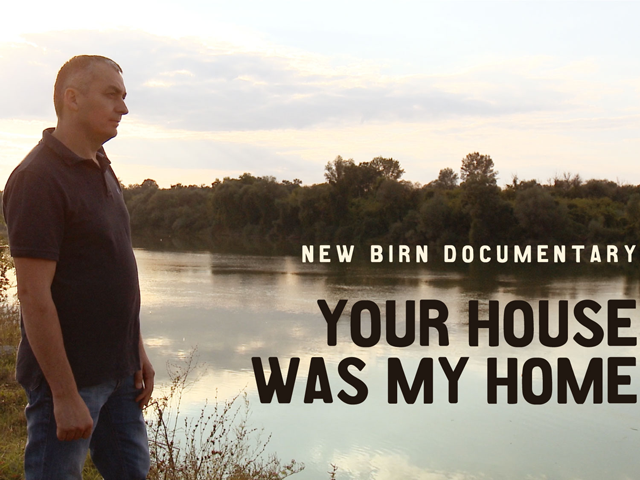
Film ‘Your House was My Home’

Documentary ‘Your House was My Home’, which tells how Serbs and Croats from Kula in Croatia and Hrtkovci in Serbia swapped houses and moved to each other’s villages after the outbreak of war in 1991, had its television premiere on Al Jazeera Balkans in September 2017.

The half-hour documentary follows the stories of two of the villages’ residents – Goran Trlaic, who left Kula for Hrtkovci, and Stjepan Roland, who left Hrtkovci for Kula. Before the 1990s conflict, Kula was predominantly populated by Serbs, while the majority of the people in Hrtkovci in Serbia.

Since the end of World War II, they had lived peacefully together – until the first multi-party elections in 1990, when nationalists came to power and minorities were not welcome in either republic anymore.

A series of threats and violent incidents started a chain reaction as increasing numbers of inhabitants of Kula and Hrtkovci exchanged properties so they could escape to safety.

This was described by officials as ‘humane relocation’, but it was actually a forced population exchange in the midst of a war.

The personal recollections in ‘Your House Was My Home’ show how this forced population exchange had a devastating long-term effect on the lives and relationships of ordinary people from both villages, said Baljak.

See more information about the film here.

Media Ownership Monitor – Serbia

Research by BIRN and the German branch of Reporters without Borders, presented in June 2017, highlights the extent to which the Serbian media space has become dominated by a handful of broadcasters and media companies.

The biggest threats to media pluralism in Serbia are the concentration of audience and political influence over the media.

BIRN and Reporters without Borders also launched the website, which contains the database with information about media ownership and audience shares.

According to the research, 62.35 per cent of the audience in Serbia is shared between four broadcasters that own seven channels.

BIRN Launches Call for Montenegrin Probes on Environment

The Balkan Investigative Reporting Network, partnered with the Centre for Investigative Journalism in Montenegro, is launching a call for investigative stories on the environment.

The call for investigatorive stories with an environmental angle was launched on March 16 as part of the project to strengthen investigative reporting in Montenegro, founded by the EU Delegation in Podgorica.

Three journalists will be awarded grants to cover their expenses while carrying out investigations and writing stories on the environment and related to Chapter 27, within the accession process of the EU.

The journalists will have nine months to dig deeper and research their ideas, and will also have the opportunity to work with experienced editors as their mentors to guide them through the process of writing to BIRN standards.

The call applies only to journalists from Montenegro. It closes on April 6.

Click for more information about the application procedure, with details in Montenegrin.

Innovative Journalism Techniques Training Held in Moldova

A training course entitled ‘Innovative Techniques for Quality Journalism’, organised by BIRN and the Independent Journalism Center in Moldova (IJC), was held on March 16-17 in Chisinau, Moldova.

Fifteen participants representing national and regional media who are interested in launching partnerships at the international level and in publishing their stories in foreign media with the support of BIRN HUB, took part in the training.

The training was conducted by BIRN editors Timothy Large, Marija Ristic and Marian Chiriac, who shared their experience in the field of narrative journalism.

The trainers offered journalists a number of instruments and techniques for enhancing their reporting skills.

The participants had the opportunity to hone their features, news and analysis writing skills and gain insights into online journalism and into the correct ways of reporting on conflict situations.

The participants said they appreciated the training course, giving feedback responses saying that they learned how to write interesting futures, improved their professional skills and `learned new techniques for writing quality articles.

A Family Affair – The Myth of Media Pluralism in Albania

Media Ownership Monitor presented by RSF and BIRN Albania.

Audience and market concentration distorts the Albanian media market. The resulting lack of plurality can be detected in television and radio but also with the printed press. This is one of the results of the three-months-long investigative research that the Balkan Investigative Reporting Network in Albania (BIRN Albania) and Reporters Without Borders (RSF) have jointly carried out. The results of the “Media Ownership Monitor Albania” are presented in Tirana today. They shed light on the Albanian media market by disclosing who owns and ultimately controls mass media.

The results of the project are accessible in Albanian and English on albania.mom-rsf.org. The site offers comprehensive information about the media landscape in the country, including a database of major media outlets, companies and their owners, as well as their economic and political interests, to the general public.

Kristina Voko, Executive Director of BIRN Albania states that finally “the myth that, despite its shortcomings, the Albanian media represents a plurality of views has been shattered. A handful of families reach more than half of audience share and 90% of the revenues in our media market.”

“After decades of transition and numerous attempts from civil society activists inside Albania, as well as substantial contributions from the international community, the media landscape seems to slide further away from a path towards independence, plurality and sustainability”, added Olaf Steenfadt, RSF’s global Project Director of the Media Ownership Monitor. “We call on political elites here to understand the value of a truly healthy media sector and act accordingly, also with a view on the country’s attempts to access the European Union. Our project could serve as a respective monitoring tool.”

The presentation in Tirana today comes less than a week after the Council of Europe’s Committee of Ministers had adopted guidelines and recommendations to its 47 Member States, including Albania, on media pluralism and ownership. Urška Umek, Administrator at the Information Society Department of the Council of Europe, quoted the call on national governments to promote transparency of media ownership and added: “We encourage States to develop a regulatory framework where needed.”

HIGH MEDIA AUDIENCE CONCENTRATION

Supported by a vast dataset, the Media Ownership Monitor proves exceptionally high concentration levels of the Albanian media market. For example, the top four owners in the Television segment reach half of the total audience (between 48.93% to 58,60% – based on reports of the two existing media research agencies, whose data conflict). Three families hold the five digital broadcasting licenses, out of which one alone has received three. Thus, the media regulatory authority has practically endorsed a monopoly. In Radio, the audience concentration is even higher, with four owners controlling almost two thirds (63.69%) of the audience. A medium level of concentration can be observed only in printed press, where the top four owners have a combined readership of 43.29%.

MOM also measured ownership across media sectors, TV, print, radio and online which revealed that top eight owners reach an audience of 72,1% to 80.1%.

All-in all, these figures illustrate a worryingly high risk to media pluralism in Albania.

HIGH MARKET CONCENTRATION

The Albanian media market is small and oversaturated, resulting in harsh economic pressure. There is no official list of print media in the country but reports have put the number at more than 200 titles. MOM investigated 12 daily national newspapers and identified a single owner with a market share of 54%. The top four newspaper publishers control 86.5% of the print market combined.

Despite the many outlets, suggesting a quantitative variety of offer, financial records show that the lion share of revenues, defining market share, is concentrated in a handful of powerful family-owned media groups.

Concentration within the commercial free-to-air TV market for the fourth biggest owners stands at 89.6% – where the two biggest alone control more than two thirds of the market (71.7% of the market share) – and jumps to even 94% if the digital network providers and the public broadcaster are included.

MISSING REGULATORY SAFEGUARDS 

Although the audio-visual market is regulated by law, most media experts perceive its regulatory body, the Audio-visual Media Authority, as being under the direct or indirect influence of political and corporate actors.

Some specific regulation exists in the audio-visual media law, that limits the amount of shares and voting rights in any additional TV company, as well as the amount of advertising, but these restrictions seem opaque and no clear definition of media monopolization exists in the law, let alone it being enforced. The MOM research provides a number of cases, where, by means of ownership across families and diverse corporate structures, the original intent of the law is easily circumvented.

One key article of the law, 62/3, which limited the stakes a person or entity could acquire in a national TV station to 40%, was nullified by the Constitutional Court in May 2016.

SELF-CENSORSHIP

According to the MOM’s research methodology, political control over media outlets in Albania was rated as high. The audience reach of the politically affiliated media owners ranges from 65,18% (Abacus data) to 75,86% (Telemetrix data).

Due to the pressure coming from media owners with political and economic interests, many Albanian journalists resort to self-censorship. Apart from the intricate web that is created around media owners affiliated interests, the media climate in Albania is under pressure also from a series of other factors, including the big corporate advertisers and government institutions. However, none of these outside factors play as big an influence on pushing journalists toward self-censorship as the economic and political interests of owners. In a survey, roughly 80% of journalists in Albania considered their job security as negative, clearly linking their working conditions to the wide-spread phenomenon of self-censorship as a means of protection.

MEDIA UNDER FIRE

As the MOM website illustrates in detail, the Albanian media market is controlled by a small number of powerful owners with strong political ties. At the same time, the few independent outlets and journalists often face intimidation and verbal abuse from politicians. During an impromptu press conference in October 2017, when faced with questions over the alleged ties of his Minister of Interior to a drug trafficking gang, Prime Minister Edi Rama lashed out at journalists, calling them “ignorant”, “poison”, “garbage bin”, “scandalmongers”, “charlatans”, and “public enemies”. Rama’s rhetoric often features the denigration of the media. Over the last few years, he has increasingly preferred communication through social media to avoid scrutiny from journalists. Some commentators have opined that a ‘strategy of abuse’ stands behind the colorful language used by Albanian politicians against the media, aiming to derail public attention from scandals by providing a readymade TV spectacle. Others see it as an attempt to delegitimize the ever shrinking pool of independent and critical journalists and outlets, not being controlled by oligarchs, politicians and their cronies. 

MEDIA OWNERSHIP MONITOR: A GLOBAL RESEARCH PROJECT 

Initiated by the German section of the international human rights NGO Reporters Without Borders (RSF), the Media Ownership Monitor project is a global research and advocacy effort to promote transparency and media pluralism at an international level. In Albania, it was conducted together with the Balkan Investigative Reporting Network in Albania (BIRN Albania) from December2017 to March 2018. The sample of media investigated included 44 national outlets: 11 television channels, 10 radio stations, 12 print titles and 11 online sites. 

RSF’s partner BIRN, the Balkan Investigative Reporting Network in Albania, is a member of a network of local non-governmental organisations promoting freedom of speech, human rights and democratic values. Through high quality reporting and creating a pool of skilled journalists BIRN examines and scrutinises key processes, steers debates and provides the public with impartial and reliable information. BIRN Network also monitors and advocates for the transparency and accountability of public institutions and enables CSOs and citizens to influence decision-makers. 

The project is financed by the Federal German Ministry for Economic Cooperation and Development (BMZ). Country studies were so far published in Colombia, Cambodia, Tunisia, Turkey, Ukraine, Peru, the Philippines and Mongolia, Ghana, Serbia, Brazil and Morocco. In addition to Albania, this year, MOM will investigate media markets in Mexico, Sri Lanka, Pakistan, Lebanon, Tanzania and Egypt. For more information visit the MOM website: http://www.mom-rsf.org

BIRN Participates in Media Policy Forum in Moldova

The Media Policy Forum was organised in Chisinau by Freedom House, the Black Sea Trust for Regional Cooperation and Internews, and co-sponsored by USAID, the Friedrich Naumann Foundation and BIRN.

“In the last few years in Moldova, we cannot talk about progress, but more about regression,”  Nadine Gogu, executive director of the Independent Journalism Centre in Chisinau, told the Media Policy Forum in the Moldovan capital on Tuesday.

The biggest problems identified by the speakers at the forum related to the increasing politicisation of the country’s media and the alleged concentration of ownership in the hands of proxies for the ruling party, which was described as a threat to the country’s democracy.

The president of the Moldovan parliament, Andrian Candu, told the forum however that “it is important that the media should be allowed to raise its economic capacity”.

Candu argued that the media should have more access to public information and that the debates at the forum should help politicians to improve mass media legislation in Moldova.

But Moldovan media NGOs complained about the unwillingness of the authorities to offer more rights to journalists.

Freedom House described Moldova as a country with a ‘partly free’ press in its 2017 Freedom of the Press index.

Participants at a panel moderated by Tim Judah, a special correspondent for The Economist, stressed the need to increase the level of media literacy in the country as a tool to combat propaganda and so-called ‘fake news’.

The director of Romanian Centre for Independent Journalism, Ioana Avadanei, described a successful media literacy programme that was implemented in some schools in Romania with young pupils.

“It is not so much fake news that causes trouble, it is disinformation that comes in many shapes and form and it’s not only about banning content from social media, it is about how to educate people today,” Avadanei said.

Credit: Freedom House in Moldova
Photo: Freedom House in Moldova

BIRN’s Macedonia Country director Ana Petruseva noted how investigative journalism had played a very significant role in the fight against the concentration of media power and the disinformation spread by government-controlled media in Macedonia over the past few years.

“We had a situation when on three to four private TV stations, we could see the same exact report… the only different thing was the voiceover,” Petruseva recalled.

The Media Policy Forum was organised in Chisinau by Freedom House, the Black Sea Trust for Regional Cooperation and Internews, and co-sponsored by USAID, the Friedrich Naumann Foundation and BIRN.