USAID Kosovo

DONOR
Since 1999, USAID has invested more than $1 billion dollars in Kosovo’s development. Our goal is to help Kosovo realize its democratic and demographic dividend through Kosovo-led solutions. We aim for citizens to be better served by accountable and effective governance institutions and to increase opportunities for inclusive democratic and economic participation.

USAID partners with Kosovans to advance Kosovo-led reforms that will further the country’s progress towards full European and Euro-Atlantic integration. Through our successful partnership with Kosovo, USAID implements numerous, wide-reaching programs to:

  • Strengthen the responsiveness of justice institutions
  • Strengthen executive governance and legislative responsiveness
  • Increase citizen contribution to democracy and economy
  • Increase private sector competitiveness
  • Improve energy security and cybersecurity

Web: https://www.usaid.gov/kosovo

Kosovo Civil Society Foundation

DONOR
Kosovar Civil Society Foundation (KCSF) is an independent, non-profit organization that supports the development of civil society and initiatives that promote a democratic culture and respond to the socio-economic needs of Kosovo, with a particular focus on contributing to the integration process in the European Union.

Webhttps://www.kcsfoundation.org/en/home-2/

Reporting Democracy in the Heart of Europe

A BIRN conference in Budapest will explore the future of democracy at a time of sweeping change.

Across Europe, populist movements are changing the political landscape and eroding faith in democratic institutions. In some countries, they are cracking down on independent media, the judiciary and civil society. The result is Europe’s biggest political transformation since the end of the Cold War. Many fear for democracy itself as authoritarian alternatives enter the mainstream.

In the immediate aftermath of EU elections, the Balkan Investigative Reporting Network and ERSTE Foundation will host a conference in Budapest to explore the factors eroding democracy, from populism and authoritarianism to demographic change.

The Reporting Democracy Conference will also focus on the role of media in countering such threats and consider how civic activism can help defend freedom.

More than 100 journalists, activists and representatives of academia and international civil society are expected to attend the all-day event at the Hotel Mercure Budapest Buda​ on May 31.

Distinguished speakers from across Europe and the Balkans will look at what is at stake, how independent media outlets can reassert themselves and what happens when the people start to push back.

To register to attend, please fill in the registration form.

The conference marks the launch of Reporting Democracy, a new cross-border journalism platform aimed at unleashing the power of fact-based journalism to scrutinise the issues, trends and events shaping the future of democracy in Central, Eastern and Southeastern Europe.

BIRN Launches New Cross-Border Reporting Platform

BIRN’s new Reporting Democracy platform seeks to unleash investigative journalism to examine the state of democracy in Central and Eastern Europe and the Balkans.

The Balkan Investigative Reporting Network launched a cross-border journalism platform on Monday aimed at shining a light on issues affecting the health of democracy across a swathe of Europe vulnerable to rising populism and authoritarianism.

Reporting Democracy extends BIRN’s coverage from the Balkans to the so-called Visegrad Group of countries in Central and Eastern Europe: Poland, Czech Republic, Slovakia and Hungary.

The new platform comes as Europeans prepare to vote in EU elections that polls suggest could bring big gains for far-right nationalists, eurosceptics and supporters of the kind of “illiberal democracy” championed by Hungarian Prime Minister Viktor Orban.

“Democracy is at a crossroads in Europe as authoritarian alternatives enter the mainstream and threaten to undo fundamentals like media freedom, judicial independence, minority rights and respect for the rule of law,” Reporting Democracy Editor Timothy Large said.

“The goal here is to put rigorous, fact-based journalism to work in exposing the trends and developments that will shape democracy, for better or for worse, and to look at things from a cross-border perspective.”

In addition to offering in-depth analysis by BIRN correspondents in 14 countries, Reporting Democracy will support independent media across the region by commissioning stories from local journalists and offering grants for cross-border investigations.

The project is supported by ERSTE Foundation, the main shareholder of Austrian bank Erste Group, which also funds BIRN’s flagship Balkan Fellowship for Journalistic Excellence programme, now in its 13th year.

Edit Inotai

Based in Budapest, Edit is reporting about Hungary for the Balkan Investigative Reporting Network.

She was formerly the Foreign Editor and Berlin Correspondent of the leading daily, Nepszabadsag, and the foreign policy analyst for the business weekly, Figyelo.

Edit holds a PhD from Corvinus University Budapest and has MA from ELTE University Budapest in English and Spanish philology.

She speaks Hungarian, English, German, Spanish.

BIRN Macedonia Journalist Awarded for Cultural Heritage Report

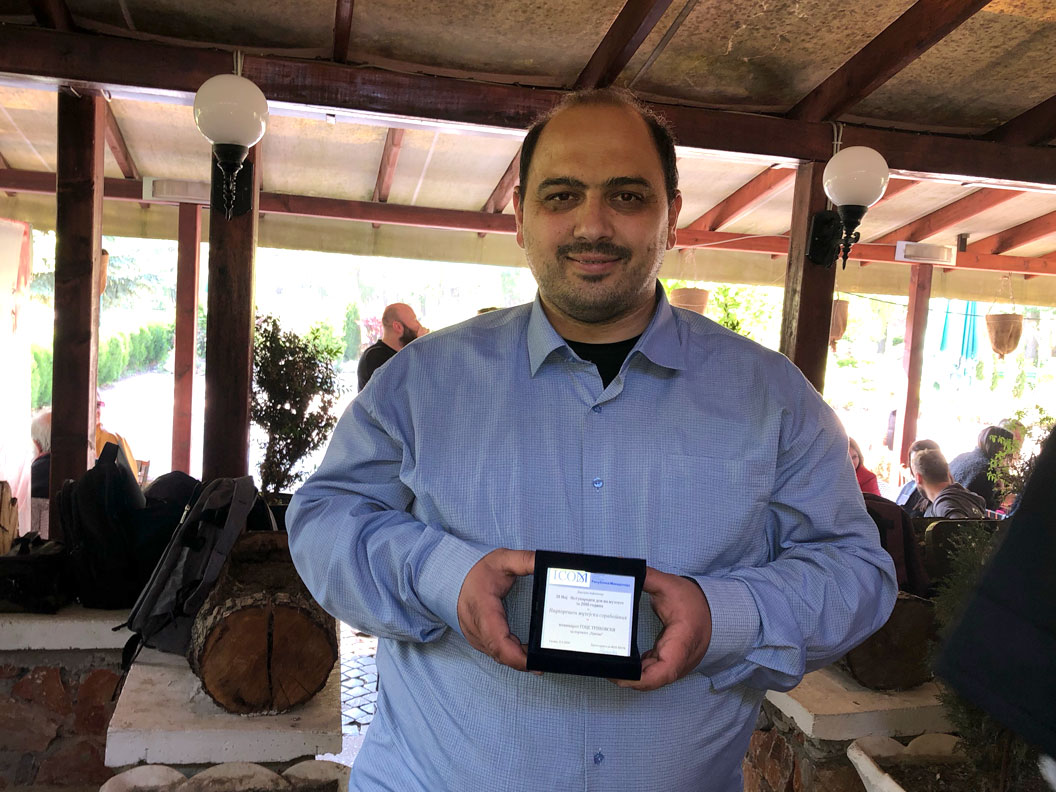
BIRN journalist Goce Trpkovski was given an award by the Macedonian National Council of the International Council of Museums for raising awareness about the poor condition of cultural heritage in the country.

The award was presented at the celebration for the International Museum Day on May 18, at the ASNOM Memorial Centre, a national landmark in the village of Pelince commemorating the establishment of the independent Macedonian state in 1944.

After the devastating fire at the Notre Dame cathedral in Paris in April this year, BIRN published an in-depth article documenting the risks to numerous cultural heritage sites in North Macedonia. The country has more than 1,200 sites – houses, public buildings, ancient ruins, churches, mosques, fortsas towers – listed as being under protection.

The article revealed that some unique historical sites like the Skopje Aquaduct are crumbling, despite politicians’ promises to restore them, while many listed sites owned by non-state entities (religious buildings, private houses and others) lack appropriate equipment in case of fire or other disasters, which they should have under the law.

BIRN Co-Hosts Media Policy Forum in Moldova

The Balkan Investigative Reporting Network on Tuesday co-hosted the second annual Media Policy Forum event in Chisinau, organised by Freedom House, the Black Sea Trust for Regional Cooperation and Internews.

The aim of the discussions was identifying policy solutions that maintain respect for international standards on free expression with attention to key issues around elections.

“These include defending digital space, fostering fair elections coverage, countering disinformation, and promoting free speech,” said Tatiana Puiu, a representative of Freedom House in Moldova, at the beginning of the conference in Chisinau.

The US ambassador to Chisinau, Dereck J. Hogan, urged independent media and journalists in Moldova to maintain their objectivity and not become intimidated out of doing their job.

“In Moldova and in the world, independent journalists encourage active debates, expose injustices and abuses, help raise more informed citizens, empower leaders, and develop a brighter course for the future,” Hogan said.

Then deputy head of the EU delegation to Moldova, Urszula Pallasz, said there should be more attempts to foster media literacy in Moldova.

Pallasz quoted an OSCE report published after Moldova’s parliamentary elections on February 24 this year, which said access to information around elections was restricted due to the concentration of ownership of media.

Independent reports say that more than 80 per cent of the country’s media is concentrated in the hands of political parties and individuals connected to the authorities.

The event in Chisinau brought together a wide array of experts from civil society, independent media, government, academia, and the international donor community.

BIRN’s correspondent in Moldova, Madalin Necsutu, spoke about the media landscapes both in Romania and Moldova during electoral campaigns on a panel entitled ‘Leveling the Playing Field: Fostering Fair Elections Coverage’.

“Like in Moldova, the Romanian media is confronting the concentration of media in the hands of political parties and restricted access to public information,” he said.

He added that in recent years, media in Romania have focused on becoming more independent, particularly with the help of crowdfunding.

But David Kankiya, a Russian election analyst, said that Russia is adopting more and more restrictive legislation regarding the media and freedom of speech, which also affects the internet.
Report on Local Mayors’ Assets

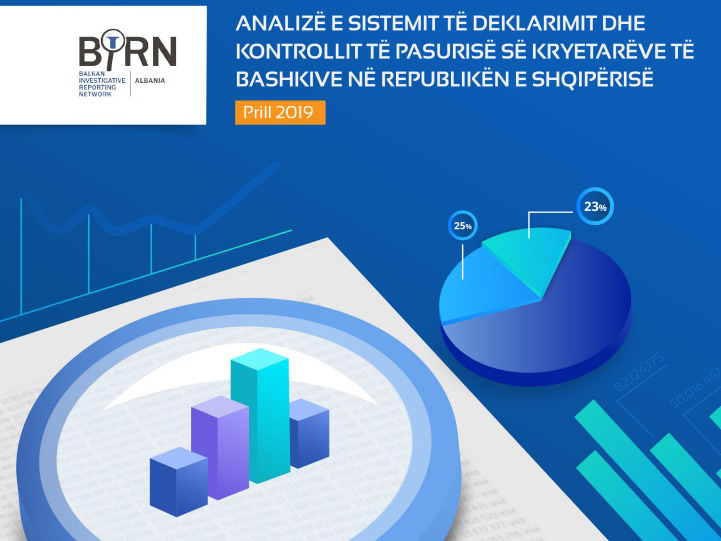
The Balkan Investigative Reporting Network in Albania has published a report entitled ‘Analysis of the System of Asset Declarations of Mayors in Albania’, which evaluates the wealth of the heads of local government units in the country as well as the integrity of the asset declaration system.

The asset declarations of serving mayors were analysed with the help of three financial experts, who recorded and categorised in a database all the data declared by heads of municipalities in their annual asset disclosures.

Read more.

To download a copy of the report in Albanian, click here.

BIRN Albania’s Local Government Transparency Monitoring Report

The Balkan Investigative Reporting Network in Albania on April 25 published a national report entitled ‘Local Government Under the Lens of Freedom of Information: A Comparative Monitoring of Transparency Indicators Online and On the Ground’, covering all 61 municipalities in the country from 2017 to 2019.

The report contains assessments of the transparency of the 61 local government units in Albania, based on 55 indicators, evaluated in both 2017 and 2019, tracing the progress made by local municipalities in the implementation of freedom of information and public consultation laws.

Read more.

For a copy of the report in Albanian click here.

For a copy of the report in English click here.