KALLXO.com Reveals Problems with Matura Exam Process

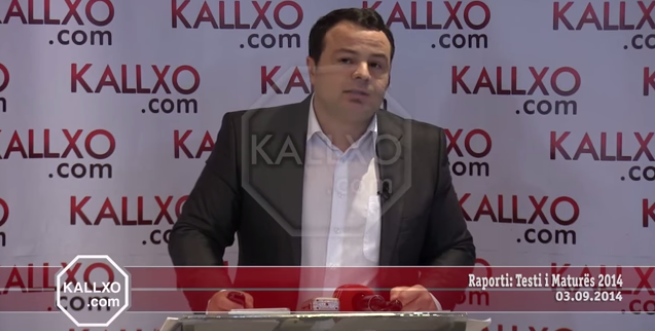
KALLXO.com presented findings of a monitoring report from the second round of the 2014 National Matura Exam, held on June 28 in Kosovo.

Kallxo.com 

Muhamet Hajrullahu, coordinator of the monitoring process for KALLXO.com, said monitoring teams were sent to 36 centres in 21 municipalities.

“The crew from KALLXO.com revealed various gaps of the process in the centers that were monitored even though security guards were used that day to administrate the process,” Hajrullahu said.

Hajrullahu said there were also problems with the identification of pupils. Discussing concrete findings, Hajrullahu mentioned a case in Podujeve, where the most serious violations happened.

“After the reporting from KALLXO.com on the Podujeva case, the police together with the Ministry of Education, Science and Technology reacted and people who shared copies of the exam through social networks were identified,” he said.

The reporting of KALLXO.com prevented further cheating from takng place.

Hajrullahu said that based on the experience from the monitoring in June, KALLXO.com recommends that the Ministry of Education, Science and Technology take into consideration the following:

1. Written tests should be encouraged as means to assess knowledge throughout the school year.
2. Administration of the testing process should be entirely conducted by teachers.
3. Protocols and responsibilities of officials engaged in test administration processes should be disseminated in clear written form, in a timely manner.
4. Responsibility to participate in and administer the testing process could be regulated contractually with all teachers.

The monitoring teams of KALLXO.com will be in the field on September 6 for the second round of the National Matura Exam.


BIRN Summer School Chooses Winning Stories

The three best stories proposed by participants in this year’s Summer School were selected by the jury and will get financial backing from BIRN’s investigative reporting fund.

At the 2014 Summer School closing ceremony on Friday, the jury selected the three top stories from the participating teams of journalists who will now be funded to develop them.

The jury consisted from BIRN managing editor Ana Petruseva, editor Lawrence Marzouk, Guardian correspondent Paul Lewis and Christian Spahr, director of the Konrad-Adenauer-Stiftung Media Programme South East Europe.

The top story, which was awarded 2,500, will deal with Roma issues in the Balkans; the second, awarded 2,000 euros, will investigate the wrongdoings of Austrian banks; while the third, awarded 1,000 euros, will tackle corruption cases in Macedonia.

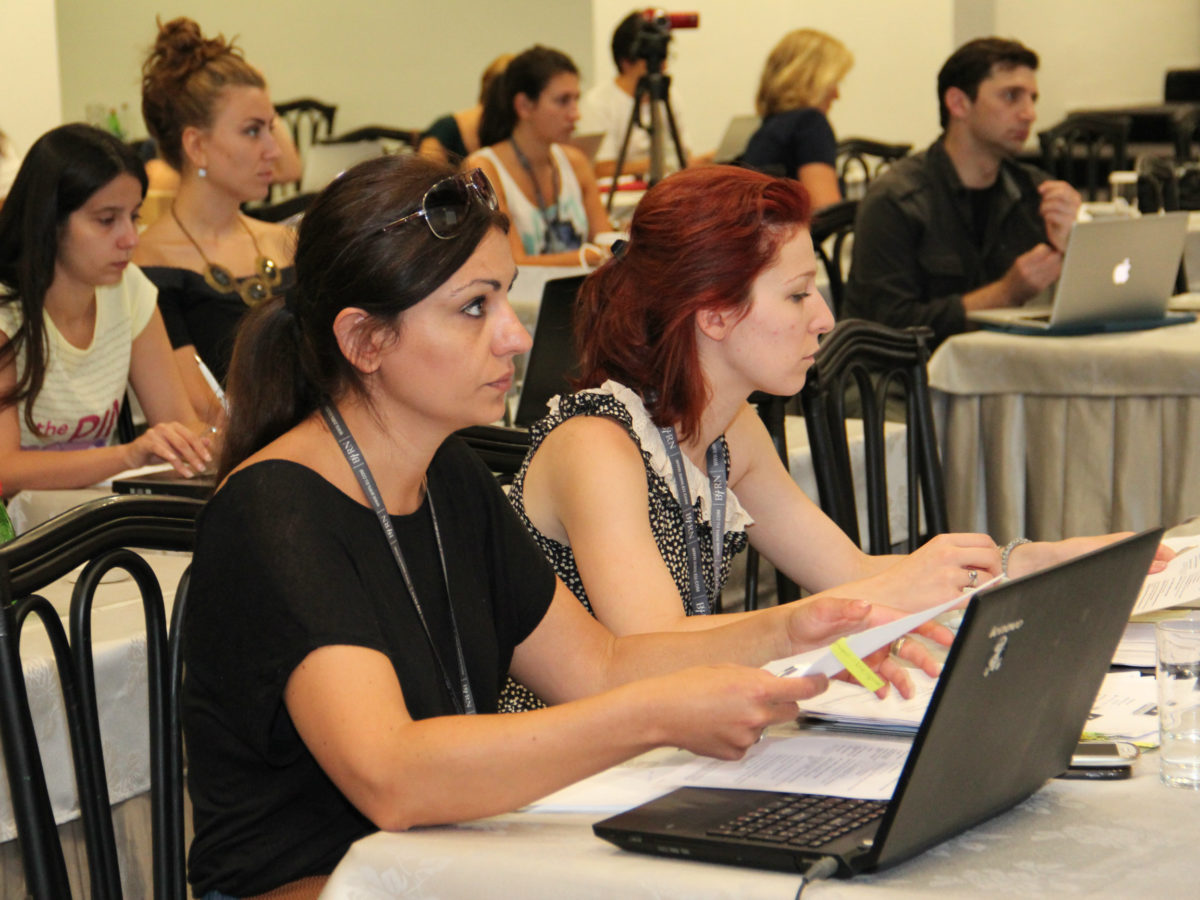
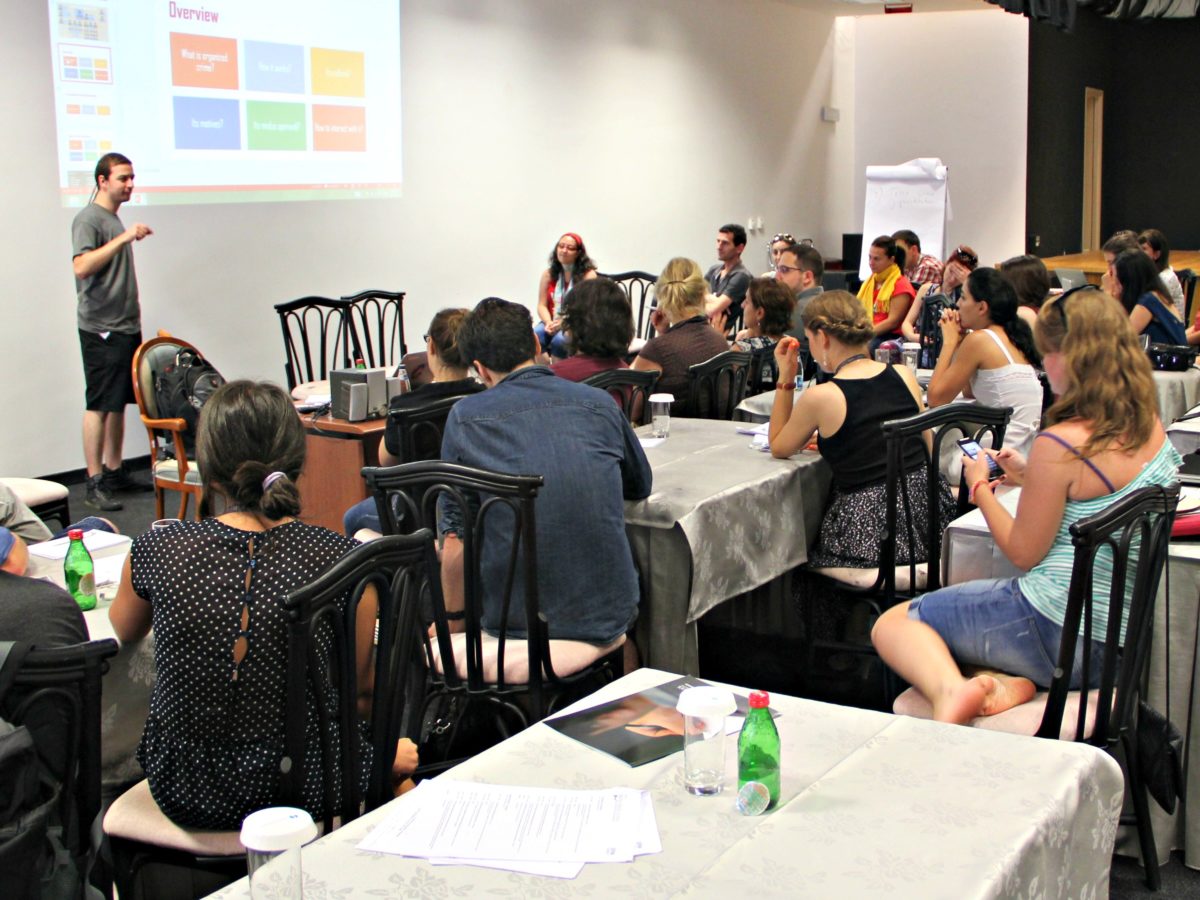
During the five-day training programme in Montenegro, 35 journalists from all over the Balkans and the world had the chance to pick up tips and tools on how to investigate corruption and organised crime cases.

Lectures were given by top trainers in the field from The Guardian, the BBC, OCCRP, Access Europe and others.

The Summer School is organised in cooperation with the Media Program South East Europe of the Konrad-Adenauer-Stiftung and with support of the Austrian Development Agency (ADA), the operational unit of Austrian Development Cooperation, the North Atlantic Treaty Organization, the OSCE Mission in Kosovo, the OSCE Mission to Serbia, the OSCE Presence in Albania, the OSCE Mission to Montenegro and USAID Macedonia.

BIRN Kosovo Director and Legal Advisor Spoke at Doku:Tech

As the internet and technology become more and more important in people’s lives, security looms an ever larger concern. That’s why this year during the documentary film festival Dokufest devoted a separate arena for “Doku:Tech” covering technology, the internet and innovation.

Jeta Xharra

On the first day of the conference, the main panelist was Lee Bryant, a leader of the marketing company Twentieth Century. He spoke about the borderless digital world of information and marketing.

“The digital world has a big challenge in front of her, which is ensuring a free space for everyone that wants to use it. But in the business world this is becoming more impossible every day. This increases the risk that powerful elites are being created who control the digital world,” said Bryant.

Other technology experts like Deanna Zandt talked about love/hate relationships with the internet in a world in which everybody was free. In another panel, Arandel Bojanovic, Altin Ukshini, Bilal Ghalib questioned the role of hackers in internet.

Jeta Xharra, director of Balkan Investigative and Reporting Network (BIRN) in Kosovo, opened the second day. She started her speech presenting the online platform for reporting corruption “KALLXO.com” and the growing need for security.

Talking about her investigative journalism experience, Xharra spoke about the importance of security in reporting big cases like the building of a new power plant that would cost millions of euro and could take people’s lives.

“The more we need security as part of our daily routine, the more it becomes industry perpetuating itself, threatening individuals and societies,” Xharra said. “Good investments do not come while the wrong practice privatizations, corruption and criminality is increasing”, said Jeta Xharra.

Later, another panel discussed the legal framework of data collection for intelligence purposes as well as the limits of personal data protection.

Furthermore, BIRN Legal adviser, Flutura Kusari, made a presentation on personal data protection and also BIRN’s experiences using the right to freedom of information during investigative stories.

BIRN Albania Launches Reporter.al Website

The Balkan Investigative Reporting Network in Albania has launched a new website designed to bring its award winning news, analysis, features and investigations to local audiences, and strengthen the cooperation between journalists and civil society.

The website, launched on Monday, is part of the BIRN Albania’s programme ‘Exposing Corruption in Albania’, supported by the Open Society Foundation in Albania (OSFA), National Endowment for Democracy (NED), and the Balkan Trust for Democracy (BTD).

Reporter.al is a general news website designed to promote excellence in journalism, with a particular focus in investigative reporting, with stories that cover the war against corruption and impunity in the country.

The interactive website will publish investigative stories, analysis, reports, blogs, but also features from Albania and the region in local language.

Through the website BIRN will expand its reporting from Albania with special projects on media development, culture, elections and human rights.

Summer School Day 4: Collaborative Reporting on Social Media

Social media can be an important tool for investigative journalists, the fourth day of the BIRN Summer School in Montenegro heard.

The BIRN Summer School began on Thursday, as on previous days this week, with a lecture by The Guardian newspaper’s Washington correspondent Paul Lewis, who explained how social media can help journalists research stories.

Lewis presented two case studies based on stories he published about Ian Tomlinson, who died after being unlawfully struck by a police officer during protests against a G-20 summit, and Jimmy Mubenga, who died on a plane as he was deported from the UK.

“There are so many possibilities for you [journalists] to find sources and stories on social media. This is what we call collaborative reporting,” Lewis said, adding that for many of his articles, information was found and witnesses contacted through various social media channels.

Advising the Summer School students how to approach sources and interview them, Lewis said: “Sometimes it is better not to ask too many questions, but to let people speak.”

During the second part of the day, the Summer School students were split into two workshops to help them to develop their stories for the future. Markus Lindermann taught journalists how to use advanced internet search techniques, while Helen Darbishire explained how to request information from the European Union using freedom of information laws.

The last lecturer on Thursday was a producer from the BBC, Meirion Jones, who introduced techniques for doing investigative stories for television.

Jones explained when and why journalists use hidden cameras for covert filming, and why it is important to have fewer documents in video stories and more people.

“It is very problematic for the viewer to sit and watch your piece if you have more than 30 seconds of documents. Or a lot of numbers. They are the enemies of TV. You need to have people in your video,” Jones said.

Some 35 reporters from the Balkans and across the world have gathered in the Montenegrin coastal town of Becici for the five-day Summer School, aiming to boost their investigative skills.

The Summer School is organised in cooperation with the Media Program South East Europe of the Konrad-Adenauer-Stiftung and with support of the Austrian Development Agency (ADA), the operational unit of Austrian Development Cooperation, the North Atlantic Treaty Organization, the OSCE Mission in Kosovo, the OSCE Mission to Serbia, the OSCE Presence in Albania, the OSCE Mission to Montenegro and USAID Macedonia.

Summer School Day 3: “Avoid pressure, take time and listen more”

Undercover policing, FIFA corruption and drug cartels were among the themes explored by award-winning journalists at the BIRN summer school of investigative reporting.

The day started with a lecture from Guardian’s Washington correspondent Paul Lewis who spoke about his two-year investigation into undercover policing in the UK.

Addressing journalists about how to carry out a successful interview, Lewis underlined that “there are no universal rules“, but there are some tips for making your source “open up“.

“Avoid pressure, take time and listen more,“ Lewis said.

He also advised journalists to be honest with their source and “never cheat”.

His lecture was followed by a training session held by Sunday Times reporter Heidi Blake who shared how she uncovered evidence of corruption related to Fifa and the Qatar 2022 World Cup.

Stevan Dojcinovic from the OCCRP held a lecture about investigating organised crime. He also revealed how he carried out one of his major stories involving drug cartels in the Balkans.

How to monitor websites and access pages that have been deleted or changed was the subject of the last lecture for Wednesday held by Marcus Lindermann.

“The most important thing is to know where to pick up traces and how to follow them. Google can work for you, if you know how to use it,“ Lindermann said.

Some 35 reporters from the Balkans and across the world have gathered in the Montenegrin coastal town of Becici for the five-day summer school, aiming to boost their skills.

The Summer School is organised in cooperation with the Media Program South East Europe of the Konrad-Adenauer-Stiftung and with support of the Austrian Development Agency (ADA), the operational unit of Austrian Development Cooperation, the North Atlantic Treaty Organization, OSCE Mission in Kosovo, OSCE Mission to Serbia, OSCE Presence in Albania, OSCE Mission to Montenegro and USAID Macedonia.

Summer School Day 2: From UK Riots to Legal Leaks

The UK riots, legal leaks, how to protect sources and tracking money abroad were all explored in the second day of BIRN’s summer school.

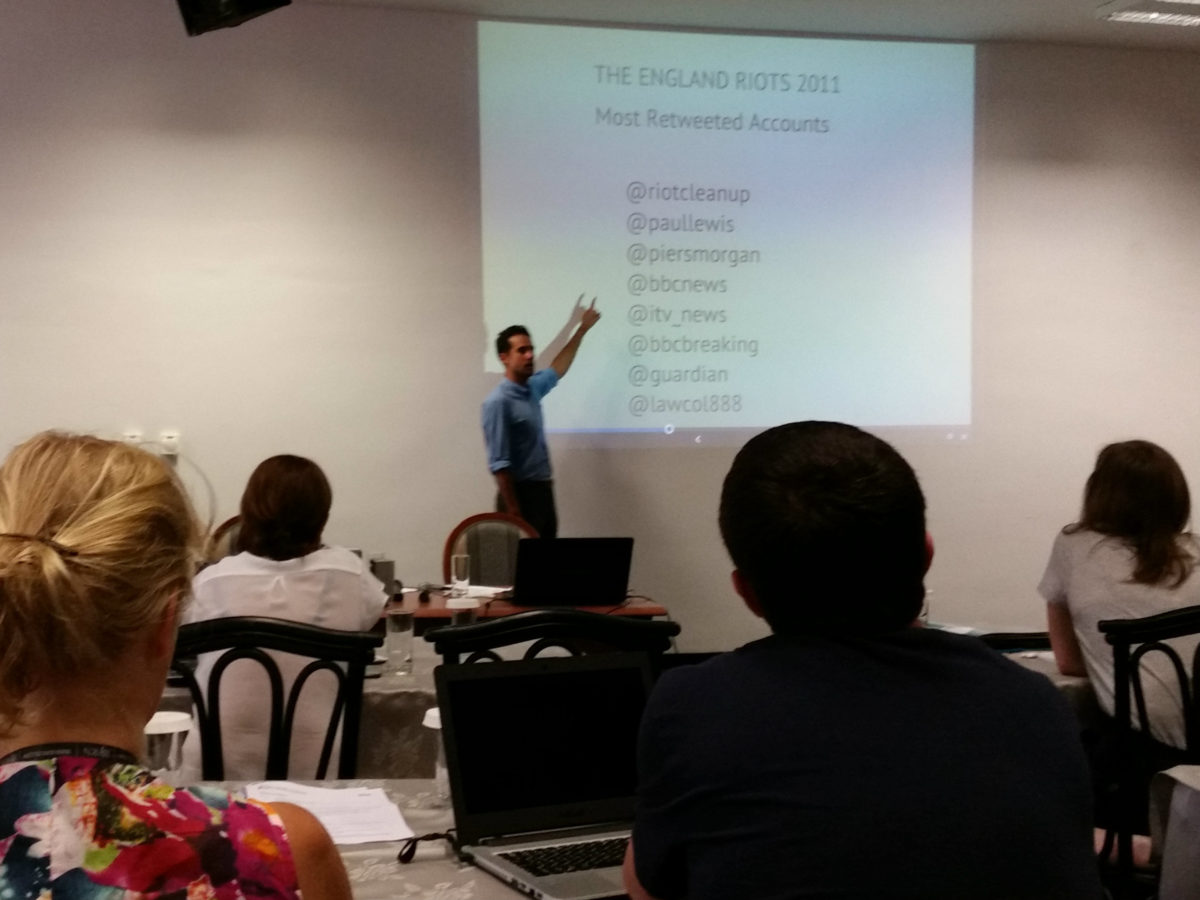
Lead teacher and Guardian Washington correspondent Paul Lewis explained how he used data to shed new light on the riots that rocked the UK in 2011.

Lewis showed the journalists how to exploit social media, including verifying information and getting members of the public to help.

 “You should embed the idea of being investigator into your daily work,” said Lewis, explaining that most of his investigations emerged from his daily reporting duties.

His session was followed by a lecture from Helen Darbishire, from the Access Info Europe group, who presented a toolkit called “Legal Leaks”.

“This was designed for journalist so they can know how to ask and get information through freedom of information laws,” Darbishire said.

She added that, on paper, Serbia had the best Freedom of Information law in Europe, while the worst were in Italy and Austria.

Marcus Lindemann explained to students how to use Google’s extensive tools to dig deeper.  

Public records and how to uncover secrets held in tax heaven were the topic of OCCRP’s Paul Radu’s session.

His colleague Miranda Patrucic shared tips and advice on how to approach and protect sources.

“Don’t pressure them for the immediate comment. Deciding to speak out takes time,” Petrucic said.

“Reporters need to build trust and bond with the source,” she added.

Some 35 reporters from the Balkans and across the world have gathered in the Montenegrin coastal town of Becici for the five-day summer school, aiming to boost their skills.

The Summer School is organised in cooperation with the Media Program South East Europe of the Konrad-Adenauer-Stiftung and with support of the Austrian Development Agency (ADA), the operational unit of Austrian Development Cooperation, the North Atlantic Treaty Organization, OSCE Mission in Kosovo, OSCE Mission to Serbia, OSCE Presence in Albania, OSCE Mission to Montenegro and USAID Macedonia.

BIRN Summer School Kicks off in Montenegro

The fifth BIRN summer school of investigative journalism has opened in the Montenegrin coastal town of Becici, bringing together top trainers and journalists.


Some 35 reporters from the Balkans and across the world have gathered on Monday for the five-day summer school, aiming to boost their skills.

The school was kicked off by lead teacher and Guardian journalist Paul Lewis, who will teach students how to think about data in the digital age and use social media to investigate.

The introductory lecture was followed by investigative case studies from BIRN editor Lawrence Marzouk, while in the afternoon participants were given a detailed session in data journalism by Markus Lindemann.

Miranda Petrucic from the Organized Crime and Corruption Reporting Project explained to students how she exposed high profile corruption cases in Montenegro.

The day finished with a panel debate focused on the challenges of tackling corruption within the defence and security sector in the Western Balkans.

Alberto Bin, director of Integration, Partnership and Cooperation at NATO, spoke about reforms in South East Europe, while Dina Bajramspahic, from Montenegrin NGO Alternative, and Katarina Djokic, from Belgrade Centre for Security Policy, reflected on the current methods of fighting corruption in their countries.

The Summer School is organised in cooperation with the Media Program South East Europe of the Konrad-Adenauer-Stiftung and with support of the Austrian Development Agency (ADA), the operational unit of Austrian Development Cooperation, the North Atlantic Treaty Organization, OSCE Mission in Kosovo, OSCE Mission to Serbia, OSCE Presence in Albania, OSCE Mission to Montenegro and USAID Macedonia.

BIRN Macedonia Launches Fifth Call for Investigative Reports

BIRN Macedonia, together with Centre for Investigative journalism – SCOOP Macedonia and the Centre for Civil Communications launched the fifth call for investigative stories on August 25th.

The call is part of the ‘Project for Investigative Journalism and Cooperation Between Media and Civil Society’, part of a USAID programme for strengthening independent media in Macedonia.

In this call that closes on September 8th, at least five journalists will be awarded a grant to cover their expenses while doing the investigation and writing the story. More calls for investigative grants will follow, for a total of 40 stories until June 2015.

Journalists will have about three months to dig deeper and research their ideas, but also will have the opportunity to work with experienced editors as their mentors to guide them through the process of writing to BIRN standards.

Topics for investigations include: health; cultural policy; education and youth; human rights; EU integration; good governance; inter-ethnic relations; environment issues; marginalised groups; quality of life.

The call only applies to journalists from Macedonia.

Next call for investigative stories will be published by the end of 2014.

Click for more information about the application procedure, with details in Macedonian.

Serbian Tabloid Targets BIRN after Airline Revelations

The pro-government tabloid ‘Informer’ has published a series of allegations about the Balkan Investigative Reporting Network, following its investigation into a secret government contract with the UAE’s Etihad Airways.

Informer on Wednesday wrote that journalists from the Balkan Investigative Reporting Network, BIRN, and Serbia’s Centre for Investigative Journalism, CINS, had been stalking Serbian Prime Minister Aleksandar Vucic, causing him to cancel his summer holiday – its second highly critical report about BIRN following the high-profile airline contract investigation.

Citing an unnamed government source, the tabloid newspaper claimed that Vucic cancelled his vacation at Serbia’s Lake Bor two weeks ago after learning that “suspicious guys” from BIRN and CINS were staying at the same hotel. “Vucic cancels vacation because of ‘spies’ in hotel,” the headline read.

The allegations follow publication of a BIRN investigation into whether Serbia overpaid for an airline contract with the United Arab Emirates carrier Etihad.

The investigation, published by BIRN and in the weekly Vreme news magazine, revealed that for a 51-per-cent stake in the newly founded company, Air Serbia, Serbia paid several times more than its UAE partner.

The director of BIRN Serbia, Dragana Obradovic, said the tabloid’s allegations were a campaign to discredit the work of BIRN and CINS.

“Nobody was in Bor to spy on the Prime Minister, which is a ridiculous claim, considering that BIRN and CINS are far from paparazzi journalism,” Obradovic said.

Last Saturday, Informer also alleged that the EU was secretly financing BIRN and CINS, which were keeping contracts with the European Commission worth millions of euros.

Obradovic explained that BIRN and CINS won a project through a public call and said that BIRN had not sought to hide the contracts but had directed Informer to the EU mission in Serbia, which has the right to reveal the details.

Informer also insisted that BIRN has denied to respond whether the EU contract imposed what BIRN can and cannot investigate, suggesting the EU has forbidden investigations that involve EU companies.

But Obradovic said that this was also untrue.

“We have explicitly said that the EU does not set the topics we investigate, nor does it forbid certain issues to be looked into as the Informer journalist suggested,” she said.

The day after the BIRN revelations were published last week, Vucic held a press conference at which he insisted that the report was based on an incorrect version of the contract with Etihad. “They must have received some previous drafts,” he said.

He also suggested the investigation was serving the interests of a controversial Serbian tycoon, Miroslav Miskovic, who is awaiting trial for corruption.

Vucic said that Vreme was owned by Miskovic, who has become a symbol of the premier’s anti-corruption drive.

Serbia’s Association of Independent Journalists, NUNS, insisted that BIRN’s and CINS’ revelations about the airline deal were in the public interest.

“In a democratic society it is unacceptable for the PM to discredit media in such a manner in public,” NUNS said last Friday.

At Vucic’s press conference last week he also officially revealed details of the Etihad deal for the first time.

NUNS responded by saying that it was “obvious that the article published in Vreme forced the government and the PM to finally make the Etihad contract public”.

Vreme has meanwhile accused Vucic of “trying to prevent free, objective and independent journalistic work”, comparing his criticism of BIRN and CINS’ probe to his actions as information minister in the government of Slobodan Milosevic in the 1990s.