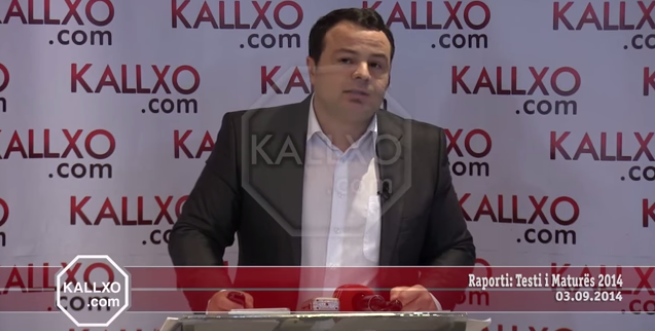
BIRN Kosovo Presents Report on Access to Public Documents

Balkan Investigative Reporting Network (BIRN Kosovo) published its report on access to the public documents on Monday. 

 Access to Public Documents

BIRN submitted 125 official requests to access public documents to the majority of public institutions in Kosovo. From these requests 68 were denied, 50 were approved and seven were partially denied. This shows that the institutions fulfilled only 40 per cent of requests.

To launch and discuss the report, BIRN organized a roundtable with representatives of public institutions from the local and central governments.

The report found that the implementation of the law on access to public documents has not improved since the year prior. The report also identified transparent and non-transparent institutions.

The roundtable included:

Zekirja Shabani – Association of Professional Journalists of Kosovo,

Arianit Bytyqi – Prime Minister’s Office,

Fidan Kalaja – Open Government Partnership,

Mentor Hoxhaj – National Agency for Data Protection,

Florent Rrahmani – Office of the President of Republic of Kosovo.

Arianit Bytyqi from the Prime Minister Office congratulated BIRN for the work conducted so far, which, he said “is a great help on going on supporting further more an efficient implementation of the law on access to the public documents”.

Fidan Kalaja said BIRN is supporting his work in Kosovo on the Open Government Partnership, a global initiative to promote government transparency.

Download full report.

BIRN Legal Adviser Lectures on Media Law

BIRN’s legal advisor, Flutura Kusari, gave a lecture on media law at Prishtina School of Politics on June 2.

Flutura Kusari

Through concrete case law from Kosovo and European Court of Human Rights she explained to participants the importance of knowing about defamation, privacy, access to public documents and copyrights and the impacts on freedom of expression.

During the lecture, participants from different backgrounds such as public institutions, non governmental organizations and the private sector raised many questions related to media regulation.

The Prishtina School of Politics was founded in 2003 as a joint initiative of the Council of Europe and a group of young Kosovar activists, aiming to promote a new political culture and social life based on the common values of tolerance and open dialogue.


Legal Advisor Gives Journalists Primer on Document Access

BIRN Kosovo legal advisor, Flutura Kusari, attended a roundtable in Gjakova titled “Ethics and Professionalism in Media” on June 26.

Kusari discussed how access to public documents remains a challenge in Kosovo. Public institutions often do not disclose sensitive documents out of the fear they will reveal wrongdoings, she said.

Kusari focused on raising awareness among journalists from Gjakova and Peja on the importance of getting the access to public documents and how to file official requests. The event was organised by Kosovo Press Council.

BIRN Kosovo Managing Editor Discusses Elections on Kosovo Serb TV

The Managing Editor of BIRN Kosovo, Muhamet Hajrullahu, was invited to Serbian-language TV station, RTV Puls, in Shillova, a village near Gjilan, to analyse the aftermath of recent parliamentary elections in Kosovo.


Muhamet Hajrullahu on TV Puls.

Discussed during the programme were the participation of Serbs in the national elections, the new government and the future of the dialogue between Kosovo and Serbia.

Also discussed was the possible participation of Lista Srpska in the new government of Kosovo.


‘Kingdom of Coal’ Screened in ‘Green’ Open Air Cinema in Mitrovica

Kingdom of Coal, directed by Antoneta Kastrati and Casey Cooper Johnson (Crossing Bridges Production) and produced by Jeta Xharra (BIRN Kosovo), was screened in the sixth edition of the ‘Green’ Open Air Cinema in Mitrovica.

Kingdom of Coal

The documentary investigates the economic, health and environmental costs of coal, while exploring the potential for alternative energy in Kosovo.

Kingdom of Coal was screened on the second night of the ‘Green’ Cinema, a project that aims to raise the awareness of the Kosovar citizens on the environmental conditions they live in.

“Besides igniting the curiosity of the more adult audience, the film sparked the interest of the younger generations and teenagers, who appeared to feel compassionate towards the fellow youngsters who were featured in this film,” said Kushtrim Hoti, the coordinator of this project.

This year, the event was held from June 9th until the 11th. An audience of around 500 had the opportunity to watch short films and documentaries by both national and international artists.

The ‘Green’ Cinema is organized by the ‘7arte’ cultural association, which in the future intends to support young artists that want to get involved in building Kosovar awareness on the issue of the environment by producing films of this nature.

Competing with other international films dealing with environmental issues, “Kingdom of Coal” won the Best Green DoX award in the International Short Film and Documentary Festival Dokufest in 2011.

BIRN Kosovo Representatives Attend an Event on Accessing Public Documents

The workshop for journalists organized by Access Info, the Network for Reporting in Eastern Europe, and the OSCE gathered several journalists working in different media outlets, as well as bloggers and other information professionals who need to access public information and documents held by Kosovo institutions in order to write a story. 

Gresa Musliu presenting at the LegalLeaks conference in Prishtina. 

BIRN Kosovo representatives, project coordinator Gresa Musliu and legal advisor Flutura Kusari were invited to this workshop to share and explain their experience on accessing public documents. The presentation was primarily focused on legal issues, explaining in detail the local legal basis and comparing it to the laws of surrounding countries.

During the conference, important laws that journalists should know were discussed.

In addition, participants had an opportunity to hear about top five investigative reports published by BIRN, which have been based on documents obtained by submitting requests to access public documents.

BIRN Kosovo regularly works on issues related to obtaining public information and is part of the Open Government Partnership working group. 

Maintenance of Schools

The National Institute of Public Health in Kosovo has claimed that the lack of maintenance in schools, especially the toilets, can be cause to many mini-epidemics that will hurt the children. While in the other hand, politicians keep promising the digitization of schools. 

To discus about this issue, Life in Kosovo invited: Nehat Mustafa, the vice minister of Education; Naim Ismaili, mayor of Shtime; Shaip Surdulli, mayor of Kamenicë; Pal Lekaj, mayor of Gjakovë; Petrit Popova Ministry of Finance official; and Agron Demi, executive director of GAP institution.

A number of schools in Kosovo are in a filthy and disastrous situation, more specifically the toilets. This is a cause of many mini-epidemics that children who attend these schools are exposed to. BIRN has recorded the situations of some schools during May and June when the classes were over. The situation on which these schools were found was catastrophic. Moreover, the new semester will start on September and there is still no action taken to fix these toilets. 

For instance, in elementary school “Mustafa Venhari” in Vushtrri the water pipes do not function properly, ceramics are outdated, the toilets are extremely dirty, and also smells really bad. There are also cases where the toilets are completely closed because of the lack of maintenance.

Developments in the Parliament

On September 26, 2013, Life in Kosovo discussed about the developments in the parliament.

Life in Kosovo invited in the debate: Behar Selimi, MP of PDK; Vjosa Osmani, MP of LDK; Dardan Sejdiu, Vetëvendoje Movement; Driton Selmanaj, Kosovo Democratic Institute; and Besa Shahini, European Initiative for Stability.

Among the things discussed was the privatization of Kosovo Post and Telecom. In the plenary session that was held for this issue, the government could not collect the votes in favor of privatization. The biggest opposition party voted against PTK privatization. Behar Selimi, the MP of PDK, stated that “PTK privatization is one of the most discussed issues in the assembly. There were many reasons that prevented the closing of this issue, such as technical problems, no uniformity between individuals in one group/party, and because privatization is not seen as indispensable yet”.

Moreover, during the plenary session LDK left the assembly room. Vjosa Osmani, MP of LDK, states that “PTK privatization is one of the most sensitive issues and every time the parliament discuses about this issue LDK always opposed it.”LDK asked to return this process in the initial state because every tender that is released should have in prior the assembly decision and the privatization of PTK did not have the assembly decision.

Moreover, Driton Selmanaj, from KDI, says that “in 2011 the government contraband this issue by adding an annex of privatization in the budget law.”

In addition, Dardan Sejdiu, from Vetevendosje, said that “Mr. Fadil Ismaili, minister of Economic Development, did not answer some of the questions asked in relation to this issue. We need to know where does the money comes, the financial reports, and the auditor’s report because PTK is one of the biggest national assets that controls 1.2 million subscribers”.

Furthermore, it is predicted that in spring of 2014 early elections might take place in Kosovo and in Serbia as well. Mrs. Besa Shahini said that “usually we do not decide to do things that are good for the dialogue between Kosovo and Serbia which is very important for Brussels, Serbia and also for Kosovo.” Whereas, Vjosa Osmani said that she agrees that the Kosovo – Serbia dialogue might have an impact on the elections of 2014 but she also said that there is a chance that the leading party will chose the time that they want without asking the other parties.

In this debate it was also mentioned that the upcoming elections (national and local) will be very important because Kosovo will show if the elections are followed by fraud and irregularities or if Kosovo improved and the major irregularities during elections will be reduced.

Finally, the debaters concluded the debate by talking about the election abuse. They said that it is important to have many local and international observers that do not allow the ballot to be abused. If these elections are passed without irregularities we will show that Kosovo is progressing and also shows that we have representative institutions.


The Local Elections of 3rd November

On November 14, 2013 ‘Life in Kosovo’ discussed the Local elections of the 3rd November, 2013.

To discus about this issue ‘Life in Kosovo’ had invited Valdete Daka, head of Central Election Commission, and Baki Kelani, Kosovo Police spokesperson.

The head of Central Elections Commission, Valdete Daka, told that Thursday evening the results for four North Kosovo municipalities will be ready; whereas, Baki Kelani, talked about the operation plan of Kosovo Police in the north.

Valdete Daka promised that they will publish the results on Friday (the debate was held on Thursday). She said that the voting sheets for the north Kosovo municipalities were being counted in the CEC offices because of the security reasons. “The commissioners and the observers were present in the counting process”, said Daka.

Daka also mentioned the incidents and security level in North Kosovo. “Considering the situation in North Kosovo the security level should have been higher and more organized having in mind that there were many threats done toward the citizens of that part of Kosovo”, added Daka. Despite the incidents, Daka classified the process as successful.

During the Elections day a group of masked people entered in three polling centers: Sveti Sava School, Technical High School, and the Medical High School. As a result of this problem these three polling centers were declared invalid.

The spokesperson of Kosovo Police, Baki Kelani, said that the operation plan of Kosovo Police for the local level and was sent to the all regional departments including the regional department of the municipality of North Mitrovica.

Kelani claimed that besides Kosovo Police responsible were also the international institutions such as EULEX and KFOR. Kelani talked mainly about the attack in the school Sveti Sava.

“A group of approximately 30 people entered in the polling center Sveti Sava and they attacked the commissioners and destroyed the election material”, said Kelani.

The reaction of the Kosovo Police officials was adequate. Kosovo Police managed to save the lives of people who were inside the polling center. According to Kelani, Kosovo Police opened eight files and arrested 3 persons in the north part of Mitrovica.


Central Election Commission and the Election of November 3rd

On October 4, 2013, Life in Kosovo discussed the importance of Local Elections of November 3rd and the role of Central Election Commission in these elections.

To discuss this topic Life in Kosovo invited: Betim Gjoshi, representative of PDK in Central Election Commission; Florian Dushi, representative of LDK in CEC; Binak Vishaj, representative of AAK in CEC; Adnan Rrustemi, representative of Vetëvendosje in CEC; and Valmir Ismaili, Democracy in Action.

Valmir Ismaili, of Democracy in Action, during the debate said that it is important that the results of the elections of November 3rd to reflect the citizens will. Betim Gjoshi said that the elections day should be a day to celebrate, whereas Florian Dushi asked to not repeat the election abuse that happened in 2010, where the national elections were considered to have warped citizens will.

The Vetëvendosje representative, Adnan Rrustemi, said that many Serbian citizens have applied to participate in the elections of November 3rd and the only document that they posses is a refugee card.

According to Rrustemi, when applying to vote in Kosovo, they should posses a document such as ID card, driving license, health card, or electricity bills to make sure that they lived in Kosovo before 1998. The ones that want to vote with the refugee card may not be from Kosovo; they might be from Bosnia and Croatia and we wouldn’t know.

Around 40 thousand applications coming from Serbia were received by CEC through OSCE. Over 6000 applications were approved and the others were refused.

Moreover, during the debate it was also said that even though the election campaign has started, the CEC still has not finished organization of elections. According to the operational plan of CEC the polling station should have been formed by now, but they are not formed yet.

Another problem that CEC is facing is the electoral list. 20 thousand dead persons and 11 thousand who resigned the Kosovo citizenship were removed from the list, but there are still many more that can be found in the election registers. Betim Gjoshi blames the citizens for not informing the municipality about the death of their family members.

Binak Vishaj said that in the near future CEC will remove 1000 other persons that resigned the Kosovo citizenship.

Furthermore, only 2100 persons have applied from Diaspora to participate in the local election of November 3rd and 1700 applications were approved. In the electoral list are put all the persons that posses Kosovo documents, no matter where they live.

The elections of November 3rd will be observed by many domestic and international organizations. Democracy in Action will have 1600 observers around Kosovo, whereas EU will have 100 observers.