Winners of EU Awards in North Macedonia Announced

EU Awards for investigative journalism for North Macedonia were awarded on Friday at the Public Room in Skopje.

“Professional journalists are essential for the strength of our democracy, they are watchdogs of democracy. The have to be better protected,” said Samul Zbogar, Head of EU Delegation in Skopje, at the opening of the ceremony. “Today we are celebrating your crucial contribution to society and democracy”.

The jury comprising of Milica Saric, in the capacity of the Head of jury, and jury members Vlado Apostolov and Radka Betcheva had an important task of evaluating the shortlisted applications.

Milica Saric in explanation of the decision said: “We had huge responsibilities in front of us. We have received 20 applications from 23 journalists. Eight of them were shortlisted, and they were selected because they covered important issues for society and democracy development. Three stories that were chosen to win were covering the most important topics.“

She added: “We want to encourage journalists to continue working on the investigations, even though surrounding can be discouraging, but this job is more important than ever. And this prize is celebrating that”.

First prize in this year’s contest for EU award for investigative journalism, was awarded to Snezhana Lupevska Sozen, Miomir Serafinovic and Biljana Nikolovska, for the investigative story Citizens Identity Theft for Criminal Purposes. The jury members awarded this the best investigative story deeming it a product of an outstanding  research.

Second prize went to Saska Cvetkovska for her piece The Secret Players Behind Macedonia’s Fake News Sites.

Third prize went to Kristina Ozimec and Vasko Magleshov for “Scandalous Amounts for MPs’ Travel Expenses”.

The EU awards will have an overall goal of celebrating and promoting outstanding achievements of investigative journalists from the Western Balkan countries and Turkey, as well as improving visibility of quality investigative journalism in these countries among the general public.

The EU award for investigative journalism is awarded through EU funded project “Strengthening Quality News and Independent Journalism in the Western Balkans and Turkey” in 2019, 2020, 2021 in EU candidate and potential candidate countries: Albania, Bosnia and Herzegovina, Kosovo, Montenegro, North Macedonia, Serbia and Turkey, for investigative stories published in the period between 2018 and 2020. In total 63 awards will be awarded through a three-year period.

The award in North Macedonia is coordinated by the Independent Trade Union of Journalists and Media Workers in North Macedonia (SSNM), while the regional consortium is led by Balkan Investigative Regional Reporting Network (BIRN Hub).

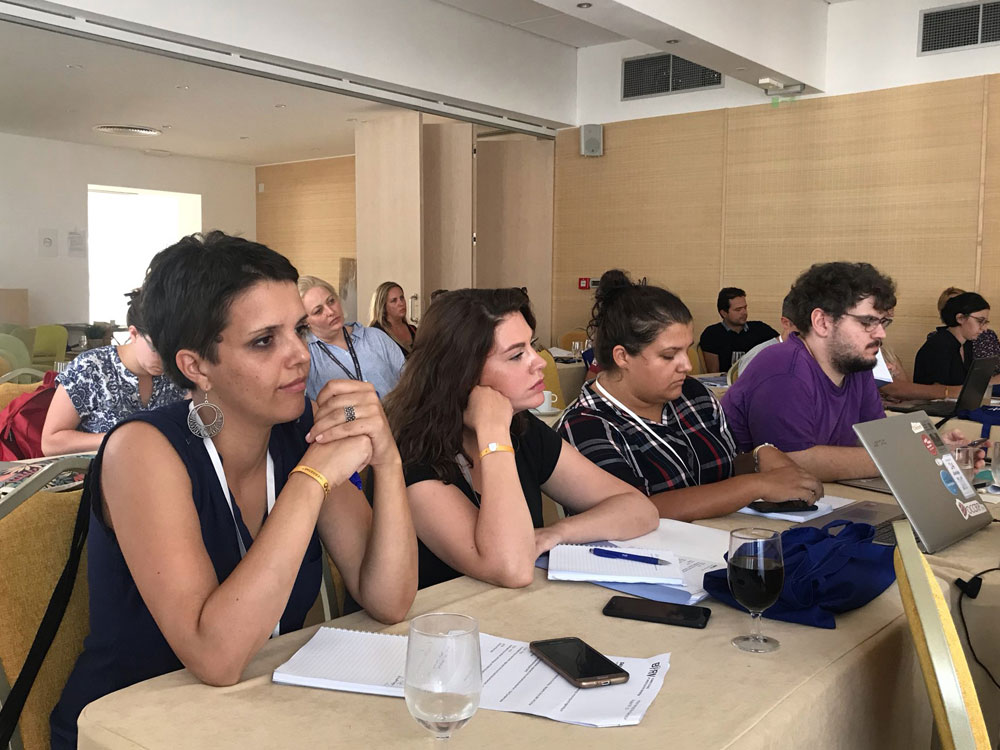
Winners of EU Awards in Turkey Announced

EU Awards for investigative journalism for Turkey were presented on Wednesday at the Press House of the Association of Journalists in the Turkish capital, Ankara.

First prize in this year’s contest for the EU award for investigative journalism was awarded to Hazal Ocak, for her investigative story „Emsalsiz İhanet“ (Unprecedented Betrayal). The story is about corruption in the real estate industry in Turkey. The jury members awarded this the best investigative story, deeming it a product of outstanding and courageous research, which was additionally presented very clearly.

Second prize went to Dinçer Gökçe for his piece “Türkiye’nin Utanç Listesi” (Turkey’s List of Shame) Part 1 & Part 2, about 115 underage girls and the gross negligence of officials in public hospitals. The jury viewed this story as a systematic and massive graft that demonstrated the need for transparency in governance. Not only was it expertly researched, it was also masterly and courageously presented in a manner over which a spotlight was cast on some very serious problems in the country.

Third prize went to Fevzi Kızılkoyun for “20. Katın Sırrı / Otopsiden Çıkan Gerçek” (Secret of the 20th Floor / Truth Revealed by the Autopsy). He was investigating a rape and murder case that might have been otherwise closed as a “suicide”, which was researched by the careful and dedicated journalist, who had little yet important evidence and was confronted with a wall of ignorance. The jury had agreed that this story was very well researched, the follow up was efficiently done, and the whole story was adequately presented.

The jury comprising Yusuf Kanlı, in the capacity of the Head of the jury, and jury members Nursun Erel, and Göksel Bozkurt had the task of evaluating the shortlisted applications.

“It is very unfortunate that investigative journalists are subjected to numerous threats and intimidating circumstances not only in our own country, but around the world. Journalists must keep in mind they are the loyal servants of public interest, and not forget that journalism is considered to be the fourth power of a democracy and is protected by national and international provisions”, said the Head of the jury.

The EU awards will have an overall goal of celebrating and promoting outstanding achievements of investigative journalists from the Western Balkan countries and Turkey, as well as improving visibility of quality investigative journalism in these countries among the general public.

The EU award for investigative journalism is awarded through the EU funded project “Strengthening Quality News and Independent Journalism in the Western Balkans and Turkey” in 2019, 2020, 2021 in EU candidate and potential candidate countries: Albania, Bosnia and Herzegovina, Kosovo, Montenegro, North Macedonia, Serbia and Turkey, for investigative stories published in the period between 2018 and 2020. In total, 63 awards will be presented through a three-year period.

The award in Turkey is coordinated by the Association of Journalists, while the regional consortium is led by Balkan Investigative Regional Reporting Network (BIRN Hub).

Photo: Naz Akman

BIRN Summer School: Pitching Stories and Interviewing Extremists

Day Four in Herceg Novi sees filmmaker Sundermeyer and programmer Bushcek join the line-up.

Pitching, geolocating and interviews with extremists were all on the agenda of Day Four of BIRN’s 2019 Summer School, which saw German ARD filmmaker Olaf Sundermeyer and independent programmer Christo Bushcek share their expertise with participants.

Lead Trainer Blake Morrison of Reuters opened the day with tips on how to pitch investigative stories, including the importance of focus and being able to explain ideas succinctly.

The gathered journalists – from Albania, Bosnia and Herzegovina, Belgium, Bulgaria, Croatia, Greece, Kosovo, Macedonia, Romania, Serbia and the United States – had another chance to practice geolocating using open-source data with investigator Ben Strick of BBC Africa Eye and Bellingcat.

Photo: BIRN

Strick demonstrated how he and his colleagues had identified the soldiers behind civilian killings in Cameroon using maps, satellite images, video footage and official sources.

Sundermeyer, an author, filmmaker and investigative journalist with the German public broadcaster ARD, joined the line-up on Day Four with excerpts from his investigative documentaries and a talk about how to gain access to far-right groups in order to get a full picture of their rise in Germany.

“I respect everybody, every human being, even those who hate me as a journalist,” Sundermeyer said.

Among his tips for successful fieldwork: “A fixer is the most important person for journalists in foreign countries” and “You have to be patient with sources. Pay attention to them, spend time with them but never pay them”.

Photo: BIRN

The last session was reserved for Bushcek, a programmer who works on tools to help investigative journalists.

BIRN’s Summer School is organised in cooperation with the Media Program South East Europe of the Konrad-Adenauer-Stiftung, The Balkan Trust for Democracy and Austrian Development Agency, the operational unit of Austrian Development Cooperation, and with support from the European Union.

BIRN Summer School Day 3: Fact-Checking and Geolocating

BBC Africa Eye investigator Ben Strick and Ivana Jeremic, BIRN editor, joined the line-up of BIRN’s 10th Summer School.

“Fact-checkers are not boring,” BIRN editor Ivana Jeremic told participants on the third day of BIRN’s Summer School of Investigative Journalism in Montenegro on Wednesday. “They are here to make your story better”.

That was just one of the messages from Jeremic’s talk on the importance of fact-checking in journalism.

“Keep track of your activities and data. Question your thesis. Use timelines. Use Excel or Google Sheets. Save all the emails, messages and calls. Fact-checking will make your story even better,” Jeremic told the assembled journalists from Albania, Bosnia and Herzegovina, Belgium, Bulgaria, Croatia, Greece, Kosovo, Macedonia, Romania, Serbia and the United States.

Photo: BIRN

In the second session, Ben Strick, an investigator at BBC Africa Eye and Bellingcat, took participants through the fundamentals of open source data from Strava, Google Maps to Twitter, Instagram, and Facebook.

In an interactive session, reporters had the opportunity to geolocate and chrono-locate various videos and pictures with Strick’s help.

Lead trainer Blake Morrison, Reuters investigative projects editor, discussed the art of the interview.

“Be yourself. Don’t deceive. Don’t get flustered. Ask for help,” he said. “You must be genuinely interested.”

The day ended with a screening of the Bellingcat documentary “Truth in a Post-Truth World”.

BIRN’s Summer School is organised in cooperation with the Media Program South East Europe of the Konrad-Adenauer-Stiftung, The Balkan Trust for Democracy and Austrian Development Agency, the operational unit of Austrian Development Cooperation, and with support from the European Union.

On Day Two of BIRN Summer School, ‘Know Your Story’

US cinematographer Andrew Baker and investigative reporter Dragana Peco joined BIRN’s 10th Summer School in Montenegro.

Day Two of BIRN’s Summer School of Investigative Journalism looked at the importance of proof, how to visualise an investigation for multimedia and methods of tracking offshore companies.

In the Montenegrin coastal town of Herceg Novi, lead trainer Blake Morrison put 30 reporters from the Balkans, Belgium, Hungary and the United States through their paces in trying to prove the stories they were reading were fake.

“Get rid of possible, leave provable,” said Morrison, investigative projects editor at Reuters.

Photo: BIRN

After a short break, the journalists spent three hours with US cinematographer Andrew Baker, who looked at ways to make investigative journalism visual.

“Know your story and follow it. Know your scene”, said Baker. “You have to be flexible, to know to pick up a camera or microphone, even if it is not your job. And always have a sound guy.”

Those attending the weeklong course, the 10th edition of BIRN’s Summer School, also heard from Dragan Peco, an investigative journalist with Serbian KRIK and the international Organised Crime and Corruption Reporting Project, OCCRP, about how to track hidden offshore firms.

BIRN’s Summer School is organised in cooperation with the Media Program South East Europe of the Konrad-Adenauer-Stiftung, The Balkan Trust for Democracy and Austrian Development Agency, the operational unit of Austrian Development Cooperation, and with support from the European Union.

Data Leaks and Ship Tracking: BIRN’s 10th Summer School Begins

Reporters from across the Balkan region and beyond have gathered on the Montenegrin coast for a week of lectures, debates and workshops on the very best practices of investigative journalism.

The 10th edition of the BIRN Summer School of Investigative Journalism kicked off on Monday in the Montenegrin coastal town of Herceg Novi.

The weeklong summer school brings together journalists from Albania, Bosnia and Herzegovina, Belgium, Bulgaria, Croatia, Greece, Kosovo, Macedonia, Romania, Serbia and the United States.

On the first day, after an introduction by Marija Ristic, regional director of the Balkan Investigative Reporting Network, those attending heard from Reuters investigative projects editor and the school’s lead trainer Blake Morrison about how to approach complex investigative stories, pitch ideas and find the right words to craft them.

“Experts aren’t simply meant to be quoted in stories,” Morrison said in one of his tips for those attending.

“The best ones – the most helpful, at least – are the ones who serve as your guide to understanding what you cover. Find a few. Be aware of their biases and treat them with a reporter’s skepticism. Ask them what are you missing. What do they see?”

Suddeutsche Zeitung journalist Frederik Obermaier, who was part of the Panama Papers investigation, spoke about investigating data, verifying leaks and the problems he and his team faced as they trawled though terabytes of data.

“Authenticity, public interest, no conditions, request for comment and known identity of the source, are 5 tips on what to check for when dealing with data leaks,” said Obermaier.

The debate continued during Obermaier’s second session when he looked at the case of the video leak that brought down Austria’s right-wing vice-chancellor, Heinz-Christian Strache, and eventually the country’s coalition government.

After a break, the reporters discussed story proposals and heard from BIRN’s investigative editor, Ivan Angelovski, about how to track ships and planes online.

BIRN’s Summer School is organised in cooperation with the Media Program South East Europe of the Konrad-Adenauer-Stiftung, headed by Hendrik Sittig, The Balkan Trust for Democracy and Austrian Development Agency, the operational unit of Austrian Development Cooperation and with support from the European Union.

Serbeze Haxhiaj

Serbeze Haxhiaj is covering issues related to establishing justice and
facilitating reconciliation after the 1998-1999 Kosovo war. Her
particular focus is on war crimes, human rights issues, rehabilitation of
victims and peace approaches in dealing with conflict and its aftermath.

Serbeze has been working as an investigative journalist and news editor in Kosovo and for international media for 20 years, dealing mainly with the most pressing issues such as corruption, human rights, security issues, religious extremism, terrorism and war crimes.

She is currently an editor at Radio Television of Kosovo and a journalist for the Balkan Investigative Reporting Network (BIRN). She has previously worked for the daily newspapers Rilindja, Zeri, Lajm and Koha Ditore. She was the correspondent in Pristina of the French Courrier des Balkans. Her articles were also published in some of the main newspapers in Europe and recently she had articles published in The Financial Times, Der Standard, Neue Zurcher Zeitung and Al Jazeera.

She also has worked for five years as a researcher for Navanti, an American research and analysis company.

For her reporting on war crimes, organised crime, corruption, human rights and violence against women, Serbeze has been awarded 19 times by various local and international organisations.

Serbeze holds MA in International Law.

She speaks Albanian, English and Serbian.

BIRN Holds Digital Rights and Freedom Monitoring Training

BIRN and Share held a training course from July 22-24 for its newly-selected digital rights monitors from Bosnia and Herzegovina, Croatia, North Macedonia, Serbia and Romania on how to classify and gather data on online attacks and freedom violations.

The training course, held in Perast in Montenegro, introduced the participants to the various categories and types of abuses, manipulations and violations.

The second part of the training course was dedicated to brainstorming with BIRN journalists on upcoming regional in-depth investigations into digital rights and information warfare.

In June, BIRN began cooperation with SHARE Foundation in order to determine who are the main players involved in disinformation and propaganda campaigns in Southern and Eastern Europe.

Share Foundation told the course participants in detail about their expertise and standardised rules for categorising digital violations, while BIRN’s editors presented them with BIRN’s editorial policy and guidelines on journalistic standards to help ensure the quality of future stories.

The monitors learned about the methods used for online attacks, and how to distinguish various types of violations, such as information security breaches, information privacy and personal data breaches, pressures exerted because of statements and activities on the internet and manipulations and propaganda in the digital environment.

The cases collected by the monitors will be filed in a newly-created database which was presented during the training course. Continuous monitoring of digital threats and reporting on digital freedom violations will be carried out in accordance with detailed methodology and guidelines based on SHARE Foundation’s know-how and expertise.

Over a period of one year, the monitors will collect information in order to provide facts about digital violations and also to emphasise the use of technology to highlight social issues in countries that are targeted.

The database will be part of the broader online BIRN Investigative Resource Desk (BIRD) and will contain a description of each case and its corresponding sources.

European Court Probes BIRN Serbian Staffer’s Online Targeting

The European Court of Human Rights has asked the Serbian government to clarify what measures it took to ensure the safety of Sofija Todorovic – who has been subject to an online campaign of nationalist intimidation.

The European Court of Human Rights has asked both the Serbian government and a BIRN staffer, Sofija Todorovic, for more explanation, after she submitted a complaint to it about right-wingers who had targeted her online.

The court called on both sides to submit additional information and clarification by July 5.

Her lawyer called it a milestone. “This is the first time the European Court of Human Rights took into the consideration a case of online persecution in Serbia, defending human rights defenders,” Mihailo Pavlovic, who is representing Todorovic, told BIRN.

He noted that the court had raised the question of whether Serbia had any mechanisms to protect people from being targeted online.

In its letter copied to Todorovic on June 28, the court asked the Serbian government to send additional documents and explain what protective measure it had taken in this case, and whether it had assessed the level of risk to Todorovic’s safety.

It also asked the government to explain under which statutory conditions persons who have been threatened on social networks obtain police protection in Serbia.

Serbian right-wingers launched a concerted campaign against the BIRN project coordinator after she reported on the plight of an ethnic Albanian baker who was being targeted in her hometown.

She then herself became a target, receiving hate speech, insults and threats on social media coupled by attempts to hack her account on Twitter.

Todorovic took the matter to the Serbian police on May 6, and one day later she informed Serbia’s Special Prosecution for Cyber Crime. After submitting several complaints that elicited no reaction, Todorovic’s lawyer, Pavlovic, filed a complaint about the work of the Prosecution to the Court of Appeal.

When the Prosecution still failed to contact her, on June 24, she filed a complaint to the European Court of Human Rights with material.

The coordinated targeting began after Todorovic documented nationalist intimidation of an ethnic Albanian baker in Serbia called Mon Gjuraj. Nationalists first re-posted on Facebook a two-year-old picture of his cousin posing with a hand gesture in the shape of a double-headed eagle, the national symbol of Albanians.

On April 27, nationalists then gathered in front of his bakery in a Belgrade suburb, shouting slogans and playing Serbian nationalist songs. Some stuck posters proclaiming “Kosovo is Serbia” on the bakery windows, and threw a pig’s heads at the bakery – a reference to his being a Muslim. A similar event was organized again on May 4.

During the April 27 events, Todorovic was live tweeting and posting videos of the incidents.

Since then, she has received months of online threats. Right-wingers also posted videos about her, calling her insulting names, mentioning her family and re-posting old pictures that are no longer public.

Calls Open for EU Investigative Journalism Award

Applications are now open for submission of investigative articles from the Western Balkans and Turkey for the annual EU Investigative Journalism Award.

Investigative stories published from January 1 to December 31, 2018, and related to freedom of expression, rule of law, transparency, abuse of power and fundamental rights, corruption and organised crime are welcome to apply.

The award fund in each country in 2019 (for achievements in 2018) is 10,000 EUR. The first prize will be 5,000 EUR, the second 3,000 EUR, and the third will be 2,000 EUR.

Individuals or groups of journalists are eligible to apply in all journalism forms (print, online, radio and TV) published or broadcast in the media in each country in official, minority or international languages.

Articles eligible for submission must appear in print, online, radio and TV media outlets during the 2018 calendar year.

EU Investigative Journalism Awards in the Western Balkans and Turkey aim to celebrate and promote the outstanding achievements of investigative journalists as well as improve the visibility of quality journalism in the Western Balkans and Turkey.

The awards are a continuation of the ongoing regional EU Investigative Journalism Award in the Western Balkans and Turkey and part of the ongoing project ‘Strengthening Quality News and Independent Journalism in the Western Balkans and Turkey’.

The project partners involved all have extensive expertise in the field of media freedom and have been recognised locally and internationally as strong independent media organisations.

The jury for the EU Award comprises media experts, some of them from the project consortia. Others are drawn from the extensive network projects that the consortium members have, such as editors, members of academia and journalists with merits.

Deadline for the submission of application is July 17th, 2019.

The awards will be given annually in all six Western Balkan countries and Turkey.

For more details, contact [email protected]


To download all necessary documents in English click here

To download all necessary documents for Serbia click here

To download all necessary documents for Kosovo click here

To download all necessary documents for Bosnia and Herzegovina click here

To download all necessary documents for Montenegro click here

To download all necessary documents for Macedonia click here

To download all necessary documents for Albania click here

To download all necessary documents for Turkey click here