EU Investigative Journalism Award-Winners Named in Serbia

The three winners of the European Union’s investigative journalism prize in Serbia were announced on Tuesday at the EU Info Centre in Belgrade, with judges praising the work for its high quality.

First prize in this year’s EU awards for investigative journalism in Serbia went to Stevan Dojcinovic and Dragana Peco for their investigation into the connections between senior political figures and criminal clans entitled How Serbia’s Health Minister Helped a Criminal Avoid Trial.

Vladimir Kostic and Dina Djordjevic were awarded second prize for their articles entitled Small hydroelectric power plants: the state and companies connected to Vucic’s best man profit most and From Nigerian scheme to clandestine EPS procurement worth milions.

Third prize went to Milos Stanic for the article Toxic Taps: Arsenic in Water Stirs Cancer Fears.

The jury headed by Bojan Pancevski and including Valerie Hopkins and Predrag Blagojevic said they had a hard task evaluating the shortlisted applications due to their high quality.

“The European Union supports pluralism of media, and therein also investigative journalism as important form of reporting and informing citizens on matters of crucial importance,” said Noora Hayrinen, head of the political section at the EU delegation in Serbia.

All of the awarded journalists in Serbia are alumni of the BIRN programme, Balkan Fellowship for Journalistic Excellence (BFJE).

The EU awards have the overall goal of celebrating and promoting outstanding investigative journalists in the Western Balkans and Turkey, as well as improving the visibility of quality investigative journalism among the public in these countries.

The prize for investigative journalism is awarded through an EU-funded project entitled Strengthening Quality News and Independent Journalism in the Western Balkans and Turkey, and applies to EU candidate and potential candidate countries Albania, Bosnia and Herzegovina, Kosovo, Montenegro, North Macedonia, Serbia and Turkey.

The award in Serbia is coordinated by the BIRN Serbia, while the regional consortium is led by the Balkan Investigative Regional Reporting Network’s BIRN Hub.

EU Investigative Journalism Awards in Montenegro Announced

The top three winners out of nine shortlisted applications received their prizes on Monday at the EU Info Center in Podgorica.

Jovan Nikitovic won first prize in this year’s awards for EU investigative journalism in Montenegro, revealed on Monday.

He won with his series of articles on the disappearance, theft, damage or destruction of 14,475 exhibits in the National Museum and other museums in Montenegro.

The jury, comprising Leila Bicakcic as head, Milica Pesic and Dragoljub Dusko Vukovic, evaluated nine shortlisted applications. “There were many great stories and the best one had to be chosen,” Bicakcic said.

After receiving his award, Nikitovic said his work was far from over. “I was confronted with hundreds of pages of information but also hundreds of hours of conversation with numerous interviewees. This is a series of over 40 article, but new documentation is still coming and the dice are still being assembled,” he said.

Second prize went to Maja Boricic for her piece, “Medical Waste in Montenegro – A lurking menace”, and third prize to Dejan Milovac and Lazar Grdinic, for “Citizens’ donations, or black-funds”.

Milka Tadic Mijovic, president of the Center for Investigative Journalism of Montenegro, CIN-CG, the local coordinator of the EU Award, underlined the importance of investigative journalism in the region. “It is not often that we reward colleagues for their contribution to investigative journalism. This is a very broad and complex project spanning several countries,” she said.

“The reason why the EU supported this project is to encourage Western Balkan journalists to work in investigative journalism, because this is the only way to reach free societies,” said Aivo Orav, Head of the EU Delegation to Montenegro.

Marija Ristic, regional director of BIRN, stressed that the EU Awards were “just one of a series of projects to follow over the next three years that will encourage the production of research stories in Western Balkans and Turkey”.

The awards have the overall goal of celebrating and promoting outstanding investigative journalists in the Western Balkans and Turkey, as well as improving the public visibility of quality investigative journalism in these countries.

The award comes via the EU-funded project, “Strengthening Quality News and Independent Journalism in the Western Balkans and Turkey”. It applies to the EU candidate and potential candidate countries of Albania, Bosnia and Herzegovina, Kosovo, Montenegro, North Macedonia, Serbia and Turkey. It covers investigative stories published between 2018 and 2020. In total, 63 awards will be awarded through the three-year period.

While the award in Montenegro is coordinated by the Center for Investigative Journalism of Montenegro, the regional consortium is led by the Balkan Investigative Regional Reporting Network, BIRN Hub.

Winners of EU Awards in Albania Announced

The three winners of the EU investigative journalism prize in Albania were announced on Monday at the EU Info Center in Tirana.

First prize in this year’s EU awards for investigative journalism in Albania went to Esmeralda Keta and Elisa Gjerani for their investigation into one of the country’s most important topics, the poor condition of hospitals and medical care in Albania, entitled “Premature Baby Deaths Rise in Albania’s Cash-starved Hospitals”.

Second prize went to Endrit Habila for his piece, “The Destruction of Valbona”. Third prize went to Ola Mitre for her investigation, “The Hidden Costs of Free Cardio Surgeries in Private Hospitals”.

The jury comprising Mark Marku, head of the jury, and Petrit Collaku, and Samir Kajosevic said they had a hard task evaluating the shortlisted applications.

Luigi Soreca, Head of the EU Delegation to Albania, said investigative journalism was more important than ever in a political climate where democracy was on the defensive.

“Freedom of speech is declining globally, and support for it is weakening, even in mature democracies,” he said.

“Disinformation clearly undermines quality journalism. Investigative journalist are vital in their contribution towards a free and yet accountable society,” he underlined.

The EU awards have the overall goal of celebrating and promoting outstanding investigative journalists in the Western Balkans and Turkey, as well as improving visibility of quality investigative journalism in these countries among the public.

The prize for investigative journalism is awarded through the EU-funded project, “Strengthening Quality News and Independent Journalism in the Western Balkans and Turkey” and applies to the EU candidate and potential candidate countries of Albania, Bosnia and Herzegovina, Kosovo, Montenegro, North Macedonia, Serbia and Turkey. It is for investigative stories published between 2018 and 2020. In total, 63 awards will be given.

The award in Albania is coordinated by the BIRN Albania while the regional consortium is led by Balkan Investigative Regional Reporting Network, BIRN Hub.

Grants for Journalists, Artists, Historians and Activists

The Balkan Investigative Reporting Network is launching a call for small project proposals on exploring archives of the International Criminal Tribunal for the Former Yugoslavia and local courts in ex-Yugoslav countries that dealt with war crimes cases.

Grants are offered to ten journalists, artists, historians and civil society activists to cover topics related to memorialisation of the courts’ archives in order to promote truth, justice, accountability and other topics related to dealing with the past. The selected grantees will be mentored by BIRN staff during the process.

Eligibility

Journalists, artists, historians and civil society activists willing to dig deeper in the archives of the ICTY and national courts from Bosnia and Herzegovina, Croatia, Kosovo, Montenegro, North Macedonia and Serbia.

Funds

10 grants; €2,000 per grantee.

Projects

Small projects on exploring archives of the ICTY and local courts that dealt with war crimes cases in former Yugoslav countries. Your project can be an investigative story, video/short film, courts’ statistics and data visualisation, publication, exhibition, multimedia project, social media campaign or something else that comes to your mind. In short – anything that will creatively use courts’ archives in order to promote truth, justice and accountability in the Balkans. Through your project, you can explore the questions such as criminal justice, victims’ testimonies, missing persons, reparations, lustration, responsibility as well as the other issues related to transitional justice and dealing with the past.

The project’s aim is to promote and disseminate the archive of the international and local courts, in order to build capacities of target groups to use legacies of courts to fight denial and disinformation among Western Balkan societies, thus increasing their intercultural dialogue and prospects for reconciliation.

The grantees will have around six months to dig deeper and research their ideas, and will also have the opportunity to work with experienced editors and mentors to guide them through the process.

All further information regarding application process can be found in our application guidelines.

Apply

To apply, send the following documents to [email protected] with the subject “Balkan Transitional Justice Programme grant application”:

  • Resume (CV)
  • Letter of motivation
  • Completed application form
  • Link to or copy of example of published work
  • Any other relevant documents

Deadline for sending your application is September 30, 2019. Applications received after the deadline will not be considered.

Download


Application form


Application guidelines


The call is a part of the Shaping and promoting the war crime trial narratives in the Western Balkansproject, financed by the Matra Regional Rule of Law Program.

Winners of EU Awards in North Macedonia Announced

EU Awards for investigative journalism for North Macedonia were awarded on Friday at the Public Room in Skopje.

“Professional journalists are essential for the strength of our democracy, they are watchdogs of democracy. The have to be better protected,” said Samul Zbogar, Head of EU Delegation in Skopje, at the opening of the ceremony. “Today we are celebrating your crucial contribution to society and democracy”.

The jury comprising of Milica Saric, in the capacity of the Head of jury, and jury members Vlado Apostolov and Radka Betcheva had an important task of evaluating the shortlisted applications.

Milica Saric in explanation of the decision said: “We had huge responsibilities in front of us. We have received 20 applications from 23 journalists. Eight of them were shortlisted, and they were selected because they covered important issues for society and democracy development. Three stories that were chosen to win were covering the most important topics.“

She added: “We want to encourage journalists to continue working on the investigations, even though surrounding can be discouraging, but this job is more important than ever. And this prize is celebrating that”.

First prize in this year’s contest for EU award for investigative journalism, was awarded to Snezhana Lupevska Sozen, Miomir Serafinovic and Biljana Nikolovska, for the investigative story Citizens Identity Theft for Criminal Purposes. The jury members awarded this the best investigative story deeming it a product of an outstanding  research.

Second prize went to Saska Cvetkovska for her piece The Secret Players Behind Macedonia’s Fake News Sites.

Third prize went to Kristina Ozimec and Vasko Magleshov for “Scandalous Amounts for MPs’ Travel Expenses”.

The EU awards will have an overall goal of celebrating and promoting outstanding achievements of investigative journalists from the Western Balkan countries and Turkey, as well as improving visibility of quality investigative journalism in these countries among the general public.

The EU award for investigative journalism is awarded through EU funded project “Strengthening Quality News and Independent Journalism in the Western Balkans and Turkey” in 2019, 2020, 2021 in EU candidate and potential candidate countries: Albania, Bosnia and Herzegovina, Kosovo, Montenegro, North Macedonia, Serbia and Turkey, for investigative stories published in the period between 2018 and 2020. In total 63 awards will be awarded through a three-year period.

The award in North Macedonia is coordinated by the Independent Trade Union of Journalists and Media Workers in North Macedonia (SSNM), while the regional consortium is led by Balkan Investigative Regional Reporting Network (BIRN Hub).

Winners of EU Awards in Turkey Announced

EU Awards for investigative journalism for Turkey were presented on Wednesday at the Press House of the Association of Journalists in the Turkish capital, Ankara.

First prize in this year’s contest for the EU award for investigative journalism was awarded to Hazal Ocak, for her investigative story „Emsalsiz İhanet“ (Unprecedented Betrayal). The story is about corruption in the real estate industry in Turkey. The jury members awarded this the best investigative story, deeming it a product of outstanding and courageous research, which was additionally presented very clearly.

Second prize went to Dinçer Gökçe for his piece “Türkiye’nin Utanç Listesi” (Turkey’s List of Shame) Part 1 & Part 2, about 115 underage girls and the gross negligence of officials in public hospitals. The jury viewed this story as a systematic and massive graft that demonstrated the need for transparency in governance. Not only was it expertly researched, it was also masterly and courageously presented in a manner over which a spotlight was cast on some very serious problems in the country.

Third prize went to Fevzi Kızılkoyun for “20. Katın Sırrı / Otopsiden Çıkan Gerçek” (Secret of the 20th Floor / Truth Revealed by the Autopsy). He was investigating a rape and murder case that might have been otherwise closed as a “suicide”, which was researched by the careful and dedicated journalist, who had little yet important evidence and was confronted with a wall of ignorance. The jury had agreed that this story was very well researched, the follow up was efficiently done, and the whole story was adequately presented.

The jury comprising Yusuf Kanlı, in the capacity of the Head of the jury, and jury members Nursun Erel, and Göksel Bozkurt had the task of evaluating the shortlisted applications.

“It is very unfortunate that investigative journalists are subjected to numerous threats and intimidating circumstances not only in our own country, but around the world. Journalists must keep in mind they are the loyal servants of public interest, and not forget that journalism is considered to be the fourth power of a democracy and is protected by national and international provisions”, said the Head of the jury.

The EU awards will have an overall goal of celebrating and promoting outstanding achievements of investigative journalists from the Western Balkan countries and Turkey, as well as improving visibility of quality investigative journalism in these countries among the general public.

The EU award for investigative journalism is awarded through the EU funded project “Strengthening Quality News and Independent Journalism in the Western Balkans and Turkey” in 2019, 2020, 2021 in EU candidate and potential candidate countries: Albania, Bosnia and Herzegovina, Kosovo, Montenegro, North Macedonia, Serbia and Turkey, for investigative stories published in the period between 2018 and 2020. In total, 63 awards will be presented through a three-year period.

The award in Turkey is coordinated by the Association of Journalists, while the regional consortium is led by Balkan Investigative Regional Reporting Network (BIRN Hub).

Photo: Naz Akman

BIRN Summer School: Pitching Stories and Interviewing Extremists

Day Four in Herceg Novi sees filmmaker Sundermeyer and programmer Bushcek join the line-up.

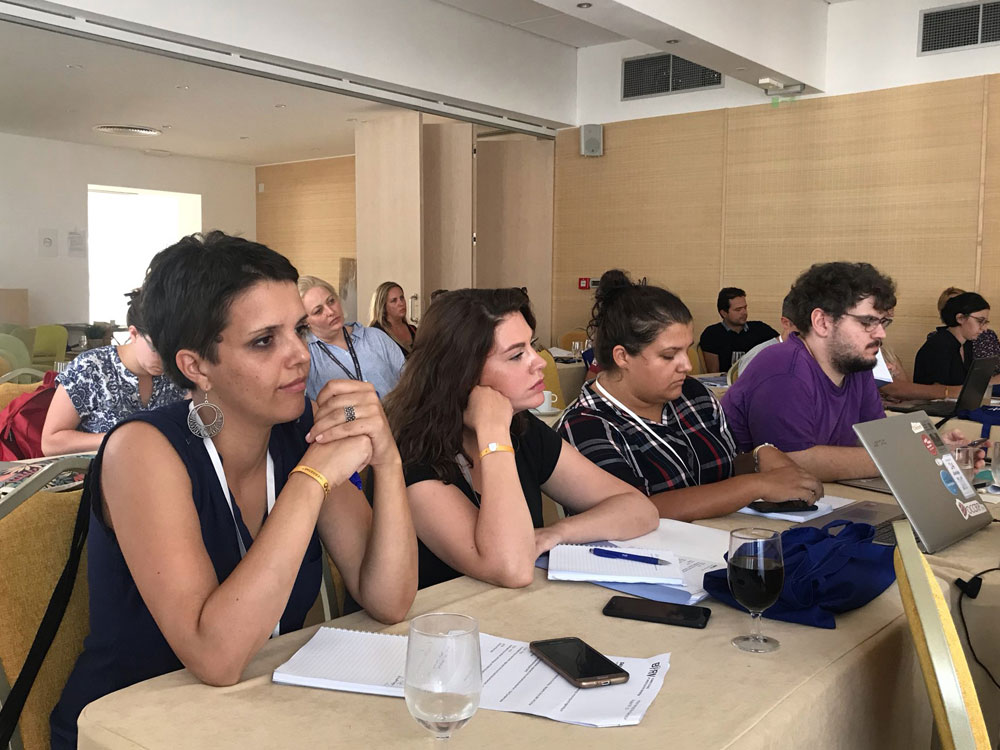
Pitching, geolocating and interviews with extremists were all on the agenda of Day Four of BIRN’s 2019 Summer School, which saw German ARD filmmaker Olaf Sundermeyer and independent programmer Christo Bushcek share their expertise with participants.

Lead Trainer Blake Morrison of Reuters opened the day with tips on how to pitch investigative stories, including the importance of focus and being able to explain ideas succinctly.

The gathered journalists – from Albania, Bosnia and Herzegovina, Belgium, Bulgaria, Croatia, Greece, Kosovo, Macedonia, Romania, Serbia and the United States – had another chance to practice geolocating using open-source data with investigator Ben Strick of BBC Africa Eye and Bellingcat.

Photo: BIRN

Strick demonstrated how he and his colleagues had identified the soldiers behind civilian killings in Cameroon using maps, satellite images, video footage and official sources.

Sundermeyer, an author, filmmaker and investigative journalist with the German public broadcaster ARD, joined the line-up on Day Four with excerpts from his investigative documentaries and a talk about how to gain access to far-right groups in order to get a full picture of their rise in Germany.

“I respect everybody, every human being, even those who hate me as a journalist,” Sundermeyer said.

Among his tips for successful fieldwork: “A fixer is the most important person for journalists in foreign countries” and “You have to be patient with sources. Pay attention to them, spend time with them but never pay them”.

Photo: BIRN

The last session was reserved for Bushcek, a programmer who works on tools to help investigative journalists.

BIRN’s Summer School is organised in cooperation with the Media Program South East Europe of the Konrad-Adenauer-Stiftung, The Balkan Trust for Democracy and Austrian Development Agency, the operational unit of Austrian Development Cooperation, and with support from the European Union.

BIRN Summer School Day 3: Fact-Checking and Geolocating

BBC Africa Eye investigator Ben Strick and Ivana Jeremic, BIRN editor, joined the line-up of BIRN’s 10th Summer School.

“Fact-checkers are not boring,” BIRN editor Ivana Jeremic told participants on the third day of BIRN’s Summer School of Investigative Journalism in Montenegro on Wednesday. “They are here to make your story better”.

That was just one of the messages from Jeremic’s talk on the importance of fact-checking in journalism.

“Keep track of your activities and data. Question your thesis. Use timelines. Use Excel or Google Sheets. Save all the emails, messages and calls. Fact-checking will make your story even better,” Jeremic told the assembled journalists from Albania, Bosnia and Herzegovina, Belgium, Bulgaria, Croatia, Greece, Kosovo, Macedonia, Romania, Serbia and the United States.

Photo: BIRN

In the second session, Ben Strick, an investigator at BBC Africa Eye and Bellingcat, took participants through the fundamentals of open source data from Strava, Google Maps to Twitter, Instagram, and Facebook.

In an interactive session, reporters had the opportunity to geolocate and chrono-locate various videos and pictures with Strick’s help.

Lead trainer Blake Morrison, Reuters investigative projects editor, discussed the art of the interview.

“Be yourself. Don’t deceive. Don’t get flustered. Ask for help,” he said. “You must be genuinely interested.”

The day ended with a screening of the Bellingcat documentary “Truth in a Post-Truth World”.

BIRN’s Summer School is organised in cooperation with the Media Program South East Europe of the Konrad-Adenauer-Stiftung, The Balkan Trust for Democracy and Austrian Development Agency, the operational unit of Austrian Development Cooperation, and with support from the European Union.

On Day Two of BIRN Summer School, ‘Know Your Story’

US cinematographer Andrew Baker and investigative reporter Dragana Peco joined BIRN’s 10th Summer School in Montenegro.

Day Two of BIRN’s Summer School of Investigative Journalism looked at the importance of proof, how to visualise an investigation for multimedia and methods of tracking offshore companies.

In the Montenegrin coastal town of Herceg Novi, lead trainer Blake Morrison put 30 reporters from the Balkans, Belgium, Hungary and the United States through their paces in trying to prove the stories they were reading were fake.

“Get rid of possible, leave provable,” said Morrison, investigative projects editor at Reuters.

Photo: BIRN

After a short break, the journalists spent three hours with US cinematographer Andrew Baker, who looked at ways to make investigative journalism visual.

“Know your story and follow it. Know your scene”, said Baker. “You have to be flexible, to know to pick up a camera or microphone, even if it is not your job. And always have a sound guy.”

Those attending the weeklong course, the 10th edition of BIRN’s Summer School, also heard from Dragan Peco, an investigative journalist with Serbian KRIK and the international Organised Crime and Corruption Reporting Project, OCCRP, about how to track hidden offshore firms.

BIRN’s Summer School is organised in cooperation with the Media Program South East Europe of the Konrad-Adenauer-Stiftung, The Balkan Trust for Democracy and Austrian Development Agency, the operational unit of Austrian Development Cooperation, and with support from the European Union.

Data Leaks and Ship Tracking: BIRN’s 10th Summer School Begins

Reporters from across the Balkan region and beyond have gathered on the Montenegrin coast for a week of lectures, debates and workshops on the very best practices of investigative journalism.

The 10th edition of the BIRN Summer School of Investigative Journalism kicked off on Monday in the Montenegrin coastal town of Herceg Novi.

The weeklong summer school brings together journalists from Albania, Bosnia and Herzegovina, Belgium, Bulgaria, Croatia, Greece, Kosovo, Macedonia, Romania, Serbia and the United States.

On the first day, after an introduction by Marija Ristic, regional director of the Balkan Investigative Reporting Network, those attending heard from Reuters investigative projects editor and the school’s lead trainer Blake Morrison about how to approach complex investigative stories, pitch ideas and find the right words to craft them.

“Experts aren’t simply meant to be quoted in stories,” Morrison said in one of his tips for those attending.

“The best ones – the most helpful, at least – are the ones who serve as your guide to understanding what you cover. Find a few. Be aware of their biases and treat them with a reporter’s skepticism. Ask them what are you missing. What do they see?”

Suddeutsche Zeitung journalist Frederik Obermaier, who was part of the Panama Papers investigation, spoke about investigating data, verifying leaks and the problems he and his team faced as they trawled though terabytes of data.

“Authenticity, public interest, no conditions, request for comment and known identity of the source, are 5 tips on what to check for when dealing with data leaks,” said Obermaier.

The debate continued during Obermaier’s second session when he looked at the case of the video leak that brought down Austria’s right-wing vice-chancellor, Heinz-Christian Strache, and eventually the country’s coalition government.

After a break, the reporters discussed story proposals and heard from BIRN’s investigative editor, Ivan Angelovski, about how to track ships and planes online.

BIRN’s Summer School is organised in cooperation with the Media Program South East Europe of the Konrad-Adenauer-Stiftung, headed by Hendrik Sittig, The Balkan Trust for Democracy and Austrian Development Agency, the operational unit of Austrian Development Cooperation and with support from the European Union.