Call for Applications for Internship Programme

BIRN offers a three-month internship programme for students interested in investigative reporting as part of its Investigative Reporting Initiative. If you are a journalism student looking for an opportunity to learn from highly dedicated journalists and editors, you are welcome to apply for this programme.

Most media receive applications for internships on a rolling basis, but rarely do they have the time and resources to offer a structured programme, so interns usually lack proper training, mentoring and feedback. However, this three-month-long programme should first provide key theoretical foundations, followed by systematic yet very practical investigative work.

Selected candidates will receive online training from experienced journalists at the beginning of the programme and spend the internship working on investigative stories while receiving support to understand and learn about the most relevant procedures.

BIRN offers six paid internship placements for applicants from six Balkan countries: Albania, Bosnia and Herzegovina, Kosovo, Montenegro, North Macedonia, and Serbia. You will work from home or your newsroom.

Who can apply?

Senior year journalism students from Albania, Bosnia and Herzegovina, Kosovo, Montenegro, North Macedonia, and Serbia may apply.

How to apply?

Applicants should complete and submit only one application that is attached to this CfA.

All applications should be submitted in English before April 30, at midnight Central European Time to: [email protected] along with the following documents:

  • Applicant’s CV (in English)
  • Motivation letter (in English)
  • Work sample (in English or local language, school assignments are eligible)
  • Evidence of status (in English or local language)

The motivation letter should show how would you benefit from this programme and your motivation to participate.

Applicants that do not have any published work can submit their student assignments from practical courses in journalism.

Applicants should provide evidence of their current. These evidences include but are not limited to, confirmation of enrolment for the following.

Language:

All applications must be submitted in English, as well as applicants’ CV and motivation letter, while work samples and proof of status may be in local languages.

The program’s working language will be English, so advanced knowledge of the English language is required.

DURATION OF INTERNSHIP: June 15, 2022 – September 15, 2022

ONLINE TRAINING:

CALL FOR APPLICATIONS: Download here

APPLICATION FORM: Download here

DEADLINE: May 15th, 2022 at midnight Central European Time


Open Calls for EU Investigative Journalism Award for 2022

Investigative stories published from January 1 to December 31, 2021, and related to freedom of expression, rule of law, transparency, abuse of power and fundamental rights, corruption and organised crime are welcome to apply.

The award fund in each country in 2022 (for achievements in 2021) is 10,000 EUR. The first prize will be 5,000 EUR, the second 3,000 EUR, and the third will be 2,000 EUR.

Individuals or groups of journalists are eligible to apply in all journalism forms (print, online, radio and TV) published or broadcast in the media in each country in official, minority or international languages.

Articles eligible for submission must appear in print, online, radio and TV media outlets during the 2021 calendar year.

EU Investigative Journalism Awards in the Western Balkans and Turkey aim to celebrate and promote the outstanding achievements of investigative journalists as well as improve the visibility of quality journalism in the Western Balkans and Turkey.

The awards are a continuation of the ongoing regional EU Investigative Journalism Award in the Western Balkans and Turkey and part of the ongoing project ‘Strengthening Quality News and Independent Journalism in the Western Balkans and Turkey’, funded by the European Union.

The project partners involved all have extensive expertise in the field of media freedom and have been recognised locally and internationally as strong independent media organisations.

The jury for the EU Award comprises media experts, some of them from the project consortia. Others are drawn from the extensive network projects that the consortium members have, such as editors, members of academia and journalists with merits.

Please download individual packages below to find more information, including application forms and deadlines for the EU Award for Investigative Journalism in your respective country.

Download documents for Bosnia and Herzegovina


Download documents for Kosovo (in Albanian and Serbian)


Download documents for North Macedonia (in English and Macedonian)


Download documents for Montenegro


Download documents for Serbia


Download documents for Turkey


Download documents for Albania


BIRN Offers Grants to Explore War Crimes Archives

BIRN is offering grants to journalists, artists, historians and activists to create projects based on the archives of the International Criminal Tribunal for the Former Yugoslavia and domestic courts in former Yugoslav countries that held war crimes trials.

The Balkan Investigative Reporting Network has launched a call for proposals for small projects by journalists, artists, historians and civil society activists covering topics related to the archives of the International Criminal Tribunal for the Former Yugoslavia and domestic courts in former Yugoslav countries that dealt with war crimes cases.

In 2019, BIRN awarded 20 journalists, artists and historians with grants of 2,000 euros each to produce small projects based on archives of local and international courts that dealt with war crime cases.

This was an indication that there is a significant interest of various professionals from different fields to research archives and improve memorialisation efforts in the Balkans.

BIRN is now offering this opportunity again, but also wants to enhance its cooperation with artists, researchers, filmmakers, historians and activists in order to develop a network of experts in various fields that will provide a holistic approach to the process of memorialisation.

“The number of war crime trials is significantly declining, and archives remain a resource for the future construction of fact-based narratives about wartime history in the Balkans,” explained programme associate Nejra Mulaomerovic.

“Currently, court archives are often inaccessible to the general public, and their enormous potential remains untapped. We are seeking projects that will creatively use courts’ archives in order to promote truth, justice and accountability in the Balkans,” Mulaomerovic said.

Journalists, artists, historians and civil society activists who want to dig deeper in the archives of the ICTY in The Hague and national courts from Bosnia and Herzegovina, Croatia, Kosovo, Montenegro, North Macedonia and Serbia are eligible to apply.

They are being invited to explore questions such as criminal justice, victims’ testimonies, missing persons, reparations, lustration, responsibility as well as other issues related to transitional justice and dealing with the past.

Further information about the application process can be found here.

The call is a part of the Enhancing Accountability and Memorialisation Processes in the Balkans project, financed by the Matra Regional Rule of Law Programme.

Meet the People Behind BIRN: Albulena Sadiku

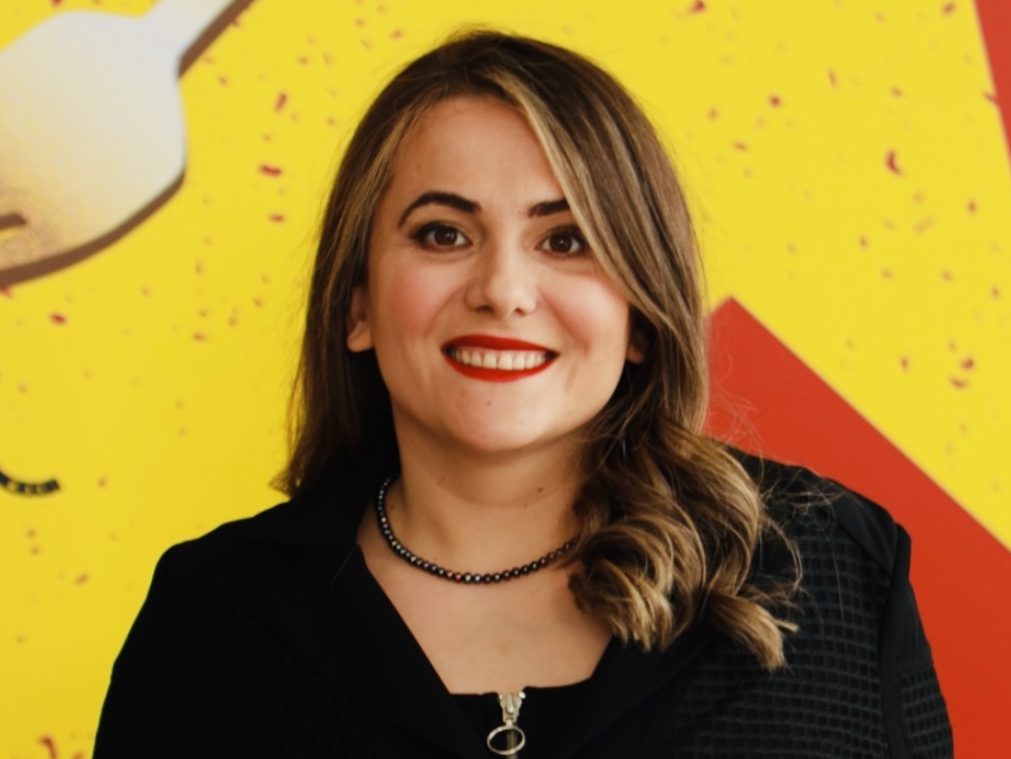
Each month, BIRN introduces you to members of its team. For March, meet, Albulena Sadiku, Deputy Director and Senior Programme Manager at BIRN Kosovo.

Sadiku, 33, is Deputy Director and Senior Programme Manager at BIRN Kosovo. This year, she celebrates her 12th work anniversary at BIRN. BIRN Kosovo is one of the most active partners of the network. Their “small” office has won numerous international prizes and distinctions while promoting democracy and accountability and the fight against corruption.

Sadiku has always been a civil society activist, she says. With her colleagues, they are working together, making a difference and most important, making a mark. Let’s meet her.

  1. When did you start working in BIRN? What do you like most about it?

When I started working with BIRN, the organization was flourishing. People talked about the impact BIRN’s work was having in various spheres, including in the lives of regular Kosovo citizens. Naturally, as a civil society activist with some years of experience in civil society and advocacy, I saw BIRN as an ideal opportunity to maximize my activity and expand the platforms to do so.

This year marks my 12th anniversary since I started working for BIRN. In these 12 years, I have had the pleasure of seeing the organization grow exponentially. I, too, felt I could grow professionally with it and become part of a team whose work is significantly impactful. BIRN has acquired a great level of credibility among Kosovo institutions, prompting the latter to react to BIRN’s findings and act to improve their performance and the lives of regular citizens. The personal satisfaction gained through working with such a great team of people, and witnessing the fruits of our work on the ground, is unparalleled. I am beyond proud to be working with a team of highly professional journalists, who received eight journalism awards in 2021 alone. Our journalists’ work has received recognition from local and international institutions who have awarded them for their stories on public procurement, corruption and the environment. 

  1. When was BIRN Kosovo created? How important is its work in Kosovo?

BIRN Kosovo was established in 2005. Since then, the organization has grown hugely. It now houses a team of over 50 professionals of various backgrounds, including journalists, editors, legal advisers, court monitors, producers, technician operators, finance officers, project managers and coordinators, to name but a few. All these individuals have come together to fulfill BIRN’s mission of ensuring the momentum of democratic transition in Kosovo by promoting accountability, rule of law and political reform. BIRN’s flagship media products, including the online anti-corruption platform KALLXO.com, the television programme KallxoPernime and the fact-checking platform Krypometer/(Truth-o-Meter), enjoy great credibility among the Kosovo public, including public institutions. BIRN’s KALLXO.com was listed as the second most credible source for fighting corruption for over five years in a row, only finishing behind the Police and far ahead of the Prosecution and Anti-Corruption Agency. Furthermore, our team was recognized as a source for reporting corruption by the US State Department 2021 Investment Climate Statement, for the second year in a row.

The results of 16 years of BIRN’s work in advocacy, reporting and watchdog monitoring of public institutions have yielded great and meaningful impacts in Kosovo society.

A total of 1,705 citizens reported on our KALLXO.com anti-corruption platform in 2021 alone. Citizens’ reporting on the injustices they encountered led to the publication of investigations and television programmes that ultimately had an impact in improving the lives of regular citizens. During 2021, BIRN’s work resulted in more than 100 direct short-term and long-term impacts on wider society.

In 2021, BIRN Kosovo’s team of court monitors, legal officers and advisers monitored a total of 388 court hearings and submitted 2,099 legal complaints to relevant public institutions in Kosovo, of which around 970 were requests for access to official documents and requests for access to information. Our legal office also gained – and provided – expertise by participating in more than 45 public discussions, workshops, conferences and meetings.

BIRN Kosovo monitored 14 recruitment processes for senior positions in Kosovo’s public Institutions during 2021, including the Police, Security and the Ministries of Culture and Trade. What is remarkable is the fact that, in the past, BIRN was imposing a process of monitoring recruitment of key management staff on various public institutions in Kosovo; nowadays, it is the institutions themselves that are asking us to monitor their recruitment processes, to ensure that recruitment standards are met and the process is merit-based.

Importantly, during 2021 alone, BIRN delivered over 70 training sessions, workshops and webinars to over 561 participants. They benefited from BIRN’s training expertise on topics such as fake news, fact-checking, the basics of investigative journalism, professional investigative journalism, televised investigations, media ethics, source protection, reporting on terrorism, public speaking, violent extremism and radicalization, environmental issues and effective advocacy.

  1. What has been BIRN Kosovo’s biggest achievement so far and what is its biggest challenge?

BIRN’s impact in improving the lives of thousands of Kosovo citizens through its work in advocating, reporting and watchdog monitoring of public institutions, constitutes its biggest achievement. The wide impact of BIRN’s work would have not have been possible without the initial reports received from citizens through our online anti-corruption platform KALLXO.com.

Due to the type of work we do, our principal challenge is a lack of sustainable funding of our investigative reporting and watchdog monitoring. Furthermore, Kosovo still has weak accountability and reluctantly transparent institutions, and discrimination on the basis of gender, nationality, sex and networks persists. In these circumstances, our biggest practical challenge nowadays is lack of staff to deal with all the citizen reports that we receive. Lastly, we face continuous propaganda whenever our stories expose the powerful elites. This is also a consequence of Kosovo’s media scene being vulnerable to financial influences, as well as to those of other groups, which shrinks the space for independent reporting.

  1. How do you overcome work-related difficulties? What is the secret of BIRN Kosovo’s success? 

The enthusiasm of the people working at BIRN is what keeps the organization going, despite work-related difficulties. Each year we witness a dozen aspiring new journalists starting off their professional journey at BIRN as interns and then steadily growing and establishing their place in our team. It goes without saying that without our families’ support we would not have been able to get this far. This is especially the case for journalists, who are busy reporting from every corner of Kosovo and are often away from their families for long periods. Last but not least, none of the work we do would be possible without our donors, partners, sponsors as well as our supporters, friends and whistleblowers, who have continued to place their trust in us for 16 years.

  1. What are BIRN Kosovo’s next plans and goals?

 BIRN Kosovo will continue to fulfill its mission and uphold the highest journalistic standards in Kosovo. We will keep the public informed through regular and specialized reporting while continuing to exert pressure to increase transparency and accountability in public institutions and advocate for changes to policies and legislation that will better represent citizens’ public interest. Lastly, and this is what I am particularly fond of and excited about, we will continue to deliver training to a wide array of stakeholders, including to local CSOs and media and journalism students, in investigative journalism and fact-checking; we will continue to support journalists through sub-grants, awards and fellowships programmes – and we will keep providing young journalists with  training and internship opportunities at BIRN.


BIRN Holds Training in Digital Security and Surveillance Capitalism

BIRN organized a four-day training in digital rights, “From Personal Security to Surveillance Capitalism”, for journalists, representatives from civil society organizations, CSOs, legal professionals and IT experts, in Herceg Novi, Montenegro.

The comprehensive programme encompassed three modules: personal digital security; reporting on surveillance capitalism; and digital activism with the goal of empowering participants to defend themselves against surveillance capitalism and understand power relations between the public and private sphere.

The first module explained the issues surrounding surveillance capitalism that impact our privacy and security and offered effective ways to combat it.

Domen Savic, from the NGO Državljan D (Citizen D), offered hands-on exercises that the participants can then replicate in their home environment. Participants learned how to harden their personal computers/mobile devices and how to avoid leaving too wide a digital trail online.

The second module focused on developing effective media reporting skills when tackling the issues of surveillance capitalism from a theoretical and practical point of view, focusing on case studies from the region. Participants learned how to investigate surveillance capitalism and worked in groups to decide on the topics they want to cover in their local environment.

During the third module, trainer and participants discussed digital policy development and the role of digital activists and campaigns.

The final sessions encouraged debate and networking, so that participants can develop relationships and ultimately benefit from these synergies to cover surveillance capitalism from a broad perspective.

The training was led by Citizen D, an NGO built whose foundational principle is the inclusive promotion of human and digital rights. Državljan D is highly experienced in providing digital security training for local and regional journalists as well as in giving insights into digital privacy and security issues: from state to corporate surveillance and secure data handling, to app and device usage.


Meet our Fellows: Aleksandra Bogdani

Aleksandra Bogdani, 42, works as an editor at BIRN Albania. In the past she has been deputy editor-in-chief at Albanian daily newspapers MAPO and Shekulli. Aleksandra was a participant in BIRN’s Fellowship for Journalistic Excellence programme in 2012. Her investigation, Secrets and Lies: Victims of Albanian Communism Denied Closure, was about former political prisoners whose quest for truth and compensation has become entangled in Albania’s murky politics.

  • What was your fellowship story about? Why did you choose this as a subject for investigation? 

My fellowship story was about the former political prisoners of Albania’s dictatorship and their longtime struggle for truth and justice. I selected this topic because I wanted to tell their story and the consequences of Albania’s failure to deal with its past.

  • Why are long-form investigations important?

With so much news and information we consume at every moment, it is hard to see most of it as having a long-term value or impact. But some journalism really does last and I strongly believe that quality journalism and long-form investigations really matter.

  • Which story from the fellowship do you like best?

 I have read many great stories through the years, but I can now recall The Great Leap Rightward by Kostas Kalergis.

  • Why would you recommend that someone apply for the fellowship? 

The fellowship helped me to better understand what real journalism is and inspired me to pursue it. I would recommend it to my colleagues for the very same reasons.

BIRN and Erste Foundation is offering 10 fellowships for a 10-month professional development programme, culminating in the production of a compelling longform story.

For more details visit the link


Meet our Fellows: Vlad Odobescu

Vlad Odobescu, 38, is a reporter at Scena9 a cultural magazine based in Bucharest. He won multiple awards and fellowships, including the first prize of the Fellowship for Journalistic Excellence in 2013 for his story “How to get Ahead in Romanian Politics”, which was about Romania’s anti-corruption agency repeatedly convicted politicians – but people kept on bringing them back.

– What was your fellowship story about? Why have you selected this investigation? 

I applied for the fellowship in early 2013, at a time when the Romanian anti-corruption agency was investigating quite a lot of local politicians: mayors, members of parliament, even a former prime minister. The investigations led to many convictions and international praise for this effort at fighting corruption, but that didn’t stop a lot of Romanians from still supporting the officials. At one time I read an article about a protest in Năvodari, a small town on the Black Sea coast, against the arrest of the local mayor, Nicolae Matei, accused in a corruption case. Images showed priests, teachers and children holding placards demanding the mayor’s release. I saw this as a case study on corruption: how power structures are built and how corruption infiltrates communities, deep down. I wanted to go to Navodari and see how that happens.

– Why are long-form investigations /stories important?

This type of journalistic work is essential for understanding complex stories: as a reporter, you need to dive deep into the world you’re about the explore, and that means trying to understand the connections between people, showing a real interest in people’s lives and that you’re not just a visitor who wants to “score” another story. Telling such a story takes time and resources: reading everything that is relevant on the topic, doing dozens of interviews during multiple field research trips, sending information requests and waiting for official answers, all with permanent editorial guidance.

Which fellowship story do you like best and why?

I enjoyed many stories but will only mention one, about the garment industry in Romania and Bulgaria, by Laura Stefanut. It exposed the tough working conditions in which thousands of women in these countries work, an unseen reality for many. This is what the best stories do: they reveal invisible truths about worlds that appear familiar and harmless.

Why would you recommend a colleague to apply for the fellowship?

This fellowship means journalism done right. For me, it was one of the most useful professional experiences I ever had: it fed my appetite for complex stories and taught me how to extract the essentials out of them, in order to tell them properly. As a fellow, you benefit from the guidance of excellent editors and also have the opportunity to learn from great journalists from other countries. And, you’ll have lots of fun doing all of that.

What is your biggest take-away from the fellowship experience?

Among others, this experience taught me how to clarify my purpose for doing the story and define a short working hypothesis. At the same time, it taught me to be ready to adjust when reality (which means field work and interviews) kicks in. This permanent process of adjusting to reality and readiness to tell complex truths is what makes it all worth it, after all.

BIRN and Erste Foundation is offering 10 fellowships for a 10-month professional development programme, culminating in the production of a compelling longform story.

For more details visit the link


Meet our Fellows: Tamara Opačić

Tamara Opačić, 35, is editor-in-chief at Nada magazine and a journalist at Novosti weekly in Zagreb, focusing on human rights, social issues and civil society. In 2017, she took part in the Balkan Fellowship for Journalistic Excellence.

Tamara’s fellowship story was about holocaust denial in Croatia. Today she speaks to us about her investigation and the importance of the long-form stories.

– What was your fellowship story about? Why did you choose this investigation?

My fellowship story was about Holocaust distortion and the impact of that process on society in the EU’s newest member state. Through the investigation, I showed that Croatian police and judicial institutions generally did not respond to various forms of historical revisionism even though they are punishable by domestic law. I chose this topic because in that period, 2016 and 2017, due to the non-reaction of institutions and ignoring the law, hate speech and attacks on various minorities were spreading throughout Croatia.

– Why are long form investigations/stories important?

The long investigation/story is important because it is the only journalistic form through which it is possible to investigate the context of the topic, analyze the whole problem, explore its background and offer possible solutions. A journalistic story cannot be of good quality without all these segments. Unfortunately, due to widespread commercialization, lack of time and resources, such stories are becoming less common in most media. That is why this fellowship is a great opportunity for investigative journalists.

– Which fellowship story do you like best, and why?

Barbara Matejcic’s “Cruel Wars Cast Shadow Over Mixed Marriages” because through an excellent feature she showed how the disaster of war breaks through the everyday life of so-called ordinary people. And, how the citizens of post-conflict areas have been living with the consequences of wars for a long time, even decades after they ended.

– Why would you recommend a colleague to apply for the fellowship?

The BIRN fellowship provides you with all the resources you need for a great story, valuable editorial help, and the opportunity to have your story published in prominent media. It’s a unique opportunity.

– What is your biggest take-away from the fellowship experience?

The experience of working with editors of major international media, networking with a bunch of great journalists, and a lot of traveling.

BIRN and Erste Foundation is offering 10 fellowships for a 10-month professional development programme, culminating in the production of a compelling longform story.

For more details visit the link

Meet the People Behind BIRN: Milica Stojanovic

Each month, BIRN introduces you to a different member of its team. For February, meet Milica Stojanović, journalist at Balkan Insight.

Milica Stojanović, 33, is based in Serbia and has been working as a journalist for Balkan Insight for the last four years. As a child in the 1990s, she remembers the grownups complaining about Yugoslavia’s and Serbia’s then leadership. Her dream then was to ask these people why they are so mean. Her dream did not come true, but she did learn that people who ask questions are called journalists, so she became a journalist and started writing stories among others and about multi-ethnic coexistence in Kosovo and Serbia.

Together with her colleague Serbeze Haxhiaj, in the context of the Peaceful Change Initiative competition, Milica won first prize for their article “Serb Monastery Shelters Kosovo Albanians”, which told of how a Serbian Orthodox Monastery provided shelter for Albanian civilians during the 1998-99 war in Kosovo.

That story is part of Balkan Insight’s new project, called “Solidarity Stories”, presenting stories of human compassion across the ethnic divides during the conflicts in former Yugoslavia.

Let’s meet Milica!

  1. Why did you decide to become a journalist?

When I was little, during the Nineties, the situation in Serbia was quite bad and chaotic looking from a child’s perspective and the grownups were mostly complaining about the Yugoslav and Serbian then leaderships. I wanted to grow up and ask these leaders why they are so mean and why they do not do better for us all. Later, I found out that the people that can ask them such things are called journalists. Later still, in the first years after the political switch in Serbia in 2000, the media scene was quite alive, and I liked the idea of being part of it. Unfortunately, the media scene by the time I started working was already broken, so my childhood wish did not come true, but my current job came out as even better.

  1. What do you like most in your job in Balkan Insight, and what is the most challenging thing?

What I like the most in BI is two things: the scope of topics I can work on and the freedom to do it. When it comes to scope of topics, a big part of my job is working on Balkan Transitional Justice program, one of BIRN and BI trademarks in this region and in Europe. On this program, I cover things like war crimes trials in Serbia but also wartime-related political life problems. Also, I am working on features, analyses and investigations about still unprosecuted war crimes as well as about the lack of responsibility either to prosecute them, or to compensate the victims and/or their families in any way.

Since the war in Ukraine broke out, we were also trying to cover some aspects of that for our audience, where our most important project is Eyewitness Ukraine.

  1. Solidarity Stories is BIRN’s new project, presenting stories of human compassion across the ethnic divides during the conflicts in former Yugoslavia. Tell us more about this project and your contribution.

Among hundreds of BTJ stories about crimes, perpetrators, suffering and lack of responsibility of any kind, Solidarity Stories is different. It is a series of stories about people who were brave and aware enough to help their neighbours and fellow residents, or even people they saw for the first time in their lives, risking their own security and in some cases losing their lives, like Refik Visca, Predrag Dacic or Tomo Buzov.

  1. Together with your colleague Serbeze Haxhiaj you have been awarded for your solidarity story ‘Serb Monastery Shelters Kosovo Albanians’. Tell us more about this story and the award.

Serb Monastery Shelters Kosovo Albanians” is about the Visoki Decani Monastery, near Decani/Decan in Kosovo, which sheltered Albanian families who’d fled their homes before Serbian paramilitaries at the very end of the NATO bombing in June 1999. Although this is the lead of the story, it is really a story about the longer-term efforts of Decani monks to protect endangered civilians in the area, which in different times from the summer of 1998 to the summer of 1999 were Albanians, Serbs and Roma. Shaban Bruqaj and his family were among the families saved in June 1999 and he still remembers Abbot Sava Janjic as person who helped them, so this is also a story about gratitude.

This story, together with another BIRN story, “Serb Saves Albanian Neighbours in Kosovo”, won first prize in the media award competition of Peaceful Change initiative. The ceremony is on March 16.

Serbeze and I have worked jointly on stories basically since I started working for Balkan Insight. For example, we were dealing with problems with opening wartime archives, problems of shielding commanders from Kosovo war atrocity cases in Serbia and still unprosecuted war crimes committed in the Kosovo villages of Meja and Korenica in 1999. We have experience in joint work and it has always been a pleasure.

  1. How difficult or easy is it for a Serbian journalist to report on such a sensitive period and collaborate with a Kosovar journalist?

I am not sure if there is any period in my life that was/is not sensitive when it comes to Serbia and Kosovo, so sensitivity is kind of permanent. Belgrade Balkan Insight’s team works very closely with Pristina Balkan Insight team both on today’s sensitive topics as well as on these from the war.

When it comes to BTJ stories especially, I would not say this is difficult, since I have many resources to do this type of job, and the most important would be editorial support and understanding. I cannot call it easy, either, because reading, watching or listening about people’s suffering, with a frustrating lack of responsibility for that, comes pretty hard.

  1. In the coming weeks, Serbia and Kosovo will attempt to finalize a deal to normalize their relations. Do you believe journalism like yours and Serbeze’s has any impact on how politicians and people think?

When it comes to politicians – and I have to emphasize especially this generation of politicians – I don’t think any journalism itself can impact them. They can be impacted only by the possibility of not being officials anymore, but with such lack of confidence in media these days, I am not sure journalism can contribute there, no matter how high quality it is.

On the other hand, I believe it can impact people. I think people, in general, are good and empathetic and that hate is not something immanent but is adopted due to campaigns via politics, culture and media, which all started years before the war itself. So, when they read something like our Solidarity Stories, I think they can realize our “heroes” do not have to be exceptions. A world in which they are standard is possible.


Call for Applications: From Personal Security to Surveillance Capitalism – Training Programme

BIRN invites journalists, Civil Society Organisation (CSO) representatives, legal professionals and IT experts with an interest in the issues where media and technology intersect to apply for a five-day digital rights capacity-building programme. Applications are welcomed from Albania, Bosnia and Herzegovina, Kosovo, Montenegro, North Macedonia and Serbia.

Over the last decade, journalistic techniques have evolved alongside new developments that require professional and accurate coverage. Meanwhile, disinformation and propaganda proliferate online. Rapid technological change needs professional journalism to respond to these emerging challenges without sacrificing ethics or standards. 

Journalists and media outlets in the region often lack the capacity to cope with the challenges of these new technologies, particularly at the local level. However this is not only a problem for the media: cross-sectional responses are often required. 

With this specific capacity-building programme, based on real-world journalistic workflows, BIRN strives to provide assistance, training and resources to media outlets and civil society groups in the region, in order to boost their capabilities for dealing with complex tech-driven challenges in their working lives.

Our capacity-building programme focuses on two main areas:

  • personal digital security of journalists and NGO workers in the field
  • the political aspect of surveillance capitalism, as seen from the point of view of media and NGO workers.

The programme aims to empower participants to defend themselves against surveillance capitalism and understand power relations between the public and private sphere.

The programme focuses on personal privacy protection and document handling, reporting on issues around surveillance capitalism and finally digital activism and lobbying for policy change. Our wrap-up sessions encourage debate and networking, so that participants can develop relationships and establish connections with media and NGO sector workers, and  ultimately benefit from these synergies to cover surveillance capitalism with a broad perspective. 

The programme is led by Državljan D (Citizen D), an NGO built on the foundational principle of inclusive promotion of human and digital rights. Državljan D is highly experienced in digital security training for local and regional journalists as well as giving insights into digital privacy and security issues: from state to corporate surveillance and secure data handling, to app and device usage. In addition, they provide help and guidance to citizens and journalists looking to improve their digital skills and habits, thereby securing their digital privacy and strengthening their digital security. For more information, see here.

Topics we plan to explore: 

(1st and 2nd of April): Personal digital security: aiming to explain the issues of surveillance capitalism that impact on our privacy and security, to offer effective ways to combat it, and to facilitate hands-on exercises that participants can replicate in their own environments.

(3rd and 4th of April): Reporting on surveillance capitalism: focusing on developing effective media reporting skills when tackling surveillance capitalism issues, from both theoretical and practical points of view, while referencing media reports from the region.

(5th of April): Digital activism: addressing digital policy development, the role and practices of digital activists, including examples from the region and real-world strategies.

Who can apply?

Local journalists, CSO representatives, legal professionals and IT experts interested in media. We welcome anyone who wants to improve their digital skills and habits, protect their digital privacy, and upgrade their digital security, regardless of whether they have extensive knowledge of the area, or merely the enthusiasm to know more. Our applicants are those people who want to get informed, learn methods for safely and confidently reporting on these topics to audiences and communities, and to ultimately use this knowledge to advocate for better solutions.

How to apply?

Applicants should complete and submit the application form attached to this CfA. All applications should be submitted in English to [email protected], along with a CV.

DATE OF TRAINING: April 1st – April 5th, 2022

TRAINING VENUE: TBC

LANGUAGE: The training sessions will be conducted in English, with simultaneous translation into local languages also provided.

DEADLINE: March 15th, midnight, Central European Time

Download the Application Form.