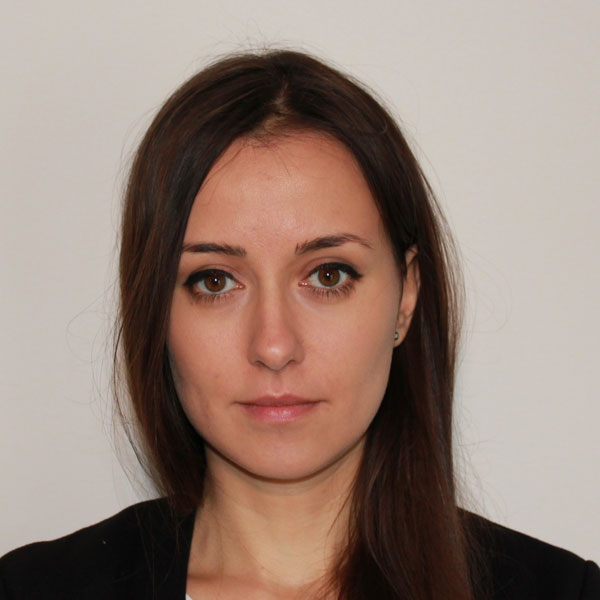
Karla joined BIRN in 2021 to coordinate work of local media outlets in the region who write investigative stories using the Engagement Citizens’ Reporting tool.
Before joining BIRN she wrote for VoxFeminae, and was part of the international affairs newsroom in Jutarnji list, Globus and Euractiv Croatia. Since 2020 she has been based in London as a correspondent.
After studying French and Russian literature at the University of Trieste, Karla decided to continue her Masters in Journalism at the Faculty of political sciences in Zagreb. Besides Croatian, she is fluent in Italian, English and French.
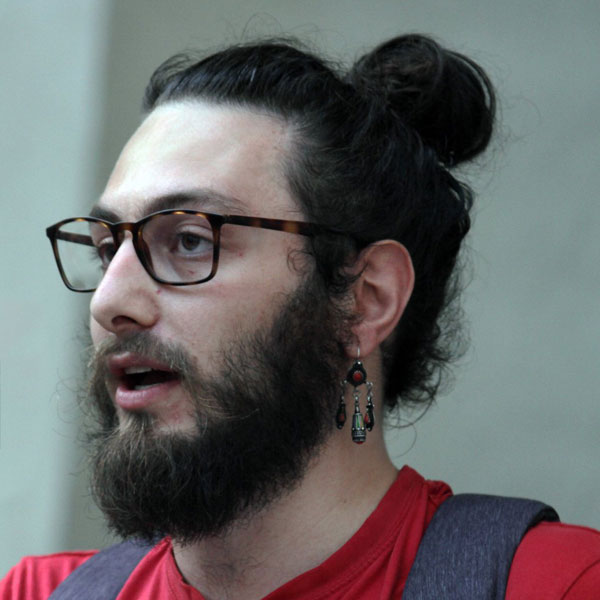
After working in different roles in BIRN from 2013, with some breaks, Milka assumed the role of Regional Director in December 2022.
Prior to that, from October 2021, Milka held the position of Head of Business and lead and oversaw development of both non-profit and for-profit projects, maintaining existing and establish new partnerships.
Milka also worked as a lead researcher designing and implementing one of BIRN’s major regional projects, pioneering engagement journalism in the Balkans. She was in charge of development of the Engaged Citizens Reporting tool, used by more than 50 media in the Southeast Europe.
In addition, Milka has a decade of experience in journalism and fact checking, having worked for the fact-checking portal Istinomer [Trutho-meter], the Center for Investigative Journalism of Serbia and Serbia’s public broadcaster. She previously worked as a journalist and translator for BIRN’s programme Balkan Transitional Justice, as well as a fixer for international media. She participated in the fellowship programme run by the International Factchecking Network, which she spent within the Pulitzer Prize-winning PolitiFact.
Milka was a Chevening scholar and completed an MSc in Marketing and Technology at Goldsmiths, University of London, which helped her improve her research and analytical skills, as well as discover new potential for successful media outreach.
Along with the native BCMS, she speaks English and has basic knowledge of French, Macedonian and German.
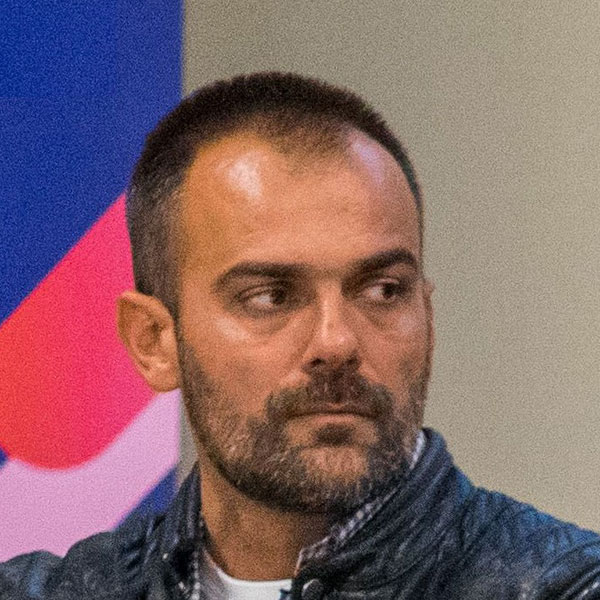
Based in Sarajevo, Tommaso joined BIRN in 2022. He is part of the Social Media team, taking care of BIRN’s social media channels in English.
Tommaso is a founder of FuoriFuoco, a network of under-25-year-old journalists covering Lake Como in Italy. He worked for five years as a journalist for “il Settimanale della Diocesi di Como”, a local weekly mostly covering environmental, educational and civil society-related topics.
Tommaso holds a Bachelor degree in political science from Università degli Studi di Milano. He speaks Italian, English, Norwegian and just a bit of Bosnian.
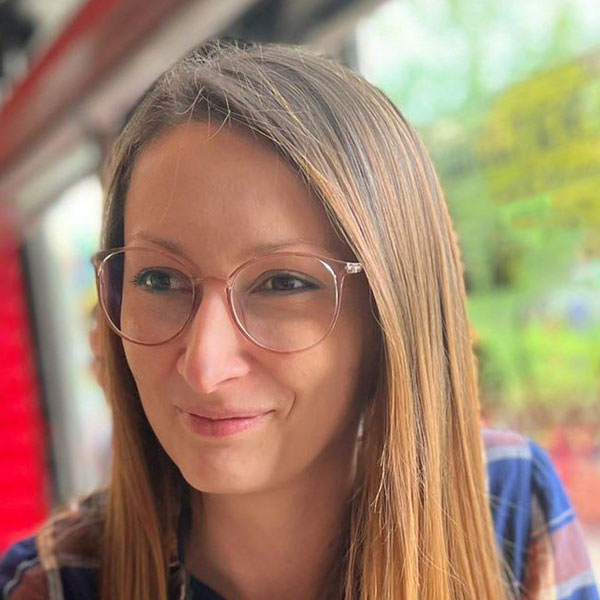
Fjori joined Balkan Insight in February 2021 as a correspondent in Albania. She is based in Tirana and responsible for daily news as well as in-depth stories and analysis.
Previously, she worked for a local media outlet in Albania focusing on investigations and human rights. She was part of Resonant Voice Fellowship in 2020 by BIRN.
Fjori studied journalism at the University of Tirana.
Aida joined BIRN Hub in 2021 as a Project/Programme Assistant. She is currently working as Grants and Project Coordinator, based in BIRN Hub’s office in Sarajevo. Her primary responsibilities entail coordinating and implementing project activities and overseeing and coordinating the grants allocation process.
Before joining BIRN Hub, Aida was a long-term associate of the Sarajevo Open Center, as an author of articles and infographics dealing with the problems and needs that LGBTI people and other marginalized social groups in Bosnia face. She also worked as an author of articles for Balkansmedia.org, which supports media independence and freedom of expression in Bosnia and Herzegovina, Montenegro, Kosovo, North Macedonia, and Serbia. Covering new tools and various techniques that journalists can use in their everyday work, the aim of the articles was to raise the quality of media content and build the competencies of journalists.
Aida gained diverse experience in several non-governmental organizations, working on cultural and creative industries projects, strengthening local self-government, and projects related to culture and art. For two-and-a-half years, she worked in Gallery 11/07/95 as a curator, where she had an opportunity to professionally explore and enhance the possibilities of museums’ educational function, which is one of her passions.
Aida graduated in Art History and Pedagogy from the Faculty of Philosophy, University of Sarajevo.
In 2023, she obtained the title of Certified New Media Designer, from the ITAcademy, International School for Education and Informatics.
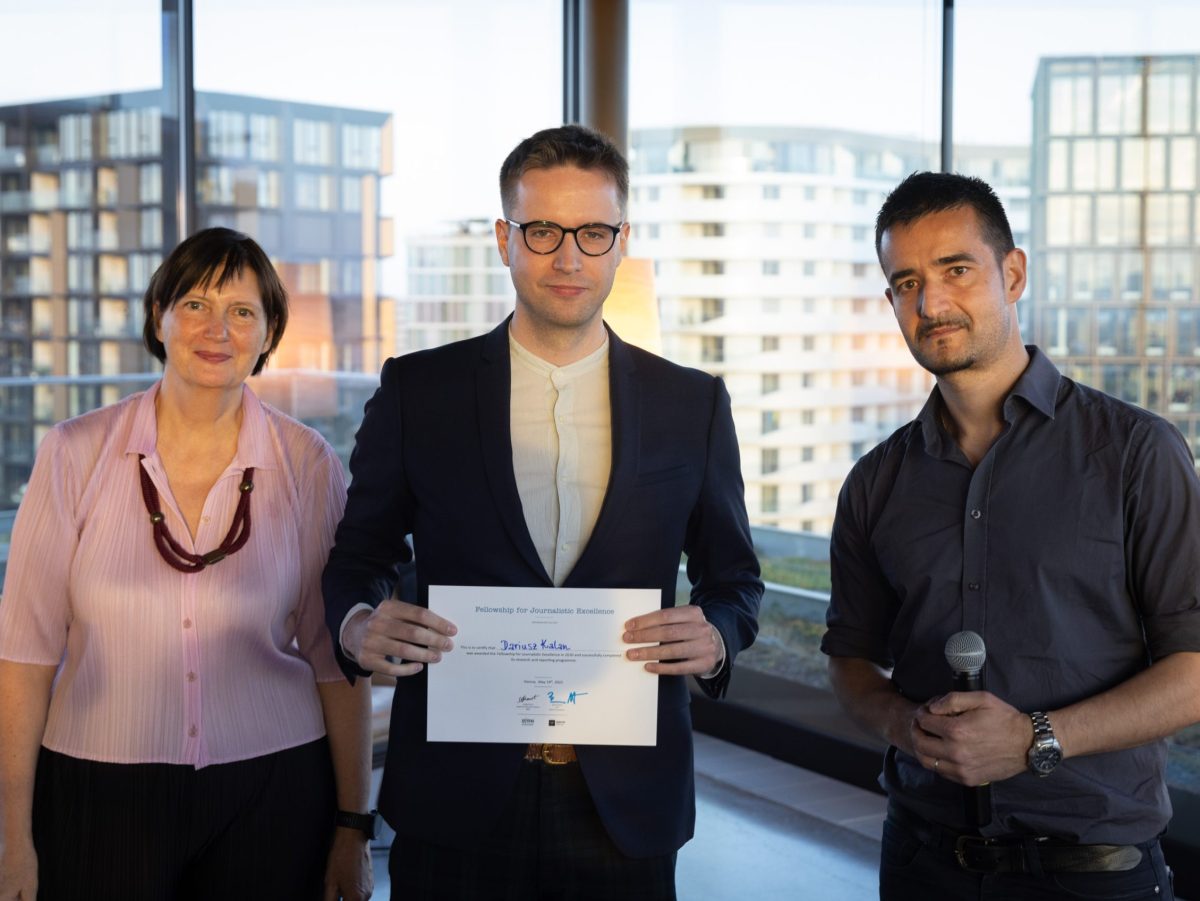
Polish journalist Dariusz Kalan was awarded the first prize for the 2020 Fellowship for Journalistic Excellence, at a ceremony held in Vienna on Thursday. The ceremony – delayed because of the pandemic – celebrated the successful completion of the programme.
Kalan won the award of 3,000 euros for his investigation into the legal process arising from a minor road traffic accident involving the Polish prime ministerial limousine and a Fiat. The court case has dragged on for some five years, exposing a catalogue of incompetence and political interference within the Polish judiciary.
Instead of awarding prizes for second and third place, the jury this year decided to distribute the rest of the award fund between three journalists.
Winners of awards for the best story, Marija Vučić, Klodiana Lala and Dariusz Kalan with Fellowship programme editor Neil Arun (Credits – (c) eSeL.at – Lorenz Seidler)
“We could not decide between the three of them because there are all good stories,” said Milorad Ivanovic, representative of the Fellowship alumni group in the Jury. “Each jury member had its preferences, and strong arguments for each of them. After three rounds of voting they still had an equal number of votes, and we just felt that this was the fair solution.”
As a result, a prize of 1,000 euro was given to Albanian journalist Klodiana Lala, Serbian journalist Marija Vucic, and Greek journalist Iason Athanasiadis.
The top prize was awarded to Kalan for the story, The Car Crash That Bent the Wheels of Polish Justice. Through meticulous reporting, he offered a ground-level view of the erosion of judicial independence in the case of a collision between a Fiat, driven by a student, and the prime minister’s limousine.
“Dariuz Kalan reveals what it means for an individual citizen when judicial checks and balances are undermined – you can become powerless if you clash with the powerful,” said Adelheid Wolfl, South Eastern Europe correspondent for Austrian der Standard. “He shows how important it is that we all look very carefully when the substance of democracy and the rule of is undermined in an EU member state like Poland. The storytelling also had a great rhythm, with an instinctive feel for the language.”
Klodiana Lala, TV crime reporter from Albania, won the price for a clearly written, sensitive and un-sensational treatment of Balkan drug gangs. Her investigation Albanian Crime Story: Hostage to the Cocaine Supply Chain, looks into the gruesome kidnap and murder of a furniture-store owner from Tirana, combining it with a broader picture of the growing cocaine market in Europe.
“Klodiana’s story offers an insight into the operation of Albanian organised crime groups through the tragedy of a family. Her report, based on court documents and interviews, avoids cliches and has a clear style and a logical structure”, said Gyula Csak, a BIRN editor and member of the Fellowship jury.
The jury also singled out Marija Vucic, an investigative reporter for Serbian debunking portal Raskrikavanje, for her story Hate, Lies and Vigilantes: Serbian ‘Anti-Vaxxer’ Brigade Plays With Fire. Her detailed expose of a Serbian far-right Facebook group traces the connection between online bigotry and real-world vigilantism, blending traditional on-the-ground reporting with the forensic debunking of conspiracy theories.
“The special value of Marija Vucic’s research lies in the fact that she not only shows the dangers of fake news, but also identifies and confronts those who are significantly involved in the spread of fake news. The political leaders in Serbia should read Vucic’s excellently researched and composed story and draw their conclusions,” said Elena Panagiotidis, editor of Swiss daily, Neue Zürcher Zeitung.
The prize also went to Greek freelance reporter, Iason Athanasiadis, for the story The Accidental Death of an Anarchist. The story looks at the Greek state’s failure to investigate a police assault on an anarchist and the evolving use of the police to tackle public protests.
“Iason Athanasiadis reported with sensitivity and courage on an extraordinary case of police brutality, the tragic death of a young Greek man, and the complex connection between the two. The reader is drawn into a capturing story about powerlessness and violence in the Greek anarchist milieu”, said Kristof Bender, deputy chairman of the European Stability Initiative.
Ten journalists from across the Central and Eastern Europe were awarded fellowships in 2020, and have completed the program under exceptional circumstances that have affected every aspect of their work. Their stories were published throughout 2021, under the topic, Rule of Law.
In addition to the awarded journalists, the 2020 fellows were Bea Bako (Hungary), Elvira Krithari (Greece), Apostolis Fotiadis (Greece), Jakub Janiszewski (Poland) and Augustine Zenakos and Mariniki Alevizopoulou (Greece).
They were all praised by the jury as exceptionally strong group of authors. “This was a phenomenally capable group of journalists who produced excellent work in exceptionally trying circumstances. While four have won prizes for their stories, plaudits are due to each and every one of them for producing stories that will stand the test of time.”
The jury members were Elena Panagiotidis, editor of Swiss daily Neue Zürcher Zeitung; Florian Hassel, Central and Eastern Europe correspondent for German daily Süddeutsche Zeitung; Remzi Lani, executive director of the Albanian Media Institute; Kristof Bender, deputy chairman of the European Stability Initiative; Milorad Ivanovic, representative of the FJE alumni network, Adelheid Wolfl, correspondent for Austrian daily Der Standard and Gyla Csak, BIRN editor.
With the conclusion of this year’s programme, the 10 fellows join the FJE alumni network, which consists of more than 150 journalists from 14 CEE countries, who promote the highest professional standards.
The Balkan Fellowship for Journalistic Excellence was launched in 2007 to promote high-quality, cross-border reporting. The programme provides fellows with financial and editorial support, allowing them to travel, report and write their stories and develop their journalistic skills. In 2020, the fellowship programme expanded to include journalists from the Visegrad Four countries of Czech Republic, Hungary, Poland and Slovakia.
The Fellowship for Journalistic Excellence is implemented by the Balkan Investigative Reporting Network and supported by ERSTE Foundation.
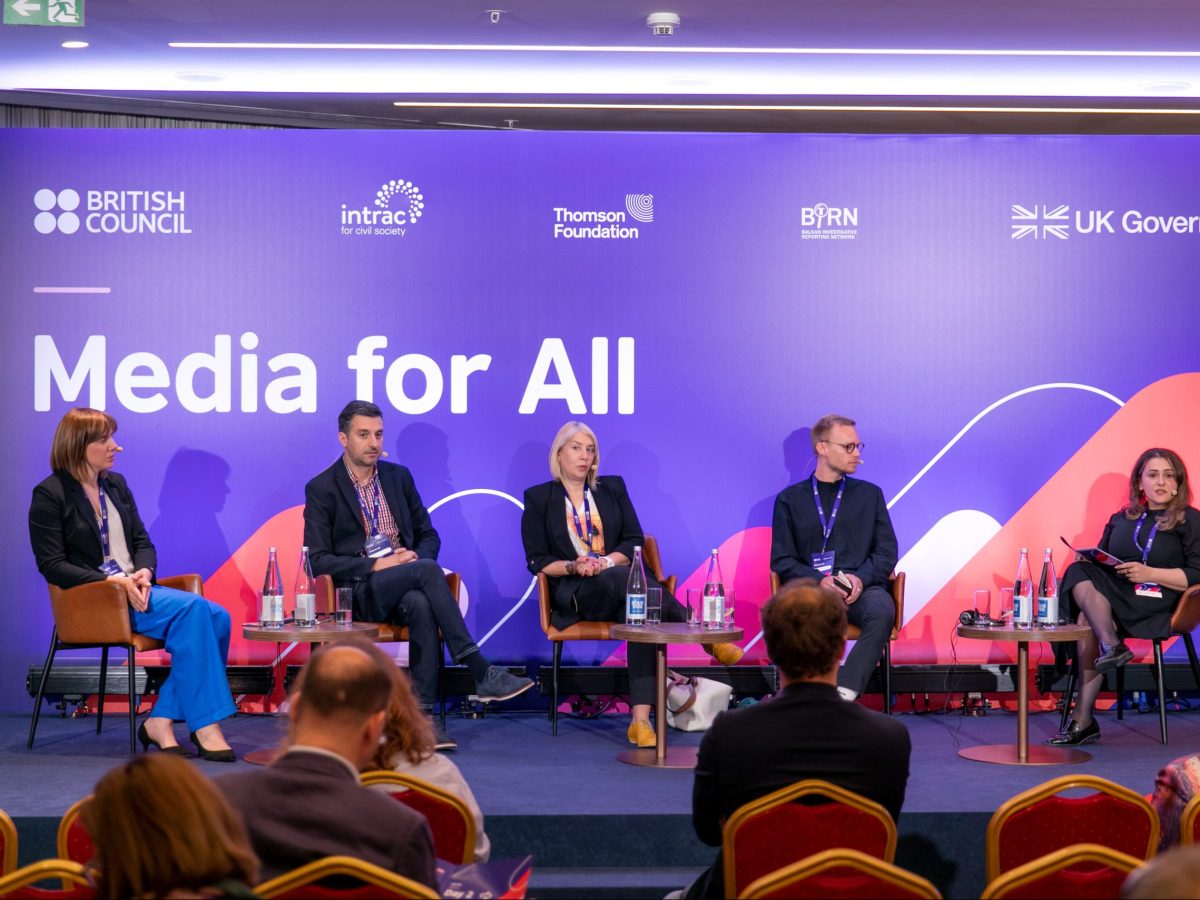
BIRN gathered with grantees, mentors, and partners at the final event in Novi Sad from May 18 to May 19th to share the impact, success stories and lessons learned from the “Media for All” project.
The event was an occasion to meet 51 media outlets that implemented the Engaged Citizens Reporting tool, ECR, which BIRN developed to introduce engagement journalism in the region.
During the two days, participants heard from Aida Ajanovic, BIRN’s Project Manager, about the importance of engaging communities in reporting.
“Today’s audience is a no longer passive recipient or consumer of news and information but an active participant who is asking questions, sharing insights and evidence,” Ajanovic said.
Several panel discussions, sharing success stories from the region and beyond, further emphasised the importance of engagement journalism.
Chris Walter, Head of Communities at On Our Radar, from the UK, a guest speaker, explained their work in engaging communities in reporting.
He talked about their manifesto, which revolves around the idea that people have the right to tell their own stories in their own words and in their own time and that technology is a tool for listening, not just for broadcasting.
Giving an example, he explained how they had trained a network of community reporters in the UK experiencing homelessness to use their mobile phones to track the impact of the COVID-19 pandemic on their lives.
Participants at the conference also heard from the director of BIRN Macedonia and a mentor on this project, Ana Petrusheva, about the challenges that media outlets in North Macedonia had to overcome to successfully implement the ECR tool.
The event was an opportunity for BIRN’s grantees to share impactful examples and meet other project grantees and exchange ideas and spread the word about the benefits they experienced from engaging with their communities.
One significant benefit is the additional leverage for impact in front of relevant institutions. BIRN’s grantees gave numerous examples across the region, ranging from influencing the openness of national institutions to solving different communal problems in the cities where they live.
The “Media for All” project was implemented in six countries in the region: Albania, Bosnia and Herzegovina, Kosovo, North Macedonia, Montenegro and Serbia.
The project is funded by the UK Government and implemented by a consortium led by British Council together with BIRN, Thomson Foundation, and Intrac.
This year’s Fellowship for Journalistic Excellence was launched with ten journalists attending an opening seminar in the Austrian capital. The Fellows were chosen from almost 100 applicants from the 14 countries covered by the programme.
This year’s Fellows are:
Ornela Liperi, an editor from Albania working for Monitor Magazine, specialising in data and financial journalism projects
Gaby Khazalova, a reporter and editor working for Referendum Daily from Brno, Czech Republic, specialising in cross-border collaborations
Andriana Theochari, a Greek journalist and documentary-maker working for Global Girl Media
Leart Hoxha, editor, author and TV presenter hosting a current affairs show on Kosovo-based ATV station
Jelena Jovanovic, senior investigative journalist, specialising in crime and corruption, with the Montenegrin daily Vijesti
David Ilieski, a journalist working for Investigative Reporting Lab, a partner media of OCCRP from Skopje, North Macedonia
Julia Alekseeva, a Belarusian journalist currently based in Poland and working for Outriders
Tadeusz Michrowski, a freelance Polish journalist and features writer
Andrei Popoviciu, a freelance investigative journalist from Romania, covering human rights, foreign affairs and conflict with international media including the UK Guardian, Al Jazeera, VICE, Lighthouse Reports and France’s Liberation.
Ilie Gulca, a Moldovan investigative journalist and editor, working for the Center for Investigative Journalism
Jovanovic, from Montenegro, said her place on the Fellowship was a reward for persistence. “I tried for the Fellowship on several previous occasions, and have been determined to win a place since the first rejection,” she said. Hoxha, from Kosovo, said he was keen to follow his topic in depth and at length. “Producing longform journalism is a welcome contrast to the daily grind of TV work,” he said.
The Fellowship helps journalists produce compelling longform features, analysis and investigations. It highlights strong storytelling and rigorous, on-the-ground reporting – qualities traditionally associated with the best magazine journalism.
This year’s fellows will attend a two-day introductory workshop on the craft of longform journalism. The workshop will be delivered by Fellowship editor Neil Arun, and programme manager Dragana Obradovic.
The fellows will receive 3,000-euro grants as well as comprehensive editorial support and mentoring. They will have the opportunity to win further awards for the best three stories, as well as to become a part of BIRN’s alumni group through which they will have access to new opportunities within our growing regional network.
The Fellowship has been running since 2007 in cooperation with the ERSTE Foundation.
If you don’t want to miss our next story, follow us on social media @RDFellowship and @Rept_Democracy and subscribe to our mailing list.
Jelena Veljkovic, 58, has been in journalism for 30 years. She studied political sciences but she didn’t graduate in it, as journalism came into her life. She started her career in this field in 1992 in Belgrade. The political circumstances, caused by the outbreak of war in former Yugoslavia, motivated her to “try her hand at journalism”, as she says. She has won multiple awards for her stories about corruption.
BIRN discusses with Jelena about “impact journalism” and how it depends on well-informed and aware readers who are open to hear a different reality from what mainstream media offer.
Let’s meet her!
1. How did you start your career in journalism?
I started working in journalism in 1992 and gained my first experience on the morning program of the Belgrade radio and television station, Studio B. I soon joined the newsroom, where I edited and hosted the primetime news program, both on television and radio. At the time of the outbreak of war in the former Yugoslavia, Studio B was, along with Radio B92, one of the few free media that strongly opposed the destruction brought by war and the autocratic regime of Slobodan Milosevic. These difficult political circumstances in the region and in Serbia motivated me to try my hand at journalism.
2. When did you join BIRN Serbia? Which are your favorite subjects and what is the most challenging thing in your job?
I joined BIRN in February 2015. BIRN seemed to be the place that will allow me to devote myself fully to investigative journalism. And I was right. I mostly investigate cases of corruption and organized crime because, unfortunately, I live in a country that is captured by corruption, where the system is based on corruption, making it a topic that cannot be avoided.
Each story carries a multitude of different challenges, but the biggest one is finding accurate, verified, official information, since the state institutions are completely closed to the independent media.
3. Choose one of your favourite pieces published on BIRN Serbia and tell us why you selected it.
In the seven years I’ve worked for BIRN I wrote a large number of pieces and it’s hard to pick just one. As parents say: I love all my children equally! Joking aside, I will single out my most recent investigation, which concerns illegal construction in Belgrade.
In recent years, Serbia has turned into a large illegal construction site. Building facilities illegally and then subsequently legalizing them has become one of the most lucrative corruption vehicles for local political figures and related entrepreneurs, associates, friends, and relatives. The most visible consequences are in Belgrade, which is the largest illegal construction site in Serbia. Devastated by corruption, lawlessness, and chaotic urbanization, Belgrade has lost its identity, and Belgraders have lost their city. The beautiful facades of old buildings are ruined, many are perishing, historical heritage is disappearing, as are green spaces, access to the river, clean air, the pavements, parks, peace, legal security, safety… all the things that most immediately affect people’s lives. That is why it is important to write about this problem persistently.
4. You were nominated for the Dejan Anastasijevic award and for the EU award for investigative journalism. Tell us more about these two awards. What makes an investigation worthy of being awarded?
On my own, or with my colleagues with whom I worked on stories, I won four awards that bear the name of our distinguished colleague Dejan Anastasijevic, and one EU award – all for investigative journalism. These are important recognitions in the work of a journalist, who thus receives confirmation that he or she did a good job. However, those awards and the growing competition also paint a picture of the state of the country. This year, more than 70 works were submitted for the Dejan Anastasijevic award, and most of them investigated corruption. This shows that, despite great political pressures, we still have good journalists – but also that something is very wrong with the country.
5. You mostly work on investigative stories that leave an impact on society. How difficult or easy is it for journalists to do impact journalism? Does impact journalism need aware readers and citizens?
That is one of the biggest problems – how to reach the broadest possible audience? How do you reach an audience that doesn’t want to hear your arguments because it perceives them as an attack on the “team” they are rooting for? Serbian society is remarkably polarized on all issues, including the media. Most of the population is not ready to listen to argumentation but approaches issues with deep prejudice. Most do not want to receive information that is different from what they want to hear. This is the result of a banalization of politics that reaches the homes of citizens via biased, strictly controlled pro-government media. In that society, you have “fans” and a minority that is willing to hear, learn and make their minds based on that. Changing this state of society is a long-term process. Without free and investigative media, although they are few in Serbia – just like their readers and viewers – the process of transforming into a society that is ready for dialogue would be impossible.