BIRN Albania Presents Its Social Media Research Findings

On July 27th, BIRN Albania held a consultation session with civil society organisations in Tirana, to present the findings of its research on the use of social media by political actors and entities during the campaign for the April 25th parliamentary elections.

The session was attended by two dozen civil society representatives from organisations that monitored the work of Albanian institutions and political parties in the elections.

This was the second presentation session held by BIRN Albania. At an earlier meeting, the findings were shared with experts and officials from Albania’s Central Electoral Commission, CEC.

The event was held as part of the project “Monitoring political discourse in social media during the 2021 parliamentary elections in Albania”, which was supported by the National Democratic Institute.

This project aims to contribute towards a more transparent social media space, so that citizens have increased access to a range of views and opinions during elections campaigns in order for them to make informed decisions.

To achieve this, based on the results on the monitoring of social media networks during the election, in cooperation with civil society and experts, BIRN Albania is identifying a number of recommendations that it believes the CEC should address ahead of the next election.

The findings of the monitoring report were presented by BIRN Albania’s Executive Director, Kristina Voko. They were followed by a discussion and recommendations by civil society representatives present.


BIRN Albania Holds Regional Info Sessions with Civil Society, Journalists

The Balkan Investigative Reporting Network in Albania over the last three weeks held three regional information sessions for civil society activists and journalists on its EU-funded project, “Using Big Data and Multimedia to Boost Quality and Independent Journalism in Albania”, which is co-financed by the European Union and the Swedish government and implemented by BIRN Albania.

Three information sessions were held, on July 22nd, July 28th and July 30th, in Elbasan, Shkodra and Vlora. The sessions, which 50 civil society activists and journalists attended, aimed to introduce local actors to BIRN Albania’s project, which supports journalists to report on the work of public inspectorates.

This project aims to create an enabling environment for Albanian journalists to produce independent content through training, mentoring, technical and financial support, and through close cooperation with civil society, so improving freedom of expression and strengthening media pluralism in Albania.

During the information sessions, BIRN Albania’s editor-in-chief, Besar Likmeta, gave a short overview of the project, while inviting participants to debate possible topics for in-depth data-driven stories, which cover the work of public inspectorates, ranging from environmental crime to fisheries, workers’ safety, mining accidents, consumer rights and public administration reform.

The activists and civil society representatives present at the meetings proposed important topics that journalists could investigate, while also calling for more coverage of their causes and activities from the media.

While underlining the importance of close cooperation between civil society and media, journalists explained that the basic tenets of news value and editorial considerations often conditioned their coverage, while calling on civil society experts to speak with a stronger voice on issues that are critical to the community.

Both parties recognised that, despite the challenges, their professional cooperation was important to address issues to a wider audience that are key to the rights of local communities, marginalized groups and individuals.

BIRN Albania Holds Training Event on Public Inspectorates

On July 7-8 in Tirana, the Balkan Investigative Reporting Network in Albania, BIRN Albania, held a two-day training session on public inspectorates.

The event, which was attended by 20 journalists form all regions of Albania, aimed to strengthen their capacities and knowledge and sharpen their reporting skills on public inspectorates and their legal framework.

The training was hosted by BIRN Albania editors and included lectures from five experts with expertise on the work of inspectorates with a focus on labour rights and unions, market oversight and consumer rights, environmental crime and food safety.

The training was organised as part of the project “Using Big Data and Multimedia to Boost Quality and Independent Journalism in Albania”, co-financed by the European Union and the Swedish government, and implemented by BIRN Albania.

This project aims to create an enabling environment for Albanian journalists to produce independent content through training, mentoring, technical and financial support, and close cooperation with civil society, so improving freedom of expression and strengthening media pluralism in Albania.


BIRN Albania Holds Training on Court and Crime Reporting

On July 9, the Balkan Investigative Reporting Network in Albania, BIRN Albania, held a one-day session training on court and crime reporting.

The event was attended by some 20 journalists from all regions of Albania who work for local and national media outlets, including online portals, newspapers and television stations.

The training was part of the project: “Increased transparency and accountability of the justice system through independent journalism,” funded by the British embassy in Tirana.

This project aims to enhance transparency of justice reform in Albania through monitoring the work of judicial institutions, while strengthening the capacities of local journalists to report and advocate for an open justice system through data-driven journalism and independent reporting.

The training was hosted by BIRN Albania editors and included lectures by two independent experts on the new legal framework and role of the media judge and gender sensitive reporting topics.

During the training, BIRN editors also discussed with reporters the lessons learned from implementation of the project.

Open Call for EU Investigative Journalism Award for 2021 in Albania

Applications are now open for submission of investigative articles from Albania for the annual EU Investigative Journalism Award.

Investigative stories published from January 1 to December 31, 2020, and related to freedom of expression, rule of law, transparency, abuse of power and fundamental rights, corruption and organised crime are welcome to apply.

The award fund in each country in 2021 (for achievements in 2020) is 10,000 EUR. The first prize will be 5,000 EUR, the second 3,000 EUR, and the third will be 2,000 EUR.

Individuals or groups of journalists are eligible to apply in all journalism forms (print, online, radio and TV) published or broadcast in the media in each country in official, minority or international languages.

Articles eligible for submission must appear in print, online, radio and TV media outlets during the 2020 calendar year.

EU Investigative Journalism Awards in the Western Balkans and Turkey aim to celebrate and promote the outstanding achievements of investigative journalists as well as improve the visibility of quality journalism in the Western Balkans and Turkey.

The awards are a continuation of the ongoing regional EU Investigative Journalism Award in the Western Balkans and Turkey and part of the ongoing project ‘Strengthening Quality News and Independent Journalism in the Western Balkans and Turkey’, funded by the European Union.

The project partners involved all have extensive expertise in the field of media freedom and have been recognised locally and internationally as strong independent media organisations.

The jury for the EU Award comprises media experts, some of them from the project consortia. Others are drawn from the extensive network projects that the consortium members have, such as editors, members of academia and journalists with merits.

Deadline for the submission of application for Albanian journalists is July 31st, 2021.

Please download individual package below to find more information about the EU Award for Investigative Journalism in Albania.

Download all necessary documents for Albania in local language click here, here and here.


BIRN Albania Opens Call for Investigations on Justice System

The Balkan Investigative Reporting Network in Albania launched a call for investigative stories on May 17, offering grants for three journalists to produce articles on topics related to justice sector.

The call is part of the project “Using Big Data and Multimedia to Boost Quality and Independent Journalism in Albania” supported by the European Union.

The goal of this project is to create an enabling environment for Albanian journalists to produce independent content through training, mentoring, technical and financial support, and close cooperation with civil society, so improving freedom of expression and strengthening media pluralism in Albania.

The call is based on topics suggested by civil society activists and journalists during a joint workshop held on May 10th via online platforms.  The workshop was attended by two dozen civil society activists and journalists, who debated about fundamental rights and the COVID-19 pandemic, justice reform, the fight against corruption and organized crime and electoral crimes during the campaign for Albania’s April 25 parliamentary elections.

The journalists will have around three months to dig deeper and research their ideas, and will also have the opportunity to work with experienced editors as mentors to guide them through the process of writing in accordance with BIRN standards.

The call only applies to journalists from Albania and closes on May 31.

Click here for more information (in Albanian) about the application procedure.

Click here to download the application form (in Albanian).


BIRN Albania Holds Roundtable on Justice Topics to Investigate

On National Justice Day, May 10, the Balkan Investigative Reporting Network, BIRN, in Albania, held a roundtable on Zoom between journalists and civil society organisations

Two dozen journalists and representatives of civil society organisations attended the session where participants brainstormed on the theme of the upcoming call for investigative stories on the justice system that BIRN Albania is launching, sharing insights and building bridges between the reporters and civil society experts.

Discussion focused on fundamental rights and the COVID-19 pandemic, justice reform, the fight against corruption and organised crime and electoral crimes during the campaign for Albania’s April 25 parliamentary elections.

The main aim was to identify the most important issues or problems that civil society believes investigative journalists should explore in greater depth.

The discussion, moderated by TV anchor and lawyer Dafina Hysa, was organised as part of the EU-funded project, “Using Big Data and Multimedia to Boost Quality and Independent Journalism in Albania”.

The project aims to create an enabling environment for Albanian journalists to produce independent content through training, mentoring, technical and financial support, and close cooperation with civil society, so improving freedom of expression and strengthening media pluralism in Albania.

The findings of the roundtable will guide the main topics of the upcoming open call of BIRN Albania to support three local journalists to produce investigative articles.

The selection of the journalists by an independent jury will be conducted based on their proposed topics of investigation as well as partnership with civil society.

During the process of their investigations, the selected journalists will be supervised and mentored on the use of investigative journalism techniques, while establishing closer cooperation with civil society partners in the field of justice.


BIRN Albania-Supported Journalists Win Investigative Award

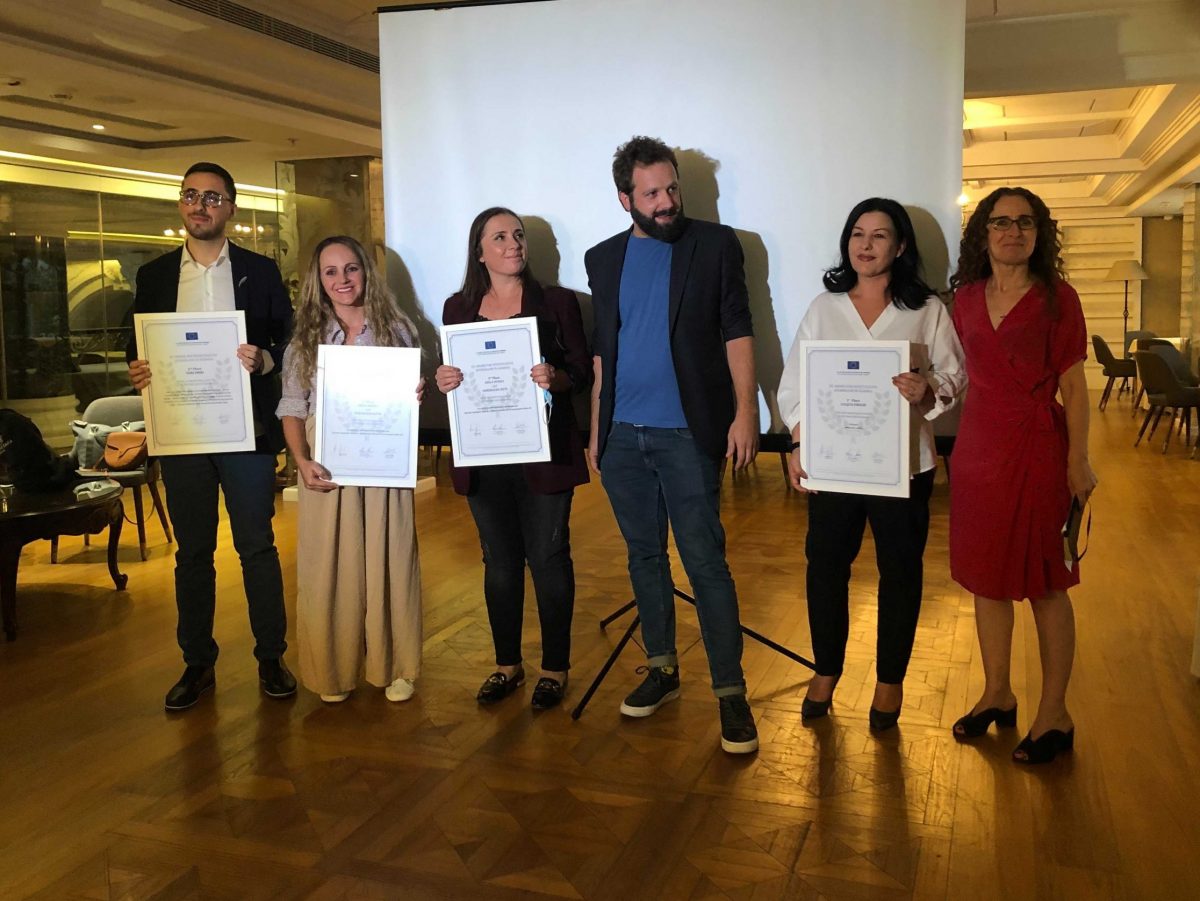
The OSCE Presence in Albania has given Rashela Shehu and Fiori Sinoruka its award for the best investigative story for 2020 for their investigation into the impact of the lack of financing of scientific research on Albania’s public universities.

The OSCE Presence in Albania has given Rashela Shehu and Fiori Sinoruka its award for the best investigative story for 2020 for their investigation into the impact of the lack of financing of scientific research on Albania’s public universities.

The investigation, entitled ‘Lack of Scientific Research Leaves Albania in Ruins’ was published by BIRN Albania’s publication Reporter.al.

The investigation was supported by BIRN Albania as part of an open call for investigative stories, backed by the National Endowment for Democracy.

As well as Shehu and Sinoruka, two other journalists were awarded grants to cover their expenses to conduct investigations and write stories on the education system in Albania.

Fiori Sinokura is a freelance journalist based in Tirana and a former participant in BIRN’s Resonant Voices Fellowship. Rashela Shehu is a television journalist with Albania’s national broadcaster TV Klan.

BIRN Albania Launches New Database on PPP Contracts

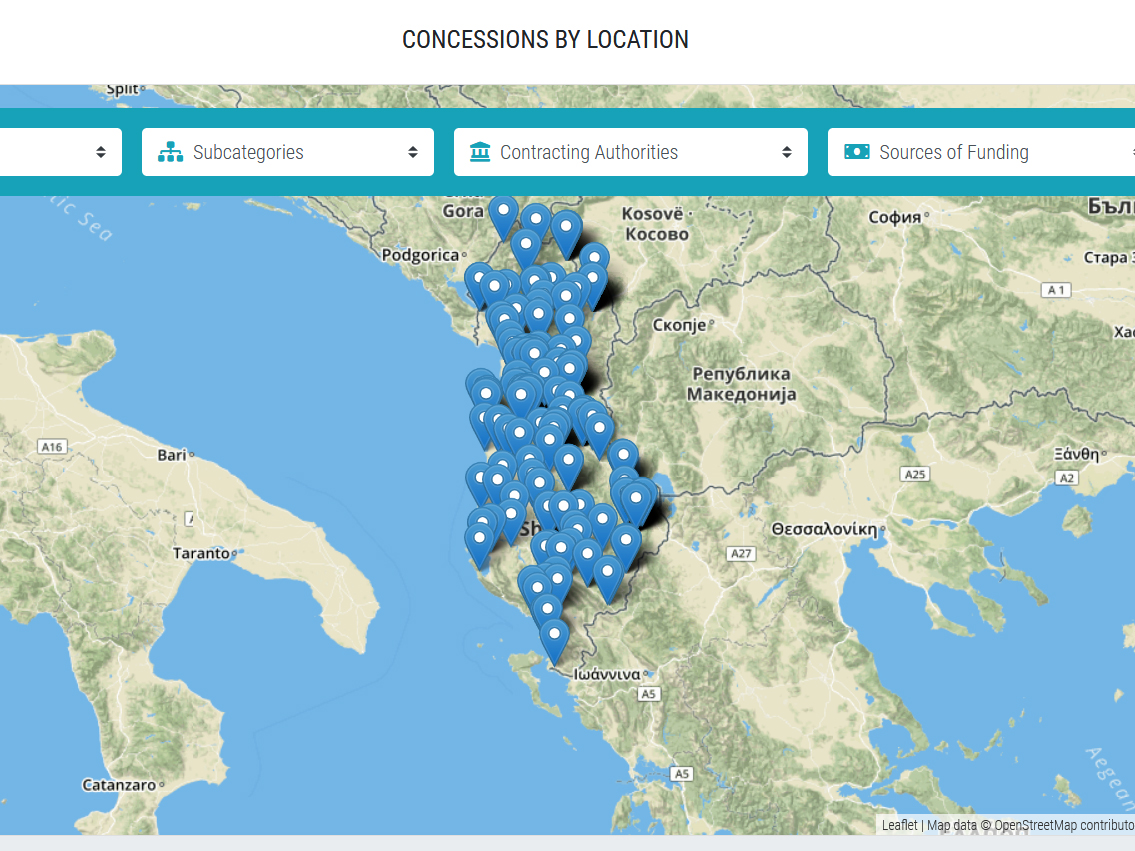
The Balkan Investigative Reporting Network in Albania on December 21st published a comprehensive database on Public Private Partnership Contracts in Albania.

The database contains the records of 220 projects with a total investment value of 4.2 billion euros, as well as hundreds of documents related to concessionary companies.

The database was published as part of the project “Following the Money Trail of Public-Private Partnership Projects in Albania,” supported by the Democracy Commission Small Grants of the US embassy in Albania.

The project’s goal is to support increased transparency on Public-Private Partnerships in Albania through open source databases and data-journalism.

In order to achieve its goal, the project conducted a systematic review of the PPP projects, collecting fiscal data and documents in order to aggregate them in this online database, which will enable journalists, researches and the public to understand and evaluate the true costs and benefits of more than 220 PPPs over the last 15 years.

Through this project BIRN Albania has also raised the capacity of local journalists to analyze and visualize this data in order to inform the public on the hidden costs of PPPs through indepth articles, investigations and videos reports.

The database is accessible online in Albanian and English at: ppp.reporter.al

BIRN Albania and Swedish Embassy Hold Digital Integrity Debate

The Balkan Investigative Reporting Network in Albania, together with the Swedish Embassy in Tirana, organised an online debate on December 11 that brought together together local, regional and international experts to discuss digital rights violations.

The debate was organized as part of Integrity Week in Albania and was addressed by the Swedish ambassador to Tirana, Elsa Hastad.

“Media, meaning you here today, your role is exceptional in promoting transparency and really demanding accountability,” Hastad said.

“I know that during the pandemic journalists have made sure that citizens receive care, or that procurement of medical equipment is done in a proper way and disinformation is met with facts,” she added.

The panel discussion was moderated by Albanian journalist Blendi Salaj and included Michael J. Oghia, Advocacy and Engagement Manager at the Global Forum for Media Freedom, the investigative journalists Driton Salihu and Marja Grill from Swedish Public Television, BIRN project coordinator Sofija Todorovic, BIRN Albania editor Besar Likmeta, civil rights lawyer Megic Reci from CRD and the chairman of the Albania Media Council, Koloreto Cukali.

The panel was joined by 70 participants from civil society and media and was broadcast live on Facebook.

Integrity Week is a week-long series of activities held in December, organised by the Chamber of Commerce in Albania as a national awareness-raising campaign to draw attention to the importance of integrity and to promote ethical behaviour not only in business, but also in governmental bodies and academia and among NGOs.