Teachers in Bosnia’s Tuzla Canton to Use BIRN Database of Facts about War

Minister says best way for school pupils to learn the truth about the 1992-5 war is by using BIRN’s ‘high-quality interactive platform’.

BIRN Bosnia and Herzegovina and the Ministry of Education of Tuzla Canton signed a memorandum of cooperation, which includes the use of the Database of Judicially Established Facts about the War in BiH in the teaching process, as teaching material in history classes.

The MoC was signed in Tuzla on Monday by Denis Dzidic, director of the Balkan Investigative Reporting Network of Bosnia and Herzegovina, BIRN BiH, and cantonal education minister Ahmed Omerovic, who expressed satisfaction that Tuzla Canton was the first canton in Bosnia’s Federation entity to formalize cooperation.

“Following [the signing of] this memorandum, we shall recommend schools to use all data from this high-quality database during the teaching process. Our goal is the truth. Our goal is for schoolchildren to learn the truth and the best way is by using facts judicially established by the International Criminal Tribunal for the former Yugoslavia, which BIRN BiH has done in a high-quality manner through an interactive platform,” Omerovic said.

In late March, BIRN Bosnia and Herzegovina presented the Database of Judicially Established Facts about the War in BiH to teachers, experts and the media in Sarajevo.

The database contains information from all verdicts handed down before the Hague war crimes tribunal concerning crimes committed, video testimonials of survivors and victims tailored to students, as well as class preparation materials containing activities to assist teachers in holding classes about topics from the recent past.

“For two years, we have been working on collecting all judicially established facts and verdicts by the Hague tribunal and we hope that this will be a unique tool which will help educational workers, who are now trying to teach children about what happened during the past war on the basis of facts, not on the basis of certain interpretations, and that this will enable them to do that in a simple manner,” Dzidic said.

He added that, by signing the Memorandum and using the Database in the teaching process, he hoped to encourage an educational system that does not incite hatred.

In late April, the Pedagogical Institute of Tuzla Canton, on the request of the Education Ministry, issued a positive expert opinion about the use of the Database, recommending teachers of the ninth grade of elementary schools, as well as the second and fourth grades of secondary schools, to use it as a tool for processing and preparing topics for history lessons in all schools in Tuzla Canton.

One of the goals of the Database is to create fact-based sources of information that contribute to the fight against disinformation and improvement of media literacy.

Dzidic said BIRN BiH’s next goal was to complement the Database with facts judicially established by the Court of Bosnia and Herzegovina. A similar memorandum would soon be signed with the Education Ministry of Sarajevo Canton.


BIRN Macedonia Holds Digital Rights Training for Journalists

BIRN Macedonia organized a training on Digital Rights for Journalists between June 8-10 in Mavrovo, North Macedonia. The training was designed to shed light on digital rights and equip journalists with skills and tools to cover stories stemming from this increasingly important topic.

Trainers included prominent legal and privacy experts as well as experts for FOIA and senior BIRN journalists. All training sessions were interactive and included numerous examples and exercises. The participants came from various North Macedonian media outlets including Lice v lice, Koha, MRT, Klan TV, Pari and Duma.

The training comprised seven sessions: Introduction to digital rights; privacy and protection of personal data; public interest versus protection of personal data; how to use open databases; how BIRN categorizes and documents violations of digital rights; fact-checking tools and techniques; and misinformation and manipulations on social networks. A separate session was dedicated to a case study about identity theft.

Each session included theoretical and practical elements that provided the participants with a better understanding of the concepts presented. The participants found the training to be highly informative and beneficial and they particularly appreciated the practical nature of the sessions, which allowed them to apply the knowledge gained during the training immediately. They also commended the trainers’ expertise and ability to explain complex concepts in a clear and concise manner.

The training was organized as part of the “Reporting Digital Rights and Freedoms” project, funded by the European Union.


BIRN Serbia Recognised for Journalistic Courage and Investigative Reporting

For only the second time since 2000, an entire newsroom – BIRN Serbia – has been awarded the prestigious Stanislav Stasa Marinkovic Award.

BIRN Serbia newsroom has been awarded the prestigious Stanislav Stasa Marinkovic Award by the daily newspaper Danas for journalistic courage and achievements in investigative and analytical reporting.

In a statement, the jury said BIRN Serbia newsroom said that the team had produced so many important stories over the past 12 months that it was impossible to select just one journalist for the award. Its work confirmed BIRN Serbia’s status “as one of the most influential investigative media in Serbia”, it said.

“BIRN newsroom, led by Dragana Zarkovic Obradovic, has been dedicated to furthering innovative ways of reporting on relevant media investigations, as well as nurturing young people who are just entering the world of journalism and that is why the jury decided that the award should belong to the whole newsroom,” the jury wrote.

It is only the second time since 2000 that an entire newsroom has won the award. The first to do so was N1 television.

Milorad Ivanovic, editor in chief of BIRN Serbia, said that the award holds special importance as recognition of the newsroom’s collective effort.

“Each and every one of our journalists has contributed to the publication of significant investigative pieces that serve the public interest,” said Ivanovic. “We firmly believe that this achievement is a testament to the exceptional teamwork within our organisation.”

The award is bestowed in honour of former Borba editor in chief Stanislav Stasa Marinkovic, one of the pioneers of Serbia’s free press and president of the Journalists’ Association of Serbia between 1983 and 1985.

It was first presented in 1993 by the daily newspaper Borba. Danas took over in 2000.

This year’s jury included 2022 winner Tamara Skroza, Marinkovic’s wife, Dragana, caricaturist Dusan Petricic, political sciences professor Aleksandra Krstic, and Danas representatives Safet Bisevac, Zoran Pavic and Dragoljub Petrovic, who was president of the jury.


Belgrade Mayor’s Chief of Cabinet Sues BIRN for Defamation

Nenad Milanovic filed a defamation lawsuit against BIRN Serbia for publishing an investigation on his negotiations with Turkish company Kentkart – the fourth SLAPP lawsuit it received this year.

Nenad Milanovic, chief of cabinet of Belgrade mayor Aleksandar Sapic, filed a defamation lawsuit against BIRN Serbia before the Higher Court in Belgrade, seeking 200.000 dinars (1,705 euros) in damages for mental anguish.

The lawsuit claims his reputation and honour has been damaged by the BIRN article, “Audios Reveal that Sapic’s Chief of Cabinet Offered to Fix Procurement to Kentkart”. The lawsuit states that the article is “full of absolute falsehoods”, but does not elaborate to explain which information Milanovic believes to be incorrect.

“The news published on website birn.rs was very disturbing to the plaintiff because the incriminating expressions used by the defendant were disparaging and have contributed to the damages for the plaintiff’s honour and reputation, especially in the plaintiff’s work environment, and then in the environment in which the plaintiff lives.

“Namely, the plaintiff is very successful in his job, and the insinuations mentioned in the text can have an extremely negative impact on the plaintiff’s reputation at his work and in the private sphere as well”, reads the lawsuit.

The lawsuit is filed against BIRN Serbia and its editor-in-chief Milorad Ivanovic.

Ivanovic says this is the fourth SLAPP lawsuit this year.

“This is forth SLAPP lawsuit filed against our newsroom this year. These lawsuits are not being filed in honest attempt to receive any kind of justice, but to exhaust journalists and newsroom.

“The lawsuit does not deny any fact we have published in the article. Mental anguish of public officials, their reputation and honour, cannot be above the truth,” said I.

So-called SLAPPs aim to drain the target’s financial and psychological resources and chill critical voices, to the detriment of public participation, according to a report on SLAPP lawsuits in Serbia published in 2022 by Article 19, the American Bar Association Centre for Human Rights and the Independent Journalists’ Association of Serbia, NUNS.

Aleksandar Sapic, the mayor of the Serbian capital, has filed two separate defamation lawsuits against BIRN Serbia, its editor and journalists in March, claiming that their reporting damaged his reputation and caused him mental anguish. He is seeking six million Serbian dinars (around 50,000 euros) in damages in each case – a total of around 100,000 euros.

Predrag Koluvija, who is on trial for alleged illicit marijuana production, in February accused BIRN of incorrectly reporting on one of his court hearings and thus damaging his reputation and causing him mental anguish. He is seeking 200,000 dinars (around 1,700 euros) in damages.

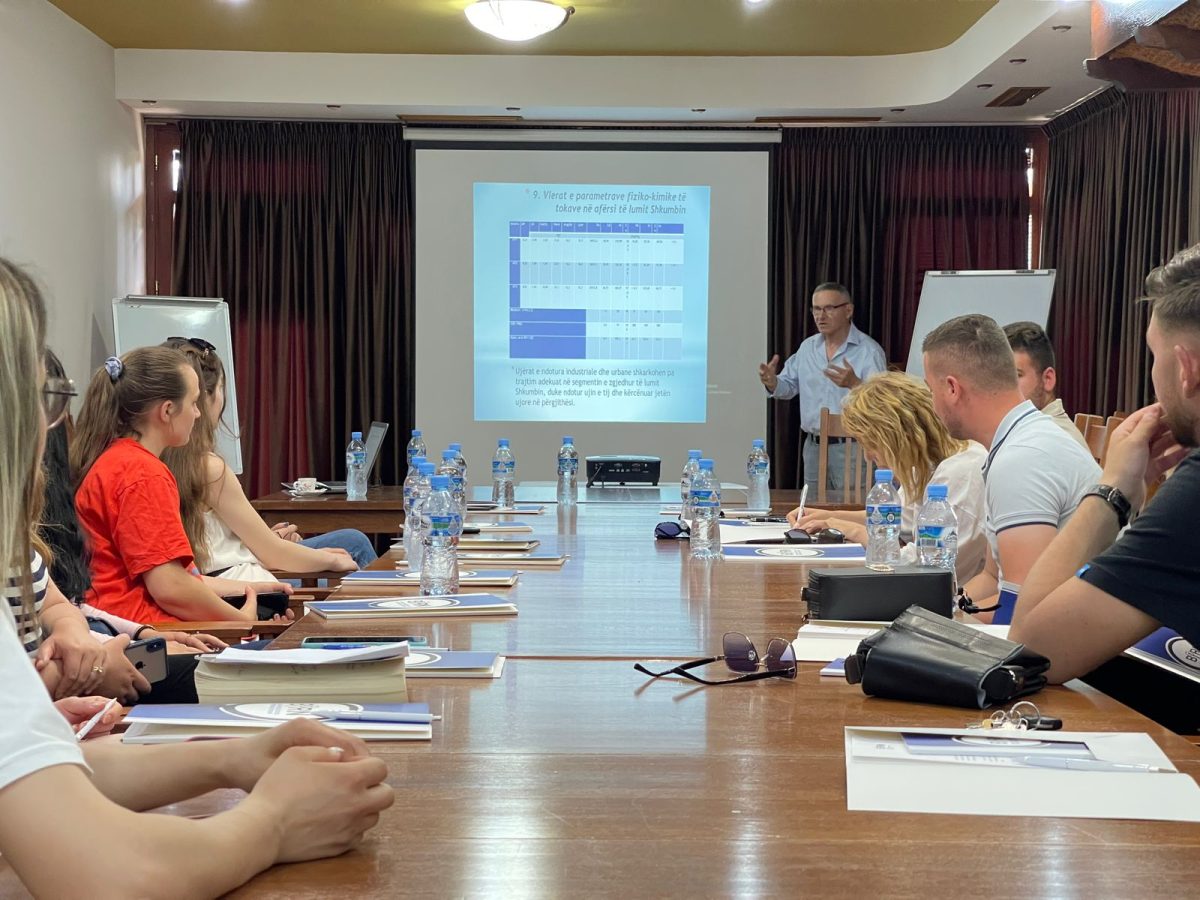
BIRN Holds Training on Environmental Journalism in Northern Albania

The Balkan Investigative Reporting Network in Albania on June 7 held a training on environmental journalism in the city of Shkodra.

BIRN Albania editor-in-chief Besar Likmeta and environmental activist Aurora Piroviq Zylaj, executive director of Well Point, a local environmental organization in Shkodra, led the training on environmental journalism.

The training, attended by 13 local journalists and civil society activists, highlighted the challenges of raising awareness on environmental crimes in the Shkodra area, where a large number of protected areas and important natural ecosystems exist.

Peroviq Zylaj noted the environmental risks to the Shkodra Lake and the river Buna, while underscoring the important role journalists can play in educating the public on such issues.

BIRN Albania’s Likmeta presented the various support mechanism schemes that BIRN Albania has for environmental reporting and stressed the importance of cooperation with civil society activists.

The training was part of the project: “Building Resilience through Environmental Journalism”, which is co-financed by the Democracy Commission Small Grants Program of the US embassy in Tirana, and implemented by BIRN in cooperation with local journalists.


BIRN Kosovo Holds Financial Fraud Reporting Course

The Balkan Network for Investigative Journalism in Kosovo held a training course entitled ‘Illicit Financial Flow and Money Laundering’ on June 1 in Pristina.

The one-day programme brought together nine aspiring journalists and journalism students and provided them with invaluable insights into this complex subject.

The training commenced with a session led by Visar Prebreza, editor at BIRN Kosovo and a certified expert in financial forensics.

Prebreza shared his expertise, guiding the participants through a deep exploration of illegal money flows and the identification of sectors engaged in illicit activities.

The journalists and students gained crucial knowledge about illegal businesses and crucial skills for tracing illegally obtained funds.

The training continued with an opportunity to listen to Murat Mehmeti, the head of investigations in the Tax Administration of Kosovo.

Mehmeti, hailed as one of the first whistleblowers in Kosovo, played an instrumental role in uncovering a significant case of organised tax evasion.

The investigation, which exposed the wrongdoing in a series published by BIRN, exemplified the impact investigative journalism can have on society.

In the final part of the course, participants were tasked with identifying potential research topics related to the illegal flow of money in Kosovo. This exercise fostered critical thinking and helped the attendees to consider how they could contribute to shedding light on hidden financial activities and their consequences for the region.

The training course was part of the project ‘Uncovering Illicit Financial Flows in the Western Balkans’, supported by Deutsche Gesellschaft für Internationale Zusammenarbeit (GIZ).

The project aims to equip aspiring journalists and journalism students with the necessary tools and knowledge to tackle the pressing issue of illicit financial flows as part of attempts to create more transparent and accountable societies in the Western Balkans.


BIRN Albania Holds Training Course on Environmental Journalism

The Balkan Investigative Reporting Network in Albania held a training course on environmental reporting on June 5 in the city of Elbasan.

The course was part of a project entitled Building Resilience through Environmental Journalism, which is being co-financed by the Democracy Commission Small Grants Programme of the US Embassy in Tirana, and implemented by BIRN in cooperation with local journalists.

Eighteen local journalists and correspondents for national media from the Elbasan region and the city of Pogradec participated in the training course, which was led by environmental expert Ahmet Mehmeti and BIRN Albania editor Aleksandra Bogdani.

Mehmeti, who is the executive director of the Elbasan Ecological Club, a local environmental organisation, presented the main environmental challenges facing Albania, focusing on the consequences of climate change in the country, pollution caused by heavy industry as well as problems with the management and treatment of urban waste.

He also gave some practical advice on how journalists can approach environmental issues in cooperation with environmental activists and organisations.

Bogdani introduced techniques of reporting on environmental crimes as well as looking at the crucial role that local journalists have in covering these issues.

Bogdani also explained through practical examples how local journalists can amplify the impact of their stories through cooperation with each other and with civil society organisations.


Applications Open: BIRN Internet Freedom Meet 2023 in Belgrade

BIRN is thrilled to announce that applications are now open for our Belgrade Internet Freedom Meet 2023!

This event, set in Belgrade, Serbia, from June 26-29, brings together some of the top minds in digital rights and internet freedom to explore, learn, and collaborate together. Our program is packed with a series of thought-provoking plenary sessions, engaging roundtable discussions, hands-on workshops, and networking events that aim to empower, educate, and inspire.

What’s on the Agenda?

Our agenda promises a robust blend of plenary sessions, engaging roundtable discussions, practical workshops, and networking opportunities aiming to provoke thought, foster learning, and inspire change.

Each day commences with invigorating plenary sessions featuring renowned speakers who will lead discussions on pressing issues like digital rights and digital activism, internet freedoms, online-to-offline violence, and ethical and regulatory measures around AI. Round discussions follow by opening the floor for an interactive dialogue on subjects ranging from enhancing internet freedom, preventing online extremism consequences, privacy issues, and personal data protection to responsible AI use. 

Moderated by industry trailblazers, these sessions provide opportunities for knowledge sharing and in-depth discussions. Next, our hands-on workshops offer a chance to develop practical skills in crucial areas such as digital rights activism, addressing cyberbullying in journalism, advocating for responsible AI strategies, and more. These sessions are designed to be interactive and provide invaluable networking opportunities.

Why Should You Apply?

The BIRN Internet Freedom Meet in Belgrade is an opportunity to engage with leading experts, gain new insights, and contribute to building a future where the Internet is free, safe, and empowering for all. Whether you’re a digital rights activist, tech enthusiast, academic, journalist, or just a concerned netizen, your voice matters in this critical discourse, and you are welcome to apply.

How to Apply

Applications are now open to the public, but seats are limited. Please complete the following application form by June 15, 2023, at 5 pm CET, to ensure your place at the BIRN Internet Freedom Meet 2023.

Take advantage of this unique opportunity to learn about and influence our digital world. BIRN will cover accommodation and travel expenses for selected participants. We look forward to your applications!

Applications Open for BIRN Summer School in Greece

BIRN Summer School of Investigative Reporting returns this August in Thessaloniki, with a stunning number of award-winning journalists and editors as trainers.

The 13th edition of the Summer School is taking place from August 21 to August 27 in the Greek port city of Thessaloniki. Thirty selected journalists from South East and Central Europe will spend a week mastering their investigative skills and learning from Pulitzer and European Press Prize winners.

During the School, participating journalists will go through the basics of investigative reporting and investigative podcasts with Michael Montgomery, a senior reporter and producer for Reveal; Marija Ristic, award-winning journalist and currently a manager at Amnesty International’s Digital Lab will teach participants how to effectively use OSINT when investigating police attacks; Sam Joiner, who leads the Visual Storytelling Team at Financial Times will explain how his team investigated North Korea’s oil smuggling, also introducing participants to various tools used to track ships; Milica Stojanovic, a BIRN journalist and a digital security trainer, will show participants tips and trick on how to stay safe online while investigating; Olaya Argüeso Perez from Correctiv will speak about data journalism and present some of the Correctiv’s best data-driven stories; the Forbidden Stories team will walk participants through the complex paths of finishing someone else’s investigative work – who could not do it because they either gave their lives for the story or are put behind bars by autocratic leaders; Alison Killing – a Pulitzer Prize winner – will show journalists how to locate notorious camps across China, using innovative online tools and techniques.

Last but not least, and for the first time this year, the School is hosting sessions focused on the mental health of journalists, to be presented by another Pulitzer Prize winner, Mar Cabra.

As every year, BIRN is providing 30 full scholarships for selected participants from the following countries: Albania, Bosnia and Herzegovina, Bulgaria, Croatia, Czech Republic, Greece, Hungary, Kosovo, Moldova, Montenegro, North Macedonia, Ukraine, Poland, Romania, Russia, Serbia, Slovakia and Turkey. This will cover accommodation, meals as well as transportation expenses of up to 200 euros.

Apart from the training, editorial support and mentorship, through our Investigative Initiative Story Fund, BIRN will provide participants with money to support story development and production.

Selected participants will be asked to prepare an investigative story proposal, which they will be working on alone or in a cross-border team during the week. On the last day of the School, a jury composed of BIRN editors will award the best pitches with editorial, financial and publication support.

Limited spots are also available for international participants who need to cover a fee of 800 euros. This includes the training curriculum and full board at the hotel where the Summer School is taking place.

Applications close on June 22, 2023.

Click here to apply!

Fellowship for Journalistic Excellence – Winners Chosen

Polish journalist Maria Wilczek was awarded the first prize in the Fellowship for Journalistic Excellence at a ceremony held in Vienna in May.

Wilczek won the 3,000-euro award for her story about the football ultras from Belarus who were inspired by their nationalist counterparts in Ukraine to rise up against their own Moscow-allied government. Her reporting, centred on a group of exiled hooligans, revealed how violent rivalries were cast aside in opposition to the Lukashenko regime. Announcing the award, Fellowship jury member and executive director of the Albanian Media Institute, Remzi Lani, praised “an elegant and complex story about an unknown game, played away – a tale of resistance against the last dictatorship in Europe.”

Czech journalist Anna Koslerova was awarded the second prize for her story about the Czech state’s failure to compensate thousands of Roma women who had been sterilised against their will. The award was given by the jury member and editor for the Swiss daily, Neue Zürcher Zeitung, Elena Panagiotidis, who praised the story for showing the enduring suffering of the victims and for “giving them a voice, without being voyeuristic”.

The award for the third prize was shared between two journalists: Alexia Kalaitzi from Greece and Matea Grgurinovic from Croatia.

Kalaitzi’s story examined the impact of the war in Ukraine on a decarbonisation drive in Greece’s coal-mining heartland. Jury member Kristof Bender, deputy chairman of the European Stability Initiative, praised the story for taking the reader to “the people and places directly affected by this major economic and social transition” – uncovering a struggle that was “not only very relevant for Greece, but also for all of Europe and, actually, the planet as a whole.”

Grgurinovic’s story examined the failure to re-house the victims of an earthquake in Croatia’s long-neglected interior. Presenting the award, jury member and BIRN editor Gyula Csak said the story showed a depth of human suffering that cannot be revealed by numbers alone. By spending time with her subjects, Grgurinovic had revealed the impact “not just of the earthquake” but of the devastation wrought by war and by official policy after independence.

The ceremony celebrated the successful completion of the 2021 edition of the programme. The stories from the programme were published throughout 2022 under the topic, Transformation.

In addition to the awarded journalists, the 2021 fellows were Mateusz Mazzini (Poland); Eva Kubaniova (Czech Republic); Vojtech Berger (Czech Republic); Mateusz Kowalik (Poland).

Alongside Remzi Lani, Elena Panagiotidis, Kristof Bender and Gyula Csak, the jury was comprised of Milorad Ivanovic, representative of the FJE alumni network; Florian Hassel, Central and Eastern Europe correspondent for German daily Süddeutsche Zeitung; and Adelheid Wolfl, correspondent for Austrian daily Der Standard.

With the conclusion of this year’s programme, the 10 fellows join the FJE alumni network, which consists of more than 150 journalists from 14 CEE countries, who promote the highest professional standards.

The Balkan Fellowship for Journalistic Excellence was launched in 2007 to promote high-quality, cross-border reporting. The programme provides fellows with financial and editorial support, allowing them to travel, report and write their stories and develop their journalistic skills. In 2020, the fellowship programme expanded to include journalists from the Visegrad Four countries of Czech Republic, Hungary, Poland and Slovakia.

The Fellowship for Journalistic Excellence is implemented by the Balkan Investigative Reporting Network and supported by ERSTE Foundation.