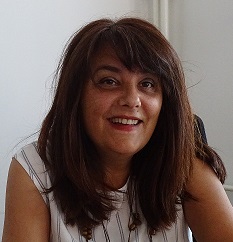
Tamara Chausidis

Tamara Chausidis is experienced editor and media freedom activist.

In 2014, she started to work as an editor for the website Prizma.mk, the main online publication of BIRN Macedonia. Before joining BIRN, she worked as an editor for Macedonian Radio-Radio Skopje, Radio Free Europe and TV ALSAT-M.

Jasna Andonovska

Jasna has worked at BIRN Macedonia since January 2016.

She has extensive experience in civil society in Macedonia. Prior to joining BIRN, she was leading a project for strengthening independent media at the Media Development Centre in Skopje. She has served as member committee president of AIESEC Macedonia and has also worked for DHL in Germany. She holds a BA in Accounting and Auditing from the Faculty of Economics at the Sts. Cyril and Methodius University in Skopje.

BIRN Kosovo Published Annual Public Procurement Monitoring Report

BIRN Kosovo and Internews Kosova published their second annual report on public procurement on June 29th. 

The report, titled “Tenders of Endearment,” includes many important elements that have to do with public expenditures by local and state and institutions in 2015.

The report has eight categories and includes 169 contracting authorities who have developed procedures through procurement.

Through statistics data, BIRN showed which categories spend the most from the state budget, highlighted irregularities during the procedures and cast light on cases that are under investigation.

This report also offers recommendations for relevant institutions in the procurement field and suggestions on how to improve the procurement processes.

The report authors found that the phenomenon of awarding tenders to family members and friends of politicians in power, or of procurement officials is a hallmark of the procurement process.

Shqipe Pantina, a Kosovo opposition MP who is also part of the Finance Commission of the Parliament, said that corruption is increasing in Kosovo because those who were declared guilty have not been punished.

She added that corruption is not just a perception in Kosovo, but this phenomenon has turned into organized crime.
BIRN Kosovo Executive Director Jeta Xharra, said that despite the fact that public opinion is becoming aware of reporting abuse and corruption, the budget is still suffers from dishonourable procurement.

“Public money is one of the ways that people in power get rich but their abuse of public money is becoming intolerable for citizens. The more time passes, the more the citizens’ will to report abuse of public money is growing,” said Xharra.
The General Auditor in Kosovo, Besnik Osmani, said that the institutions that abuse the budget should be punished with a smaller budget the following year.

According to the co-author of the report Florina Ujupi, Kosovo institutions need to work urgently in raising human and technological capacities in the procurement sector and in fostering collaboration between procurement professionals and judges and prosecutors.

In the report there are infographics that show the statistics about the tenders published by the Public Procurement Regulatory Commission (PPRC) in which the pending differences between institutions are made plain.

The report also presents a few monitored court sessions about procurement and analyzes contracts in which the contracting had violated the administrative guideline of PPRC by publishing tenders without a set amount.

This is BIRN’s second annual report on public procurement. Last year’s was titled “Hidden Tenders”.

BIRN Macedonia Trains Albanian-Language Journalists

In a day-long course in Skopje, BIRN’s Jeta Xharra shared her insights into ethics, undercover reporting, how to conduct interviews and manage sources and much more. 

BIRN Macedonia held a journalism training session for a dozen journalists from the local Albanian-language media on June 28 in the Macedonian capital, Skopje.

The training course was designed to boost the skills of journalists from different media outlets, offer insight into BIRN’s standards of reporting and provide opportunities for journalists to expand their knowledge.

Attending were journalists from Skopje and other parts of the country engaged in web portals, national and local TV stations, newspapers and magazines.

Jeta Xharra, BIRN Kosovo director and lead trainer of the course, used case studies drawn from her extensive experience as a journalist and an editor Xharra to give the journalists her insights into how to produce a story on the Balkans, how to use sources and establish trustworthy relations with them, what to do when institutions are not responsive, tips on how to conduct an interview, and more.

The training included an extensive debate on ethics in reporting at which the journalists shared their diverse experiences and knowledge from the country and the region and learned more about ethics and undercover reporting.

This training course was part of the BIRN’s Project for Investigative Journalism and Cooperation between Media and Civil Society, funded by USAID Macedonia.

BIRN Albania Holds Roundtables on Local Government

Eleven roundtables held across the country discussed ways to empower actors for change and increase transparency at municipal level.

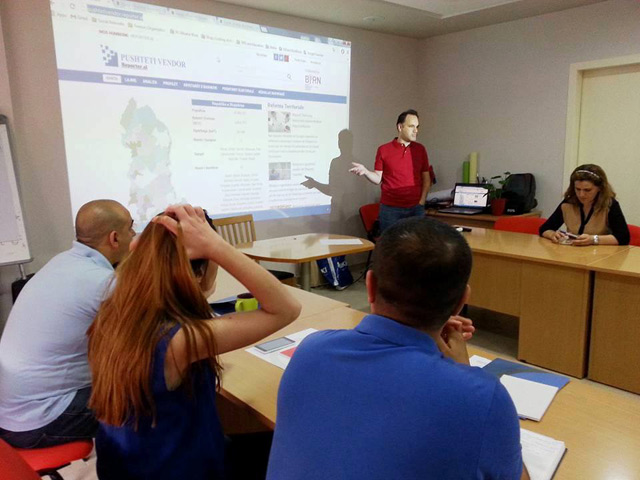
During June BIRN Albania held a series of 11 regional roundtables across the country with civil society activists and community leaders, addressing key issues for local government and discussing ways to empower actors for change in local communities
The regional roundtables were held in the towns and cities of Elbasan, Korce, Berat, Fier, Vlore, Gjirokaster, Kukes, Burrel, Lezhe, Shkoder and Tirana, as part of BIRN Albania’s project, Strengthening the Local Partnership between Media and Civil Society.

The project, funded by Leviz Albania and the Rockefeller Brothers Fund, aims to strengthen the pressure mechanisms of the public on local government institutions and increase transparency, by strengthening cooperation between journalists, civil society groups and grassroots organizations.

The roundtables aimed to identify problems crucial to local communities. They will be used by a network of journalists – trained by BIRN Albania across the country – in order to draw up a list of interview questions for the mayors of Albania’s 61 municipalities.

Apart from carrying out interviews with mayors on issues important to their communities, the journalists will also produce a series of features on actors for change in local communities – in order to empower them through media exposure.

The features and interviews produced as part of the project will be published on BIRN Albania’s special focus page pushtetivendor.reporter.al, which is part of its award winning local publication Reporter.al.

The project, which apart from the BIRN team also involves 11 local journalists, will also produce two monitoring reports on the implementation of the requirements of the Freedom of Information Law by Albania’s local government institutions.

BIRN Albania Seeks Investigations Into Local Government

Three journalists can get grants to cover local government corruption and abuse of power while being mentored by experienced editors.

The Balkan Investigative Reporting Network in Albania launched a call for investigative stories on local government on June 27th.

The call is part of the program “Exposing Corruption in Albania”, while the grants are supported by the Open Society Foundation in Albania.

Three journalists will be awarded grants to cover their expenses while conducting investigations and writing their stories on local government.

The journalists will have some three months to dig deeper and research their ideas, and will also have the opportunity to work with experienced editors as mentors to guide them through the process of writing in accordance with BIRN standards.

The call only applies to journalists from Albania and closes on July 15th.

Click for more information about the application procedure, with details in Albanian.

Thirrje për artikuj investigativë në fushën e Pushtetit Vendor

Thirrja organizohet nga Rrjeti Ballkanik për Gazetarinë Investigative në Shqipëri (BIRN Albania), si pjesë e programit të saj “Zbardhja e Korrupsionit në Shqipëri”, të mbështetur nga Fondacioni Shoqëria e Hapur për Shqipërinë, Balkan Trust for Democracy dhe National Endowment for Democracy.

Nëpërmjet këtij konkursi tre (3) gazetarë investigativë do të përzgjidhen për të prodhuar artikuj investigativë në fushën e pushtetit vendor, në bashkëpunim me shoqërinë civile. Fituesit do të përzgjidhen nga një juri e pavarur e përbërë nga gazetarë me eksperiencë dhe ekspertë në fushën e mirëadministrimit të pushtetit vendor.

Aplikantët e përzgjedhur, të cilët do marrin një bursë prej 1,200 USD (minus taksën të ardhurave personale), do kenë në dispozicion një periudhë tre mujore për të përfunduar investigimin e tyre dhe përgatitjen e artikullit për publikim. Bursat për gazetarët mundësohen nga Fondacioni Shoqëria e Hapur për Shqipërinë.

Kandidatët fitues pritet që të angazhohen dhe të përmbushin të gjitha detyrimet në lidhje me investigimin, siç janë: takimet e shpeshta me redaktorin, publikimin e tekstit në faqen e BIRN Albania www.Reporter.al dhe gjithashtu në www.BalkanInsight.com, si dhe respektimin e standardeve të gazetarisë investigative dhe etikës profesionale.

Kandidatët duhet të formulojnë një propozim të detajuar për konkursin. Propozimet duhet të kenë për qëllim ekspozimin e rasteve konkrete të korrupsionit, pandëshkueshmërisë dhe mungesës së zbatimit të ligjit në pushtetin vendor.

Prioritet në përzgjedhje do i kushtohet propozimeve të cilat përfshijnë një nga temat e mëposhtme, të sygjeruara si prioritare gjatë një tryeze të rrumbullakët midis gazetarëve dhe përfaqësuesve të shoqërisë civile të organizuar nga BIRN Albania:

– Problematikat në riorganizimin dhe ofrimin e shërbimeve të decentralizuara dhe të barabarta ndaj të gjithë qytetarëve të bashkisë, pavarësisht zonës së banimit;
– Mungesë transparence në vendimmarrje, e cila mund të përfshijë mungesë të njoftimeve dhe konsultimeve publike ose moszbardhje të vendimeve nga bashkia ose këshilli bashkiak;
– Favorizim, nepotizëm ose mungesë transparence në marrëdhënie të ndryshme kontraktuale;
– Keqmenaxhim i burimeve natyrore ose aseteve publike;
– Ndryshime jo transparente në administratën lokale ose në emërime;
– Raste korrupsioni ose abuzimi me pushtetin në administratën vendore.

Aplikantët mund të dërgojnë më shumë se një aplikim, por vetëm një propozim për kandidat do të përzgjidhet.
Të drejtën për të aplikuar e kanë të gjithë gazetarët në Shqipëri, të punësuar pranë mediave të tjera apo në profesion të lirë.

Kandidatëve u kërkohet të dërgojnë propozimet e tyre në formularin e aplikimeve (Kliko këtu për formularin), një CV dhe tre shembuj të punës së tyre me email në: [email protected]

Afati i Aplikimit: 15 Korrik, 2016
Kandidatët e përzgjedhur do të njoftohen deri më datë: 25 Korrik, 2016

BIRN Regional Board Meeting Held in Skopje

Directors, board members, partners and donors of the Balkan Investigative Reporting Network, BIRN, met in the Macedonian capital Skopje on June 18-20 for the network’s latest regional Board meeting.

Attendees convened for the three-day meeting, held every 18 months, to highlight BIRN’s recent achievements, review its internal policy and discuss its future role in the region.

BIRN’s Steering Board also met to review internal policy, current training plans, anticorruption policy, obstacles faced by individual country, and a potential change in financial software.

A number of new policies were agreed upon and voted into effect by the BIRN Assembly.

During the meeting, BIRN directors also led special presentations on key topics currently affecting the political and media landscape in the Western Balkans, which included press freedom and the rule of law.

BIRN Regional Network Director Gordana Igric said that in the current regional political landscape “organisations such as BIRN working on promoting responsible journalism are more important than ever.”

The regional Board meeting was attended by Board members Stefan Lehne, visiting scholar at Carnegie Europe, Per Byman, Secretary-General of Radiohjälpen, Wolfgang Petritsch, Chair, Board of the European Cultural Foundation, Steve Crawshaw, Secretary General of Amnesty International, and Ana Petruseva, BIRN Maceodnia director.

Some of BIRN’s long-term donors, such as representatives from ERSTE Foundation, as well as ambassadors and representatives from Swedish, Norwegian and UK embassies, also attended the meeting.

Alongside Igric, BIRN’s regional country directors, including Mirna Buljugic from Bosnia and Herzegovina, Jeta Xharra from Kosovo, Kristina Voko from Albania, Dragana Zarkovic Obradovic from Serbia and Marian Chiriac from Romania, attended the event as well.

On Monday, 20 June, Igric, Lehne, and Petritsch, hosted a public panel on the ‘EU Prospects for the Region’, moderated by BIRN Macedonia Director Ana Petruseva.

BIRN BiH Journalists Coached on Role of Publicity in Court

Session led by Vasvija Vidovic focused on importance of publicity and transparency – as the only way for the public to keep an eye on the judiciary. 

Journalists of BIRN BiH attended a training session held by Vasvija Vidovic, a highly respected lawyer from Sarajevo with long experience in the field of law, in order to gain fresh education and insight into impartial reporting, the fight for transparency in the judicial sector and respect for the freedom and rights of the media.  

Vidovic, one of the most eminent persons in the Bosnian judiciary, began her long career in the former Yugoslavia as a judge in the crime section. In the meantime she gained extensive experience in numerous lawsuits and international and prosecution projects.   

The training focussed on the importance of the principle of publicity within the law on criminal proceedings, as prescribed under the European Convention, and on transparency and freedom of the media as the only way for the public to monitor the judiciary on behalf of citizens.

During their discussions, the trainer and the journalists reflected on examples from Bosnian practices that BIRN BiH journalists face daily while following war-crime trials and reporting on corruption, crime and terrorism.

Mentioned examples concerned disrespect for the principle of publicity and misuse of exceptions, with the aim of hiding omissions within the judicial system in Bosnia.

In view of such occurrences, Vidovic informed journalists of their rights, of the lawfulness of excluding the public, of the most frequent ways of keeping the public away from hearings against legal provisions, as well as their obligations to be clear, vociferous and persistent in their fight for transparency and information from court proceedings, unless stated otherwise under the law.   

The importance of authentic reporting and of the correctness of all pieces of information published on a media platform was accentuated in the BIRN training.

Besides that, examples of blatant violations of the presumption of innocence by the media in Bosnia and Herzegovina were also presented.

Vidovic praised the past practices of BIRN BiH journalists, pointing out that analyses by legal professionals indicated that BIRN BiH reported in an objective and professional manner.

Journalists were informed of their rights and obligations related to publishing personal data about suspects, as well as the obligations of prosecutors’ offices and the media in case of the termination of certain proceedings that had been published previously.

The attorney dedicated part of the training to protection of privacy, as well as to journalists’ inviolable right to protect their sources.

She also pointed to the importance of multiple checks of information and models of reporting in which journalists avoid making assertions, minimizing the chances of being accused of defamation.

By organizing this training session, BIRN BiH rounded off the education of its staff in the field of improving reporting on war crimes, and preparing them for the monitoring of the judiciary and reporting on organized crime, terrorism and corruption.