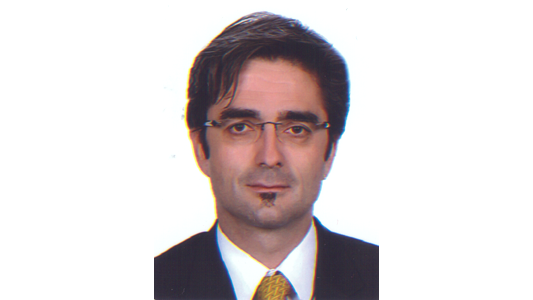
The BIRN effect

So BIRN is ten years old, and I have been asked to write a few lines about what it has meant to me. I have so many memories of my time with this unique organisation, of fascinating people, hard lessons, and incredible experiences, that it’s difficult to know where to start.

I remember the first nervous decisions we took in an out-of-season hotel on Bjelasnica mountain to set up our own organisation; how we descended on Dragana’s summer house in Boka Kotorska to thrash out plans for a documentary on Kosovo’s future, something that may not seem so ambitious now, but when you remember how little infrastructure we had then, was really quite audacious; and how I seemed to be constantly on the road, going from capital to capital, and embassy to embassy, looking for funding to get us up and running.

In those first few years, we all did anything and everything we could to realise our ambition to set up an outlet for quality journalism that would inform both locally and internationally on the most important issues facing the Balkan region. It was hard, hard work, and there was little room for anything else.

After three years, first as director of BIRN’s regional hub, and latterly in charge of getting the Fellowship up and running, I decided to move on.

Although my aim then was to achieve better balance in my life, somehow to this day I still find myself regularly deep in excel spreadsheets and funding applications at ungodly hours. Maybe that’s the BIRN effect: once you have realised how hard you can push yourself, and what this can achieve, it is difficult to stop stepping up to the plate and striving for the best.

A Unique Voice and an Inspiration

Let me congratulate you on your 10th anniversary and wish you all the best for your next decade and hopefully more years of contributing to investigative journalism and media freedom in the Balkans.

You were a baby that grew very fast and became a strong, independent and self-confident woman, holding up a mirror to those in power in and around the Balkans – producing stories based on facts and thorough investigations. Well done!

I had been following and reading you from your first days, when I was working as a Western Balkans correspondent for German-speaking newspapers in Sarajevo from 2005 to 2010. You were always a source of inspiration and of course of reliable information. Thank you for that. Later, when I joined the Federal Department of Foreign Affairs of Switzerland in 2010 and started working in different countries of the region supporting civilian peace-building efforts, I met you again.

You were present everywhere in the region; the cooperation of your correspondents and editors had intensified even more than it had already been the case before. I was impressed by your performance, not only as a reader and consumer, which I already used to be for years, but now also as a partner and representative of one of BIRN’s donor countries, Switzerland. This immediately put me in a dilemma. In Berne, capital of Switzerland, my colleagues at the Ministry were often confused because they thought that I was speaking about them when mentioning BIRN. Berne and BIRN sound the same in English! That created funny confusion so many times.

So, dear BIRN, you have become and will remain the Balkans BIRN for me – also in terms of pronunciation – although your stories are also published in English and therefore reach many people outside the Balkans as well. This is good and much wanted. Both audiences need BIRN: those who read, listen to and watch your stories in one of the Balkan languages but also those all over the world who want to be informed about what is going on in and around the Balkans.

One more thing is great with you among many others, a thing that makes you unique. You were founded and have been led by female directors over all these years. This is unique not only in the Balkans but probably worldwide. In addition to that, so many women, side by side with equally talented male colleagues, contribute as professionals to your success every day. Congratulations!

Dear BIRN, I commend and thank you for being what you are: an invaluable contribution to a better-informed society in the Balkans and a better-informed world about the Balkans. This helps connecting people and ideas! Your independent voice is needed more than ever. Happy birthday, BIRN!

The Author is currently working for the Federal Department of Foreign Affairs of Switzerland in Kyiv, Ukraine

BIRN Kosovo Holds Discussion with Multi-Ethnic Journalists

BIRN Kosovo organised a discussion on April 11 in Gracanica, bringing together journalists from various ethnic communities in Kosovo – Albanian, Serb, Bosnian – with the aim of increasing cooperation between them.

During the discussion, speakers said that one of the main problems they face on a daily basis is the lack of knowledge of other communities’ languages.

The journalists also noted that they do not know each other in person, and said that this would improve their cooperation and eliminate any so-called “fear” of one another.

Petrit Çollaku from the Association of Professional Journalists of Kosovo (AGK) said that the situation in terms of cooperation is currently stagnant.

He suggested that Serb journalists should visit Pristina frequently, in order to get acquainted with the social and political problems of Kosovo.

This is the second consecutive year that this project has been organised by the Balkan Investigative Reporting Network, supported by the European Union Office in Kosovo.

Participants for 2018 Balkan Fellowship for Journalistic Excellence have been chosen

The 10 participants for this year’s Balkan Fellowship for Journalistic Excellence (BFJE) have been chosen.

The programme received 99 applications; the selection committee chose 10 participants from across the region.

Applicants from around the Balkan region pitched their story ideas on “TRUTH”, the theme for this year’s edition of the BFJE. A selection committee had to make some tough choices and evaluate the applications based on the relevance, feasibility and originality of the proposals, as well as the professional qualifications, motivation and journalistic approach of the applicants.

The list of chosen fellows is on the BFJE web site.

Application for BIRN Summer School 2018 in Romania opens

The BIRN Summer School for investigative journalism will be held from 19 to 25 of August this year in Romania.

The school, in its ninth year, will again gather top journalists and editors from the Balkans and across the world to train reporters.

Click here to apply now.

Thanks to support from donors, BIRN is providing 20 full scholarships for Balkan participants.

International journalists can apply for an early-bird fee until the May 15th.

This year, the school will have a strong focus on new trends and online tools for investigative journalists.

The lead trainer will be Blake Morrison, investigative projects editor for Reuters New York.

BIRN Kosovo Reports on Progress of Corruption Cases

A conference organized by BIRN and Internews Kosova on March 28 presented a report with findings on the monitoring of judicial cases in Kosovo that have been targeted in connection with visa liberalization, and the procedures for each case.

At the beginning of the conference, the main findings of the report were outlined.

Labinot Leposhtica, BIRN/Internews Kosova’s Legal and Border Monitoring Coordinator and co-author of the report, stated that there were a total of 39 targeted cases, focusing on 19, with an emphasis on the Basic Court procedures in which 15 of the cases are being processed.

He noted a discrepancy between the data provided by the Prosecutorial Council and the Judicial Council, KJC. From the KJC, it was stated that so far five first instance cases were concluded, and six with a final decision rendered.

In the KPC, there are eight cases with a final decision rendered, and four cases concluded in the first instance.

Of the 19 cases, the largest number now in process are before the Basic Court in Prishtina, two in Mitrovica, Prizren and Ferizaj, and one in the Kaçanik branch.

Aleksander Lumezi, the Chief State Prosecutor, said he agreed that there had been no concrete progress concerning final decisions on the targeted cases.

He pointed out that the Prosecution targeted 40 cases, and that together with the Chief Prosecutor of the Special Prosecution, they are in the targeting phase of a number of these cases, and by the end of June expect to return with more conclusive results.

Faik Ispahiu, Director of Internews Kosova, said there had been some progress but not enough in comparison to what was needed. “There are advances, there is progress, but these are so small as to be almost negligible,” he said.

Abelard Tahiri, Minister of Justice, said policy making is important in this process. “I am talking about its three perspectives: addressing issues arising from the progress report; implementation of the national plan; and the enlargement report, where deep reforms in the judiciary and prosecution are required,” he said.

Enver Peci, President of the Supreme Court, stated that the EU rule of law body EULEX was complicating things, that fighting crime and corruption as criterion for visa liberalization was a process, and that cases cannot be measured day by day.

Reshat Millaku, the Coordinator of the KPC for these cases, said that they had targeted all of the cases to convey the message that no one is untouchable. Millaku stated that when he took up the post of KPC coordinator for the targeted cases, he asked all prosecutors from the basic prosecution to send every case of corruption so that a database could be created.

Hasan Shala, Chairman of the Court of Appeals, mentioned that last year the court concluded 145 cases out of 161 cases in total, and affirmed those who had committed a criminal act, and deserve to, will go to jail.

Aferdita Bytyqi, President of the Basic Court in Prishtina, said the judges of this court and the Department for Serious Crimes faced the biggest challenges. She said she understood that the capital’s court has more cases because high crime is more concentrated in Pristina. Despite these challenges, she said, cases targeted for visa liberalization were progressing.

Skënder Çoçaj from Kosovo Judicial Council indicated several recommendations that BIRN and IKS have provided in the report, which have recently started being implemented, and they need now to decide whether there is legal basis to transfer these cases to other courts.

Three of the 19 cases dealt with in the report are known as the “Ferronikeli”, “Stenta”, and “Safety” cases.

In the “Ferronikeli” case, the accused is the former leader of Lipjan, Shukri Buja; 129 days have passed and the date of the hearing has not yet been determined. In total, 884 days have elapsed since the start of this case.

The “Stenta” case includes 59 physical persons and four juridical ones that have been accused; 646 days have elapsed since the filing of the indictment and no review of the case has begun.

In the “Safety” case, the accused include the director of KEK, Arben Gjukla, and the former head of PRB, Hysni Hoxha and the former chairman of Skenderaj, Sami Lushtaku.

Some of BIRN’s and IKS’s recommendations are:

  • Increased communication between KPC and KJC through joint meetings to coordinate and harmonize data
  • Judges dealing with these targeted cases should be supported by professional associates to assist them
  • Prosecutors who have targeted cases should also rely on professional associates
  • Prosecutors should not be allowed to miss a session; otherwise they will be replaced and will not be able to participate in other cases
  • Requests for transfer or promotion of judges and prosecutors who have cases in process should be refused.

Participants in this discussion included judges and prosecutors of the specific targeted cases, lawyers as well as representatives of civil society.

The whole report in English is available here.

The whole report in Albanian is available here.

BIRN Documentaries Recognised as Source for Educators

Devedesete.net, a website developed with historians from Bosnia and Herzegovina, Croatia, Montenegro and Serbia, has named two films made by the Balkan Investigative Reporting Network in Bosnia and Herzegovina (BIRN BiH) as an important source about the history of the 1990s wars in the former Yugoslavia.

The Association of European Educators of History, EUROCLIO, in cooperation with associations of history teachers and educators from the former Yugoslav region, recently launched the Devedesete.net website, which contains materials intended to help teach subjects related to the 1990s wars.

The materials include Hague Tribunal verdicts and two documentaries produced by BIRN BiH – ‘Missing You’, about the relatives of missing persons, and ‘Silent Scream’ about the traumas still experienced by wartime sexual abuse victims in Bosnia.

“Our idea was to show to teachers there are materials beyond the curriculum that can be used when teaching about the 1990 wars in a modern and responsible manner. Those include various databases, literature, documentaries and feature films, museum exhibitions, memorials, as well as various NGO projects,” said Aleksandar Todosijevic of the Association for Social History of Serbia EUROCLIO.

BIRN Albania Trains Reporters on Data in Health Journalism

The Balkan Investigative Reporting Network in Albania held a two-day training session in Tirana on March 23rd to 24th, on transparency in health through data journalism.

The course formed part of “Transparency in Health Through Data Journalism,” a project which is supported by the United States Development Agency, USAID.

A group of 20 journalists from national and local outlets received training in the basic techniques of data gathering in health and visualization, the organization of the health service in Albania, open data sources and access to patients’ rights organizations.

The goal of the course was to strengthen the capacities of local journalists to cover more in-depth stories on the health sector in Albania through data and investigative journalism.

The course will be followed by a call for data-driven stories that will be published on BIRN Albania’s award winning website Reporter.al.

BIRN Albania Trains Activists on Multimedia Techniques

The Balkan Investigative Reporting Network in Albania held a training session on March 21st in Tirana on the use of multimedia techniques in media advocacy.

Those taking part were young activists from grassroots and civil society organizations, working to promote access to higher education, gender equality, minority rights and environmental conservation.

The training session, which 21 civil society activists attended, was held with the support of the Balkan Trust for Democracy, BTD.

BIRN Albania photojournalist Ivana Dervishi led the course, focusing on the importance of photography in activism and media engagement.

She shared her experience in photographing difficult and conflict situations such as protests, and in covering human rights issues. She also engaged the activists on the techniques for creating stunning photo-series and how to pitch them to the media.

The participants also discussed ethical questions concerning the line between photography as part of freedom of expression and people’s rights to privacy.

During the training filmmaker Elton Baxhaku shared his experience working on human rights documentaries and on how to film videos that can be used for activism. He also explained how to persuade people to talk in front of the camera and discussed the difficulties in remaining objective while promoting causes as an activist.

The group shared their own stories of activism and the challenges of explaining human rights violations and the abuse of laws by using videos and the editing process.

BIRN Macedonia Wins Investigative Reporting Award

BIRN Macedonia on Tuesday won second prize in the prestigious Nikola Mladenov award for investigative reporting.

The prize was given for the Foreign Investments Uncovered database on foreign investments in Macedonia announced by the government from 2007 to 2016.

“BIRN’s journalists have provided the public with a comprehensive insight into the real value of foreign investments, as well as into the unjustified spending of huge amounts from the state budget to support the entry of foreign investments,” said Biljana Petkovska, director of the Macedonian Media Institute, which grants the award.

The first prize went to Menche Atanasova Tochi for a series of stories about suspicious imports of drugs, published on Nova TV’s website, a study that, according to the commission, showed serious abuses by state institutions and manipulation by some pharmaceutical companies.

The third prize was shared by Peter Klincharski for the story ‘Lost in 1,000 Translations’, which was broadcast by TV Alsat-M, and Liridona Veyseli for the story ‘Where is the Jihadist’s Headquarters in Macedonia?’, published on the Zhurnal website.

The award was given for the 17th time, as part of efforts to promote professional journalism and democratic values ​​in the country.

BIRN’s database Skopje 2014 Uncovered, detailing the cost of the capital’s grand revamp, won the Nikola Mladenov first prize in 2016.