The report identifies a growing gap between central strategic planning and practical implementation at the local level. Additionally, the report highlights the lack of local empirical research on radicalization, institutional failure in formalizing Multidisciplinary Referral Mechanisms across municipalities, a critical shortage of school psychologists due to municipal recruitment delays, and the formal functioning of Municipal Community Safety Councils (MSCS), especially in northern municipalities where such mechanisms are non-functional and no concrete steps have been taken to address ethno-nationalism and other forms of extremism highlighted in the four previous reports.
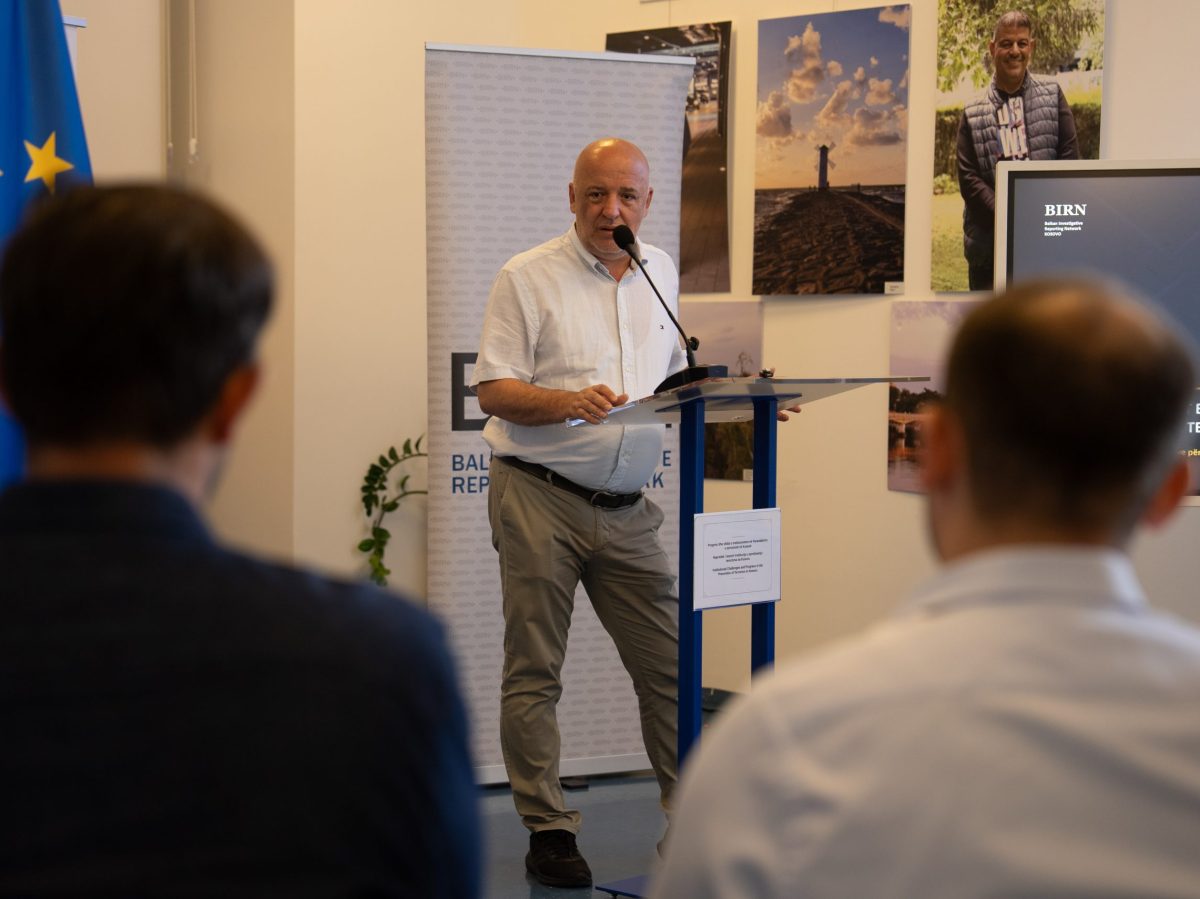
To mark the report launch, BIRN Kosovo organized a conference to present its main findings and bring together partners, representatives of relevant institutions, and civil society. During the conference, Mensur Hoti, director of the Department for Public Security at the Ministry of Interior, Kreshnik Gashi, editor-in-chief of KALLXO.com, and Labinot Leposhtica, team leader of the monitoring team, emphasized the importance of concrete steps and measures to address the current situation with extremism and terrorism in Kosovo.

More concretely, Mensur Hoti highlighted the importance of the National Strategy and the cooperation with various civil society organizations during the implementation phase of the GCERF-funded projects in Kosovo. This cooperation was aimed at since the initial phases of drafting the strategy to ensure, among other things, an independent evaluation by civil society of the institutional work and results achieved. Regarding BIRN’s published reports, Hoti stated that the findings and recommendations offer a crucial mechanism for long-term institutional improvement and future policy steps in Kosovo. By establishing a vital, independent external evaluation, the report ultimately counters institutional subjectivity and self-complacency, ensuring that performance is no longer judged solely by the institutions themselves.
The authors of the report, Kreshnik Gashi and Labinot Leposhtica, presented the report’s findings, conclusions, and recommendations, highlighted the importance of involving civil society organizations in countering various forms of extremism, and argued for the need for Kosovo institutions. Moreover, this is the fifth report published on the implementation of the “Prevention” objective for the period July 2023 – May 2026, comparing the strategic obligations with the actual actions taken by the relevant institutions.

Additionally, as a contribution to the field in Kosovo, BIRN Kosovo has launched an educational platform designed primarily for journalists, offering accessible training at no cost. This platform includes three training modules specifically tailored to equip journalists with the knowledge and skills necessary to navigate complex issues related to extremism and terrorism. By enhancing their understanding of these critical themes, journalists will be better prepared to report responsibly and effectively on these sensitive topics, ultimately contributing to more informed public discourse and awareness.

Present at the launch conference were 23 participants, of whom 12 were women.
The report is accessible in three languages:
The report in Albanian, click here.
The report in Serbian, click here.
The report in English, click here.
The educational platform is accessible here.
This activity falls under the ‘Resilient and Inclusive Community Program’ project, funded by GCERF and implemented by the organizations ATRC, BIRN, CBM, and Rin’on.