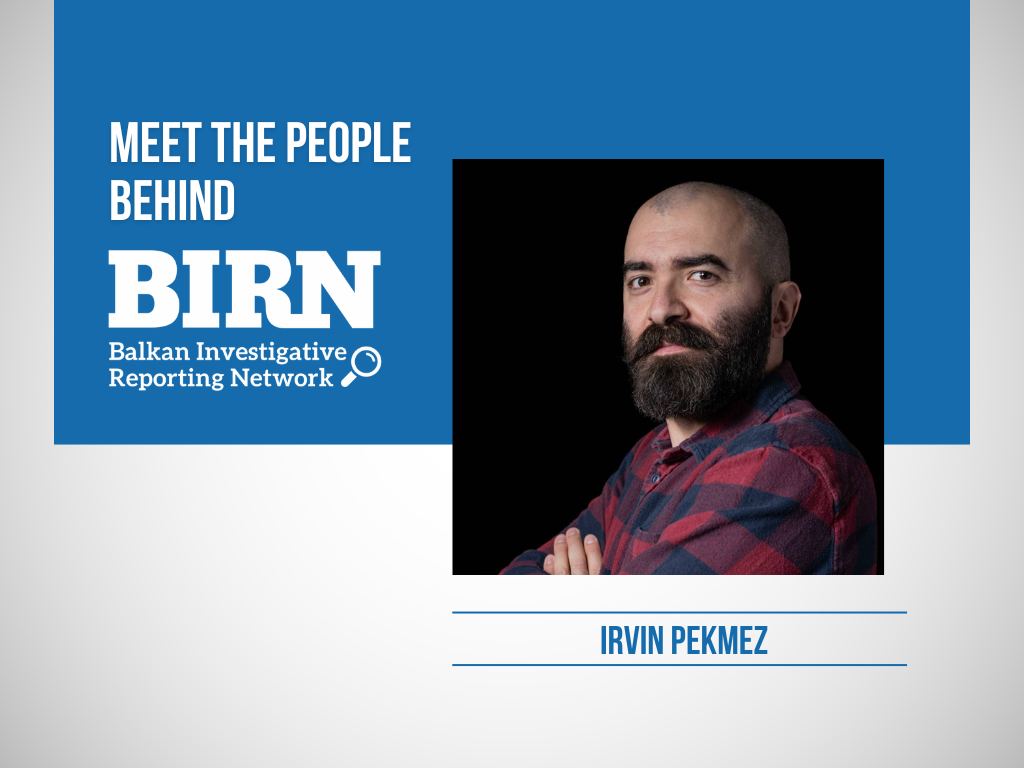
Irvin Pekmez studied journalism at the University of Sarajevo. During that time, he had his journalistic heroes and other role models from the culture of public debate and “wanted to be like them when I grew up”.
“I don’t know how far I got with that,” he jokes modestly, although he has, in fact, been awarded for his work.
He first heard about BIRN in his previous work for other media outlets.
“We relied on the work of the [BIRN] Sarajevo office for specific topics, especially those related to war crimes and trials. Of course, I later learned that BIRN is much more than that,” he explains.
His main focus now at BIRN, in addition to social problems, is foreign influence in Bosnia and Herzegovina. “The relentless abuse of the BiH system and all the systemic loopholes, along with unfulfilled agendas from the 1990s, require tireless observation and reporting to the public about the fact that the fight for this society is not over.” Irvin says.
There are several obstacles to investigative journalists’ work in Bosnia and Herzegovina, he notes.
“One of the biggest burdens is the lack of interest among young journalists to engage in this type of journalism. Pressure on a bad system requires, among other things, people who will apply that pressure. If there were more of us, it would be easier,” he says.
Of all his investigations, he is most proud of some. One is “Black-Clad ‘Humanitarians’ Promote Pro-Russian Agenda in Bosnia”, which was his first significant story published in BIRN.
“The Hostomel Filmmaker: Hunt for war criminals with the help of surveillance cameras” was one of many stories he got from a Kyiv visit in 2023. “A profound and deep human experience that I will never forget and that impacted me for life,” Irvin recalls.
Speaking of Ukraine, Pekmez worked on another investigation, which he came across totally unintentionally.
“From Bosnia to Ukraine: How a Serb Sportsman Became a Russian Fighter” is an example of “how a significant and influential story can be born from a random scroll through clips from Ukraine”, he adds.
“I don’t think there will be a repeat of the story about which I did two investigations with my colleagues,” he recalls, of “Disruptors: Inside Russia’s Balkan Training Camps for Moldovan ‘Destabilisation’”, and “Military Drones, Incendiary Devices: How Russian Trainers Taught Subversion at Balkan Camps” and other significant analyses and news, which eventually received a journalistic award.
“Because the authorities in Republika Srpska, despite all Detektor‘s evidence, continue to deny everything – there is a strange satisfaction in that,” Pekmez stresses.
Recently, with Detektor colleagues Enes Hodzic and Nino Bilajac, and the media outlet CU SENS, he won second place at the Superscrieri journalism awards in Romania in the TV and Video Journalism category.
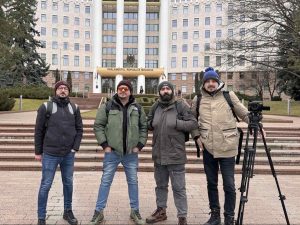
Together with the organisation FactCheck from Bulgaria, they showed how people from Moldova were being trained in Russia, Serbia, and Bosnia and Herzegovina to use weapons and drones carrying explosive devices for use in potential mass unrest in Moldova. This is a story that had been going on for two years. Irvin is glad they did not give up.
“It took a lot of time, building a network of trust with important people and a network of cooperation with journalists from Serbia and Moldova,” he recalls.
“The security aspect of this story is what, among other problems, moves the journalistic interest the most: the possibility that someone close to you is being trained for violent illegal tasks, and that the police who are in charge of your security belong to a system that denies all of this.
“The essence of danger and proof of how a state can, in peacetime, support a foreign paramilitary factor without having to explain itself,” Irvin explains.
Outside BIRN, Irvin likes to run in his spare time.
For young people who want to work as investigative journalists in the region, he has an encouraging message – it’s more fun than you think.
“Do you want to use your skills and curiosity to fight the system that is rigged against you? Then join us, we are fun and have snacks,” he concludes.