Kosovo Civil Society, Media, Form Coalition Against Disinformation

BIRN Kosovo director hails formation of new coalition as a kind of vaccine against “the virus of disinformation” eroding Kosovo society.

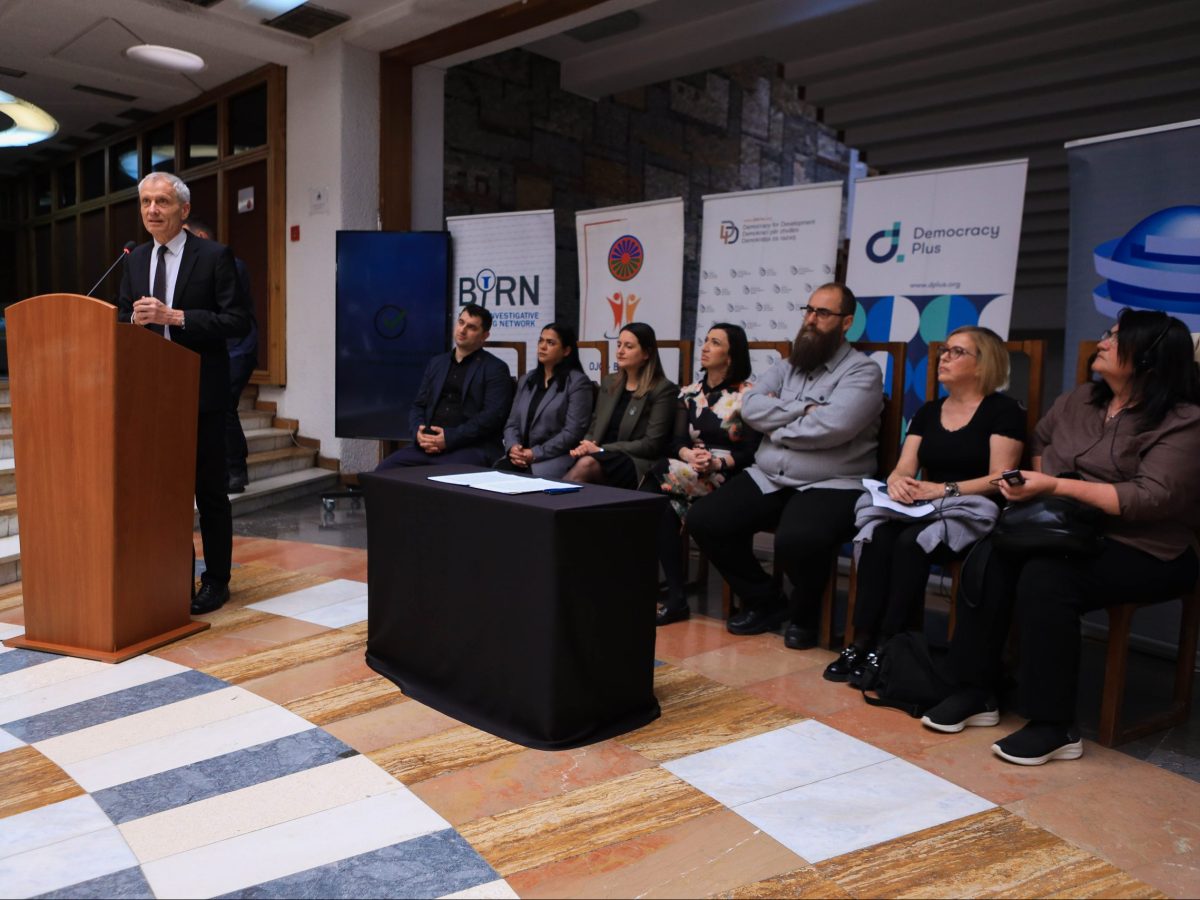
BIRN Kosovo and six other Kosovo-based NGOs and media organisations have formed the Kosovo Coalition Against Disinformation.

“The coalition aims to advocate for and support awareness raising and capacity building in Kosovo society in order to face the challenges of disinformation and build a society in which accurate, full, and timely information is the foundation of information,” their joint statement read.

The organisations participating in the coalition alongside BIRN are the NGOs Democracy Plus, Democracy for Development and Roma in Action, the media outlet Internews Kosova and the Serbian-language media outlets KoSSev and Gracanica Online.

BIRN Kosovo director Jeta Xharra said the coalition’s goal is to “function as a vaccine against the disinformation virus and the untrue propaganda that is shared very quickly in many information channels that exist today, including social media networks”.

Xharra added: “We decided to become strategic and create alliances with other civil society and media organisations which have worked in this field. We are started today with seven members but we aim to include new members in future.”

She explained that the members have worked together to create the coalition’s principles in the war against disinformation in order to “to make this alliance functional in all the territory of Kosovo including the many languages of Kosovo, not only the language of the majority”.

The ambassador of Switzerland to Kosovo, Thomas Kolly, said the media have an obligation to offer the truth to news consumers.

“Everyone has the right to be told the truth, the media has an obligation to tell us this. We as consumers are on the other side. This coalition is a wonderful concept,” he said.

Alongside the two main ethnic communities of Albanians and Serbs, Kosovo’s constitution recognises Romani, Egyptian, Ashkali, and Turkish communities. Serbian and Albanian are official languages, but in certain towns Romani and Turkish are also widely spoken.

“If those who distribute disinformation are organised, we, on the other hand, must become organised and strategic to stop disinformation, and this is not done alone but together around good information,” Xharra said.

Tatjana Lazarevic, from the KoSSev portal, said she expected the coalition to aid justice, impartiality and accuracy.

“My expectation is to share together the values of the Declaration; they are words for me, which means, words with meaning; I expect us to practice our profession, not to serve politics. I expect us to spread justice, impartiality, accuracy; to increase the potential of our professional community and media literacy, but also the expectations and power of our public,” she said.

The Kosovo Coalition on Disinformation intends to become a platform of civil society and media organizations “that defend freedom of expression, pluralism of thought and free flow of information”, fighting disinformation not only via reporting but also in the field of education and science.

During the announcement ceremony, the coalition brought together various representatives from embassies, prominent media institutions, journalists and NGOs.

The project is supported by the Swiss embassy.


Digital Rights Training for Kosovo Journalists: Applications Open

BIRN invites Kosovo journalists to apply for a three-day training program designed to address rising concerns over digital rights and freedoms violations in the Balkans. The event, to be held in Brezovica, Kosovo, from May 26 to May 28, 2023, will provide participants with a comprehensive understanding of digital rights, focusing on reporting breaches, content blocking, manipulations, and propaganda in the digital realm.

With technology evolving rapidly, it’s essential for journalists to stay up-to-date on the latest methods and strategies to uncover and appropriately report on digital rights violations. To tackle these challenges, BIRN is organizing a three-day training that will focus on the theoretical and practical framework necessary to understand digital rights and how to report on breaches, blocking and filtering content, manipulations, and propaganda in the digital environment.

Numerous reports from international human rights organisations, media organisations, CSOs and international institutions indicate a concerning situation regarding digital rights in the Balkans, highlighting the need for continued efforts to improve the protection and promotion of these rights, but also to enhance journalists’ ability to adequately report on these issues. Although many of the countries from the region have regulatory frameworks that formally address these issues, challenges persist, such as online surveillance, censorship and data privacy issues.

Frequent cyberattacks and online harassment also threaten the safety and security of many, including journalists, who are often targets of online attacks. Still, many journalists from the region may not be fully aware of the extent of digital rights violations or the underlying legal and technological aspects that lead to these kinds of violations.

BIRN’s training will provide ten selected journalists from Kosovo with a comprehensive understanding of the issues at stake, helping them to identify and report on digital rights violations more effectively. Journalists play a crucial role in raising public awareness and driving change, and by equipping them with the necessary skills and knowledge, this training will enable them to produce impactful stories that can contribute to a more informed public debate and eventually lead to policy changes that protect and promote digital rights in the Balkans.

Who can apply?

The Balkan Investigative Reporting Network (BIRN) invites journalists from Kosovo to apply for a three-day training on reporting digital rights violations.

How to apply?

To apply, interested journalists should demonstrate an interest in digital rights, possess previous journalism experience and show active engagement in the field of digital rights. A selection committee will evaluate the applications and select ten journalists to participate in the training.

To apply, submit the following application form along with your CV and a motivational letter to [email protected] no later than May 19, 2023, by 5 pm CET, with the subject line: Digital Rights Reporting Training for Journalists KOSOVO.

Where?

The training will take place in Brezovica, Kosovo, from May 26 to May 28, 2023. The organizers will fully cover travel and accommodation costs for selected participants. The working language of the training is Albanian and English.

What to expect?

The training will provide selected journalists with essential skills and knowledge to effectively investigate and report on digital rights violations in an ever-changing technological landscape. The training will cover various aspects of digital rights reporting, including identifying and collecting digital rights violations, categorizing these violations, and reporting on individual cases and broader trends.

The program will also focus on multimedia, contemporary tools, and modern journalistic approaches, such as open-source investigations, data journalism, fact-checking, and cross-border collaborations. The training in Brezovica will offer valuable educational insights and provide the opportunity to connect with fellow journalists and experts working in the digital rights field.

Unique opportunity after the training

Upon completion of the training, journalists will have the opportunity to pitch their story ideas to BIRN. Selected journalists will receive on-the-job mentoring and financial support to research and apply their newly acquired skills to implement their ideas on cases involving breaches, content blocking, filtering, manipulations, and propaganda in the digital environment.

Long story short

DEADLINE: Submit the application form along with your CV and a motivational letter to [email protected]  no later than May 19, 2023, at 5 pm CET with the subject line: Digital Rights Reporting Training for Journalists KOSOVO.

DATES OF TRAINING: May 26, May 27, and May 28, 2023

LOCATION: Brezovica, Kosovo


Trajnim për të Drejtat Digjitale për Gazetarët e Kosovës: Ftesë për aplikim

BIRN fton gazetarët e Kosovës që të aplikojnë për një program tre-ditor trajnimi i cili ka për qëllim të trajtojë çështjet gjithnjë e më shqetësuese lidhur me shkeljet e të drejtave dhe lirive digjitale në Ballkan. Ky trajnim, i cili do të mbahet në Brezovicë të Kosovës, nga data 26 maj deri më 28 maj 2023, do t’u ofrojë pjesëmarrësve një pasqyrë të plotë të kuptimit të të drejtave digjitale, duke u fokusuar në raportimin e shkeljeve, bllokimet e postimeve, manipulimet, dhe propagandën në sferën digjitale.

Marrë parasysh sa shpejtë po ndryshon teknologjia, është me rëndësi thelbësore që gazetarët të jenë në hap me metodat dhe strategjitë e fundit se si zbulohen dhe si raportohen në mënyrë të duhur shkeljet e të drejtave digjitale. Për të trajtuar këto sfida, BIRN është duke organizuar trajnim tre-ditor i cili do të fokusohet në kornizën teorike dhe praktike të domosdoshme për të kuptuar të drejtat digjitale dhe mënyrën e raportimit të shkeljeve, bllokimeve dhe filtrimit të postimeve, manipulimet dhe propagandën në mjedisin digjital.

Një numër i madh raportesh nga organizata ndërkombëtare të të drejtave të njeriut, organizata mediatike, organizata të shoqërisë civile dhe institucione ndërkombëtare tregojnë se situata lidhur me të drejtat digjitale në Ballkan është shqetësuese, dhe raportet theksojnë se ka nevojë për përpjekje të vazhdueshme për të përmirësuar mbrojtjen dhe promovimin e këtyre të drejtave, por edhe për të përmirësuar aftësitë e gazetarëve për të raportuar si duhet këto çështje. Pavarësisht asaj se shumë vende të rajonit kanë korniza rregullative të cilat trajtojnë zyrtarisht këto çështje, sfidat vazhdojnë, sfidat me çështje si mbikëqyrja në internet, censura dhe privatësia e të dhënave.

Sulmet e shpeshta kibernetike dhe ngacmimet në internet janë gjëra që po ashtu rrezikojnë sigurinë dhe mbrojtjen e shumë njerëzve, duke përfshirë ato të gazetarëve, të cilët shpesh janë caqe të sulmeve në internet.

Prapëseprapë, shumë gazetarë të rajonit mund të mos jenë plotësisht në dijeni për nivelin e shkeljeve të të drejtave digjitale apo për aspektet themelore ligjore e teknologjike që çojnë tek këto lloj shkeljesh.

Trajnimi i BIRN-it do t’u ofrojë dhjetë gazetarëve të përzgjedhur nga Kosova një pasqyrë të plotë të kuptimit të këtyre çështjeve, dhe do t’i ndihmojë ata të identifikojnë dhe raportojnë në mënyrë më efektive shkeljet e të drejtave digjitale. Gazetarët luajnë rol vendimtar në rritjen e ndërgjegjësimit publik dhe në shtyrjen përpara të ndryshimeve, andaj, duke i pajisur ata me aftësitë dhe njohuritë e duhura, ky trajnim do t’u mundësojë atyre të përgatisin storie të cilat do të kenë efekt dhe të cilat mund t’i kontribuojnë një debati publik më të informuar dhe përfundimisht mund të çojnë tek ndryshime të politikave të cilat mbrojnë dhe promovojnë të drejtat digjitale në Ballkan.

Kush mund të aplikojë?

Rrjeti Ballkanik i Gazetarisë Hulumtuese (BIRN) fton gazetarët nga Kosova të aplikojnë për pjesëmarrje në trajnimin tre-ditor për raportimin e shkeljeve të të drejtave digjitale.

Si të aplikoni?

Për të aplikuar për këtë mundësi, gazetarët e interesuar duhet të dëshmojnë se kanë interesim në të drejtat digjitale, përvojë të mëparshme gazetareske, dhe të tregojnë angazhim aktiv në fushën e të drejtave digjitale. Një komision vlerësues do të vlerësojë aplikacionet dhe do të përzgjedhë dhjetë gazetarë për të marrë pjesë në trajnim.

Për të aplikuar, dorëzoni këtë formular aplikimi bashkë me CV-në tuaj dhe një letër motivuese tek [email protected]  më së largu më datë 19 maj 2023, ora 17:00 duke shkruar tek subjekti i emailit: Digital Rights Reporting Training for Journalists KOSOVO.

Ku?

Trajnimi do të mbahet në Brezovicë të Kosovës, nga data 26 maj deri më 28 maj 2023. Organizatorët do të mbulojnë plotësisht shpenzimet e udhëtimit dhe qëndrimit për pjesëmarrësit e përzgjedhur. Gjuha e punës në trajnim është shqip dhe anglisht.

Çfarë ju pret?

Gazetarëve të përzgjedhur trajnimi do t’u ofrojë aftësi dhe njohuri thelbësore të hetimit/hulumtimit dhe raportimit efektiv të shkeljeve të të drejtave digjitale në sferën teknologjike e cila gjithnjë është duke ndryshuar. Trajnimi do të shikojë aspektet e ndryshme të raportimit të të drejtave digjitale, duke përfshirë identifikimin dhe grumbullimin e shkeljeve të të drejtave digjitale, kategorizimin shkeljeve, dhe raportimin e rasteve individuale dhe tendencave më të gjera.

Programi i trajnimit do të fokusohet edhe në multimedia, mjetet bashkëkohore, qasjet moderne gazetareske siç janë hetimet/hulumtimet me mjete teknologjike me burim të hapur, gazetarinë e cila bazohet në analizim të të dhënave, kontrollimin e fakteve dhe bashkëpunimet ndërkufitare. Trajnimi në Brezovicë do të ofrojë njohuri të vlefshme edukative dhe do të ofrojë mundësi për t’u njohur me kolegë gazetarë dhe ekspertë të cilët punojnë në fushën e të drejtave digjitale.

Mundësi unike pas trajnimit

Pas përfundimit të trajnimit, gazetarët do të kenë mundësinë që t’i paraqesin BIRN-it idetë e tyre për storie. Gazetarët e përzgjedhur do të përfitojnë mentorim dhe mbështetje financiare për të bërë hulumtim dhe për të zbatuar aftësitë e posa-fituara të tyre për të realizuar idetë që kanë për storie lidhur me shkelje, bllokime të postimeve, filtrimeve, manipulimeve dhe propagandave në mjedisin digjital.

Pra, si përmbledhje

AFATI I FUNDIT: Dërgoni këtë formular aplikimi bashkë me CV-në tuaj dhe një letër motivuese tek [email protected]  më së largu deri më datë 19 maj 2023, ora 17:00 duke shkruar tek subjekti i emailit: Digital Rights Reporting Training for Journalists KOSOVO.

DATAT E TRAJNIMIT: 26 maj, 27 maj dhe 28 maj 2023

LOKACIONI: Brezovicë, Kosovë


Obuka o digitalnim pravima za novinare na Kosovu: Otvoren je rok za prijavu

BIRN poziva kosovske novinare da se prijave na trodnevni program obuke koji je osmišljen da odgovori na rastuću zabrinutost o kršenjima digitalnih prava i sloboda na Balkanu. Ovaj događaj, koji će se održati u Brezovici, na Kosovu, od 26 do 28 maja 2023. godine, će pružiti učesnicima sveobuhvatno razumevanje o digitalnim pravima, sa fokusom na kršenja u toku izveštavanja, blokiranje sadržaja, manipulacije i propagandu u digitalnom svetu.

Uz tehnologiju koja se brzo razvija, za novinare je od suštinskog značaja da budu u koraku sa poslednjim metodama i strategijama za otkrivanje i pravilno izveštavanje o kršenju digitalnih prava. Da bi se uhvatio u koštac sa ovim izazovima, BIRN organizuje trodnevnu obuku koja će se fokusirati na teoretski i praktički okvir neophodan za razumevanje digitalnih prava i kako izveštavati o prekršajima, blokiranju i filtriranju sadržaja, manipulacijama i propagandi u digitalnom okruženju.

Brojni izveštaji od međunarodnih ogranizacija za ljudska prava, medijskih organizacija, organizacija civilnog društva i međunarodnih institucija ukazuju na zabrinjavajuću situaciju u vezi digitalnih prava na Balkanu, naglašavajući potrebu za neprekidnim naporima da se poboljša zaštita i promocija ovih prava, ali i da se unaprede veštine novinara da adekvatno izveštavaju o ovim pitanjima. Iako većina zemalja u regiji poseduje regulatorni okvir koji se zvanično bavi ovim pitanjima, izazov i dalje postoji u sledećim pitanjima: online nadzor, cenzura i pitanja o privatnosti podataka.

Česti sajber napadi i onlajn uznemiravanje takođe prete sigurnosti i bezbednosti mnogih ljudi, ukjučujući novinare koji se često nalaze na meti ovih onlajn napada. Međutim, mnogi novinari iz regije možda nisu svesni razmera kršenja diitalnih prava ili pravnih i tehnoloških aspekata koji vode do ovih vrsta prekršaja.

BIRN-ova obuka će deset odabranim novinarima sa Kosova sa sveobuhvatnim razumevanjem pitanja o kojima je reč, pomoći da identifikuju i izveštavaju o kršenjima digitalnih prava na efikasniji način. Novinari igraju važnu ulogu u podizanju svesti javnosti i pokretanju promena, kao i u naoružavanju javnosti sa potrebnim veštinama i znanjem, otuda će im ova obuka omogućiti da proizvode uticajne priče koje mogu doprineti informisanijim javnim raspravama i na kraju dovesti do promena politika koje štite i promovišu digitalna prava na Balkanu.

Ko se može prijaviti?

Balkanska mreža za istražno novinarstvo (engleski BIRN) poziva novinare sa Kosova da se prijave na trodnevnu obuku o izveštavanju o kršenjima digitalnih prava.

Kako se možete prijaviti?

Da bi se prijavili, zainteresovani novinari treba da pokažu interesovanje za digitalna prava, imaju prethodno novinarsko iskustvo i da pokažu aktivan angažman u oblasti digitalnih prava. Komisija za procenu će ocenjivati prijave i odabrati deset novinara koji će učestvovati na obuci.

Za prijavu, pošaljite sledeći obrazac za prijavu zajedno sa Vašim CV-om i motivacionim pismom na email adresu [email protected]  najdalje do 19. maja 2023. godine u 17:00h po centralno-evropskom vremenu, sa naslovom: Obuka za izveštavanje o digitalnim pravima KOSOVO.

Gde?

Obuka će se održati u Brezovici, Kosovo, od 26-28 maja, 2023. godine. Organizatori će u potpunosti pokriti putne troškove i troškove smeštaja za odabrane učesnike. Radni jezici obuke će biti albanski i engleski.

Šta očekivati?

Obuka će odabranim novinarima pružiti osnovne veštine i znanje da efikasno istražuju i izveštavaju o kršenjima digitalnih prava u tehnološkom okruženju koje se stalno menja. Obuka će se baviti različitim aspektima izveštavanja o digitalnim pravima, uključujući i identifikovanje i prikupljanje primera kršenja digitalnih prava, kategorizaciju prekršaja i izveštavanje o individualnim slučajevima i rasprostranjenijim trendovima.

Program obuke će biti fokusiran na multimedije, savremene alate i moderne novinarske pristupe kao što je istraživanje otvorenog izvora, data novinarstvo, provera činjenica i prekogranične saradnje. Obuka u Brezovici će pružiti vredne obrazovne uvide i mogućnost povezivanja sa kolegama novinarima i stručnjacima koji rade u oblasti digitalnih prava.

Jedinstvena mogućnost nakon obuke

Po završetku obuke, novinari će imati mogućnost da predstave svoju priču BIRN-u. Odabrani novinari će dobiti mentorstvo na poslu i finansijsku podršku za istraživanje i primenu svojih novostečenih veština kako bi implementirali svoje ideje u slučajevima koji uključuju kršenja, blokiranje sadržaja, filtriranje, manipulacije i propagandu u digitalnom okruženju.

Ukratko

ROK ZA APLICIRANJE: Pošaljite obrazac za prijavu zajedno sa Vašim CV-om i motivacionim pismom na email adresu [email protected]  najkasnije do 19. maja 2023. godine, u 17:00h po srednje-evropskom vremenu sa naslovom: Obuka za novinare za izveštavanje o digitalnim pravima KOSOVO.

DATUMI OBUKE: maj 26, maj 27, i maj 28, 2023. godine.

MESTO: Brezovica, Kosovo


BIRN Kosovo Hosts Debate on Fake News, Gender Disinformation and Sexism

On March 31, 2023, BIRN held a debate with 20 students of the high school “Hivzi Sylejmani” in the municipality of Fushë Kosovo on fake news, gender disinformation and sexism.

The activity addressed the importance of fact-checking information coming from all sources, emphasizing the significance of addressing fake news and disinformation as measures to prevent gender disinformation and sexism in the virtual era.

The activity included also the screening of a video titled “Gender disinformation”, followed by the presentation and discussion of the panel composed by Kreshnik Gashi, Managing editor of KALLXO.com, Sanam Dolatshahi, Head of the Office of Strategic Communications and Public Affairs at UNMIK, and Kadrije Krasniqi, Project Coordinator at Balkan Sunflowers Kosovo.

The event started with opening remarks of the guest speaker of this event, Barrie Freeman, Deputy Special Representative of the UN Secretary–General.

Freeman stated: “Studies have shown that 58 per cent of women have declared that once in their life they have experienced gender-based violence and mistreatment through the internet. For the United Nations, the fight against fake news and hate speech is an important battle. We know that the world is a better world, people live better lives when news and information are based on facts.”

Gashi, managing editor of KALLXO.com, spoke about the importance of educating the young on how to debunk fake news and invest their skills in reading properly on the internet by close cooperation with credible media outlets, in order to avoid harming others online but also being victims themselves.

Sanam Dolatshahi, Head of the Office of Strategic Communications and Public Affairs at UNMIK, stated that, “the internet is very important, and we cannot ignore it, but we have to know how to use it properly without harming ourselves or others.”

Kadrije Krasniqi, Project Coordinator at Balkan Sunflowers Kosovo, highlighted the significance of the interest among the young in participating in educative activities because such activities can help youngsters to build their future.

The event was followed by an interactive discussion between the guest speakers and the students.

Young participants were eager to express their views on fake news, disinformation and hate speech. Apart from addressing questions to the panel, they shared personal experiences. A total of 20 students took part in this debate, out of whom 14 were women.

The activity was carried out within the UNMIK-supported project “Addressing disinformation through fact-checking journalism”.


BIRN Marks International Fact-Checking Day in Kosovo

Event attended by a range of high-level politicians and diplomats including the Kosovo Prime Minister, the EU ambassador and the ambassadors of Italy, Croatia and Sweden, among others

On March 30, 2023, Balkan Investigative Reporting Network – BIRN Kosovo organized an event financed by the EU in Kosovo to commemorate International Fact-Checking Day at the National Library in Kosovo.

Jeta Xharra, Executive Director of BIRN Kosovo, delivered the opening speech. In her address, Xharra emphasized the critical role of journalism in promoting truth and countering disinformation. She also acknowledged the impressive contribution of Kallxo.com to journalism. Xharra highlighted some notable cases when Kallxo’s reporting has resulted in rectification of injustices, formal investigations and the prosecution of public officials and individuals affiliated with organized crime in Kosovo.

Kreshnik Gashi, managing editor of KALLXO.com, presented initial findings from BIRN’s research on fake news sources in Kosovo, revealing that fake news producers can deceive even computers.

“From October 2022 to March 2023, a total of 315 fake information articles were detected, with 33 of them related to Kosovo’s interethnic relations and national security and 30 related to the dialogue between Kosovo and Serbia,” Gashi said.

The full report is set to be available by the end of May.

The event included keynote speeches from Kosovo Prime Minister Albin Kurti, EU Ambassador in Kosovo Tomáš Szunyog and a video address from Lutz Guellner, Head of Strategic Communication, Task Forces and Information Analysis Division.

The Prime Minister spoke about the need for a sociology of television and media anthropology to produce a “vaccine” against the virus of fake news. At the same time, the Head of the EU in Kosovo pledged continued support for Kosovo’s collective fight against disinformation and promote professional journalism.

Guellner addressed the issue of disinformation and manipulation of information as a challenge for societies and emphasized the importance of fact-checkers and journalists in resisting this challenge.

A panel discussion on disinformation in Kosovo and the impact of the war in Ukraine, moderated by Jeta Xharra and featuring a range of media experts from Kosovo, included Xhemajl Rexha from the Association of Journalists of Kosovo, Jeton Mehmeti from Independent Media Commission, Brikenda Rexhepi from Koha Group, Faik Ispahiu from Internews Kosova and Budimir Nicic from Medija Centar Cagllavica.

Over 80 participants attended the event in person, with others joining via Zoom. The conference was also attended by a notable roster of public officials and international diplomats, including Arberie Nagavci, Minister of Education, Antonello De Riu, the Italian Ambassador in Kosovo, Danijela Barišić, the Croatian Ambassador in Kosovo, Ronald Goldberg, the Deputy Head of Mission in the Dutch Embassy, Jonas Westerlund, the Ambassador of Sweden, Zeinah Salahi, Head of USAID, SRSG Caroline Ziadeh, Head of UNMIK, etc.

The event underscored the challenges facing the pursuit of truth in a global, complex, and ever-evolving information environment, as highlighted by the recent publication of the European External Action Service’s (EEAS) Stratcom division’s first study on Foreign Information Manipulation and Interference (FIMI).

The study revealed that Russia’s FIMI operations target Ukraine, seeking to undermine its sovereignty and territorial integrity. At the same time, China uses its global media footprint and economic leverage to influence media coverage and developments worldwide.

BIRN has been a member of the International Fact-Checking Network since 2017 and is recognized for its efforts in exposing disinformation and gaining the public’s trust. The organization’s ongoing disinformation study in Kosovo is part of a broader effort to understand and counter various malign influences in the region.


Fake News ‘Virus’ Needs ‘Vaccine’, BIRN Media Conference Concludes

A conference organized by BIRN Kosovo on the eve of International Fact-Checking Day called for new strategies and partnerships to counter the ‘virus’ of fake news and disinformation.

By Perparim Isufi

In the wake of regional and global political uncertainties, fake news in Kosovo has gone to another level, a BIRN-organised conference on the eve of International Fact-Checking Day, April 2, concluded on Thursday.

The conference gathered media people, politicians and diplomats to showcase the danger fake news pose in a pluralistic media environment and elaborate ways on how to fight the phenomenon.

Presenting the preliminary findings of a report on disinformation that BIRN in Kosovo is conducting, Kreshnik Gashi, editor-in-chief of news site KALLXO.com said that from October 2022 to March 2023 a total of 315 fake information articles had been detected, with 33 of them related to Kosovo’s interethnic relations and national security and 30 related to the dialogue between Kosovo and Serbia.

“During the research, we saw that producers of fake news are deceiving even the computer … These are not dubious news, they are fake. They are published and verified as fake,” Gashi said.

“We have managed to understand who the source of these information is. In 169 of them, they appear to be people who have political knowledge, who are influencers, and who have produced fake information distributed on social media,” he added.

Kosovo’s Prime Minister, Albin Kurti, said fact-checking was a potential “vaccine” against the “virus” of fake news.

“Verification techniques are expected to be a vaccine against the virus of fake news. It’s similar to the fake news on COVID vaccines which flooded the world three years ago, where our population was a victim, too. But to produce a vaccine against the virus of fake news, we need a sociology of television and media anthropology,” Kurti said.

The head of the European Office in Kosovo, Tomas Szunyog, said advances in the internet and digital age had increased dramatically their impact.

“It is our collective responsibility to fight disinformation and explore new strategies and partnerships to promote professional journalism and media literacy and ensure access to verified information, transparency, and accountability. The EU will continue supporting Kosovo in this regard,” Szunyog said.

Antonello De Riu, Italian ambassador to Kosovo, said that behind fake news, the wider strategy was to manipulate public opinion and erode the stability of states and their democratic institutions.

“In this environment, civil society organizations and media play a central role in addressing disinformation’s growing impact on democracy, positively contributing to shaping policy making, improving platform responses and enhancing citizen knowledge and engagement,” he said.

In its annual report for Kosovo, the European Commission noted that the country has “some benefits” from a pluralistic and lively media environment.

“However, concerns remain regarding public smear campaigns and threats and physical attacks on journalists. The lack of financial self-sustainability leaves the media, including the public broadcaster, vulnerable to political and business interests,” the Commission said.

The international media watchdog Reporters Without Borders in its latest report said that despite its small size and division along ethnic lines, Kosovo has a pluralistic and vivid media market.

But it added that although the media hold the authorities accountable, journalists are regularly targeted by political attacks.


BIRN Kosovo Holds Workshop on Reintegrating Returnees from War Zones

BIRN Kosovo held a regional workshop on March 27 in Prishtina on reinforcing the role of Centres for Social Welfare and Municipal Directorates of Education, Emergency and Security, Health and Mental Health, along with other relevant institutions, in strengthening the process of the reintegration and resocialisation of returnees from Middle Eastern conflict zones.

The workshop was delivered by Labinot Leposhtica, Coordinator for Monitoring of Courts and Law Office at BIRN Kosovo, and focused on the state’s vision for preventing radicalism and violent extremism that leads to terrorism.

“The meeting with regional officials from Pristina – which was composed of participants, such as correctional service officials, probation service officials, social workers, psychologists, municipal officials – was a very good opportunity for the participants to understand the obligations that the new strategy will bring for the prevention of extremism, which foresees the formation of multidisciplinary teams. At the same time, it is an opportunity for these officials to hear about the role, responsibilities and duties of other municipal officials in terms of creating a suitable environment for reintegration and re-socialization,” said Leposhtica.

“Frontline officials are very important in the early identification of the appearance of the first signs of radicalism and at the same time they are also the last address that should offer treatment to radicalized individuals who have moved to other institutional links in the programs of rehabilitation and reintegration,” he added.

Ten representatives from the various institutions participated in the workshop, six of whom were women.

The workshop was the seventh held by BIRN Kosovo as part of the Resilient Community Programme, which is funded by the Global Community Engagement and Resilience Fund, GCERF.


Reporting Digital Rights and Freedoms

BIRN Kosovo

The aim of this project is to enhance the knowledge and skills of media and civil society to monitor digital rights violations and disinformation, assert the right to information and respond to abuses in the digital sphere. The project will work on improving the capacities of journalists and organizations by providing them with mentorship, editorial guidance, legal and grant support to increase policy and advocacy efforts, and equip target groups with the skills to track and respond to digital rights violations.

Summary:

Human rights violations in fragile, illiberal democracies differ in type, nature, scope and target, while with the fast-changing world of technology, the limitations of human rights became omnipresent in the digital environment. Journalists, officials and the public face vicious attacks – including verbal abuse, trolling, smear campaigns and undue pressure to retract content – in response to publishing information online. Ongoing tensions and cultural controversies from the “physical sphere” are simply migrating to an “online reality”, while prevention or protection mechanisms are far from successful, and the accountability of online actors, including states and big tech companies, is limited.

The only systematic mapping and reporting of (mis)use of technology for human rights violations in the Western Balkans was carried out by BIRN, which started it during the COVID-19 pandemic. From August 2021 to August 2022, BIRN recorded over 700 cases of digital rights violations in eight Southeast European countries. Similarly, political and religious tensions, which continue to mark our societies’ cultural and political life, also surged, causing further polarization. Unsurprisingly, the two most common violations in the past year were “pressure because of expression and activities on the internet” and “manipulation and propaganda in the digital environment”. Journalists were most frequently the targets of online threats in many countries, with numerous smear campaigns against independent journalists.

For the reasons above, through a comprehensive approach, involving sub-granting, capacity-building, publication and promotion of media content and monitoring reports, relevant institutions on local, regional and EU levels will be strengthened to better address policy recommendations and act on them. Finally, action will work on improving the capacities of journalists and organizations by providing mentorship, editorial guidance, legal and grant support to increase policy and advocacy efforts, and equip target groups with the skills to track and respond to digital rights violations.

Donor:

European Union

Main Objectives:

Overall Objective: Contribute to enhancing the knowledge and skills of media and civil society to methodically decipher the intersections between digital rights violations and disinformation, assert the right to information and respond to abuses in the digital sphere.

Specific Objectives:

  • Determine the patterns in digital freedoms violations in the targeted region that will serve as a basis for developing protection and prevention mechanisms, policy recommendations and legal framework improvements;
  • Better informed societies on current digital freedom violations and raised awareness of critical threats in digital ecosystems;
  • Enhanced digital safety, and increased media and civil society capacities to respond to digital threats through training, workshops and grants;
  • Increased engagement in internet governance by men, women and young people through specialised software, an engaged citizens reporting tool, meet-ups and conferences.

Main activities:

  • Conduct monitoring of digital rights breaches, recording about 1,500 cases and constant updating of the databases
  • Develop a digital media policy hub
  • Produce three research papers and three annual reports, mapping the main actors in digital disruption
  • Present the cross-regional report and overall project impact through one regional conference and three online events for the research papers
  • Develop five recommendation sets, one per monitored country, and distributing them to the respective decision-makers
  • Hold (at least 15) meetings at national, regional, EU and international level to advance digital rights policies based on monitoring findings
  • Develop and Deploy a Digital Service Tracker
  • Produce at least 500 stories in English and local language for online, print and TV
  • Ensure at least 500 are published by other media nationally, regionally and internationally
  • Design and run an awareness raising and promotional campaign, reaching 20 million people
  • Deliver six (6) national training sessions for reporting on digital rights violations for about 60 journalists from media in Albania, Bosnia and Herzegovina, Montenegro, North Macedonia, Serbia, and Kosovo
  • Organize three (3) regional Internet Freedom camps, which will bring together about 30 journalists, researchers, media/freedom of speech lawyers, fact checkers, academia, youth, activists and tech enthusiasts
  • Provide technical assistance to 100 journalists and CSOs as hands-on support on some of the key challenges identified so far
  • On-the-job mentoring and financial support to 30 local journalists and 10 local media outlets in the form of fellowship for stories
  • Award 15 sub-grants to media and CSOs
  • Raise the awareness of about 3,000 citizens on how to use specialized software to report on digital environment challenges
  • Organize 12 meet-ups with local communities in the respective countries

Target Groups:

Journalists, media outlets, policy makers, general digital policy forums and citizens.

Main Implementer:

BIRN Kosovo

Partners:

BIRN HUB, BIRN offices in Albania, BiH, Serbia, and North Macedonia


BIRN Kosovo Holds Training for Media on Preventing/Countering Violent Extremism and Reintegration and Resocialization Reporting

On February 20, BIRN Kosovo held one training for central and local media to increase their capacities on R&R (Reintegration and Resocialization) and P/CVE (Preventing/Countering Violent Extremism) reporting.

More specifically, the training focused on the problems that have arisen when reporting on violent extremism and terrorism in Kosovo, including the importance of ethical reporting, media outlets’ hesitation to report on these matters, and how to fight narratives in the battle against violent extremism and terrorism as well as raise public awareness instead of spreading fear, hatred and stigmatization.

The training was delivered by Kreshnik Gashi, editor-in-chief at KALLXO.com, and brought together Mensur Hoti, Director of the Department for Public Safety at the Ministry of Interior, and 11 participants, of whom six were women.

The participants represented different media outlets in Kosovo, including public and national TV, national radios and national portals, such as KOHA, Gazeta Express, Insajderi, Radio Kosova, Demokracia.com and Paparaci, as well students of journalism from the University of Prishtina “Hasan Prishtina”.

The training was organized as part of the “Resilient Community Program”, a project that is funded by the Global Community Engagement and Resilience Fund (GCERF).


BIRN Kosovo Hosts Debate on Impact of Fake News and Misinformation on Economy

Over 20 high school students of Hasan Prishtina Economy High School of Prishtina municipality participated in the debate organized by BIRN Kosova on the “Impact of fake news and misinformation on economy”, which took place at this school.

The activity kicked off with the screening of educative reportage “MISINFORMATION IN ECONOMY” and  continued with the presentation and discussion of the panel composed by Kreshnik Gashi, Member of the Kosovo Press Council, correspondent of Reporters without Borders for Kosovo and managing editor of KALLXO.com; Lamir Thaçi, Information Officer at Food and Veterinary Agency of Kosovo; Visar Prebreza, Managing Editor at KALLXO.com

The highlight of the debate raised by the panelists comprised of a set of points starting with the fact that the businesses are among the biggest producers of fake news. Whether the news is that the products are dangerous or successful is part of propaganda aimed at increasing or decreasing the purchase of certain product, they said.

The fake news on the economy circulating in recent years in Kosovo included the possible bankruptcy of banks, the danger from some food products and that the market will lack supplies. The fake news was intended to boost sales and harm competition

With the start of the war in Ukraine, fake news intensified and citizens were bombarded with information of a fuel crisis.

Young participants in the debate were advised on how to verify the accuracy of information by identifying which actors are competent to give information on products and other methods that assure deep research and bring true information.

Participants were instructed to share with their peers the knowledge they reached during this activity of reportage followed by a panel discussion.

Thewactivity was carried out within the UNMIK-supported project “Addressing disinformation through fact-checking journalism”.


Media as a means to improve the transparency of the justice system and the fight against terrorism and violent extremism

BIRN Kosovo

The project aim is to contribute to making justice institutions in Kosovo more transparent and accountable, thereby increasing public demand for the enhancement of their performance.

In the frame of this project, which is a continuation of the Italian MFA-funded project “Media Strengthening the Rule of Law in Kosovo”, BIRN Kosova will implement activities such as monitoring and analysing court hearings on corruption and terrorism cases, and writing and publishing articles to increase public awareness and institutional facilitation of education and training programs for convicted fighters returned from war zones.

Summary:

The judicial system in Kosovo has made tremendous improvements to its work and management. However, challenges remain, especially when it concerns the transparency and accountability of judicial institutions. These lack an open approach towards citizens; protracted court proceedings, unskilled judges and ongoing struggles with backlogs of cases make for an inefficient system that does not deliver to citizens.

BIRN has identified a number of shortcomings in the justice system’s handling of corruption cases, including frequent postponements of court hearings, overdue processes, sentences that do not align with penal policy, changes of witness statements and the evaluation of evidence in a selective manner.

Some of the challenges identified during the monitoring of cases of terrorism and violent extremism include lack of a clear punitive policy when it comes to the resolution of these cases, lack of a vision as to whether or not punishments help in the resocialization process of returnees, and a lack of supplementary and conditional punishments which would condition convicts to follow educational and training programs while they remain incarcerated, etc.

The project aims to ensure the transparency of the judicial system, promoting the rule of law and representing the public interest by monitoring court hearings on corruption and terrorism, as well as providing institutions with follow-up recommendations, promoting accountability and raising awareness by accurately informing the public on the respective court cases with regard to corruption and terrorism.

It also aims to inform the public of the importance of education and training programs for the resocialization of convicted fighters returned from war zones, while also contributing to increased demand from respective institutions to implement such programs.

Donor:

Italian Ministry of Foreign Affairs and International Cooperation through the Italian Embassy in Pristina

Main Objectives:

Objective 1: Increase public demand for delivering rule of law commitments by Kosovo’s judicial institutions, including the investigation, prosecution and adjudication of cases of corruption, terrorism and violent extremism.

Objective 2: : Increase the responsiveness of judicial institutions implementing their rule of law commitments owed to the citizenry of Kosovo.

Objective 3: Increase public awareness and institutional facilitation of education and training programs for convicted fighters returned from war zones.

Main Activities:

  1. Monitoring at least 20 court hearings related to cases of corruption
  2. Monitoring at least 10 court hearings related to cases of terrorism and extremism
  3. Participating in meetings with the drafting committee to follow up recommendations
  4. Publishing 30 short news items based on the monitoring of 50 court hearings on corruption terrorism and extremism
  5. Publishing an analytical report based on the findings of the monitoring of cases of corruption, terrorism and extremism
  6. Broadcasting one (1) TV program based on the findings of monitoring related to cases of corruption, terrorism and extremism
  7. Monitoring five (5) cases in which the parole panel has released people convicted of terrorism-related charges prematurely
  8. Monitoring five (5) cases related to terrorism and extremism to ascertain the success rate of the resocialization process
  9. Publishing an analytical report based on the findings on the monitoring of the above-mentioned cases

Target Groups:

  • Public officials of Justice institutions of Kosovo
  • Returnees from war zones
  • Citizens of Kosovo

Main implementer:

BIRN Kosovo