BIRN Film Premieres in Kosovo’s Divided Mitrovica

The screening of BIRN’s road-movie documentary The Majority Starts Here in Mitrovica was followed by a debate examining how transitional justice can address the grievances of the wartime past.

The BIRN film about young people’s interpretations of the recent conflict in the former Yugoslavia was shown for the first time in the north Kosovo town on Monday, followed by a discussion on the issues raised by the documentary, entitled ‘Why Do We Need Transitional Justice?’

The event, organised by the EU Rule-of-Law Mission in Kosovo, EULEX, and the Centre for Peace and Tolerance, brought together representatives of civil society, journalists and the international community to examine what role the judicial process should play in post-war reconciliation.

BIRN journalist Marija Ristic, who was a screenwriter for the documentary, said that the film showed that young people in former Yugoslav countries are poorly informed about the recent conflicts, which happened while they were still children.

“The majority of them knew something about the war in their own country, but very few of them knew the scale of conflicts that took place in their neighbouring countries, and this is what we wanted to change with our documentary,” Ristic said.

“It is hard to show the history of one war in an hour-long documentary, but our message was that even though people still have different opinions about the war, they should sit and talk about that. We have to understand that reconciliation is a process,” she added.

EULEX judge Paulo Teixeira, who worked as a war crime judge in East Timor before coming to Kosovo, said that his long career in the field had taught him that solving post-war issues takes time.

“Things should not be forgotten, but forgiven. War crimes are universal, they take place everywhere… but the difference is not in the war crime itself, but in the way how people deal with that after the war,” Teixeira told the discussion.

Asja Zujo, who worked as a legal officer in Bosnia and Herzegovina and is now with EULEX, said that almost 20 years after the Dayton Agreement that ended the Bosnian war, the process was not over.

“A lot has been done, but there is still space for improvement. War crime trials cannot be the only way of dealing with the past, we have to work on other things as well, such as missing persons, refugees,” Zujo said.

“We still need to rebuild institutions and that remains a problem,” she added.

Alan Edwards from EULEX police also spoke about his experience in conflict zones in Northern Ireland and Cyprus.

“It is very difficult in a post-conflict situation to be fair to both sides in the conflict. But it is important to keep trying. Change takes a lot of time,” Edwards said.

The Majority Starts Here follows six young people from the former Yugoslavia who make a journey through the region, examining how the conflicts of the past, which they were too young to understand fully at the time, have influenced both their present and their prospects for the future.

It was produced by BIRN and directed by award-winning film-maker Lode Desmet, and is part of BIRN’s Balkan Transitional Justice project, which aims to improve public understanding of transitional justice issues in Bosnia and Herzegovina, Croatia, Kosovo, Macedonia, Montenegro and Serbia.

BIRN Summer School Chooses Winning Stories

The three best stories proposed by participants in this year’s Summer School were selected by the jury and will get financial backing from BIRN’s investigative reporting fund.

At the 2014 Summer School closing ceremony on Friday, the jury selected the three top stories from the participating teams of journalists who will now be funded to develop them.

The jury consisted from BIRN managing editor Ana Petruseva, editor Lawrence Marzouk, Guardian correspondent Paul Lewis and Christian Spahr, director of the Konrad-Adenauer-Stiftung Media Programme South East Europe.

The top story, which was awarded 2,500, will deal with Roma issues in the Balkans; the second, awarded 2,000 euros, will investigate the wrongdoings of Austrian banks; while the third, awarded 1,000 euros, will tackle corruption cases in Macedonia.

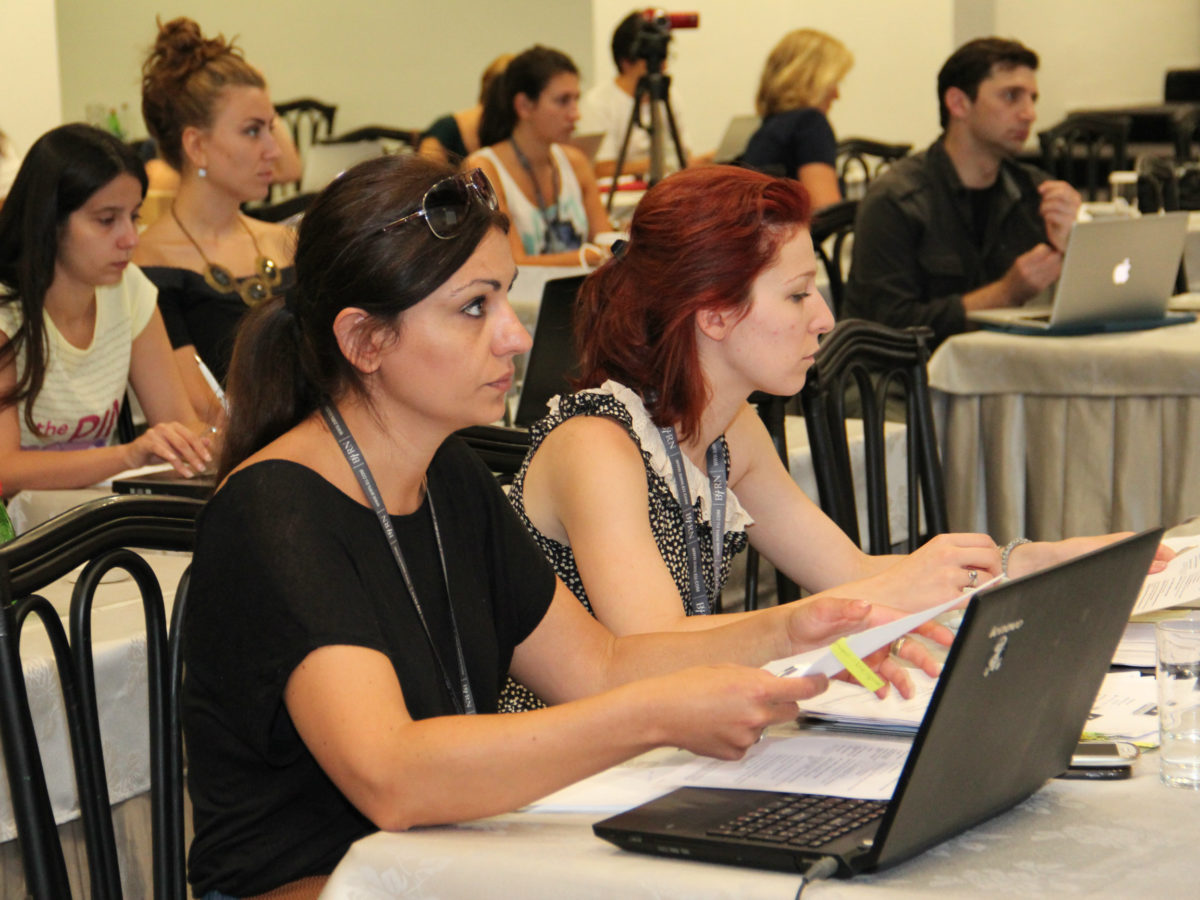
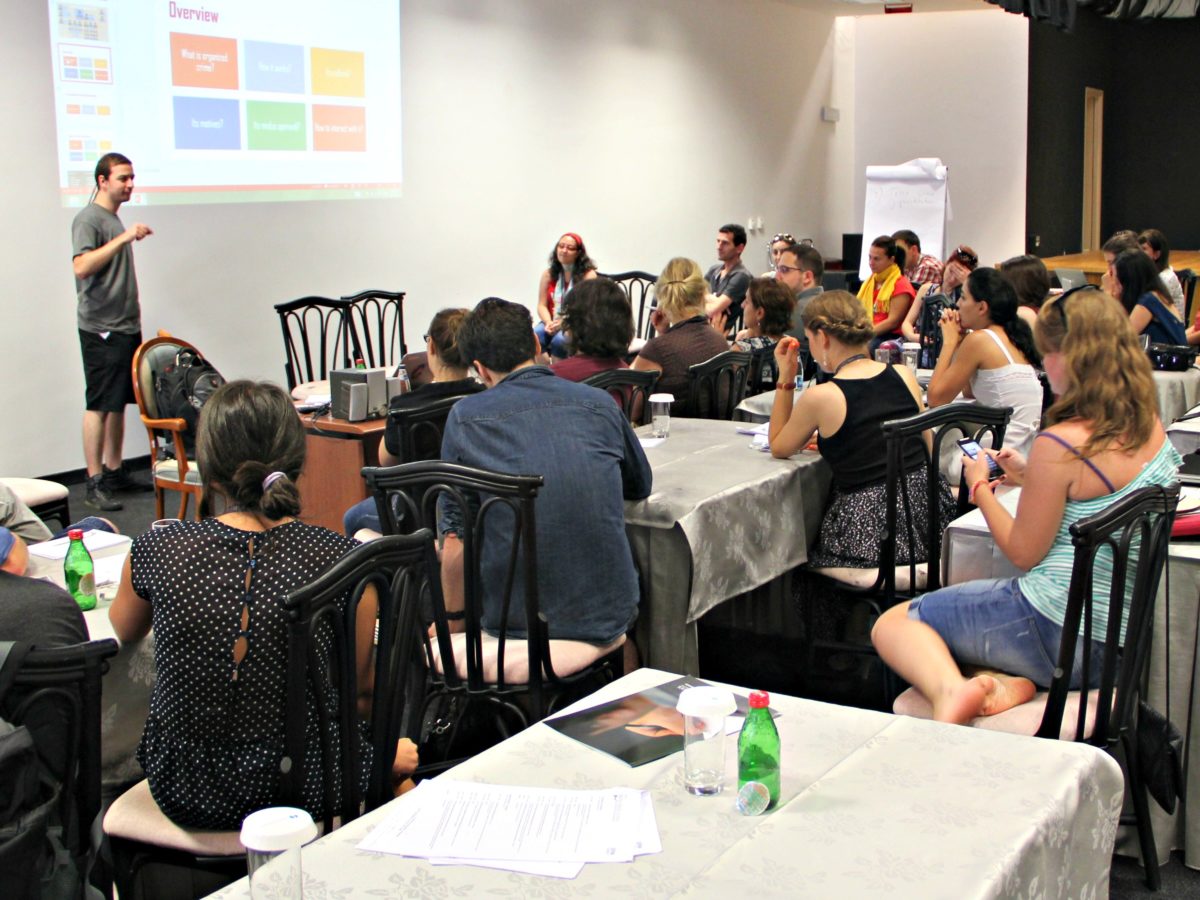
During the five-day training programme in Montenegro, 35 journalists from all over the Balkans and the world had the chance to pick up tips and tools on how to investigate corruption and organised crime cases.

Lectures were given by top trainers in the field from The Guardian, the BBC, OCCRP, Access Europe and others.

The Summer School is organised in cooperation with the Media Program South East Europe of the Konrad-Adenauer-Stiftung and with support of the Austrian Development Agency (ADA), the operational unit of Austrian Development Cooperation, the North Atlantic Treaty Organization, the OSCE Mission in Kosovo, the OSCE Mission to Serbia, the OSCE Presence in Albania, the OSCE Mission to Montenegro and USAID Macedonia.

Summer School Day 4: Collaborative Reporting on Social Media

Social media can be an important tool for investigative journalists, the fourth day of the BIRN Summer School in Montenegro heard.

The BIRN Summer School began on Thursday, as on previous days this week, with a lecture by The Guardian newspaper’s Washington correspondent Paul Lewis, who explained how social media can help journalists research stories.

Lewis presented two case studies based on stories he published about Ian Tomlinson, who died after being unlawfully struck by a police officer during protests against a G-20 summit, and Jimmy Mubenga, who died on a plane as he was deported from the UK.

“There are so many possibilities for you [journalists] to find sources and stories on social media. This is what we call collaborative reporting,” Lewis said, adding that for many of his articles, information was found and witnesses contacted through various social media channels.

Advising the Summer School students how to approach sources and interview them, Lewis said: “Sometimes it is better not to ask too many questions, but to let people speak.”

During the second part of the day, the Summer School students were split into two workshops to help them to develop their stories for the future. Markus Lindermann taught journalists how to use advanced internet search techniques, while Helen Darbishire explained how to request information from the European Union using freedom of information laws.

The last lecturer on Thursday was a producer from the BBC, Meirion Jones, who introduced techniques for doing investigative stories for television.

Jones explained when and why journalists use hidden cameras for covert filming, and why it is important to have fewer documents in video stories and more people.

“It is very problematic for the viewer to sit and watch your piece if you have more than 30 seconds of documents. Or a lot of numbers. They are the enemies of TV. You need to have people in your video,” Jones said.

Some 35 reporters from the Balkans and across the world have gathered in the Montenegrin coastal town of Becici for the five-day Summer School, aiming to boost their investigative skills.

The Summer School is organised in cooperation with the Media Program South East Europe of the Konrad-Adenauer-Stiftung and with support of the Austrian Development Agency (ADA), the operational unit of Austrian Development Cooperation, the North Atlantic Treaty Organization, the OSCE Mission in Kosovo, the OSCE Mission to Serbia, the OSCE Presence in Albania, the OSCE Mission to Montenegro and USAID Macedonia.

Summer School Day 3: “Avoid pressure, take time and listen more”

Undercover policing, FIFA corruption and drug cartels were among the themes explored by award-winning journalists at the BIRN summer school of investigative reporting.

The day started with a lecture from Guardian’s Washington correspondent Paul Lewis who spoke about his two-year investigation into undercover policing in the UK.

Addressing journalists about how to carry out a successful interview, Lewis underlined that “there are no universal rules“, but there are some tips for making your source “open up“.

“Avoid pressure, take time and listen more,“ Lewis said.

He also advised journalists to be honest with their source and “never cheat”.

His lecture was followed by a training session held by Sunday Times reporter Heidi Blake who shared how she uncovered evidence of corruption related to Fifa and the Qatar 2022 World Cup.

Stevan Dojcinovic from the OCCRP held a lecture about investigating organised crime. He also revealed how he carried out one of his major stories involving drug cartels in the Balkans.

How to monitor websites and access pages that have been deleted or changed was the subject of the last lecture for Wednesday held by Marcus Lindermann.

“The most important thing is to know where to pick up traces and how to follow them. Google can work for you, if you know how to use it,“ Lindermann said.

Some 35 reporters from the Balkans and across the world have gathered in the Montenegrin coastal town of Becici for the five-day summer school, aiming to boost their skills.

The Summer School is organised in cooperation with the Media Program South East Europe of the Konrad-Adenauer-Stiftung and with support of the Austrian Development Agency (ADA), the operational unit of Austrian Development Cooperation, the North Atlantic Treaty Organization, OSCE Mission in Kosovo, OSCE Mission to Serbia, OSCE Presence in Albania, OSCE Mission to Montenegro and USAID Macedonia.

Summer School Day 2: From UK Riots to Legal Leaks

The UK riots, legal leaks, how to protect sources and tracking money abroad were all explored in the second day of BIRN’s summer school.

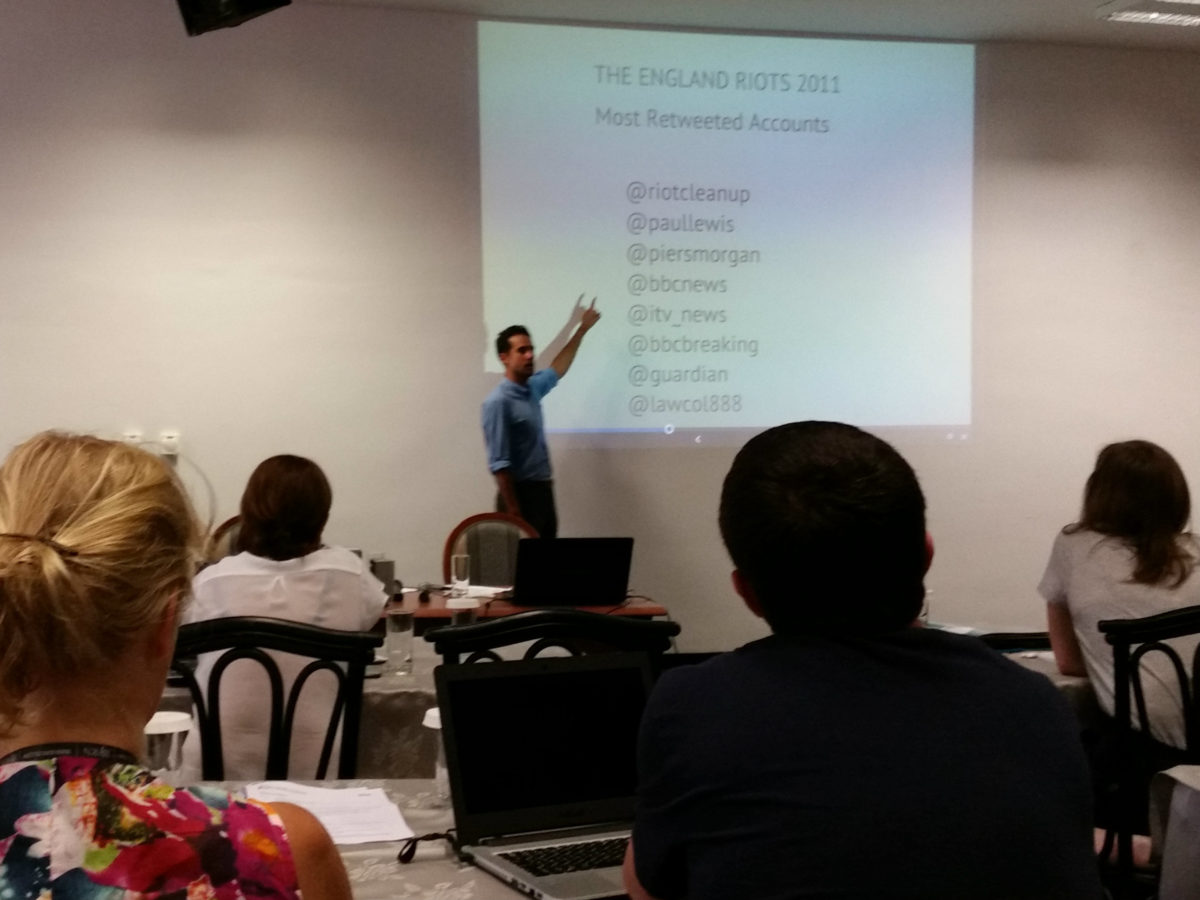
Lead teacher and Guardian Washington correspondent Paul Lewis explained how he used data to shed new light on the riots that rocked the UK in 2011.

Lewis showed the journalists how to exploit social media, including verifying information and getting members of the public to help.

 “You should embed the idea of being investigator into your daily work,” said Lewis, explaining that most of his investigations emerged from his daily reporting duties.

His session was followed by a lecture from Helen Darbishire, from the Access Info Europe group, who presented a toolkit called “Legal Leaks”.

“This was designed for journalist so they can know how to ask and get information through freedom of information laws,” Darbishire said.

She added that, on paper, Serbia had the best Freedom of Information law in Europe, while the worst were in Italy and Austria.

Marcus Lindemann explained to students how to use Google’s extensive tools to dig deeper.  

Public records and how to uncover secrets held in tax heaven were the topic of OCCRP’s Paul Radu’s session.

His colleague Miranda Patrucic shared tips and advice on how to approach and protect sources.

“Don’t pressure them for the immediate comment. Deciding to speak out takes time,” Petrucic said.

“Reporters need to build trust and bond with the source,” she added.

Some 35 reporters from the Balkans and across the world have gathered in the Montenegrin coastal town of Becici for the five-day summer school, aiming to boost their skills.

The Summer School is organised in cooperation with the Media Program South East Europe of the Konrad-Adenauer-Stiftung and with support of the Austrian Development Agency (ADA), the operational unit of Austrian Development Cooperation, the North Atlantic Treaty Organization, OSCE Mission in Kosovo, OSCE Mission to Serbia, OSCE Presence in Albania, OSCE Mission to Montenegro and USAID Macedonia.

BIRN Summer School Kicks off in Montenegro

The fifth BIRN summer school of investigative journalism has opened in the Montenegrin coastal town of Becici, bringing together top trainers and journalists.


Some 35 reporters from the Balkans and across the world have gathered on Monday for the five-day summer school, aiming to boost their skills.

The school was kicked off by lead teacher and Guardian journalist Paul Lewis, who will teach students how to think about data in the digital age and use social media to investigate.

The introductory lecture was followed by investigative case studies from BIRN editor Lawrence Marzouk, while in the afternoon participants were given a detailed session in data journalism by Markus Lindemann.

Miranda Petrucic from the Organized Crime and Corruption Reporting Project explained to students how she exposed high profile corruption cases in Montenegro.

The day finished with a panel debate focused on the challenges of tackling corruption within the defence and security sector in the Western Balkans.

Alberto Bin, director of Integration, Partnership and Cooperation at NATO, spoke about reforms in South East Europe, while Dina Bajramspahic, from Montenegrin NGO Alternative, and Katarina Djokic, from Belgrade Centre for Security Policy, reflected on the current methods of fighting corruption in their countries.

The Summer School is organised in cooperation with the Media Program South East Europe of the Konrad-Adenauer-Stiftung and with support of the Austrian Development Agency (ADA), the operational unit of Austrian Development Cooperation, the North Atlantic Treaty Organization, OSCE Mission in Kosovo, OSCE Mission to Serbia, OSCE Presence in Albania, OSCE Mission to Montenegro and USAID Macedonia.

BIRN Energy Investigation Makes Waves in Albania

BIRN’s hard-hitting series of investigations into energy deals in Albania has generated widespread interest in the country.

The revelations have hit the front pages of most of the country’s newspapers in recent weeks, have been aired by leading television stations and have led to calls for a tax investigation to be opened into the family of former prime minister Sali Berisha. 

The investigation was also picked up in Bosnia and Herzegovina, Serbia and Kosovo where it was republished in more than 20 media outlets.

The Balkan Investigative Reporting Network has revealed how Berisha’s daughter Argita Malltezi, and her husband and colleague, made huge profits from selling worthless land to Bosnian businessman Damir Fazlic.

Fazlic, a friend and adviser to Berisha, then made millions of euros when the premier designated the land an “energy park”, paving the way for massive investment.

BIRN also traced the origin of the investment to controversial Serbian tycoon Vojin Lazarevic and revealed the extraordinary number of foreign energy investors who employed Malltezi as their solicitor as they attempted to launch businesses in Albania.

Fazlic has denied any wrongdoing while Malltezi and her father have yet to comment.

In an editorial for the newspaper Tema, journalist Mero Baze, a vocal critic of Berisha, lauded BIRN and Lindita Cela, the lead journalist in Albania on the investigations.

The story also sparked a reaction from Erion Brace, Socialist MP and chairman of the Parliamentary Commission on the Economy, who called on the tax authorities to investigate BIRN’s findings.

The stories are the first to be published as part of BIRN’s “Power Games” project, a detailed investigation into the energy sector in the Balkans.

BIRN has spent nine months looking at the key companies, players and state officials involved in this lucrative, secretive and critical sector of the economy.

Power Games is part of “A Paper Trail to Better Governance” project financed by Austrian Development Agency to hone investigative journalism in the Balkans, hold officials to account and improve the implementation and use of freedom of information laws.

BIRN Fellowship Alumnus Vlad Odobescu Wins a Hubert Humphrey Fellowship

Vlad Odobescu, a Romanian investigative reporter and a participant in last year’s Balkan Fellowship for Journalistic Excellence, has won a Hubert Humphrey Fellowship in the United States.

For 10 months starting this August, Vlad will be affiliated to the Walter Cronkite School of Journalism and Mass Communication at Arizona State University in Phoenix. He will study funding models for investigative journalism across the United States and explore whether they could be applied in Romania.

Initiated in 1978, the Hubert Humphrey Fellowship Program is funded by the US Department of State.

Vlad won the top prize in last year’s Balkan Fellowship for Journalistic Excellence for his article How to Get Ahead in Romanian Politics, which described how politicians have bounced back from corruption investigations.

BIRN Screens Documentary Film in Brussels

BIRN’s film ‘The Majority Starts Here’ was shown at the centre for European Policy Studies in Brussels on Wednesday.

The event was hosted by former EU Special Representative to Macedonia and Senior Associate Research fellow Erwan Fouere, and the screening was followed by a debate on current challenges in Balkan countries with BIRN Macedonia director Ana Petruseva.

Petruseva spoke about the importance of BIRN’s Transitional Justice programme, which is the only one of its kind in the region, the public’s interest in issues related to the past and the lack of political will to address them, as well as about the making of the documentary, the state of the media in the region and challenges to freedom of speech.

Guests included EU parliament rapporteur for Macedonia Richard Howitt, representatives of the European Commission, the European Parliament, Brussels-based think tanks as well as diplomats from Balkan countries’ embassies.

BIRN’s documentary is available to buy at: http://www.balkaninsight.com/en/page/dvd-documentary-majority-starts-here.  


Prestigious National Awards for BFJE Alumni

Two alumni from the Balkan Fellowship for Journalistic Excellence have won awards this month for their work in 2013.

The Croatian Journalists’ Association, HND, named Barbara Matejcic as the recipient of its annual Marija Juric Zagorka award for written journalism. Barbara won the award for a series of articles about Vukovar, where a deep ethnic divide still exists between Croat and Serb populations as a result of the conflict of the 1990s.

“It is no coincidence that Barbara Matejčić was not proposed for this award by her colleagues or editors, but by a group of people from Vukovar. That’s because her stories influence ordinary people. Therefore this award is more than deserved — for whom, after all, should journalists actually work if not ordinary people?” the prize jury said in its citation.

A few days later, on May 8, Dino Jahic received the web journalism award from the Independent Association of Journalists of Serbia, NUNS. The story, “Bought International Awards to Show Off on Home Turf,” revealed that prominent individuals from Bosnia and Serbia had bought “awards” from the so-called Europe Business Assembly of Oxford, sometimes using public money to do so. The story was co-authored by fellow reporters from the Centre for Investigative Journalism of Serbia, Jasna Fetahovic and Dracana Peco, one of this year’s BFJE fellows.