Are you a journalist interested in attending Dataharvest – The European Investigative Journalism Conference in May 2026? Do you want to benefit from advanced training, networking opportunities, and connections with editorial teams from all around Europe? BIRN, in partnership with the conference organisers, Arena for Journalism in Europe, and with the support of ERSTE Foundation, invites interested journalists to apply for a grant that can help make this experience possible.
Eligible countries: Albania, Bosnia and Herzegovina, Bulgaria, Croatia, Czech Republic, Greece, Hungary, Kosovo, North Macedonia, Montenegro, Poland, Romania, Serbia, and Slovakia.
Number of individual grants: 22
About the Grant
Journalists are invited to apply for a grant to attend Dataharvest 2026 – The European Investigative Journalism Conference, one of Europe’s major annual events dedicated to investigative, data, and collaborative journalism. Over the course of the event, participants will engage in practical training, workshops, expert sessions, and networking, with the aim of enhancing professional skills and fostering collaboration across countries and media organisations.
The grant is designed to support journalists whose participation in international professional events may be limited by financial or logistical constraints. By enabling their attendance at Dataharvest, we want to strengthen professional skills, facilitate international networking, and encourage cross-border collaboration within the European investigative journalism community.
Who Can Apply
The call is open to professional journalists, with particular encouragement for freelance journalists and those working in small or independent media outlets, based in the following countries:
Albania, Bosnia and Herzegovina, Bulgaria, Croatia, Czech Republic, Greece, Hungary, Kosovo, North Macedonia, Montenegro, Poland, Romania, Serbia, and Slovakia.
What the Grant Offers
Each selected journalist will receive a lump-sum grant of €700, which is intended to cover:
Travel costs to and from the conference;
Daily expenses (per diem) during the conference.
In addition, the following will be arranged and covered directly by the conference organisers:
Conference registration;
Accommodation (three nights, 28, 29, and 30 May);
All necessary practical information to participate in the event.
Kindly note that the grant covers the registration for and accommodation during the main programme of the conference (29 – 31 May 2026), and not the full-day masterclasses on 28 May 2026. The ticket for masterclasses needs to be purchased separately if one wishes to attend.
How to apply
All interested journalists are encouraged to apply by completing the online application form.
Applications must be submitted by 2 February 2026, 17:00 CET. Successful candidates will be notified mid-February 2026.
Online presentation
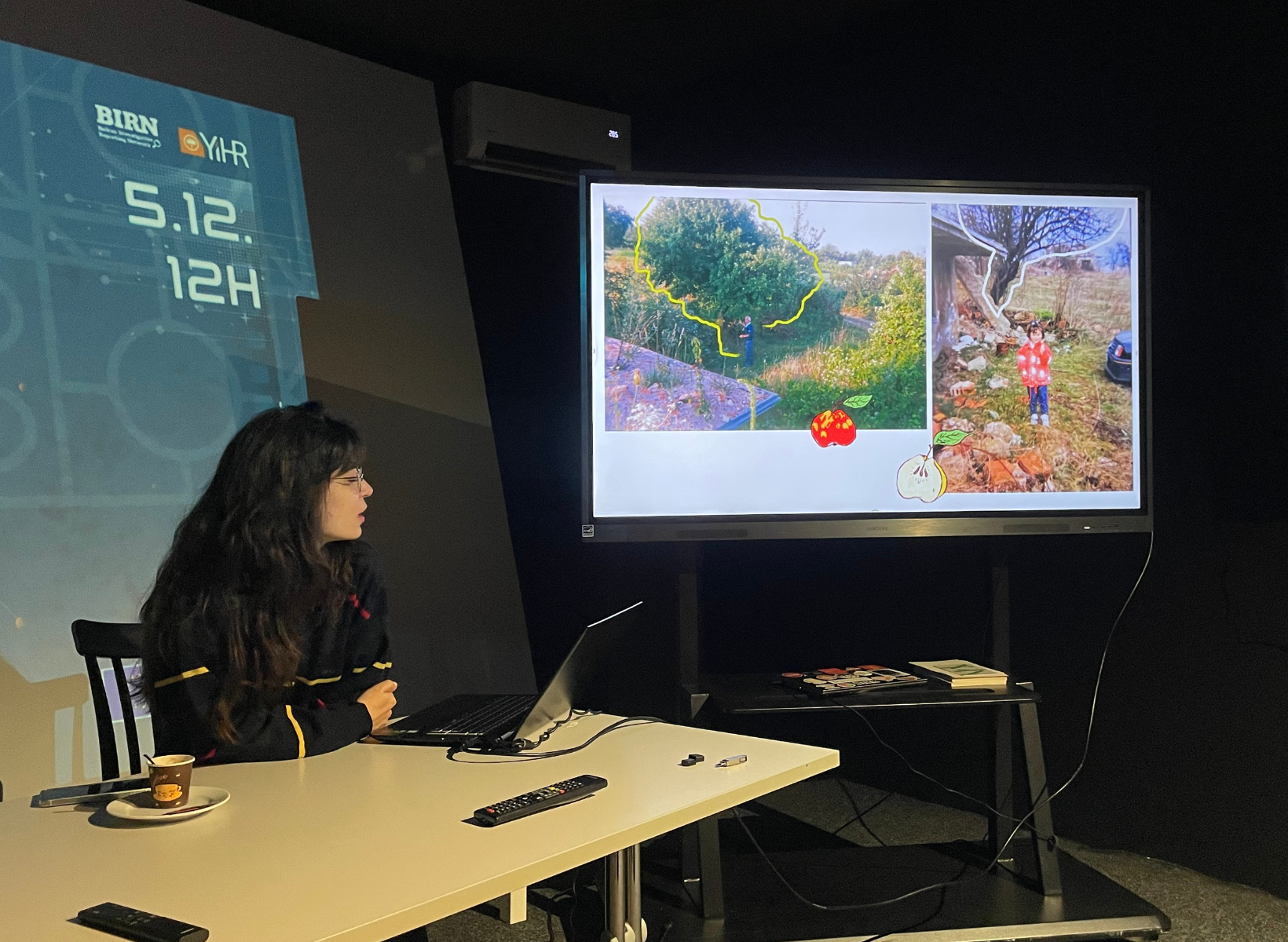
Join us for the presentation, and get a comprehensive overview of Dataharvest, including its professional development and networking opportunities, as well as detailed information on grant-supported participation. Participants will learn what to expect from the 2026 conference, how to strengthen their grant applications, and how to make the most of this opportunity.
The session will be hosted by Jelena Prtorić, Dataharvest Director and Project Coordinator.
A dedicated Q&A session will allow participants to ask questions about the programme, participation, grants, and other practical aspects of the conference.
Selection Process and Criteria
Applications will be reviewed by a selection panel and assessed based on the following criteria:
Years of relevant professional experience and areas of journalistic work;
Motivation to participate, including the clarity and relevance of the applicant’s interest in the conference;
The applicant’s potential contribution to the conference programme, discussions, and peer exchange.
Final selections will be made collectively by the panel, taking into account the overall quality of applications and ensuring a balanced representation of countries of residence among selected participants.
We look forward to receiving your applications!
Should you have any questions about the grant or the application process, please contact us at: [email protected]
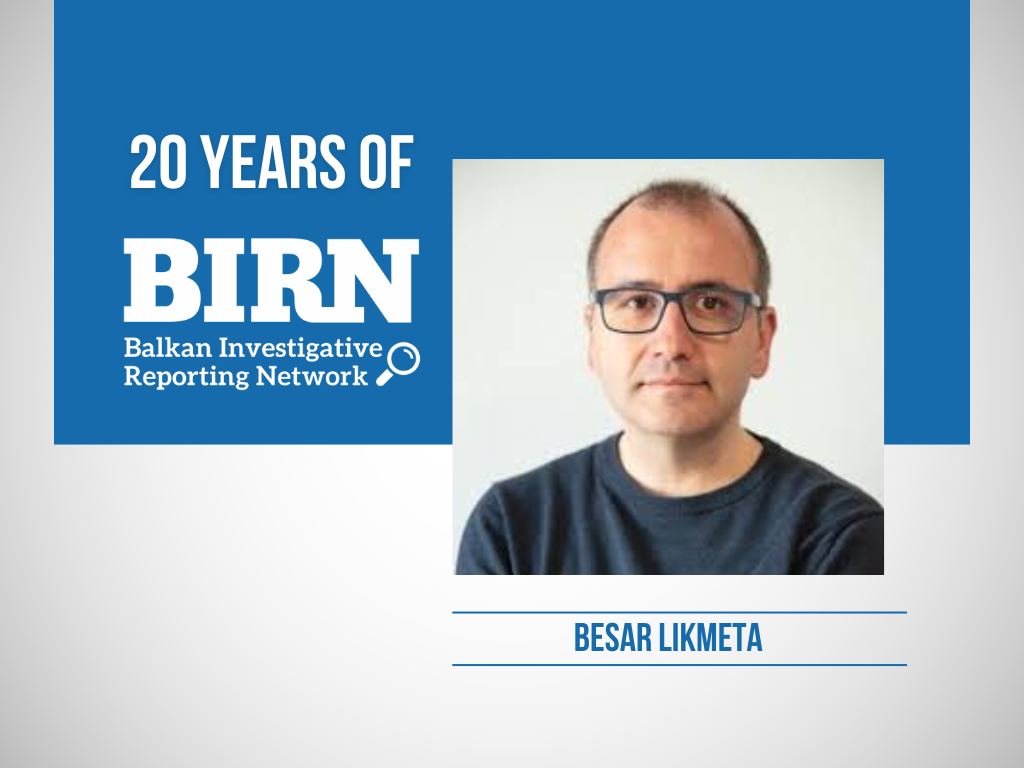
In 2025, Balkan Investigative Reporting Network (BIRN) marked its first 20 years – 20 years of investigative journalism and dedication to promoting freedom of speech, human rights and democratic values.
Besar Likmeta has been the editor of BIRN Albania almost from the beginning of BIRN, since 2007, and was also the country correspondent for Balkan Insight.
Having studied philosophy at the University of North Florida, he explains how that shaped his thinking and influenced his path in journalism and investigative work.
“The quest to make sense of the world, to understand its underlying truths, and to engage with the study of ideas, has instilled in me a deep appreciation of the role the media – now increasingly social media – plays in shaping our beliefs as individuals and as a community,” he says.
“I grew up in a country where freedom was constrained by propaganda and where no independent press existed, and I learned at an early age the importance of free speech and the right to be informed – not only as pillars of a democratic society, but also as prerequisites for personal freedom and intellectual inquiry,” he adds.
He has extensive experience in journalism, having worked in print, television and electronic media in both the US and Albania since 2003. Besar started his career reporting for the Florida Times Union in Jacksonville, Florida. He moved back to Albania in 2005 where he worked as a features editor for the Tirana Times, and as world news editor for the 24-hour news channel TV Ora News.
He has contributed stories to various publications, including The Christian Science Monitor, Global Post, Transitions Online, The Diplomatic Courier and World Politics Review.
In 2009, Besar received the CEI/SEEMO Award for Outstanding Merits in Investigative Journalism and in 2010 he was runner-up for the Global Shining Light Award, presented at the Global Investigative Journalism Conference in Geneva.
He recalls when and how he found out about BIRN.
“I first heard about BIRN in 2006, as one of the handful of media development organisations in the region supporting coverage of current affairs in English through its newsletter, Balkan Insight. At the time, there was little local reporting in English, and the region’s narrative abroad was largely shaped by major Western media outlets, often relying on parachute journalism and reproducing clichés and stereotypes,” he explains.
One thing was significant for him when it comes to our organisation.
“What drew my attention to BIRN was the consistently high quality of its in-depth reporting, along with the professional editing of news analysis, investigations, and features,” he says.
When he started working for BIRN, he expected it to sharpen his skills as a reporter.
“Over the years, BIRN has proven to be both a challenging and rewarding professional experience – not only for me, but also for many of my colleagues and for hundreds of other journalists across the region,” he says.
Having worked with BIRN for nearly 19 years, Besar saw firsthand how BIRN Hub and BIRN Albania complemented and built on each other within the network over the time.
“BIRN Albania was established in 2014 by a group of journalists who had participated in BIRN Hub’s regional projects, such as the Fellowship for Journalistic Excellence. The aim was to introduce to the Albanian-language media landscape a professional publication where local reporters could benefit from strong editorial support and mentorship, enabling them to produce in-depth, hard-hitting investigative journalism. Through the dedication and hard work of its staff and contributors, BIRN’s local outlet, Reporter.al, has become a media source of record in Albania,” he explains.
In the current Albanian media landscape, BIRN Albania has a specific role.
“BIRN is the leading media development and investigative journalism organisation in Albania. It plays a crucial role as a bridge between journalists, media outlets, and civil society, helping to strengthen their collective impact as agents of change in the fight against corruption and organised crime, and in the defence of human rights and fundamental freedoms. In the years ahead, we aim not only to uphold but also to expand this role, particularly in the face of the profound generational technological transformation brought about by artificial intelligence,” Besar says.
Looking back over BIRN’s first 20 years, he has seen big changes and challenges within the network and in Albania.
“Its size has certainly expanded, from a handful of ambitious and passionate journalists and editors into a powerhouse of hundreds of media and development professionals, programme managers, and researchers. The organisation’s impact and influence have grown accordingly. Today, BIRN is a household name in the Western Balkans and in Brussels. It has taken 20 years and a great deal of hard work to get here. Along the way, we have overcome many challenges – from funding crises to SLAPP lawsuits, while also benefiting from significant support,” he says.
Since BIRN Albania’s establishment, it has produced many award-winning investigations, he notes.
“The most influential investigations over the years have been those that succeeded in shaping the public narrative on specific issues, generating sustained public debate and prompting authorities to act, including by launching investigations and issuing indictments.
“In this regard, the series of investigations into the waste management scandal – linked to the construction of three waste-to-energy plants through public-private partnerships – has had the greatest impact.
However, investigations aren’t the only BIRN Albania work that deserve attention, he says.
“BIRN Albania is widely known for its investigative reporting, but this represents only the tip of the iceberg. The organisation has also come to play an important role in monitoring the use of traditional and social media during elections, producing research on propaganda and foreign information manipulation and interference (FIMI), monitoring the justice reform in Albania, advocating for freedom of expression and media freedom, and assessing the country’s overall progress toward European Union integration,” Besar outlines.
Speaking of BIRN’s next 20 years, he has his “dream scenario”.
“My ideal scenario is that, 20 years from now, we will have passed on our skills and ethical standards to a new generation of journalists and editors, and that the organisation will be more sustainable and resilient,” he explains.
Besar stresses what BIRN represents for him personally, and who is he outside BIRN.
“BIRN represents my life’s work – so far – with all its joys and tribulations, and outside of it, in the little time that remains, I enjoy spending it with friends and family,” he concludes.
On December 12, the Balkan Investigative Reporting Network launched SPEAK, a new platform designed to report abuses of surveillance and censorship in the Western Balkans.
The region faces a surge in surveillance and censorship practices that have profound implications for freedom of speech, human rights and democracy. BIRN’s report from April 2025, “Surveillance and Censorship in the Western Balkans”, highlighted the urgent need for a safe and accessible reporting mechanism. SPEAK was created to meet this need – a secure space where individuals can report abuses of surveillance and censorship.
What is SPEAK?
SPEAK allows users to safely and anonymously report abuses of surveillance and censorship across the Western Balkans, in Albania, Bosnia and Herzegovina, Kosovo, Montenegro, North Macedonia and Serbia. As BIRN also monitors digital rights violations in Romania, Hungary, Turkey, and Croatia, submissions from these countries are welcome as well.
The platform empowers users to speak out against illegal surveillance and censorship. All submissions are reviewed by BIRN, which may further investigate relevant information and include them in in-depth stories or ongoing research projects. This approach ensures that critical issues are brought to light and further examined.
How to report?
Reporting through SPEAK is simple and fully anonymous, using BIRN’s Engaged Citizen Tool (ECR) a dedicated questionnaire consisting of basic questions in required fields, where the user is asked to provide information describing the incident they are reporting. The ECR tool does not collect or store IP addresses or any personally identifiable information, ensuring full anonymity and data protection. Users are not required to provide any personal details, guaranteeing complete identity protection.
By using SPEAK, journalists, human rights defenders, civil society organisations and the general public can report violations without fear of retaliation. Highlighting and reporting these abuses helps to increase transparency, raise awareness, and strengthen human rights in the region.
Visit our new platform and learn how to report, what can be reported, and how the whole process works here.
This website was produced with the support of the Open Society Foundations – Western Balkans, as a part of Surveillance and Censorship in the Western Balkans project. The thoughts and opinions expressed herein belong to the authors and do not necessarily reflect the views of the Foundation.
Ada is a reporter with more than a decade of experience covering breaking news and writing long-form stories for outlets including The New York Times, The Guardian, The Boston Globe, and Gazeta Wyborcza. In 2021, she was selected as the IWMF Elizabeth Neuffer Fellow out of over a hundred applicants worldwide. During the fellowship, she reported for The New York Times and The Boston Globe, and carried out independent research on media freedom at MIT. Before that, she worked as a freelance foreign correspondent based in New Delhi and was part of the editorial teams at NewsMavens and Wysokie Obcasy.
Ada, who is based in Warsaw, has wide experience in a variety of journalistic forms, including investigations, analysis, features, documentary photography, and narrative podcast.
“This is a fascinating time to be reporting on Poland, and I’m thrilled to do it with BIRN. What excites me most is the chance to work alongside journalists across the region and dive into the kind of cross-border stories that are uncomfortable in all the right ways”, she said about her new role.
Ada will be part of the Reporting Democracy team. In this position, she succeeds Claudia Ciobanu, BIRN’s longtime correspondent and Fellowship for journalistic excellence alumna, who established our presence in Poland six years ago.
Reporting Democracy is a cross-border journalistic platform dedicated to supporting independent journalism to scrutinise the issues, trends and events shaping the future of democracy in Central, Eastern and Southeast Europe.
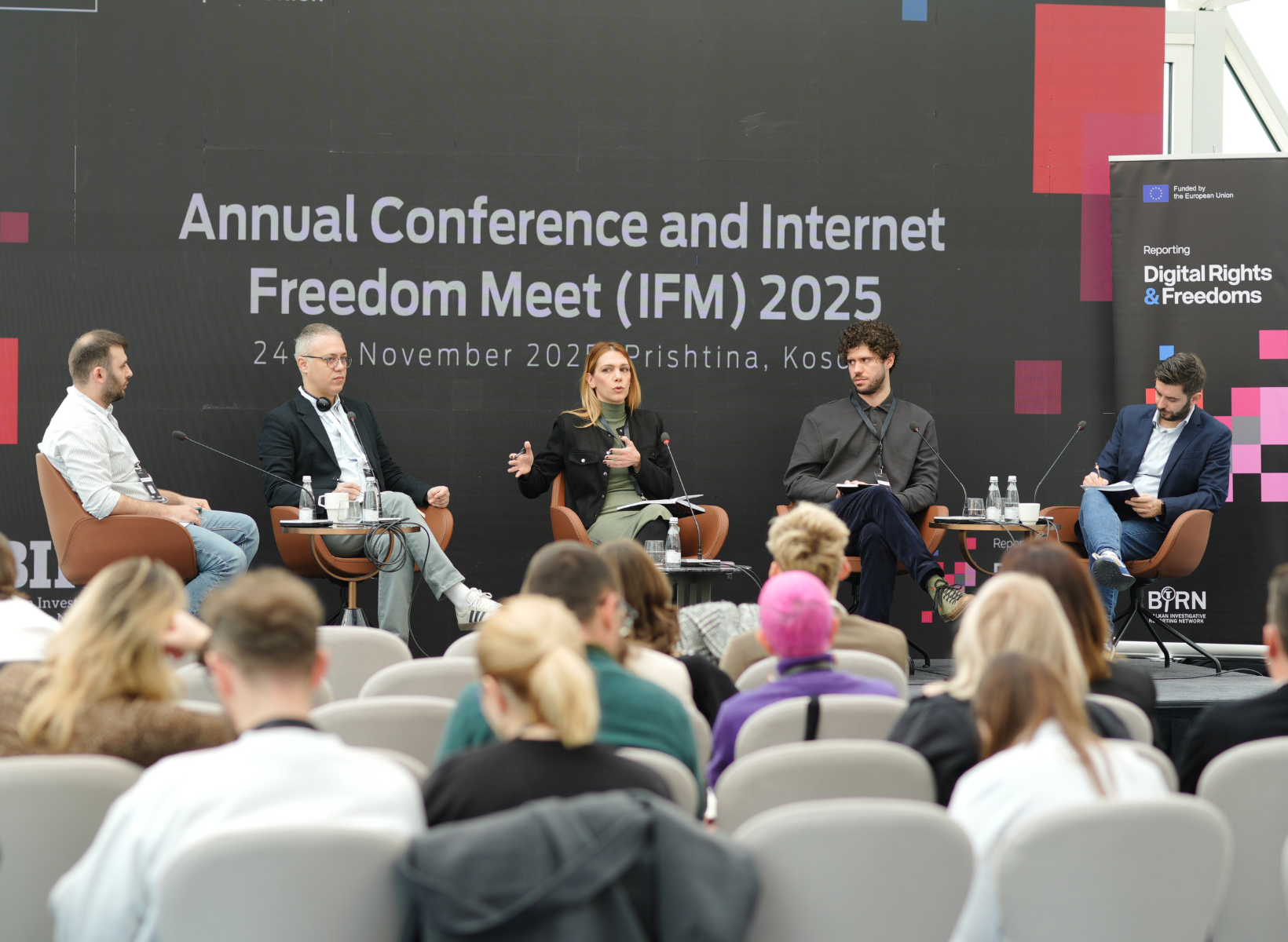
From November 24 to 26, 2025, BIRN welcomed some 120 participants – journalists, civil society activists, tech experts, academia, relevant institutions’ representatives and citizens at large – in Prishtina (Kosovo) for a regional annual conference and the Internet Freedom Meet event on digital rights and freedoms.
What unfolded was more than a presentation of cold statistical data. We witnessed a collective reckoning with how rapidly emerging technologies are advancing, and with how weak oversight and shrinking civic spaces are reshaping – and often endangering – people’s everyday lives across the Western Balkans and beyond.
From Project Roots to Regional Reality
The third and final annual conference is built on BIRN’s three-years project, Reporting Digital Rights and Freedoms, funded by the European Union and implemented by BIRN Kosovo and its regional partners BIRN Hub, BIRN Albania, BIRN Bosnia and Herzegovina, BIRN Macedonia, BIRN Montenegro and BIRN Serbia in the Western Balkans region and Turkey. The project aimed at strengthening media and civil society capacity to document and report digital rights and freedoms violations. Through training, capacity building online and offline events, fellowships, subgranting as well as editorial and other technical support, the project equipped newsrooms and individuals, journalists and activists with tools to first and foremost understand and then monitor and report about issues such as online abuse, to challenge disinformation, and bring somewhat hidden digital violations into public debate and for institutional reaction.
BIRN Kosovo director Jeta Xharra opened the conference and noted that there was very little knowledge about digital rights and that the project has contributed to educating both journalists to report on and the public to understand digital rights.
In a high-level speech, Kosovo’s President, Vjosa Osmani, sent a strong message of support towards the internet as a free space, and on the importance of exposing tech-facilitated abuse, be it online manipulation, promotion of hatred, violence against women or harassment of children.
The Deputy Head of the EU Office in Kosovo, Eva Palatova, emphasised the EU’s commitment to a human-centric digital environment, noting recent key policy instruments, the Digital Services Act, the AI Act and the European Democracy Shield, aimed at protecting users.
The work done throughout the project pointed to the importance of addressing internet governance-related topics systematically. The latest BIRN regional report, launched at the opening of the conference, documented 1,440 violations from September 2024 to August 2025. Over the three years of the project, based on BIRN’s monitoring methodology, we captured over 4,000 cases of digital rights and violations mapped.
From September 2024 to August 2025, the most frequent types of trending violations include misuse of artificial intelligence (AI) to facilitate sexual, gender-based violence and fraud, threats to the freedom and pluralism of information, attacks on digital assets and economic rights and harmful and threatening online behaviour.
The conference was attended by around 120 participants including 30 Internet Freedom Meet fellows from the Western Balkans region selected following a public call for participation.
Throughout the three-day event, the fellows played a dual role. They followed conference panels on the main stage, bringing sharp questions and contextual knowledge; and in parallel, they immersed themselves in dedicated workshops with international trainers, diving deeper into some of the most urgent challenges shaping the digital landscape.
In these workshops, fellows confronted real-world dilemmas: how to investigate online harassment while keeping victims safe; how to trace disinformation networks across borders; how AI-generated deepfakes and algorithmic bias threaten vulnerable groups; and how online/street surveillance erodes civic freedom. Fellows additionally enriched the discussion with local knowledge and lived experiences.
Photo: BIRN Kosovo
Humans Behind the Numbers
The conference focused heavily on the human impact behind the numbers – giving a platform to stories of and about real people – journalists, activists, citizens’ – whose lives were impacted and shaken by digital abuse, such as threats, surveillance or disinformation.
Participants heard worrying testimonies: journalists recounting smear online campaigns after exposing corruption, activists exposed to harassment and doxxing following their online advocacy, and citizens becoming victims of AI-driven scams, identity theft or deepface-based abuse.
Speakers emphasized a critical truth: digital rights violations are rarely isolated incidents. They are more often than not entwined with inequalities – especially in terms of gender, LGBTIQ+ persons, minorities, people with disabilities and other vulnerable groups. As Albanian technology policy expert Alba Brojka noted on the panel about gender-based violence, “It is a mirror of what is happening in the society and is amplified online.”
Photo: BIRN Kosovo
New Technologies, Same and Worse Dangers
Emerging technologies, such as generative Artificial Intelligence, are accelerating threats, while legislation and institutional oversight – and to a valuable extent also the media and civil society pace of understanding technological changes – lag dangerously behind.
Experts on the panels warned of AI-facilitated fraud, voice-cloning scams, deepfakes and more – noting that they are all increasingly used to exploit individuals’ vulnerabilities, especially women, young people and children. We heard how deepfakes have become so realistic that more and more people, especially with the information overload, cannot differentiate between real news, manipulated content or disinformation – which directly leads to undermining public trust and discourse influencing democratic and public informed participation.
Panelists looked into [weak] legal frameworks and selective enforcement, which make digital space a fertile ground for censorship, repression, threats and surveillance. We heard from several speakers sharing stories from Serbia or Turkey of unlawful surveillance, spyware deployment and non-transparent use of digital technologies and tools to intimidate critical voices of activists, journalists or even whistleblowers. While on one side, we see an “implementation gap” of those appropriate laws that exist, on the other side, in many places, we encounter outdated institutional settings, limited resources or political pressure, which stays unbothered while critical voices under attack stay unprotected and often with severe online or offline consequences.
Photo: BIRN Kosovo
Digital Rights are Human Rights – Not Optional Extras
One underlying message seconded by all participants – and participation was truly multistakeholder – is that digital rights are human rights, and are not marginal issues for tech-savvy urbanities but fundamental rights, deeply tied to dignity, security and democratic participation. Beyond the number of captured digital rights violations, those numbers represent people. At least one person per case. At least one more friend or family member was affected by it. And often entire communities.
Numbers cannot tell the whole story. Data reveals patterns to which the BIRN team, together with our partners, fellows, subgrantees, gave context. Living in the online space is not abstract – it shapes people’s safety, identity and freedom. Every violation is a life interrupted, a voice shaken, a right diminished. By documenting abuses, amplifying testimonies and exposing the systems that allow them to keep happening, the project brought human stories back to the centre.
Photo: BIRN Kosovo
From Talk to Action: What Needs to Happen Now
By the end of the conference, participants agreed on several urgent and concrete steps for the region:
Update and enforce legislation regionally, looking into good practice, to keep pace with technological change: laws should address AI-driven abuse, data protection, online harassment and digital surveillance
Support for victims/survivors, ensuring accessible reporting mechanisms, provide legal, psychological and social support, including protecting anonymity whenever needed
Empower independent media and civil society, including sustained grants, training and mentorship, so that civil society and journalists (media) can continue documenting abuses safely and effectively
Promote digital literacy and public awareness, as a necessary continued effort to educate citizens at large about ever-evolving online risks and understanding their rights
Fostering regional cooperation, as digital threats do not respect borders – cooperation among media, civil society, institutions, technical community and academia across countries is essential.
Why This Matters and Appreciation Words
For many years we have lived in a world where technology evolves fast – outpacing our social, legal and institutional capacity to adapt. As the closing conference in Prishtina underscored, these are not abstract policy questions. They are about people’s lives, freedom, trust, safety and dignity. They are about our future.
By bringing together journalists, experts from different fields and policymakers, over the three-year project we jointly took responsibility for protecting digital rights not as a niche project but as a core human-rights obligation that shapes people’s realities in the digital age. The Reporting Digital Rights and Freedoms initiative proved that when knowledge, evidence and human stories are brought together, digital rights can no longer be dismissed as technical issues “in the cloud”. They become what they truly are – essential rights that protect the very fabric of democratic society.
BIRN Kosovo wishes to extend its gratitude to project partners, coordinators, editors, monitors, journalists, researchers and authors, subgrantees, fellows, participants of physical and online training and community meetings, and the colleagues and individuals who contributed to the project’s delivery and success.
The Annual conference and Internet Freedom Meet were organised within the framework of the Reporting Digital Rights and Freedoms project, implemented by BIRN Kosovo and supported by the European Union.
More than 20 young people from Bosnia and Herzegovina and Serbia gathered for a three day regional workshop dedicated to media, art and dealing with the past, organised by BIRN and the Youth Initiative for Human Rights.
Between 2 to 5 December participants explored how journalism, creative practices and digital media can contribute to dialogue and understanding in post-conflict contexts. Through interactive sessions, they gained hands-on experience in intercultural reporting, storytelling and artistic activism (known as ‘artivism’). They learned how creative tools can support processes of remembrance and reconciliation.
As part of the programme, participants worked in small groups to develop their own video installations, addressing themes of memory, dealing with the past and the role of memorials in divided communities. The artworks reflected their perspectives on shared histories and the possibilities for building bridges through creativity.
The workshop concluded with the public opening of an exhibition in the Historical Museum of BiH showcasing participants’ video installations. The event was followed by a panel discussion featuring visual artist Anita Karabašić, who presented her work on artistic commemoration practices, including memorial projects dedicated to children killed in Prijedor and the victims of the Srebrenica genocide.
The initiative aimed to empower young people to engage critically and creatively with the region’s past, while fostering dialogue across borders and communities.
Photo: BIRN
The project REPORTING CULTURE – Connecting Communities for Change is implemented by Balkan Investigative Reporting Network, BIRN Hub and Youth Initiative for Human Rights, in cooperation with the Regional office of the Italian Agency for Development Cooperation in Tirana. It is run within the framework of “Culture and Creativity for the Western Balkans”, a project funded by the European Union that aims to foster dialogue in the Western Balkans by enhancing the cultural and creative sectors for increased socio-economic impact.
Workshop Overview and Participant Breakdown
Dates and place: 2-5 December 2025, Sarajevo
Number of participants per country:
BiH 12
Serbia 16
Netherlands 1
Total number of participants: 29
The full findings and activities are available in the EDS Report, which can be accessed here.
Are you a journalist, researcher or media-practitioner interested in the intersection of investigative journalism and transitional justice? We invite you to apply for a dedicated three-day training that will explore how journalism can contribute to accountability, memory and societal reconciliation after conflict.
Eligible countries: Bosnia and Herzegovina, Kosovo, Montenegro, Serbia
Number of participants: 25
What is this training about?
In post-conflict societies, journalism plays a crucial role in exposing past and ongoing injustices, documenting war crimes, giving voice to survivors, and supporting public debate about accountability and memory. Sessions will include lectures and discussions with media experts from BIRN Bosnia and Herzegovina.
This training aims to equip participants with skills and tools to:
Investigate and report on transitional justice issues, including war-crimes trials, missing persons, mass graves, reparations, and memorialisation.
Understand legal and ethical challenges in covering sensitive topics.
Engage with victims and survivors respectfully and responsibly.
Produce in-depth stories that contribute to public awareness.
Who can apply?
Journalists, editors, reporters, students, media researchers or independent media workers from BiH, Kosovo, Montenegro and Serbia.
Professionals with any level of journalism or media-research experience, including early-career journalists, freelancers or people coming from civil society/NGO backgrounds with relevant interests in transitional justice and human rights reporting.
Individuals who are strongly motivated to explore investigative journalism in the context of post-conflict transitional justice.
We particularly encourage applications from diverse backgrounds, including minority communities, underrepresented groups and people committed to human rights, memory and justice.
What we offer
Comprehensive three-day training in Sarajevo (20–22 January).
Expert-led sessions on investigative journalism, legal frameworks, ethics, victim-centred reporting, research and storytelling for transitional justice contexts.
A platform for networking with regional peers, human rights practitioners, researchers and legal experts.
Post-Training Assignment
Participants will be required to apply the knowledge gained during the training immediately upon returning to their institution or workplace. This includes producing a short investigative or analytical output related to transitional justice (such as an article, interview, research brief, lecture or multimedia piece) within a defined period after the training.
To support this process, a modest honorarium will be provided upon successful completion and submission of the assignment.
Please send your application by 18 December 2025, 17:00 CET. Selected candidates will be notified by 26 December.
Selection
Applications will be evaluated on the basis of:
Motivation and commitment to engage in investigative journalism on transitional justice.
Relevance of applicant’s background and interest (journalistic, civil society, academic).
Potential contribution to the regional public debate on transitional justice and to community-engaged journalism.
Language and Conditions
Training language: English
Travel costs and accommodation will be covered by BIRN.
Info session for all those interested will be held on December 16. Please register here.
If you are passionate about justice, memory, human rights and the power of journalism to contribute to social transformation, this training is for you. We look forward to your applications – and to collaborating on meaningful investigative work.
Across the Western Balkans and Turkey, governments are reshaping the digital landscape, often in ways that test the balance between state power, platform accountability, and fundamental rights. A new series of policy papers by BIRN explores these developments, offering in-depth analysis and recommendations to advance democratic resilience and digital freedoms in the region.
“Digital legislation and policies emerging in the Western Balkans and Turkey are not isolated technical matters. They are deeply political choices that will shape human rights, public discourse, and accountability for years to come,” says Megi Reçi, BIRN’s Digital Rights Lead Researcher and editor of the series.
“We hope this work contributes to the much-needed, evidence-based debate on how the Western Balkans and Turkey can advance toward more open, transparent, and rights-based digital governance, firmly grounded in democratic principles and the rule of law” she adds.
About the policy papers
The first policy paper, “At the crossroads: Data retention policies in the Western Balkans amid shifting EU standards’’, by Ana Toskic, examines data retention in the region in light of evolving European Union standards. While the EU has moved away from indiscriminate data retention following landmark rulings by the Court of Justice of the European Union, CJEU, legal analysis of national legislation reveals that most Western Balkan countries continue to rely on outdated frameworks rooted in the annulled 2006 EU Data Retention Directive, maintaining broad and indiscriminate retention practices.
This divergence creates systemic risks for privacy and democratic accountability across the region, while also undermining progress toward EU legal harmonisation. The paper further highlights how access to retained data remains largely dominated by security and intelligence agencies, characterised by low transparency and limited institutional oversight.
It concludes with targeted recommendations for Western Balkan governments to align their data retention laws with EU standards and fundamental rights protections.
The second paper, “Digital Public Space in Turkey: Platforms and State Power Amid Rule-of-Law Challenges’’, by Gürkan Özturan, examines how Turkey’s digital legislation and policy have moved toward digital repression in step with the country’s broader democratic and rule-of-law erosion. It traces the tightening of state control over online spaces through successive legislative amendments that have expanded government authority over digital platforms, data governance, and online expression.
Beyond the legal framework, the paper analyses platform dynamics and the implementation of regulations, drawing on key case studies of content moderation, algorithmic visibility, and compliance with government takedown and data requests. It explores how these mechanisms shape the digital public sphere, affect the pluralism of online discourse, and constrain democratic dialogue, media freedom, and civic participation.
Recognising that Turkey’s ongoing digital rights crisis is deeply intertwined with its institutional erosion, politicised judiciary, and weak regulatory independence, the paper argues that advancing digital rights will require comprehensive political reform and a renewed commitment to restoring legal safeguards and institutional accountability – an outcome that, for now, remains uncertain.
The paper compares the DSA’s user-rights and platform-duty provisions with Serbia’s current framework, identifies key legal gaps, and offers targeted recommendations. For example, it examines DSA mechanisms that guarantee users clear explanations for content removals, accessible avenues to challenge moderation decisions, and transparency obligations for platforms.
The paper highlights that Serbian citizens lack the legal protections and procedural safeguards available to users in the EU, leaving them without effective redress and platforms without adequate oversight.
As Serbia drafts a DSA-inspired law, the policy paper argues that this process will determine whether the country genuinely strengthens digital rights, or expands state control over online speech.
The internship is designed as a part-time, flexible engagement that can be combined with your studies. Interns are expected to commit about 15–20 hours per week, primarily through online/remote work, with occasional hybrid or in-person activities, depending on project needs.
The internship will last for six months, with exact starting dates agreed with selected candidates. This is a paid internship, so selected candidates will receive a monthly stipend.
The call is open until 15 December 2025
Qualifications & Requirements
General Requirements for All Interns:
Student or recent graduate (not more than six months ago) in a relevant field (Law, Social Sciences, Media, Public Administration, International Relations, European Integration, Political Science, or related areas)
Full working proficiency in English and at least one of the Western Balkans languages
Good working knowledge of computer applications (e.g., MS Office)
Strong ethics, integrity, reliability and confidentiality
Excellent verbal and written communication skills
Good interpersonal and organisational skills
Innovative, team-oriented, and eager to learn
Department-Specific Qualifications:
Editorial Intern:
Relevant fields: Journalism, Media & Communications, Political Science, or related areas
Strong research skills, including desk and field research
Ability to fact-check, verify information, and support investigative reporting
Strong writing, editing and storytelling abilities
Analytical skills to develop story ideas and assist with data collection
Familiarity with producing long-form or investigative content
Good understanding of editorial standards, ethics, and integrity principles
Programmes Intern:
Relevant fields: Law, Public Administration, International Relations, European Integration, Political Science, or related areas
Interest in project management, programme coordination, and research
Ability to support programme planning, implementation, and reporting
Ability to support in event organisation and administrative work
Support in grant cycle management
Strong analytical and organisational skills
Finance Intern:
Relevant fields: Finance, Accounting, Economics, Business Administration, or related areas
Basic understanding of financial principles and budgeting
Ability to assist with bookkeeping, reporting and financial documentation
Attention to detail and numerical accuracy
How to Apply
Please submit your application via email to [email protected] with the subject line: “BIRN Internship Application – [Your Name]”.
In the body of the email, please include:
The department you are applying for: Editorial / Programmes / Finance
The country where you are currently based
When you are available to start your internship
The languages you speak
Please attach your CV and a letter of motivation (up to 300 words) in PDF or Word format. Only shortlisted candidates will be contacted for an interview.
The end of November brings the release of the Digital Rights Violations Annual Report 2025. The report is based on findings gathered through continuous monitoring of digital rights violations. BIRN provides further details about the methodology used in the monitoring process.
In an era where freedoms are shaped and shaken online, BIRN’s Digital Freedoms Monitoring Tool offers systematic tracking and analysis of digital rights violations in Southeast Europe – aiming to safeguard those rights and drive accountability through evidence.
As a living document, the methodology builds on BIRN’s previous monitoring efforts, now upgraded to address emerging digital violations.
It is organised around seven overarching categories:
Freedom of expression and media
Freedom, pluralism of information and protection from manipulation
Personal data protection and security
Digital civic participation and engagement
Technological access and equity
Threatening behaviour and harmful content
Economic rights and digital assets protection
The categories are further broken down into subcategories and types of violations to capture complex and overlapping cases. For each, the methodology outlines affected rights and public interest, targeted groups, perpetrators, and methods of attack.
BIRN’s monitoring across ten countries is grounded in ethical standards, backed by a thorough legal review of national and international frameworks, and informed by diverse sources – including court records, reports of regulators and human rights bodies, media investigations, civil society and academic research and direct citizen reports via BIRN’s Engaged Citizen Reporting tool.
Importantly, BIRN also tracks legal proceedings and policy changes to assess state responses and real-life impact of violations.
Philosophy of Monitoring
The methodology views digital rights as integral to human rights, calling for equal protection online and offline, while also addressing emerging norms like internet access, digital literacy, and inclusion – all aimed at promoting digital equity and fairness.
Its philosophy rejects digital authoritarianism, opposing the surveillance and censorship used by authoritarian regimes to suppress dissent. It seeks transparency and accountability from both public and private actors, and supports a multi-stakeholder, decentralised approach to internet governance. This stance is especially relevant when monitoring countries that continue to grapple with the legacies of past authoritarian rule, conflict, or war – many of which operate nowadays as hybrid regimes.
Embracing intersectionality, the methodology recognises that digital harms disproportionately affect marginalised groups and reflect deeper social inequalities. Whether by documenting violations against women, ethnic or sexual minorities, economically disadvantaged individuals, or groups like journalists and civic actors, the monitoring centres the experiences of those most at risk, aspiring for a digital environment that challenges structural injustices.
Open Data for Advocacy and Accountability
What sets the Digital Freedoms Monitoring Tool apart is its transparency.
Users can access, search and download documented cases by country, facilitating trend tracking for interested stakeholders.
The open-access database, continuously updated by the monitoring team, serves both as a resource and a call to action, supporting advocacy and reinforcing accountability by documenting the actions of governments, tech companies, and other societal actors.
The website was created and maintained with the financial support of the European Union, as part of the Reporting Digital Rights and Freedoms project. Its content is the sole responsibility of BIRN and does not necessarily reflect the views of the EU.