BIRN Bosnia and Herzegovina Premieres ‘Four Walls’ Documentary

‘Four Walls’, a film produced by BIRN Bosnia and Herzegovina about pressures on the LGBTIQ community in Bosnia and Serbia, was screened in Sarajevo in cooperation with the Bosnian Pride March.

by Aida Trepanic

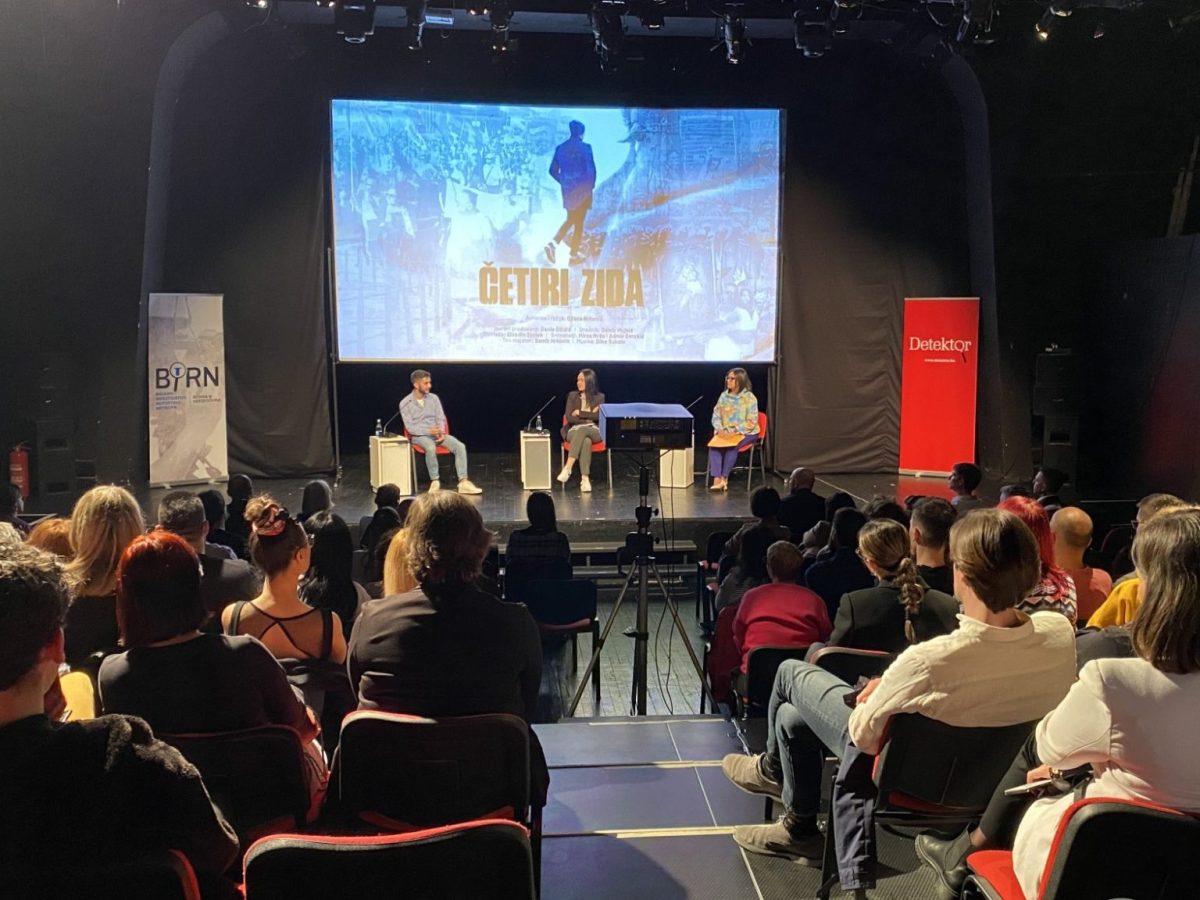
‘Four Walls’, a documentary directed by BIRN Bosnia and Herzegovina’s deputy editor Dzana Brkanic about the aftermath of attacks on LGBTIQ people in Belgrade and Banja Luka and the intimidation they face in Sarajevo, was premiered at the Sarajevo War Theatre in the Bosnian capital on May 17.

The first part of the film focuses on the situation in Belgrade before EuroPride in September 2022, when authorities decided to ban the event. A restricted event was ultimately held, at which several members of the LGBTIQ community were assaulted. The perpetrators have not been prosecuted.

The film, which is available on BIRN Bosnia and Herzegovina’s YouTube channel, also deals with the spreading of hatred against the community by right-wing groups and football hooligans in the region and activists talking about attacks in Republika Srpska and discriminatory statements by politicians.

“Our idea was to make a documentary that will show how EuroPride was stopped in Belgrade and how the narratives of politicians and right-wing organisations and the misuse of religious organisations are merging in the region to limit human rights, particularly those of this community,” Denis Dzidic, executive director of BIRN Bosnia and Herzegovina, said at the premiere.

He explained how the experience of organising the premiere was different from other events held by BIRN Bosnia and Herzegovina, as it required the presence of the police, security guards, ambulance crews and the fire brigade, unlike when screening other films and holding debates. However, he noted, this is a situation that the Bosnian Pride March organisers face constantly.

Jan Waltmans, the Netherlands’ ambassador to Sarajevo, whose government supported the production of this film, said that a society that does not respect human rights cannot advance properly.

“Even in Bosnia and Herzegovina, it is sometimes difficult to defend human rights, to advocate for human rights, to advocate for equal rights. It is not just through the funding of organisations, funding of BIRN, as our very important partner, that we are connected with what we are seeing and doing tonight, but also what is happening behind the scenes,” said Waltmans, expressing hope that the film made at least a little contribution to a possible change.

Talking about the film at a panel discussion after the screening, Mirza Halilcevic of the Bosnian Pride March said that all the right-wingers interviewed in the film said more or less the same thing – that they would not allow the marches to take place, that members of LBGTIQ community should be eliminated from the public sphere.

“Just as there is ethnic cleansing, there is also sexual cleansing, as a way of cleaning the society by eliminating all socially unacceptable forms, or sexual forms,” Halilcevic said.

He said that there are still parents who throw their children out of the house for revealing their sexual orientation, or have them locked up in psychiatric facilities for forcible treatment.

The documentary’s director Dzana Brkanic said that she has been mostly dealing with war crime victims’ stories over the past 15 years, but that this story had affected her just as much.

“I have to say that within my social circle, not everyone is well acquainted with the situation of the LGBT community in Bosnia and Herzegovina. People just cast an eye over the information or it simply doesn’t affect them in any way,” said Brkanic.

“My hope was for this film to change the mind of at least one person and that would be a success for me,” she added.

The film was edited by Elvedin Zorlak, Mirza Mrso and Admir Svrakic were the camera operators and Samir Hrkovic the sound engineer. Dino Sukalo provided the music and Semir Mujkic was the editor.


Federation CEST and BIRN BiH Sign Memorandum to Boost Education on Genocide Denial

The Balkan Investigative Reporting Network of Bosnia and Herzegovina and the Judicial and Prosecutorial Training Center of Bosnia’s Federation entity signed a Memorandum of Cooperation on developing an educational programme on genocide denial and hate narratives.

By Emina Dizdarevic

The aim of the Memorandum of Cooperation is to exchange information on improving the education system in the prosecution of hate crimes, improve the transparency of the judiciary, as well as advocate the efficiency and increased integrity of judicial institutions holders.

“The Memorandum of Cooperation is important for preventing genocide denial and hate narratives in the public space, which is unfortunately a growing phenomenon. There is a need to improve the prosecution of such crimes as well as a need for trainings and education,” said director of BIRN BiH, Denis Dzidic.

Mutual cooperation between BIRN BiH and the Judicial and Prosecutorial Training Center of the Federation of Bosnia and Herzegovina, CEST FBiH, will be based on transparency, cooperation and joint actions, as well as on independence and autonomy.

“The Center will help with creating educational programmes and will lend support in research into hate crimes. It is necessary to provide education and have regular communication with agencies, as well as to grant greater rights to injured parties. Those crimes must be given priority in prosecution,” said Federation CEST director Arben Murtezic.

The signed Memorandum resulted from a panel on prosecution of hate crimes, held in February, which concluded that there was a need for a continuous education of police, judges and prosecutors for a more efficient prosecution of those crimes.

At the time, during the course of a project titled “Mapping of Hate”, two policy papers were presented, “Hate Crimes: Much Damage, Little Punishment”, by Murtezic, and “In a Vicious Circle: Hate Speech, Extremism and Extent of Responsibility of the Judiciary”, by criminologist Mirza Buljubasic.

Presenting “Hate Crimes: Much Damage, Little Punishment”, Murtezic pointed to dangers of those crimes to individuals and society, offering a series of recommendations for improvements.

Those included regular communication between law enforcement and other state institutions with concerned organisations in the community, nongovernmental organisations and religious institutions with regard to those crimes.

The Memorandum of Cooperation arose from activities carried out within the project “Mapping of Hate”, which CEST FBiH recognized.


BIRN BiH Gives Database of Facts about War to Sarajevo Canton’s Memorial Fund

Balkan Investigative Reporting Network of Bosnia and Herzegovina, BIRN BiH, has donated the content of its database of judicially established facts about the Bosnian war to Sarajevo Canton’s Memorial Fund, as per a previously signed partnership memorandum, for educational and scientific-investigative purposes, as well as for the establishment of a museum of suffering.

The database of judicially established facts about the war in Bosnia contains information from all judgments passed down by the Hague Tribunal concerning crimes committed, video testimonials by survivors and victims adapted to schoolchildren, as well as class preparation materials with activities to help teachers and professors hold classes on topics from the recent past.

“This significant archival material will be used by the Memorial Fund for educational and scientific-investigative purposes. Precisely, it will be used both for museum collections and affairs, and for the needs of the Memorial Fund’s archives and digital archives and for the establishment of the Museum of Suffering of Citizens of Bosnia and Herzegovina in the former Kon-Tiki detention camp in Vogosca,” said Memorial Fund director Ahmed Kulanic.

The database of judicially established facts about the 1992-5 war is a BIRN BiH project that was realized from April 2021 to March 2023 with support from the United Nations Democracy Fund.

The project’s goal is to create fact-based sources of information to be used for educational and information purposes, which will contribute to the fight against disinformation and improvement of media literacy.

“We are proud that the database … will now also be used through the activities of the Sarajevo Canton’s Memorial Fund and be permanently available to citizens of BiH, as well as to all other visitors to the archive of the future Kon-Tiki museum, who will be able to acquaint themselves with all judicially established facts about detention camps in Bosnia, while the database will achieve its objective in the fight against crime denial and revisionism,” said BIRN BiH director Denis Dzidic.

BIRN BiH previously gave away the complete content of a video series, “44 – Months under Siege”, containing testimonials by Sarajevo citizens who survived the wartime siege of the Bosnian  capital.


Cyber-Threat Report Presented to Bosnia MPs, UK Minister

Bosnia recorded almost 10 million cyber-attacks in just one month, parliamentarians heard at a presentation of the first report on cyber threats attended by UK Minister Baroness Neville-Rolfe and UK ambassador Julian Reilly.

Data from the first cyber threat report show that more than 9.2 million separate cyber-attacks were recorded in Bosnia in November 2022 alone, against a wide range of targets.

The scale illustrates the vulnerability of citizens, companies and institutions to cyber-security threats, in the absence of coherent strategies, focused regulation and modern capabilities to respond or protect against such attacks.

These are the results of the first report assessing cyber-security threats in Bosnia and Herzegovina, authored by the Centre for Excellence in Cyber Security CSEC and BIRN Bosnia and Herzegovina, BIRN BiH.

Baroness Neville-Rolfe said the report “shows that BiH institutions, businesses and the general public are acutely vulnerable to attacks and online interference from around the world. Attacks numbers in the millions, and are already costing businesses, harming institutions, and taking advantage of the public. I hope today’s discussion will help decision-makers better understand what needs to be done now to protect all of BiH society from cyber threats.”

The report assessed the scale of the cyber threat in Bosnia and highlighted the importance of an urgent government response.

It was presented to members of the Parliamentary Assembly of Bosnia and Herzegovina, whose systems were targeted last year, the European Integration and Security Caucus, different levels of legislative bodies in Bosnia and discussed with a range of cyber experts. Wider learning and reporting from CSEC and BIRN BiH on cyber security issues were also presented.

An updated threat report will be published every six months, providing an up-to-date assessment of cyber threat trends, and sharing practical advice on how to protect against them.

CSEC, with the help and support of the UK government, has monitored the attacks using two devices that impersonate a digital target.

The most common form of cyber-attacks recorded were Distributed Denial of Service DDoS attacks, which attempt to disable or obstruct the functioning of an IT system by bombarding it from many different sources simultaneously. CSEC recorded 3.8 million DDoS attacks in Bosnia in November alone.

Media were frequent targets. Along with DDoS attacks, attackers often tried to control computers and exploit various databases and devices with the Android operating system.

As only two devices were used to monitor attacks, the coverage in this threat report is not comprehensive: the total number of attacks is assumed to be far higher.

Detecting attacks is only the first step. The report indicates that Bosnia needs a comprehensive strategy to direct government and societal efforts to defend against threats from the cyber world.

This report also cites the lack of comprehensive cyber-security incident response teams, CERTs, as a critical problem, as well as the absence of an effective legislative framework.


BIRN Bosnia Publishes Database of ‘Judicially Determined Facts’ about Bosnia War

Single database resulting from two years’ work will serve as important educational tool and help counter disinformation about Bosnian war.

BIRN Bosnia and Herzegovina presented teachers, experts and the media with a database of judicially determined facts about the Bosnian 1992-5 war containing information from all verdicts passed down by the Hague war crimes tribunal concerning crimes committed, video testimonials by survivors and victims adapted to students, as well as class preparation materials with activities that help teachers conduct classes on topics from the recent past. Participants in Sarajevo recognized the database as a tool for fighting revisionism, denial and education at the service of divisions.

A round table on “How to teach about judicially determined facts about the war in Bosnia – challenges and perspective” was opened by BIRN Bosnia and Herzegovina executive director Denis Dzidic.

“The idea was to have a single database, on the basis of Hague Tribunal verdicts, where we would collect all judicially determined facts related to the war in Boasnia and, on that basis and with the help of Professor Melisa Foric-Plasto, make a class preparation document with the help of which judicially determined facts can be used for educational purposes,” he said.

According to Dzidic, the goal of the database is to create fact-based sources of information that can be used for educational and information purposes, which will contribute to countering disinformation and improving media literacy.

“We hope to update the database to include verdicts passed down by the Court of Bosnia and Herzegovina, as well as local and regional courts, in the upcoming period,” said Dzidic, pointing out that the goal of this round table, besides presenting the database itself, was also to hear from the professional public how to make the database official trough institutions so it could reach the school content.

The database of judicially determined facts is a project of the Balkan Investigative Reporting Network in Bosnia and Herzegovina, which has been realized with the support of the United Nations Democracy Fund from April 2021 to March 2023. Agnes Picod of the UN in Bosnia emphasized that the project was a topic of importance for the UN in the field of coming to terms with the past and education.

“It has the potential to educate about judicially determined facts, as a tool to generate understanding and compassion. We hope it will find its way through the education system in Bosnia, but I see the potential of this database as a pedagogical tool also outside the school system,” she said, adding that the database was a very important tool for countering revisionism.

The two-year work on the database was presented to the round table participants by Haris Rovcanin. He explained that over the course of nearly two years, material was collected from Hague verdicts, containing judicially determined facts which form the basis of this database and divided into ten regions – Sarajevo and its surroundings, Eastern Herzegovina, Zenica region, Central Bosnia, Doboj-Posavina region, Eastern Bosnia, Srebrenica, Herzegovina region, Krajina and Bijeljina-Zvornik region.

Rovcanin explained that the work on the database required having to analyze hundreds of thousands of pages of Hague verdicts, some containing several volumes. He most often used first-instance verdicts for the database because they were the ones determining the factual status. Some regions, he said, concern crimes against all three peoples in Bosnia.

“The majority of Hague verdicts concerned crimes committed in Prijedor, followed by Eastern Bosnia and Krajina. The database contains more than 2,000 facts from 50 verdicts,” he said.

BIRN BiH also published ten short documentaries for each of the regions, which, besides conclusions from verdicts and incidents, also contain personal testimonials by witnesses, victims and survivors, which is also a way of offering support in the fight against denial and minimization of crimes and adjudicated facts.

During the round table, a condensed version of one of the videos from the database was shown, while Rovcanin said that BIRN Bosnia’s journalistic team visited some places for the first time since the end of the war and talked to numerous witnesses, some of whom also testified in the Hague.

Participants in a panel titled “How to help history teachers teach about the war in Bosnia” said that the educational system was in the jaws of politics, education was at the service of divisions, but at the personal level, educational workers wanted to work, so a tool such as this database of judicially determined facts would be an excellent help in their work.

“We have all failed to come to terms with the past – as individuals, and as the society – and that has also happened in education,” said Skolegium editor Rubina Cengic, adding that the database was a useful tool for students and teachers but also for journalists who could use it for their stores.

Branko Todorovic, director of the Helsinki Committee for Human Rights Banja Luka, said he database summarized very clear messages and judicially determined facts, which represented its intrinsic value.

“What BIRN Bosnia has made is a very objective and accessible tool,” he said, adding that there might be the best possible history textbook, but there were still professors and teachers interpreting content the way they thought it should be done.

Professor Melisa Foric-Plasto, who made a 200-page document for this project, containing class preparations with learning activities and concrete examples of events from the past war, explained how her part of the task went, also pointing out that three workshops with teachers were held in Sarajevo, Tuzla and Mostar with the help of those class preparation materials.

She drew attention to the fact that official terminology determined by courts should be used in the curriculum.

“It is really good to have a single database in which you can check the facts and terminology at any given moment,” she said.

The participants emphasized the need for education of teachers and professors, as well as involvement of psychologists in working with them.

During a panel discussion on “Informal educational tools as part of the official curriculum – opportunities and challenges”, representatives of education ministries in Bosnia said they would support the inclusion of the database of judicially determined facts into the official content.

“We shall recommend our teachers to use the material, primarily in the ninth grades, as an educational tool,” said Elmir Tukic of the Ministry of Education and Science of Tuzla Canton.

He added that the Ministry wanted to empower teachers to use other materials for education purposes, while participants in the round table also pointed to dangerous materials containing incorrect information which can be found on the Internet.

Azerina Muminovic, of the Ministry for Education of Sarajevo Canton, pointed to the importance of the role of teachers and their education, but also the fact that they are under constant pressure.

“It is very important to educate teachers about the use of the database and I am happy that you have done such an important thing,” she said, adding that she hoped that the education of history teachers would be agreed upon and realized in future with the help of BIRN Bosnia.

Bojana Dujkovic Blagojevic, of EuroClio HIP Bosnia, described the database as a pioneering step, among other things, due to the extensive archive, as well as the multimedia content.

She added that she supported the autonomy of teachers, but had witnessed a lot of self-censorship and fear among teachers in Bosnia. She considers that teachers are making a mistake when telling their students to find something on their own.

“Students, but also the majority of teachers, lack critical reading skills,” she said, pointing to the issue of relevant information sources.

You can view the database of judicially determined facts on this link.


Bosnia Court Confirms Indictment of Nefail Cehic for Threats to Detektor Journalists

Cehic accused of sending death threats to BIRN journalists over report on whether returned ISIL fighters can be tried for war crimes.

The Municipal Court in Sarajevo confirmed an indictment filed by the Cantonal Prosecution, charging Nefail Cehic with the crime of “jeopardizing security” by sending serious threats to the life of staff members of Detektor newsroom of Balkan Investigative Reporting Network of Bosnia and Herzegovina, BIRN BiH, from his Facebook profile. The threats were sent to Detektor’s Facebook page.

The indictment alleges that, on August 7, 2020 Cehic threatened the lives of persons employed at the BIRN BiH newsroom, aware that it would jeopardize their security and cause disturbance, which was his intention, by sending a message containing threats from his Facebook profile “Beauty of Nature” to the Facebook profile of Detektor in Sarajevo.

The defendant cursed and insulted BIRN BiH journalists, mentioning the terrorist organization of ISIL and pointing out, among other things: “All of you should be summarily [executed]”, which, as stated in the indictment, caused the feelings of risk to life as well as distress among the newsroom staff.

Cehic sent the message after BIRN BiH published an analysis and the 116th episode of TV Justice titled “Can former ISIL fighters also be tried in BiH for war crimes?” 

The episode speaks about the possibility of trying returnees from the Syrian battlefronts for war crimes in addition to terrorism, which is the practice in several European countries, increasing the sentences for joining the terrorist organization of the so-called Islamic State.


BIRN BiH Recognized for Reporting on Corruption Whistleblowers

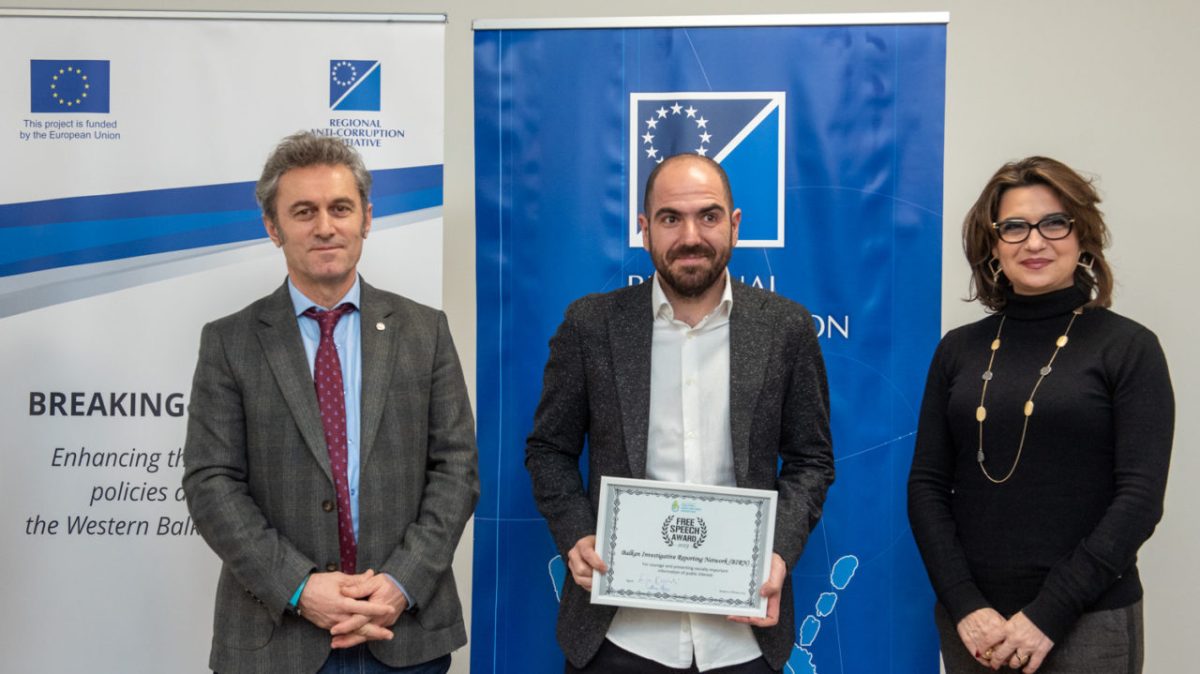
At its annual meeting in Sarajevo, the Southeast Europe Coalition on Whistleblower Protection granted recognition for freedom of speech to BIRN Bosnia and Herzegovina and other journalists and activists.

Recognitions for freedom of speech by the Southeast Europe Coalition on Whistleblower Protection were given for activist efforts, engagement in public interest and contribution to transparency within own community during 2022.

The Coalition granted recognition to Balkan Investigative Reporting Network of Bosnia and Herzegovina, BIRN BiH, for its courage and presentation of socially important information of public interest.

Other award winners include Amila Tatarevic (Baby Steps Association), journalist Rubina Cengic, Maida Bilal (Circle of Life, Kruscica, Foundation) and the Center for Investigative Journalism (CIN).

The annual meeting of the Coalition, hosted by the Center for Development of Youth Activism, CROA, and supported by the Secretariat of the Regional Anticorruption Initiative, RAI, served as a platform to present the activities of Coalition members, nongovernmental organizations from Southeast Europe, and for discussion of common challenges, strategies and solutions for improving the protection of whistleblowers in the region.

It was organized under the auspices of a regional project, “Breaking the Silence: Enhancing the Whistleblowing Policies and Culture in Western Balkans and Moldova”, which is funded by the European Union and implemented by the Secretariat of RAI.

The meeting gathered representatives of civil society organizations from Albania, Bosnia and Herzegovina, Bulgaria, Moldova, Montenegro, North Macedonia, Romania, Serbia, Slovakia and Kosovo.

As BIRN BiH reported previously, for several years persons employed in state institutions in Bosnia have had the possibility to report corruption and get whistleblower status or protected corruption denouncer.

However, till now, few have acquired such status. One of the episodes of BIRN’s TV Justice showed what whistleblowers have to go through after reporting corruption, why they are still not protected, and how that can be changed.

In November last year, as we reported, a law to protect individuals reporting corruption in institutions or companies majority-owned by the entities had still not been adopted in Bosnia’s Federation entity.

Such a situation directly favours corruption perpetrators, as the Federation entity government admitted when adopting a proposed law on protection of corruption denunciators in August.

This is the second time ten years that the entity government has adopted the text of the law, but, just like other proposals by parliament members, it has never been fully adopted by the Federation assembly.

After ten years of hesitation, the law on protection of corruption denunciators should be adopted in the Federation soon, but experts warn that encouragement to report corruption will depend on the speed with which courts take measures of protection.

In the meantime, those who decide to report corruption risk losing their jobs and being forced to fight for their rights through courts.


BIRN BiH Journalist Shortlisted for Thomson Foundation Award

An investigation into the US far-rightist Robert Rundo and his organization by Nermina Kuloglija-Zolj of BIRN BiH has been shortlisted for the Thomson Foundation’s Young Journalist Award.

By Enes Hodzic

An investigative piece into US far-rightist Thomas Rundo’s influence in Serbia and Bosnia and Herzegovina, and his activities in those two countries, by Nermina Kuloglija-Zolj of BIRN BiH, has been shortlisted for the Thomson Foundation’s Young Journalist Award – dedicated to finding talented and ambitious journalists from all over the world. It is competing with 11 other stories.

BIRN BiH’s investigation into Rundo, who is considered the founder of the Rise Above Movement, R.A.M., in the United States, which says it is fighting a modern world corrupted by “the destructive cultural influences” of liberals, Jews, Muslims and non-white immigrants, shows that after having been accused of charges in the US, he headed towards Europe.

Although he has concealed his places of residence, Kuloglija-Zolj reveals that, over the past two years, he has appeared at numerous events in Serbia and participated in activities of various organizations opposing migrants, reiterating their anti-Roma and anti-Semitic stands and expressing disagreement with Serbia’s entry in the European Union and NATO.

It was determined also that he has spent a certain time in the eastern Serb-run part of Bosnia and Herzegovina.

At the same time, authorities in Serbia and Bosnia have not divulged information on when and how often he has crossed the borders between the two countries – one which he was officially expelled from, and the other from which, he said himself, he was banned and whose police were reportedly looking for him.

The aim of the Thomson Foundation’s Award for Young Journalists, which is presented in partnership with the UK Foreign Press Association, is to spotlight young journalists and their work and enable their voice to be heard and for them to feel the power of journalism to create significant changes. The award is open to journalists aged 30 or under, only from countries with a Gross National Income per capita of less than US$ 20,000.

After the list was announced, Kuloglija-Zolj said it was an honour to be placed among the 12 shortlisted young journalists who have worked over the past year on investigative pieces exposing inconsistencies affecting the development of their societies.

“The story about Robert Rundo, for which I was nominated, was a new experience in comparison to previous investigations,” she said, “due to the outspread of activities of the group with which he associated and, on the other hand, due to the closed nature of all those groups and the refusal of their leaders to be interviewed,” Kuloglija-Zolj said.

Now in its 10th year, the Award received a remarkable number of entries from all over the world. Besides the BIRN BiH journalist’s piece on Rundo, other nominees are from Yemen, Guatemala, Ukraine, India, Pakistan, Nigeria and Malaysia.

Following the announcement of the short-listed entries, independent judges at the UK Foreign Press Association will select three finalists whose names will be revealed in October. They will be vying for the award itself, to be presented on November 28 at a gala dinner in London.

In addition to receiving the award, the three finalists and three best shortlisted journalists will have a chance to be mentored by six established journalists and former students of the Thomson Foundation.


BIRN Debate Calls for Faster Prosecution of Corruption in Bosnia

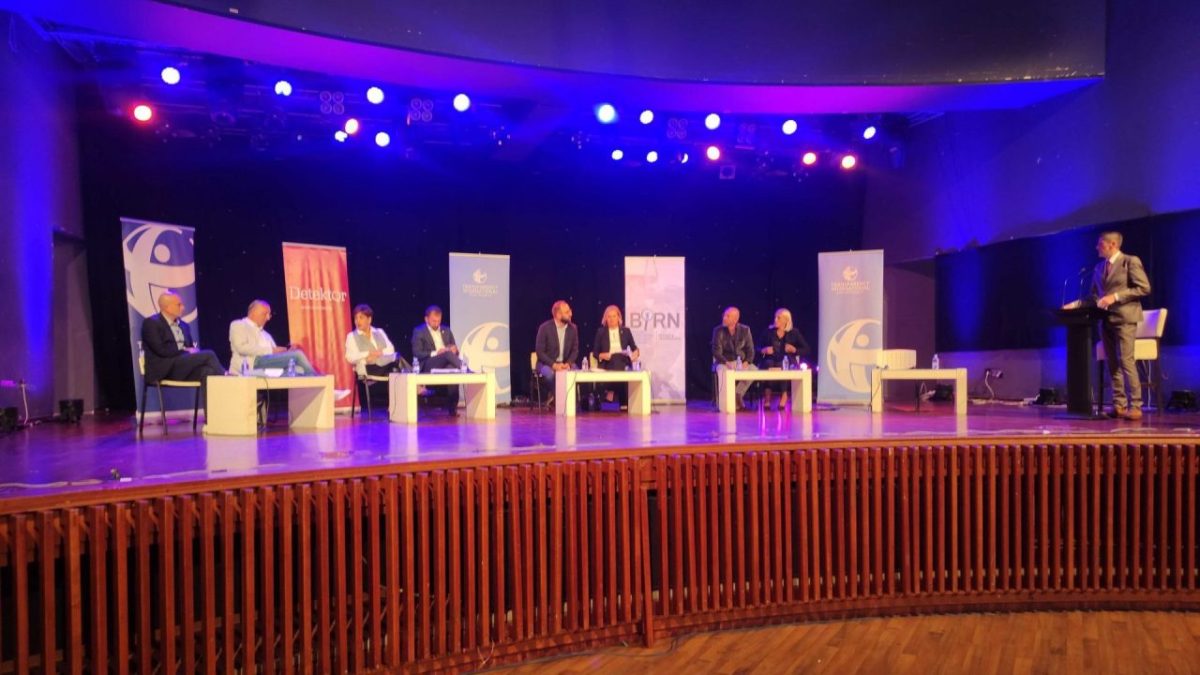
During the debate, ‘(Anti)Corruption in Focus’, organised by Bosnian BIRN and Transparency International in Sarajevo, members of eight political parties presented their anti-corruption strategies.

Candidates of eight political parties in the Federation of Bosnia and Herzegovina, Bosnia’s larger entity, called for faster and more agile prosecution of corruption cases during a public debate held in Bosnia’s capital, Sarajevo.

“I ask all actors to process corruption more effectively,” said Alma Colo, from the [Bosniak] Party of Democratic Action, SDA, adding that “they haven’t done much” at state level, citing the blockade of state institutions as the reason. “It’s a captive system that works that way,” she added.

“On average, it takes about four years of pre-investigative actions before an indictment,” noted Sanela Prasovic-Gadzo from the Union for Better Future, SBB, commenting on the slow steps taken to process corruption cases.

One issue mentioned during the debate was [lack of] transparency in public spending, which weakens citizens’ trust in government.

An improvement to the law on public procurements, and the law on conflict of interest, which is not being implemented in the Federation, were mentioned as possible solutions, reducing corruption in Bosnia and Herzegovina.

Damir Masic, from the Social Democratic Party, SDP, said that 90 per cent of all problems in the country were caused by “people who are not able to explain the origin of their property”.

The second public debate organised by BIRN and TI will be held on September 19 in Banja Luka, the main city of Republika Srpska, Bosnia’s other entity, where party representatives will talk about their plans for the upcoming term. General elections in Bosnia are scheduled for October 2.

BIRN BiH Receives Certificate of Appreciation from Sarajevo Canton’s Memorial Fund

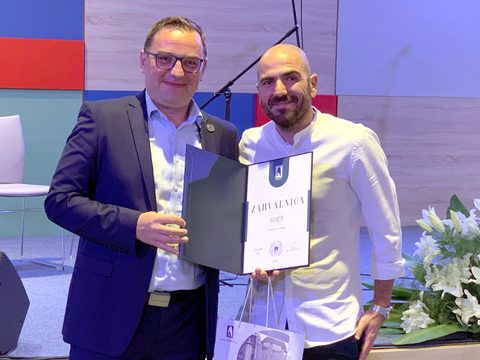
Marking its 25th anniversary, the Memorial Fund presented BIRN BiH with a certificate of appreciation for its contribution toward raising awareness about the importance of the culture of memory.

During a ceremony held on Monday, July 25 associations, individuals and institutions, governmental and nongovernmental organizations, including BIRN Bosnia and Herzegovina, were presented with certificates of appreciation for successful cooperation.

Denis Dzidic, executive director of BIRN BiH, said the Balkan Investigative Reporting Network had systematically followed all war crimes trials and reported on transitional justice processes in the region for nearly 20 years.

He added that, in the past few years, BIRN BiH has given away its archive of reports from trials and video materials about the massacre at Kapija to the city of Tuzla for the needs of a museum exhibition and, jointly with the Memorial Center in Srebrenica, had opened a memorial room called “The Lives behind the Fields of Death”.

“We are particularly proud because institutions dealing with the culture of memory recognize us as a valuable partner and we hope that BIRN BiH’s content will reach out to as many young people as possible and be used for educational purposes in order to stand ready to counter revisionism and denial of crimes committed during the war in Bosnia and Herzegovina,” Dzidic said.

In May this year, BIRN BiH and the Sarajevo Canton’s Memorial Fund signed a Partnership Memorandum on the basis of which the content of a database of judicially established facts, being developed within a project titled “Establishing an Interactive Educational Database on the War in Bosnia and Herzegovina” financed by the United Nations Democracy Fund, UNDEF, was disposed to the Fund.

Besides the database content, BIRN BiH also made available the complete content of a video series, “44 – Months under Siege”, containing video testimonials by Sarajevo citizens who survived the siege.

Amer Osmic, representative of the Management Board, said that the Memorial Fund was a unique institution in Bosnia with a special role in society, uniting numerous institutions and organizations in the fight to maintain awareness about the importance of the culture of memory.

“The Sarajevo Canton’s Memorial Fund has invested a huge effort during the past two years into becoming an institution which strengthens the importance of memorialization through teamwork and synergy of forces, especially in a society in which one of the gravest forms of crimes that humankind can remember – the crime of genocide – was committed in a planned and premeditated manner, in addition to ethnic cleansing and siege endured by this city,” Osmic said.

The Fund, established in 1997 by the Sarajevo Cantonal Assembly, now manages, among others, the “Tunnel D-B” Memorial Complex, also known as the “Tunnel of Life”.