Workshop for Sarajevo Canton Teachers on Teaching History from Database of Judicially Established Facts

BIRN Bosnia and Herzegovina and the Institute for Development of Pre-University Education of Sarajevo Canton are organising workshops in October for history teachers at which plans for lessons about the past and a multimedia Database of Judicially Established Facts will be presented.

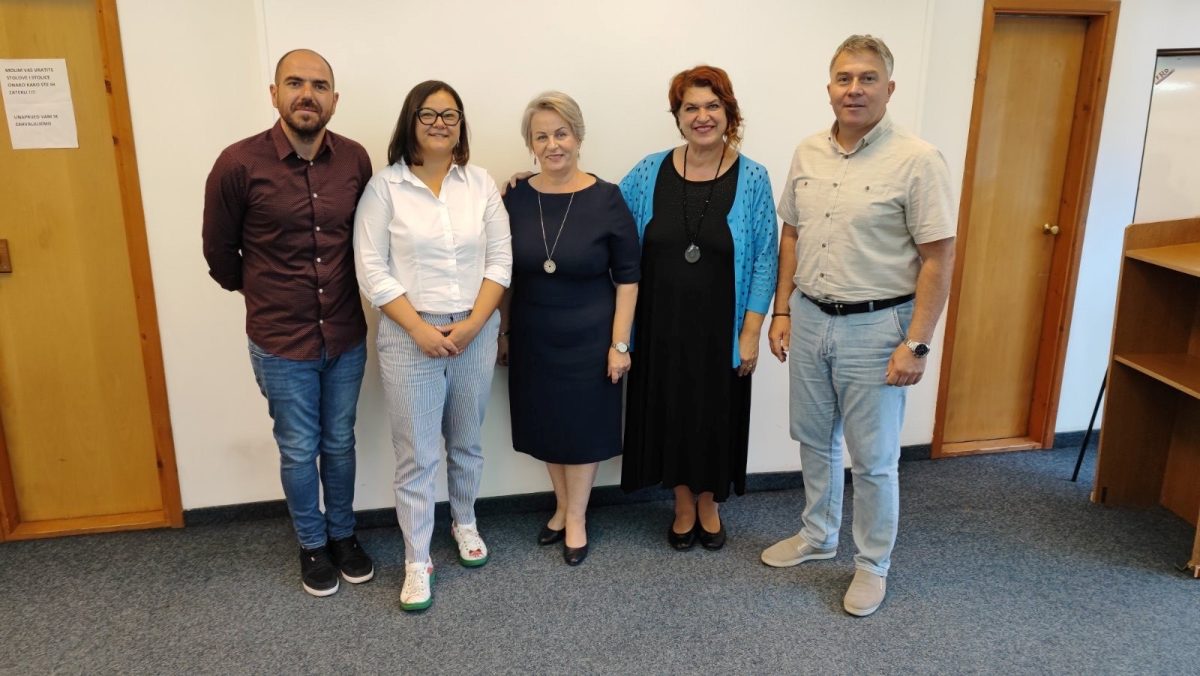
During a meeting held at the Institute for Development of Pre-University Education of Sarajevo Canton – an advisory, educational and coordination body for starting and steering the growth and development of the educational system – participants stressed the need for teachers to use the Database of Judicially Established Facts, arising from previous evaluations filled out by educators to whom BIRN BiH had presented the materials.

Institute director Senada Salihovic said it was a pleasure to offer to teachers an innovative, yet verified, working material.

“We gladly support and participate in projects which will be based on high pedagogical and scientific standards, as a guarantor of development and progress of society as a whole. Our mission is to motivate teachers for further training, although they are already doing an excellent job,” Salihovic said.

In March 2023, Balkan Investigative Reporting Network of Bosnia and Herzegovina BIRN BiH presented its Database of Judicially Established Facts about the War in BiH.

This contains information from all Hague Tribunal verdicts about crimes committed in the 1992-5 war, video testimonials from survivors and victims tailored to pupils, as well as lesson plans containing activities, to help teachers and professors give lessons about topics from the recent past.

“We are pleased that as many teachers as possible will use our database. Our goal is to start working on its expansion soon, by means of drawing facts also from verdicts passed down before the State Court and other courts in the region, in addition to those from the Hague verdicts,” BIRN BiH director Denis Dzidic said.

The October workshop for teachers in Sarajevo will be run by representatives of the Institute and BIRN BiH who worked on compiling the materials, alongside professor Melisa Foric-Plasto.

For the purposes of this project, she has prepared a 200-page document containing lesson plans with learning activities and concrete examples of events from the past war.


Internet Governance Forum to Be Held in Bosnia Again

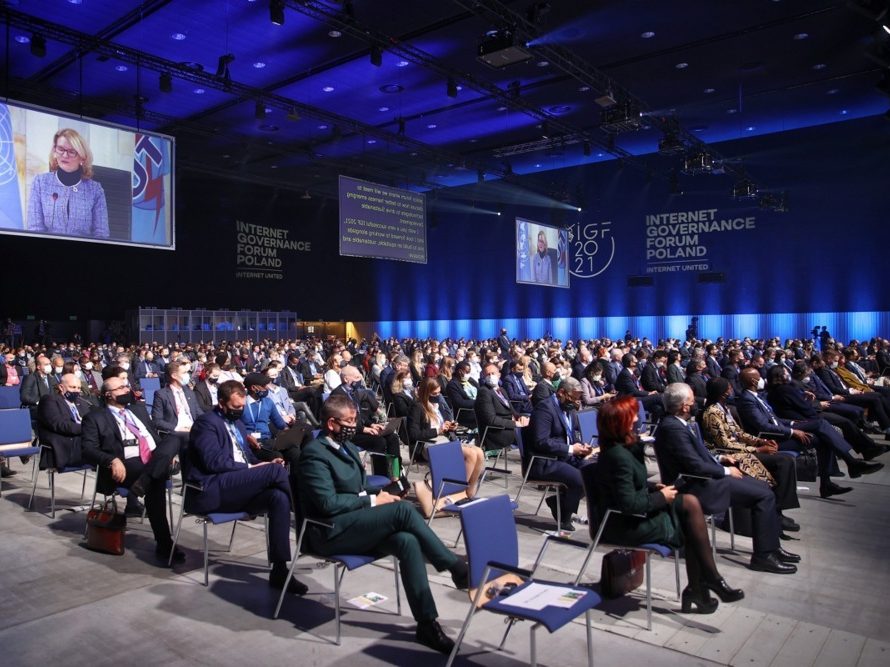
After five years, the Internet Governance Forum is being held again in Bosnia – and, below, you can help select the topics to be discussed by experts in cyber-security and citizens’ rights, representatives of academic community and the media.

The first national meeting of the Internet Governance Forum, BH IGF, to be held in Bosnia in the past five years is scheduled to take place in Novotel Hotel, Sarajevo, on October 2.

Given the complexity of the country’s set-up, the non-existence of a strategic approach and the growing challenges facing the country as regards digital rights, cyber-security, social media operation and other issues in the online sphere, BIRN BiH jointly with its partners has decided to relaunch the IGF platform in Bosnia and Herzegovina.

The Organising Committee consists of the Cyber-Security Excellence Centre in Bosnia and Herzegovina, CSEC, BHNIX.ba, the Centre for Education of Judges and Prosecutors of the Federation of Bosnia and Herzegovina, the Faculty of Political Sciences of the Sarajevo University, Logosoft and BIRN BiH.

The main focus of the forum will be cyber-security, with a new report on such threats in Bosnia to be presented for the first time, as well as on freedom of expression and the media on the Internet, historical revisionism, and violence against women and marginalized groups through information and communications technologies.

Each session will result in key recommendations, which will be conveyed to the Global IGF 2023 to be held in Tokyo, which has been convened by the Secretary-General of the United Nations since 2006.

It would give us great pleasure if, by selecting two of the offered topics of importance for citizens, you would influence the work of this year’s forum, whose practical ideas will be presented at the next annual meeting. And, if you wish to attend in person, email your application to: [email protected]

Choose two topics for the Internet Governance Forum in Bosnia

  1. Violence on the Internet
  2. Security in cyber space (security of institutions, private companies, citizens’ data)
  3. Systematic approach to the Internet issue
  4. Networks as a platform for hate speech, genocide and war crime denial and disinformation
  5. Freedom of speech on the Internet, vs repressive laws restricting it
  6. Bosnia’s readiness for artificial intelligence, AI
  7. Human rights before digitalization
  8. Other…


BIRN BiH Launches Video Campaign about Missing Persons

Marking International Day of the Disappeared, BIRN Bosnia and Herzegovina has launched a campaign to help raise awareness of the pain of family members of those who disappeared during and after the war.

by Dzana Brkanic

By August 28, ten videos of family members of the disappeared from across Bosnia and Herzegovina – saying who they are searching for and sharing memories of that person, with a plea for help in finding the person – will be posted on BIRN BiH’s social media.

All of them share a joint pain and hope that they will one day find the remains of their loved ones before they die.

“Considering that we have reported on war crimes and on missing persons in BiH for nearly two decades, we are well acquainted with what the families are going through. Unfortunately, we have fewer and fewer interlocutors, because families are disappearing naturally.

“This campaign is our way to be their voice, with a hope that someone who sees these videos will help them, that someone will grow a conscience and reveal where the bodies were buried,” said Denis Dzidic, executive director of BIRN BiH.

He explained that, at the end of each video, there is information on how to report locations of individual or mass graves to the Missing Persons Institute of BiH anonymously.

Within BIRN BiH’s campaign, called “I am still searching for…”, members of families of the missing have shared their own findings about their loved ones’ fates.

Some went missing in the area of Sarajevo and its surroundings, others in Mostar, Bugojno, Zvornik and other places in Bosnia. BIRN BiH spoke to fathers, mothers, sisters and children of the missing, and many of them described their love for, and memories of, their loved ones.

All of them asked for help, highlighting that many members of their families did not live to bury their loved ones. Many of them would give everything and pay for the information, they said in the filming.

Around 30,000 people went missing in Bosnia and Herzegovina during the 1992-5 war and the search for more than 7,000 of them is still ongoing.

The International Day of the Disappeared is marked each August 30, as a day of remembrance of and tribute to people across the globe, who went missing in armed conflicts, crimes against humanity or as a result of violations of basic human rights.

The campaign is being implemented with the support of the Global Initiative for Justice, Truth and Reconciliation consortium.


Digital Rights Training for Bosnian Journalists: Applications Open

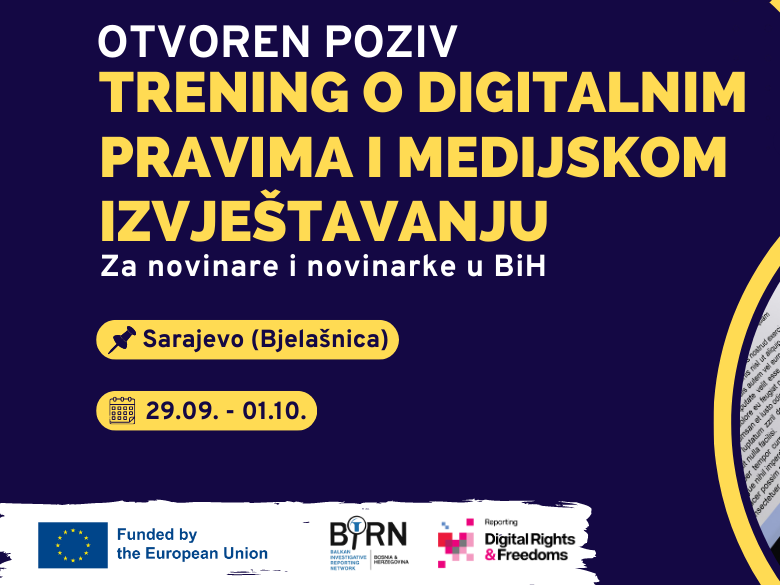
BIRN Bosnia and Herzegovina invites journalists, NGO representatives and activists from across Bosnia to apply for a three-day training program addressing topics and cross-cutting issues related to digital rights and freedoms violations in the Balkans.

The training will take place in Bjelašnica, Sarajevo, from September 29 to October 1, 2023.

The way the media reports on dangers and human rights in the digital space is very important, so journalists and human rights advocates need to understand how the Internet and its networks work and be informed about the latest policy developments in order to be able to recognise and report on violations of rights in the digital space and point out questionable policies.

BIRN BiH’s three-day training will focus on understanding human rights-related issues in the digital sphere, such as privacy, security, violence against women and marginalized groups, content regulation, malign foreign influence through propaganda and manipulation, and other relevant topics.

“When we talk about ‘digital rights’, we are talking about the same rights that are fundamental for all people in the physical space, such as freedom of expression, privacy, access to information, security, which also apply in the era of the Internet, technology and social media. It is important to understand digital rights in order to protect them in online spaces that are developing every day, and in which human rights require effective and human-centric responses towards arising malicious influences and often oppressive legal regulations,” said Aida Mahmutović, BIRN BiH project manager. She added that violations of human rights on the Internet in Bosnia and the Balkans are no different from those in the rest of the world.

The first threat report on cyber threats in Bosnia and Herzegovina, issued by the Cyber Security Excellence Center and BIRN BiH, shows more than 9.2 million separate cyber attacks were recorded in Bosnia in November 2022 alone, against a wide range of targets. This points to the significant vulnerability of citizens, companies and institutions to cyber-security threats.

The lack of regulations at a national level, comprehensive and coherent strategies and systems in place is worrisome when it comes to responding to these threats, which are aimed at not only institutions but citizens as well.

Online harassment, especially against women and marginalized groups, is burgeoning. When it comes to abuse of intimate images, for example, the absence of laws and support system in place discourages the victims, the latest Detektor Magazine reports.

The BIRN BiH training will give at least ten selected journalists, NGO representatives and activists a comprehensive understanding of the risks at stake, in order to help them to identify and report on digital rights violations more effectively.

Journalists especially play a crucial role in raising public awareness and driving change. By equipping them with the necessary skills and knowledge, this training will enable them to produce impactful stories that can contribute to a more informed public debate and eventually lead to policy changes that protect and promote digital rights in Bosnia and Herzegovina and the Balkans.

Who can apply?

BIRN Bosnia and Herzegovina invites journalists from across Bosnia and Herzegovina, as well as NGO representatives and activists who have an interest in or advocate for human rights in the digital space, to apply.

Those interested should demonstrate an interest in digital rights, possess previous journalism experience and/or show active engagement in the field of rights in the digital space. A selection committee will evaluate the applications. Ten participants will be selected to participate in the training.

Where?

The training will take place in Bjelašnica, Sarajevo, BiH, from September 29 to October 1, 2023. On October 2, all participants will then join the Internet Governance Forum in Bosnia and Herzegovina in Sarajevo. The organisers will fully cover the travel, food and accommodation costs of the selected participants. The working language of the training is Bosnian. Knowledge of the English language is desirable.

Opportunity to pitch ideas after the training

On the last day of the training, participants will have the opportunity to pitch their ideas for stories and other content to BIRN BiH. The selected participants will receive mentoring and financial support to implement their ideas in accordance with newly acquired knowledge related to human rights violations in the digital space, such as freedom of expression and freedom of media, access to information, violence against women and marginalized, cyberthreats and foreign malign influence (including manipulation and propaganda).

How to apply and deadline

You can apply by filling in the application form below no later than August 31, 2023, by 10 pm CET. If you have questions about the training, contact: [email protected]. Please note that only selected participants will be contacted.


Nino Bilajac

Nino joined Detektor (BIRN BiH) in 2022 as a journalist. He is based in the Sarajevo office providing support to regional operations.

His main responsibilities include following developments related to corruption and crime at government institutions and public companies, as well as foreign malign influence. Previously, he worked in the media and NGO sector, such as the Center for Investigative Reporting (CIN), Face TV Sarajevo and N1 BiH as a reporter, editor and producer and was responsible for researching, investigating and authoring complex investigative stories, covering financial misuse in public procurement and public funds.

During this period, he also gained valuable experience in investigative reporting.

His awards include “Eco Journalist” 2022 – winner; European Union Award for Investigative Journalism in BiH 2021 – second prize; European Press Prize 2021 – selected in the top five; CEI SEEMO Award for Outstanding Merits in Investigative Journalism 2018 – winner; Thompson Foundation – Finalist for the Young Journalist Award, 2017 University and Languages.

Nino studied Communication and Journalism at the University of Sarajevo. His bachelor’s degree was in media and communication. In addition to his formal education, he attended various projects, courses and seminars on journalism and investigative reporting. Along with Bosnian, his mother tongue, Nino speaks English.

Nermina Kuloglija-Zolj

Nermina Kuloglija-Zolj joined BIRN BiH in August 2019. For the last four years, she has been researching extremism, terrorism, genocide denial and corruption.

She published many investigative stories about far-right groups in Bosnia and the Western Balkans, following the activities of at least five far-right groups operating in Bosnia. Before joining BIRN BiH, Nermina was a journalist at the Center for Investigative Reporting in Sarajevo, where she started her career in 2017, first as an intern, then as a journalist, focusing on researching corruption and organized crime.

Awards

In 2021, she was given a special mention by the judges of the CEI SEEMO journalism awards for outstanding merits in investigative journalism. That same year, she was a finalist for the Kurt Schork Awards in International Journalism.

She holds a master’s degree in Journalism and Mass Communication from the Faculty of Political Sciences at the University of Sarajevo.


Enes Hodzic

Enes joined BIRN BiH in May 2022 as a journalist/investigator. He is based in BIRN BiH’s Sarajevo office providing support to various projects.

He works as an investigative journalist and specialist court monitor. Since joining the team, he has contributed to various investigative pieces related to far-right extremism. During the past year, he has done several researches into harmful foreign influences in the Balkans and cyber security, including the first report on cyber security threats in BiH, which BIRN BiH presented in cooperation with CSEC.

Some of his investigative pieces, which were high on the media radar, were: “Bosnian Entity Road Company Ignores Sanctions, Promotes Gazprom Petrol Stations” – “Detektor, BiH ranjiva na cyber napade zbog nedostatka ključnih dokumenata” – “Detektor and “Kako su dvije desničarske organizacije spriječile mirnu šetnju povodom Dana bijelih traka u Prijedoru”.

He authored the first Detektor Magazine episode on cyber security, “Građani i institucije i dalje bez zaštite od cyber napada”, and co-authored an episode of the TV Justice show about the online monetization of hatred flourishing in Bosnia and Serbia.

Apart from journalism, he has high interest in technology and (cyber)security.

Previous Experience

Previously, he worked in various media outlets in Bosnia and gained extensive experience in journalism and investigative work, administration, financial and operational work.

Since 2012, he worked at the media outlets Visoko.co.ba, Radio Sarajevo and Federation Television as journalist and editor and was responsible for various projects and contents in those outlets.

He also worked as a project manager at VICOBA d.o.o., working on various media projects, including the Engaged Citizens Reporting project.

During this period, he also gained valuable experience in office management, project operations, field investigations, social media management and use of different digital tools needed for the jobs listed above.

 Awards

 He received an award for continuous reporting and contribution to witnessing the truth about the genocide in Srebrenica at the “Nino Catic” Journalist Award event in 2020.

University and Languages

Enes studied communication science at the Faculty of Political Sciences of the University of Sarajevo. His major was in communication sciences, journalism, PR and marketing. In addition to formal education, he has attended various project related and journalism courses/seminars. Along with Bosnian he speaks English.


BIRN BiH Part of Coalition for Freedom of Expression and Content Moderation in Bosnia

Coalition designed ‘to create a free and healthy online environment for all citizens of Bosnia as well as to promote peace through digital technologies’ was officially launched in Sarajevo.

At the signing ceremony, numerous representatives of civil society organizations, journalist associations and activists, including Denis Dzidic, director of the Balkan Investigative Reporting Network in Bosnia and Herzegovina, BIRN BiH, signed a memorandum of understanding and accession to the Coalition, which is part of UNESCO’s project Social Media 4 Peace.


Sinisa Sesum, head of UNESCO’s Office in Bosnia and Herzegovina, said that the Coalition’s primary focus was to create a free and healthy online environment for all citizens of Bosnia as well as to promote peace through digital technologies, especially social media.


“The Social Media 4 Peace project is a concrete step in strengthening the global partnership between the European Union and UNESCO to strengthen resilience of societies to potentially harmful content that spreads online, especially hate speech that incites violence and division,” said Sesum.


The head of the Delegation of the European Union to Bosnia and Herzegovina and the EU special representative in Bosnia, Johann Sattler, said that unverified information and hate speech “are eroding our democracies and often pose a major threat to the enjoyment of human rights and reconciliation”.

As he said, freedom of expression and media freedom are fundamental pillars of democratic societies, essential for the protection of human rights and the promotion of good governance. These are also the key areas Bosnia needs to work on, on its EU path.

“Freedom of expression should not mean freedom to spread false information that can harm other people’s rights and that is misused to incite hatred, intolerance or violence,” said Sattler, adding that he was glad that the EU supported the Coalition and that civil society organizations were working on it.

Stela Vasic, advisor at the country’s Ministry of Transport and Communications, said hate speech and incitement to physical violence were unacceptable, adding that a law on e-content that would also deal with these issues was in preparation.

Similar coalitions have been formed in other countries where the Social Media for Peace project is being implemented, such as Indonesia, Kenya and Colombia. The project is implemented with the support of the European Union.


Teachers in Bosnia’s Tuzla Canton to Use BIRN Database of Facts about War

Minister says best way for school pupils to learn the truth about the 1992-5 war is by using BIRN’s ‘high-quality interactive platform’.

BIRN Bosnia and Herzegovina and the Ministry of Education of Tuzla Canton signed a memorandum of cooperation, which includes the use of the Database of Judicially Established Facts about the War in BiH in the teaching process, as teaching material in history classes.

The MoC was signed in Tuzla on Monday by Denis Dzidic, director of the Balkan Investigative Reporting Network of Bosnia and Herzegovina, BIRN BiH, and cantonal education minister Ahmed Omerovic, who expressed satisfaction that Tuzla Canton was the first canton in Bosnia’s Federation entity to formalize cooperation.

“Following [the signing of] this memorandum, we shall recommend schools to use all data from this high-quality database during the teaching process. Our goal is the truth. Our goal is for schoolchildren to learn the truth and the best way is by using facts judicially established by the International Criminal Tribunal for the former Yugoslavia, which BIRN BiH has done in a high-quality manner through an interactive platform,” Omerovic said.

In late March, BIRN Bosnia and Herzegovina presented the Database of Judicially Established Facts about the War in BiH to teachers, experts and the media in Sarajevo.

The database contains information from all verdicts handed down before the Hague war crimes tribunal concerning crimes committed, video testimonials of survivors and victims tailored to students, as well as class preparation materials containing activities to assist teachers in holding classes about topics from the recent past.

“For two years, we have been working on collecting all judicially established facts and verdicts by the Hague tribunal and we hope that this will be a unique tool which will help educational workers, who are now trying to teach children about what happened during the past war on the basis of facts, not on the basis of certain interpretations, and that this will enable them to do that in a simple manner,” Dzidic said.

He added that, by signing the Memorandum and using the Database in the teaching process, he hoped to encourage an educational system that does not incite hatred.

In late April, the Pedagogical Institute of Tuzla Canton, on the request of the Education Ministry, issued a positive expert opinion about the use of the Database, recommending teachers of the ninth grade of elementary schools, as well as the second and fourth grades of secondary schools, to use it as a tool for processing and preparing topics for history lessons in all schools in Tuzla Canton.

One of the goals of the Database is to create fact-based sources of information that contribute to the fight against disinformation and improvement of media literacy.

Dzidic said BIRN BiH’s next goal was to complement the Database with facts judicially established by the Court of Bosnia and Herzegovina. A similar memorandum would soon be signed with the Education Ministry of Sarajevo Canton.