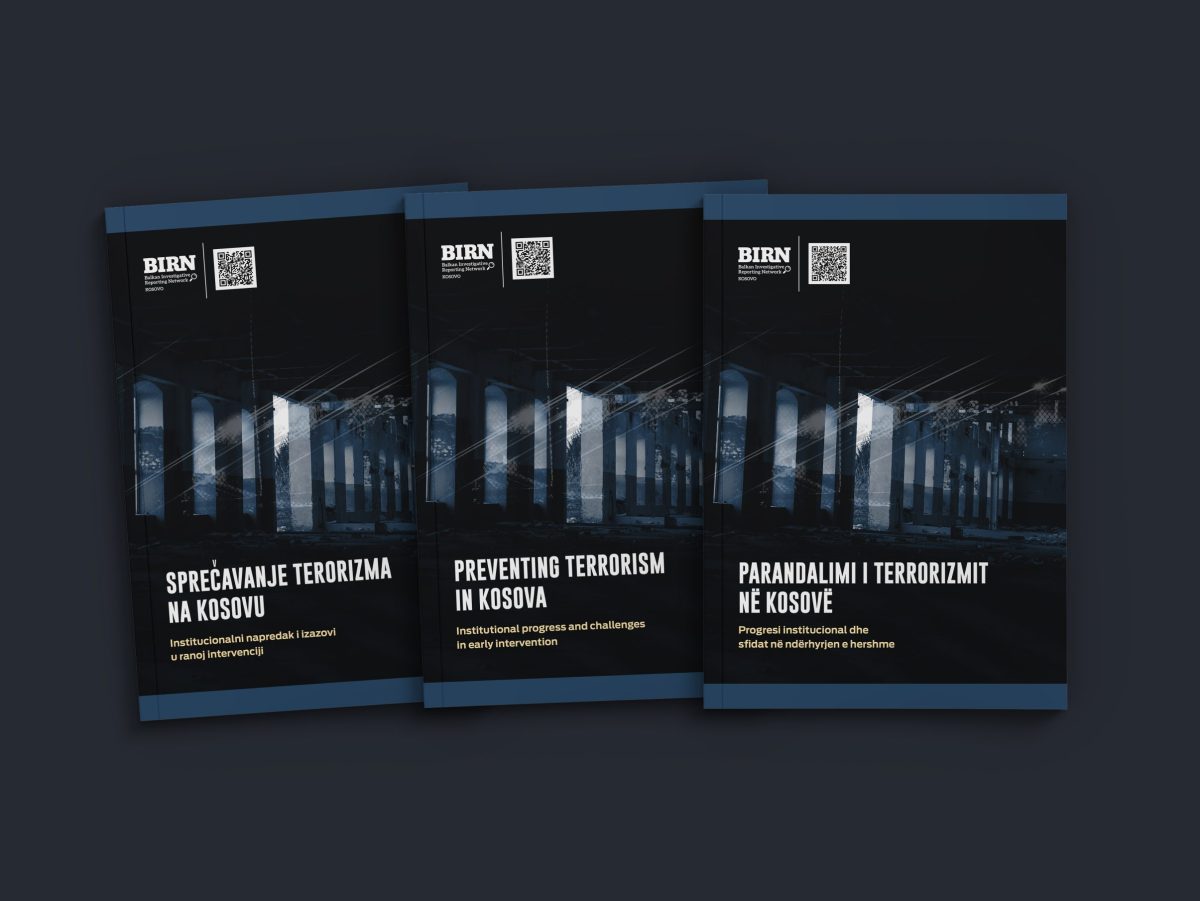
Based on interviews, surveys, and institutional data, the report identifies key structural weaknesses: poor communication between central and local authorities, lack of standardized reporting and unified guidelines, delays in establishing functional referral mechanisms, and a serious shortage of psycho-social professionals in schools. Critically, there is also an absence of empirical risk assessments, meaning institutions lack evidence on which communities or groups are most vulnerable to radicalization.
A central finding is that Kosovo’s approach is still largely reactive: focused on arrests, rather than preventive. Municipalities, which should serve as the first line of defense, are often not properly informed or equipped to implement the strategy. The referral mechanism, a key tool for identifying and supporting at-risk individuals, is barely operational, and the education system lacks the capacity to detect early warning signs due to understaffing.
The report also highlights a significant geographical and ethnic divide, noting that Serb-majority municipalities, especially in the north, are largely excluded from national prevention efforts.
Overall, the report concludes that without stronger coordination, better data, increased mental health capacities, and full integration of municipalities into implementation, Kosovo’s shift toward proactive prevention of violent extremism will remain incomplete
The report is accessible online in three languages:
The report in Albanian:https://kallxo.com/wp-content/uploads/2026/03/parandalimi-i-terrorizmit-ne-kosove.pdf
The report in Serbian: https://kallxo.com/wp-content/uploads/2026/03/sprecavanje-terorizma-na-kosovu.pdf
The report in English: https://kallxo.com/wp-content/uploads/2026/03/preventing-terrorism-in-kosova.pdf
This report was published as part of the ‘’Resilient and Inclusive Program’’, funded by GCERF, through ATRC, implemented by BIRN Kosovo.