On July 3, BIRN Kosovo published its fourth study on workers’ rights, titled “Systematic challenges of addressing occupational safety and health crimes”, aimed at identifying the key challenges related to the accountability of businesses and individuals who violate occupational safety and health regulations.
Through various research methods and stakeholder involvement, such as data analysis, case study examinations and interviews, the report highlights the lack of institutional coordination, weakness in the legal framework and other challenges within the justice system that have created an environment in which violations of occupational safety and health regulations too often are inadequately addressed and are not subject to effective accountability.
The findings call for more comprehensive institutional, legal and procedural reforms to ensure stronger protection for workers and more effective enforcement of the law.
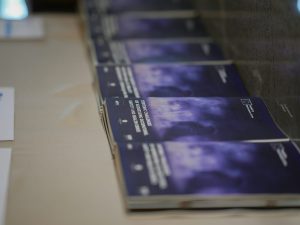
At the conference to mark the report launch, BIRN Kosovo brought together consortium partners, representatives of the relevant ministry, the legal system, civil society and activists.
During the conference, Jeta Xharra, Executive Director of BIRN Kosovo, Agon Dobruna, Deputy Minister of Labour, Family and War Values, and authors Kreshnik Gashi, editor-in-chief of KALLXO.com, and Laurant Berisha, BIRN legal team, emphasized the need for institutional steps to improve the overall situation on occupational safety and health regulations.
Xharra stated that the three organisations’ initiative (BIRN Kosovo, ATRC, Jahjaga Foundation) focuses on workers’ rights in Kosovo, where implementation of both the Labour Law and the Law on Safety and Health at Work remains a major challenge, also highlighting the severity of this issue: about 40 workplace fatalities were recorded over the three years of the project’s monitoring.
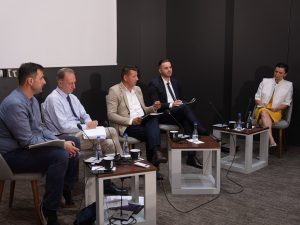
Agon Dobruna said the launch of this report was a key opportunity to strengthen a joint commitment toward creating safe and dignified workplaces.
The ministry is dedicated to protecting and advancing workers’ rights, firmly believing that a functional labour market is measured not just by the number of jobs but by the quality of jobs, health, and safety standards, Dobruna said.
To build a more efficient system aligned with European standards and real market needs, the ministry is drafting amendments to legislation on workplace safety and health, modernizing the draft Labour Law and advancing a new law for the Central Labour Inspectorate.
The authors of the report, Gashi and Berisha, presented the findings of the research and investigative work, recalling that the project team analyzed 37 completed court cases, tracking and reviewing the entire process from the initial work done by the inspectorate, police and prosecution up to the final decisions issued by the Basic Court or Court of Appeals.
This process included a review of nine Court of Appeals decisions and 25 administrative files from the Labour Inspectorate.
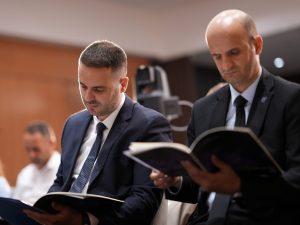
Following this, the analyzed judgments concerning criminal offences under Article 358, which addresses the destruction, damage, or removal of protective equipment. While employers are legally obligated to implement all necessary safety measures before commencing work, they often fail to do so, endangering workers’ lives and, in certain cases, causing fatalities, lifelong severe physical injuries, or minor injuries.
The event was followed by a panel discussion, moderated by Xharra, which included a representative from the Supreme Court of Kosovo, Judge Burim Ademi, and from the State Prosecution, Prosecutor Egzon Jakupaj, Jusuf Azemi, from the Independent Union of Private Sector Workers and Kreshnik Gashi, managing editor at Kallxo.com.
They discussed the report’s findings and upcoming steps needed to be taken to ease the situation with frequent deaths of workers in the workplace, case handling, better communication and proper amendments to update laws on workers’ rights in Kosovo.
There were 29 participants at the conference of whom 13 were women.
The report will be available in three languages soon.
This activity was part of the “Labour Rights for All” supported by the European Union and implemented by BIRN Kosovo.