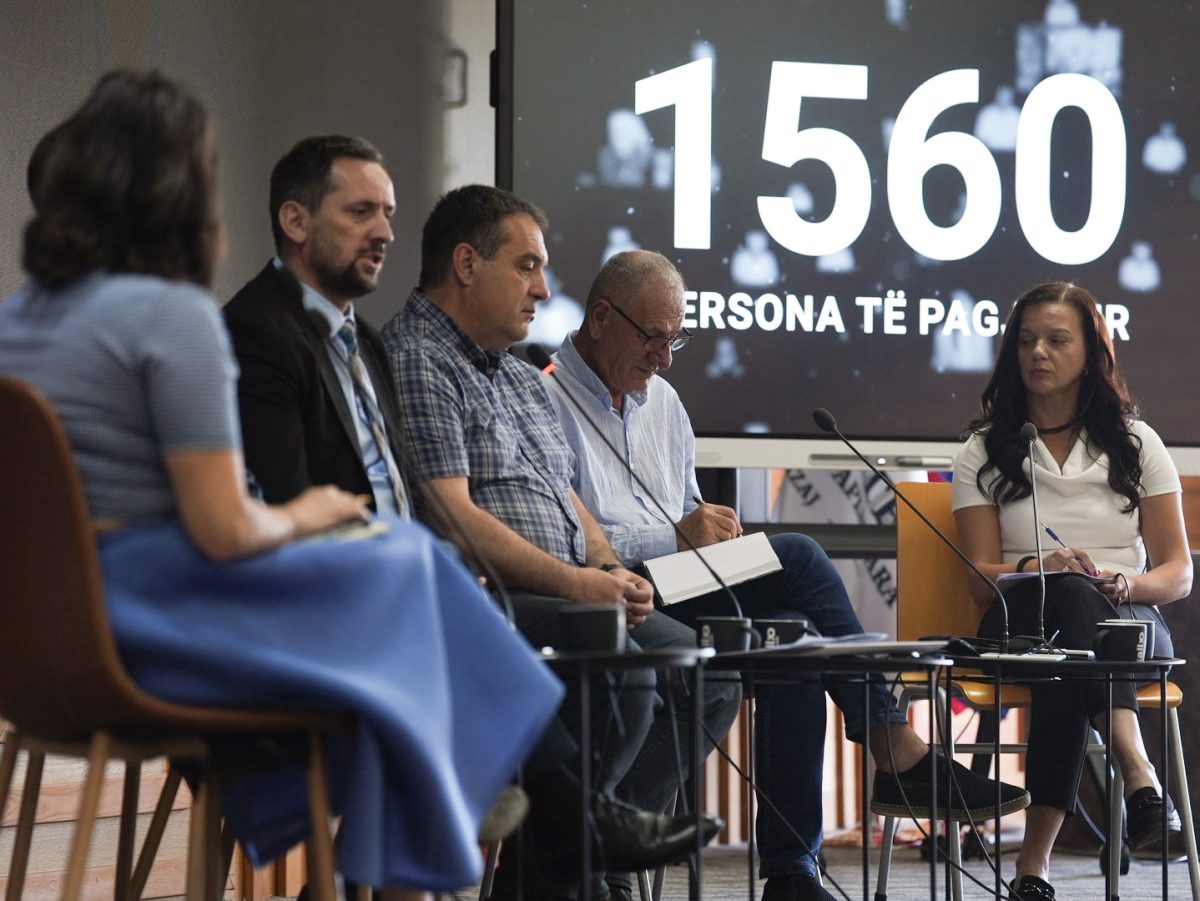
On June 9, BIRN Kosovo screened a documentary on missing persons from the region of Ferizaj as part of a broader series of public discussions on transitional justice and missing persons in Kosovo.
Produced as part of the EU-funded project “Unveiling the Truth: Combating Monoethnic Journalism and Advocating for Missing Persons in Kosovo,” the documentary highlights the lasting impact of war crimes on families and communities across the region of Ferizaj.
It included stories and testimonies from the families of missing people from the region of Ferizaj, and from representatives of relevant institutions addressing the grievances of the past in Kosovo.
The documentary was produced following more than 200 hours of interviews with family members of missing persons, witnesses, and individuals involved in the search and identification process.
Through personal testimonies and expert insights, the film sheds light on one of the most painful and unresolved legacies of the conflict. It revisits the lasting consequences of the Kosovo war, which left behind thousands of victims and cases of missing persons. In the municipalities of Ferizaj, Kaçanik, Shtime, Hani i Elezit, and Shtërpcë alone, around 80 people are still listed as missing.
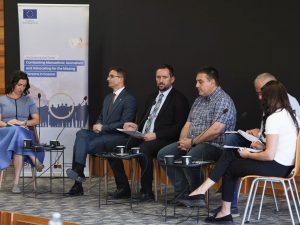
Following the screening, a panel discussion brought together institutional representatives and organisations working on missing persons issues, moderated by BIRN Kosovo’s Executive Director, Jeta Xharra.
Participants included Ilir Morina, from the Special Prosecution Office, Kushtrim Gara, from the Government Commission on Missing Persons, Ditor Haliti, from the Institute of Forensic Medicine, Salih Muhaxhiri, from the Family Association for Missing Persons and Civilian Victims “Stars of Hearts,” and Natasa Bozilovic, from the Missing Persons Resource Centre.
Morina emphasized that one of the first steps taken in addressing war crimes was the establishment of dedicated institutions. “The Special Prosecution Office’s first step in this direction was the creation of relevant institutions dealing with war crimes,” Morina said, adding that tangible progress has been achieved in recent years on the recovery of human remains.
Kushtrim Gara stressed that the Ferizaj region would remain a priority within institutional efforts to locate missing persons. Ditor Haliti, from the Institute of Forensic Medicine, discussed the technical challenges involved in identifying victims. He noted that the disposal of bodies into the Lepenc River significantly complicated the verification and identification of human remains.
Meanwhile, Salih Muhaxhiri, whose wife is a missing person, spoke about his long-standing commitment to the issue. “I have been involved in this work since the end of the war because I am also a family member of a missing person. My wife disappeared during the war. Since that day, we have tried to contribute despite numerous obstacles. The greatest challenge we face today is that family members are becoming increasingly discouraged and are no longer willing to share information,” Muhaxhiri said.
Natasa Bozilovic also raised concerns about the prolonged wait for answers. “Many people have passed away without ever receiving information about their missing relatives,” she noted.
The event was attended by 24 participants, of whom 13 were women. Participants included civil society activists, journalists, students, and family members of missing persons from the Ferizaj region.
This event was organised in the framework of “Unveiling the Truth: Combating Monoethnic Journalism and Advocating for Missing Persons in Kosovo” project, funded by the European Union.