BIRN Journalists Brief International NGO

BIRN
journalists working for the Justice Report agency in Bosnia and
Herzegovina addressed members of the International Forum Bosnia on
November 28 about war crimes trials and dealing with the past.

Nidzara
Ahmetasevic and Aida Alic spoke about the challenges facing
journalists in covering the legacy of the war which engulfed the
country between 1992-95.
 
BIRN’s Justice Report is
the only local or international agency which is dedicated to coverage
of war crimes trials and transitional justice on a daily basis.
 
 
International Forum Bosnia is a Sarajevo-based
NGO which rallies individuals and organisations from Bosnia and
Herzegovina and the rest of the world in order to promote dialogue,
trust and respect and the best principles of human rights.

New Correspondents Boost BIRN Coverage of Serbia

BIRN Serbia has recruited correspondents from Sandzak, southern Serbia, Vojvodina and Kosovo (covering the Serb community and other minorities) for its expanded news service on the new Balkan Insight website.

Amela Bajrovic, Nikola Lazic, Dragan Gmizic and Isak Vorgucic will strengthen BIRN’s network of contributors and give our readers a direct insight into the latest developments in these regions. Our new correspondents are trained and supported through the Minority Media Training and Reporting Project.

Since 2005 more than 50 journalists from Serbia have attended the training programme organized by BIRN Serbia, and sponsored by the British Embassy in Belgrade and the Washington-based National Endowment for Democracy. The project’s aim is to strengthen the capacity of local journalists and support their work.

Life in Kosovo Breaks All Records

In
November Life in Kosovo’s team covered municipal and parliamentary
elections in a series of 33 televised debates.

Before
the debates the Life in Kosovo team visited local TV stations across
Kosovo, and opened a hotline to collect questions from the
inhabitants of each municipality. Viewers were encouraged to call in
and put their questions to the candidates.

It
was the first time that Kosovo voters had a chance to vote for
individual candidates, in addition to casting their ballots for their
preferred party.

"Life
in Kosovo" truly lived up to its name when the team travelled to
each municipality to record its debates in the presence of local
audiences. The 27 road shows on the municipal elections brought the
audiences face to face with the candidates running in the elections
for local mayors. The candidates had an opportunity to present
their political agenda and explain how they would carry out their
promises.

A grand total of over
10,000 viewers participated in the shows. The debates were broadcast
on Kosovo’s public service television, RTK, and because of the
extraordinary level of interest, each show was repeated twice on the
same day.

Meanwhile,
Life in Kosovo carried on with its regular schedule of televised
debates every Thursday. Well-known public personalities and
leading political analysts discussed and explained the election
programmes of Kosovo’s rival political parties.

During
these five live shows viewers were encouraged to call and answer the
question whether the electoral campaign had influenced their decision
as to who they should vote for. Over 1,500 viewers phoned in to ask
questions or make their views known.

The
five election debates were held with the participation of editors of
Kosovo’s major daily newspapers – Koha Ditore, Bota Sot, Express,
Epoka e Re, Lajm, Zeri, Info Press and Kosova Sot. They shared the
platform with prominent civil society activists.

The
"Life in Kosovo" shows on municipal elections were a
co-production of Balkan Investigative Reporting Network, BIRN,
Kosovo’s public service TV station, RTK, Advocacy Training and
Resource Centre, ATRC, the Balkan Trust for Democracy, BTD and the Group for Policy Analysis, GAP. These
debates were supported by the Rockefeller Brothers Fund, the OSCE and
the UNDP. Local organizations have contributed to the production of
these debates as well.

Sigrid Rausing Trust to support BIRN in 2008

The
Sigrid Rausing Trust has renewed its support to BIRN for 2008 with
two grants for the forthcoming 12-month period.

Its
core funding for BIRN is aimed to support costs for a one-year
programme to strengthen BIRN’s network of journalists across the
Balkans and enable them to continue probing and analysing key issues
– as well as to support the development of democracy, good
governance and the rule of law in the region, as part of its advance
towards European integration.

Through
an advancement grant, a one-off contribution for strategic
development, The Sigrid Rausing Trust will help to increase and
sustain BIRN’s editorial capacities.

These
two significant grants will also assist BIRN advance its capacities
to develop other network activities, with a view to achieving
sustainability in the medium term.

Netherlands Embassy Support BIRN in 2008

The Embassy of the Kingdom of the Netherlands in Belgrade has made a grant available to support BIRN’s efforts to turn part of its output into an income-generating activity. The new grant provides funds designed to boost the BIRN network’s editorial capacity, in particular its cutting-edge output in analytical and investigative journalism.

The Netherlands Embassy has given generous support to BIRN’s development as an independent local civil society initiative, and helped its regional activities throughout 2006-07.
 
During the past two years BIRN has engaged in extensive training activities, building teams of investigative journalists throughout the Balkans and training them in different aspects of their trade.  It has created a network of over 200 local contributors and editors in nine countries across the region.

Balkan Insight Website Launch

Balkan Investigative Reporting Network, BIRN, has launched its new website – a comprehensive online news service on Balkan political, economic and social affairs.

The www.BalkanInsight.com website contains current information from nine countries in the Balkans, and will keep its readers updated on the latest developments in the region, through regular analytical and investigative reports. It carries in-depth coverage of reforms and the transition process, business and investment trends as well as the latest news in a brief, accessible format.

The content of the website will be free for readers and republication until January 31, 2008, after which certain sections of the website will be available by subscription only. During December 2007 BIRN is offering a promotional 20% discount for subscription for 2008.
For more information visit us at: www.Balkaninsight.com. For rates and subscription options visit: http://www.balkaninsight.com/en/main/info/5515/ or contact us directly at: [email protected]

Life in Kosovo Discusses Violence against Women

This Thursday the Life in Kosovo TV debate is to explore a very sensitive issue – violence against women.

violence against women

How much violence is there against women in Kosovo? Who is working with the victims of domestic abuse? Is anybody protecting them? Who is fighting against trafficking in human beings? And can the victims of violence expect help with their reintegration into society?

To discuss these issues, we will have the following panellists in the studio:

Ariana Qosaj Musa – Expert for gender balance, OSCE;
Flora Macula – Executive Director of UNIFEM;
Lumnije Decani –from the Centre of Women’s Wellbeing/Safe House
Luljeta Vuniqi – Executive Director from the Kosovar Gender Studies Centre
Tahire Haxholli- from the investigating sector of domestic violence within the Kosovo Police Service, KPS

The Life in Kosovo TV debate show is a cooperative project between Kosovo public television, RTK, and the Balkan Investigative Reporting Network, BIRN, and is broadcast every Thursday beginning at 20:15

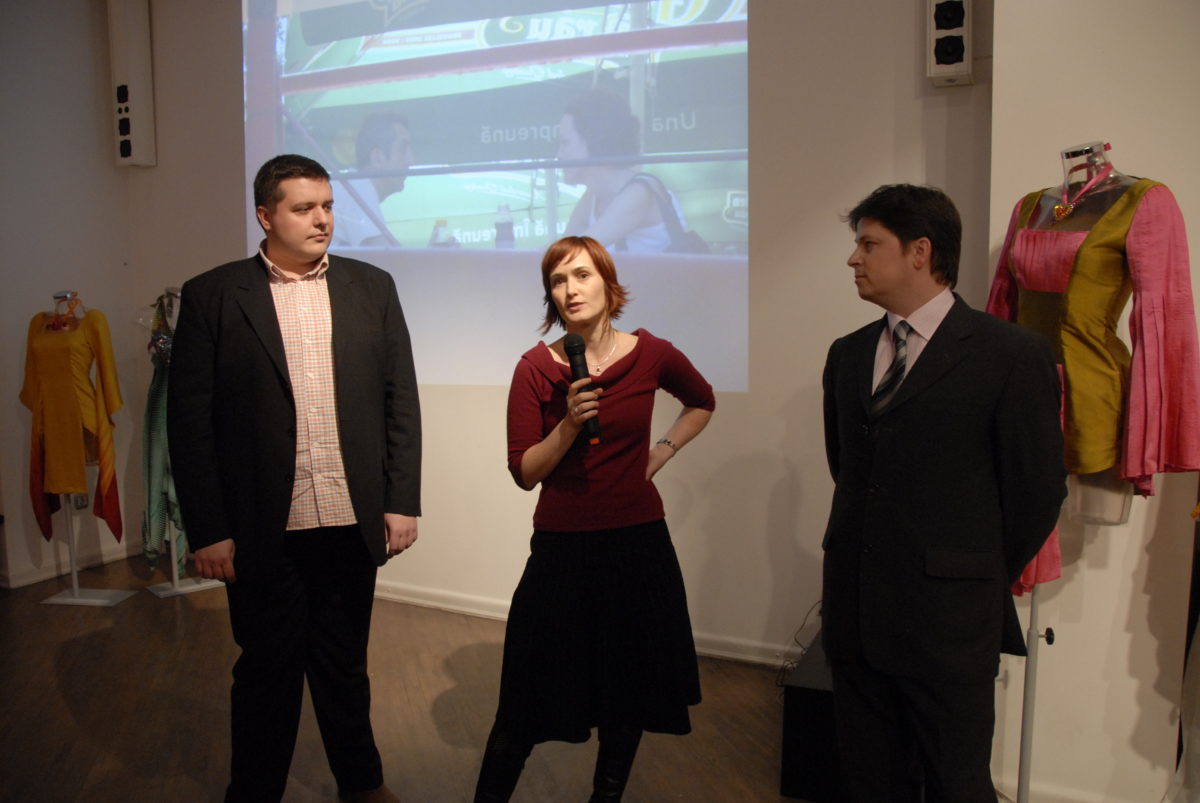
Moving On: Reception at Ozone gallery

The first in a series of presentations of the publication – Moving On: Overcoming Barriers to a European Futurewas held in Belgrade on Wednesday in the presence of representatives of the media, NGOs, international and governmental organizations.

The occasion was to celebrate the completion of the Balkan fellowship for journalistic excellencein 2007, an initiative of the Robert Bosch Stiftung and ERSTE Foundation.

The reception and cocktail were organized in honour of the two fellows from Serbia, Nenad Radicevic and Milorad Ivanovic. The BIRN team from Serbia gave a presentation about the publication, and announced that the next fellowship project is to start in January 2008. Fellows from the 2007 intake discussed their experiences during the project.

“This is a great opportunity to travel and work through the region and Europe”, Radicevic said, and Ivanovic encouraged colleagues to take part in future activities within the fellowship programme.

Fellowship Book to be Launched Throughout the Balkans

A series of articles recently produced by ten journalists participating in this year’s Balkan Fellowship for Journalistic Excellence, highlighting the need for better movement of people, goods and ideas in the Balkans, is to be launched over the next two weeks in capital cities throughout the region.

Starting with a reception on November 28 in Belgrade, the fellows and their mentors will present the book Moving On: Overcoming Barriers to a European Future at nine events hosted by the Balkan Investigative reporting Network, BIRN. Members of the media and organisations working on themes related to European integration are invited to attend the events, which will also take place in Buchurest, Podgorica, Pristina, Sarajevo, Skopje, Sofia, Tirana and Zagreb.

The book reflects in-depth research conducted by fellows on the existence and impact of a range of obstacles to political, economic and social development. Articles feature topics as diverse as criminal justice, environmental threats and sport and culture policy, as well as visa regimes, labour flows and the politics of transport.
 
The Fellowship programme, an initiative of the Robert Bosch Stiftung and ERSTE Foundation, provides financial and professional support for quality reporting, regional networking among journalists and balanced coverage on an annual theme, selected for its significance in the Balkan region and the EU. Fellows are given practical, professional support by the programme’s local partner, BIRN, a regional network of media development organisations and publisher of Balkan Insight.
 
Moving On is published by BIRN, online in English, German, Albanian, Bulgarian, Bosnian/Croatian, Macedonian, Romanian and Serbian at http://fellowship.birn.eu.com/movingon .
 
For information on the programme, upcoming events, or how to republish and cite reports, contact Anna McTaggart, Fellowship Programme Manager & Editor, on [email protected] or tel. +381 11 303 7809.

Montenegro on the Way to the EU

Balkan Investigative Reporting Network, BIRN, together with the Centre for Civic Education, organized in Podgorica on November 16 a round table, “Montenegro on the way to the EU: progress and challenges”.

Taking part in the round table were the Montenegrin deputy Prime Minister, Gordana Djurovic, the representative of the European Commission in Montenegro, Eric Trotemann, and the coordinator of the Stability Pact for South-eastern Europe, Goran Svilanovic.

The event was moderated by Nedjeljko Rudovic, BIRN coordinator for Montenegro.
The starting point for the discussion was the “EU’s progress report for Montenegro”, published earlier this month, reflecting on the country’s achievements, and the challenges that remain on its way to the EU.

The overall assessment of Montenegro’s progress was positive. Goran Svilanovic said that Montenegro, despite its efforts, should wait for Serbia on the way towards accession to the European Union.

“Montenegro has made significant progress towards accession, but Brussels should consider its application for the status of candidate for membership together with Serbia and Albania next year,” said Svilanovic.

Djurovic stressed the readiness of the administration in Podgorica to take all necessary steps as part of the process of EU accession in next five years. She said that “European integration processes and dynamic development of society are the choice of the people of Montenegro,” and that the government was truly dedicated to the final goal, full membership.

The European Commission’s representatives presented the results from latest report on Montenegro’s progress towards the EU, and said that the problems of corruption and organized crime remained the biggest issues in Montenegro. “It is necessary to have a wider consensus on all key issues during the implementation of reforms in all areas of society,” said Mr. Trotemann.

The audience actively participated in the two-hour debate.

Reports about the event were broadcast in the main news on TVCG, IN TV, Montena TV, MBC TV. MINA News Agency and daily newspapers Vijesti, Dan, Pobjeda and Republika also published extensive reports on the event.