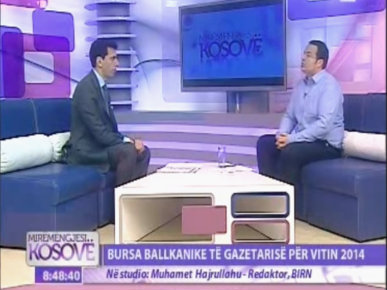
Microfinance Institutions

The law that allowed microfinance institutions registered as NGOs to turn capital gains as NGOs in investment capital for commercial purposes was abolished.

In April 2012 a law was implemented that states when donors give money to non-governmental organizations (NGOs) in Kosovo it is legal for NGOs to ‘transform’ the money in stocks or shares of personal private persons. According to the Law on Freedom of Association in NGOs, the capital microfinance NGOs that are in case of dissolution or closure should be distributed to other NGOs operating with similar objectives. As a result, the constitutional court has decided to prohibit microfinance institutions registered as NGOs to turn capital gain as NGOs in investment capital for commercial purposes.

The decision of the constitutional court to abolish this law brought a lot of consent to the Civil Society. Driton Selmanaj, Kosovo Democratic Institute (KDI) says that this law had violated three articles of the Constitution of Kosovo: Article 44 (the freedom of association), Article 46 (freedom of property) and Article 10 (economy).

Korab Sejdiu, a lawyer representing microfinance NGOs, says that this law has been misinterpreted because the objectives of these NGOs were not the way they were deduced. “We had a very strong case where we set our main objectives, but the court did not even take them into consideration,” said Sejdiu.

This law was voted and approved by the Assembly, and the reasoning of Naser Osmani, MP (Democratic League of Kosovo), was that according to him it was a better law than the previous one. However, he adds: “Civil Society has done a good job into being vigilant towards this issue and that they sent their complaints to Ombudsperson. The abolishment of this law is a good sign because it shows that institutions are collaborating and are supervising the work [potential flaws] of each other. The Parliament is not infallible.”

The attempts to create this kind of law have started since 2004, and the transparency has been low. Lulzim Rafuna, minister of Finance, reasons this by saying: “this problem was inherited by UNMIK times. In year 1999 and 2004, these organizations were regulated by UNMIK rules and these rules were abolished in year 2008.” According to him, the purpose of this law was to only touch one category of microfinance NGOs and it does not oblige these institutions to become corporations. However, Selmanaj add that this law has destroyed the main purpose of NGOs which is that they are non-profitable and the money they accumulate should be used in benefit of the society, not private benefits.

In conclusion, the law that allowed microfinance institutions registered as NGOs to turn capital gain as NGOs in investment capital for commercial purposes was abolished. There is still a debate taking place towards this issue, and “Life in Kosovo” will follow the proceedings.

Negotiations between Kosovo and Serbia

Even after the eighth round of negotiations between Prishtina and Belgrade, no definitive agreement has been reached.

On April 2, 2013 the eight round of negotiations between Kosovo and Serbia regarding the stabilization of relations took place. Catherine Ashton, the EU High Representative for Foreign Affairs and Security Policy, after this meeting stated that the conflict is deeper than thought. The reason behind this seems to be very clear to Blerim Shala, political coordinator of the negotiations, since according to him there is still tension in the Serbian government and they do not want to reach a common agreement.

Most of the diplomats expected that this will be the final round of negotiations, especially with the presence Serbian Deputy Prime Minister Aleksandar Vucic in this meeting. Shala reasons this by saying that he is one of the strongest political figures in Serbia.

When asked about the disagreements between these two countries, Shala said, “The fundamental disagreements are on the case of association, but Ashton is categorical towards this issue since there cannot be any executive power. And the other disagreements are on the justice and the work of police.”

On the other hand, Skender Hyseni, former Foreign minister of Kosovo, answering the question about why this round failed, said that the expectations were too high.

Another issue mentioned in this debate is the case of a chair for Kosovo in the United Nations. Asked of Serbia would accept this, Glauk Konjufca, vice president of the Assembly of Kosovo said, “The main issue towards this case is the price Kosovo has to pay to Serbia in order to be recognized. From previous history, Serbia recognized Bosnia and Hercegovina … This could happen with Kosovo, as well.”

A report from “Justice in Kosovo” was also aired. It concerned the transparency of the dialogue, which is low. “Justice in Kosovo” sent a letter on January 12, 2013 to the office of the Prime Minister to ask for full access in the documents regarding technical and political issues of this dialogue. This request is supported by the law on access to public documents.  However, there was no response. Nevertheless, Blerim Shala said that 95 per cent of the information has been made public.

Prishtina-Belgrade Agreement

Prishtina and Belgrade signed an agreement, which is seen as a catalyst for other agreements.

Prishtina and Belgrade signed an agreement, on April 19, 2013, relating the normalization of relationships between each other. There were various interpretations towards this act: some saying that Kosovo won, some saying that Serbia won on a margin of 14 to 1, and others saying that Serbia has recognized the Republic of Kosovo. This agreement was supposed to a compromise on the interests of both parties.

This agreement is seen as a step forward for Kosovo, but not recognition. This agreement creates association/community of Serb municipalities in Kosovo, which, as a result, gives full power for sectors such as economy, urban planning, health and education. Also, it enables the power to select police leadership for the Northern region, for judges and others; and inserts within the framework of Kosovo the existing structures of Serb security institutions that are a part of the country. It is also guaranteed that neither country would hamper each other’s integration in the European Union.

Oliver Ivanovic, the Serb political representative from Mitrovica, implies that even after this agreement Serbs are afraid of any physical contact with Albanians, due to the prejudices as a result of the negative experiences during the war of 1999. He adds that in order for this agreement to be accepted by Serbs of Mitrovica, it should not be transmitted to them by Prishtina or Brussels, but: “the only party that can be trusted in long-term is the Government of the Republic of Serbia. They have the obligation to explain to people that work [the agreement].”

Part of the agreement between Kosovo and Serbia is also holding local elections in four Northern municipalities which are expected to be organized this year by the Organization for Security and Cooperation in Europe, OSCE. Ivanovic states that this is not a good idea because less than 10% of the Northern population would vote; hence, degrading the credibility of OSCE. He proposes: “there must be no hurry and next year will probably be the best solution.” OSCE spokesman in Prishtina, Nikola Gaon, told “Life in Kosovo” that the OSCE is familiar with its role in the agreement and that the situation is being monitored; therefore, the elections are supposed to take place on this autumn, 2013.

Nexhmedin Spahiu, analyst from Mitrovica, states that one of the most discussable points on this agreements are the ones which Serbia wants to isolate itself inside the borders of Kosovo. “They want to create institutions that will be for Serbs only, just to isolate themselves inside Kosovo. While according to Ahtisaari’s plan Kosovo is a multiethnic country where everyone has the right to their own ethnicity and there are no institutions that categorize each one of them.”

Naim Rashiti, ICG (International Crisis Group), suggested that the agreement reached on April 19 in Brussels is just an opening step towards other agreements. He analogizes this situation with the one in between east and west Germany in 1970s. t

Also expected to be discussed is Kosovo becoming a member of the Green Card, which includes all the countries of Europe and some other countries of the Mediterranean. Green Card would enable Kosovar citizens to pass the borders without having to pay extra insurance fees for their vehicles. Also, Kosovo would demand its own international bank code which would allow the sending and receiving of the transactions information in a more secure and standardized way. A international dialing code will also be demanded for Kosovo.

The Degradation of Prevalla

The Ministry of Environment and Spatial Planning decided to halt all construction activities in Prevalla for an unspecified time.

The Ministry of Environment and Spatial Planning decided to stop all construction activities in the area Prevalla, near of the Sharr National Park, for an indefinite period. Prevalla is a village near Prizren with a beautiful landscape. Six years ago, an area of 27 hectares of Prevalla has started to get transformed into a touristic area with a project ignited by the Municipality of Prizren.

Some 360 villas in this area were planned – 35 of them planned would be built by the municipality itself and 315 privately. Currently, there are 100 villas built in Prevalla, but 90 of them do not match with the urban plan of the municipality and violates the law that protects the environment.

Salajdin Fanaj, owner of  Fanaj Engineering, says the first six years of the contract made with the municipality of Prizren for the construction of infrastructure in the touristic village Prevalla, included ground installations, sanitation, water supply, electricity network regulation and sidewalks. He adds that his company did the basements but there were other private individuals who disregarded them and expanded their buildings.

As a result, Dardan Gashi – Minister of Environment and Spatial Planning, took a decision last week that abrogated the previous decision of the former Minister Gjini – full competence given to the municipality of Prizren towards Prevalla. All the constructions were stopped as Dardan Gashi suggests due to: “the situation in the area Pravalla, exceeding the conditions and criteria for construction and disrespect MESP guidelines that were sent to the Municipality of Prizren regarding the urban plan for the area.”

Sadik Paçarizi – Director of Urban Planning, Municipality of Prizren, says that he knew about these degradations but had no power to stop these over-building. He said that on April 4, 2011 he sent a letter to the municipal inspectorate department to prevent illegal construction. One of the passages in this letter said: “We seek from you to take measures against the wild illegal construction in this area within the legislative competence of the construction according to the law of the relevant regulations.”

Iftiman Lytfiu, architect and the designer of the Prevalla plan, said that in the plan there were definite rules and guidelines towards the construction. The problem is that there are individuals who disrespected these guidelines and started constructing palaces. However, he adds that economically the value of this land has raised from thousands into millions.

Naim Cahani, Kosovo Democratic Institute (KDI) Prizren, says that the case of Prevalla was never discussed seriously in the municipal assembly of Prizren. However, he is delighted with the fact that these constructions were stopped.

The Establishment of New Municipalities

The government initiated the procedures of establishing Hasi as a new municipality.

“Life in Kosovo” discussed the establishment of new municipalities in Kosovo; specifically, the government’s proposal of recognizing Hasi as a new municipality. The establishment of Hasi as a new municipality was promised by many politicians for years. Prime minister, Hashim Thaci, declared that the decision for establishing Hasi as a new municipality was already made, however, this declaration has been modified as a proposal from the government without any firm verdict. This approach is being considered as a political move of the government since the new elections are going take place in autumn 2013.

Basri Musmurati, undersecretary of Local Government Administration and general secretary of PDK, said that this decision is the best regarding the population of Hasi and the government has done a thorough analysis into deciding whether Hasi should be established as a new municipality.

Even though, the government has modified the prime-minister’s declaration of Hasi as a new municipality, in their website is written that one of the government’s decision on their 129th meeting is “The Republic of Kosovo, today, has approved the decision of establishing a new municipality based on the request of the Hasi’s population.” Afrim Kasolli, Vetevendosje, said that this is firmly a political and electoral decision by saying: “It is clear that this is an electoral decision since we are in an electoral environment and in only 5-6 months the elections will be held.”

Besnik Tahiri, AAK, said that there are a lot of criteria that a place should meet in order to become a municipality, but most importantly he said that “The establishment of new municipalities does not generate any new jobs or to have a Head person to run it, but it is done to improve the public service.” Moreover, Tahiri explains that in order for a place to be considered as new municipalities there are five fundamental principles: “1) The number of population, 2) geography, 3) financial self-sustainability, 4) the acceptance of the municipality, 5) special specifications.”

Sadri Ferati – Former Minister of Local Government and Member of Parliament LDK, implies that the promises for the establishment of new municipalities will continue and there will be a huge mess since most of the villages would want to become a municipality. As a result, he proposes: “we should make some criteria that fit the international ones, but also should be based upon social agreements, where our society should gather and find a common ground related to the criterions regarding the establishment of new municipalities.”

BIRN broadcast two stories relating this issue. The first one was between the region of Prizren and Gjakova, and the population interviewed did not support the decision to establish Hasi as a new municipality. The other story was in Zhegra, which is a village that has requested to become a municipality since it fulfills most of the criterion. But there is no decision taken upon this request by the government.

Amnesty Law

Kosovo Correcting Service, which is supervised by the Ministry of Justice, submitted to the Basic Courts a list with the names of approximately 350 prisoners who will benefit from the Amnesty Law.

The list is comprised of the names of large number of individuals sentenced, accused and being investigated. However, the heads of the judicial system in Kosovo expect to exempt only a small number of persons on the list. Part of this list is also Enver Sekiraqa, Faton Hajrizi, Nazmi Mustafi, Zarko Veselinovic. Included in the list are also the criminals sentenced for triple murder and for hiding illegal weapons.

“If a person has conducted only one criminal act which is included in the amnesty, then  person is included also in the list. However, the court will decide if the person benefits from the amnesty or not”, said the Deputy Minister of Justice, Daut Xhemajli.

According to Xhemajli, the reason why they are included in the list is the fact that apart from other crimes they have also committed a crime that is included on the list, such as holding illegal weapons.

From this list, only a small number of prisoners will benefit from the Amnesty Law, therefore the drafting of this list has been a rushed decision” said the head of Basic Court of Prishtina, Hamdi Ibrahimi.

According to Ibrahimi, this law will only benefit the persons who have committed a criminal act such as call to resistance.

On the other hand, the head of the Supreme Court, Fejzullah Hasani, thinks that the drafting of this list came as a result of misinterpretations in the law.

The Amnesty Law was criticized by the organizations of the civil society and the opposition members of the parliament. As a result, the opposition and the civil society protested for several days in order to influence and put pressure on the Kosovo Assembly to be more vigilant and not make a rushed decision. However, on November 3, 2013, the Constitutional Court decided that except some articles the law is in compliance with the Kosovo Constitution. 

The Amnesty Law benefits people on three cases: those who have committed criminal acts against the constitutional order, those who called for resistance, and the hooligans.

For instance, if a person did not pay the taxes as a result of not recognizing the state institutions, then that is considered as a call for resistance.

All the persons who have been sentenced and escaped from the prison will not benefit from the Amnesty Law.


The Strategy for Lowering the Number of Cases

A new strategy was drafted with the purpose of lowering the number of judicial cases, but the heads of courts ask for new judges and legal advisors in order to implement the strategy successfully.

The National Strategy for the Reduction of Old Cases of the Kosovo Judicial Council, aims to lower the number of unresolved judicial cases.

This is not the first time that Kosovo Judicial Council has attempted to lower the number of cases. KJC’s previous strategy for lowering the number of cases was not fully implemented.

This strategy was approved on November 18, 2010, and aimed to finish the cases that were filed until 2008.

Head of the Basic court of Prishtina, Hamdi Ibrahimi said, “The previous strategy was not fulfilled. In our court you can find cases that were filed in 2003 through 2005 and according to this, we did not implement the strategy.”

According to Hamdi Ibrahimi, the reason the strategy was not fulfilled is because of the large number of cases and the lack of judges.

According to the Head of Kosovo Judicial Council, Enver Peci, “Based on the old strategy, the number of old cases were lowered up to 63%. However we must admit that it was impossible to finish the cases until 2008 with this strategy.”

According to the Head of the Basic Court of Mitrovica, Kada Bunjaku-Perquku, beside the lack of judges, there are other obstacles in implementing the strategy in Mitrovica and where the judges work.

Bunjaku-Perquku also mentioned that they do not have access to cases that derived from the North Mitrovica court. The basic Court of Mitrovica currently uses the court building in Vushtrri.

The progress report, which was drafted from the European Commission, published on October 16, recommends that the judicial system addresses the collection of cases. According to this report, the number of unresolved cases in the Basic Courts of 2012 was 218,740.

The Accident in Trepca

In October, 2013, Justice in Kosovo discussed about the accident in Trepca.

A year prior to the broadcast of the program, the death of Habib Osmani was reported in one of the mines of Trepca, in Stanterg. One year after, there are two versions how this miner died and the causes of his death.

According to the internal report of the Trepca Mines Administration, the miner died from natural causes and his death was not related to any irregularities in the mines. Another report was released by the Independent Commission for Mines and Minerals which says that the main causes of his death is directly implicates another person Justice in Kosovo decided to interview the members of the family, the eye witnesses and other persons who know anything about this case.

Imer Osmani, the father of the miner who died while working, said, “Habib started working in the mines one year before the accident. I found out about the accident at midnight. He worked as a loader of minerals and ores.”

For his first and the second shift he had the order not to work that day because it was dangerous, but for his third shift he was ordered to work. Habib was on his third shift when he died, added Mr.Osmani.

The eyewitness of this case is one of the co-workers who were working on the same shift with Habib Osmani. Blerim Murseli, the eyewitness said, “We were working on the chimney 144. The water ruptured from the chimney 144. The water pushed me to the chimney 141, which is approximately 100 meters far from the chimney 144. I told my other co-workers to go and look for Habib because he might be dead. Musa Bucinca, our supervisor, gave us the order to work that day”

The report of Trepca Mines says that Habib Osmani died because the water ruptured from a hole and there was nothing they could do about it, whereas the report of the Independent Commission for Mines and Minerals says that Musa Bucinca is the one who should be blamed because he did not take into consideration the order that the previous supervisor gave.

 The supervisor of the first shift had given the order to not work that day because one of the chimneys contained water.  The supervisor of the third shift did not evaluate how dangerous it could be for normal work proceedings to take places that day at the mine.

Xhafer Peci, production director, said that an unknown amount of water was accumulated in a natural hole and it had suddenly ruptured in the chimney 144.

In addition, Nuredin Ibishi, the head inspector of Independent Inspectorate of Mines and Minerals, said that the supervisor made a concession and did not evaluate well the dangers of the workplace on that particular day.

The director of Trepca Mines, Halil Qelaj, said that they did not receive any report from the Independent Inspectorate of Mines and Minerals. “I know that they were engaged in this issue, but I did not receive any report, but if the commission says that the supervisor is responsible, then measures should be taken”, added Qelaj. The Police of Kosovo also said that they did not receive the report of the Independent Inspectorate of Mines and Minerals.

The supervisor Bucinca had denied all the claims of the Independent Inspectorate of Mines and Minerals.

15,000 Euros were given to the family as a compensation for the death of their family member.


Elections Abuse

On the 28th of October, 2013, Justice in Kosovo broadcast a program about the abuses associated with elections in the country.

Local elections of 2009 were associated with much ballot fraud and abuse.  In order to ensure that such irregularities do not take place again in the elections that were due in November 2013, prosecution authorities in Kosovo organized themselves rather efficiently to combat fraud.  Around 50 prosecutors, hundreds of police officers and tens of judges were in charge on the elections day.

The prosecutors, judges and police made it very clear that all those intending to interfere with a fair and democratic election process would be brought in front of justice and face charges.

The head of Kosovo Judicial Council, Enver Peci, said “We are going to take adequate measures on the Election Day”. Apart from the organizational framework of courts and prosecution for fraud-prevention, to combat fraud, another helping hand came from Central Election Commission. When Justice in Kosovo asked Enver Peci if in one way or another they have warned not to abuse with votes, he said that they had tried to warn the political parties to be careful and not to encourage their militants for unfair means during the elections.

In a statement given for Justice in Kosovo, Laura Pula said, “50 prosecutors will be engaged on the election day. If we notice actions against voting rights during the elections day, the prosecutor in charge will immediately decide for the measures that should be taken. Laura Pula, head prosecutor of the Election Council, said that the prosecution will try to find and arrest even the people who deal with ballot sales and purchase.

Kosovo Police was also diligent in their job determined to combat any actions that breach the law and tarnish the reputation of these elections.

Baki Kelani, the spokesperson of Kosovo Police, said, “The Kosovo Police has a drafted and approved a plan that was prepared in time for the Election Day. We, as the Police of Kosovo, have done all the necessary preparations to offer the citizens order and safety.”

At the end of the programme, there are some vote abusers of the elections of 2009 who explain what they did and how they did it.

Dangerous Public Spaces

On November 29, 2013, Justice in Kosovo discussed about the dangerous public location that jeopardize people’s lives every day.

 The investigative report addresses the problem of dangerous public locations where many people have died accidentally. During this investigation Justice in Kosovo worked diligently in identifying various dangerous spots where a lot of citizens across the country were either at risk of their lives or had already lost their lives.

The program addresses the problem of Barileva village, in Prishtina, where many children drowned in the irrigation channel of Iber- Lepenc. This channel was established during the Communist era of Kosovo. The channel was used to irrigate the tableland of Kosovo. Many houses have been built near this channel. However, due to this area being a residential area there had always been concern that local children were at risk due to the irrigation channel.

A three-year-old boy named Endrit Nreci was one of the victims who lost his life in this channel when he drowned in the water of this channel. Sevdije Nreci, the mother of Endrit, explains the accident. She also said that she always feared that this would happen.

The Iber-Lepenc officials say that the channel was established many years ago and the houses near the channel have been built afterwards. Hajdar Beqa, one of the officials, said, “This is an open channel and the citizens should be very careful. These houses near the channel should not have been built there in the first place.”

The program also addressed the problem related to the controls being put on theme parks, with many of them lacking the required supervision from the municipality; one of the parks in Lipjan resulted to be dangerous for the visitors. 

One of the cases is the amusement park in Lipjan where a seesaw was put in the park without possessing a license for it. Petrit Gashi is a young boy who was injured in the seesaw. For this case, the public prosecution filed an indictment. The Court of Lipjan sentenced the responsible persons with a fee of 250 Euros per person.

In addition, Justice in Kosovo also showed the case of a child from Peja who was seriously injured because an electric cord passed through his balcony. The child of this family, Mergim Syla, was injured a few years ago. Shkurte Syla, Mergim’s aunt, said that it is difficult to watch children all the time and keep them away from the cords. As a result of the accident Mergim’s hands are not fully recovered.

Seven years after the accident, Kosovo Energy Corporation has not removed the cords from that place.

Namik Bajraktari, Head of KEC in Peja, said, “I was not informed of this case. He said that for the moment the cords are isolated.” He promised that this problem will be resolved and action was indeed taken to address the issue.

Agron Maxhuni, a legal official in the Ministry of Local Governance Administration, said that the Municipality Security Council should track these cases. He also mentioned that they have 6 meetings per year where they actively discussed these issues and seek to find solutions.