Strengthening Civil Society Anti-Corruption Capacity in Energy and Environment Issues in Kosovo

BIRN Kosovo

The project aims to strengthen the legal basis for proper environmental protection for national parks and increase the efficiency of this mechanism through good management. BIRN Kosova, as leader of the civil society coalition, will implement various activities including analysis and research, aiming to identify and expose corruption related to protected areas/national parks, focused on the Drini and Mirusha rivers, including the Ibar.

Summary:

The Green Agenda for the Western Balkans aims to reflect the European Green Deal in a proportionate and adapted manner in the Western Balkans. The objective is to turn environmental and climate challenges, similar throughout the region, into opportunities. Given that natural resources and climate change do not know borders, the Green Agenda foresees joint actions that will contribute to the sustainable socio-economic development and green recovery of the entire region in the post-pandemic period.

Kosovo should contribute by successfully implementing this joint regional vision with a high level of ambition. Like all Western Balkans, Kosovo endorsed the Green Agenda for the Western Balkans at the Sofia Summit in November 2020. The European Green Deal demands a complete transformation of the national economy, transportation, and many more factors. As such, it also depends on a national consensus about the green future of our country.

Many activities and campaigns have been launched regarding the state of the environment in Kosovo. However, nothing seems to have made an impact in terms of raising societal awareness about the risks that the environment is facing. Yet, citizens experience environmental threats at first hand every day, starting from the denial of the basic human right of access to clean drinking water to the ongoing damage of Kosovo’s natural landscape, often through illegal business activities.

Insufficient education, unimplemented laws, weak environmental policy and media misinformation all contribute to ongoing environmental degradation. There are dozens of lawsuits against polluters in Kosovo who continue to operate without any legal intervention, mostly because they are not reported by the media or seen as important by the authorities.

This project aims to enhance implementation of the legal basis for proper environmental protection for national parks by increasing the efficiency of this mechanism through good management, conducting fact-based and specialised research on the environment, in this way informing citizens about environmental concerns and so holding relevant institutions accountable.

Donor:

National Democratic Institute (NDI)

Main Objectives:

Objective 1: advocate the revision and strengthening of the legal basis for environmental protected areas and watercourses.

Objective 2: identify and expose environmental violations and corruption related to protected areas in order to increase transparency and accountability.

Objective 3: Increase efficiency through legal frameworks and good management in order to lower the possibilities of further environmental exploitation and land deterioration.

Main Activities:

  1. Establish the Coalition’s project team, hold the first coordination meeting with partner organizations, and initiate research in five different areas of environmental concern, to develop a baseline assessment of environmental violations.
  2. Research on five different areas of environmental concern to develop a baseline assessment of environmental violations and hold a launch conference to raise public awareness, share research findings and promote greater government transparency and accountability.
  3. Public TV debate with the purpose of raising visibility of relevant environmental issues to promote greater government transparency and accountability.
  4. Roundtable discussions, draft policy briefs, and creating and designing an educational video to promote greater efficiency through legal frameworks and good management to prevent further environmental exploitation and land deterioration.
  5. Two roundtable discussion and a strategic planning session with key lawmakers to discuss project findings and promote greater transparency, accountability and responsiveness in environmental governance.

Target Groups:

  • Civil Society Organizations CSOs
  • Media and multidisciplinary experts in the field from different ethnic backgrounds
  • Kosovo parliamentary working groups on Environment and Health Concerns, Ministry of Environment, Ministry of Health
  • Basic Court in Mitrovica
  • Citizens of Kosovo

Main implementer:

BIRN Kosovo

Partners:

Democracy Plus

Advocacy Center for Democratic Culture

Association of Journalists of Kosovo (AJK)

Udruženje Goraždevac Media Group


BIRN Kosovo Hosts Debate on Fake News and Misinformation in Health

Over 20 pupils of Haxhi Zeka Gymnasium in Istog took part in a debate organized by BIRN Kosovo on “Impact of fake news and misinformation on health”.

The activity kicked off with the screening of an educative reportage, “Misinformation in Health”, and continued with the presentation and discussion of the panel.

This was composed by Kreshnik Gashi, member of the Kosovo Press Council and correspondent of Reporters without Borders for Kosovo and managing editor of KALLXO.com; Adnora Nurboja, Director of Regional Centre of Public Health in Peja Municipality; and Visar Prebreza, Managing Editor at KALLXO.com

The panelists discussed the danger of fake news and disinformation in advertising inaccurate information related to health concerns, whether it is advice to take certain medications, proclaiming that they heal certain illness, or to take different teas or medications for weight loss.

The panelists recalled that the distribution of false and unverified information on health was worst during the COVID-19 pandemic. Such “information” raised fear, confusion and doubts about official advice on how to treat COVID-19.

But this trend of spreading fake news in the field of health continues today, panelists said, and is present in the giving out of medications without a doctor’s prescription, but following the preferences of the pharmaceutical industry, which is not only harmful to health but also illegal.

The debate concluded by advising the young audience to be careful about getting their information on various topics, with particular emphasis on health.

Young people were told how to evaluate the information they have access to. They should seek try to understand who the authors of news are and what interest they have in sharing the news. They should research in depth to understand which sources the writing is referring to, and whether they are true or fictitious.

The youngsters participating in this debate expressed great interest in the topic and were active in the discussion, sharing their personal  experiences on finding fake news in health-related articles.

This activity was carried out within the UNMIK-supported project, “Addressing disinformation through fact-checking journalism”.


BIRN Sued Over ‘Marijuana Farm’ Court Case Coverage

Predrag Koluvija, who is on trial for alleged illicit marijuana production, accuses BIRN of incorrectly reporting a past case in which he was mentioned, while the media organisation claims he is trying to silence the press.

A preliminary hearing in Predrag Koluvija’s defamation lawsuit against BIRN, claiming that the organisation incorrectly conveyed facts about his past while reporting on his trial for alleged marijuana cultivation, was held at Belgrade Higher Court on Monday.

The lawsuit claims BIRN’s report on a court hearing on September 21 at Belgrade Special Court damaged the reputation of Koluvija, the owner of the Jovanjica company, and caused him mental anguish. He is seeking 200,000 dinars (around 1,700 euros) in damages.

During the hearing in September, the prosecution presented documents from a cannabis-smuggling trial in Hungary in 2011 and 2012, stating that although Koluvija was not charged, his name was mentioned numerous times in connection with the defendants.

BIRN presented the prosecution’s claims, as well as a response from Koluvija’s legal team and Koluvija himself, in detail.

Serbia’s Law on Public Information and Media states that journalists are free to report from court hearings.

“In this case, we have all the elements of a SLAPP lawsuit… In brief, the aim of these lawsuits is not to protect rights, but to intimidate media so they will not report on specific topics or people and thus silence public debate on issues of public interest,” BIRN said in its response to the lawsuit.

Strategic Lawsuits Against Public Participation, SLAPPs are a “form of legal harassment against critical voices, pursued by powerful individuals and organisations who seek to avoid public scrutiny”, according to a report on SLAPP lawsuits in Serbia published by Article 19, the American Bar Association Centre for Human Rights and the Independent Journalists’ Association of Serbia, NUNS in 2022.

“Their aim is to drain the target’s financial and psychological resources and chill critical voices to the detriment of public participation,” the report said.

Koluvija, BIRN editor-in-chief in Serbia Milorad Ivanovic and BIRN journalist Jelena Veljkovic, who wrote the report, are expected to give statements at the next hearing scheduled for May 29.

The case against Koluvija began after police stopped him on the Belgrade-Nis highway in November 2019 for reckless driving and detained him for possessing a false police identity document.

On the same day, police raided his property near Stara Pazova, where the indictment stated they found 1.6 tons of marijuana.

Two indictments were raised in the case – the so-called ‘Jovanjica 1’, which deals with illegal marijuana production, and which is currently in progress, and ‘Jovanjica 2’, which deals with alleged Serbian state security links to the marijuana farm.

Both indictments claim Koluvija is the organiser of a criminal group.

BIRN has been reporting from court since the trial started over two years ago.

Koluvija previously filed two lawsuits against investigative news outlet KRIK over its coverage of the case, seeking around 24,700 euros in damages.

Reporters Without Borders urged the Serbian government in April 2022 to amend its regulations to give journalists protection from SLAPP lawsuits.

BIRN Conference Highlights Importance of Environmental Journalism in Balkans

Reporting on environmental issues in the Balkans is still not a priority for the media, which are struggling with political and financial pressures and lack of dedication, a BIRN conference in Sarajevo concluded.

By Azem Kurtic

The environmental crisis in the western Balkan has become more visible in the wake of Russian invasion of Ukraine in February last year, as countries struggled to obtain enough energy with rising prices, putting environmental protection in the shade.

“The crisis was already existent in the region and the war made it clearer that this is something that will stay for years and will take a lot of efforts to change,” said Pippa Gallop, Southeast Europe energy advisor at Bankwatch.

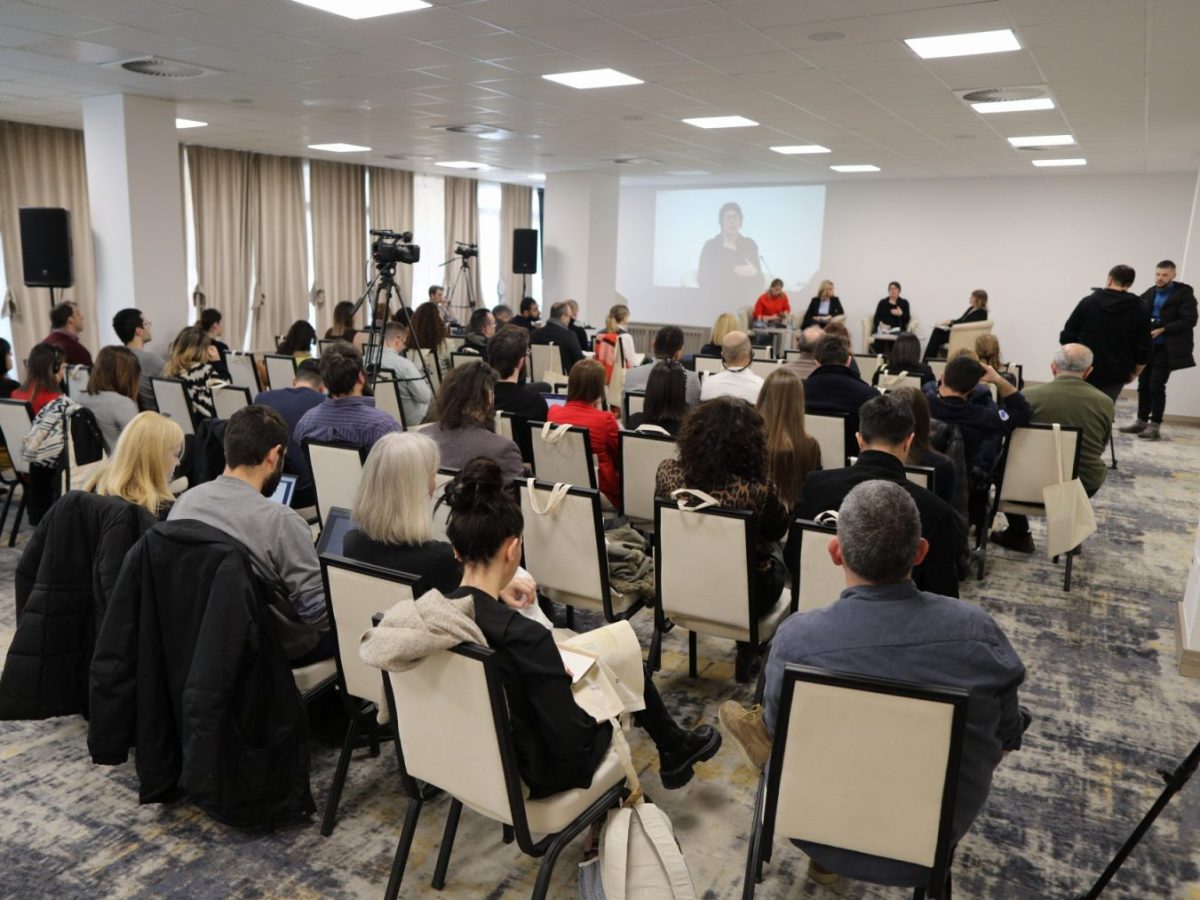
Over 50 journalists gathered in Sarajevo, Bosnia, for the “Going Environmental” conference, the culmination of a project by BIRN and German partner n-ost.

The project’s goal was to promote collaborative environmental journalism in the region by bringing together journalists from Western Balkan countries to collaborate and provide regional perspectives on environmental and climate change issues – which are quite often common ones.

The Western Balkans face a significant challenge in the form of its reliance on coal for electricity and heating, which has resulted in cities in the region frequently appearing on lists of the world’s most air-polluted cities.

However, with the escalating energy crisis, conference participants emphasized that many countries are now shifting away from renewable energy sources.

In Bosnia and Herzegovina, for example, closure of the Tuzla power plant’s Block 5 and Kakanj power plant’s Block 4, originally planned for 2022, has been postponed.

“We still don’t have a state-level environment protection strategy and are waiting for on to be made, which will be a historical moment in Bosnia and Herzegovina,” said Sabina Sahman – Salihbegovic, secretary of the Ministry of Environment and Tourism of the Federation of Bosnia and Herzegovina, one of the two entities in the country.

Training programs were held for journalists to report on various critical topics, including the effects of pesticide use, the loss of protected heritage sites to construction projects, illegal deforestation, and the consequences of small hydropower plants.

A special emphasis was placed on cross-border journalism, leading to the production of 19 insightful articles that were published in media outlets across the western Balkans.

In 2022, 18 participants from six Western Balkan countries underwent two training sessions with the objective of developing a new regional approach to environmental issues in the Balkans.

The culmination of their work was showcased at a presentation in Sarajevo on Thursday. The event highlighted the vital role of media in fostering an open and informed public discourse on the fight against climate change, as well as the far-reaching impacts of the Russian invasion of Ukraine on environmental and energy policies in Europe and the Balkans.


BIRN BiH Recognized for Reporting on Corruption Whistleblowers

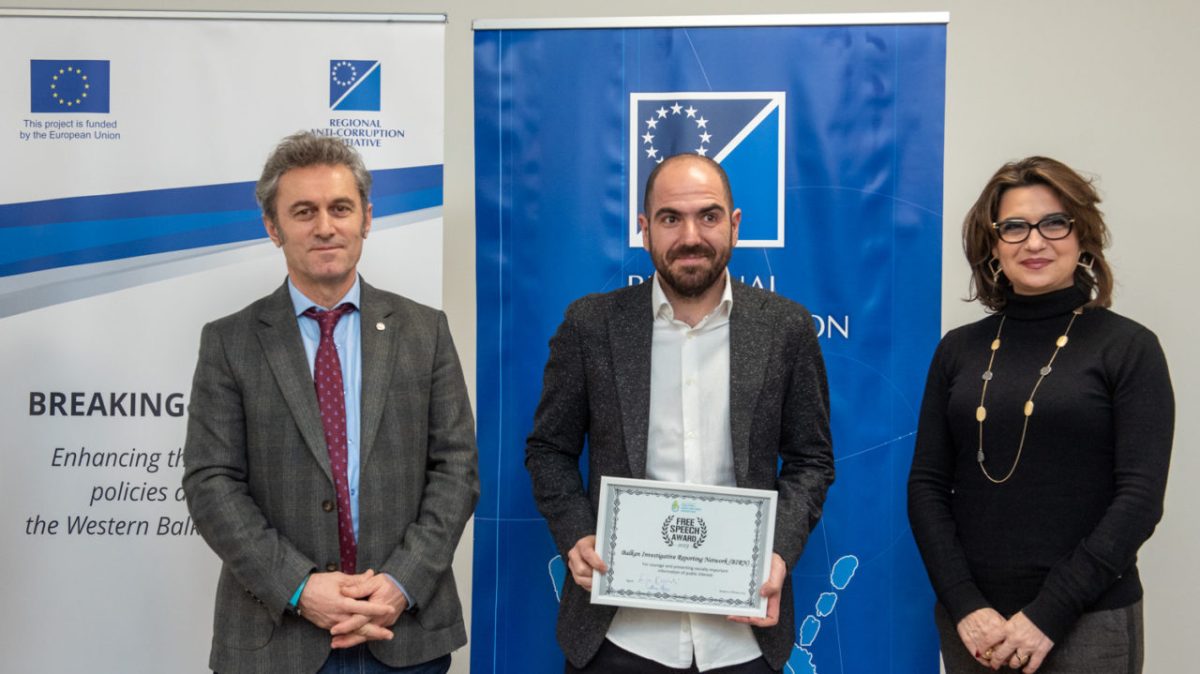
At its annual meeting in Sarajevo, the Southeast Europe Coalition on Whistleblower Protection granted recognition for freedom of speech to BIRN Bosnia and Herzegovina and other journalists and activists.

Recognitions for freedom of speech by the Southeast Europe Coalition on Whistleblower Protection were given for activist efforts, engagement in public interest and contribution to transparency within own community during 2022.

The Coalition granted recognition to Balkan Investigative Reporting Network of Bosnia and Herzegovina, BIRN BiH, for its courage and presentation of socially important information of public interest.

Other award winners include Amila Tatarevic (Baby Steps Association), journalist Rubina Cengic, Maida Bilal (Circle of Life, Kruscica, Foundation) and the Center for Investigative Journalism (CIN).

The annual meeting of the Coalition, hosted by the Center for Development of Youth Activism, CROA, and supported by the Secretariat of the Regional Anticorruption Initiative, RAI, served as a platform to present the activities of Coalition members, nongovernmental organizations from Southeast Europe, and for discussion of common challenges, strategies and solutions for improving the protection of whistleblowers in the region.

It was organized under the auspices of a regional project, “Breaking the Silence: Enhancing the Whistleblowing Policies and Culture in Western Balkans and Moldova”, which is funded by the European Union and implemented by the Secretariat of RAI.

The meeting gathered representatives of civil society organizations from Albania, Bosnia and Herzegovina, Bulgaria, Moldova, Montenegro, North Macedonia, Romania, Serbia, Slovakia and Kosovo.

As BIRN BiH reported previously, for several years persons employed in state institutions in Bosnia have had the possibility to report corruption and get whistleblower status or protected corruption denouncer.

However, till now, few have acquired such status. One of the episodes of BIRN’s TV Justice showed what whistleblowers have to go through after reporting corruption, why they are still not protected, and how that can be changed.

In November last year, as we reported, a law to protect individuals reporting corruption in institutions or companies majority-owned by the entities had still not been adopted in Bosnia’s Federation entity.

Such a situation directly favours corruption perpetrators, as the Federation entity government admitted when adopting a proposed law on protection of corruption denunciators in August.

This is the second time ten years that the entity government has adopted the text of the law, but, just like other proposals by parliament members, it has never been fully adopted by the Federation assembly.

After ten years of hesitation, the law on protection of corruption denunciators should be adopted in the Federation soon, but experts warn that encouragement to report corruption will depend on the speed with which courts take measures of protection.

In the meantime, those who decide to report corruption risk losing their jobs and being forced to fight for their rights through courts.


Meet the People Behind BIRN: Igor Vujčić

Each month, BIRN introduces you to a different member of its team. For January, meet Igor Vujčić, BIRN’s graphic designer.

Igor Vujčić, 37, comes from Serbia and has worked for BIRN as a graphic designer for the last three years. His natural gift in arts guided him to study at the College of Fine and Applied Arts in Belgrade.

Balkan Insight’s biggest investigative and long-form stories have his visual signature. His style has formed Balkan Insight’s unique visual identity.

Igor prefers to illustrate investigative stories, as they are more personal and include a human factor, unlike global news stories.

He believes that illustration is powerful, as it conveys the message that journalists want to transfer to the readers through their words, while simultaneously working as a tool to attract readers.

  1. Why did you become a graphic designer/illustrator? Who is your favourite artist?

As it usually goes with artists, from the first day I could hold a pen in my hand it was clear that I would become an artist, or something close to that. Throughout my childhood, I would sit for hours and draw superheroes and other favourite cartoon characters, so my natural choice after elementary school was the Design School in Belgrade, and the best fit to meet my passion for illustration was the Graphic Design department. There is certainly a bit of genetics in all that, as both my father and mother, though an electrical engineer and a medical worker, always had talent for drawing. Now my two-and-a-half-year-old daughter can already draw faces and details like at least a four-year-old kid.

Illustrator Bob Zivkovic was my childhood “hero”, while now that I’ve dived into the world of illustration, I cannot single out one favourite artist.

  1. Why did you decide to work as an illustrator for a media company, namely Balkan Insight?

Working for a media company like Balkan Insights enables a lot of freedom in expression, creativity and participation in diverse projects. It’s not only about getting the work done; I must also immerse myself in the topic and think metaphorically, finding new relations between objects and themes to convey the right message to the viewer. It is never boring and is quite challenging.

  1. What do you like most in your job in Balkan Insight and what is the most challenging thing? 

The possibility to experiment with styles is a big plus in this job; depending on the subject, I need to find the appropriate style which best fits the context. It enables me to make an authentic design that makes me also satisfied with my work. That is challenging at the same time, as I don’t use the same template and “recycle”, but always start from scratch.

  1. How difficult or easy is it to illustrate a media story and an in-depth investigation for Balkan Insight? How do visual elements contribute to media stories?

If done right, illustration is a powerful tool to attract readers and convey the message as, along with the headline, they tell part of a story, but still not enough, so they trigger a viewer’s curiosity, and our urge is to understand the whole story and not leave it “half-baked” in our minds. There is an expression that “people are visual creatures,” so the illustration for a media story makes a long-standing mark and adds to the expression of the journalist. That is at least what I hope is my contribution to an article.

  1. What kind of stories do you prefer to illustrate? Which is your favourite illustration you have done for Balkan Insight?

I mostly enjoy doing illustrations for investigative stories, as they are more personal and include a human factor, unlike global news stories. That means I can better relate to them and put myself in the correspondent’s shoes, and as a result provide a better visual for the story.

As for my favourite illustration, it is better to ask my colleagues and readers – what made the greatest impression and what triggered the conversation?

  1. Do you believe media should have visual identity? Can you tell us about Balkan Insight’s visual identity?

As the case is with any organization, visual identity makes a brand recognizable and enhances the credibility of the news piece.

When it comes to the visual identity of Balkan Insight, there is a good balance between excellent quality photography and illustration, which puts it on a par with major worldwide media.


BIRN Publishes 2022 Report on Handling of Workers’ Rights Cases in Kosovo by Courts and Labour Inspectorate

On January 24, BIRN held a conference for the launch of a report titled “Handling of Workers’ Rights Cases by the Labour Inspectorate and the Judiciary”.

In the current situation, amid ongoing accidents occurring at workplaces, there is plenty of room for improving and advancing workplace policies, it was agreed.

The 2022 report found that almost one person dies in the workplace in Kosovo every month on average, while only 1.5 per cent of businesses have fulfilled their obligation to assess the risks at the workplace.

Although there are no exact statistics on the number of unregistered workers in Kosovo, Labour Inspectorate data show that during 2021 alone, 1,459 employees were found to be working without employment contracts while 433 employees were not declared at the Tax Administration of Kosovo, TAK.

The findings of the report were discussed with two panels, including different actors from public institutions.

On the first panel, the main subject was the handling of workers’ rights by the Labour Inspectorate.

This panel was moderated by Jeta Xharra, executive director at BIRN Kosovo. Panelists included the Chief Labour Inspector Hekuran Nikçi, the General Director of the Tax Administration of Kosovo, Ilir Murtezaj, and Kastriot Berisha, legal officer at BIRN.

Chief Inspector Nikçi claimed that in June 2022, when he became the Chief Inspector, he found the office in a chaotic situation. Statistics show that 15 people died at work 2022, all in construction. Since 2016, 81 workplace deaths have been recorded.

After scrutiny of this report, it was concluded that Kosovo lacks a database of inspections about conditions at workplaces.

Nikçi said Kosovo still lacks inspectors in this field, despite progress that has been made since he assumed office.

This affects the implementation of a database, when there are not enough inspectors and no chance to inspect all businesses throughout the country in order to detect violations at workplaces.

The General Director of the Tax Administration of Kosovo, TAK, Ilir Murtezaj, said fines have been issued to many businesses that did not declare that their workers were working without contracts.

However, Kastriot Berisha, legal officer of BIRN, said cooperation between the Tax Administration and the Labour Inspectorate lacks coordination.

The second panel was moderated by Kreshnik Gashi, managing editor at BIRN. This panel included Jehona Grantolli, member of the Prosecution Council of Kosovo and Fahret Velija, Chairman of the Commission for the Administration of Courts and member of the Kosovo Judicial Council.

Gashi questioned the responsibility of the Kosovo judiciary, saying many businesses clearly manipulate and neglect the mandatory norms of workplace conditions.

The report noted that out of 27 court judgments analyzed regarding cases of deaths and injuries at the workplace, only four resulted in prison sentences. Of these four, two were prison sentences and the other two conditional imprisonments.

This activity was implemented as part of the project “Protecting and Promoting Labour Rights of Vulnerable Groups in the Labour Market”, funded by the European Office in Kosovo and implemented by BIRN Kosovo in partnership with Advocacy Training and Resource Center ATRC.

The overall report can be found at these links:

Report in English language

Report in Albanian language

Report in Serbian language


BIRN Kosovo Holds Workshop on Reintegrating Returnees from War Zones

BIRN Kosovo held a regional workshop on January 23 in Peja/Pec on reinforcing the role of Centres for Social Welfare and Municipal Directorates of Education, Emergency and Security, Health and Mental Health, along with other relevant institutions, in strengthening the process of reintegration and resocialisation of returnees from Middle Eastern conflict zones.

The workshop was delivered by Kreshnik Gashi, editor-in-chief at BIRN Kosovo’s Kallxo.com website, and focused on the state’s vision for preventing radicalism and violent extremism that leads to terrorism.

Eleven representatives from the various institutions participated in the workshop.

The workshop was the sixth held by BIRN Kosovo as part of the Resilient Community Programme, which is funded by the Global Community Engagement and Resilience Fund, GCERF.


BIRN Kosovo Hosts Debate on Dangers of Online Disinformation Among School Pupils

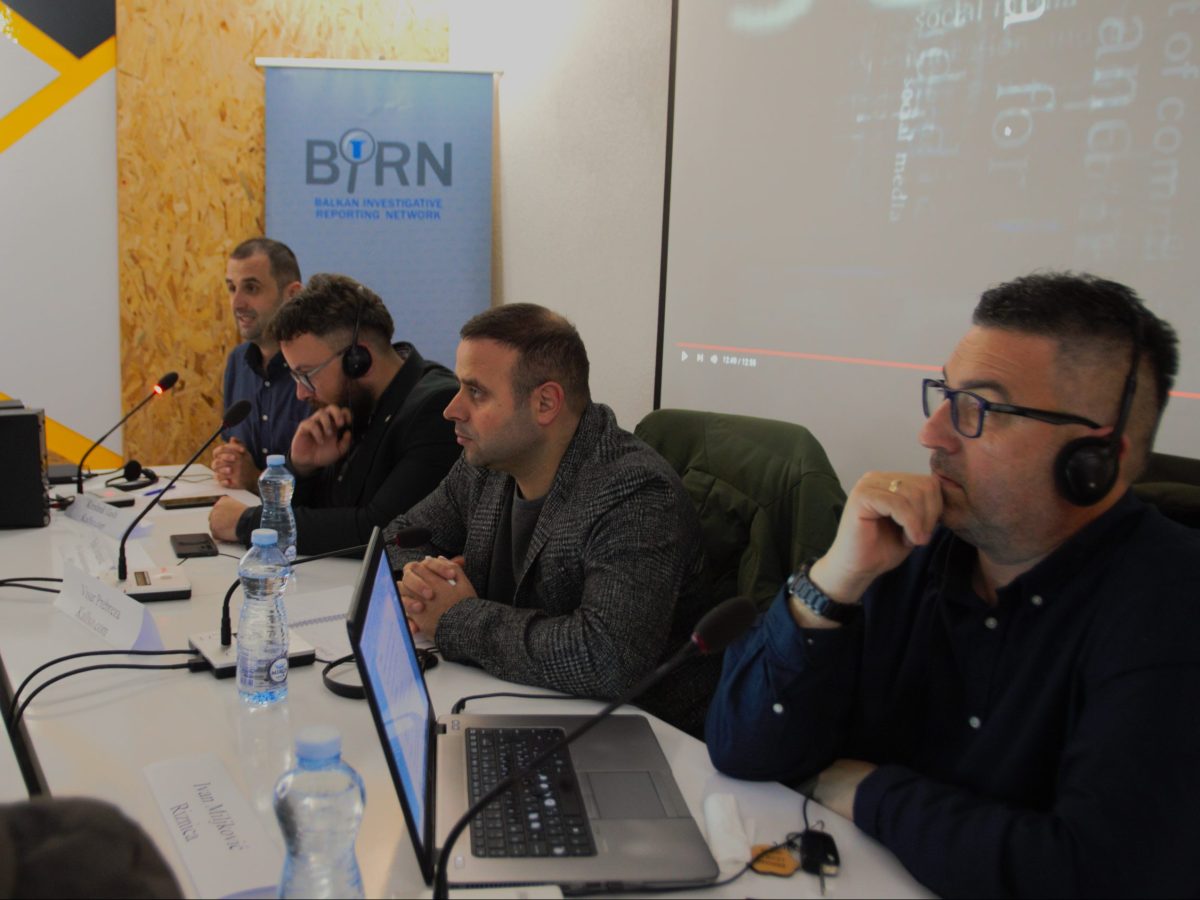
Over 20 Albanian, Serbian and Roma high school students from the Kosovo municipalities of Gracanica and Lipjan took part in a debate organized by BIRN Kosovo and Gracanica Online on “Increasing security in social media platforms as a mechanism for protection against fake news”, held in Gracanica.

Activity kicked off with presentation of a report, “(Un)Safe Internet” and continued with the presentation and discussion of the panel.

This was composed of Kreshnik Gashi, member of the Kosovo Press Council and correspondent of Reporters without Borders for Kosovo and managing editor of KALLXO.com; Rajko Jovanovic, from the Gracanica-based the NGO Communication for Social Development; Visar Prebreza, Managing Editor at KALLXO.com; and Ivan Miljkovic, journalist with Riznica portal.

The panelists raised the issue of the danger, especially to young people, of privacy, identity and integrity violations on the Internet. The debate concluded that dubious media use inaccurate and disinformation to disorientate the public and draw attention from the truth, inciting hatred and compromising the security of individuals, groups, communities regardless of ethnic, religious or cultural affiliations by creating a false image of the same.

The panel recommended increased caution when using social networks and emphasized the legal consequences that the individuals may face through different types of interaction on these social media platforms.

The youngsters participating in this debate expressed their experience with social networks, denouncing negative phenomena in the environments where they interact but also with the aim of promoting positive initiatives.

This activity was carried out within the UNMIK-supported project “Addressing disinformation through fact-checking journalism”.


Meet the People Behind BIRN: Eleni Stamatoukou

Each month, BIRN introduces you to a different member of its team. For
December, meet Eleni Stamatoukou, BIRN’s Communication Manager and Journalist at Balkan Insight.

Eleni Stamatouku, 41, has been working for BIRN’s flagship Balkan Insight for the last two years as our correspondent from Greece as well as Communications Manager in BIRN.

Based in Athens, she has a BA in Balkan Studies and MA in Social Anthropology and wanted to be a journalist since she was a young child. For her, journalism allows people to “live” different lives by meeting people from all cultures.

She always tries to include the human side in all the topics she reports on, so it is even easier for the readers to relate. She has led BIRN’s investigation into the harassment of Greek women journalists in their workplaces. The investigation covered incidents from 1993 to 2021, revealing that female journalists in Greece do not feel safe reporting incidents.

1. Why did you decide to become a journalist?

 When we were in the first grade, our teacher asked us to write down what we wanted to become when we grew up. I still have this composition. I wrote that I wanted to be a teacher or a journalist. I chose to be a journalist because I like listening to and writing stories. Through journalism, you can “live” different lives and meet extraordinary people and cultures. That’s the good part of our profession.

2.  Do you have a quote, it can be directly about journalism or not, that you keep in mind during your work? If yes, share it with us and explain why you picked it.

After finishing reporting (reading, interviews, transcriptions, meetings, etc.), the best part is the writing process, as I listen to music to concentrate and write. In her book “Girl in a band: A Memoir” Kim Gordon, who formed Sonic Youth together with Thurston Moore, narrates a conversation she had with her friend, an artist called Dan, who confesses to her that he wishes he could make art that was like a Kinks’ song. Gordon questions herself, saying: “A lot of artists listen to music while they work, and many think, ‘Why can’t I make art that looks as intense as the sounds I’m hearing’? I don’t have an answer.” I wish my journalism could be as intense as the sounds of my favourite songs – a difficult task.

3. What do you like most in your job, and what is the most challenging thing?

I am very proud to be part of BIRN’s family and have the chance to collaborate with many people from different backgrounds and cultures. The thing that I like is that I am always learning something new. The most challenging thing in my everyday work is the deadlines and the obstacles, when companies, state bodies, and people do not answer my questions.

4. On what kind of stories do you prefer to work and why? Which is your favoirite story you have written for Balkan Insight so far?

I like to write primarily human stories because I feel like that’s the only way readers can feel some connection and relate. Even in the most difficult investigations, I always try to get people talking first.

One of my favorite investigations is “No Refund: How Greece Made Passengers Pay to KeepAirlines Alive,” which is about consumers in Greece and abroad who were waiting to get their money back from three Greek airlines (Aegean Airlines, Sky Express, Ellinair) when their flights were canceled due to the pandemic. The Greek government supported a voucher-only compensation scheme at the expense of consumers, and contrary to European law. I should note here that the Greek media refused to publish this research at first. Aegean Airlines is one of the largest companies in Greece and has a big influence.

5. Recently you published an investigation into the #metoo movement in Greek media. Would you like to tell us more about this story and its importance?

Due to the lack of a media watchdog in Greece, BIRN investigated the harassment of Greek female journalists in their workplaces.

The BIRN investigation disclosed that female journalists are often afraid to report such abuse and harassment and ignore the procedures. At the same time, most media in Greece do not even have the means to handle such cases.

BIRN’s research covered incidents over almost 30 years, from 1993 to 2021, documented through interviews with current and former media industry workers

The investigation was republished in Greek by the EFSYN newspaper and presented by several Greek media, such as Lifo, In.gr, ERT3, Proto Thema, Marie Claire, TVXS, Ladylike.gr, Popaganda.gr etc.

BIRN’s investigation helped open up a long-needed debate on the abuse and harassment of female journalists in the Greek media.

6. What were the main obstacles during this investigation?

 I want to thank my editor-in-chief Dusica Tomovic and all my editors and colleagues at Balkan Insight. Without their support, I could not have done this research. The biggest difficulty was how to approach the female victims who agreed to meet in person. I was very anxious how to make the interviewees feel safe so that they would trust me and share their stories with me. Then there were various other small “difficulties” such as the reactions of the Greek media – some of which were exaggerated – when we asked to see if they have procedures where victims can seek help and report their abuse / harassment. A second investigation could certainly be written about the reactions of the Greek media. I hope our report helps in some way to slowly change things in the Greek press.

7.  What is your advice to aspiring journalists who want to work as correspondents in our region?

 Read as much as you can (books, investigations, etc.,) write as much as you can, work hard, travel, be open, ask questions, don’t give up, and dream.