BIRN Kosovo Trains Journalism Students on Ethics, Safety and Gender Sensitivity

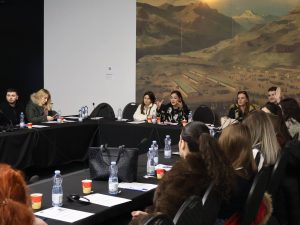
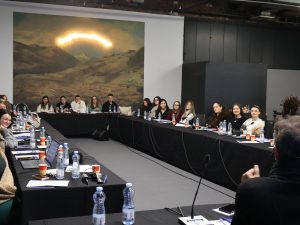
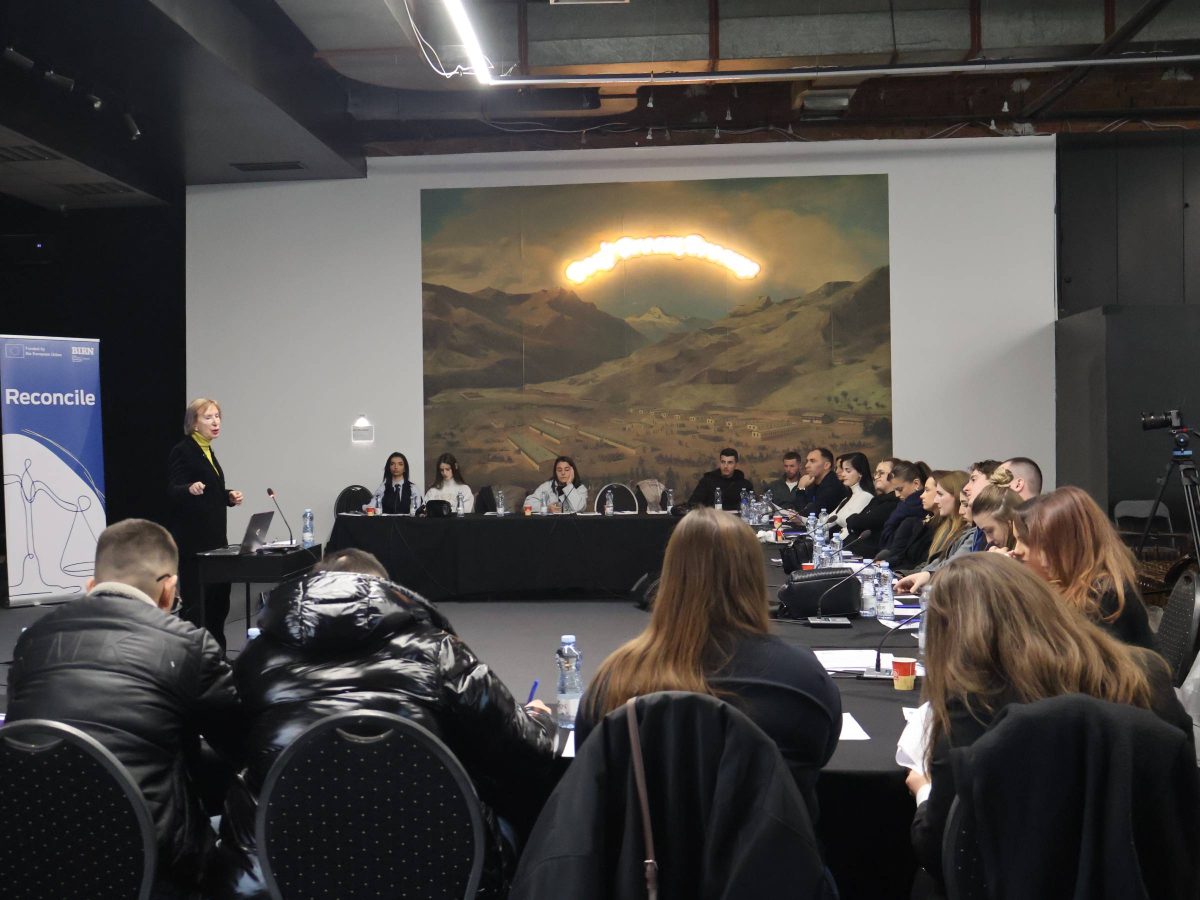
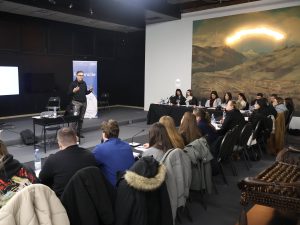
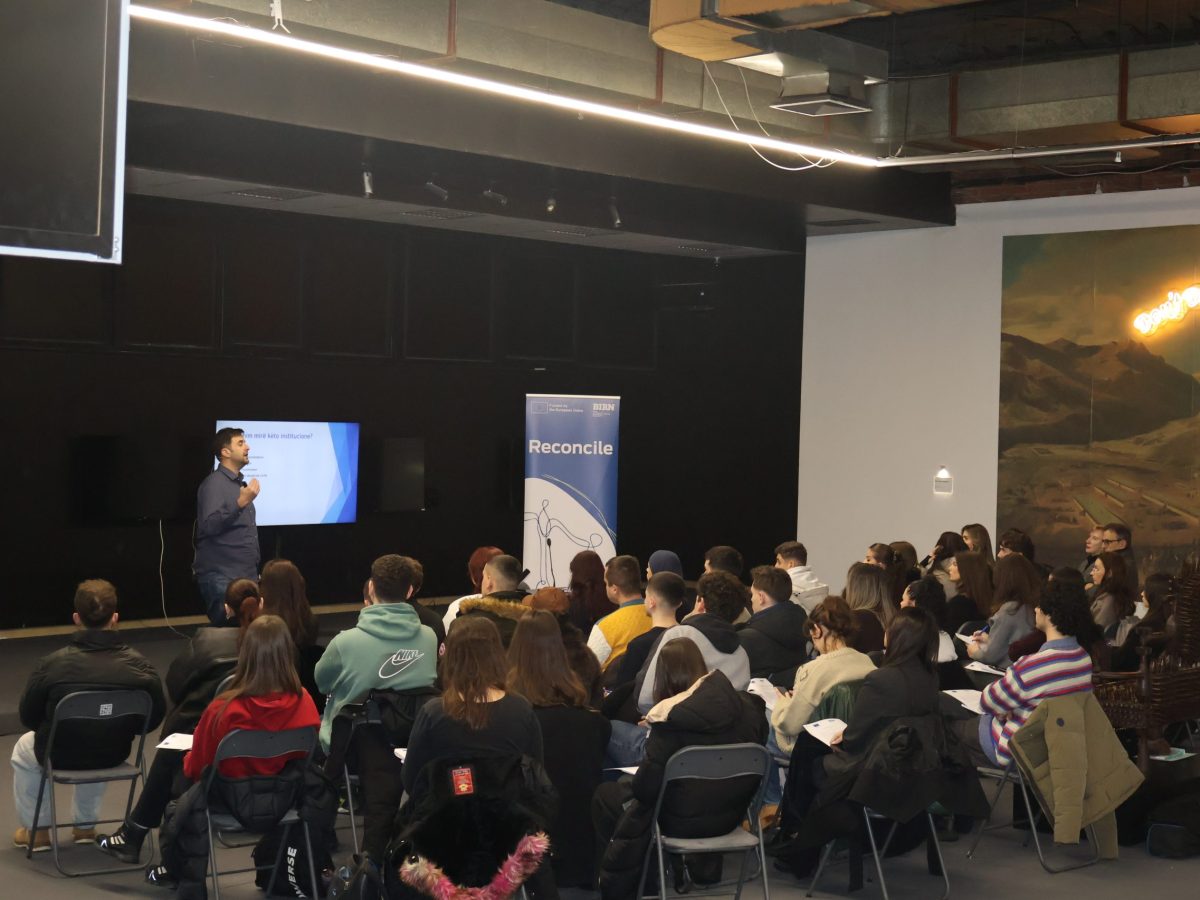
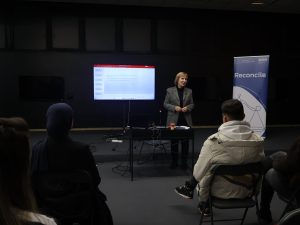
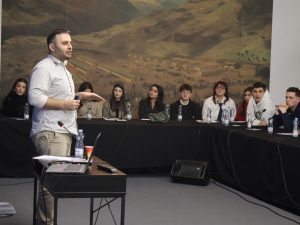
BIRN Kosovo held a workshop for 22 students on November 26 from the Massive Communication department at AAB College, focusing on responsible journalism, gender-sensitive reporting, ethical standards, and safety practices in the field.

The workshop opened with a presentation by Labinot Leposhtica, BIRN Kosovo’s Coordinator for Court Monitoring and the Legal Office. He introduced students to Kosovo’s media regulatory landscape, explaining media ownership structures, transparency requirements, and the legal obligations that govern news organisations. He also explored key ethical dilemmas faced by journalists, illustrating how professional integrity can be maintained amidst complex editorial pressures.

Kreshnik Gashi, editor-in-chief of KALLXO.com, then addressed issues of legal and professional safety in reporting, particularly in crisis zones or hostile environments. Drawing on real-world field experiences, he highlighted the risks that journalists may encounter and the practical safeguards necessary to protect themselves and their sources.

Gashi concluded the workshop with a discussion on gender-sensitive reporting, emphasizing accurate and responsible representation of women in the media. He underlined the importance of empathy, fairness and careful handling of gender-related topics in journalistic storytelling.

Throughout the training, students engaged actively with the trainers – asking questions, sharing reflections, and examining contemporary challenges in the media landscape. The workshop enhanced their understanding of the ethical and legal foundations of journalism while offering valuable insights into the realities of reporting on the ground.

At the close of the event, participants expressed their strong interest in additional training sessions, noting that such workshops equip young journalists with essential skills and confidence for responsible and impactful reporting.

This was the second workshop of its kind, following a similar session held with students from the Journalism Department at the University of Prishtina. In 2026, BIRN Kosovo plans to continue delivering workshops on these themes for both journalism students and working journalists.

This activity is supported by the European Union under the project “Strengthen the Role and Capacities of Investigative Journalism in Kosovo”, implemented by BIRN Kosovo, the Press Council of Kosovo, and TV Mreža.

BIRN Montenegro Report Reveals State Firms’ Abuse of Severance Payments

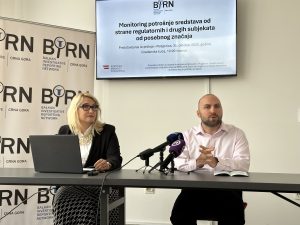
On November 26, BIRN Montenegro presented a monitoring report showing that state-owned transport companies are exploiting loopholes in the law to misuse severance payments.

Over the course of eight months, BIRN Montenegro monitored the spending of eight state-owned transport companies – Airports of Montenegro, the national airline ToMontenegro, Monteput, Montecargo, the ports of Bar and Kotor, as well as Crnogorska Plovidba and Barska Plovidba.

BIRN Montenegro’s Programme Manager, Jelena Mitrovic, said that legal gaps in Labour Law give company managements broad discretion in determining severance payment amounts.

“This enables companies, through internal acts and decisions, to award amounts significantly higher than those prescribed by law, which may suggest a political background to the signed agreements on voluntary termination of employment,” Mitrovic said.

The BIRN report showed that state companies spent more than 1.3 million euros on severance payments, while more than 1.2 million euros was spent on donations and sponsorships.

BIRN Montenegro’s Executive Director, Vuk Maras, said that only three companies provided all the requested documentation, while some submitted incomplete data.

“Monteput submitted part of the documentation only after BIRN concluded its research, while Luka Bar classified a portion of the requested documents as a business secret,” Maras said.

BIRN Montenegro analyzed over 1.400 datasets, spanning over 6.000 pages of documents, which resulted in creation of a database with more than 9.000 entries. It is available at https://birn.me/projekti/izvjestaj-o-monitoringu-potrosnje-sredstava-od-strane-regulatornih-i-drugih-subjekata-od-posebnog-znacaja/

Internship Open Call

The internship is designed as a part-time, flexible engagement that can be combined with your studies. Interns are expected to commit about 15–20 hours per week, primarily through online/remote work, with occasional hybrid or in-person activities, depending on project needs.

The internship will last for six months, with exact starting dates agreed with selected candidates. This is a paid internship, so selected candidates will receive a monthly stipend.

The call is open until 15 December 2025

Qualifications & Requirements

General Requirements for All Interns:

Student or recent graduate (not more than six months ago) in a relevant field (Law, Social Sciences, Media, Public Administration, International Relations, European Integration, Political Science, or related areas)

Full working proficiency in English and at least one of the Western Balkans languages

Good working knowledge of computer applications (e.g., MS Office)

Strong ethics, integrity, reliability and confidentiality

Excellent verbal and written communication skills

Good interpersonal and organisational skills

Innovative, team-oriented, and eager to learn

Department-Specific Qualifications:

Editorial Intern:

Relevant fields: Journalism, Media & Communications, Political Science, or related areas

  • Strong research skills, including desk and field research
  • Ability to fact-check, verify information, and support investigative reporting
  • Strong writing, editing and storytelling abilities
  • Analytical skills to develop story ideas and assist with data collection
  • Familiarity with producing long-form or investigative content
  • Good understanding of editorial standards, ethics, and integrity principles

Programmes Intern:

Relevant fields: Law, Public Administration, International Relations, European Integration, Political Science, or related areas

  • Interest in project management, programme coordination, and research
  • Ability to support programme planning, implementation, and reporting
  • Ability to support in event organisation and administrative work
  • Support in grant cycle management
  • Strong analytical and organisational skills

Finance Intern:

  • Relevant fields: Finance, Accounting, Economics, Business Administration, or related areas
  • Basic understanding of financial principles and budgeting
  • Ability to assist with bookkeeping, reporting and financial documentation
  • Attention to detail and numerical accuracy

How to Apply
Please submit your application via email to [email protected] with the subject line: “BIRN Internship Application – [Your Name]”.

In the body of the email, please include:

  1. The department you are applying for: Editorial / Programmes / Finance
  2. The country where you are currently based
  3. When you are available to start your internship
  4. The languages you speak

Please attach your CV and a letter of motivation (up to 300 words) in PDF or Word format. Only shortlisted candidates will be contacted for an interview.

BIRN BiH Joins in Presenting Database of Facts About War and Handbook for Teachers

The Balkan Investigative Reporting Network of Bosnia and Herzegovina, BIRN BiH, the “Forgotten Children of War” Association, and the Srebrenica Memorial Centre presented a Database of Judicially Established Facts about the War and a handbook, How to Learn ad Teach about the War in Bosnia and Herzegovina, a tool for educating young people, combatting denial and relativization of verdicts, and building peace and mutual understanding.

For the purpose of creating the database, more than 980 final court verdicts were analysed, including decisions of the International Criminal Tribunal for the former Yugoslavia, ICTY, the Bosnian State Court and other courts in Bosnia and the region, about war crimes committed in the period 1992-1995.

BIRN BiH Executive Director Denis Dzidic emphasized the importance of the presence of teachers, representatives of education ministries and pedagogical institutes at the presentation of the database, which has now been supplemented with domestic and regional rulings, in addition to ICTY judgments.

Arnhild Spence, the United Nations Resident Coordinator in Bosnia and Herzegovina, said she was glad that the UN had the opportunity to support BIRN BiH in this groundbreaking work on fact-based teaching of the history of Bosnia and Herzegovina.

Hasan Hasanovic, from the Srebrenica Memorial Centre, stated that he dreamed that we would reach a stage where we wrote such educational content for children. In the past five or six years, the Memorial Centre has made a significant step forward and created exhibitions, scientific research projects and oral history that serve educational purposes, he said.

Haris Rovcanin and Dzana Brkanic, BIRN BiH editors, presenting the database, said it was an educational resource based on judicially verified facts, focusing on established facts about war events rather than on perpetrators.

During a panel discussion, “The Role of Educational System in Peacebuilding Process”, Senad Osmanovic, Head of Education for Brcko District, Azerina Muminovic, Senior Associate for Professional Development of Educators, Teachers, and Associates at the Pre-University Education Institute of Sarajevo Canton, Enisa Golos, Director of the Pedagogical Institute of Herzegovina-Neretva Canton, and Nadia Bandic, Assistant Federation Minister of Education, welcomed the database, which for the first time offers teachers across Bosnia a tool for teaching about history and the painful past.

The database and handbook were developed within the project “Building Long-Term Peace in Bosnia and Herzegovina: Investing in the Future”, which is implemented by BIRN BiH, the Srebrenica Memorial Centre and the “Forgotten Children of War” Association, with the support of the United Nations General Secretary’s Peacebuilding Fund, PBF.

The database is free and available for use at the link ratnizločin.detektor.ba

Ahead of BIRN’s Digital Rights Violations Annual Report 2025: Monitoring Methodology

The end of November brings the release of the Digital Rights Violations Annual Report 2025. The report is based on findings gathered through continuous monitoring of digital rights violations. BIRN provides further details about the methodology used in the monitoring process.

In an era where freedoms are shaped and shaken online, BIRN’s Digital Freedoms Monitoring Tool offers systematic tracking and analysis of digital rights violations in Southeast Europe – aiming to safeguard those rights and drive accountability through evidence.

As a living document, the methodology builds on BIRN’s previous monitoring efforts, now upgraded to address emerging digital violations.

It is organised around seven overarching categories:

  1. Freedom of expression and media
  2. Freedom, pluralism of information and protection from manipulation
  3. Personal data protection and security
  4. Digital civic participation and engagement
  5. Technological access and equity
  6. Threatening behaviour and harmful content
  7. Economic rights and digital assets protection

The categories are further broken down into subcategories and types of violations to capture complex and overlapping cases. For each, the methodology outlines affected rights and public interest, targeted groups, perpetrators, and methods of attack.

BIRN’s monitoring across ten countries is grounded in ethical standards, backed by a thorough legal review of national and international frameworks, and informed by diverse sources – including court records, reports of regulators and human rights bodies, media investigations, civil society and academic research and direct citizen reports via BIRN’s Engaged Citizen Reporting tool.

Importantly, BIRN also tracks legal proceedings and policy changes to assess state responses and real-life impact of violations.

Philosophy of Monitoring

The methodology views digital rights as integral to human rights, calling for equal protection online and offline, while also addressing emerging norms like internet access, digital literacy, and inclusion – all aimed at promoting digital equity and fairness.

Its philosophy rejects digital authoritarianism, opposing the surveillance and censorship used by authoritarian regimes to suppress dissent. It seeks transparency and accountability from both public and private actors, and supports a multi-stakeholder, decentralised approach to internet governance. This stance is especially relevant when monitoring countries that continue to grapple with the legacies of past authoritarian rule, conflict, or war – many of which operate nowadays as hybrid regimes.

Embracing intersectionality, the methodology recognises that digital harms disproportionately affect marginalised groups and reflect deeper social inequalities. Whether by documenting violations against women, ethnic or sexual minorities, economically disadvantaged individuals, or groups like journalists and civic actors, the monitoring centres the experiences of those most at risk, aspiring for a digital environment that challenges structural injustices.

Open Data for Advocacy and Accountability

What sets the Digital Freedoms Monitoring Tool apart is its transparency.

Users can access, search and download documented cases by country, facilitating trend tracking for interested stakeholders.

The open-access database, continuously updated by the monitoring team, serves both as a resource and a call to action, supporting advocacy and reinforcing accountability by documenting the actions of governments, tech companies, and other societal actors.

The website was created and maintained with the financial support of the European Union, as part of the Reporting Digital Rights and Freedoms project. Its content is the sole responsibility of BIRN and does not necessarily reflect the views of the EU.

BIRN Kosovo Trains Journalism Students on Gender Sensitivity, Ethics and Safety

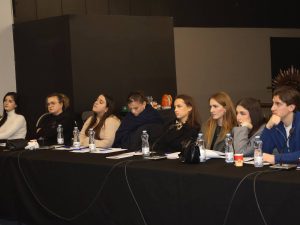
BIRN Kosovo held a workshop with 19 students from the Journalism Department of the University of Pristina, focusing on responsible journalism, gender-sensitive reporting, ethics and safety in the field.

The workshop opened with a presentation by Kreshnik Gashi, Editor-in-Chief of KALLXO.com, who guided students through the principles of gender-sensitive reporting, representation of women in the media, and the importance of approaching gender-related topics with accuracy, responsibility, and empathy.

Gashi also discussed legal and professional safety in reporting, particularly when journalists operate in crisis situations or confront hostile environments. Through practical examples from field experience, students gained a clearer understanding of the risks and safeguards that shape real-world reporting.

Labinot Leposhtica, BIRN Kosovo’s Coordinator for Court Monitoring and the Legal Office, then introduced the participants to Kosovo’s media regulatory framework, including media ownership structures, transparency obligations, and the legal responsibilities of news organisations.

He also expanded on ethical standards in journalism, presenting real-life dilemmas and discussing how journalists can uphold integrity while navigating complex editorial decisions.

Throughout the training on November 20, students interacted with trainers, posed questions and reflected on current issues in the media landscape. The programme strengthened their understanding of the ethical and legal pillars of journalism, while also exposing them to practical challenges they are likely to encounter in future reporting assignments.

At the end of the event, the participating students expressed great appreciation for the workshop, describing it as highly valuable for their academic and professional development. They emphasized the need for additional workshops of this kind, noting that such sessions help to equip young journalists with the skills and confidence required to report responsibly and effectively.

This activity is funded by the EU under the project ‘Strengthen the Role and Capacities of Investigative Journalism in Kosovo’, which is implemented by BIRN Kosovo, the Press Council of Kosovo and TV Mreža.

Nejra Mulaomerovic

Nejra is a human rights advocate focused on research, project development and programming, particularly in transitional justice and human rights projects.

With over 10 years of experience, her expertise lies in project development and implementation within the CSO sector in post-conflict societies and transitional justice processes. Based in Sarajevo, Nejra oversees the projects implemented as part of the Balkan Transitional Justice regional programme. Prior to her role at BIRN, she focused on cultural development and programming, particularly within projects related to memorialization, the culture of remembrance and the promotion of human rights. Nejra holds a Master Degree of Advanced Studies in Transitional Justice, Human Rights and Rule of Law from Geneva Academy of International Humanitarian Law and Human Rights and Master´s Degree in Comparative Literature from University of Sarajevo.

She’s fluent in English and Bosnian, and she’s actively learning French and Arabic.

Open Call for Investigative Journalists: Apply Now!

Journalists covering EU member countries and EU aspiring countries are invited to apply for grants to produce investigations shedding light on critical social, political and economic issues.

The Balkan Investigative Reporting Network, BIRN, is calling on journalists who are interested in producing in-depth investigations to apply for grants that will cover the cost of producing investigations but also include mentoring support to develop impactful stories that foster accountability and public awareness.

Who is eligible?

Journalists currently working in or publishing stories covering EU member countries and EU aspiring countries – Albania, Bosnia and Herzegovina, Georgia, Moldova, Montenegro, North Macedonia, Serbia, Turkey, Ukraine and Kosovo – can apply.

Please note: this is not a collaborative grant.  Only individual journalists may apply, and each journalist can propose one investigative story.

What are we offering?

Selected journalists will receive grants of €1,140 for the production of their investigative stories (The grant lasts a minimum of three and a maximum of six months). The selected journalists will receive mentoring support from BIRN editors/mentors to help them produce their stories.

This call is ongoing – what does that mean?

Twenty grants in total are available and the ongoing call for applications will be closed once they are all distributed. The third and final deadline after which applications received so far will be evaluated is February 28th, 2026.

How to apply?

Before applying, click HERE to read the full call for applications. After reviewing the information, follow the link to access the application form. Applicants need to attach two documents in English to the application form: a CV and a signed letter of support from the media outlet where they will publish the story.

About the project

This call for applications is part of the Media Organisations for Stronger Transnational Journalism (MOST) initiative, which aims to enhance the resilience of non-profit media in reporting on European issues and drive innovation in foreign reporting. The initiative supports media organisations in developing new approaches and strengthening capacity, fostering collaboration and sharing best practices across borders.

MOST brings together seven prominent media organisations to establish a community of practice focused on business transformation and editorial cooperation.

The project is implemented by a consortium comprising: 1) Balkan Investigative Reporting Network (BIRN), 2) Centro per la Cooperazione Internazionale (CCI/OBCT); 3) El Orden Mundial – EOM, Spain; 4) European Pravda, Ukraine; 5) Kolegium Europy Wschodniej im Jana Nowaka-Jezioranskiego we Wroclawiu – KeW, Poland (New Eastern Europe); 6) Le Courrier des Balkans – Courriers D’Europe et D’Orient – DcB, France; and 7) Stichting the Tactical Technology Collective – TTC, Netherlands.

For clarifications, contact: [email protected].

Open Call for Applications: Content Production Fund

The project Strengthening Quality News and Independent Journalism in Western Balkans and Türkiye II aims to provide systemic support to improve the quality and professionalism of journalism.

The project includes capacity building for mid-career and young journalists, ensuring quality in journalism study programmes, supporting the production of quality news, TV and cross-border investigation stories, providing investigative resource desk support, and promoting these stories through awards. Additionally, the project aims to ensure that the quality of journalism study programmes is maintained for future generations.

1. SCOPE AND OBJECTIVES

This Content Production Fund aims to support the creation of cross-border journalistic content through providing financial support to media outlets from the Western Balkans. Furthermore, it aims to achieve the following outcomes for the supported media outlets:

  • Production of cross-regional multimedia stories published in English and local languages
  • Improved skills of journalists in the media outlets by on-the-job training and mentoring, as a part of a grant production scheme.

2. TYPE, SIZE AND DURATION OF GRANTS

Through this call, BIRN Hub invites media outlets to apply for grants to produce high-quality, cross-border journalism on local, national, or regional topics, using their own newsroom resources. Stories should be investigative and impactful, with a clear focus on including underrepresented groups such as minorities, youth and women.

Media outlets are expected to begin implementing their project’s activities from 15/01/2026 and can last up to a maximum of two-and-a-half (2.5) months from the date of contract signature. All activities must conclude by no later than 31/03/2026.

3. AVAILABLE FUNDING AND ALLOCATIONS

The overall amount expected to be distributed under this Call for Applications is up to €60,000. The table summarises the grants foreseen to be given.

Type of Grants Maximum Amount per Grant Number of

Grants Foreseen

Estimated Amount
Content Production Fund €5,000 Up to 12 €60,000

BIRN reserves the right to fund any or none of the applications submitted, as well as to discuss with applicants allocating actions as needed within the categories towards achieving the overall goal of the programme.

No co-financing from the applicant’s side is expected or is obligatory within this Call for Applications.

4. APPLICATION

This section includes important information on the rules for application, including eligibility criteria, activities and costs eligibility, and application and evaluation procedures, among others.

5.1 ELIGIBILITY CRITERIA

To apply, applicants must fulfil the following criteria:

  1. Demonstrate a strong commitment to producing high-quality, independent journalism that includes cross-regional, multimedia content with content pieces featuring perspectives or issues from more than one country from the Western Balkans.
  2. Propose an application with an investigative and in-depth angle, with a cross-border aspect and which is impactful for the community
  3. Express a clear intention and means of including underrepresented communities in stories. These may include marginalised groups such as minorities, youth, women and other under-reported communities.
  4. Be a legally registered entity within the country of application on or before 1 January, 2023.
  5. Be able to provide supporting documentation as listed in 5.4.1 Application Form Content.
  6. Must not have an active grant from any other BIRN granting scheme during the proposed period of implementation of the production grant.
  7. Demonstrate a commitment to actively engage in on-the-job mentoring by following the guidance and recommendations provided by assigned mentors.

5.2 ACTIVITIES ELIGIBILITY

The types of activities eligible for support will include but are not necessarily be limited to:

  1. Production of high-quality, independent content pieces that includes a cross-border, multimedia content, with content pieces featuring perspectives or issues from more than one country from the Western Balkans. One example of such content is the following: ‘Lifeless’: Pollution Threatens the Drin and its Tributaries in Three Balkan States | Balkan Insight
  2. Production of one cross- border multimedia content piece with an investigative and in-depth angle that is impactful for the community and includes a cross-border aspect, while clearly demonstrating the intention and approach to include underrepresented communities such as minorities, youth, women, and other often under-reported groups in the storytelling. Grantees will receive appropriate mentoring. Content may comprise news, analysis, investigations, different news formats: audio, text, video or multimedia.
  3. Promoting content through the social media channels of the respective outlets.

Applicants may propose additional activities beyond those listed above, ensuring their alignment with the project’s vision and goal. These activities should complement the existing ones and may include any relevant investigative engagement stories.

5.3 COSTS ELIGIBILITY

This call for content grants will cover only lifeline costs essential for the continuation of content production by the media outlets. While developing the budget for the proposal under this Call for Applications (budget form enclosed in 5.4.1 Application Form Content) the following eligible and ineligible costs should be:

Eligible Costs
Category Explanation
Human Resources Costs Costs of the media outlets’ core staff salaries, freelancers’ fees and experts directly involved in implementing the proposed activities and proportionate to their level of involvement.
Production / Research / Communication Costs Costs related to the production of the stories, including communication with stakeholders, research costs, as well as costs of promotion of the stories on social media.
Travel Costs Any travel costs needed to produce the story, especially if it’s a cross-border story or a story covering citizen’s experiences in some local or more remote areas in the country.
Ineligible Costs                                                                                                                
Include costs of office equipment, construction costs, entertainment and excessive transport, organisation and/or participation in trainings and events.

5.4 APPLICATION SUBMISSION INSTRUCTIONS

To ensure a fair and competitive application process, applicants should complete and submit only one application / proposal under this Call for Applications. Multiple applications by individual media outlets are not eligible.

5.4.1. APPLICATION FORM CONTENT

To apply for this Content Grants, media outlets should:

    • Be completed in the English language. Please use your own words. ChatGPT applications will be downgraded or not considered.
    • Outline general information, current audience data, and a story proposal.
  • Submit the following supporting documents within the embedded application form:
    • Financial Proposal. Download the budget template HERE.
    • Financial Statements for the 2023 and 2024 fiscal years, if applicable.
    • Certificate from relevant tax authority that the media outlet is a regular taxpayer.
    • A Court Certificate that the media outlet does not have ongoing legal proceedings nor is awaiting the final judgment of cases against the organisation. Note: If obtaining a Court Certificate confirming no ongoing legal proceedings is challenging (e.g., due to SLAPP lawsuits), applicants may submit a detailed explanation of their legal status and the nature of such cases. This ensures equal opportunities for all while maintaining transparency and compliance with administrative requirements.
    • Editorial policy, if applicable.
    • Business Registry Certificate or any other document certifying that the applicant is registered as a legal entity in (country) as of January 2023.

5.4.2 APPLICATION DEADLINE

The applicant must submit the application by 08/1/2026, midnight, CET at: [email protected] with the subject:  Application for Content Production Grants_name of your media outlet
Applications submitted after the deadline will not be considered for funding. The deadline applies to all parts of your application, including supporting documentation.

5.4.3. CLARIFICATIONS, QUESTIONS & ANSWERS

Questions about the Call for Application and Application Form may be sent in English to the Programme Coordinator at this email address: [email protected] until the deadline for clarifications has passed.
5.5 EVALUATION AND SELECTION PROCESS

All received proposals will go through the following three steps:

  1. Administrative and eligibility check by BIRN to ensure applicants filled in the Application Form, according to the eligibility criteria and submitted all required documents by the deadline.
  2. Evaluation by the independent jury.
  3. Notification of the application outcome.

STEP 1: BIRN ADMINISTRATIVE AND ELIGIBILITY CHECK

BIRN will undertake administrative checks to ensure the applicants have followed application procedures and submitted all the required documents. If any requested information / document is missing or incorrect, the application may be rejected and will not be evaluated further. Any rejected application will be replaced by the next best-placed application on the reserve list that falls within the available budget for this Call for Applications.

An application that passes the administrative check will be assessed further as part of the evaluation by the independent jury.

STEP 2: EVALUATION BY THE INDEPENDENT JURY

After the call is closed, all applications that meet the administrative requirements and eligibility criteria will be subject to evaluation by an independent jury. A jury consisting of media professionals, acting independently, will assess the proposals based on their Relevance of the Proposed Story, Capacity, Financial Proposal and Potential, including the Social impact.

Please refer to the criteria list for further information on quality assessment.

CRITERIA MAXIMUM SCORE
1. RELEVANCE OF THE APPLICATION

●     The proposed application should feature at least one cross- border multimedia content piece which tackles an issue relevant to local/national / regional communities.

●     The proposed stories should include a cross-border dimension, with content featuring perspectives or issues from more than one country from the Western Balkans.

●     The proposed stories demonstrate investigative and in-depth potential, while also addressing cross-cutting issues such as the promotion of gender equality, respect for human rights and the inclusion of marginalized groups.

●     Must not have active grant from any other BIRN granting scheme during the proposed period of implementation of the production grant.

20 points
2. CAPACITY 

●     Applicant demonstrates available capacity to implement activities.

●     Applicant demonstrates significant reach in its community.

●     Applicant demonstrates previous experience in engaging communities.

●     Risks and challenges are clearly identified and are manageable.

10 points
3. FINANCIAL PROPOSAL

●     Budget demonstrates value for money – the organisation clearly shows it will manage to implement activities according to the proposed amount.

10 points
4. POTENTIAL

●     The application addresses specific problems affecting particular communities.

●     The media outlet demonstrates a clear commitment to producing meaningful, high-quality content through the proposed application.

●     The proposed story strategically aims to engage new audiences, with a focus on underrepresented groups such as women and girls, youth, and ethnic, social, sexual, or other minorities.

10 points
MAXIMUM TOTAL SCORE 50 points

STEP 3: NOTIFICATION OF THE APPLICATION OUTCOME

All applicants will be notified of the outcome of the selection process via email, whether successful or not, and may request clarifications if needed. Upon positive notification, successful applicants will sign the contract with BIRN and become a recipient of the grant.

5. MENTORING

On-the-job training and mentoring will be provided as part of a grant-supported production scheme aimed at strengthening the professional skills and editorial capacities of participating journalists. Following the signing of a contractual agreement by both parties, a dedicated mentor will be assigned to each media outlet.

BIRN will assign mentors to support the implementation of the project’s application in a format of on-the job mentoring.  Media outlets will collaborate with mentors assigned by BIRN to create provisional activity/production plans that will be further confirmed. Throughout the project, BIRN mentors will be available to provide guidance and support to the participating media outlets, while respecting their editorial independence via online/offline meetings and consultation sessions.

6. TIMELINE OF CALL ACTIVITIES

The following is the indicative table of the application, evaluation, notification process and online training:

ACTIVITY DATE
Call for Applications issued 17/11/2025  
Deadline for Submission of Applications 08/01/2026 
Notification to Applicants on the Results of the Qualitative Assessment                        09/01/2026  
Contract Signature 14/01/2026