Local media and election campaigning

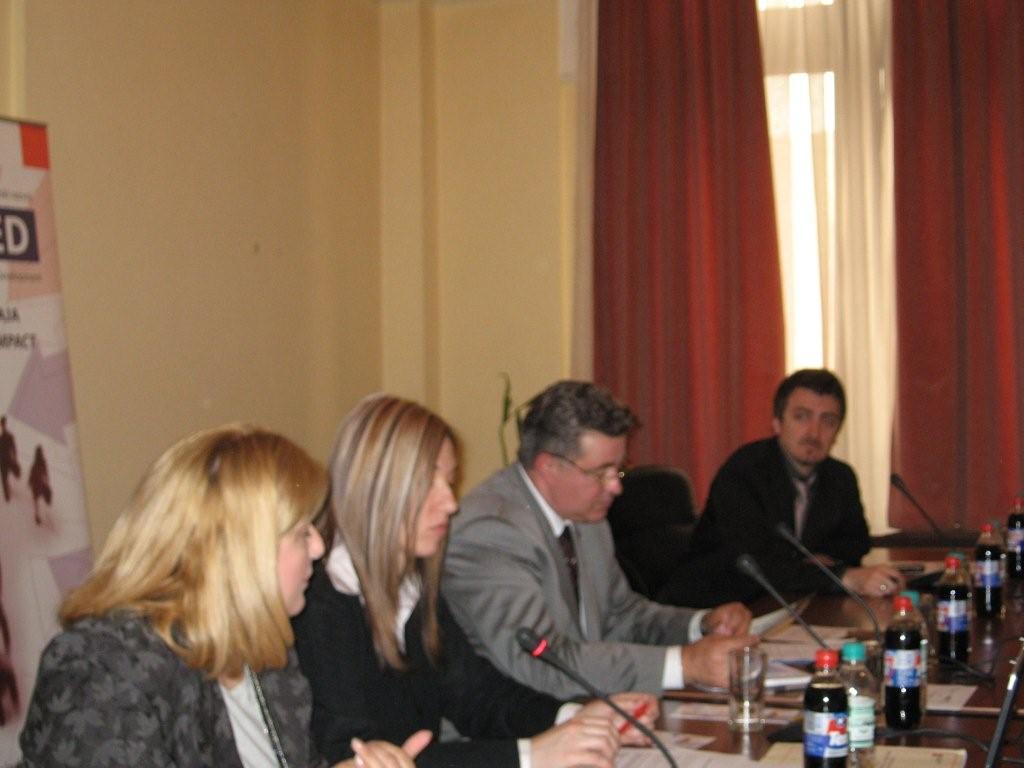
BIRN Serbia, together with the Organisation for Security and Cooperation in Europe mission in Serbia organised in April, two workshops in Novi Pazar and Novi Sad for journalists and editors from local media in order to help them cover and understand the political campaign.

The event was separated into two sessions. The first focused on the legal framework, the obligations of the media in campaigns and the use of different kind of election polls.

Rade Veljanovski, a professor from Belgrade’s Faculty of Political Science gave a wide overlook of the actual conditions in Serbia and introduced participants to best European practice. He stressed that the situation in the Serbian media is not appropriately regulated because of the lack of good legislative and the absence of professional independent organisations.

Djordje Vukovic, a researcher from election monitoring body, CESID explained the difference between professionally-implemented research and false election polls whose authors are dubious. He said journalists must be aware when getting results of election polls from an undefined source.

Zoran Stanojevic from RTS presented his experience from covering the election campaigns. He compared Serbian media coverage practice with US-based media and said that here we do not have a thematic approach which is crucial in western media. He said that there was no space for real debates of the main political players because they did not show interest in taking part in that kind of programme.

Slobodan Basic and Nadezda Milenkovic gave the participants a possibility to look behind the campaign’s main stage and to understand how electoral teams work. They explained the point of view of party members and their chancellors and the way of formulating main ideas for the campaign. Basic and Milenkovic explained the different strategies and the importance of marketing and public relations in the campaigns in Serbia.
Opportunities for young people in South Serbia

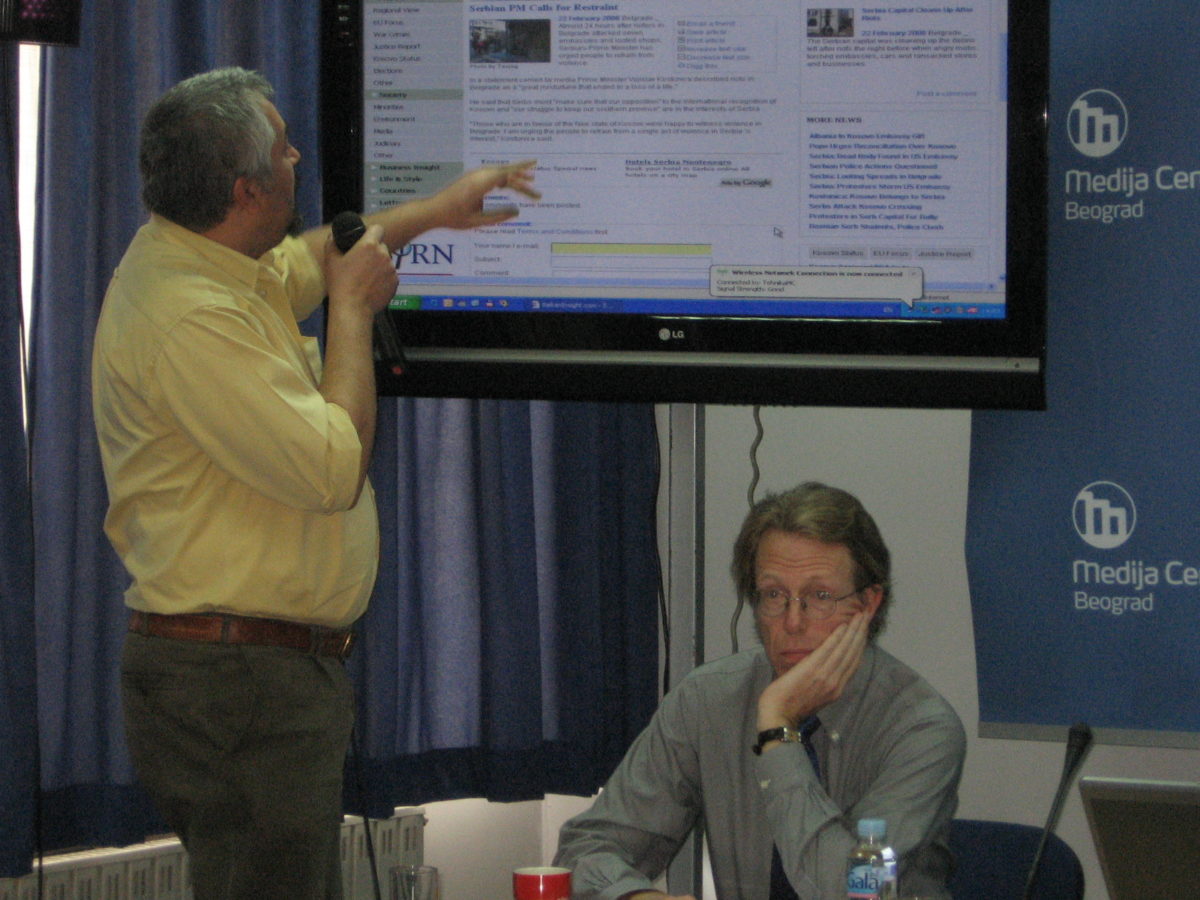
The fifth consecutive public debate on economic development in local communities organized by BIRN Serbia, Media Centre, NALED and Ekonomist magazine took a place in Vranje on April 11.

The event gathered more than 25 representatives from the public, business and civil sector from Pcinja and Jablanica district and the debate was focused on the problems of youngsters in that region of Serbia.

The mayor of Vranje, Miroljub Stojicic stressed the importance of the Strategy for sustainable development which defined the areas of main interest and recommended solutions. He said many things can be solved if the local community gets more decentralisation powers.

“We are forced to go to Belgrade for everything and this is big problem” said Stojicic.

The mayor said the local administration is open to new ideas and initiatives and that one should take their faith in their own hands.

Biljana Stankovic from the MIR programme presented the activities of the United Nations Development Programme in the region which were mainly based on increasing the capacities of the local administration and development in south Serbia.

Dobrila Sudimac Mratnikovic from the Centre for Regional Development in Jablanica and Pcinja district presented the possibilities for a better and stronger network between regional municipalities regarding cross-border cooperation.

The representatives of the non-governmental organisation, Generator, presented the main problems facing youths in South Serbia based on research. They stressed importance of bigger institutional involvement in these issues if the administration wants to create a good environment for youth employment.

The British Embassy in Belgrade supported this project.

BIRN Serbia Holds Newswire Reporting Course

BIRN Serbia organised a two-day advanced workshop on newswire reporting for contributors from the region as part of its Minority Media Training and Reporting Project.

At the training in Belgrade’s Media Center BIRN’s Editor Aleksandar Vasovic and James Heintz, a Moscow-based Associated Press news editor held three specialized sessions on different types of reporting techniques to seven BIRN contributors for the In Brief section on Balkan Insight’s website.


Vasovic focused his presentation on reporting in crisis situations. He explained news gathering techniques ranging from alerting the public about ongoing developments, handling the news desk, organising reporters’ teams and handling the story to its end. The discussion examined the problems of reliability of the sources and witnesses, aspects of security for a reporter in the field, interviewing techniques as well as the key differences between urgent and detailed reporting.

Heintz introduced local journalists to AP standards and explained the chain of information distribution from the spot to the editorial desk. Heintz also demonstrated some key elements of AP writing style and in a discussion highlighted usage and usefulness of press conferences and official press statements as sources.

New Correspondents Boost BIRN Coverage of Serbia

BIRN Serbia has recruited correspondents from Sandzak, southern Serbia, Vojvodina and Kosovo (covering the Serb community and other minorities) for its expanded news service on the new Balkan Insight website.

Amela Bajrovic, Nikola Lazic, Dragan Gmizic and Isak Vorgucic will strengthen BIRN’s network of contributors and give our readers a direct insight into the latest developments in these regions. Our new correspondents are trained and supported through the Minority Media Training and Reporting Project.

Since 2005 more than 50 journalists from Serbia have attended the training programme organized by BIRN Serbia, and sponsored by the British Embassy in Belgrade and the Washington-based National Endowment for Democracy. The project’s aim is to strengthen the capacity of local journalists and support their work.

Netherlands Embassy Support BIRN in 2008

The Embassy of the Kingdom of the Netherlands in Belgrade has made a grant available to support BIRN’s efforts to turn part of its output into an income-generating activity. The new grant provides funds designed to boost the BIRN network’s editorial capacity, in particular its cutting-edge output in analytical and investigative journalism.

The Netherlands Embassy has given generous support to BIRN’s development as an independent local civil society initiative, and helped its regional activities throughout 2006-07.
 
During the past two years BIRN has engaged in extensive training activities, building teams of investigative journalists throughout the Balkans and training them in different aspects of their trade.  It has created a network of over 200 local contributors and editors in nine countries across the region.

Roma Journalist Training in Belgrade

BIRN Serbia is to train eight Roma journalists from all over Serbia, September 27-29. The training will be followed by publication of a special edition dedicated to key political, economic, and social issues of importance to the Roma community in Serbia.

Since the beginning of the inter-governmental “Decade of Roma Inclusion” programme in 2005, a number of measures have been taken to improve conditions for this disadvantaged community. But there is much more to be done before the current patterns are changed. Frequent attacks on Roma people and their settlements, exclusion from society, the huge obstacles in the way of breaking the cycle of poverty and ways of overcoming cultural barriers will be some of topics that we will tackle.
 
“Roma media are important, because they influence the emancipation of the Roma, the development of their culture and traditions. Roma media also play a very important role in the development of inter-ethnic relations between Roma and other nations”, said Orhan Galjus, journalist from Amsterdam and activist at the “Media and minorities in SEE” conference.
 
Galjus will be a guest trainer at the Belgrade event.
 
The trainees’ reports will be published in English, Serbian and Roma languages early November.
 
These training and publishing activities will be implemented under the framework of the “Minority Media Training and Reporting Project”, supported by the British Embassy in Belgrade and the OSCE mission in Serbia.

Advanced Journalism Training in Kosovo

The BIRN Serbia team organized an advanced journalism training session for local Serbs, Montenegrin and Bosniak journalists in Kosovo. The training was held from June 29 to July 1, in northern Mitrovica, as part of BIRN’s ongoing Minority Training and Reporting project.

The group comprised journalists who, having completed primary level training, have become regular BIRN contributors from Kosovo. In addition, two journalists were trained for the first time in news analyses and feature writing. They will begin work with other colleagues on articles dealing with issues concerning minority communities in Kosovo.

The training was delivered by Aleksandar Vasovic, BIRN Serbia editor, and Tim Judah, British journalist and expert on the Balkans. Over three days, Vasovic led a discussion on the differences in approach to reporting on Kosovo by journalists in the disputed territory, Belgrade and abroad, and looked at different ways of making a local story interesting and understandable to international readers.

Judah then held an editorial session with journalists; talking about how to put events in wider context, give local stories a broader perspective, about sources in the international community and new topics emerging in Kosovo.

Special attention was devoted to the question of ethical dilemmas raised by trainees, such as a reluctance to tackle topics that are not in the interest of their communities and the boundaries of professionalism.

Both Vasovic and Judah participated in a session devoted to outlining stories that will be published in August in a special edition of Balkan Insight.

The British Embassy in Belgrade and National Endowment for Democracy, NED, sponsored the event as part of a three-year journalism-training project.

East Serbia BIRN Training Event

On May 21 – 22, the BIRN Serbia team will travel to East Serbia to interview potential candidates for the BIRN correspondent network.

The network in Serbia includes young and middle-aged journalists from a range of ethnic backgrounds, who work for local media outlets and national media in Belgrade.

As part of its efforts to build a truly nationwide network of journalists, BIRN Serbia is to launch a training course in East Serbia on June 9. Participants will be taught international reporting standards, news analyses and feature writing.

This training session will be followed by a special issue of Balkan Insight devoted to the socio-political situation in East Serbia, an underdeveloped area, blighted by a bad economy, unsuccessful privatization and ecological problems.

This session, sponsored by the British Embassy in Belgrade as part of a three- year journalism training project, will provide a group of five journalists with invaluable opportunities to adopt BIRN’s professional standards and become permanent members of its netw

BIRN to Hold Regional Event in Belgrade

Staff and contributors from throughout the Balkan Investigative Reporting Network will meet from April 12 –15 in Belgrade.

They will take part in a panel discussion on April 12, tackling the issue of how countries of the Balkan region are managing to develop, set and promote their own foreign policy. This public event, which will include additional guest speakers, is to follow publication of a special edition of Balkan Insight addressing this topic.

Investigative journalism training for BIRN members will follow on April 13, continuing on April 14 with editorial planning and a review of ongoing projects initiated at the last meeting of the network in August 2006.

The board of the regional network will convene on April 15 to review institutional development issues and other outstanding business.

BIRN Visit to South Serbia

BIRN held several meetings with local politicians, human rights activists, local media journalists and representatives of international organisations during a three-day visit to the South Serbia municipalities of Bujanovac, Presevo and Vranje.

The purpose of the visit was to learn more about local affairs and the most serious problems affecting people in the region, one of the poorest in the country.

The principal problems that were discussed in our meetings were the inadequacy of the government’s Coordinating Body for South Serbia; the absence of dialogue between the representatives of local ethnic communities; the lack of a Serbian government economic and political plan for the region; as well as discrimination against the ethnic Albanians in the area of the privatisation.

Most participants in the discussions pointed out that, in their view, we could not expect any substantial progress in South Serbia until after the final solution of Kosovo’s status.

BIRN Serbia country director, Dragana Nikolic Solomon, met up with the editors of the only Albanian television broadcaster in the region, TV Spektra; the editor of Albanian-language weekly, Perpsektive; the editor-in-chief of RTV Bujanovac; the chairman of the Bujanovac Human Rights Committee; the principal of the primary school Sveta Sava in Bujanovac; local Presevo politicians; the editor-in-chief of the weekly Vranjske; the editor of Vranje-based OK Radio; and Martin Brooks, OSCE South Serbia Coordinator.

The BIRN visit also included meetings with BIRN contributors Nikola Lazic, Ardita Beljulji, Ivica Stepanovic and Faruk Daliu. The discussion focused on activities conducted so far; the expansion of journalist networks and topics covered in the BIRN special edition on South Serbia.

An agreement was reached that the journalists from this region should take part in the seminar dedicated to the problems facing South Serbia to be organised in Nis.

This visit is a part of the journalist-training programme covering multinational regions in Serbia, which is implemented by BIRN Serbia with the generous support of the Embassy of the United Kingdom in Belgrade and the National Endowment for Democracy, NED, the US foundation.