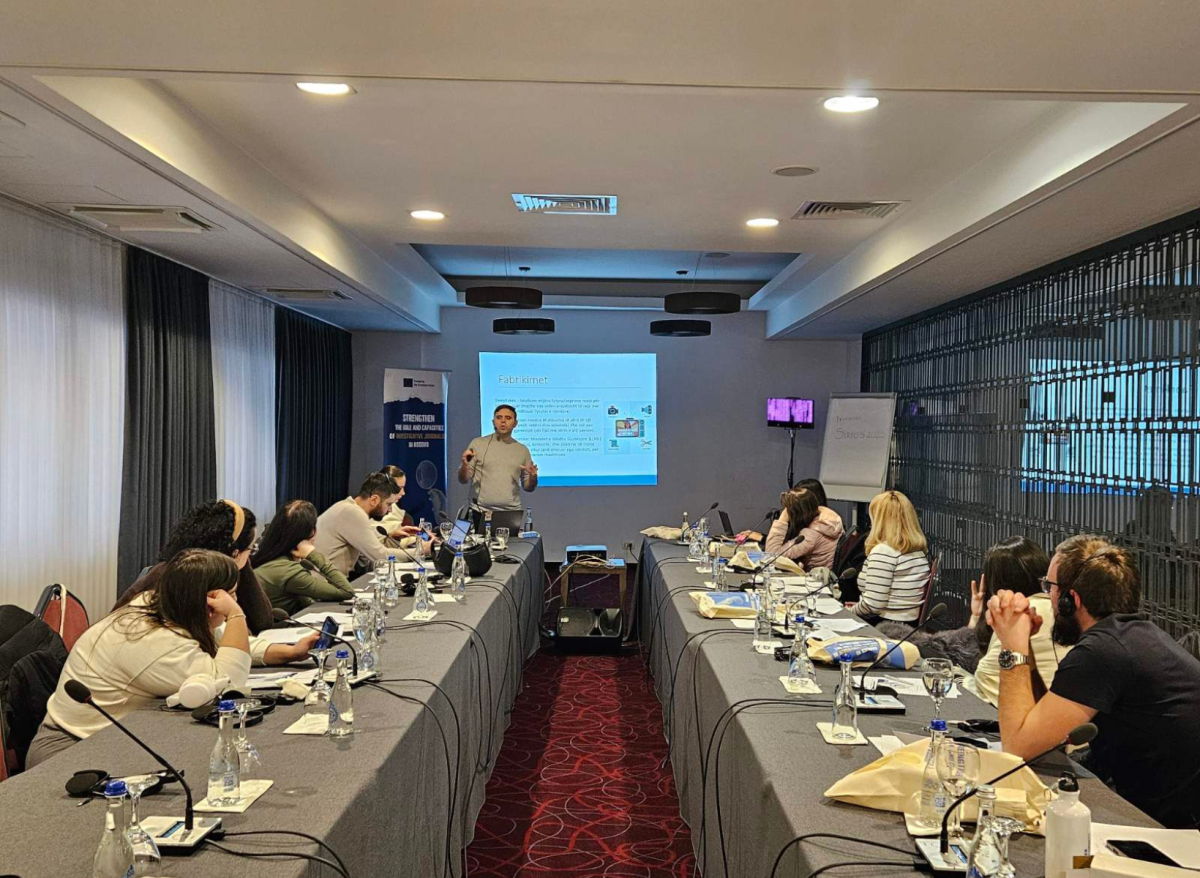
BIRN Kosovo organized a one-day training in Prishtina bringing together journalism students, journalists and media professionals to strengthen responsible journalism, gender-sensitive reporting, professional ethics, and fact-based reporting. The training aimed to enhance journalistic standards and address key challenges facing the media sector in Kosovo.
The training held on December 22, 2025, focused on improving journalists’ understanding of ethical decision-making, legal safeguards, and verification practices in an increasingly complex media environment.
The first session addressed gender-sensitive journalism and safety in reporting. Participants discussed the representation of women in the media, approaches to reporting on gender-related issues, and legal and professional safety when reporting from crisis or hostile environments. The session was delivered by were shared by Kreshnik Gashi, Editor-in-Chief of KALLXO.com, giving practical examples from the field.
The second session focused on media regulation and professional ethics. Participants were introduced to the legal and regulatory framework governing media in Kosovo, media ownership and financial transparency, and access to public documents. The session was delivered by Labinot Leposhtica, Monitoring Coordinator and Head of the Legal Office at BIRN Kosovo.
The discussion further delved into professional journalism ethics, examining real-life dilemmas and the decision-making processes journalists encounter in their daily work.
The final part of the training focused on fact-based reporting and verification standards. Participants were introduced to international fact-checking methodologies and tools used to verify photos and videos, followed by practical exercises. The sessions were led by Visar Prebreza, Editor at Krypometër.
Through a combination of expert-led sessions and hands-on exercises, the training reinforced the importance of ethical, accurate, and responsible journalism, highlighting BIRN’s ongoing commitment to strengthening media professionalism and public trust in journalism in Kosovo.
This activity is supported by the EU-funded project “Strengthen the Role and Capacities of Investigative Journalism in Kosovo”, implemented by BIRN Kosovo, the Press Council of Kosovo, and TV Mreža.
On December 23, 2025, BIRN Kosovo conducted a one-day training session for officials from the Municipality of Peja/Pec to deepen their understanding of the State Strategy for Preventing and Countering Terrorism and to strengthen their capacity to tackle extremism in Kosovo.
The training was provided to officials of the Municipality of Peja/Pec, including assembly members and other officials, to address various forms of extremism and terrorism, with a focus on the strategic goals set out in the Strategy. Present were Labinot Leposhtica, the Legal Office and Monitoring Coordinator at BIRN Kosovo and a member of the Working Group for the National Strategy for Preventing and Countering Terrorism, and Milot Sfishta, an official from the Department for Reintegration of Repatriated Persons and Integration of Foreigners at the Ministry of Internal Affairs.
Labinot Leposhtica emphasized the crucial role of local communities in combating extremism and terrorism and stressed the immediate need for the Strategy to be implemented at the regional level. Milot Sfishta provided an overview of the current situation regarding returnees and the work undertaken by the institutions. Speakers emphasized that local authorities play a vital role in achieving the Strategy’s goals and that their involvement is crucial to preventing violent extremism.
During the training, the participants were very active in discussing various cases, such as political terrorism, many attacks that occurred in the past years in Kosovo towards critical infrastructure, such as the Iber-Lepenc case, the Badovci Lake, and other cases, such as Banjska and the fragility of the overall security situation, which requires attention of all, regardless of political parties.
Photo: BIRN Kosovo
The participants were very familiar with violent extremism cases and people involved in the past, when they joined foreign fights. Underlying ideologies and economic factors were two of the main reasons why they joined the war in Syria. Moreover, participants reached a shared agreement on the urgent need for further action, particularly focused on youth. There was a growing concern that young people may be influenced by incidents that have occurred in the region in recent years, highlighting the importance of using their roles and elected representatives within the Peja/Pec community to more actively address and prevent such developments. 27 participants attended the event, out of whom 12 were women.
The training was part of the Resilient and Inclusive Community Programme, funded by the Global Community Engagement and Resilience Fund (GCERF), through the Advocacy Training and Resource Center (ATRC), and implemented by BIRN Kosovo.
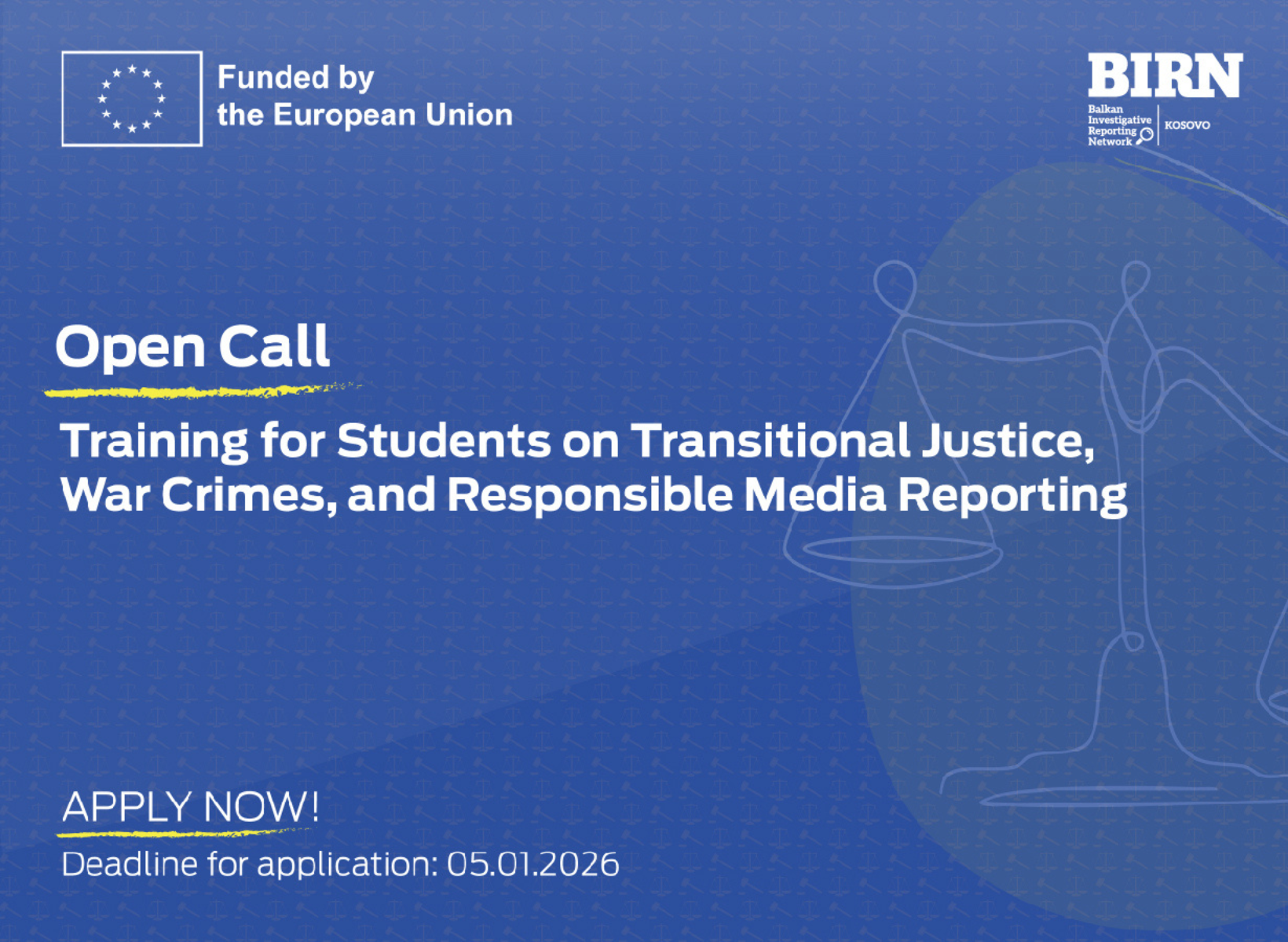
The project “Reconcile”, supported by the European Union, is being implemented by BIRN Hub and BIRN Kosovo and is taking place in Kosovo as well as in several other Western Balkan countries. This project represents an additional effort to increase discussion on transitional justice and dealing with the past in Kosovo and across the Western Balkans more broadly. The project aims to strengthen reconciliation and non-recurrence by empowering diverse communities in the Western Balkans, with a focus on training media professionals, public institutions, and students, by providing them with specialized knowledge on topics such as war crimes, judicial processes, reporting ethics, the role of the media in documenting the truth, as well as the impact of hate speech and disinformation in distorting the truth.
About the training
The training aims to provide participants with theoretical knowledge and practical skills on:
War crimes and international legal standards
Transitional justice mechanisms and accountability
Ethical principles and challenges in reporting on sensitive issues
The role of the media and civil society in shaping public opinion
Professional standards and fact-based reporting
Who can apply?
The call is open for:
Bachelor’s level students in Law, Political Science, and related fields in the social sciences
Master’s level students in Law, Political Science, and related fields in the social sciences
BIRN Kosovo encourages interested individuals from non-majority ethnic communities, without distinction, to apply and participate in the student training session, in line with the principles of equality and inclusiveness.
Applicants must demonstrate:
Interest or experience in the topics of war crimes, transitional justice, or media reporting
Motivation to apply the acquired knowledge in their professional or academic work
When and where will the respective training sessions be held?
For the target group: Students, two one-day trainings will be held, focusing on students from the University of Prishtina and the University of Prizren, while the call remains open to other private universities in these two municipalities as well.
8 January 2026 – Students from Prishtina (University of Prishtina and others)
9 January 2026 – Students, University of Prizren and other public universities
The training sessions will be held at: Reporting House Museum, Prishtina.
Applicants may apply only for the region they come from, through the Google application form.
Selection of participants:
Selection will be based on:
The relevance of the applicant’s professional and academic profile to the respective training
Motivation to participate
Experience or interest in the thematic areas
Willingness to learn and share experiences in this field
During the selection process, gender equality and inclusiveness will be taken into account, in line with EU principles.
How to apply?
Interested individuals are invited to complete the online application form at this link, depending on the group they belong to.
Application form for the student session – University of Prishtina and other non-public universities in Prishtina
Application form for the student session – University of Prizren
Language of the training: The training sessions in the field of transitional justice will be conducted in Albanian; interpretation will be provided for participants.
Application deadline: 05.01.2026
Only selected participants will be contacted. _______________________________________________________________
The Association of Journalists of Kosovo (AJK) and BIRN Kosovo, through a joint initiative launched the “Award for Fact-Checking Journalism in Kosovo”, recognising outstanding reporting that exposes disinformation, raises public awareness about information disorders and debunks harmful and manipulative narratives.
On December 15 in Prishtina, AJK, BIRN Kosovo and Internews Kosova awarded three Kosovo journalists for their exceptional contributions to fact-checking journalism, as part of the “Media Integrity and Disinformation Watch project,” with the support of the British Embassy in Kosovo.
British Ambassador Jonathan Hargreaves, BIRN’s executive director Jeta Xharra and University Professor Dren Gërguri delivered the awards.
First prize was awarded to Fitim Gashi of Sbunker for an investigation into coordinated disinformation campaigns conducted through Serbian and Russian-language Telegram channels, targeting the Serbian community in Kosovo. The investigation documented the cyclical spread of hate speech and disinformation, including intimidation, threats, and stigmatization of anyone cooperating with Kosovo’s institutions. It highlighted the instrumentalization of historical narratives to foster fear and deepen societal divisions.
Second prize was awarded to Sandra Cvetković of Radio Free Europe for two interconnected investigations into the role of Russian state media in shaping political narratives in Kosovo. The research revealed preferential treatment of the Belgrade-backed Serbian List, marginalization of other Serbian political actors and unsubstantiated portrayals of Kosovo institutions and Western partners as persecutors of Serbs. The analysis situates these narratives within the broader context of Russian hybrid influence in the Western Balkans.
The third prize was awarded to Xhezair Dashi and Arbër Ramadani of Nacionale for their investigation into the use of fake Facebook profiles, presenting themselves as women, to disseminate political propaganda during the February 9, 2025, election campaign. Through a combination of written reporting and video content, the journalists identified the operational patterns, interaction strategies and reach of these deceptive accounts.
The Fact-Checking Journalism Award marks a significant step in strengthening professional journalism in Kosovo, honouring journalists who uphold accuracy, accountability and the public interest in an increasingly complex information environment.
The documentary showcases how foreign information manipulation, interference and hate speech target Kosovo’s electoral processes. It illustrates the ways in which such campaigns undermine public trust in institutions, intensify polarization, and create additional obstacles for women participating in political life.
The film aims to increase awareness among citizens and within institutions about the scale and consequences of disinformation and to contribute to strengthening society’s resilience to manipulation. It also serves as a source of evidence that can support public dialogue and shape practical solutions.
The screening was followed by a discussion with the British Ambassador to Kosovo, Jonathan Hargreaves, the Director of NDI Kosovo, Ambassador Nancy Soderberg and Jeta Xharra, Executive Director of BIRN Kosovo.
Referring to the documentary’s findings, Ambassador Hargreaves stated that the situation represents a serious warning, emphasizing the importance of exposing this issue. He noted that this challenge is neither unique to Kosovo nor unfamiliar to the United Kingdom.
Ambassador Soderberg said what stood out most to her was the extent to which Russian authorities operate openly in their disinformation campaigns, while stating the importance of media literacy in mitigating the challenges of today’s information space.
This event was organised in partnership with the National Democratic Institute in Kosovo, under the framework of the Information Integrity Conference DISICON.
Photo: BIRN Kosovo
The documentary was produced and published under the “Media Integrity and Disinformation Watch” project, with the support of the British Embassy in Kosovo.
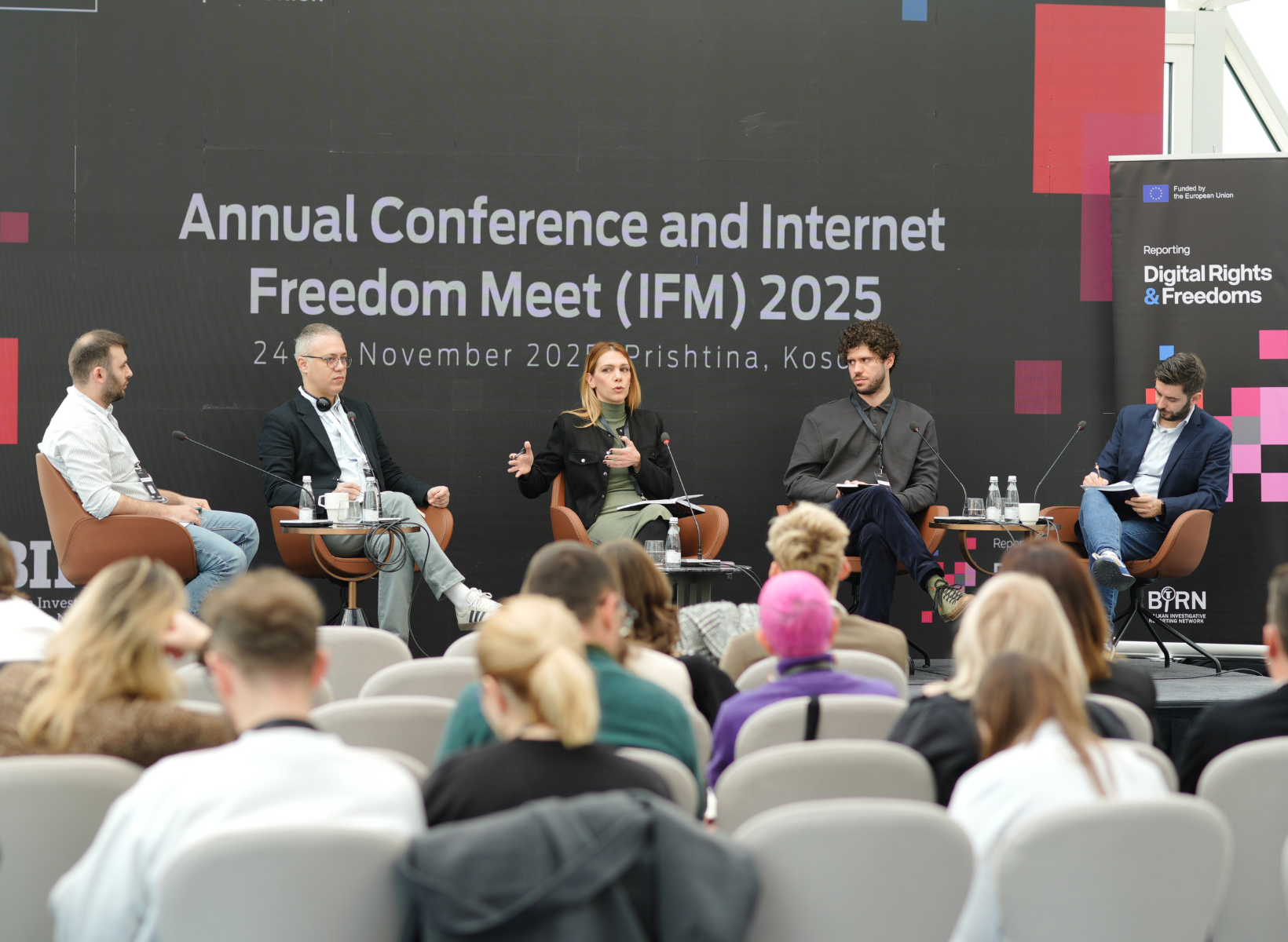
From November 24 to 26, 2025, BIRN welcomed some 120 participants – journalists, civil society activists, tech experts, academia, relevant institutions’ representatives and citizens at large – in Prishtina (Kosovo) for a regional annual conference and the Internet Freedom Meet event on digital rights and freedoms.
What unfolded was more than a presentation of cold statistical data. We witnessed a collective reckoning with how rapidly emerging technologies are advancing, and with how weak oversight and shrinking civic spaces are reshaping – and often endangering – people’s everyday lives across the Western Balkans and beyond.
From Project Roots to Regional Reality
The third and final annual conference is built on BIRN’s three-years project, Reporting Digital Rights and Freedoms, funded by the European Union and implemented by BIRN Kosovo and its regional partners BIRN Hub, BIRN Albania, BIRN Bosnia and Herzegovina, BIRN Macedonia, BIRN Montenegro and BIRN Serbia in the Western Balkans region and Turkey. The project aimed at strengthening media and civil society capacity to document and report digital rights and freedoms violations. Through training, capacity building online and offline events, fellowships, subgranting as well as editorial and other technical support, the project equipped newsrooms and individuals, journalists and activists with tools to first and foremost understand and then monitor and report about issues such as online abuse, to challenge disinformation, and bring somewhat hidden digital violations into public debate and for institutional reaction.
BIRN Kosovo director Jeta Xharra opened the conference and noted that there was very little knowledge about digital rights and that the project has contributed to educating both journalists to report on and the public to understand digital rights.
In a high-level speech, Kosovo’s President, Vjosa Osmani, sent a strong message of support towards the internet as a free space, and on the importance of exposing tech-facilitated abuse, be it online manipulation, promotion of hatred, violence against women or harassment of children.
The Deputy Head of the EU Office in Kosovo, Eva Palatova, emphasised the EU’s commitment to a human-centric digital environment, noting recent key policy instruments, the Digital Services Act, the AI Act and the European Democracy Shield, aimed at protecting users.
The work done throughout the project pointed to the importance of addressing internet governance-related topics systematically. The latest BIRN regional report, launched at the opening of the conference, documented 1,440 violations from September 2024 to August 2025. Over the three years of the project, based on BIRN’s monitoring methodology, we captured over 4,000 cases of digital rights and violations mapped.
From September 2024 to August 2025, the most frequent types of trending violations include misuse of artificial intelligence (AI) to facilitate sexual, gender-based violence and fraud, threats to the freedom and pluralism of information, attacks on digital assets and economic rights and harmful and threatening online behaviour.
The conference was attended by around 120 participants including 30 Internet Freedom Meet fellows from the Western Balkans region selected following a public call for participation.
Throughout the three-day event, the fellows played a dual role. They followed conference panels on the main stage, bringing sharp questions and contextual knowledge; and in parallel, they immersed themselves in dedicated workshops with international trainers, diving deeper into some of the most urgent challenges shaping the digital landscape.
In these workshops, fellows confronted real-world dilemmas: how to investigate online harassment while keeping victims safe; how to trace disinformation networks across borders; how AI-generated deepfakes and algorithmic bias threaten vulnerable groups; and how online/street surveillance erodes civic freedom. Fellows additionally enriched the discussion with local knowledge and lived experiences.
Photo: BIRN Kosovo
Humans Behind the Numbers
The conference focused heavily on the human impact behind the numbers – giving a platform to stories of and about real people – journalists, activists, citizens’ – whose lives were impacted and shaken by digital abuse, such as threats, surveillance or disinformation.
Participants heard worrying testimonies: journalists recounting smear online campaigns after exposing corruption, activists exposed to harassment and doxxing following their online advocacy, and citizens becoming victims of AI-driven scams, identity theft or deepface-based abuse.
Speakers emphasized a critical truth: digital rights violations are rarely isolated incidents. They are more often than not entwined with inequalities – especially in terms of gender, LGBTIQ+ persons, minorities, people with disabilities and other vulnerable groups. As Albanian technology policy expert Alba Brojka noted on the panel about gender-based violence, “It is a mirror of what is happening in the society and is amplified online.”
Photo: BIRN Kosovo
New Technologies, Same and Worse Dangers
Emerging technologies, such as generative Artificial Intelligence, are accelerating threats, while legislation and institutional oversight – and to a valuable extent also the media and civil society pace of understanding technological changes – lag dangerously behind.
Experts on the panels warned of AI-facilitated fraud, voice-cloning scams, deepfakes and more – noting that they are all increasingly used to exploit individuals’ vulnerabilities, especially women, young people and children. We heard how deepfakes have become so realistic that more and more people, especially with the information overload, cannot differentiate between real news, manipulated content or disinformation – which directly leads to undermining public trust and discourse influencing democratic and public informed participation.
Panelists looked into [weak] legal frameworks and selective enforcement, which make digital space a fertile ground for censorship, repression, threats and surveillance. We heard from several speakers sharing stories from Serbia or Turkey of unlawful surveillance, spyware deployment and non-transparent use of digital technologies and tools to intimidate critical voices of activists, journalists or even whistleblowers. While on one side, we see an “implementation gap” of those appropriate laws that exist, on the other side, in many places, we encounter outdated institutional settings, limited resources or political pressure, which stays unbothered while critical voices under attack stay unprotected and often with severe online or offline consequences.
Photo: BIRN Kosovo
Digital Rights are Human Rights – Not Optional Extras
One underlying message seconded by all participants – and participation was truly multistakeholder – is that digital rights are human rights, and are not marginal issues for tech-savvy urbanities but fundamental rights, deeply tied to dignity, security and democratic participation. Beyond the number of captured digital rights violations, those numbers represent people. At least one person per case. At least one more friend or family member was affected by it. And often entire communities.
Numbers cannot tell the whole story. Data reveals patterns to which the BIRN team, together with our partners, fellows, subgrantees, gave context. Living in the online space is not abstract – it shapes people’s safety, identity and freedom. Every violation is a life interrupted, a voice shaken, a right diminished. By documenting abuses, amplifying testimonies and exposing the systems that allow them to keep happening, the project brought human stories back to the centre.
Photo: BIRN Kosovo
From Talk to Action: What Needs to Happen Now
By the end of the conference, participants agreed on several urgent and concrete steps for the region:
Update and enforce legislation regionally, looking into good practice, to keep pace with technological change: laws should address AI-driven abuse, data protection, online harassment and digital surveillance
Support for victims/survivors, ensuring accessible reporting mechanisms, provide legal, psychological and social support, including protecting anonymity whenever needed
Empower independent media and civil society, including sustained grants, training and mentorship, so that civil society and journalists (media) can continue documenting abuses safely and effectively
Promote digital literacy and public awareness, as a necessary continued effort to educate citizens at large about ever-evolving online risks and understanding their rights
Fostering regional cooperation, as digital threats do not respect borders – cooperation among media, civil society, institutions, technical community and academia across countries is essential.
Why This Matters and Appreciation Words
For many years we have lived in a world where technology evolves fast – outpacing our social, legal and institutional capacity to adapt. As the closing conference in Prishtina underscored, these are not abstract policy questions. They are about people’s lives, freedom, trust, safety and dignity. They are about our future.
By bringing together journalists, experts from different fields and policymakers, over the three-year project we jointly took responsibility for protecting digital rights not as a niche project but as a core human-rights obligation that shapes people’s realities in the digital age. The Reporting Digital Rights and Freedoms initiative proved that when knowledge, evidence and human stories are brought together, digital rights can no longer be dismissed as technical issues “in the cloud”. They become what they truly are – essential rights that protect the very fabric of democratic society.
BIRN Kosovo wishes to extend its gratitude to project partners, coordinators, editors, monitors, journalists, researchers and authors, subgrantees, fellows, participants of physical and online training and community meetings, and the colleagues and individuals who contributed to the project’s delivery and success.
The Annual conference and Internet Freedom Meet were organised within the framework of the Reporting Digital Rights and Freedoms project, implemented by BIRN Kosovo and supported by the European Union.
BIRN Kosovo is pleased to announce the call for applications for a specialised training programme on responsible journalism, gender-sensitive reporting, freedom of information, media regulation, journalistic ethics, and safety in the field.
The training is organised within an EU-funded project, ‘Strengthening the role and capacities of investigative journalism in Kosovo’.
This programme aims to equip participants with essential journalistic tools, strengthen their professional knowledge, and enable them to exchange experiences on key issues that affect the media landscape. While media and civil society organisations play a crucial role in monitoring public institutions and societal developments, many journalists still lack the necessary training, practical skills, and resources to effectively use freedom of information mechanisms, conduct in-depth research, and follow public sector developments.
Who can apply?
The call is open to:
Journalism students
Recent graduates
Young journalists
Experienced journalists
Applicants from Serbian, Roma, Ashkali, and Egyptian communities in Kosovo are strongly encouraged to apply. Translation will be provided during the training to ensure equal participation for all selected applicants.
How to Apply?
Applicants must submit their applications no later than December 12, 2025 (midnight, Central European Time) to:
Applicants who have journalistic articles published in different media may submit them together (links of PDF) with their CV and motivation letter. The motivation letter should reflect the applicant’s interest in the topic, relevant experience, and expectations from the programme.
Location
The training will be held in Prishtina. The exact venue, agenda, and logistical details will be shared only with selected participants.
Important dates
Application Deadline: December 12, 2025, at 12:00 CET
The event brought together representatives from universities in Kosovo, students, journalists and civil society organisations. Its aim was to strengthen people’s capacities to understand digital rights and enhance their skills in identifying and protecting these rights.
The meeting began with a presentation about the Reporting Digital Rights and Freedom project, including its goals, objectives and activities over the past year. The presentation highlighted key findings from BIRN’s Annual Report on Digital Rights Violations, focusing on the cases that have been identified and recorded as digital rights violations within the framework of the project.
During the meeting, Labinot Leposhtica, Coordinator of the Legal and Court Monitoring Office, highlighted the importance of digital rights as an integral part of universal human rights. He said these rights include privacy, freedom of expression and protection against online abuse. Leposhtica discussed the necessary steps and best practices to respect and promote these rights effectively, underlining the role of institutions and citizens in ensuring a safe and fair digital environment.
Following this, Xhorxhina Bami, journalist and editor at BIRN, presented the Engaged Citizens Reporting (ECR) platform, a digital tool launched by BIRN that allows journalists to gather information directly from communities and involve them in the reporting process. Bami explained that the platform enables citizens to report their concerns while maintaining full anonymity.
The meeting was attended by 35 participants, including 30 women. They had the opportunity to engage in discussions and share their experiences regarding digital rights violations in Kosovo, including the misuse of personal data, anonymity on social media and unauthorised dissemination of information.
This meeting was organised within the framework of Reporting Digital Rights and Freedoms, implemented by BIRN Kosovo and supported by the European Union.
During November 2025, BIRN Kosovo organized three tailored workshops designed to raise awareness and strengthen understanding as well as operational capacities of security and justice institutions in countering disinformation. The workshop “Development of Inter-Institutional Capacities for Building Strategies to Counter Disinformation,” brought together representatives from the Prosecution, Courts, Customs, Police, Tax Administration, Local Departments for Security and Emergency as well as Ministries of Internal Affairs, Defence and Local Government Administration, facilitating dialogue and collaboration among institutions that play a crucial role in safeguarding public trust and security.
Workshops opened with a discussion on participants’ expectations and institutional experiences, setting the stage for a shared understanding of current challenges. This was followed by an introductory session on information disorders, presented by Kreshnik Gashi, Editor in Chief at Kallxo. Mr. Gashi highlighted the need for a forward-looking approach toward today’s challenges in the information space and discussed most effective experiences in addressing and preventing disinformation.
Further sessions delivered by Visar Prebreza, Editor at Krypometër and Granit Mavriqi, Social Media Manager at Kallxo, discussed the influence of media financing, transparency, and digital security on the spread of disinformation. Mr. Prebreza, while showcasing real life examples of information disorders related to security and justice institutions, emphasized the need to understand disinformation as a coordinated approach that seeks to undermine trust in institutions. Mr. Mavriqi provided participants with practical tools and techniques to enhance their digital safety and best practices for institutions to communicate through social media.
Participants were additionally introduced to the effects of algorithms and practical monitoring methodologies through sessions led by Norik Selimi and Meriton Nagavci from Pikasa Analytics, who presented the latest trends in online media monitoring as well as examples of institutions performance online.
Blerton Abazi, University Professor, discussed the interplay of cybersecurity, artificial intelligence, and coordinated disinformation campaigns, illustrating how evolving technologies are reshaping the information space. Arton Hajdari, Financial Forensics Expert, delivered a session focusing on the legal framework and available tools for tracing financial flows and identifying the beneficial owners of businesses and media outlets. It also highlighted the role of the Financial Intelligence Unit and outlined practical analysis strategies for suspicious cases. In addition, one interactive session was held with Miroslav Sazdovski from the European Centre of Excellence for Countering Hybrid Threats.
Workshops concluded with group discussions facilitated by Kreshnik Gashi and Labinot Leposhtica, Head of the Legal Office and Court Monitoring Coordinator at BIRN, where representatives collaboratively outlined practical steps for developing effective pre-debunking and debunking strategies.
A total of 90 participants, 28 women and 62 men, took part in the workshops held on 12-13 November, 18-19 November and 25 November. These activities were organised under the framework of the project “Media Integrity and Disinformation Watch”, supported by the British Embassy in Kosovo.
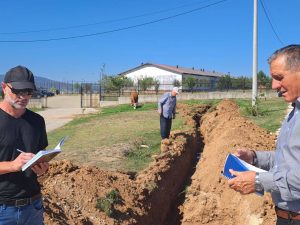
Teams established across six Kosovo municipalities this year worked on audits to strengthen transparency, accountability and citizen participation in local government.
Over four months, citizens participated intensively in trainings, field visits, community consultations, meetings with municipal leaders and in the drafting of recommendations that will inform future public investments.
The Social Audit project engaged local NGOs, municipal mayors, officials and directorates, contract managers, and up to 120 community members, culminating in the preparation of six Social Audit reports, 30 journalistic articles (five per municipality), a TV documentary and six short videos – one for each municipality. These audiovisual products will document the entire Social Audit process. The selected municipalities were Istog, Drenas, Kaçanik, Dragash, Lipjan and Mamusha.
Following an extensive field-screening process, the project formed six Social Audit Teams, one per audited project, with a diverse membership, including teachers, activists, farmers, engineers, persons with disabilities, youth leaders, journalists, business owners and pensioners. More than 70 men and 40 women monitored 12 different infrastructure projects, with the aid of BIRN Kosovo, Democracy Plus (D+), and local partner NGOs in each of the six municipalities: HANDIKOS Istog, HANDIKOS Kaçanik, HANDIKOS Drenas, NGO Avoko, YAHR, and Mamuşa Emekçi Kadınlar Derneği.
These teams acted as independent community monitors, ensuring that public investments funded by the Municipal Performance Grant comply with standards, meet community needs, and follow proper procedures.
Before field monitoring began, the project delivered one training for the six local NGOs involved in facilitation and six full-day trainings for each of the Social Audit Teams. Topics included civic activism and citizen engagement, Municipal Performance Grants, access to public documents, identifying indicators and drafting findings, technical and environmental monitoring and reporting, communication, and community outreach. These trainings built the teams’ capacities to analyse project documentation, conduct field inspections, and formulate evidence-based recommendations.
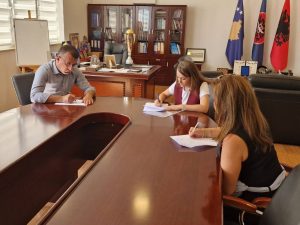
The project began with the signing of Memorandums of Understanding with all six municipal mayors, formalizing cooperation for the 2025 Social Audit cycle. Mayors and municipal directors committed to close collaboration, transparency, and the provision of documents, facilitating citizen participation throughout the process.
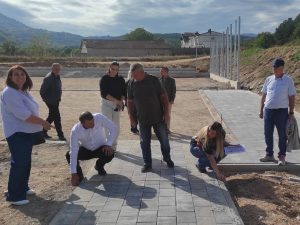
Throughout September, October, and the first half of November, the Social Audit teams carried out field visits to construction sites, public spaces, roads, riverbeds, water systems, and sports facilities; met contract managers and municipal departments; consulted residents about local needs; and reviewed procurement documents, designs, contracts and plans.
Key findings included concerns related to accessibility, environmental impacts, construction quality, safety risks, delays, and non-standardized infrastructure. Teams drafted detailed recommendations, which were formally submitted to the municipalities. All the municipalities responded with written feedback, many confirming that several recommendations were already being addressed.
From November 5 to 13, all six Social Audit teams met with their respective mayors or deputy mayors to present preliminary findings. In each municipality, local leaders expressed appreciation for the citizen-driven approach and acknowledged its role in improving service delivery and strengthening decision-making. Some municipalities committed to increasing accessibility measures, adjusting road safety infrastructures, prioritizing citizen requests in future budgeting, and piloting participatory budgeting mechanisms.
To enhance visibility and public engagement, the project has also produced rich multimedia content. In total, 30 articles will be published on KALLXO.com and partner platforms – five per municipality– covering every stage of the Social Audit process, from the signing of MoUs to trainings, findings, and meetings. In addition, an upcoming feature documentary will showcase the entire four-month cycle of community monitoring. The project will also produce six short videos, one for each municipality, highlighting project-specific challenges, stories, and citizen voices. Filming included interviews with mayors, team members, residents, engineers, and NGO partners, along with extensive footage from all monitored project sites.
This project will culminate in the publication of six Social Audit reports, one for each municipality. These will present the key findings derived from the fieldwork conducted by the Social Audit teams, along with the recommendations developed based on their assessments. The reports will also highlight systemic issues identified during the process, good practices, lessons learned, and actionable steps for local institutions to improve transparency, service delivery and accountability. Each report will include community feedback, documented evidence and a set of priority measures designed to support long-term, citizen-driven oversight at the municipal level.
The Social Audit Project has proven to be one of Kosovo’s most comprehensive citizen-engagement models, combining capacity-building, institutional cooperation, field monitoring and civic participation in decision-making. With up to 120 trained citizens, partnerships with six municipalities, and a full body of public reports and audiovisual storytelling, the initiative sets a new standard for local governance oversight.
The 2025 Social Audit cycle began in August and will be completed in December. It is supported by the Ministry of Local Government Administration and the Decentralisation and Municipal Support Project (DEMOS), a project co-financed by the EU, the Swiss and Swedish government, and implemented by HELVETAS Swiss Intercooperation–Kosovo.
In 2024 BIRN Kosovo and D+ facilitated the Social Audit process in six municipalities of Gjakova, Peja, Lipjan, Obiliq, Klina and Malisheva. In 2023, BIRN Kosovo facilitated the same process in Drenas, Kaçanik, Hani i Elezit, Suharekë, and Viti.