Uncovering the Truth: Combating Monoethnic Journalism and Advocating for the Missing Persons in Kosovo

BIRN Kosovo

The overall objective of the proposed action is to contribute to transforming the discourse surrounding the missing persons issue, paving the way for reconciliation, resolution and mutual understanding, all while advocating for the rights of their families. This action aims to achieve the overall objective through a combination of methods that seek to educate, inform, and stimulate public discourse.

Summary:

The Kosovo war, a profoundly distressing period during the breakup of Yugoslavia, continues to cast a dark shadow over many families even decades later. An agonising remnant of this period is the issue of missing persons in Kosovo, a matter yet to be fully resolved. Initial approximations suggested between 4,400 to 4,500 individuals vanished during the conflict, which came to an end in June 1999 following a NATO military intervention. As of today, the fate of approximately 1,621 individuals of all ethnic backgrounds remains unknown, a haunting fact that fuels a perpetual sense of loss, fear, and uncertainty among affected families and communities.

However, drawing from the European Commission’s Kosovo 2022 Report, the unresolved fate of persons who are missing from the 1990s conflicts remains a pressing concern in the Western Balkans. Despite the efforts of Kosovo’s authorities, which led to 9 exhumations and the official identification of 21 persons in 2021, the reality is that 1,621 people are still missing as of April 2022. This continuous uncertainty casts a shadow over the region’s reconciliation efforts. Balkan Investigative Reporting Network (BIRN) posits that the absence of political will and dialogue between Kosovo and Serbia exacerbates this issue. This also often includes bias or ethnic centric reporting from the mainstream media. Therefore, it is imperative for the independent media to shed light on the profound impact this unresolved matter has, particularly on the families of the missing persons, and more broadly, on regional reconciliation.

Although the momentum to address the issue of missing persons exists, 24 years after the conflict, monoethnic narratives by both Albanians and Serbs overshadow the shared experiences of suffering and loss among families of missing persons.

The institutional frameworks in Kosovo, particularly entities like the Special Prosecutor’s Office of Kosovo and the Inter-Ministerial Working Group on with the Past and Reconciliation, are central in the efforts to resolve the fates of missing persons and address war crimes. However, these institutions often grapple with issues of transparency, accountability, and reach, becoming hamstrung by systematic constraints.

In this context, the BIRN and Advocacy Center for Democratic Culture (ACDC) project presents an opportunity for these institutions. By showcasing their endeavours, we aim to extend their visibility and promote a deeper public comprehension of their roles.

On the other hand, journalists lack the specialised knowledge to handle the topic of missing persons with the sensitivities and care they warrant. Our actions are designed to directly tackle this problem, by offering capacity-building training for journalists, emphasising accurate, impartial, and humane reporting. Furthermore, by targeting journalists from diverse ethnic backgrounds, our action will contribute to a media ecosystem where narratives of forced disappearances and missing persons are inclusive and representative of all affected ethnicities.

Through our initiative, we endeavour to highlight these efforts and the associated challenges, fostering an environment that encourages more proactive policy-making to better support affected families and ensuring a platform for these institutions to demonstrate their commitment and progress.

To ensure a comprehensive approach and a more nuanced understanding of the problem, BIRN is partnering with the Advocacy Center for Democratic Culture (ACDC), a Serb NGO based in North Mitrovica. This partnership serves to encompass both Albanian and Serbian perspectives, to offer an unbiased and fact-based narrative on the missing persons issue. Together, as project partners we will align all affected communities to create an environment of shared understanding and common pursuit for the truth.

Donor:

European Union Office in Kosovo

Main Objectives:

Objective 1: Equip journalists with the knowledge and tools necessary for effective, impartial, and sensitive reporting on the issue of missing persons.

Objective 2: To enhance accountability and understanding of the investigative and justice processes by fostering dialogue with institutional stakeholders is designed to bridge this information gap.

Objective 3: Youth across Kosovo communities enhanced media literacy and gained the necessary knowledge on fact-checking, ethical constitutes and professional reporting.

Main Activities:

  1. Specialized Training Program for Journalists
  2. Production of Eight (8) TV Documentaries
  3. Post-Premiere Public Debates:
  4. Producing four (4) TV Reports with War Crime Prosecutors
  5. Publication of Web-stories on BIRN’s Kallxo.com Platform

Outputs:

Output 1.1 – Media deliver balanced, effective, and empathetic narratives around the missing persons’ issues

Output 2.1 –  Public discourse is invigorated and comprehension regarding the missing persons deepened

Output 3.1 – Public dialogue initiated, understanding of the missing persons issue deepened and active public involvement stimulated

Output 4.1 – to contribute to an environment where transparency, accountability, and public trust in the justice system’s approach to missing persons cases are strengthened

Output 5.1 – Public’s focus on the issue maintained through offering a continuous stream of informative and compelling content on the experiences of missing persons and their families, and updates on investigations

Target Groups:

  • Families of missing persons
  • Journalists and media outlets
  • Representatives of the Special Prosecutor’s Office
  • Local and Central Level Government Officials
  • Academia and Researchers

Main implementer:

BIRN Kosovo

Project partner:

Advocacy Center for Democratic Culture (ACDC)

BIRN Kosovo Holds a Workshop for the Referral Mechanism Members of the Municipality of Hani i Elezit

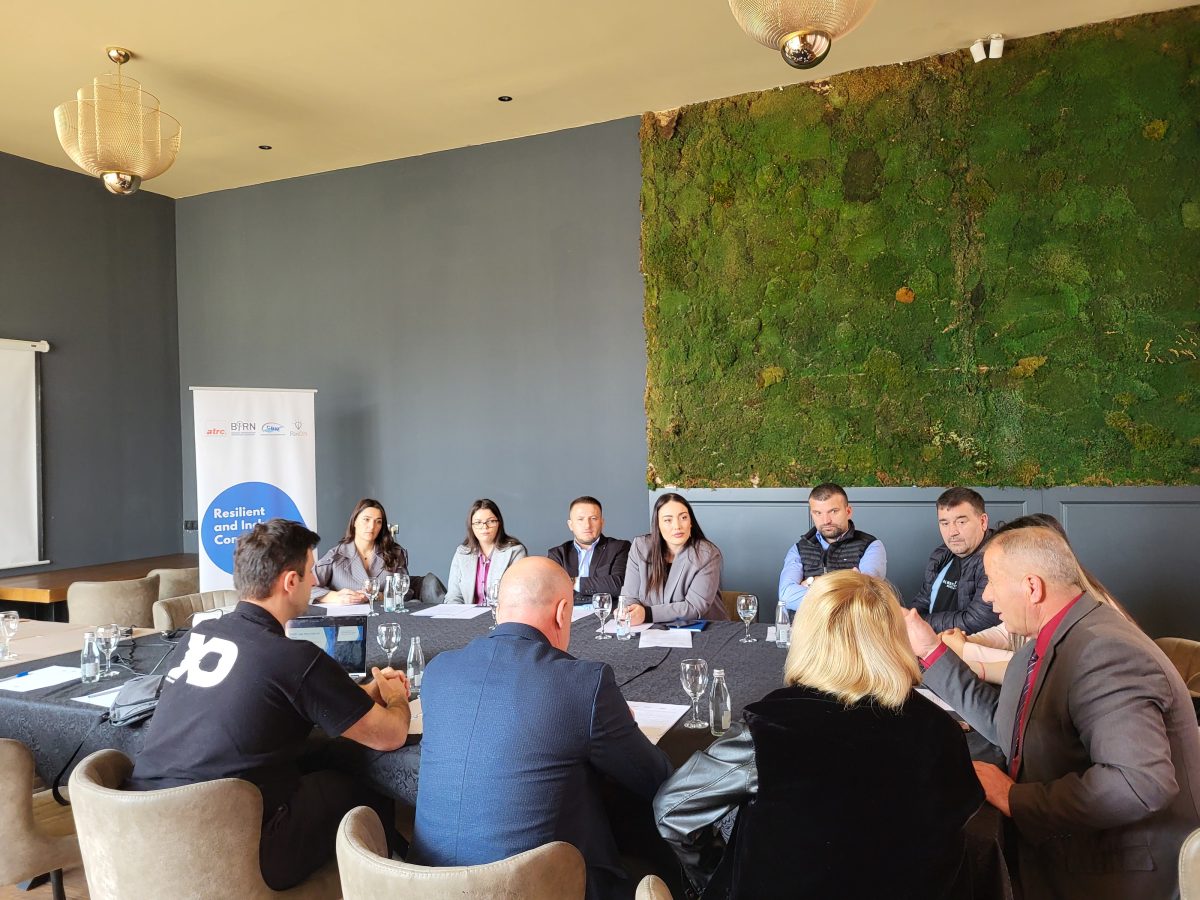
On February 28, 2024, BIRN Kosovo held a workshop on strategic communication during the implementation of the activities of the National Strategy for Preventing and Countering Terrorism. The workshop was organised in Hani i Elezit for the members of the referral mechanism of the local municipality.

The workshop addressed the principles of strategic communication, including media functioning and other platforms of strategic communication thus ensuring that the members of the referral mechanism have a better understanding of the importance of different platforms on the P/VE, R&R, and other forms of extremism.

A total of 11 participants, 5 of them women, gathered at this workshop which started with a presentation of each member of the referral mechanism including an overview of the work of this mechanism.

The trainer for this workshop Kreshnik Gashi – Managing Editor of Kallxo.com, presented and thoroughly explained means of strategic communication regarding their work on P/VE, R&R, and other forms of extremism. With an emphasis on fake news and disinformation, Gashi mentioned that the members must pay attention to the usage of social media, considering the fact of the widespread usage of all social media platforms in Kosovo. Other elements such as direct and indirect forms of propaganda were illustrated with examples, while the members of the mechanism were instructed to be assured of the audience that they address and find correct ways of defining and addressing a specific group.

During the workshop, the attendees were very engaged and expressed an interest in sharing their firsthand experiences as members of the referral mechanism of the Municipality of Hani i Elezit. They were quite forthcoming in sharing their sources of information and providing tangible examples of times when they had fallen prey to fake news and disinformation.

This workshop was part of the ‘Resilient Community Programme’ founded by GCERF.

BIRN Kosovo Holds Training for the Members of the Municipal Assembly in Vitia

On February 27, 2024, BIRN Kosovo held a one-day training to present the strategic vision of the National Strategy for Preventing and Countering Terrorism for the Municipal Assembly of Vitia, in Viti.

The training addressed the matter of the P/VE, R&R, and other forms of extremism. Also, it addressed the strategic vision of the strategy on the local level with an emphasis on the Municipal Assembly’s role in countering violent extremism and terrorism.

A total of 10 participants, 5 of them women, gathered for this training, which started with introducing the objectives of the National Strategy for Preventing and Countering Terrorism 2023-2028. The focus was on countering religious extremism and far-right extremism on the strategic vision of this strategy presented by Kreshnik Gashi – A member of the Working Group on drafting the National Strategy for Preventing and Countering Terrorism. Gashi presented his experience in contributing to the finalization of these documents and explained the objectives of this strategy.

Mensur Hoti – Director of the Department for Public Safety in the Ministry of Internal Affairs, focused his attention on the role of the local authorities in fulfilling the objectives of the Strategy. An important part of this presentation was oriented on discussing the current situation on preventing radicalism and violent extremism that leads to terrorism.

The participants were very active in sharing their experiences and addressing the current situation in their municipality. Among other issues discussed, they also highlighted the fact that they did not receive the National Strategy for Preventing and Countering Terrorism 2023-2028. As a result of them being more informed during this training session, they mentioned that besides the Strategy they will ask the Mayor to receive the Action Plan and agreed to be more vocal in their municipal assembly regarding P/VE, R&R, and other forms of extremism.

This training was held as part of the ‘Resilient Community Programme’ founded by GCERF.

BIRN Crew Attacked While Covering Church-Building Initiative in Kosovo

A man was questioned by police after he verbally attacked and insulted a crew from BIRN Kosovo while they were reporting on a controversial initiative to build a Catholic church in the village of Kline e Eperme/Gornja Klina.

Journalist Adelina Ahmeti and camera operator Jetmir Hoxha from BIRN Kosovo’s Kallxo website were attacked on Monday by a resident of Kline e Eperme/Gornja Klina, a village in the Skenderaj/Srbica municipality, where a proposal to build a Catholic church has encountered resistance from some locals.

The police said on Thursday that the “suspect was interviewed and after a case was initiated by a decision from the prosecutor, he was released in the usual way”.

The BIRN crew visited the village to report on the proposal to build the church, initiated by a local man called Ndreke Kelmendi. Kelmendi insists that a church had previously existed at the same location, but his proposal has sparked negative reactions from several villagers who claim that the land is privately owned.

Moments after the BIRN crew went to Kelmendi’s house to interview him about the church issue, his brother Mustafe Hasani confronted them for several minutes, using insulting language and making threats.

“I swear to God that you will be in trouble,” Hasani repeatedly threatened.

The BIRN crew reported the incident to the police.

The Association of Journalists of Kosovo, AJK condemned the incident, saying that “any attack against journalists is an attack on free speech and democracy”.

“The AJK is concerned about the threats toward its Kallxo.com colleagues and calls on the police to address the case as a priority,” it said.

“We condemn any form of threats against journalists, camera operators and media workers and call on the relevant institutions to secure justice for all threats and attacks on media,” it added.

BIRN Kosovo Holds Fact-Checking Journalism Course

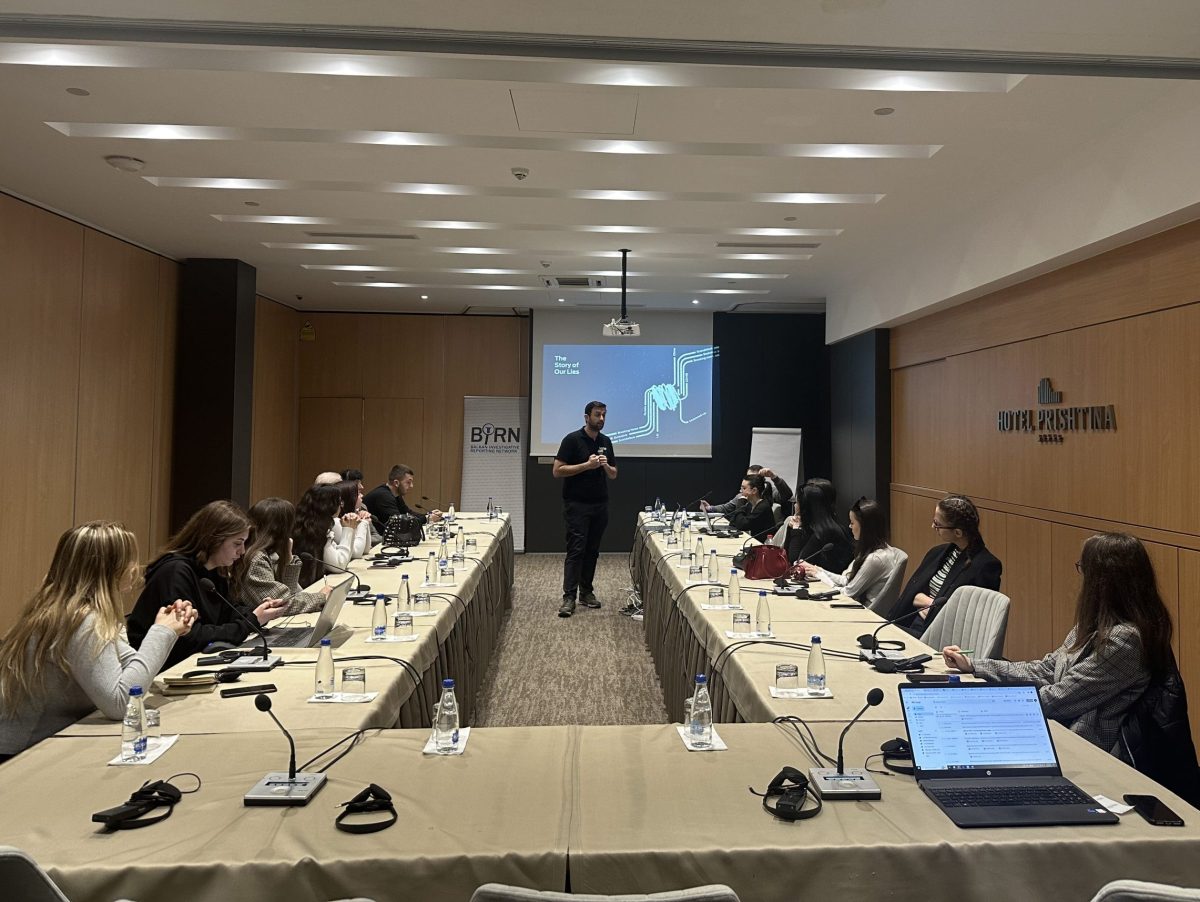
BIRN Kosovo held a one-day training course on fact-checking journalism for young and mid-career journalists in Pristina on February 26, 2024.

The course addressed the importance of fact-checking in daily reporting, reporting on inter-ethnic issues, propaganda, misinformation and the handling of disinformation and fake news on social media.

A total of 13 journalists, 11 of them women, gathered for the training course which started with a keynote speech from BIRN project manager Arita Suhodolli.

The first part of the training was delivered by Kreshnik Gashi, managing editor at KALLXO.com, who used illustrations to explain how information can be altered while spreading across different media.

Gashi also presented the findings from BIRN’s report ‘The Story of Our Lies’, about the influence of China and Russia on disinformation in Kosovo. He discussed with participants the difference between disinformation, fake news, deep fakes and other forms of fake news production.

Gashi closed his part of the course with some practical work on analysing articles by using fact-checking techniques to improve the participants’ critical thinking and taught them various techniques for verifying news.

Dorentina Kastrati, an editor at BIRN, spoke about local initiatives addressing disinformation and misinformation. She started her lecture by presenting BIRN Kosovo’s initiative to create the Coalition Against Disinformation. She also emphasised the importance of inter-ethnic groups of journalists engaging in fact-checking and ended her lecture with a summary of how to write fact-checking activity proposals.

The training concluded with a lecture on handling disinformation and fake news on social media networks by the another guest speaker, Faik Ispahiu, the executive director of Internews Kosova.

Ispahiu talked about how KALLXO.com’s Krypometer (Truth-o-meter) become the first fact-checking tool in Kosovo to be granted a licence by the International Fact-Checking Network. He also explained the mechanisms Facebook and other social media companies use for fact-checking news.

The training course was supported by the United Nations Interim Administration Mission in Kosovo, UNMIK.

Call for Applications: BIRN Kosovo Training on Fact-Checking Journalism for Young Journalists

In multi-ethnic, post-conflict societies, misinformation has the potential to adversely impact conditions for sustained peace and coexistence among communities and create political strife.

Moreover, in a digital and social media age, and with the steep rise of online news portals in Kosovo, rumors and manipulated fake news can have heightened operational consequences for credible media outlets and journalists in Kosovo.

Media outlets lack the necessary capacities (resources and skillsets) to report on issues and uphold professional fact-checking standards, whereas consumers are not well-equipped to identify spurious news stories and debunk them.

Such false news items are frequently on topics related to members of non-majority communities, which in turn perpetuates discrimination, and reinvigorates fear and insecurity amongst readers. These news items are easily spread across most online media given current social media algorithms reward polarizing and extreme content.

To address these challenges and create more credible and professional future generations of journalists in Kosovo, on February 26, 2024, BIRN will organize a one-day training module with journalists and journalism students on fact-checking standards, methodologies, and tools.

The one-day training module will bring together 20 young and mid-career journalists as well as students of journalism from different communities, who will have the opportunity to acquire knowledge and hands-on skills on how to report on fact-checking methodology and tools.

The training module will be delivered by BIRN’s team of award-winning journalists and editors, who have extensive experience in investigating, reporting on, and advocating for fact-checked journalism.

Who can apply?

Students of journalism, young and mid-career journalists across different regions in Kosovo, who are interested in learning more about reporting based on fact-checking methodologies are eligible to apply for this call.

Applicants from marginalized communities in Kosovo, including members of minority ethnic communities and women, that fulfill the above-mentioned criteria are encouraged to apply for this call.

To apply for the one-day training on fact-checking reporting click here.

Language:

Simultaneous translation in Albanian, Serbian, and English will be provided.

Location:

The training will take place in Prishtina, Kosovo. Details regarding the specific location and agenda will only be provided to selected participants.

Deadline for application: February 5, 2024

Date of the training course: February 26, 2024

*This training activity is supported by the UNMIK.

BIRN Kosovo publishes report on justice system’s handling of terrorism and corruption cases in 2023

BIRN Kosovo published the report titled “The Justice System’s Handling Cases with Terrorism and Corruption Charges in 2023”, which is based on the monitoring of the justice system and presents a detailed analysis of how cases of terrorism and corruption are handled by the justice system in Kosovo during 2023.

BIRN monitored 7 terrorism cases and 16 corruption cases that remain active in 2023, which are handled by the Special Department of Basic Court in Prishtina, and also gathered data from public documents on cases of terrorism and corruption.

This report highlights the lenient sentencing policy and non-involvement of all institutions as the main weaknesses of the system, especially in corruption cases. It also reveals the courts’ serious issues with the delays in handling cases, by showing data from prolonged cases handled by the Special Department of the Basic Court in Prishtina and the Special Department of the Court of Appeals in 2023.

As per the terrorism cases, data from this report shows that the justice system had a quicker approach to dealing with such cases. However, considerable delays are also observed between the time when the crime is alleged to have been committed and the time when the indictment is filed and when the trials are held. As for punishments, this report finds the sentencing policy inadequate. Revealing that in 3 out of 7 monitored cases that have been issued a conviction, sentences appeared in the lowest threshold of the sentence envisaged.

The report also provides recommendations intended to be a useful aid to justice institutions to improve the efficiency and effectiveness of Kosovo’s justice system and contribute to developing the necessary justice reforms.

The main recommendations of this report focus on the improvement of Prosecution from addressing the mistakes made in the application of investigative techniques, to considering the court’s findings when prosecutors failed to establish the intent of the accused in committing criminal offenses and ensuring prosecutors are provided with skills and updated knowledge to investigate violent extremism and terrorism cases.

Other recommendations include the further strengthening of KJK and KPK collaboration with international organizations, civil society, and other relevant institutions, as well as the media, with the common goal of strengthening the efforts against corruption and increasing the public’s trust in the justice system.

Click here for the report on Albanian and English.

This activity is implemented as part of the “Media as a means to improve the transparency of the justice system and the fight against terrorism and extremism” project, supported by the Italian Ministry of Foreign Affairs and International Cooperation through the Italian embassy in Prishtina.

BIRN Kosovo publishes report on the procedures of release of individuals convicted of terrorism

On December 28, 2023 BIRN Kosovo has published a report titled “Conditional Release and Supervision of Persons Convicted of Terrorism” based on its direct monitoring of the advantages and disadvantages of the management of the process of the release of individuals convicted of terrorism.

Kosovo ranks among the countries with the highest number of foreign fighters per capita who have joined the terrorist organization ISIS in the war in Syria and Iraq.

Kosovo also is one of the first countries to accept the repatriation of its citizens who had sided with terrorist organizations in conflict zones. In 2015, Kosovo adopted a specific law to prevent its citizens from participating in foreign conflicts. The justice system responded quickly to the issue, swiftly prosecuting, investigating, and adjudicating individuals involved in terrorist acts.

The Balkan Investigative Reporting Network (BIRN) has analyzed the conditional release process of individuals convicted of criminal acts related to terrorism. BIRN selected a random sample for analysis, comprising of five cases handled between 2015 and 2020 by the Conditional Release Panel.

Based on the methodology, the analysis focused on five cases of individuals conditionally released, convicted of committing criminal acts related to terrorism, including terrorism with religious motives and other forms of terrorism.

In its analysis, BIRN looked into the conditional release procedure of individuals convicted of terrorism from the initial report of the Correctional Service, the Conditional Release Panel’s decision, to the final report of the Probation Service after the supervision period was concluded.

For the compilation of this report, BIRN utilized the archives of the Probation Service of Kosovo and the Conditional Release Panel.

Data analysis on the processes carried out for conditional release encompassed the entire chain of institutions, including the submission of requests for conditional release, to the compilation of the case file by the Correctional Service, processing of the file, decision-making by the Conditional Release Panel, and the supervision process and the drafting of the final report on the supervision process by the Probation Service of Kosovo.

The report also includes individual summary analyses of all analyzed cases, chronologically detailing the key moments in the handling of each case.

At the end of the report, BIRN included recommendations to justice institutions, such as the Ministry of Justice, the Conditional Release Panel, Probation Service, courts, etc.

Click here for the report on Albanian and English.

This activity is implemented as part of the “Media as a means to improve the transparency of the justice system and the fight against terrorism and extremism” project, supported by the Italian Ministry of Foreign Affairs and International Cooperation through the Italian embassy in Prishtina.

BIRN Publishes 2023 Report on Handling of Workers’ Rights Cases in Kosovo

On December 14, BIRN held a conference in Kosovo to launch a report, “Victims of Injustice”, which covers the performance of institutions such as the judiciary and the Labour Inspectorate in handling workers’ rights in Kosovo.

The report is drawn from direct monitoring of workplace accidents and an analysis of records archived in both the Labour Inspectorate and the Kosovo courts.

The findings reveal that the authorities and the judiciary have made little progress in addressing issues related to labour rights, especially related to safety at work regulations, while fatal accidents in the country continue to increase.

Between 2021 and 2023, a total of 33 workers died from 763 accidents at work. The statistics for the first half of 2023 alone reveal nine workplace fatalities, indicating an increase in worker fatalities as a result of workplace accidents.

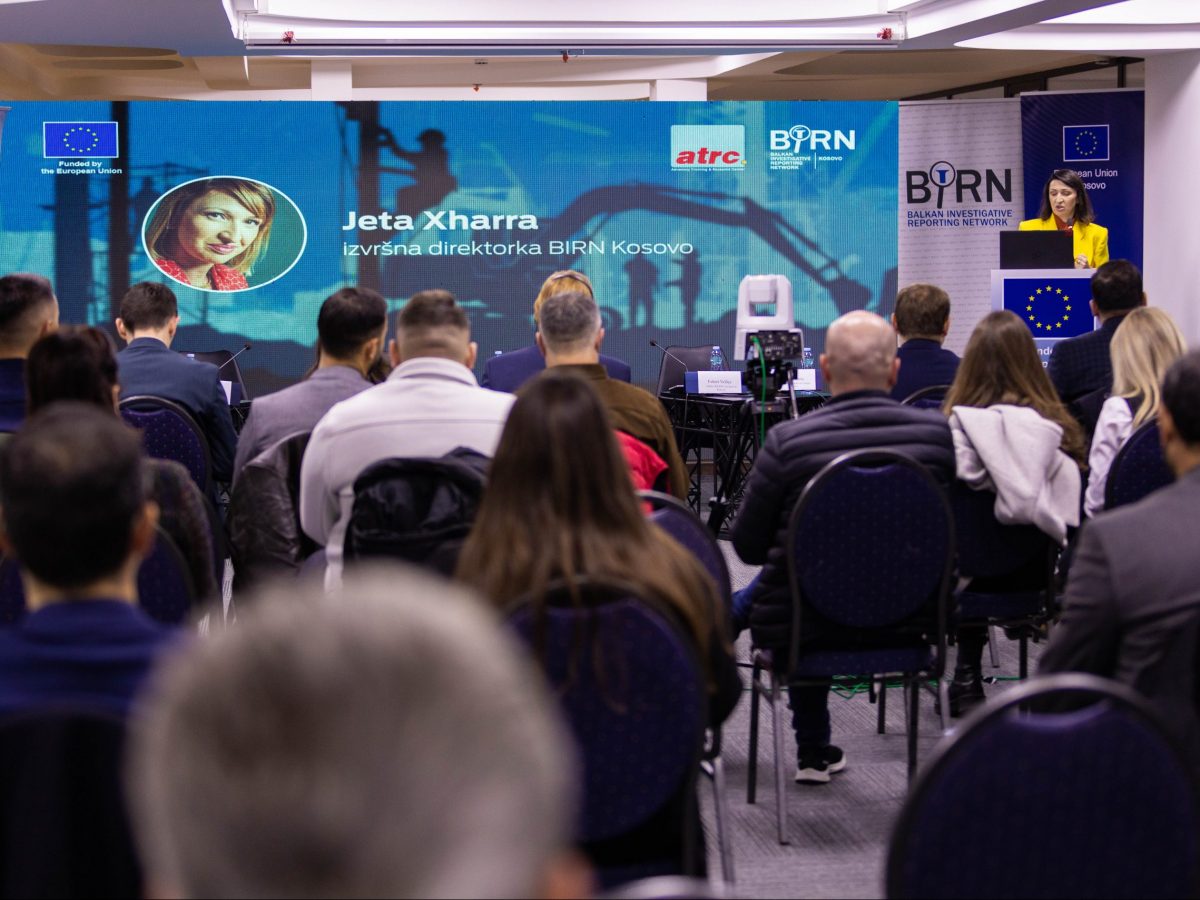
The conference started with speaker notes from Jeta Xharra, Executive Director at BIRN Kosovo, and Johannes Madsen, Head of Cooperation at the EU in Kosovo.

Madsen said that “the protection of labour rights is not an option, it is a commitment to the principles that define a just and humane society”.

The findings of the report were presented by Kreshnik Gashi, Managing Editor at KALLXO.com and Jetlira Buzhala, a monitor and researcher at BIRN. Afterwards, the report was also discussed by a panel, including different actors from public institutions and civil society.

The panel included: Hekuran Nikçi, Chief of the Labor Inspectorate, Eros Gashi, Advisor at Ministry of Justice, Adnan Konushevci, Head of the Civil Department at the Basic Court of Prishtina, Fahret Vellija, Member of the Kosovo Judicial Council and Arif Kadriu, Project Manager at Solidar Suisse.

A total of 51 participants took part in the conference, 19 of whom were women.

The report was published under the “Protection and Promotion of the Labour Rights of Vulnerable Groups in the Labour Market” Project, financed by the European Union Office in Kosovo.

This aims to improve the working conditions for vulnerable categories of workers in Kosovo, especially within the private sector, including health and safety in the workplace for women and men, through the promotion of social dialogue between workers and duty bearers.

The overall report can be found at these links:

Report in English language

Report in Albanian language

Report in Serbian language


Media Ownership Monitor Kosovo published by BIRN

Kosovo has not established the necessary mechanisms and legal framework to prevent the concentration of media ownership in the hands of a single business or individual. This finding was determined through research conducted by the Balkan Investigative Reporting Network (BIRN Kosovo).

Since 2015, the Media Ownership Monitor (MOM) has been in development as a publicly accessible database mapping tool, and it is consistently updated to include all media outlets. The database allows for quality contextualization and analysis within the country where it is implemented, providing assessments of the market and the pertinent legal environment.

The research supported by the EU Office in Kosovo indicates that the media market in Kosovo has been diversified for a considerable period, providing numerous opportunities for individuals and companies to wield their economic and political influence in the creation and establishment of various cable and online media outlets. However, the presence of an inadequate legal framework has allowed many media organizations to conceal their revenues from public scrutiny.

Media, often referred to as the fourth pillar of government, holds significant importance in modern democracies. Thus, those who control the media often shape public opinion. Consequently, media ownership must be transparent, accessible, and known to the broader public.

“Political influence on media funding is another challenge that deserves attention. The Media Ownership Monitor underscores a concern regarding the association between individuals who previously held political positions and are currently involved in the media industry. This connection between politics and the media poses a potential risk to the independence and impartiality of the media,” stated Tomas Szunyog, Head of the European Union Office in Kosovo, during the launch conference of the Media Ownership Monitor in Pristina, which took place on Wednesday.

The website of the Media Ownership Monitor in Kosovo, launched in Pristina on Wednesday, represents the first comprehensive effort to thoroughly research and monitor media ownership in Kosovo, providing detailed information on media ownership in one database. The research reveals that the majority of media outlets in Kosovo do not disclose their sources of funding. Additionally, changes in ownership have been identified, particularly during the pandemic. Other data highlights the presence of former political officials working in the media sector, and it underscores gender discrimination in media ownership. Out of the 44 media outlets examined, only eight are owned or managed by women.

“This report is being drafted for the first time in Kosovo. This means that the report we are launching today is part of an organization that has been compiling a global database of media ownership for several years. This organization is known as the ‘Global Media Registry’ and is registered in Germany. Its representative is here with us today,” said Jeta Xharra, Executive Director of BIRN Kosova.

Speakers at the conference emphasized the importance of establishing secure information environments for media consumers, ensuring that citizens are well-informed, and promoting transparency in the media industry.

“When we began our work in 2015, media ownership transparency was not as significant of an issue as it is today; it has now become a matter of national security,” said Olaf Steenfadt, Project Director at the Global Media Registry.”

“Transparency is of utmost importance because the audience needs to be aware of the individuals or entities that own the media or the platforms which they consume content and information from. Owners have a significant impact on the transparency and editorial policies of specific media outlets, and I doubt whether the listed owners represent the true or ultimate owners,” stated Ardita Zejnullahu, Executive Director of the Association of Independent Media in Kosovo (AMPEK).

During the panel discussions, the significance of media market diversification was highlighted, but it was also stressed that market expansion does not always guarantee quality and trustworthiness for the audience.”

“The licensing process was initially quite stringent, but now it has become more accessible, allowing almost anyone to obtain a license. I don’t want to come across as unsupportive, given my extensive advocacy for the media sector in Kosovo. However, I do not endorse the idea of granting licenses solely based on meeting technological criteria, especially when this sector lacks appropriate regulation” – said Aferdita Saracini from RTV 21.

The European Union, through its regulations, has shown its commitment to matters of transparency, human rights, media, and digital rights. This commitment was exemplified by its proactive approach in Kosovo, where it provided support for this project, the first of its kind, aimed at mapping media ownership in the country.”

“During the website launch ceremony, the issue of insufficient cooperation with relevant media outlets and ministries regarding the collection and provision of data was emphasized.

Out of the 44 monitored media outlets, only 15 of them were willing to share their media ownership data. Consequently, our researchers had to invest over five months in diligent efforts through official channels, both within and outside the country, to obtain the relevant media ownership data,” highlighted Xheneta Murtezaj, Senior Researcher at BIRN.

Apart from transparency, this platform also aims to educate the public on the digital side, in order to enable citizens fair information and the possibility of choosing the news they receive.

At the launch ceremony, it was emphasized that media ownership and changes in media ownership are not solely a matter of updating information at the Kosovo Business Registry Agency. Instead, a series of steps must be followed.

“Currently, we have observed ownership changes that were not as prevalent in previous years, particularly over the last three years. There have been numerous requests for ownership changes, whether among family members, share allocations to different individuals, or the complete sale of businesses. However, the Independent Media Commission has not been adequately informed about these changes,” stated Jeton Mehmeti, Head of the Independent Media Commission.

Beyond its role in promoting transparency, this platform also seeks to educate the public in the digital realm, empowering citizens to access unbiased information and make informed choices about the news they consume.

This conference was attended by 68 participants, including 32 women.

To visit the Media Ownership Monitor, click here.