Balkan Fellowship for Journalistic Excellence Shortlisted for European Press Prize

Balkan Fellowship for Journalistic Excellence programme and its editor Neil Arun have been nominated for the European Press Prize 2012 in the Innovation Award category for the outstanding innovation of the year.

In order to encourage regional networking among journalists and advance balanced coverage on topics that are central to the region as well as to the European Union, the Robert Bosch Stiftung and the ERSTE Foundation, in cooperation with the Balkan Investigative Reporting Network, BIRN, have initiated the Balkan Fellowship for Journalistic Excellence programme in 2007.

Each year, ten Balkan journalists are competitively chosen to receive funding and professional support to conduct their own research project.

Adrian Mogos, a Romanian journalist and Fellowship alumni, has been also nominated in the News Reporting  Award category, for the reporter or specialist expert whose work has made a decisive impact.

Awards will be also made in two further categories – the Editing Award and the Commentator Award.

The idea for the awards was born in 2011 when representatives of seven European media foundations joined forces to launch the European Press Prize in order to reward excellence in journalism across all 47 European countries. They agreed that launching the awards would encourage high-quality, innovative and independent journalism.

Each award carries a prize of 10,000 euros, to be spent wherever possible on a personal project that may in turn enrich the practice of journalism.

The winners will be announced later this month by the jury which is chaired by veteran British journalist and editor Sir Harold Evans, and the awards will be presented on February 26 at the De Balie Debating Centre in Amsterdam.

BIRN Meeting Brings Balkan Journalistic Teams Together

As a result of a new two-year grant from the United Kingdom’s Foreign and Commonwealth Office, BIRN is bringing together its team of journalists from across the Balkans for a two-day training.

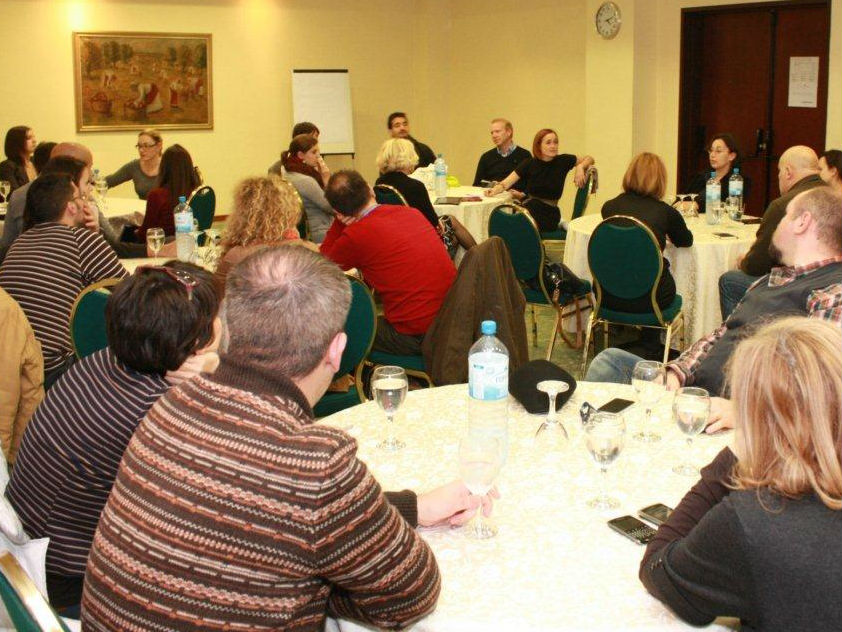
At the meeting in Belgrade from January 12-13, the Balkan Transitional Justice team will also develop a series of major cross-regional investigations, discuss project activities for the forthcoming two years and development session aimed at enhancing investigative reporting skills and techniques for covering transitional justice issues.

Those attending will include BIRN’s reporters, translators, television editor and radio producer, and the session will also introduce to the entire team the new English-language editor-in-chief for Balkan Transitional Justice, Matthew Collin.

The Balkan Insight team of correspondents and editors will also be present at the meeting for joint cross-regional editorial discussions.

“This is an important opportunity to get all our journalists together, face to face, and work on strategies and collaborative projects for the future,” said Collin.

“The exchange of ideas should be fascinating and form the basis for some important investigative work,” he said.

The United Kingdom’s Foreign and Commonwealth Office is now the third donor for the Balkan Transitional Justice project, alongside the European Commission and the Federal Department of Foreign Affairs of Switzerland.

BIRN Offices Hold Joint Meeting On Regional Investigations

BIRN HUB and BIRN Bosnia and Herzegovina held a joint meeting in Sarajevo on Wednesday to discuss a series of upcoming regional investigations.  

The two offices of the Balkan Investigative Reporting Network discussed topics for regional investigations related to transitional justice.

“Our future investigations need to tackle issues of transitional justice that will prompt debate in our societies,” said Gordana Igric, regional director of BIRN.

Igric added that a regional approach to these issues is crucial, as almost every story related to the conflict in the 1990s affects at least two countries in the former Yugoslavia.

The meeting was attended by: Marija Ristic, BTJ Serbian correspondent, Elvira Jukic, journalist, Erna Mackic, Editor in Chief BIRN BiH, Marija Tausan, BIRN Justice Report journalist and Editor, Albina Sorguc, Journalist, Amer Jahic, Journalist, Mirna Buljugic, BIRN Justice Report journalist, Dragana Erjavec, TV Justice journalist and Editor, Selma Ucanbarlic, Journalist/Court reporter, Melisa Bilalovic, Radio Justice Editor and Boris Pavelic, Balkan Transitional Justice Croatia Correspondent.

The investigations are part of BIRN’s Regional Reporting on Transitional Justice Issues programme. Over the next two years, the organisation’s network of journalists will produce four investigations on transitional justice issues in the region.

The topics for investigations will be finalised in January in Belgrade at a joint editorial meeting.

BIRN Investigative Journalists meet in Belgrade

BIRN investigative reporters met for the first time this year to discuss story ideas and possible regional cooperation in the Serbian capital on October 29, 2012.

Balkan Insight’s Besar Likmeta of Albania, Elvira Jukic of Bosnia and Bojana Barlovac of Serbia, along with Belgrade Insight’s Gordana Andric, BIRN Serbia’s Aleksandar Djordjevic, and Semir Mujkic, an investigative journalist for the Bosnian Zurnal magazine, gathered in Belgrade and brainstormed ideas for regional cooperation on investigative pieces.

BIRN Regional Director Gordana Igric and Balkan Insight Managing Editor Ana Petruseva guided the journalists through different topic possibilities.

Investigations are an important part of BIRN’s publishing activities and the BIRN team is always preparing new stories.

Over the next year, BIRN journalists will work on several regional investigative projects that are relevant to the Balkans and beyond.

BIRN journalist recognised by UNICEF Bosnia and Herzegovina

Eldin Hadzovic, an alumnus of BIRN’s Balkan Fellowship for Journalistic Excellence, was honoured by UNICEF for his outstanding contribution to journalism in Bosnia. 

UNICEF Bosnia and Herzegovina marked Human Rights Day on December 10 with the presentation of the results of its ‘Justice for Every Child’ campaign. Officials also awarded several journalists and recognised the ambassador of the campaign- Bosnian singer Dino Merlin.

The organisation honoured journalistic achievements in the fields of child protection, violence prevention and juvenile justice in 2012.

Eldin Hadzovic won award for his BIRN’s Fellowship article ‘Abandoned Twice: Bosnia’s Orphans Left in the Lurch’ in which he explains how Bosnia is unable to monitor its orphanages properly, nor can provide any decent alternatives to the institutions.  

UNICEF Bosnia and Herzegovina presented awards to local journalists for the best online work, best radio work, the best TV news and the best in print media.

In addition to BIRN’s Eldin Hadzovic, four other journalists from various media outlets in the country were also honoured with special tributes for outstanding contributions to journalism.

UNICEF’s partner organisations were present for the awards ceremony, as well as representatives of state institutions, the media and several non-profit groups.

The ‘Justice for Every Child’ campaign is part of UNICEF’s project for protection of children at risk, and is supported by relevant ministries and organisations in Bosnia. The campaign is also supported by the Swedish International Development Cooperation Agency, SIDA, and the Swiss Agency for Development and Cooperation, SDC.

First Culture Watch Award Goes to Vranje

The first ever Culture Watch Award for analytical and investigative reporting on cultural issues in the Balkans went to Valentina Milenkovic from Vranje.

Gordana Igric, Valentina Milenkovic

The award organised by Balkan Investigative Reporting Network (BIRN) and SeeCult.org was presented at the regional conference “What is (to be) Done” that took place on November 28 in Dom Omladine in Belgrade.

The jury, consisting of six cultural experts and an internationally awarded journalist, gave the first prize to Valentina Milenkovic, a journalist at “Vranjske” weekly magazine, for her complex investigative piece “How does government entertain people”.

Milenkovic investigated the funding of the cultural event “Cultural-touristic manifestation” in the municipality of Vranje in Serbia over the period of three years.

“For all that time they can only show four or five contracts that prove how the money was spent. Over 50 participants, some of them really famous Serbian singers, took part in the event,” said Milenkovic at the award ceremony.

“This is my first award in 13 years-long journalistic career, and therefore this is very important to me,” she added.

The second prize was awarded to Gordana Popovic from the daily newspaper Politika for her article “Serbia and the EU  – Culture and Candidature” about the reaction from the Serbian officials after the country obtained the EU candidate status.

“I talked to numerous officials and it was really interesting to confront opinions of two different sides in Serbia,” said Popovic.

The third prize went to Pristina to Vullnet Krasniqui, a journalist from the daily newspaper Koha Ditore for the article: “Kosovo authorities risk loosing some clay figures of Kosovar origin”.

Article by Bosnian journalist Irfan Hosic “Departures as a Rule” published in the “Dani” weekly magazine, was given the fourth prize.

“It is an honour for me to receive this award especially for my analysis of art scene in Bosnia and Herzegovina and the emigration of the artist from the country,” said Hosic.

The Balkan Initiative for Cultural Cooperation Exchange and Development, BICCED, envisages the Culture Watch Award was envisaged as a step towards strengthening the analytical and investigative approach to cultural issues.

The BICCED board decided on Tuesday that the award would become an annual event. This year’s awards were supported by the Swiss Cultural Programme for the Western Balkans (SCP).

Final BICCED Culture Conference in Belgrade

The closing event of the three-year project “Balkan Initiative for Cultural Cooperation, Exchange and Development”, BICCED, started on Thursday in Belgrade’s Youth Centre.

At the conference “Balkan Cultural Policies – What Is (to be) Done”, culture experts and speakers from the region review the cultural policies implemented in the Balkans over the past three years based on more than 300 analytical pieces produced as part of the project.

BIRN’s regional director Gordana Igric opened the conference by saying that BICCED has raised interest among the journalists and that now after three years there are 50 journalists in the group from the region that are interested in cultural polices.

“We have planted a seed and all should know that cultural policy is important because it reflex national identities in the Balkans but also financial power of the states themselves”.

The director of SEEcult.org and project partner Vesna Milosavljevic explained that the name of the conference is taken over revolutionary novel by Nikolay Chernyshevsky -What Is to Be Done? “This is an open call for all of us to think what should be done, so the situation in the cultural field would have change.”

“For three years BICCED journalists achieved much in realising the context of cultural polices in the Balkans. With the help of the experts and cultural workers journalists have managed to analyse and investigate topics that weren’t in the focus of the society. The articles dealt with laws on culture and its influence on various areas of arts. More than 300 hundred pieces were produced”,  said Nemanja Cabric, BIRN Culture Watch project coordinator.

BICCED has aimed to map the main problems and tendencies in the field of culture in Albania, Bosnia and Herzegovina, Kosovo, Macedonia and Serbia, and to present them to decision-makers and the public, thus contributing to finding solutions for problems and initiating needed reforms.

BICCED was implemented by the Balkan Investigative Regional Reporting Network, BIRN, and by SEEcult.org, and was funded by the Swiss Cultural Programme in the Western Balkans (SCP).

The conference brings together representatives of cultural institutions and media from the region, including journalists trained during the project.

In the first part of the conference Jelena Knežević, executive director of BITEF from Belgrade; Lutfi Dervishi, executive director of Transparency International in Albania and media lecturer at the University in Tirana; Nihad Kreševljaković, director of SARTR theatre from Sarajevo; and Robert Alagjozovski, independent cultural consultant, art and culture critic from Skopje, gave an overview of cultural policies in the region and the main problems faced by cultural organisations and institutions over the past three years.

In the afternoon session, the focus of the work during three panel discussions will be on the financial crisis and its consequences, new networks and initiatives in independent cultural scenes and the lack of space for culture in the media and possibilities for improving this situation.

Panelists and participants in the event include Lola Joksimović (Cultural Contact Point Serbia, Belgrade), Amila Ramović (Ars Aevi, Sarajevo), Josif Papagjoni (Center for Art Studies, Tirana), Dimitrije Vujadinović (Balkankult Foundation, Belgrade), Sašo Stanojković (artist, Skopje), Albert Heta (Stacion – Center for Contemporary Arts, Pristina), Milica Pekić (Kiosk/Kooperativa, Belgrade), Darka Radosavljević Vasiljević (Remont/ Independent Culture Scene of Serbia, Belgrade), Iskra Gešoska (Kontrapunkt/Jadro Assotiation, Skopje), Dražen Crnomat (UNSA Geto, Banja Luka), Marija Đorđević (Politika, Beograd), Janja Sesar (Kurziv/Kulturpunkt, Zagreb), Jasmin Duraković (Depo.ba, Sarajevo), Nebojša Ilijevski (Center for Media Activities, Skopje), Ben Andoni (Gazeta Shiptare, Tirana) and Nataša Novaković (blogger, Banja Luka).

The sessions will be moderated by Aleksandar Brkić (University of Arts, Belgrade), Gordana Igrić (BIRN) and Vesna Milosavljević (SEEcult.org), and will be followed by questions from the floor and discussion.

The conclusions of the conference and its panel discussions will be used for a common appeal and recommendation letter to all decision-makers and other relevant stakeholders in the region, as well as for the BICCED project follow up.

The end of the conference will include a presentation of the Culture Watch Award, established by the BICCED project with the aim of promoting an investigative and analytical approach to journalism in culture.

Balkan Fellowship Alumni Meet in Macedonia

The Balkan Fellowship for Journalistic Excellence has gathered 35 alumni from nine countries of the region in the Macedonian capital Skopje.

The award ceremony, honouring the work of the 2012 fellows, was held on Friday, November 23.

This year’s winners are Sorana Stanescu, Saska Cvetkovska and Aleksandra Bogdani.

“I will never forget the feeling when I was awarded, it was really special moment for me,” said Majlinda Aliu who won the first place in 2011 for her story about the Balkan war widows.

On Saturday the alumni had an opportunity to see the newly revamped Skopje. They were taken for a guided tour to see dozen new buildings and numerous monuments and sculptures, new bridges as well as hear about the controversies related to the costly project that has now put Macedonia on the tourist map.

The alumni also attended a panel with Roberto Belicanec of the Media Development Centre and Xhabir Deralla from the NGO Civil and a discussion about the current political situation in Macedonia, the deteriorating state of media and freedom of speech as well as the fragile inter- ethnic relations.

“I did not know much about the situation in Macedonia before, but now I am inspired to come back here with the TV crew and make a piece about it,” said Jelena Kulidzan, a journalist and editor from Montenegro, awarded with the second price in 2011
programme.

The same day, the group discussed future alumni activities and models of cooperation, including the joint regional reporting projects.

“It is great seeing all of us together, this network is the biggest asset of the programme and I really enjoy being in touch with the likeminded group of professionals,” said Nenad Radicevic, a fellow from 2007.

The idea to hold annual alumni meetings came about as a result of interest by former fellows to continue to jointly contribute to the goal of promoting excellence in journalism in the Balkans.

The alumni initiative is supported by Erste Stiftung and the Robert Bosch Foundation, in cooperation with the Balkan Investigative Reporting Network.

Culture Watch Award Shortlist Made

Four journalists from the region have made it to the Culture Watch Award shortlist.

Among the shortlisted candidates are Vullnet Krasniqi (Koha Ditore, Kosovo), Irfan Hosic (Dani, Bosnia and Herzegovina), Gordana Popovic (Politika, Serbia) and Valentina Milenkovic (Novine Vranjske, Serbia).

The award will be given to the best investigative and analytical story dealing with some aspect of cultural policy in the region, which has been published between September 1, 2011 and August 31, 2012.

The Culture Watch Award is launched by the Balkan Initiative for Cultural Cooperation Exchange and Development, BICCED, and funded by the Swiss Cultural Programme in the Western Balkans.

During the past three years over 30 journalists from Albania, Bosnia and Herzegovina, Macedonia, Serbia and Kosovo took part in the BICCED project.

 The journalists gained new skills in reporting on cultural policy in the region and their articles were published on the Balkan Insight’s focus page “Culture Watch“.

The Culture Watch Award is the next step in strengthening analytical and investigative approaches to reporting on cultural policy.

Applications received from the journalists were evaluated by a jury comprised of six experts on cultural policy in the region and one internationally awarded journalist.

The winners will be announced at the final event of the BICCED project – the regional conference „What is (to be) done“ that will take place in Dom Omladine in Belgrade on November 28.

Romanian Journalist Wins 2012 Balkan Fellowship Award

Sorana Stanescu, a journalist from Romania, takes first place in the 2012 Balkan Fellowship for Journalistic Excellence for her story about the job restrictions that have left migrant construction workers underpaid and vulnerable to exploitation.

The top prize in this year’s Balkan Fellowship for Journalistic Excellence has been won by Sorana Stanescu for her article, Cheap and Far from Free: The Migrants Building Britain.

Stanescu, a reporter for the Romanian public broadcaster, won 4,000 euros in prize money.

Second place and a 3,000-euro award went to Saska Cvetkovska from Macedonia for her article, Want to Work? Join the Party: Contacts Trump Merit in Balkan Job Market.

Aleksandra Bogdani took third place, winning a 1,000 euro prize, for her investigation entitled, Secrets and Lies: Victims of Albanian Communism Denied Closure.

The winning articles were selected by an independent panel of judges, including Florian Bieber, a professor and director of the Centre for Southeast Studies at the University of Graz; Remzi Lami, the executive director of the Albanian Media Institute, Milorad Ivanovic, executive editor of the Serbian weekly, Novi Magazin; Markus Spielman, editor of the Swiss newspaper, Neue Zeitung Zuricher; and Adelheid Wölfl, Zagreb correspondent for the Austrian daily, Der Standard.

All members of the committee stressed that it had been “extremely difficult” to choose the three winners. They noted that the winning article covered a highly relevant and complex topic, demonstrating great mastery of detail.

Stanescu said she was grateful that the fellowship had allowed her to carry out an in-depth investigation on a subject that she had been researching for a long time.

“The best part of the programme was the opportunity to work with a very scrupulous editor, an experience you rarely get in Romania, and one that can only enhance one’s storytelling,” she said.

The winners were announced on the evening of Friday, 23 November, at a ceremony at the Holiday Inn Hotel in Skopje. Besides fellows and jury members, a further 30 journalists from the region who are alumni of the fellowship also participated in the event.

The theme for this year’s competition was “communities”. Journalists on the programme reported on topics ranging from football fan groups, the environmental movement, radical Islamists, youth unemployment, orphans and the exploitation of immigrant workers within the European Union.

Initiated by the Robert Bosch Stiftung and ERSTE Foundation in 2007, in cooperation with the Balkan Investigative Reporting Network, the annual fellowship provides financial and professional support to foster quality reporting in the Balkan region.

Additionally, the programme encourages regional networking among journalists and provides balanced coverage of complex reform issues that are central to the region and the European Union.

This year’s ten fellows were selected from more than 120 applicants from nine Balkan countries. Next year’s programme will be open for applications from early 2013.