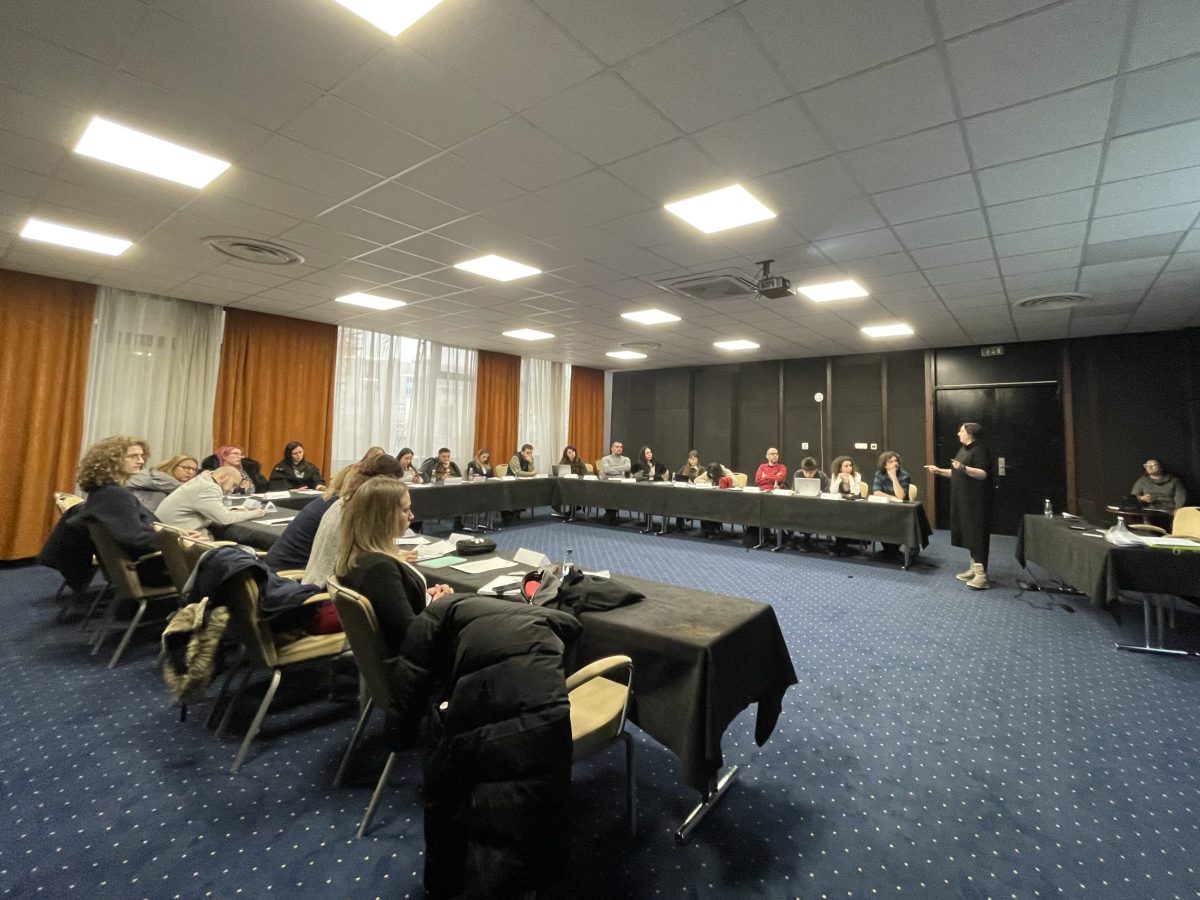
The training focused on strengthening journalists’ capacity to report responsibly and evidence-based on war crimes, accountability, and transitional justice in post-conflict societies. The programme combined theoretical grounding with practical skills and was led by expert trainers from Bosnia and Herzegovina.
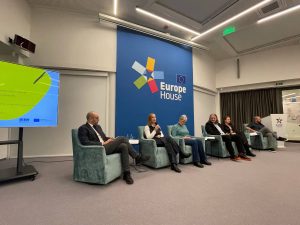
The training opened with a public panel discussion on the state of the transitional justice process in Bosnia, held at Europe House in Sarajevo. The panel gathered around 60 participants, including victims associations, members of international organisations and embassies, journalists and civil society, and provided a platform to reflect on three decades of transitional justice efforts, ongoing challenges.
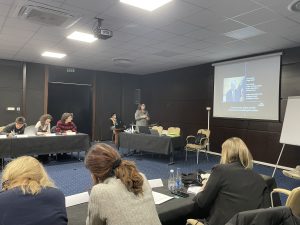
Over the following two days, participants engaged in intensive training sessions covering the theoretical foundations of transitional justice, as well as the role of domestic and international criminal justice mechanisms. Particular attention was given to monitoring criminal court proceedings, interviewing war victims in line with safeguarding and ethical guidelines, and reporting on the issue of missing persons.
The second day of training focused on the development of investigative journalism in the Western Balkans in the post-war period. Participants explored methodologies for fact-checking, countering disinformation, and responding to genocide denial, with an emphasis on responsible reporting and the protection of historical truth.
As part of the programme, participants also attended a screening of the BIRN Bosnia and Herzegovina documentary Justice and Truth at the Historical Museum of BIH, which explores the themes of peace, transitional justice, and accountability through the experiences of Bosnia and Herzegovina and war-torn Ukraine. The screening provided an opportunity for reflection on the relevance of transitional justice beyond the region and the importance of documenting crimes in ongoing conflicts.

By bringing together journalists from across the region, the training aimed to foster cross-border exchange, strengthen professional networks, and contribute to more accurate, ethical, and impactful reporting on transitional justice issues in the Western Balkans.
As a result of a BIRN training program on the role of investigative journalism in transitional justice, held in January 2026 in Sarajevo and bringing together journalists, civil society actors, and students, a training guide was produced and can be found here.
Workshop Overview and Participant Breakdown
Dates and place: 20 to 23 January 2026, Sarajevo
Number of training participants per country:
Kosovo 14
BiH 15
Serbia 34
Montenegro 11
Croatia 1
Total number of participants: 75
The full findings and activities are available in the EDS Report, which can be accessed here.