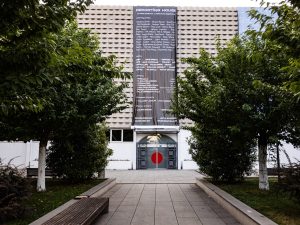
On Tuesday, the Regional Community Centre for Public Safety opened in Mitrovica, marking the launch of operations under the broader project “Strengthening Accountability and Dialogue: Police Monitoring, Fact-Checking, and Transitional Justice in Kosovo”.
The initiative is being implemented by BIRN Kosovo and Internews Kosova in collaboration with the North Mitrovica-based NGO the Advocacy Centre for Democratic Culture, ACDC.
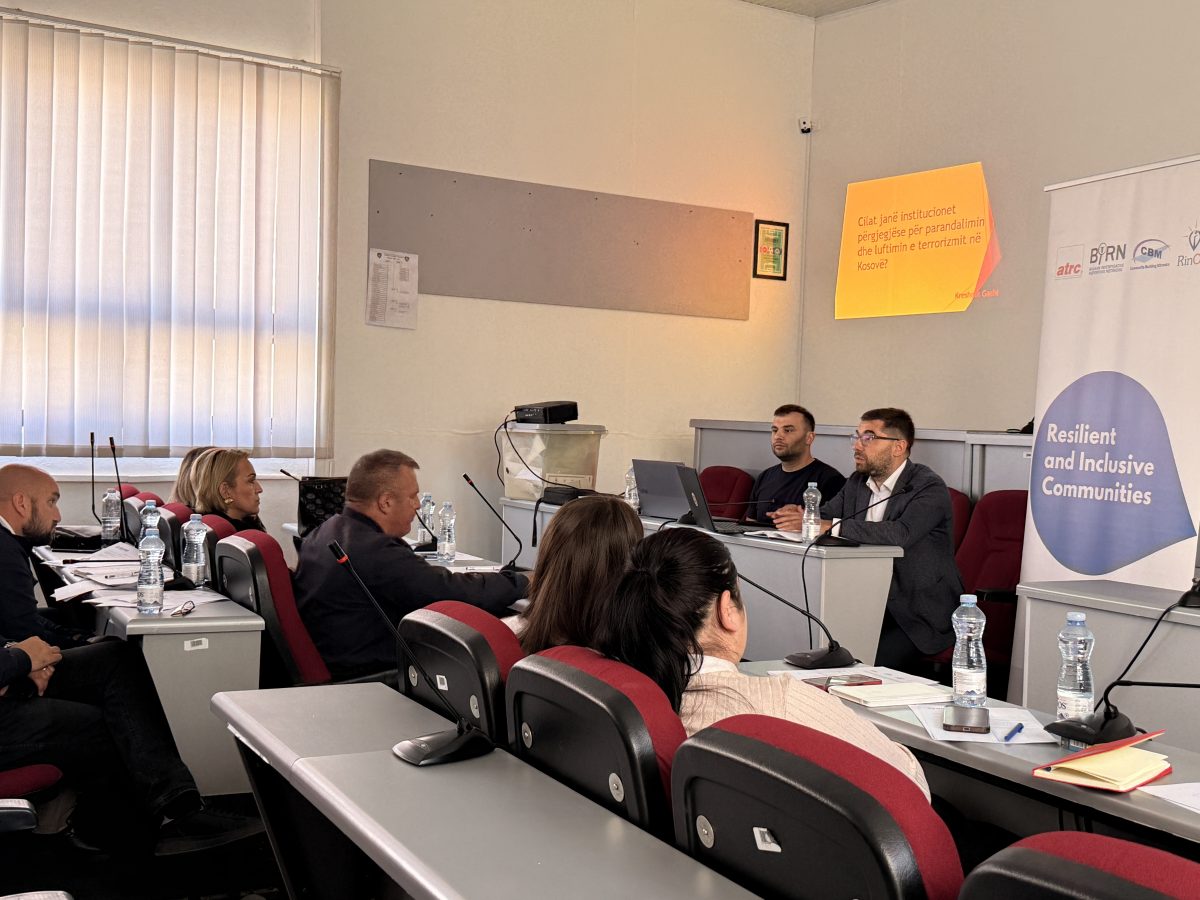
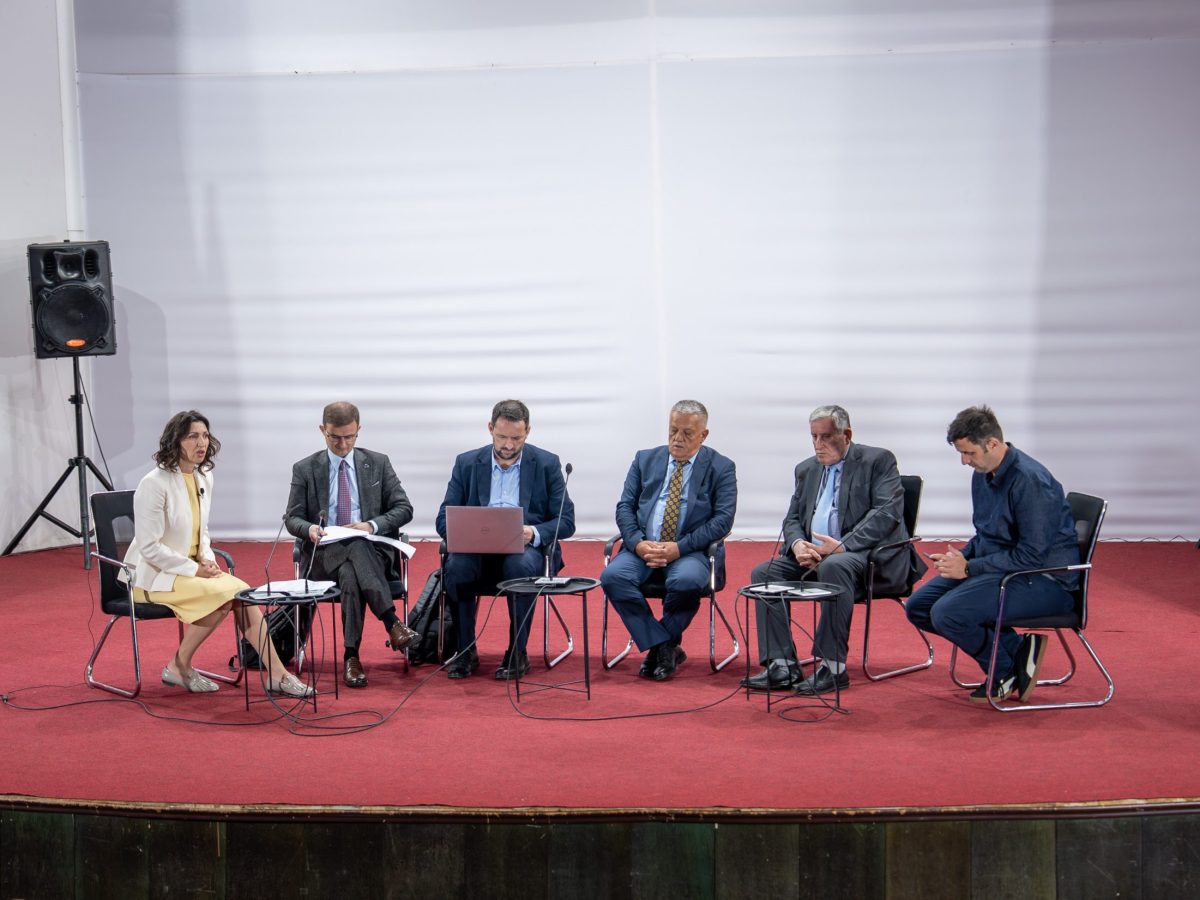
The opening gathered representatives of civil society, institutions and diplomatic missions to reflect on the importance of police oversight and community dialogue in the region.
Representatives from international missions working in institutional support and police monitoring were also present, including the EU mission, EULEX, UNMIK, OSCE, Council of Europe and KFOR.
The Centre will serve as a hub for monitoring security institutions in seven municipalities in the Mitrovica region through the programme “Accountability in Action”.
Civil society organisations involved will observe police work, provide recommendations to police management and inform the public through regular reports. The monitoring teams will be multi-ethnic and connected with educational campaigns, including real-time fact-checking components.
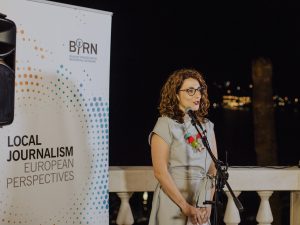
Opening the event, Aleksandar Rapajic, project manager at ACDC, emphasized the initiative’s significance following the withdrawal of Serb representatives from the police and judiciary in 2020.
“The withdrawal of Serb representatives from the police and judiciary led to a period of deterioration followed by gradual improvement in the security situation. From the beginning, we decided it is not our role to choose who will be in institutions, but it is our obligation to cooperate. Even after these changes, we have had cooperation with the police, relatively speaking, in most cases good cooperation,” Rapajic said.
Jeta Xharra, Executive Director of BIRN Kosovo, highlighted the uniqueness of the initiative in the Balkan region, where police allow multi-ethnic civil society teams to monitor their operations through the new Centre.
“This is a rare project in the Balkans. Nowhere in the Balkans, no matter how bad the situation gets, has a multi-ethnic civil society team been allowed to go with police and monitor.
“Kosovo has this opportunity because the Kosovo Police apply Western-style community policing rather than the model inherited from the former Yugoslavia, where police were seen primarily as an arm of the state rather than a service for the community,” Xharra said.
She added that one component of the project is monitoring police actions through the Centre, while another is addressing interethnic barriers that still exist. Through the initiative, journalists from Albanian and Serbian media outlets will exchange experiences by spending time working in each other’s newsrooms in northern Kosovo and in Prishtina.
Jurg Sprecher, the Swiss Ambassador to Kosovo, said public trust is crucial for building lasting peace and strong institutions.
“Peacebuilding in a post-conflict environment depends not only on institutional stability but also on public trust,” Sprecher said.
“Trust between citizens and law enforcement institutions is fundamental for democratic governance and the rule of law. When communities feel heard, respected and represented, institutions become stronger and societies more resilient,” he added.
Ronald Goldberg, Deputy Head of Mission at the The Netherlands’ embassy in Kosovo, also emphasised the importance of transparency, noting that his embassy proudly supports the project.
“When institutions open their work to dialogue and public observation, they demonstrate confidence in their professionalism and commitment to democratic values,” Goldberg said.
Veton Elshani, Deputy Director of the North Mitrovica Directorate of the Kosovo Police, welcomed the involvement of civil society organisations and the establishment of the Centre.
“The media have been our window to citizens. We have faced many challenges, and the inclusion of NGOs and the media as partners is an added value for our work. You are our partners, and we are your partners. Through you, citizens will also understand that the work of the police is not easy,” Elshani said.
Kreshnik Gashi, editor-in-chief at Kallxo.com a co-publication of BIRN Kosovo and Internews Kosova, noted that monitors have been trained by Kosovo Police for the initiative.
“We would like our project to cover all of Kosovo. Due to a lack of funds, the project is currently focused on the Mitrovica region. The teams will be multi-ethnic and connected with educational campaigns. We will also have real-time fact-checking, and the doors of this Centre will be open to any complaints from citizens,” Gashi added.
The Centre is part of broader efforts by BIRN Kosovo, ACDC and Internews Kosova to promote democratic governance and institutional transparency through investigative reporting, fact-checking, and systematic documentation under the project “Strengthening Accountability and Dialogue: Police Monitoring, Fact-Checking, and Transitional Justice in Kosovo.”
In total, there were 43 participants at the opening event, 30 men and 13 women. The event was also followed by four media outlets.