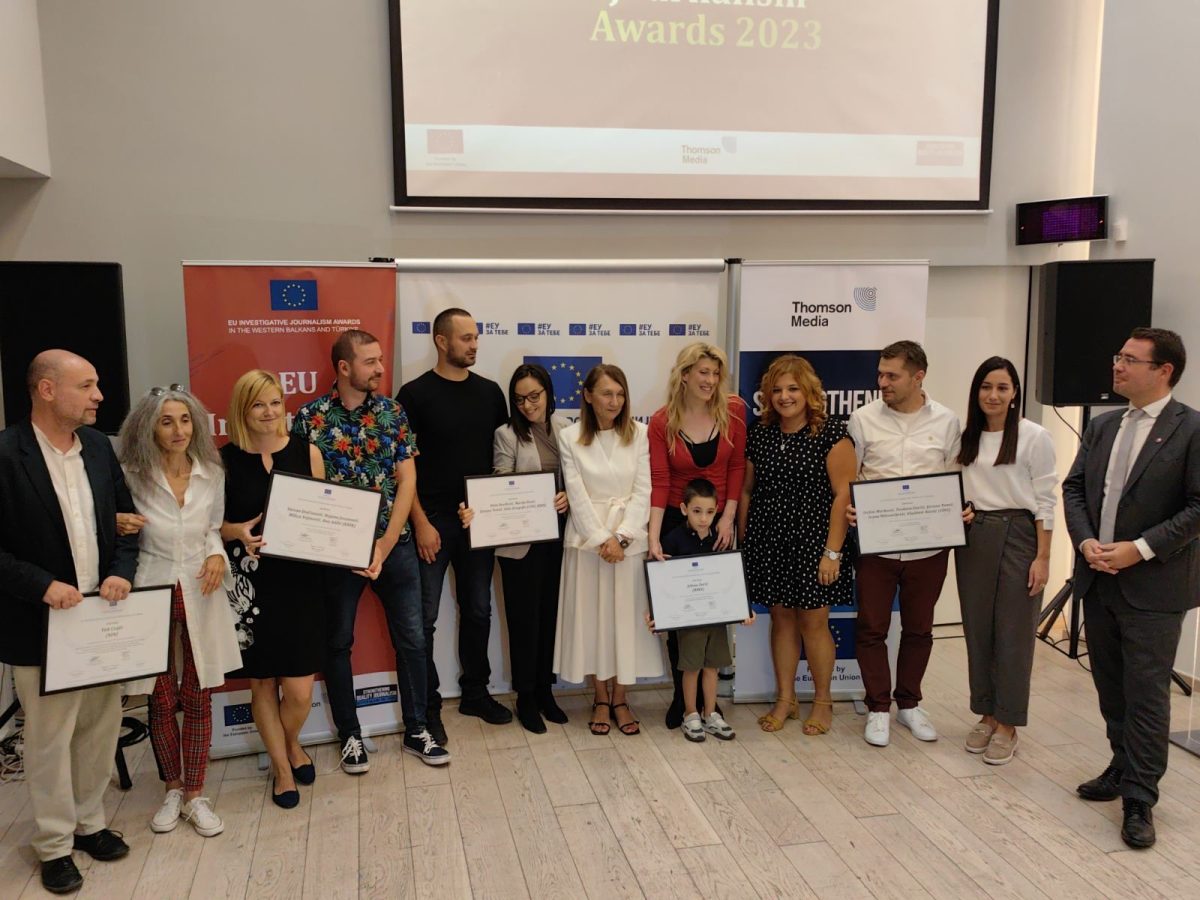
BIRN Holds Training on Digital Rights Reporting in Sarajevo

For three days in Sarajevo, BIRN trained eight Balkan journalists in digital rights reporting as part of a training support by the United Nations Democracy Fund.

Journalists selected to participate in BIRN’s digital rights reporting training in Sarajevo, Bosnia, from September 26 to 28, came from various backgrounds.

The topics ranged from digital rights and their impact on journalism to multimedia storytelling using contemporary tools, employing the power of open-source intelligence, OSINT, in journalism, techniques, best practices in data journalism, fact-checking and verification techniques for digital rights reporting, among others.

Two journalists from Kosovo were unable to join the group due to clashes in the north of Kosovo but will be trained online.

The trainees singled out sessions on how to stay safe online when reporting on digital rights violations and fact-checking and verification techniques for digital rights reporting as particularly useful in their future work.

BIRN’s training program gave the participants a comprehensive understanding of the relevant issues around digital rights reporting, and allowed them to pitch story ideas during the workshop session on the last day of the training.

As a result, ten digital rights-related stories by trainees will be produced in collaboration with Balkan Insight’s editors, who will serve as their mentors. The trainees will also receive a stipend for their work on the stories. Upon editorial approval, these will be published by Balkan Insight in the coming months.

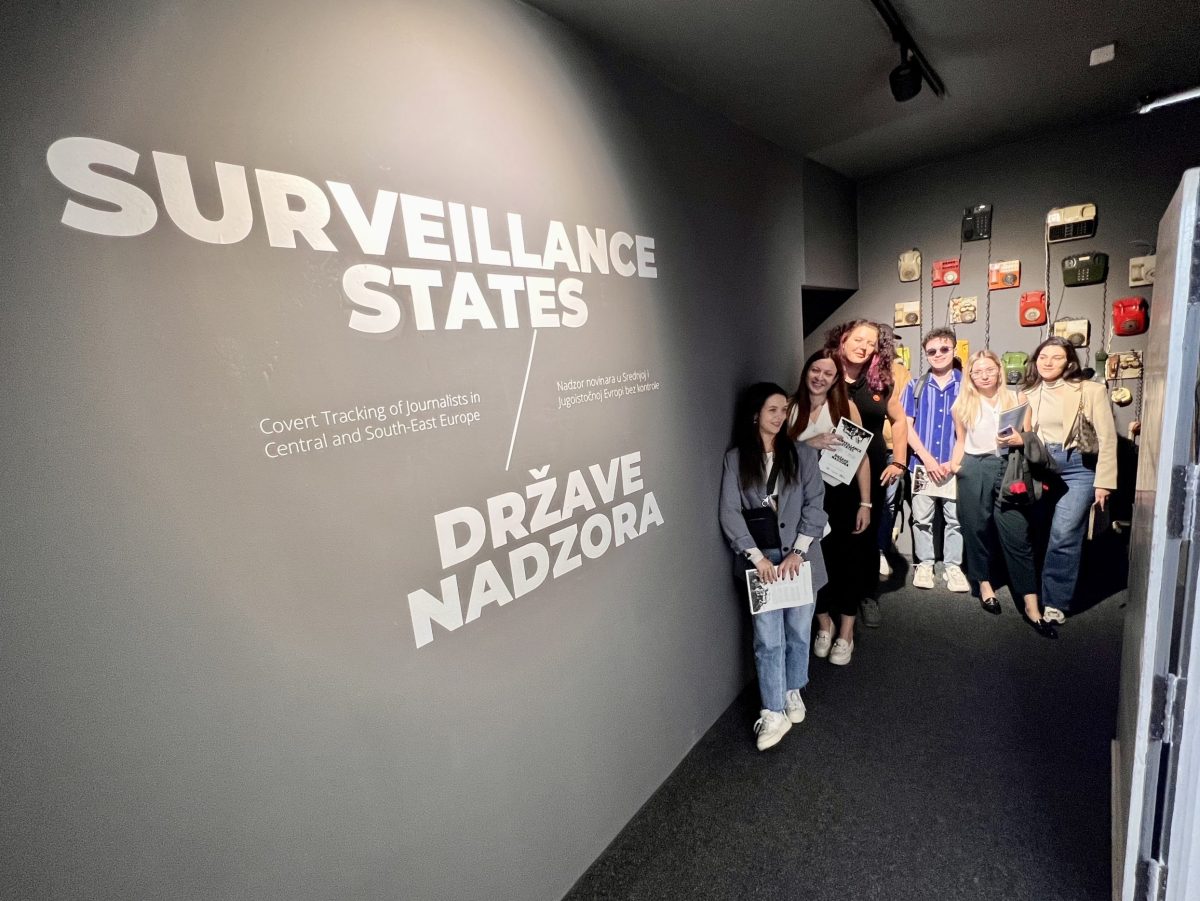
As part of the program, participants also visited BIRN’s exhibition in the Historical Museum in Sarajevo based on the recent project “Surveillance States”, which gave them insights into the experiences of journalists targeted by state-sponsored surveillance.

Journalists are key in raising public awareness and driving change in digital rights reporting. This training gave journalists the skills and knowledge they need to produce impactful stories to contribute to a more informed public debate and so protect and promote digital rights in the Balkans.

Numerous reports from international rights and media, civil society, international organisations, and BIRN’s own annual digital rights violations reports, indicate a worrying situation regarding digital rights in the Balkans.

The reports emphasize the need for continuous efforts to enhance the protection and promotion of these rights by improving journalists’ abilities to produce quality reporting on these issues.

Training in digital rights reporting in Sarajevo is part of BIRN’s attempts to educate, inform, and empower journalists interested in reporting on digital rights in the region.

The training was made possible through the support of the United Nations Democracy Fund.
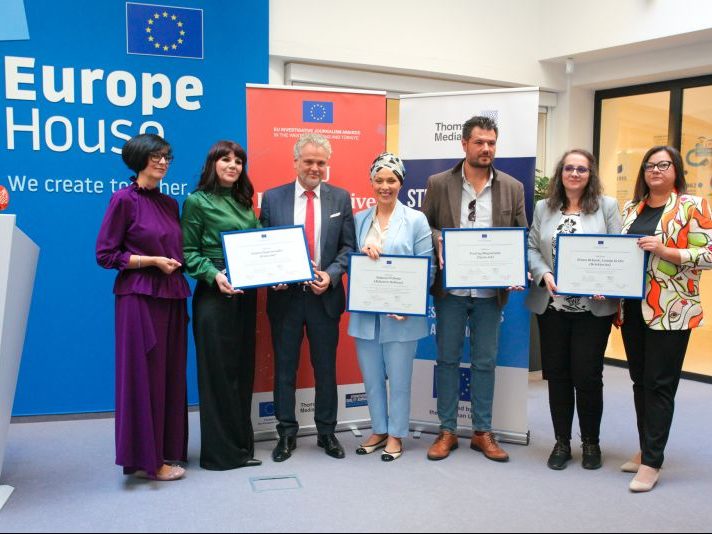


EU Awards for Best Investigative Journalism in Bosnia Announced

On October 5, in Europe House in Sarajevo, the winners of the EU Awards for Investigative Journalism in Bosnia and Hercegovina were announced.

Semira Degirmendzic, Predrag Blagovčanin, Džana Brkanić, Lamija Grebo and Arduana Pribinja were selected from many colleagues as this year’s winners for their stories published in 2022 exposing violations of labour rights, protection of war crimes, the spread of hatred and wrongdoings in the health system.

The jury consisted of Lamija Aleckovic, a media expert with over two decades of experience in journalism; Lejla Turcilo, a professor at the University of Sarajevo specializing in media theory, journalism, PR and online media; and Tanja Topic, a former journalist, political analyst and media expert.

The first prize went to Semira Degirmendzic (Fokus.ba, Raport.ba) for the story “Turkish Cengiz got deals worth a billion marks, but will not pay compensation to the workers.”

The second prize was shared between Predrag Blagovčanin and Džana Brkanić  and Lamija Grebo.

Blagovčanin, from Tacno.net, got the second prize for the story “Between the HDZ and DF: How the Ministry of Defence of Bosnia and Herzegovina protected a war criminal”. Brkanić and Grebo, from Balkan Investigative Reporting Network, BIRN, got the second prize for the story “Probation does not prevent the spread of hatred”.

The third place was given to Arduana Pribinja from Al Jazeera Balkans for her story “Misuse of prescriptions by patients in Sarajevo Canton (parts I and II)”.

Lejla Turcilo, representing the jury members, explained the decision and announced the winners while the Head of the Delegation of the European Union to Bosnia and Herzegovina, Ambassador Johann Sattler, handed the certificates to the winners.

More information can be found here.

The EU Award for Investigative Journalism 2023 is part of the project “Strengthening Quality Journalism in Western Balkans and Türkiye II”. This aims to recognise and promote outstanding achievements in investigative journalism as well as improve the visibility of quality journalism in the Western Balkans and Türkiye.


BIRN’s Citizen Reporting Tool Presented in Greece

BIRN’s Engaged Citizen Reporting tool was presented at the International Journalism Forum in Greece for the first time.

In the context of the International Journalism Forum 2023, an annual journalistic meeting organised by Greek non-profit iMEdD (incubator for Media Education and Development), Balkan Insight’s Managing Editor, Dusica Tomovic, presented BIRN’s Engaged Citizen Reporting ECR tool.

“ECR tool is the fastest way to get to the real people, as our main scope is to report with them, not only about them,” Tomovic told the audience of journalists and journalism students from Greece and other countries.

ECR is not only a citizens’ engagement tool; it is an original, trustworthy and inspiring mechanism that creates bonds among society members and impactful stories that matter.

Presenting some of the most successful stories created through ECR, such as “Flight Delayed: Air Serbia Faces Capacity and Quality Questions,” “Childbirth Often Traumatic in CEE, But Few Women Seek Redress,” and “TikTok Balkans: Alarm Bells over Child Access to Video App,” Tomovic explained how it works. Besides the callouts for engagement, journalists must analyze the data they collect, verify and fact-check them and then produce the story.

In the past four years, BIRN has trained 75 media outlets from six Western Balkan countries on how to use the ECR; a total of more than 400 videos, articles, features, and podcasts on health, environment, social issues, etc, was produced through ECR.

Users of the BIRN investigative reporting tool say it has transformed the way they communicate with their audiences who feel empowered by helping shape the content of their own media.

BIRN continues to support local media to further develop their skills in engagement journalism and raise their editorial standards, with a focus on storytelling, data analysis, verification and fact-checking, contributing to the fight against misinformation and disinformation.

The International Journalism Forum 2023, an annual journalistic meeting organized by iMEdD, was held in Athens from September 28 to 30. iMedD is a non-profit founded in 2018 with the exclusive donation of the Stavros Niarchos Foundation.


BIRN Macedonia Starts Investigative Journalism Training Program

BIRN Macedonia started a series of trainings for 12 young journalists. The training started with a three-day course held between September 29 and October 1 in the North Macedonia’s mountain resort of Mavrovo.

The course was the first in a series of five different training modules that will take place over the next year. The next courses will be held in November, February and April and end with a summer school that will take place in mid-2024 where the journalists attending can acquire skills and techniques that will prepare them for work in journalism. The programme also includes mentoring support.

The first training in Mavrovo consisted of a mix of theoretical lectures and practical exercises. The idea behind the approach was to introduce the participants to important journalistic concepts, while allowing them to apply that knowledge in a practical way.

The topics covered were: public interest vs the interest of public, ethics in journalism, media genres, sources of information, news writing and interview techniques, as well as the language tips for journalistic writing and reporting. All trainings were held by BIRN Macedonia’s editors and journalists.

The weekend wrapped up with an exercise that synthesized knowledge from the training sessions: the participants were asked to produce a short news article based on an announcement from a public institution. Through this, they put into the practice the skills they had gained over the first training module.


EU Awards for Best Investigative Journalism in Serbia Announced

On September 28, in the EU info centre in Belgrade, the winners of the EU Awards for Investigative Awards for Investigative Journalism in Serbia were announced.

KRIK, CINS and a BIRN team of Jelena Zorić and Vuk Cvijić were selected from many colleagues as this year’s winners for their stories published in 2022.

The jury consisted of Tamara Skrozza a journalist who has worked for radio, press and TV productions and engaged with a number of different media outlets; Snjezana Milivojevic, a professor of public opinion and media studies who chaired doctoral and master’s programs at Bayan College in Oman and the University of Belgrade; and Sasa Lekovic, President of the Investigative Journalism Centre, based in Croatia, a reporter and editor and a licensed investigative reporting trainer and lecturer.

The first prize went to the KRIK team (Stevan Dojčinović, Bojana Jovanović, Milica Vojinović and Ana Adžić) for their stories on the Darko Šarić clan.

The second prize was shared between CINS and BIRN. The CINS team (Stefan Marković, Teodora Ćurčić, Jovana Tomić, Ivana Milosavljević and Vladimir Kostić) was awarded for their stories on political party financing.

Jelena Zorić from BIRN was awarded for her stories about medical malpractice in the sensitive area of psychiatric health.

The third prize went to Vuk Cvijić of NIN for his investigations into the connections between criminal circles and state officials, and CINS/BIRN (Dina Đorđević, Marija Ristić, Jovana Tomić and Saša Dragojlo) for “Paths of Serbian weapons”. Part of this series is the investigation “Serbian Rockets Sent to Myanmar Even After 2021 Coup”, a cross-border collaboration between BIRN, CINS, Myanmar Witness and Lighthouse Reports, originally commissioned at the BIRN Summer School of Investigative Reporting in Dubrovnik in 2021.

Manuel Munteanu, Head of Press and Info and Deputy Head of Political Section of the EU Delegation in Serbia, gave a speech highlighting the importance of independent media and extending congratulations to the winners.

Davor Marko from Thomson Media introduced the project and the importance of the EU awa for supporting investigative journalism in the Western Balkans and Türkiye. Snjezana Milivojevic, representing the jury, provided a detailed explanation of the award selection process and announced the recipients of each awarded position.

More information can be found here.

The EU Award for Investigative Journalism 2023 is part of the project “Strengthening Quality Journalism in Western Balkans and Türkiye II”. This aims to recognise and promote outstanding achievements in investigative journalism as well as improve the visibility of quality journalism in the Western Balkans and Türkiye.

The project is funded by the European Union and it is implemented by a consortium composed of Balkan Investigative Reporting Network – BIRN Hub, Central European University (CEU) – Hungary, the Association of Journalists (AJ) – Türkiye, Thomson Media (TM) – Germany, University Goce Delcev Stip (UGD) – North Macedonia, The Independent Union of Journalists and Media Workers (SSNM) – North Macedonia, Media Association of South-East Europe (MASE) – Montenegro, and Balkan Investigative Reporting Network Kosovo (BIRN Kosovo).

BIRN Journalist Frosina Dimeska Wins EU Investigative Award

Frosina Dimeska, a journalist at Prizma/BIRN, has won second prize from the European Union for her outstanding investigative journalism in North Macedonia. The awards ceremony took place on September 28 in Skopje.

Dimeska’s work exposed a significant scandal involving a controversial Ukrainian figure, Oleksandr Onishchenko, who managed to obtain a North Macedonian passport despite being under sanctions from both the United States and Ukraine, where authorities sought his extradition.

The judges recognised the impact of Dimeska’s investigation, leading to the government revoking Onishchenko’s North Macedonian citizenship. However, no individuals have been held accountable for the scandal as of now.

In expressing her gratitude, Dimeska stated: “This award serves as motivation for me and is a testament to Prisma editorial team’s commitment to continued in-depth investigative journalism.”

First prize went to the documentary Bad Blood, produced by the Investigative Reporting Laboratory IRL.

Additionally, “KOD”, a series of video stories aired on TV Telma, secured third place.

The awards, presented by EU Ambassador David Geer in Skopje, celebrate exceptional journalistic work produced over the past year.

BIRN Albania Holds Trainings on Environmental Advocacy

The Balkan Investigative Reporting Network in Albania on September 27 and 29 held two trainings for civil society organisations and activists in Shkodra and Kukes.

The training sessions on environmental advocacy were held as part of the project: “Building Resilience through Environmental Journalism”, which is co-financed by the Democracy Commission Small Grants Program of the US embassy in Tirana and is implemented by BIRN in cooperation with local journalists.

The trainings in Shkodra and Kukes attracted 41 civil society representatives and activists from the northern regions of Albania.

The project aims to strengthen cooperation between NGOs, activists and local journalists in Albania to research, monitor and publish articles on environmental violations, with the aim of increasing awareness, public pressure and advocacy for the most efficient use of natural resources and sustainable development in the country

The training in the town of Kukes, bordering Kosovo, was led by environmental experts Bukurosh Onuzi, Besart Halilaj and Anxhela Vincani. It attracted 22 participants. The training in Shkodra was held by journalist Emi Kalaja and Alminda Mema, executive director of the Ahrus Centre in Shkodra and had 19 participants.

During the training sessions, the experts discussed environmental issues and cooperation between journalists and civil society to tackle them, the work of local environmental organisations to raise awareness and advocate for their causes, as well as intra-institutional cooperation on the local level on environmental issues.


BIRN Journalists Win EU Investigative Journalism Awards in Serbia

Jelena Zoric and Sasa Dragojlo won prestigious EU investigative reporting awards for their stories on clinical trials and arms exports respectively.

BIRN Serbia’s Jelena Zoric was awarded second prize and BIRN Hub’s Sasa Dragojlo was awarded third prize at the EU Investigative Journalism Awards 2023 in Serbia.

The jury awarded Zoric for series of stories about a psychiatrist who has been recording false diagnoses into his patients’ medical records for the sake of a clinical trial he has participated in, and about the role Serbian state institutions played in this trial.

Dragojlo won third prize as a part of a team of BIRN and the Centre for investigative journalism of Serbia CINS, compromised of Marija Ristic, Dina Djordjevic and Jovana Tomic, who reported on Serbia’s arms exports to Myanmar following the army coup in the country.

First prize went to the team of journalists from Serbia’s Crime and Corruption Reporting Network, KRIK, for a series of articles on Serbian drug boss Darko Šarić.

This year, the jury in Serbia awarded two second and two third prizes. Along with Zoric, the second prize was also presented to the CINS team – Teodora Curcic, Jovana Tomic and Stefan Markovic – for their series of reports on political parties’ financing.

Along with BIRN and CINS, the third prize was awarded to Vuk Cvijic, journalist for the weekly NIN.

With a series of articles on the abuse of medical ethics, Jelena Zorić told the shocking story about the fate of people given false psychiatric diagnoses and the unwillingness of the system to investigate and sanction the actions of psychiatrist Aleksandar Miljatović at the health centre in Belgrade, who – for the sake of personal gain – manipulated a large number of people from particularly sensitive group of patients for months.

Drawing on testimonies and analysis of extensive documentation, Zoric’s first investigation, on how Miljatović gave false diagnoses to patients, revealed how he abused psychiatric patients, while the second article, “Health centre Palilula: Doubtful clinical trial of a drug approved by everyone”, dealt with the institutional responsibility of all who knew and approved, despite legal prohibitions, the clinical trial of the drug primavanserin to be conducted in one of Belgrade’s public health centres.

Saša Dragojlo, along with colleagues Dina Djordjevic, Marija Ristic and Jovana Tomic, received the award for an investigation into Serbia’s exports of millions of euros worth of rockets to Myanmar in 2021, days after a military coup that has since triggered a civil war – ignoring requirements that the government revoke any arms export permit should conditions in the destination country change and there be a risk that the arms might be used to violate human rights.

This year’s jury members in Serba were Snjezana Milivojevic, professor at the Faculty of Political Sciences at Belgrade University, Tamara Skrozza, journalist and a member of Serbia’s Press Council and Sasa Lekovic, president of the Centre for Investigative Journalist of Croatia.

The organiser of the award is Thomson Media, an organisation with decades of experience in media development and the promotion of media freedom on a global level.

The EU Award for Investigative Journalism 2023 is part of the project Strengthening Quality Journalism in Western Balkans and Türkiye II. It aims to recognise and promote outstanding achievements in investigative journalism as well as improve the visibility of quality journalism in the Western Balkans and Türkiye.

The project is funded by the European Union, and is being implemented by a consortium composed of Balkan Investigative Reporting Network – BIRN Hub, Central European University (CEU) – Hungary, Association of Journalists (AJ) – Türkiye, Thomson Media (TM) – Germany, University Goce Delcev Stip (UGD) – North Macedonia, The Independent Union of Journalists and Media Workers (SSNM) – North Macedonia, Media Association of South-East Europe (MASE) – Montenegro and Balkan Investigative Reporting Network Kosovo (BIRN Kosovo).


EU Awards for Best Investigative Journalism in Kosovo Announced

On September 20 in Prishtina’s Kino Armata, the winners of the EU Awards for Investigative Awards for Investigative Journalism were announced.

Journalists Kreshnik Gashi, Dafina Halili and Saranda Ramaj were selected from many colleagues as this year’s winners for their stories published in 2022 about corruption, mismanagement, and discrimination.

The jury consisted of Lutfi Dervishi, investigative journalist who founded ACQJ’s Journalism Investigative Lab and worked as editor of 31 Minutes and as a journalist trainer; Arbana Xharra, awarded investigative journalist and expert on religious radicalization; and Agon Maliqi, political analyst and media writer, co-founder of Sbunker, an analytical platform in Prishtina.

The first prize went to Kreshnik Gashi, from Kallxo.com, for his series, Blerja e Kryeprokurorit I dhe II (Purchase of the Chief Prosecutor). This two-year investigation blew the lid off a high-profile corruption scandal involving a businessman and a prosecutor in  Kosovo.

Second prize went to Dafina Halili, a journalist from KOSOVO 2.0, for her story, Ghost Schools, Ghetto Schools and Segregated Shifts, which exposed discrimination against Roma and Ashkali children in the Serbian education system in Kosovo.

Saranda Ramaj, from Koha.net, earned third prize for her series, Abuzimet me Fondin per Trajtim Jashte Institucioneve Publike (Abuses of the Outpatient Treatment Fund). These articles delved into corruption and mismanagement within Kosovo’s healthcare sector.

The awards were handed by the EU Ambassador in Kosovo, Tomas Szunyog who greeted the participants. Davor Marko from Thomson Media, in his capacity as project’s partners’ representative, introduced the project and the importance of the award for journalism. Agon Maliqi, representing the jury, provided a detailed explanation of the award selection process and announced the recipients of each awarded position.

More information can be found here.

The EU Award for Investigative Journalism 2023 is part of the project “Strengthening Quality Journalism in Western Balkans and Türkiye II”. This aims to recognise and promote outstanding achievements in investigative journalism as well as improve the visibility of quality journalism in the Western Balkans and Türkiye.

The project is funded by the European Union, and it is implemented by a consortium composed of Balkan Investigative Reporting Network – BIRN Hub, Central European University (CEU) – Hungary, the Association of Journalists (AJ) – Türkiye, Thomson Media (TM) – Germany, University Goce Delcev Stip (UGD) – North Macedonia, The Independent Union of Journalists and Media Workers (SSNM) – North Macedonia, Media Association of South-East Europe (MASE) – Montenegro, and Balkan Investigative Reporting Network Kosovo (BIRN Kosovo).


EU Awards for best Investigative Journalism in North Macedonia Announced

On September 28 in Europe House in Skopje, the winners of the EU Awards for Investigative Journalism in North Macedonia were announced.

Journalists from IRL Macedonia (Saska Cvetkovska, Elena Mitrevska Cuckovska, Maja Jovanovska, Trifun Sitnikovski), Frosina Dimeska, Miomir Serafinovic, Snezana Lupevska were selected from many colleagues as this year`s winners for their stories published in 2022.

The jury consisted of Konstantin Testorides, a journalist with more than 40 years of experience based in Skopje, with background as a correspondent for Tanjug News Agency and Associated Press and with a working experience in various news outlets as journalist and editor in TV stations and news agencies; Filip Rudić, a journalist based in Belgrade, currently working for the regional TV channel N1 in Serbia who also won the Anthony Lewis Prize for Exceptional Rule of Law Journalism and was a finalist for the Global Shining Light Award with the Centre for Investigative Journalism of Serbia; and Boris Georgievski, a Macedonian-German journalist currently serving as the Head of the Macedonian Program with the German international broadcaster Deutsche Welle (DW). He worked as a reporter, editor and correspondent for various news outlets  and was the winner of the Investigative journalism award in 2008 and the EU Award for investigative journalism 2016.

The first prize went to Saska Cvetkovska, Elena Mitrevska Cuckovska, Maja Jovanovska and Trifun Sitnikovski from IRL Macedonia for their story Bad blood / Нечиста крв which shed light on the treatment of patients in a private hospital in North Macedonia during the COVID-19 epidemic.

Second prize went to Frosina Dimeska from Prizma for the story A fugitive Ukrainian politician under US sanctions received Macedonian citizenship / Избеган украински политичар под санкции на САД, добил македонско државјанство. Following publication of the story, North Macedonia revoked the citizenship of the Ukrainian politician.

Third prize was given to Miomir Serafinovikj and Snezana Lupevska Sozen who did a series of stories: The state did not collect money from a convicted crime, (Un)successful confiscation of Transmet / КОД: Државата не наплати пари од пресудено кривично дело-(Не)успешната конфискација на Трансмет as part of the investigative show KOD broadcasted on TV Telma.

The awards were given by Ambassador David Geer, Head of the Delegation of the European Union who highlighted the importance of investigative journalism. A representative from the jury, Konstantin Testorides, provided a detailed explanation of the award selection process and announced the recipients of each awarded position.

More information can be found here.

The EU Award for Investigative Journalism 2023 is part of the project “Strengthening Quality Journalism in Western Balkans and Türkiye II”. This aims to recognise and promote outstanding achievements in investigative journalism as well as improve the visibility of quality journalism in the Western Balkans and Türkiye.

The project is funded by the European Union, and it is implemented by a consortium composed of Balkan Investigative Reporting Network – BIRN Hub, Central European University (CEU) – Hungary, the Association of Journalists (AJ) – Türkiye, Thomson Media (TM) – Germany, University Goce Delcev Stip (UGD) – North Macedonia, The Independent Union of Journalists and Media Workers (SSNM) – North Macedonia, Media Association of South-East Europe (MASE) – Montenegro, and Balkan Investigative Reporting Network Kosovo (BIRN Kosovo).