Few Kosovo Corruption Verdicts Lead to Jail Terms – BIRN

Only a small proportion of those found guilty of corruption in Kosovo end up in prison, the 12th court monitoring report produced by BIRN and Internews Kosova finds.

Few corruption-related court cases in Kosovo end with a prison sentence, BIRN Kosovo and Internews Kosova’s annual court monitoring report for 2017, presented on Tuesday, said.

Since the first such report, 12 years ago, the project has monitored over 10,000 court sessions, revealing important evidence of violations and failings within the judiciary in Kosovo.

Introducing the report, Labinot Leposhtica, from BIRN’s legal office in Kosovo, noted that only 32 of 254 court verdicts on corruption in 2017 resulted in prison sentences.

In most cases, those found guilty received conditional prison sentences or fines, Leposhtica added.

The report outlined numerous instances of light sentences – and of seriously prolonged corruption-related court cases.

Leposhtica also drew attention to procedural violations by judges, prosecutors and lawyers, which were witnessed during the monitoring.

The report was presented at a panel discussion on Tuesday, when the panelists discussed the main findings – including that few corruption cases in Kosovo end in prison sentences.

Jeta Xharra, BIRN Kosovo director, said that the past 12 years of court monitoring had revealed both progress and cause for disappointment.

She mentioned one notorious case, of Xhabir Zharku, former mayor of Kacanik, who after being convicted in Kosovo simply left the country and did not serve his prison sentence.

“The person you refer to is Kosovo’s shame, but such cases will not discourage us from supporting the judiciary. Such cases should not happen again,” Kosovo’s Minister of Justice, Abelard Tahiri, said, responding to Xharra’s words.

Tahiri said he saw BIRN as a welcome partner in his own work in the justice system.

The head of the Kosovo Supreme Court, Enver Peci, said judges and prosecutors had become more disciplined as a result of BIRN’s monitoring work over the past 12 years.

He said it was good that “the courts are not afraid of BIRN any longer; before, people were like, ‘Run! The BIRN people are here’ … whereas now we’ve become more disciplined because of you,” Peci said.

Hasan Shala, head of the Court of Appeals, talked about some of the worst flaws in the judiciary. “There are secret compromises between judges and prosecutors,” he admitted.

But he also mentioned achievements. “There were 160 cases related to corruption in 2017, 145 of which were closed during the year, so only 15 were left to be finished in 2018,” Shala noted.

Nehat Idrizi, head of the Kosovo Judicial Council, agreed with the findings of the report but said they were working hard on evaluating judges who since last year had been assessed by a professional commission.

“Last year, we started evaluating the judges’ performances; 66 judges have been evaluated, most of them have received a positive assessment, and only two or three were negative and had to undergo further training,” he said.

Idrizi said the low number of judges was a challenge when the number of unfinished court cases remained significant.

He also highlighted the lack of supporting staff for judges, arguing that they had an insufficient number of personal aides.

BIRN Kosovo Holds Inheritance Law Debate

BIRN Kosovo held a roundtable discussion on June 26 entitled ‘Moving forward with the package of laws on inheritance, addressing gender issues’.

The roundtable at the Palace of Justice in Pristina was intended to look again at suggestions made by civil society organisations about amendments to the laws on inheritance in Kosovo, which are seen as unfavourable to women.

Key speakers at the discussion included Lisa Magno, Acting Mission Director at USAID, MP Korab Sejdiu and Altin Ademi, advisor and chief of office to the Minister of Justice.

“USAID offers its full support on debate, discussion and passion about this issue,” said Magno.

She said it was very important that the package of laws should be moved forward.

“Without action, there will be no change,” she added.

MP Sejdiu affirmed that he and his colleagues stood ready to help and cooperate in order to improve the current situation of women in terms of inheritance, emphasising that the main issue is Kosovo society’s mentality about women’s roles.

“If, since they were in the womb, women have been at a disadvantage to men, this disadvantage will continue to follow them,” he said.

After remarks from the key speakers, the floor was opened up to a series of panellists – Nehat Idrizi, president of Kosovo Judicial Council, Enver Peci, president of the Supreme Court, Brian Kemple of the USAID Property Rights Programme, Hasan Shala, president of the Court of Appeals, Aferdita Bytyqi, president of the Basic Court in Pristina and Isa Kelmendi, a judge at the Supreme Court.

Addressing the issue of delayed inheritance, Kemple called for more activism and solidarity in society to help women by working on the recognition and implementation of their rights to inheritance.

Bytyqi called for the issue from men to be taken more seriously by men in Kosovo society.

“I call on those men who have an impact [on society], to seriously fight for this matter,” she said.

After the panel, the roundtable continued with an open discussion including prosecutors, lawyers, judges, parliament members, ministries, and civil society representatives.

The event ended with a request from MP Sejdiu to send any concrete suggestions about laws on inheritance to him, promising to try to push them forward together with his colleagues.

The moderators of the roundtable discussion, Kreshnik Gashi, editor and director of the TV programme ‘Justice in Kosovo’, and Labinot Leposhtica from the legal office of BIRN Kosovo, responded that these suggestions have been ready for a long time already and will be sent to Sejdiu.

New Partners for ‘Public Money’ Project in Serbia

Three civil society organisations were selected on June 11 as partners on the ‘Public Money for Public Interest’ project which is being conducted by BIRN Serbia, the Independent Journalism Association of Serbia (IJAS) and the Slavko Curuvija Foundation, funded by the European Union.

The organisations selected were the Nis Committee for Human Rights, the Omnibus civic association from Pancevo, and the Sumadija Centre for Civil Activism ‘Res Publika’.

Over the next year, these organisations will have the opportunity to determine what is in the public interest in their communities.

After a restricted call for five local civil society organisations that attended a training course in April, three of them were selected to continue working on the ‘Public Money for Public Interest’ project as sub-grantees.

The overall objective is to contribute to the participation of civil society in changing public policies related to media financing to reflect the rights and interests of the country’s citizens.

BIRN Summer School 2018 in Romania

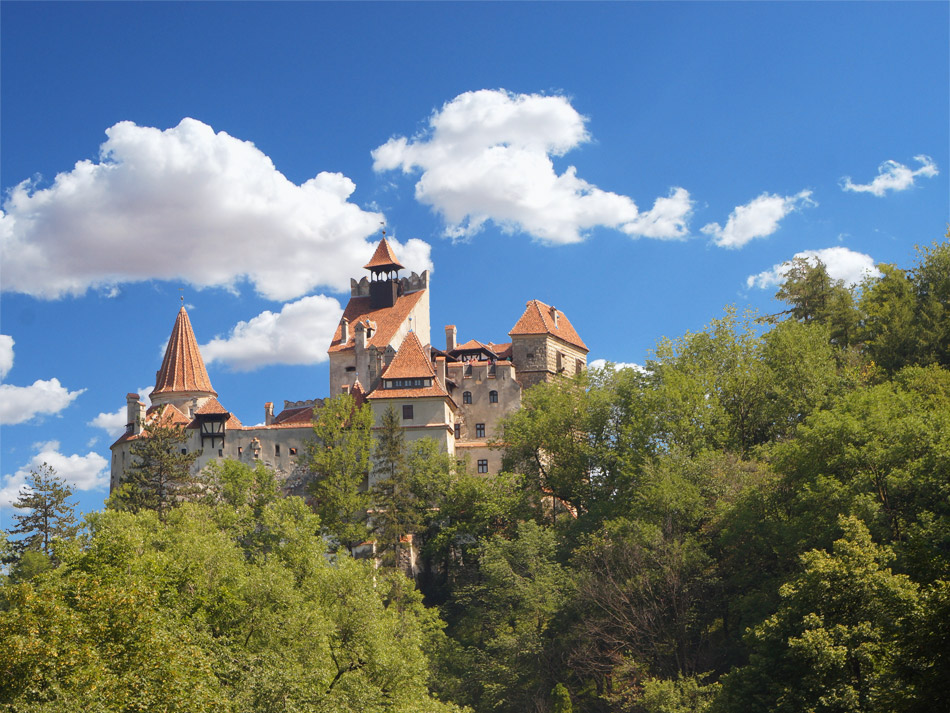
This year’s BIRN Summer School of Investigative Reporting will be held from August 19th to 25th in Poiana Brasov, a Romanian resort best known for winter sports but also for hiking and other activities.

This is a great opportunity for all those who wish to improve their investigative skills and learn the latest tricks from media experts.

BIRN will be gathering some of the world’s best-known editors and trainers to teach the course members investigative tips and tricks.

Successful applicants will be provided with excellent possibilities for networking – and the possibility of getting a grant for a story idea.

The lead trainer on the course in Romania is one of the best investigative editors in the US, Reuters’ Blake Morrison, a three-times finalist for the Pulitzer investigative award.

Others include the New York Times senior journalist Christoph Koettl; co-creator of one of the best podcast series in US and winner of an Emmy and three Peabody awards Susanne Reber; Knight International Journalism Award winner and OCCRP editor Miranda Patrucic; European Press Prize winner Bellingcats’ Christiaan Triebert; ICIJ journalist Matthew Caruana Galizia and award winning BIRN’s investigative editor, Lawrence Marzouk.

BIRN-Backed Documentary Wins Washington Festival Award

The documentary film ‘Kosovo… Nazdravlje! Gëzuar!’, produced by the Association of Independent Journalists of Vojvodina and BIRN Kosovo, won the audience award at the Serbian Contemporary Short and Documentary Film Festival on June 10 in Washington DC.

The documentary, directed by Aleksandar Reljic, looks at the possibility of coexistence between Albanians and Serbs in Kosovo.

In 2017, a Serbian far-right group called Zavetnici attempted to stop a screening of the film in Novi Sad, but the coordinators and the police prevented them.

The documentary originated from project ‘Real People – Real Solutions’, which addresses relations between Kosovo and Serbia from the perspectives of history, everyday life, and the future.

The project is a cooperation between the Association of Independent Journalists of Vojvodina, BIRN Kosovo and ZFD Forum Belgrade, with the support of the EU delegation in Serbia.

Four other movies have been shot as part of the same project.

The Serbian Contemporary Short and Documentary Film Festival is staged by the Orfelin Circle (Krug Orfelin) organisation.

Belgrade Insight Publishes Special Pride Month Issue

The latest issue of BIRN’s newspaper Belgrade Insight, published on Friday, is the first Serbian publication to join global celebrations of LGBT Pride Month.

The edition of Belgrade’s only English-language newspaper offers a feature on  Belgrade’s LGBT history, an interview with prominent drag performer Dekadenca, a guide to the city’s LGBT-friendly spots and a comment piece on why being ‘out’ in Serbia is still a big issue for many.

Pride Month is globally celebrated each June to honour the 1969 Stonewall riots in New York City, which were an important milestone in the LGBT community’s struggle for equal treatment.

The latest issue of Belgrade Insight also provides an analysis of planned infrastructure and beautification projects that are set to reshape the Serbian capital, as well as a list of recommended sports bars where fans can watch the football World Cup.

Conference Discusses Ombudsperson’s Role in Kosovo

The embassy of the Netherlands in Kosovo, ACDC and BIRN held a conference and discussion in north Mitrovica on June 12, to endorse the ‘Boosting the Role of the Ombudsperson in Watching Human Rights in Kosovo’ project, which is supported by the embassy of Netherlands and is being implemented by ACDC and BIRN.

At the conference, the panellists talked about human rights and the Ombudsperson’s role, then participants had the opportunity to discuss the topic with experts who are directly or indirectly involved in dealing with human rights.

The panellists were Gerrie Willems, the Netherlands’ ambassador to Kosovo, Mehdi Geci, a representative of the Ombudsperson, Tatjana Lazarevic, editor of the KoSSev news website and Ljubisa Bascarevic, a human rights activist.

Ambassador Williams said that the objective of the project is to raise public awareness and encourage people to report relevant information to the Ombudsperson.

Ombudsperson’s representative Geci said only two per cent of all citizens’ reports to the Kosovo Ombudsperson come from Serb cizens in the north, and they are mostly related to the usurpation of property and prolongation of judicial cases.

Lazarevic from KoSSev claimed meanwhile that human rights are being violated on a daily basis in Kosovo.

Serbian ‘Alternative Report’ Responds to EU Media Assessment

Six civil society organisations in Serbia, including BIRN, have prepared a comment and Alternative Report on the findings on freedom of expression and media pluralism in the European Commission’s recently-published Serbia Country Report for 2017.

The European Commission’s 2017 report on Serbia rightfully states that negative trends are restricting media freedoms in the country, but an additional emphasis on the depth of the problem in this field is needed, in particular the inadequacy of the legal framework and problems in the implementation of legislation, says the Alternative Report.

The Alternative Report says that EU monitoring of the progress of media freedoms under Chapter 23 and its ‘Freedom of Expression and Media’ section has proved to be insufficient as issues of public procurements, state aid, advertising and other areas effectively affecting media freedoms are not covered in it.

It points to not only stagnation but also “obvious deterioration of the situation with media freedoms which are very much under threat”.

Pressure and attacks on journalists and media outlets, control of media by way of financial pressure, and the dysfunctional state of the independent institutions which are supposed to enforce the laws in these fields are the principal causes of threats to media freedoms, the Alternative Report adds.

The report provides a range of recommendations both for indicators to be taken into account in future EU reports and for the Serbian authorities in charge of establishing the conditions for freedom of expression and the media in the country.

The Alternative Report was compiled by Civic Initiatives, Balkan Investigating Reporting Network – BIRN Serbia, the Independent Journalists’ Association of Serbia, PG Network, Educational Centre and Transparency Serbia.

The whole report is available here.

UK Parliament Opens Inquiry After BIRN Weapons Report

The British parliament’s committee on arms export controls  requested internal correspondence related to the shipment of ammunition from Bosnia to Saudi Arabia, following BIRN’s investigation into the deal.

The committee said it would write a formal letter outlining the information it needs as part of an inquiry into UK arms licences issued in 2016.

On June 6, BIRN revealed that the UK failed to warn Bosnia and Herzegovina of its suspicions about the consignment of bullets officially bound for Saudi Arabia.

This is the latest case of international reactions following BIRN’s Balkan arms trade investigations.

In September 2017, a BIRN investigation had sparked an official probe in Germany into whether the Pentagon broke the law by sending weapons to Syrian rebels through its German airbases. A public prosecutor in the  city of Kaiserslautern carried out a preliminary investigation into the findings of an investigation that BIRN, the OCCRP and Süddeutsche Zeitung published.

BIRN’s weapons investigations in 2016 provoked reactions from heads of states and foreign ministers (in Serbia, Bulgaria and Montenegro) and from arms companies. The EU’s diplomatic service also said it was looking into the findings of the BIRN and OCCRP investigation into how Central and Eastern Europe weapons are flooding the battlefields of Syria, while the opposition in Germany questioned Berlin’s role in the Middle East arms trade following the reports.

BIRN Albania’s Documentary ‘Free Flow’ Premiered

Nearly 100 activists, civil society representatives and film buffs packed the Destil Hostel in Tirana on June 5 for the premiere of the BIRN Albania-produced documentary ‘Free Flow’, which was directed by documentary film-maker Elton Baxhaku.

The premiere was held on World Environmental Day, in an effort to underline the importance of documenting the efforts of local communities to protect the environment and their way of life.

The documentary covers the decade-long grassroots struggle of local communities, activists and civil society organisations against hydropower plant projects that threaten the environment, the water supplies of local communities and their livelihoods that are based on sustainable tourism.

In the past two decades, the Albanian government has approved over 500 hydropower plant projects on its rivers and streams, which environmentalists say threaten some of the last unspoiled river systems in Europe.

The documentary focuses on three areas, the Shebenik Jabllanica National Park, the Vjosa River and the Valbona National Park – following local villagers, community rights activists, scientists and artists as they struggle to voice their concerns over hydro power plant projects, challenge concession contracts in court and protest in the streets to encourage support for their cause.

Elton Baxhaku is an acclaimed Albanian film-maker, best known for his 2014 documentary ‘Skandal’ and the 2016 documentary ‘Selita’, which was co-directed by Eriona Çami.