BIRN Albania Holds Training Course on Environmental Journalism

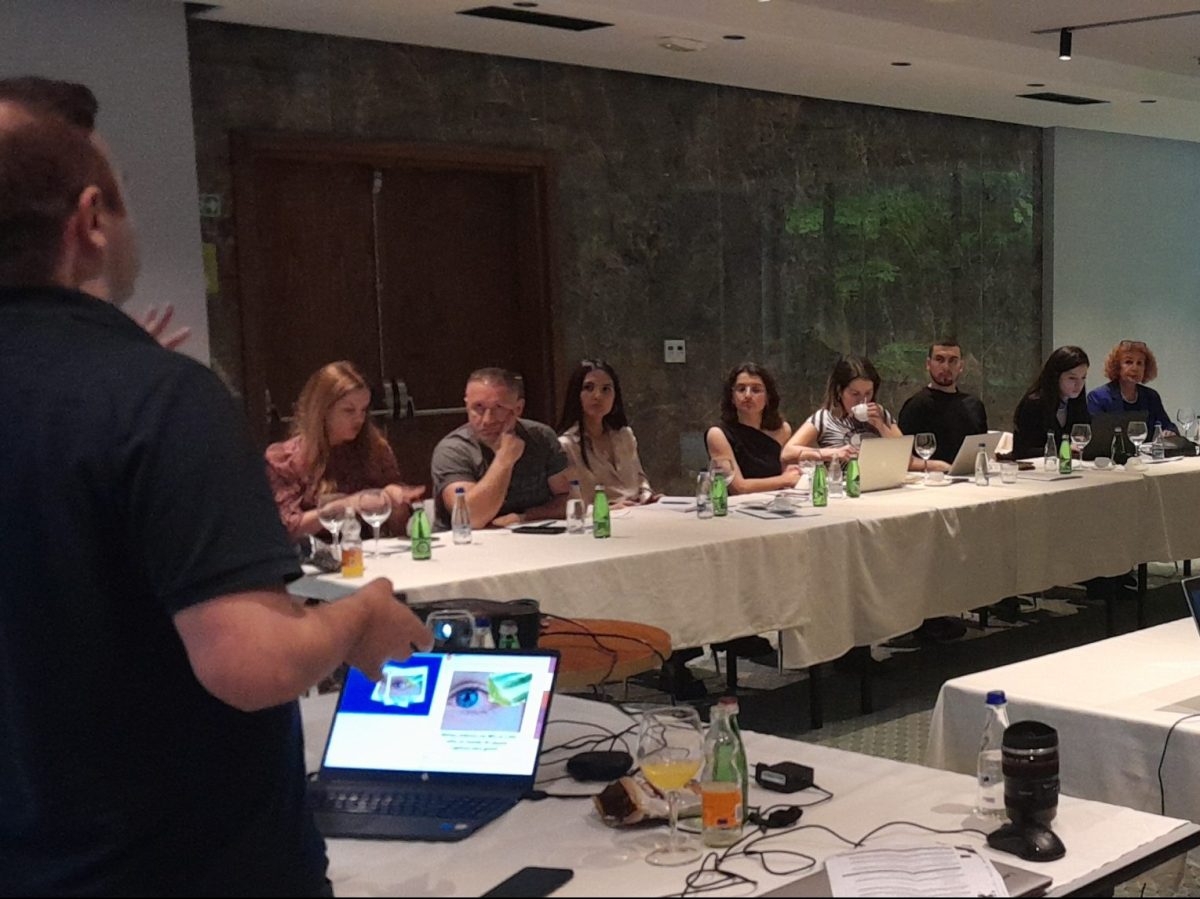
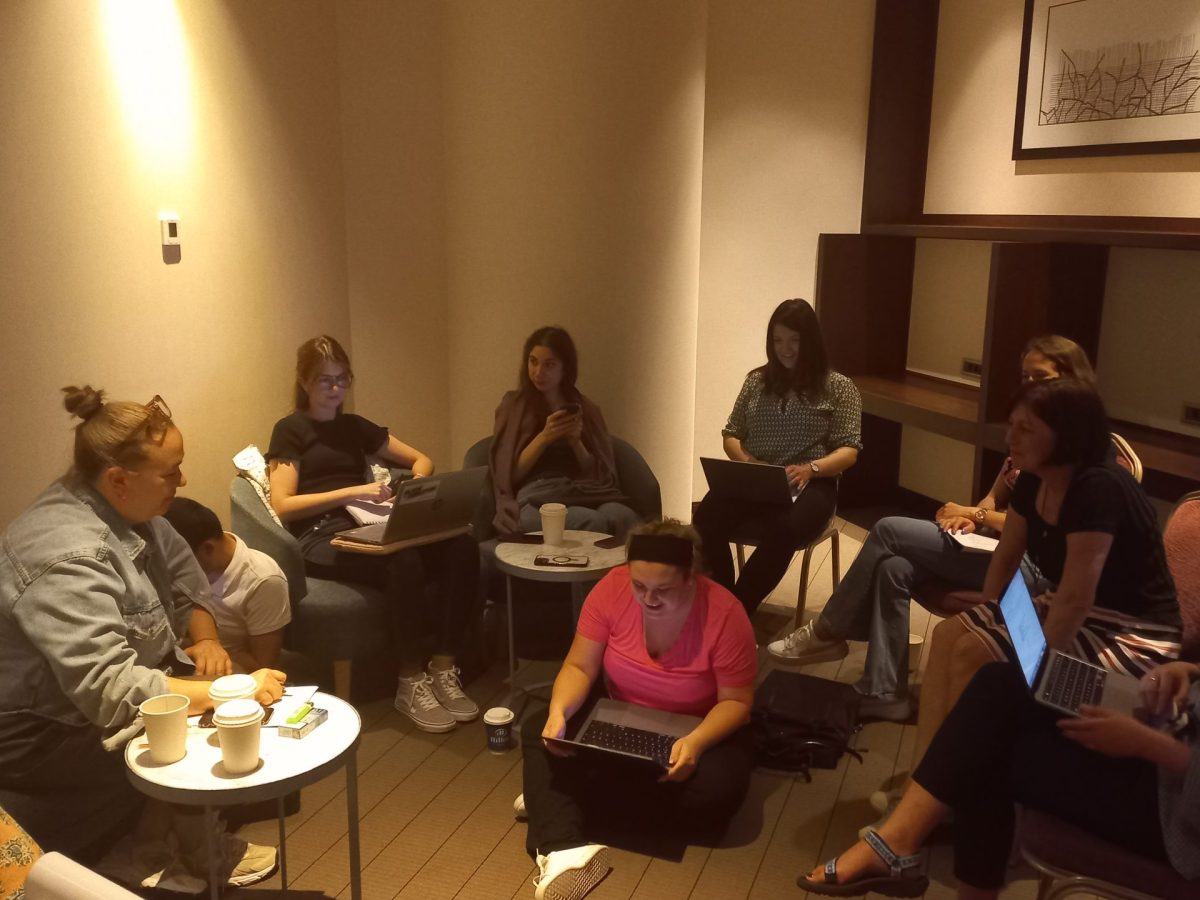
The Balkan Investigative Reporting Network in Albania held a training course on environmental reporting on June 5 in the city of Elbasan.

The course was part of a project entitled Building Resilience through Environmental Journalism, which is being co-financed by the Democracy Commission Small Grants Programme of the US Embassy in Tirana, and implemented by BIRN in cooperation with local journalists.

Eighteen local journalists and correspondents for national media from the Elbasan region and the city of Pogradec participated in the training course, which was led by environmental expert Ahmet Mehmeti and BIRN Albania editor Aleksandra Bogdani.

Mehmeti, who is the executive director of the Elbasan Ecological Club, a local environmental organisation, presented the main environmental challenges facing Albania, focusing on the consequences of climate change in the country, pollution caused by heavy industry as well as problems with the management and treatment of urban waste.

He also gave some practical advice on how journalists can approach environmental issues in cooperation with environmental activists and organisations.

Bogdani introduced techniques of reporting on environmental crimes as well as looking at the crucial role that local journalists have in covering these issues.

Bogdani also explained through practical examples how local journalists can amplify the impact of their stories through cooperation with each other and with civil society organisations.


Applications Open for BIRN Summer School in Greece

BIRN Summer School of Investigative Reporting returns this August in Thessaloniki, with a stunning number of award-winning journalists and editors as trainers.

The 13th edition of the Summer School is taking place from August 21 to August 27 in the Greek port city of Thessaloniki. Thirty selected journalists from South East and Central Europe will spend a week mastering their investigative skills and learning from Pulitzer and European Press Prize winners.

During the School, participating journalists will go through the basics of investigative reporting and investigative podcasts with Michael Montgomery, a senior reporter and producer for Reveal; Marija Ristic, award-winning journalist and currently a manager at Amnesty International’s Digital Lab will teach participants how to effectively use OSINT when investigating police attacks; Sam Joiner, who leads the Visual Storytelling Team at Financial Times will explain how his team investigated North Korea’s oil smuggling, also introducing participants to various tools used to track ships; Milica Stojanovic, a BIRN journalist and a digital security trainer, will show participants tips and trick on how to stay safe online while investigating; Olaya Argüeso Perez from Correctiv will speak about data journalism and present some of the Correctiv’s best data-driven stories; the Forbidden Stories team will walk participants through the complex paths of finishing someone else’s investigative work – who could not do it because they either gave their lives for the story or are put behind bars by autocratic leaders; Alison Killing – a Pulitzer Prize winner – will show journalists how to locate notorious camps across China, using innovative online tools and techniques.

Last but not least, and for the first time this year, the School is hosting sessions focused on the mental health of journalists, to be presented by another Pulitzer Prize winner, Mar Cabra.

As every year, BIRN is providing 30 full scholarships for selected participants from the following countries: Albania, Bosnia and Herzegovina, Bulgaria, Croatia, Czech Republic, Greece, Hungary, Kosovo, Moldova, Montenegro, North Macedonia, Ukraine, Poland, Romania, Russia, Serbia, Slovakia and Turkey. This will cover accommodation, meals as well as transportation expenses of up to 200 euros.

Apart from the training, editorial support and mentorship, through our Investigative Initiative Story Fund, BIRN will provide participants with money to support story development and production.

Selected participants will be asked to prepare an investigative story proposal, which they will be working on alone or in a cross-border team during the week. On the last day of the School, a jury composed of BIRN editors will award the best pitches with editorial, financial and publication support.

Limited spots are also available for international participants who need to cover a fee of 800 euros. This includes the training curriculum and full board at the hotel where the Summer School is taking place.

Applications close on June 22, 2023.

Click here to apply!

Fellowship for Journalistic Excellence – Winners Chosen

Polish journalist Maria Wilczek was awarded the first prize in the Fellowship for Journalistic Excellence at a ceremony held in Vienna in May.

Wilczek won the 3,000-euro award for her story about the football ultras from Belarus who were inspired by their nationalist counterparts in Ukraine to rise up against their own Moscow-allied government. Her reporting, centred on a group of exiled hooligans, revealed how violent rivalries were cast aside in opposition to the Lukashenko regime. Announcing the award, Fellowship jury member and executive director of the Albanian Media Institute, Remzi Lani, praised “an elegant and complex story about an unknown game, played away – a tale of resistance against the last dictatorship in Europe.”

Czech journalist Anna Koslerova was awarded the second prize for her story about the Czech state’s failure to compensate thousands of Roma women who had been sterilised against their will. The award was given by the jury member and editor for the Swiss daily, Neue Zürcher Zeitung, Elena Panagiotidis, who praised the story for showing the enduring suffering of the victims and for “giving them a voice, without being voyeuristic”.

The award for the third prize was shared between two journalists: Alexia Kalaitzi from Greece and Matea Grgurinovic from Croatia.

Kalaitzi’s story examined the impact of the war in Ukraine on a decarbonisation drive in Greece’s coal-mining heartland. Jury member Kristof Bender, deputy chairman of the European Stability Initiative, praised the story for taking the reader to “the people and places directly affected by this major economic and social transition” – uncovering a struggle that was “not only very relevant for Greece, but also for all of Europe and, actually, the planet as a whole.”

Grgurinovic’s story examined the failure to re-house the victims of an earthquake in Croatia’s long-neglected interior. Presenting the award, jury member and BIRN editor Gyula Csak said the story showed a depth of human suffering that cannot be revealed by numbers alone. By spending time with her subjects, Grgurinovic had revealed the impact “not just of the earthquake” but of the devastation wrought by war and by official policy after independence.

The ceremony celebrated the successful completion of the 2021 edition of the programme. The stories from the programme were published throughout 2022 under the topic, Transformation.

In addition to the awarded journalists, the 2021 fellows were Mateusz Mazzini (Poland); Eva Kubaniova (Czech Republic); Vojtech Berger (Czech Republic); Mateusz Kowalik (Poland).

Alongside Remzi Lani, Elena Panagiotidis, Kristof Bender and Gyula Csak, the jury was comprised of Milorad Ivanovic, representative of the FJE alumni network; Florian Hassel, Central and Eastern Europe correspondent for German daily Süddeutsche Zeitung; and Adelheid Wolfl, correspondent for Austrian daily Der Standard.

With the conclusion of this year’s programme, the 10 fellows join the FJE alumni network, which consists of more than 150 journalists from 14 CEE countries, who promote the highest professional standards.

The Balkan Fellowship for Journalistic Excellence was launched in 2007 to promote high-quality, cross-border reporting. The programme provides fellows with financial and editorial support, allowing them to travel, report and write their stories and develop their journalistic skills. In 2020, the fellowship programme expanded to include journalists from the Visegrad Four countries of Czech Republic, Hungary, Poland and Slovakia.

The Fellowship for Journalistic Excellence is implemented by the Balkan Investigative Reporting Network and supported by ERSTE Foundation.


Kosovo Journalists Trained on Digital Rights Reporting

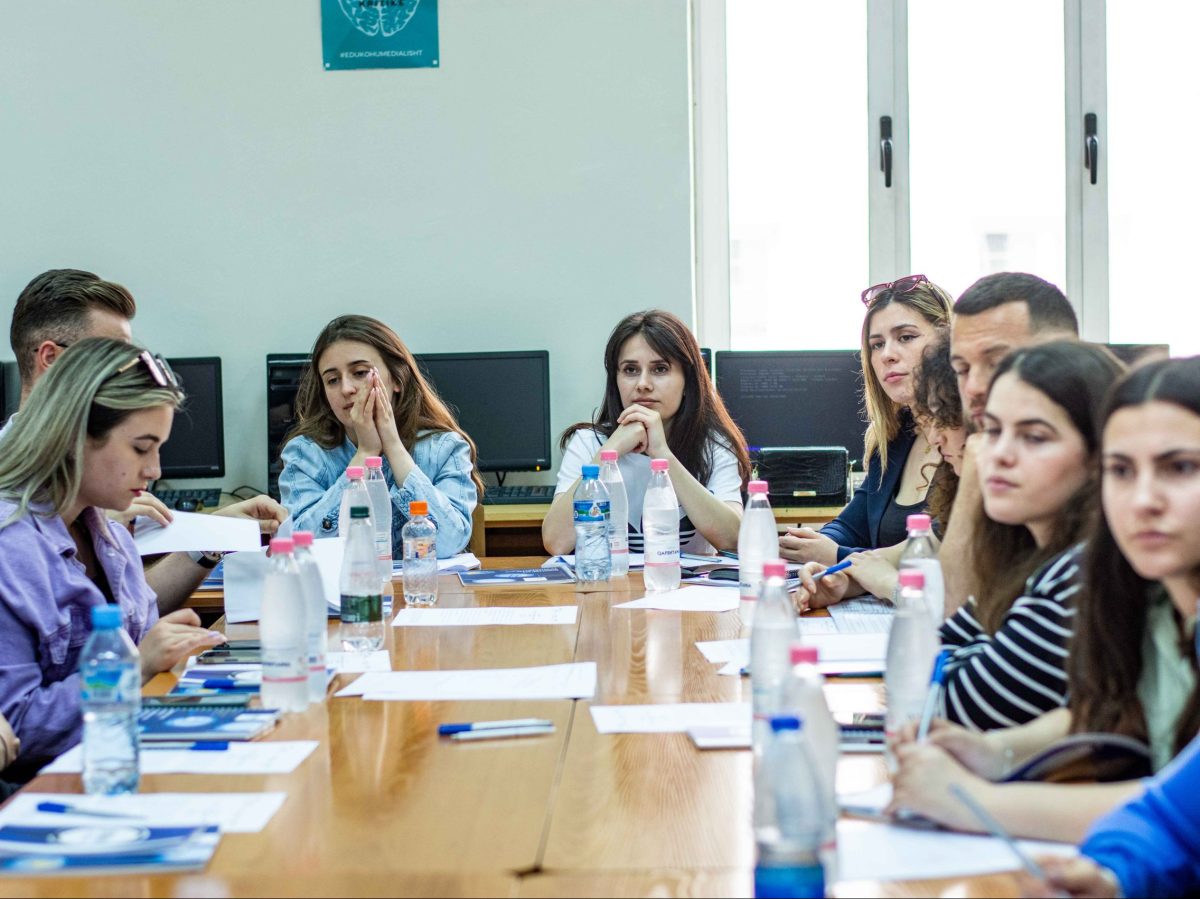
On May 26–28, BIRN Kosovo held a National Training on Digital Rights Reporting for journalists in Brezovica. The three-day training program was designed to address rising concerns over digital rights and freedoms violations in Kosovo and in the Balkan region.

The training brought together 14 journalists, of whom eight were women and one from the Serbian community. They received a comprehensive understanding of the issues at stake, helping them to identify and report on digital rights violations more effectively.

Special focus was put on topics including: Reporting Digital Rights in Kosovo and their impact on journalism; Digitalization and Protection of Privacy based on the Legislation of Kosovo; Violations in the Collection of Data in Kosovo; Data Protection of Children and other Marginalized Groups in the Era of Digitalization; Identifying and Collecting Digital Rights Violations in Kosovo; Reforms, Strategies and Challenges in the Process of Digitalization; Fact-Checking and Verification Techniques for Digital Rights Reporting; and Open-Source Investigations for Journalists.

Participants heard case studies on successful reporting on Digital Rights Violations and received guidance on how to develop their ideas for investigative stories.

“The topics covered during this training were great and enabled me to gain additional knowledge and provided new insights when it comes to digital rights, public information and privacy,” said one of the participants.

On completion of the training, journalists will have an opportunity to pitch their story ideas to BIRN. Selected journalists will receive on-the-job mentoring and financial support to research and apply their newly acquired skills to implement their ideas on cases involving breaches, content blocking, filtering, manipulations, and propaganda in the digital environment.

The training was delivered by Kreshnik Gashi, Visar Prebreza and Labinot Leposhtica. Guest speakers included Krenare Sogojeva Dermaku, Commissioner for Information and Privacy, and Lulezon Jagxhiu, Adviser to the Prime Minister for Digital Transformation Commission.

The training was organized as part of the “Reporting Digital Rights and Freedoms” project that is funded by the European Union.


BIRN Kosovo Holds Discussion on Fake News and Disinformation With School Students

On May 29, BIRN held the last debate discussion with the students of the high school “Eqrem Cabej” in the municipality of Vushtrri about fake news and disinformation related to culture.

The discussion started after the BIRN team showed a video titled “History between interpretation and the truth”, published on BIRN’s KALLXO.com.

The video explains how history is one of those topics that is affected deeply by fake news and how the persons who create such news and disinformation intend to deceive their audience about historical facts.

The video addresses also the risk of the young being put at risk by such materials on history. The video includes an interview with Gjon Berisha, a historian, and Kushtrim Koliqi, who organizes the “Mirëdita Dobar dan” festival.

Gjon Berisha said every nation or country has at particular times misused or misinterpreted history for its own purposes, even for patriotic or national reasons.

Kushtrim Koliqi talked about the idea of the festival which helps to build bridges between Kosovar and Serbian artists and avoid the propaganda that can manipulate culture.

The discussion was moderated by Kreshnik Gashi, managing editor at KALLXO.com. Gashi spoke about the importance of the young generation identifying fake news and on ways to debunk the phenomenon.

Pupils at the “Eqrem Cabej” high school expressed interest in this topic and how social media is changing fast and can manipulate information.

A total of 39 students participated in the discussion, of whom 27 were girls.

The activity was carried out within the UNMIK-supported project “Addressing disinformation through fact-checking journalism”.


BIRN Organises Cross-Border Stories Workshop in Georgia

As part of a project exploring foreign influences in the Balkans, the South Caucasus and Central Asia, BIRN and its partners organised a workshop in Georgia, focusing on the joint production of cross-border and cross-regional reports.

A three-day training workshop was held in Batumi, Georgia from May 25-29, bringing together around 20 journalists and editors from Bosnia and Herzegovina, Montenegro, North Macedonia, Serbia, Georgia, Tajikistan and Uzbekistan.

The workshop is part of the project ‘Spheres of Influence Uncovered, jointly implemented by BIRN, German NGO n-ost, Uzbek media outlet Anhor and Georgia’s JAMNews.

Over the three days, the participants learned more about the importance of cross-border reporting in the context of the topics the project is covering. They were also guided through successful cross-border stories published by BIRN, JAMNews and Anhor and given tips and advice on how to approach potential cross-border topics.

They also were given advice about where to look for data, how to obtain official data when public institutions are reluctant to release it, how to interview experts and what to expect from them, how to read complicated records and who to ask for help with them.

The participants were asked to list potential problems and issues they might come across while investigating and writing about political and economic players in their regions.

Split into cross-border teams, the journalists worked on specific stories with editors from all three regions. The first cross-border and cross-regional stories are to be published by the end of the year.

The project ‘Spheres of Influence Uncovered’ aims to contribute to a better understanding of the roles that three key international players – the EU, Russia and China – have on the seven project countries’ economies.

During the project, the participating journalists will map the economic activities of these three players and identify the main challenges and consequences for their countries. This project is partly a follow-up to BIRN’s previous work in the sphere of foreign economic activities, explored in its interactive map of China’s activities in the Balkans.


BIRN Film About Victims of Yugoslav Wars Screened in Serbia

The Balkan Investigative Reporting Network’s latest documentary, exploring the lives and struggles of civilian war victims from Serbia, Kosovo and North Macedonia, was broadcast by Euronews Serbia.

The documentary ‘Forgotten Victims’ (‘Zaboravljene Žrtve’), which tells the stories of four families who lost someone in the wars in Serbia, Kosovo and North Macedonia during the 1990s or were direct victims themselves, was screened by Euronews Serbia on Saturday and Sunday.

The film showcases the continuing failure of the systems in the three countries to address the needs of civilian victims of war, more than two decades after the conflicts ended.

It follows Bekim Gashi and Slavica Popovic from Kosovo and Andronika Jovanovska and Skender Zimberi from North Macedonia in their decade-long struggles to learn who killed their loved ones, win compensation from the state and get some kind of acknowledgment for their suffering.

In the film, they explain how they feel abandoned and betrayed by all the key players – including their own states and the international community.

While some, like Gashi, are at the end of a lengthy reparation process, most will probably never get any compensation. In most Balkan countries, material reparations are possible via civil lawsuits after a final, guilty verdict is reached in court. With the slow pace of war crime trials and legal challenges, those who received compensation are a minority.

The film also tackles the ongoing trial of former Kosovo Liberation Army fighters and the issues some Serbian war victims are having with the international lawyers assigned to them by the Kosovo Specialist Chambers in The Hague.

The film was financed by the European Union and includes interviews with victims’ associations, legal experts, civil society activists, lawyers and government representatives.

Kushtrim Koliqi, executive director at the Pristina-based NGO Integra, which was part of the project, told BIRN that the purpose of the film is “to assist in the recognition of past injustices, their memorialisation and reparation, but also testify about the social challenges of transition.”

The documentary is also intended to “open up discussion and offer a new perspective on the life of different war victims after their losses, hence opening up spaces for new ways of dealing with the past”, Koliqi added.

The Albanian and Macedonian versions of the same film have already been screened in Kosovo and North Macedonia. All three versions of the film, as well as one with English subtitles, are soon to be published on the BIRN Network’s YouTube channel.

The film ‘Forgotten Victims’ was produced as part of the Strengthening Inclusive Victims’ Voices: Transforming Narratives project and financed by the European Union. Apart from BIRN, the other partners in the project are Integra, New Social Initiative, Civic Initiatives, PAX and the International Centre for Transitional Justice (ICTJ).


Digital Rights Training for Albanian Journalists: Applications Open

BIRN invites Albanian journalists to apply for a three-day training program designed to address rising concerns over digital rights and freedoms violations in the Balkans. The event, to be held in Durres, Albania, from June 15 to June 17, 2023, will provide participants with a comprehensive understanding of digital rights, focusing on reporting breaches, content blocking, manipulations, and propaganda in the digital realm.

With technology evolving rapidly, it’s essential for journalists to stay up-to-date on the latest methods and strategies to uncover and appropriately report on digital rights violations. To tackle these challenges, BIRN Albania is organizing a three-day training that will focus on the theoretical and practical framework necessary to understand digital rights and how to report on breaches, blocking and filtering content, manipulations, and propaganda in the digital environment.

Frequent cyberattacks and online harassment also threaten the safety and security of many, including journalists, who are often targets of online attacks. Still, many journalists from the region may not be fully aware of the extent of digital rights violations or the underlying legal and technological aspects that lead to these kinds of violations.

BIRN’s training will provide ten selected journalists from Albania with a comprehensive understanding of the issues at stake, helping them to identify and report on digital rights violations more effectively. Journalists play a crucial role in raising public awareness and driving change, and by equipping them with the necessary skills and knowledge, this training will enable them to produce impactful stories that can contribute to a more informed public debate and eventually lead to policy changes that protect and promote digital rights in the Balkans.

Who can apply?

The Balkan Investigative Reporting Network in Albania (BIRN Albania) invites journalists from Albania to apply for a three-day training on reporting digital rights violations.

How to apply?

To apply, interested journalists should demonstrate an interest in digital rights and possess previous journalism experience. To apply, submit the following application form along with your CV to [email protected] no later than June 9, 2023, by 5 pm CET, with the subject line: Digital Rights Reporting Training for Journalists Albania.

Where?

The training will take place in Durres, Albania, from June 15 to June 17, 2023. The organizers will fully cover travel and accommodation costs for selected participants. The working language of the training is Albanian and English.

What to expect?

The training will provide selected journalists with essential skills and knowledge to effectively investigate and report on digital rights violations in an ever-changing technological landscape. The training will cover various aspects of digital rights reporting, including identifying and collecting digital rights violations, categorizing these violations, and reporting on individual cases and broader trends.

The program will also focus on multimedia, contemporary tools, and modern journalistic approaches, such as open-source investigations, data journalism, fact-checking, and cross-border collaborations. The training in Durres will offer valuable educational insights and provide the opportunity to connect with fellow journalists and experts working in the digital rights field.

Upon completion of the training, journalists will have the opportunity to pitch their story ideas to BIRN. Selected journalists will receive on-the-job mentoring and financial support to research and apply their newly acquired skills to implement their ideas on cases involving breaches, content blocking, filtering, manipulations, and propaganda in the digital environment.

Long story short

DEADLINE: Submit the application form along with your CV to [email protected] no later than June 9, 2023, by 5 pm CET, with the subject line: Digital Rights Reporting Training for Journalists Albania.

DATES OF TRAINING: June 15, June 16, and June 17, 2023

LOCATION: Durres, Albania


Meet the People Behind BIRN: Radmilo Markovic

Each month, BIRN introduces you to a different member of its team. For May, meet Radmilo Marković, journalist at BIRN Serbia.

Radmilo Markovic, 42, is working on breaking investigative stories and has won the Dejan Anastasijevic award for the best online article.

Radmilo, based in Belgrade, has been working for the last two years for BIRN Serbia. His report, “Illegally Legalised: The Corruption Involved in Building Belgrade”, was on buildings built without permits in Belgrade over the last seven years that were legalized by new construction legislation.

His report angered the Mayor of Belgrade, Aleksandar Sapic, who filed two separate defamation lawsuits against BIRN Serbia, its editor, and journalists, including Radmilo, claiming that BIRN’s report had damaged his reputation and caused him mental anguish.

Radmilo spoke to us about the award, his first defamation lawsuit, and about journalism in Serbia and its impact; sometimes he admits he feels that journalists’ work is almost meaningless, as investigative stories have little impact in terms of arrests or prosecutions in Serbia, where impunity is the king.

1. Why did you become a journalist and decide to work for an investigative media non-profit like BIRN Serbia? What do you like most in your job, and what is the most challenging thing?

It was an honour for me when BIRN called me to join them two years ago, as BIRN Serbia is one of the most respected media in the country. These days, when number of clicks is the main interest for media executives, joining one of the few organisations that play by the book was refreshing. The best thing – and the worst thing at the same time – is that you have the time to thoroughly explore the topic you are covering, which sometimes puts you in a rabbit hole of an endless network of people or companies, and you eventually end with a lot of information that you don’t use in a final article. On the other hand, since almost all other media outlets are focused on speed and measure only quantity, you could end up working on something that is forgotten and not in the spotlight of the general public.

2. What kind of stories do you prefer to work on? Do you have a story that you feel especially proud of?

Right now I’m working on the problem of illegal real estate construction in Belgrade, and I hope to be able to widen the scope of my research to the whole of Serbia. The problems here are that the state doesn’t have (or doesn’t want to share) a definite list of all illegal buildings, and the fact that these buildings are being built as we speak, so it’s like a snake chasing its own tail. 

3. You worked on an investigative story on corruption practices in building processes in Belgrade. More than 450,000 square meters of residential property, partially or completely built without permits since 2015, have escaped demolition and somehow been legalised. Tell us more about this investigation. What drove you to start doing it, and what was the impact?

My colleague Jelena Veljković initially found the first such case: under our law, you could legalise a building if it was built before 2015 and exists on the satellite image of Serbia from 2015. Jelena found one building, linked to the person responsible for issuing legalisation documents in Belgrade, that was built during 2017-2018 and still ended up being legalised, which was against the law.

So, she discovered the phenomenon, and after that it was relatively easy but also time-consuming; all we needed to do is to find buildings that weren’t on the satellite image in 2015, and which in spite of that were registered in the cadastre as “legalised”.

We never knew the magnitude of this malpractice, so it was a bit of a shock to see that there are literally hundreds of such buildings.

Sadly, this story – like almost all investigative stories – did not produce any impact in terms of arrests or prosecutions. In Serbia, when it comes to high corruption cases, impunity is the king.

4. Belgrade Mayor Aleksandar Sapic filed two separate defamation lawsuits against BIRN Serbia, its editor, and journalists, including you, claiming that BIRN’s reporting damaged his reputation and caused him mental anguish. Would you like to tell us more about this Slapp case? Has it affected you and your colleagues?

I can speak for myself on this topic. On the day we received the lawsuits I was a bit shaken. No one had ever sued me for something I wrote so it came as a shock. However, over the next few days, this shock became anger – anger that I must now go to court, and not him for all the things that he has done, that we wrote about.

In his lawsuit, he demanded around 50,000 euros per case, which is higher than the amount the court approves in such a cases, so there is a good argument that this indeed is a Slapp case, even if we don’t go to the facts that we have thoroughly researched and carefully wrote these articles, according to all the standards.

5. How would you advise fellow journalists from the regions to tackle Slapps?

I don’t have any idea; this is my first time. It’s useful if a local journalists’ association gives free legal assistance, like in our case.

6. Recently you won an award, would you like to tell us more about it?

Just a few days ago, the Independent Association of Journalists gave me the annual award named after our great late colleague Dejan Anastasijević. The award was for the best online article – that one I mentioned, about illegal legalization of illegally built buildings (good luck in trying to explain that to your public).

It was an honour for me to receive that award, but, as I said during the ceremony, the fact that nothing ever happens after we reveal crime and corruption is making our journalists’ work almost meaningless. But it’s a good feeling to receive such an award, there is no doubt about that.
BIRN Albania Holds Training on Illicit Financial Flows

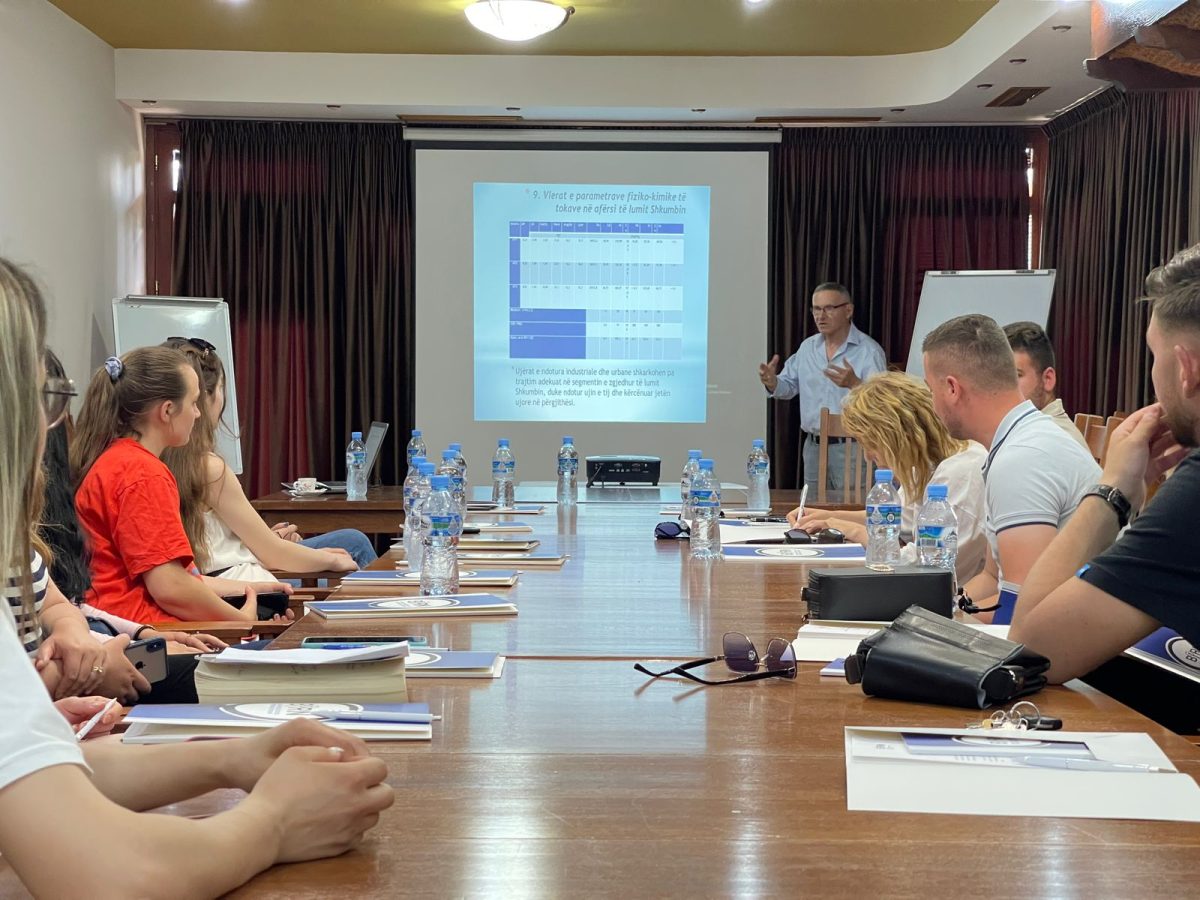
The Balkan Investigative Reporting Network in Albania on May 25 in Tirana held a training on illicit financial flows.

Training was delivered by BIRN Albania editors Besar Likmeta and Vladimir Karaj at the Department of Journalism at the University of Tirana.

Fifteen young and mid-career journalists were present. The editors introduced the participants to the basics of money laundering techniques and how investigative journalists investigate them.

The themes covered included investigating offshore dealings and links to tax havens, beneficial ownership, investigating public procurement contracts, tax evasion, money laundering through real estate, trade-based money laundering, identifying assets and scrutinizing authorities’ actions to prevent illegal money flows, as well as tracking cross-border criminal activities.

The training was held as part of the project “Uncovering Illicit Financial Flows in the Western Balkans”, financed by the Deutsche Gesellschaft für Internationale Zusammenarbeit, GIZ.

The overall goal of this project is to contribute to raising public awareness about illicit financial flows and provide a basis for decision and opinion makers to boost efforts to combat illicit financial flow.

It aims to increase the pool of journalists in Western Balkan countries equipped with tools and techniques in uncovering illicit financial flows, especially across borders.