Open Call: Third Cycle of the Digital Rights Programme for Journalists

Journalists from Bosnia and Herzegovina, Montenegro, North Macedonia, Serbia, and Kosovo are invited to apply for the third edition of BIRN’s Digital Rights Programme, which seeks to analyse threats to digital rights and freedoms and to document, explore and communicate to the wider public the abuses of digital tools to undermine democracy and human rights.

BIRN is looking for people who want to create engaging and informative content focusing on technology and the opportunities and challenges it poses to democracy and human rights, in particular:

  • Freedom of expression,
  • COVID-related tech regulations,
  • Content blocking and removal,
  • Artificial intelligence, machine-learning and algorithmic decision-making processes,
  • Transparency of processes of digital transformation in the region,
  • Hate speech and discrimination in the digital environment,
  • Gender issues,
  • LGBTI+ issues,
  • Digital security and phishing campaigns,
  • Privacy and data protection,
  • Surveillance practices,
  • Accountability of the major internet platforms and online safety of users,
  • Information security,
  • Disinformation and misinformation,
  • 5G technology in the region,
  • Cryptocurrencies/blockchain,
  • Social media bots and troll farms.

BIRN offers a comprehensive six-month programme for all accepted applications, which includes:

  • Financial support ($1,325 gross),
  • Regular networking opportunities,
  • Meetings with relevant stakeholders dealing with digital transformation challenges and freedom of expression,
  • On-the-job mentoring and editorial sessions to produce high-quality journalism and educational sessions focused on digital security for media.

Support is available for professional freelance or staff journalists to cover local, national and cross-border topics. The stories produced under the programme will be published by Balkan Insight and by prominent European, regional and international media outlets.

Click here to apply for the programme.

The call is open until October 31, 2022.

Who can apply?

The programme is open to all journalists who believe they have a good story concerning the health of the digital ecosystem in the Bosnia and Herzegovina, Montenegro, North Macedonia, Serbia, and Kosovo . We also welcome applications from staff reporters from local and national media who wish to co-publish the story with us.

Formal applicants can be:

  • Individual journalists (working as part of newsroom structures or as freelancers),
  • Teams (eg. reporter, producer, photographer, video editor) with a designated team leader as the contract signatory.

BIRN is committed to gender diversity and freedom from prejudice on any grounds.

Story requirements

  • The story must focus on at least one of the topics listed above,
  • It must be relevant and current to Bosnia and Herzegovina, Montenegro, North Macedonia, Serbia, and Kosovo ,
  • Stories that cover more than one country will be given an advantage,
  • Only in-depth, investigative stories will be taken into account,
  • Each story should be around 2,000 words long,
  • Each selected story must be published within six months of receipt of the first instalment.

How to apply?

Fill out the application form and follow the instructions.

Attach the signed declaration document.

Evaluation and selection:

Step I: Technical evaluation will be carried out by BIRN staff to ensure the applicants have followed application procedures and submitted all the required documents.

Step II: Evaluation will be carried out by the editorial board to select applicants based on the evaluation criteria, including:

  • Quality of the proposed idea,
  • Feasibility of the proposed plan,
  • Ability to reach the general public,
  • Relevance of the proposed idea.

Step III: Notification of applicants.

For additional information, please contact [email protected]

The Digital Rights Programme for Journalists is made possible through support from the UN Democracy Fund, Internews and Swedish International Development Cooperation Agency.

Open Call for Participation in BIRN Kosovo’s one-day training module for journalists to report on labour rights issues

Are you a student of journalism, young or mid-career journalist eager to expand your journalistic reporting skills? Do you want to develop your capacities in reporting and advocating for labour rights in the Kosovo labour market? Do you think you have the ambition and creativity to be one of the prospective winners of a 500 Euro bursary to write a story on labour rights, health and safety at work? Then look no further!

BIRN Kosovo has the ideal opportunity for you.

BIRN will select the 10 best story pitches to be supported through a bursary amounting to 500 Euros, through which the 10 journalists with the winning pitches will have the opportunity to conduct research, analysis, investigative articles and other publications on various issues that pertain to the field of labour rights.

Moreover, on September 27, 2022 BIRN will organize a one-day training module with journalists and journalism students on the process of reporting on labour rights issues who wish to benefit from the bursary. Please note that in order to be part of the bursary program, interested parties should apply and participate in the above-mentioned training.

The one-day training module will bring together 20 young and mid-career journalists as well as students of journalism from different communities, who will have the opportunity to acquire knowledge and hands-on skills on how to report on labour rights issues, including reporting on injuries at work and labour rights abuses, safety in the workplace, mistreatment and breaches of employee rights, failure to adhere to work schedules, working without proper contracts or lack of employment contracts, violating annual leave and maternity leave entitlements, to name a few. The training module will be delivered by BIRN’s own team of award-winning journalists and editors, who have extensive experience in investigating, reporting on and advocating for labour rights issues.

BIRN Kosovo’s team of journalists and editors will provide editorial support to the winning journalists in the process of identifying their topic of interest, in the drafting of their editorial work and in the final publication of their media products. Notably, journalists’ works will be published on BIRN’s flagship anti-disinformation platform, KALLXO.com in a TV/online format. The platform enjoys high viewership and readership rates among the Kosovo public, including its social media platforms, such as Facebook, YouTube and Instagram.

The bursary and the one-day training module are organized in the framework of the EU-funded project “Protecting and promoting labour rights of vulnerable groups in the labour market” implemented by ATRC and BIRN Kosovo.

The aim of this project is to improve the working conditions for vulnerable categories of employees, notably within the private sector, including workplace health and safety for women and men, through the promotion of social dialogue between workers and duty bearers.

Who can apply?

Students of journalism, young and mid-career journalists across different regions in Kosovo, who are interested to learn more about reporting and advocating for labour rights issues and become one of the potential winners of ten 500 Euro bursaries, are eligible to apply for this call.

Applicants from marginalized communities in Kosovo, including members of minority ethnic communities and women, that fulfill the above-mentioned criteria are encouraged to apply for this call.

To apply for the one-day training module on reporting on labour rights issues, click here.

The deadline to apply is September 16, 2022.


Thirrje e hapur për pjesëmarrje në trajnimin njëditor të BIRN Kosovë për gazetarët që raportojnë mbi çështjet e të drejtave të punës

Jeni student i gazetarisë, gazetar i ri apo gazetar në mes të karrierës, i etur për t’i zgjeruar shkathtësitë tuaja gazetareske? Dëshiron t’i zhvillosh kapacitetet tuaja në raportim dhe avokim për të drejtat e punës në tregun e punës në Kosovë? Mendon se ke ambicie dhe kreativitet për të qenë një nga fituesit e mundshëm të bursës prej 500 euro për të shkruar storie mbi të drejtat e punës, shëndetin dhe sigurinë në punë? Atëherë mos kërko më tej!

BIRN Kosovë ofron mundësinë ideale për ju.

BIRN do të zgjedhë 10 storiet më të mira të propozuara që do të mbështeten me bursë në shumë prej 500 euro, përmes së cilës bursë 10 gazetarët me propozimet fituese do të kenë mundësi të realizojnë hulumtime, analiza, artikuj hulumtues dhe publikime të tjera për çështje të ndryshme që kanë të bëjnë me fushën e të drejtave të punës.

Për më tepër, më 27 shtator 2022 BIRN do të organizojë një trajnim njëditor me gazetarët dhe studentët e gazetarisë të cilët dëshirojnë të përfitojnë nga bursa, ku fokusi do të jetë në procesin e raportimit për çështjet e të drejtave të punës. Ju lutem keni parasysh se për të qenë pjesë e programit të bursave, të interesuarit duhet të aplikojnë dhe të marrin pjesë në trajnimin e lartpërmendur.

Trajnimi njëditor do t’i mbledhë 20 gazetarë të rinj dhe në mes të karrierës, si dhe studentë të gazetarisë nga komunitete të ndryshme, të cilët do të kenë mundësinë të marrin njohuri dhe t’i ngrisin shkathtësitë praktike në raportimin për çështjet e të drejtave të punës, përfshirë raportimin për lëndimet në punë dhe shkeljet e të drejtave të punës, sigurinë në vendin e punës, keqtrajtimin dhe shkeljen e të drejtave të punëtorëve, mosrespektimin e orarit të punës, punën pa kontratë të rregullt ose mungesën e kontratave të punësimit, shkeljen e të drejtave të pushimit vjetor dhe lehonisë, mes tjerash. Trajnimi do të ofrohet nga ekipi i BIRN-it së bashku me gazetarë dhe redaktorë të vlerësuar me çmime, të cilët kanë përvojë të gjerë në hulumtimin, raportimin dhe mbrojtjen e çështjeve të të drejtave të punës.

Ekipi i gazetarëve dhe redaktorëve nga BIRN Kosovë do të ofrojë mbështetje editoriale për gazetarët fitues në procesin e identifikimit të temës së tyre të interesit, në hartimin e angazhimit të tyre editorial dhe në publikimin përfundimtar të produkteve të tyre mediatike. Në veçanti, storiet e gazetarëve do të publikohen në platformën kryesore të BIRN kundër dezinformimit, KALLXO.com në një format televiziv/online. Platforma gëzon shkallë të lartë shikueshmërie dhe leximit nga qytetarët e Kosovës, përfshirë platformat e saj të mediave sociale si Facebook, YouTube dhe Instagram.

Bursa dhe trajnimi njëditor organizohen në kuadër të projektit të financuar nga BE “Mbrojtja dhe promovimi i të drejtave të punës të grupeve të cenueshme në tregun e punës” zbatuar nga ATRC dhe BIRN Kosovë.

Qëllimi i këtij projekti është përmirësimi i kushteve të punës për kategoritë e punonjësve të cenueshëm, veçanërisht brenda sektorit privat, përfshirë shëndetin dhe sigurinë në vendin e punës për gratë dhe burrat, përmes promovimit të dialogut social ndërmjet punëtorëve dhe bartësve të detyrës.

Kush mund të aplikojë?

Në këtë thirrje kanë të drejtë të aplikojnë studentët e gazetarisë, gazetarët e rinj dhe ata në mes të karrierës nga rajone të ndryshme të Kosovës, të cilët janë të interesuar të mësojnë më shumë rreth raportimit dhe avokimit për çështjet e të drejtave të punës dhe të bëhen fitues të mundshëm të njërës nga dhjetë bursat prej 500 euro.

Inkurajohen aplikuesit nga komunitetet e margjinalizuara në Kosovë, duke përfshirë pjesëtarët e komuniteteve nga pakicat etnike dhe gratë, që plotësojnë kriteret e lartpërmendura.

Për të aplikuar për trajnimin njëditor mbi raportimin për çështjet e të drejtave të punës, klikoni këtu.

Afati i fundit për të aplikuar është 16 shtator 2022.


Otvoreni poziv za učešće u jednodnevnom modulu obuke BIRN Kosovo za novinare za izveštavanje o pitanjima radnih prava

Da li studirate novinarstvo ili ste mladi novinar ili novinar sa karijerom u usponu koji želi da proširi svoje veštine izveštavanja? Da li želite da razvijete kapacitete u izveštavanju i zagovaranju radnih prava na kosovskom tržištu rada? Da li mislite da imate ambiciju i kreativnost da budete jedan od potencijalnih dobitnika stipendije od 500 evra za pisanje priče o radnim pravima, zdravlju i bezbednosti na radu? Onda, ne tražite dalje!

BIRN Kosovo ima odličnu ponudu za vas.

BIRN će izabrati 10 najboljih kratkih opisa priča koje će biti podržane stipendijom u iznosu od 500 evra, a kroz koju će 10 novinara sa pobedničkim kratkim opisom priča biti u prilici da sprovedu istraživanja, analize, istraživačke članke i druge publikacije o različitim pitanjima koja se odnose na oblast radnih prava.

Štaviše, BIRN će 27. septembra 2022. organizovati jednodnevni modul obuke za novinare i studente novinarstva koji žele da dobiju stipendiju o procesu izveštavanja o pitanjima iz oblasti radnih prava. Imajte na umu da kako bi mogli da učestvuju u programu stipendije, zainteresovani moraju da se prijave i učestvuju u gore pomenutoj obuci.

Jednodnevni modul obuke će okupiti 20 mladih novinara i novinara u karijeri u usponu, kao i studente novinarstva iz različitih zajednica, koji će imati priliku da steknu znanja i praktične veštine o tome kako izveštavati o pitanjima iz oblasti radnih prava, uključujući, između ostalog, izveštavanje o povredama na radu i zloupotrebama prava na radu, bezbednosti na radnom mestu, maltretiranju i kršenju prava zaposlenih, nepoštovanju radnog vremena, radu bez odgovarajućih ugovora ili nepostojanju ugovora o radu, kršenju prava na godišnji odmor i porodiljsko odsustvo. Modul obuke će održati BIRN-ova ekipa nagrađivanih novinara i urednika, koji imaju veliko iskustvo u istraživanju, izveštavanju i zagovaranju za pitanja radnih prava.

Novinarski i urednički tim BIRN Kosovo će pružiti uređivačku podršku stipendisanim novinarima u procesu identifikacije njihove teme od interesa, u izradi nacrta njihovog uređivačkog rada i konačnom objavljivanju njihovih medijskih proizvoda. Pored toga, radovi novinara će biti objavljeni na vodećoj platformi za borbu protiv dezinformacija BIRN-a, KALLXO.com, u TV/onlajn formatu. Platforma uživa visoku stopu gledanosti i čitanosti među kosovskom javnošću, uključujući njene platforme na društvenim medijima, kao što su Facebook, YouTube i Instagram.

Stipendija i jednodnevni modul obuke su organizovani u okviru projekta koji finansira EU „Zaštita i promocija radnih prava ranjivih grupa na tržištu rada“, koji implementiraju ATRC i BIRN Kosovo.

Cilj ovog projekta je unapređenje uslova rada za ugrožene kategorije zaposlenih, posebno u privatnom sektoru, uključujući zdravlje i bezbednost na radnom mestu za žene i muškarce, kroz promociju socijalnog dijaloga između radnika i nosilaca dužnosti.

Ko se može prijaviti?

Studenti novinarstva, mladi novinari ili novinari sa karijerom u usponu iz različitih regiona na Kosovu, koji su zainteresovani da saznaju više o izveštavanju i zagovaranju za pitanja radnih prava i postanu jedan od deset potencijalnih dobitnika stipendije od 500 evra, imaju pravo da se prijave na ovaj poziv.

Podstičemo podnosioce prijava iz marginalizovanih zajednica na Kosovu, uključujući pripadnike manjinskih zajednica i žene, koji ispunjavaju gore navedene kriterijume da se prijave na ovaj poziv.

Da biste se prijavili za jednodnevni modul obuke o izveštavanju o pitanjima radnih prava, kliknite ovde.

Rok za prijavljivanje je 16. septembar 2022.

BIRN’s 12th Annual Summer School Starts in Slovenia

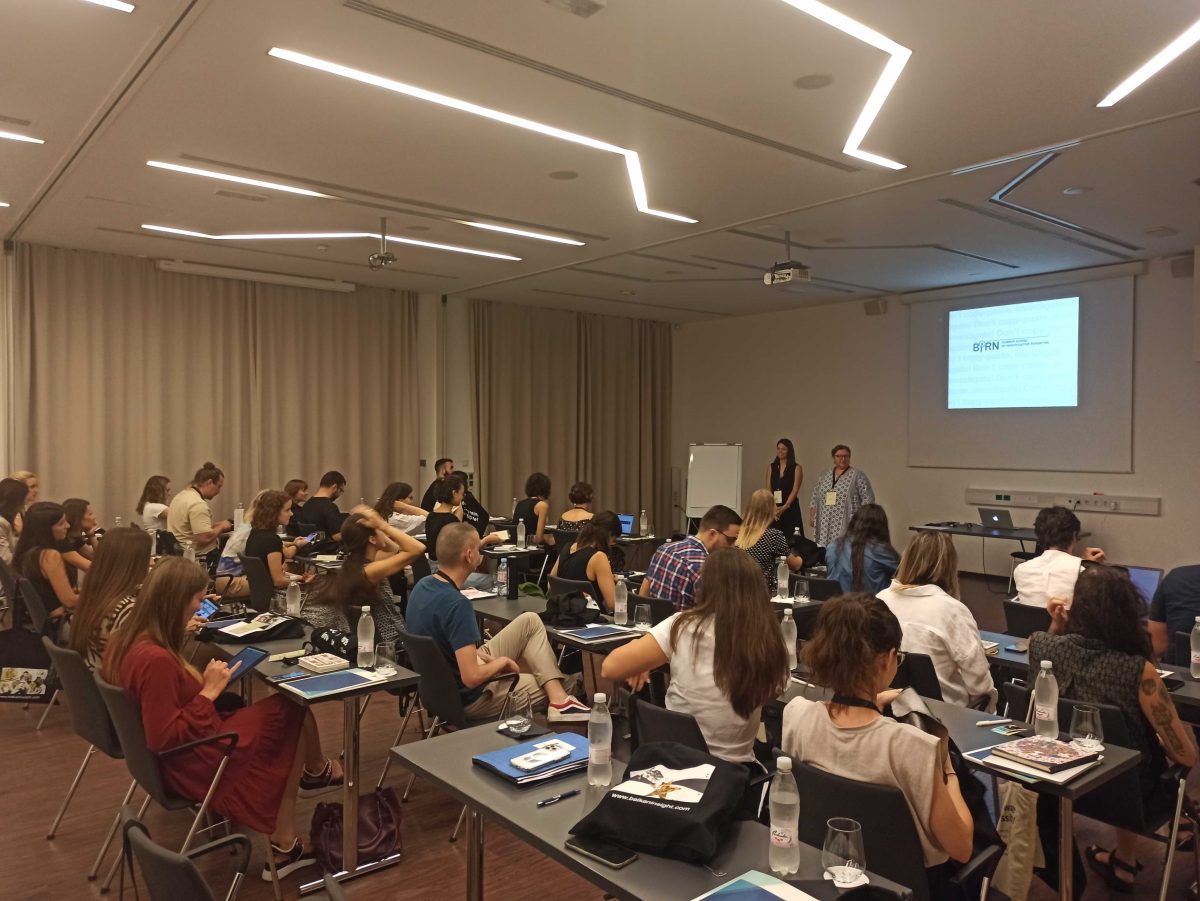
For the 12th time, BIRN’s Summer School of Investigative Reporting is bringing together 30 journalists from South-East and Central European countries for a week-long training programme to develop skills, explore new techniques and start cross-border cooperations.

This year’s Summer School of Investigative Reporting started on Monday in the Slovenian town of Portoroz.

During the week-long programme, journalists from Albania, Bosnia and Herzegovina, Bulgaria, Croatia, Czechia, Greece, Hungary, Kosovo, Moldova, Montenegro, North Macedonia, Poland, Romania, Serbia, Finland and Ukraine will learn new skills and techniques and work on investigative stories.

The head of Regional Operations at BIRN, Dusica Stilic, welcomed the participants selected from a record-breaking number of applications – 180 this year.

“We are very proud to have this extraordinary group of people eager to learn to become the best version of an investigative journalist they possibly can be,” Stilic said.

Ivana Nikolic, leading the Investigative Reporting Initiative Programme at BIRN, presented the agenda and encouraged the participants to work towards pitching powerful stories.

“This week, you will learn a lot about innovative journalism techniques and skills from award-winning journalists and editors,” Nikolic said, adding that for the first time this year, participants will have the opportunity to learn how to stay safe online while working on their investigations.

Freelance coder and data specialist Friedrich Lindenberg gave an introduction to open data for investigations. Lindenberg has been working with investigative journalists and anti-corruption activists for the past decade and has built data-driven tools that support their work.

Lindenberg gave practical advice on effectively searching and cross-referencing open databases and using various tools to track documents.

“It’s important to remember that a search doesn’t make any document or information reliable and doesn’t take away the journalist’s responsibility,” he told the participants.

The first day ended with the journalists sharing ideas and starting to work on pitching cross-border investigative stories.

Aida Tinjak

Aida joined BIRN Hub in 2021 as a Project/Programme Assistant. She is currently working as Grants and Project Coordinator, based in BIRN Hub’s office in Sarajevo. Her primary responsibilities entail coordinating and implementing project activities and overseeing and coordinating the grants allocation process.

Before joining BIRN Hub, Aida was a long-term associate of the Sarajevo Open Center, as an author of articles and infographics dealing with the problems and needs that LGBTI people and other marginalized social groups in Bosnia face. She also worked as an author of articles for Balkansmedia.org, which supports media independence and freedom of expression in Bosnia and Herzegovina, Montenegro, Kosovo, North Macedonia, and Serbia. Covering new tools and various techniques that journalists can use in their everyday work, the aim of the articles was to raise the quality of media content and build the competencies of journalists.

Aida gained diverse experience in several non-governmental organizations, working on cultural and creative industries projects, strengthening local self-government, and projects related to culture and art. For two-and-a-half years, she worked in Gallery 11/07/95 as a curator, where she had an opportunity to professionally explore and enhance the possibilities of museums’ educational function, which is one of her passions.

Aida graduated in Art History and Pedagogy from the Faculty of Philosophy, University of Sarajevo.

In 2023, she obtained the title of Certified New Media Designer, from the ITAcademy, International School for Education and Informatics.

Besides BCS languages, she is fluent in English.


Eleni Stamatoukou

Eleni Stamatoukou is Balkan Insight’s correspondent in Greece, writing on current affairs and producing features, analyses, reviews, interviews and investigations.

Eleni joined BIRN Hub in 2021 as Communications Manager. She is a data journalist based in Athens. She has worked for Greek and foreign media and the NGO SolidarityNow.

She has covered a big range of issues: migration, the refugee crisis, corruption, LGBTI and human rights, politics, business, sports, media, environment, health and culture.

Eleni was a Fellow of the Stavros Niarchos Foundation and Columbia Journalism School 2019.

She has a BA in Balkan Studies from Aristotle University of Thessaloniki, Greece and an MA in Social Anthropology (Europe) from Sussex University, United Kingdom.

She speaks Greek, English, Turkish and Serbian.

Karla Junicic

Karla joined BIRN in 2021 to coordinate work of local media outlets in the region who write investigative stories using the Engagement Citizens’ Reporting tool.

Before joining BIRN she wrote for VoxFeminae, and was part of the international affairs newsroom in Jutarnji list, Globus and Euractiv Croatia. Since 2020 she has been based in London as a correspondent.

After studying French and Russian literature at the University of Trieste, Karla decided to continue her Masters in Journalism at the Faculty of political sciences in Zagreb. Besides Croatian, she is fluent in Italian, English and French.

Milka Domanovic

After working in different roles in BIRN from 2013, with some breaks, Milka assumed the role of Regional Director in December 2022.

Prior to that, from October 2021, Milka held the position of Head of Business and lead and oversaw development of both non-profit and for-profit projects, maintaining existing and establish new partnerships.

Milka also worked as a lead researcher designing and implementing one of BIRN’s major regional projects, pioneering engagement journalism in the Balkans. She was in charge of development of the Engaged Citizens Reporting tool, used by more than 50 media in the Southeast Europe.

In addition, Milka has a decade of experience in journalism and fact checking, having worked for the fact-checking portal Istinomer [Trutho-meter], the Center for Investigative Journalism of Serbia and Serbia’s public broadcaster. She previously worked as a journalist and translator for BIRN’s programme Balkan Transitional Justice, as well as a fixer for international media. She participated in the fellowship programme run by the International Factchecking Network, which she spent within the Pulitzer Prize-winning PolitiFact.

Milka was a Chevening scholar and completed an MSc in Marketing and Technology at Goldsmiths, University of London, which helped her improve her research and analytical skills, as well as discover new potential for successful media outreach.

Along with the native BCMS, she speaks English and has basic knowledge of French, Macedonian and German.


Samir Kajosevic

Samir is based in Podgorica and covers stories from Montenegro as well as parts of regional investigative stories.

Previously, he worked as a journalist and editor at the Montenegrin daily newspaper Vijesti. In 2018, he became a correspondent for Balkan Insight.

He studied at the Faculty of Agriculture at the University of Belgrade and completed the Danish School of Journalism at Montenegro Media Institute.

Samir speaks Serbian, English and Albanian.

Tommaso Siviero

Based in Sarajevo, Tommaso joined BIRN in 2022. He is part of the Social Media team, taking care of BIRN’s social media channels in English.

Tommaso is a founder of FuoriFuoco, a network of under-25-year-old journalists covering Lake Como in Italy. He worked for five years as a journalist for “il Settimanale della Diocesi di Como”, a local weekly mostly covering environmental, educational and civil society-related topics.

Tommaso holds a Bachelor degree in political science from Università degli Studi di Milano. He speaks Italian, English, Norwegian and just a bit of Bosnian.

BIRN hosts Green Energy Days high-level conference

BIRN Kosovo hosted a high-level conference in Pristina on Thursday (May 19) as part of its second edition of Green Energy Days.

Featuring three discussion panels, the conference brought together senior leaders and decision makers from around Kosovo and the region to discuss the Western Balkans’ green energy future as well as the challenges of decarbonisation.

BIRN also used the event at Kino Armata to launch a new position paper on Kosovo’s National Energy and Climate Plan (NECP) that included 32 concrete recommendations on how to move the country towards an energy efficient and 100 per cent renewable economy.

Western Balkan countries, including Kosovo, have agreed to produce NECPs to help plan their energy futures in an integrated way that is in line with the European Union’s Energy Union policy. As part of the Sofia Declaration on the Green Agenda signed in 2020, they have also committed to ending the use of all fossil fuels by 2050 and reducing greenhouse gas emissions by 2030.

While specific energy targets for 2030 have yet to be finalised, the position paper lays out clear proposals for decarbonisation, based on close market integration, flexible electricity generation, and electrification of Kosovo’s transport and heating sectors.

BIRN Kosovo’s executive director, Jeta Xharra, introduced the conference by questioning whether the long established concept in the region of development being characterised by smoke, coal and quarries could be challenged through education. She said that a mindset shift is required so that citizens who are known for being proud of the cleanliness of their homes treat shared public spaces with the same respect.

“As Albanians, we are rare in having an eagle on our flag, but we are not leaving any room for eagles to fly freely or to have somewhere to land”, she said.

President of Kosovo Vjosa Osmani gave the day’s opening address and started by thanking activists and civil society members who had helped to bring environmental issues to the fore. She said that the green agenda has today transcended the energy and environment sector and has become part of every discussion and intersectoral policy.

The president also asserted that it was imperative Kosovo diversifies its energy supply, as demonstrated by the shortages over the winter and the need to import energy at high prices, as well as the critical situation in global energy markets caused by Russia’s invasion of Ukraine.

“Although the present may seem very challenging, our future must be clear. The future is green and sustainable. In this regard, we need to find good and quick solutions, courageous solutions, smart and affordable solutions”, she said.

Following President Osmani, the deputy head of the European Union Office in Kosovo, AnnaCarin Platon, spoke about the EU’s environmental priorities. She explained that the EU is the leading donor in supporting Kosovo’s environmental sector, having contributed more than 100 million euros since 2015.

“It is important to also highlight the costs of not transitioning, not only on health and the effects on climate change, but also the pure economic losses that come from lost investments and job creation. It is important to emphasise that there is no future for coal”, she said.

The first panel discussion put the spotlight on green cities and featured the mayor of Pristina, Përparim Rama, and the mayor of Tirana, Albania, Erion Veliaj.

Rama said that the cities of the future must work as systems, rather than focussing on one element and leaving others aside. He said that his vision for Pristina was to develop a “7-minute city”, where citizens can meet all of their needs within 7 minutes of their homes, and where walking, cycling, e-scooters and public transport are prioritised as the primary modes of travel.

“We have a city centre that must be redefined, meaning we have to figure out how to use the city centre. In our programme, we focus on the citizen, public transport and the alternatives, and vehicles would be the tertiary mode of transport. Then we will be thinking how to link the suburbs to provide easy access to people coming to the city centre, and how we provide access to the city centre from other towns and cities, knowing that Pristina is the capital city”, Rama said.

Talking about his experience of leading Tirana for the past seven years, Veliaj said that the most important issue is changing the mindset of citizens. He said that for a long time, the vehicle has been treated as a status symbol in Albania, but through bold interventions his administration has helped to transform Tirana’s city centre.

“It used to be a city of 200,000 inhabitants, now we have 1.2 million inhabitants with 200,000 vehicles, meaning we had to make a decision: Is the city going to be a car park for 200,000 vehicles or do we make it for the people? If it’s for the people then we have to plan a functioning city, so Skanderbeg Square was returned to citizens — because previously, 100,000 vehicles were travelling around it per day”, he said.

To conclude the opening panel, a video message was played from Benjamina Karić, mayor of Sarajevo, Bosnia and Herzegovina.

Karić said that there is a vision for Sarajevo to become a city of clean air and clean rivers, with sophisticated and practical options for urban mobility. She also explained how Sarajevo had been chosen as one of 100 European cities to become climate neutral by 2030 as part of a new EU initiative.

“It will be a great challenge … We are aware that the climate emergency must be tackled within cities, and by engaging citizens who are not only political actors in a governance structure, but also everyday users, producers, consumers and owners”, she said.

In the second panel, ministers from Kosovo and Albania discussed how to fight climate change in the region.

Liburn Aliu, Kosovo’s minister of environment, spatial planning and infrastructure, asserted that we must see economic development as connected to sustainability, as we cannot talk about development if there is devastation of the environment.

“When we talk about climate change and the reduction of environmental impacts, in terms of reducing CO2 emissions, this implies talking about transport, energy efficiency, waste management, reforestation and forest preservation. So, these are sectors under the responsibility of various ministries. And that’s why we must have an integrated approach”, he said.

Albania’s minister of tourism and environment, Mirela Kumbaro, joined via video link and talked about her country’s initiative to ban plastic bags. From June 1, the sale, import and production of single-use plastic bans will be banned across Albania, following a similar initiative that has already been introduced in Tirana.

However Kumbaro said that of all the policies that could be introduced, the most important thing was to try and change the way in which people think about the environment and public space.

“We know that whatever we throw on the ground — be it in the coastal areas of Albania or Montenegro, or in North Macedonia — it all goes into the rivers. And all of our rivers are common ones; whether a river starts in Kosovo or North Macedonia or Albania, they all end up in the Adriatic or in the Ionian Sea”, she said.

Kosovo’s minister of economy, Artane Rizvanolli, talked about the country’s energy system, explaining that a much more flexible system must be created and the use of lignite replaced. This transition should take place in an integrated fashion, she said, not only through investments in the grid and storage capacity, but also by ensuring that immediate steps are taken to ensure that there are enough people with appropriate labour skills in the renewables sector.

Rizvanolli also gave timescales for replacing the inadequate filters on the Kosova B power plant, stating that the filters in one unit would be replaced by 2024 and those on the second unit by 2025. She added that the government had analysed different options for refurbishing some of Kosova A’s units to keep the plant operational at full capacity until 2028, after which it would be maintained as a strategic reserve for winter and times of energy shortages.

KALLXO.com’s Visar Prepreza was also part of the panel to talk about some of the key recommendations from BIRN Kosovo’s NECP position paper. He said that Kosovo’s rejection of gas was a good one, both economically and environmentally, but also politically given how so many other countries are now attempting to rapidly reduce their reliance on gas from Russia.

Prepreza also said that it’s not possible to plan energy consumption without also planning how to save energy by cutting consumption. “We know that thermal insulation is not good in our houses, most apartments use pumps that are very inefficient. And the recommendation is for the government to think about subsidising energy-efficient pumps, which consume four times less energy”, he said.

Minister Rizvanolli said that the government aimed to start subsidising efficient heating methods such as thermal pumps and potentially pellet heating later this year.

The day’s final panel focused on some of Kosovo’s major municipalities.

Mayor of Prizren Shaqir Totaj said that one of the big environmental issues in his city was noise pollution, with bars and cafes frequently playing loud music, particularly in the summer months. He said that his new administration is working on producing a regulation that would introduce noise limits in Prizren with a maximum decibel level.

“In order for a successful therapy, you need an appropriate diagnosis. In this instance, that diagnosis is application of the law”, he said.

The recently elected mayor of Gjilan, Alban Hyseni, said that Gjilan has amongst the least amount of green space per capita in Kosovo, and that his city has had a big issue with wastewater. Part of his plans, he said, is to create a public square in Gjilan that functions as a green boulevard, while his administration plans to introduce green, electric transport and incentivise citizens to use it.

“It is our aspiration to make Gjilan the most green, ecological and sustainable city in Kosovo”, he said.

Mayor of Drenas Ramiz Lladrovci said that his municipality is one of the most polluted in Kosovo, but that they are developing a sustainable energy and climate action plan that will be completed by the end of the year. Lladrovci said he receives a lot of criticism for pollution that he cannot control and talked about the Feronikeli metal extracting company, which is located in his municipality.

“I’m certain that Feronikeli respects environmental standards and protects the environment. People think that I have interests there — of course I do, because 1,400 people in my municipality work there”, he said.

Mayor of Obiliq Xhafer Gashi said that his municipality — which contains the Kosova A and Kosova B power plants — is not only the most polluted municipality in Kosovo but possibly in the whole of Europe.

“We have 64 hectares of contaminated land that we need to address. One of the bigger issues in our area is also the slag landfill, which we are looking to rehabilitate together with the ministry”, he said.

The high-level conference is one of several activities held by BIRN Kosovo and its partners within the auspices of Green Energy Days, part of the “Europeanisation of Kosovo’s Environmental Agenda” project that is supported by the European Union Office in Kosovo and implemented by BIRN Kosovo, Bankwatch, ERA Group and TV Mreža.

This publication was produced with the financial support of the European Union. Its contents are the sole responsibility of BIRN and do not necessarily reflect the views of the European Union.