Meet the People Behind BIRN: Madalin Necsutu

Madalin has been Balkan Insight’s correspondent from Moldova and Romania since 2017. He is a political and investigative journalist who specialises in Eastern Europe and the politics of ex-Soviet states in the region.

After graduating from the Faculty of History in Bucharest, he joked that he would work as a journalist. But, for about 18 years since he started this job, he still loves what he does.

Let’s meet him!

  1. You graduated from the Faculty of History in Bucharest and completed an MA in International Relations. After that, you completed your postgraduate studies in diplomacy and are doing a PhD in History in Chisinau, Moldova. Still, you’ve been working as a journalist since 2006. What made you become a journalist?

Somehow, this job chose me. At first, it was a joke that a colleague and I would go to work for a newspaper after finishing the degree in History. And so we did. Only it wasn’t in a newspaper, but in the most significant news agency in România at the time – Mediafax. That’s when I started to like the press. We monitored all the print media in Romania every night before the newspapers reached the readers and I liked certain newspapers that were better on the foreign policy side. I joined one of them as a foreign policy journalist due to my History and international relations education. Therefore, my training in foreign policy, research skills, and the field of History helped me a lot, especially when I started practising investigative journalism. It’s driven me to practice this job for about 18 years, and I still like what I do.

  1. Why did you specialize in Eastern Europe and the politics of ex-Soviet states in the region?

That’s a good question. The first newspaper I worked for in Romania, ZIUA, The Day, had one of the best foreign policy editorial offices in Romania, and mainly dealt with Romania’s immediate neighbourhood and the former ex-Soviet space. So, I started to specialize in Moldova, Ukraine and the Russian Federation. In addition, this area, unfortunately, as we see today since the Russian invasion of Ukraine, is up-and-coming for foreign policy journalists. I have also always been interested in the “frozen” conflicts around the Black Sea created by Russia in the former Soviet states.

  1. What has changed in this region for journalism and media outlets in the past few years, especially since the beginning of the war in Ukraine?

Journalists in this area are, first of all, in high demand, and many of them are close to burnout. After the Coronavirus pandemic, journalists from this region almost immediately entered a new crisis – that of the war in Ukraine. So, the last four years have been and are still very difficult for journalists in the vicinity of Ukraine.

Unfortunately, there is news fatigue among journalists and the public regarding Ukraine. The fact that Ukraine is having a hard time maintaining the lines of defence against Russia, and the Western aid has been unacceptably delayed for a long time, is also reflected in the state of the journalists reporting on this area.

The Moldovan media, for example, is still very much subject to Russia’s hybrid war with all its elements of disinformation, fake news, manipulation, etc.

I have noticed another worrying trend in recent years, especially among young journalism graduates not found in newsrooms. On the other hand, I also see many colleagues who have re-profiled in other, less stressful fields. However, there are more opportunities for professional growth through training, development programs, scholarships, and other benefits that journalists enjoy. In other words, there are many less good parts and some opportunities.

  1. In 2016, the Romanian Professional Journalists Union awarded you for your political and investigative stories in Romania, the European Commission awarded you the ‘European Reporter in 2017’ prize, and the UN Development Project awarded you in Moldova in 2016. What do all of these awards mean to you?

Of course, I am happy for each of them. I won all of them with stories on which I worked a lot, some even in dangerous conditions in very unsafe areas or on the edge of wars.

The awards recognise my work but they don’t mean so much to me anymore; they are just nice memories. These prizes only validate the work from that moment. It is a good opportunity to mark some milestones and move towards new ones in my career.

The fact that such awards bring you professional satisfaction simultaneously raises your bar even higher. They also come with responsibilities not to reduce the engines and always try to be your best version. Always work professionally and for the benefit of those who read or follow you on TV screens.

For example, I don’t even participate in some competitions, to give younger colleagues more chances in such contests. I am happy to see their emotions and satisfaction when they receive such awards because I know this will push them to continue in this challenging job.

  1. What Balkan Insight stories are you especially proud of and why?

In seven-and-a-half years of working for Balkan Insight, I have written over 1,200 items, 350 of which were long stories.

One of my favourites was about the cryptocurrencies produced in the separatist Transnistrian region of Moldova with the help of cheap energy obtained from Russia’s supply of free gas. It was tricky and hazardous to get there. However, I created an exciting story about a cryptocurrency production scheme involving some dubious characters from Moldova and Russia.

Another story I liked that I have written in Albania was from a museum of the horrors of communism in Shkoder. I wrote it after a trip to the Balkan region organised by the European Commission. I liked it because, in addition to visiting this earth-shattering museum, I also made many documentaries to understand Albania’s history in the communist era and this whole phenomenon of the totalitarian state. I found shocking similarities with the history of the communist victims in Romania. My training as a historian led me to an in-depth analytical material for a foreigner who writes about Albania in the communist era.

But I have written dozens of stories for Balkan Insight, which in turn have various stories behind them.

  1. What obstacles do you encounter during your work, and what was the most challenging thing you experienced as a journalist?

There are many stories in this sense because I am also an investigative journalist. I’m not an adrenaline junky; I prefer to calculate the risk, not to take it.

However, I often went through dangerous situations during investigations in Moldova’s breakaway region of Transnistria and in Ukraine or in the Middle East on the border with Syria.

There are always obstacles, such as bureaucracy, lack of transparency, bad faith, etc. But as a journalist, you must enter through the window when you are thrown out the door. A good journalist should keep going until he gets what he wants to write in the public interest. The rest is easy and non-involved sort of journalism or PR.

  1. What is one message that you would like to send to young journalists interested in politics?

I would tell them that if they are unwilling to work and do a lot of poorly paid work at the beginning, they might look for another field of activity. If you don’t also have a romantic component of Don Quixote, who fights with windmills, and don’t put the public interest above your disposition to effort and resistance to stress, it’s good to look for something else. Real journalists are strong characters willing to sacrifice a lot of their free time, leave home for whole days, and be reimbursed below their level of training and involvement.

Those unwilling to make such sacrifices at the beginning of their careers are better off not even starting. To the others willing to go through these trials, I advise them to learn continuously, focus on specific aspects/areas/topics, and improve themselves. The most important thing is not to be complacent, to keep an open mind, and to always try new things.

BIRN Bosnia Journalist Shortlisted for Journalistic Award in Slovakia

Nino Bilajac, a journalist at BIRN Bosnia and Herzegovina, has been nominated alongside his colleague Tomas Madlenak for this year’s Slovak Journalistic Award in the ‘written investigative journalism’ category.

Bilajac and Madlenak were nominated for a series of pieces about Slovak policemen and the head of the country’s counterintelligence service who have taken refuge from  legal proceedings in Bosnia and Herzegovina.

Madlenak, a journalist with the Investigative Center Jan Kuciak, ICJK, was also nominated for another investigative piece in the same category.

In a joint investigation by BIRN Bosnia and ICJK that was published last year, Bilajac and Madlenak discovered that two officials involved in an internal struggle within the Slovak police are now living in exile in Bosnia and Herzegovina. They also established why the men have not been extradited back to Slovakia.

In an investigative piece published in February, Bilajac and Madlenak, along jointly with BIRN Bosnia journalist Enes Hodzic, found out that former Slovak counterintelligence head Peter Gasparovic, who was convicted of corruption and served two-thirds of his sentence, requested asylum in Bosnia and Herzegovina while on conditional release, which protected him from potential extradition.

Bilajac said the two investigative pieces involved a lot of effort, energy, time and stress.

“During our work, we were turned down by domestic institutions in Bosnia and Herzegovina, as if nobody was particularly interested in how high-ranking security officials from Slovakia had escaped from justice and were hiding in Bosnia and Herzegovina. Or it was just their defence mechanism due to an omission allowing three corruption convicts to come and stay in our country in a very short period of time,” he said.

Bilajac explained that, with the help of their fellow journalists from Slovakia, they talked to lawyers, politicians, sociologists and prosecutors.

Madlenak said the nomination was particularly important because it was a joint project.

“Before being killed [in 2018], [Slovak journalist] Jan Kuciak was someone who was advocating for cooperation between journalists, especially investigative ones. To me, this nomination confirms that cooperation between journalists is working, we can genuinely be colleagues, not just competitors, even if we come from different media outlets,” he said.

He also said that such cooperation was important “considering events in our country and internationally with non-democratic regimes and movements being on the rise”.

“I think it is time to suppress our desire for exclusive news and our own ego and start working together. Investigative journalism is under unprecedented pressure and if we want to persevere, we must work together,” he said.

BIRN Kosovo Holds Training on Terrorism and Violent Extremism for Judges and Prosecutors

Between 24-28 April 2024, BIRN Kosovo held a four-day training on terrorism and violent extremism for judges and prosecutors in Durrës, Albania.

The intensive training was structured into pre-arranged sessions as outlined in the training curriculum and methodology. On the first day of the training, Mr. Mensur Hoti, Director of the Department for Public Safety in the Ministry of Internal Affairs, gave an opening address on the objectives of the Strategy and Action Plan. Mr. Luan Keka, Director of the Kosovo Police Unit on Anti-terrorism, led a training session on the rise of far-right movements in Europe and terrorist organizations in Kosovo, which included a detailed explanation of the AKEA Case presented by Mr. Nexdet Haxhaj, Kosovo Police Investigator on Unit of Anti-terrorism.

During the second day of the training, two sessions were held discussing national and international investigations of terrorism cases and the role of the prosecutor’s office in addressing them. Mr. Keka and Mr. Haxhaj spoke about risk factors and terrorist threats in Kosovo. They also introduced case models such as the Case of Israel and the Plan of terrorist attacks in North Kosovo (Banjska). The participants were then divided into groups for practical work, and Ms. Fikrije Fejzullahu, Prosecutor in the Special Prosecutor’s Office presented the Prosecution’s role in addressing terrorism and violent extremism cases, including the usage of drones for investigative purposes and supporting the indictments in court.

Labinot Leposhtica, Legal Office and Monitoring Coordinator at BIRN Kosovo, and Arsim Tahiri, Director of Kosovo Probation Service gave presentations on the justice system during the training’s third day. They discussed the lack of communication between courts and the Kosovo Probation Service about final reporting. The speakers highlighted the importance of addressing the post-conditional release of individuals and how dossiers are prepared. Mr. Tahiri focused on the pre-punishment report, which is an official document containing information and evidence gathered from various bodies to help in finding a sentence or an adequate alternative punishment.

During the final day of the training session, the focus was on strategic communication, specifically exploring the communication tactics of terrorist groups. Kreshnik Gashi -Managing Editor at Kallxo.com highlighted that these groups employ concrete methodologies, plans, and strategies that vary depending on the situation and location. Through case studies, it was observed that these organizations have different approaches to communication: utilizing the internet to a greater extent and causing a stir among global media. Furthermore, various techniques of media usage were presented such as live streaming, sending materials to media, spreading narratives of disinformation, and community intimidation.

This training was attended by 26 participants of whom 14 were women. The participants have actively engaged in this training by sharing experiences and asking questions on how to effectively deal with terrorism and violent extremism.

The training was part of the ‘Resilient Community Programme’ funded by GCERF.

Balkan Journalists Deepen Knowledge on Engaged Citizens Reporting

Over 50 journalists from eight media outlets joined an online ‘learning circle’ on April 22-23 to gain more knowledge about engagement journalism and innovative methods to involve women, young people and under-represented communities in the creation of high-quality content.

The learning circle, entitled ‘Building Foundations for Engaging Citizens in Reporting’, was organised as part of the Western Balkans Media for Change project for media outlets from Albania, North Macedonia, Serbia, Montenegro and Kosovo.

Fifty-three journalists strengthened their understanding of community dynamics, engagement journalism principles and the development of investigative stories based on community involvement.

On the first day, journalists received an introduction to engagement journalism from Corrective, an award-winning, public interest-oriented media company from Germany that aims to strengthen democracy.

Corrective is involved in investigative journalism and seeks to trigger public debate, work with members of the public on their research and promote educational programmes.

In the first session, the journalists explored the emergence of independent local newsrooms that redefine the landscape of journalism production and funding.

They also learned how to actively engage people in their reporting processes, amplify marginalised voices and empower local communities to shape their democratic environments.

Community journalism as a topic was then discussed, showcasing best practices from industry pioneers and strategies for building sustainable business models with community at the core.

The second session focused on presenting a compelling case study titled ‘Suddenly, your body is not yours’ which highlighted barriers to obtaining an abortion in Germany through a crowd-sourced survey.

In the investigation by Correctiv, 1,505 women shared their experiences, shedding light on the systemic failures within the German medical system concerning abortion care.

The second day focused on the development of editorial startegies and best practices to engage communities. In the first session of the second day, the journalists explored editorial strategies for creating engaging content and learned best practices from BIRN.

This part of the learning circle was led by Katarina Zrinjski from BIRN Bosnia and Herzegovina, Besar Likmeta, editor-in-chief at BIRN Albania, and Ana Petruseva, country director of BIRN Macedonia.

The day continued with practical work and ended with a session on using the Engaged Citizens Reporting tool, which BIRN developed through the Media for All project.

The tool enables users to crowdsource data and facilitate engagement with communities. Karla Junicic, BIRN’s ECR Coordinator, presented the tool and its potential for engaging audiences in content creation.

The learning circle formed part of the editorial and mentoring support provided to journalists and media outlets as part of the project. The project provides financial support to media outlets and individual journalists to help them improve operational capacity, business sustainability and innovation potential, while aiming to better equip media professionals to produce more quality diverse, fact-checked and gender-sensitive content that will reach and engage with wider audiences.

The Western Balkans Media for Change project is funded by the UK Government and implemented by the British Council in partnership with the Balkan Investigative Reporting Network, Thomson Foundation and The International NGO Training and Research Centre, INTRAC. It supports the work of media outlets and individual journalists from the Western Balkan countries.

Call for Applications: BIRN Training on Gender-based Misinformation and Issues Related to Sexism

The dissemination of false information poses a serious risk to security, openness, and democracy. It has an impact on society on several levels, impeding efforts to promote interethnic communication as well as the fight against hate speech, discrimination, violence, and gender inequality.

Online violence and misogyny against women were among the most widespread subjects in the media during the last few years. The 2023 Women, Peace, and Security – WPS index published by the Oslo Institute for Peace Research, PRIO, which ranks and scores 177 countries based on the status of women, placed Kosovo as the 100th country in the world. Consequently, Kosovo finds itself as the second-worst country in Europe for women to live in.

Media as the main source of information, plays a crucial role in creating a collective perception when reporting about women-related topics. Thus, educating journalists about gender-based reporting and sexism is a step to building an unbiased society in the future.

To address the challenges and to create a more comprehensive and professional reporting, on May 23, 2024, BIRN will organize a one-day training module with journalists, and journalism students on gender-based misinformation and issues related to sexism.

This training will gather 27 young and mid-career journalists and students of journalism from different communities, who will have the opportunity to gain firsthand knowledge on reporting on issues related to sexism and to use mechanisms and tools to verify and combat gender-based misinformation.

The training module will be delivered by BIRN’s team of award-winning journalists and editors, who have extensive experience in investigating, reporting on, and advocating for fact-checked journalism and gender-based reporting.

Who can apply?

Young and mid-career journalists, students of journalism from across different regions of Kosovo, interested in learning about reporting on gender-based topics and issues related to sexism are eligible to apply in this call.

With a special focus, applicants from marginalized communities, minority ethnic groups and women who fulfill the above-mentioned criteria are encouraged to apply in the call.

To apply for the training session, please click here.

Language:

Simultaneous translation in Albanian, Serbian, and English will be provided.

Location:

This training will be held in Prishtina, Kosovo. Further information regarding the exact location and agenda, will be provided to chosen candidates only.

Deadline for application: May 14, 2024

Date of the training course: May 23, 2024

*This training activity is supported by the UNMIK.

BIRN Investigation Shortlisted for European Press Prize 2024

Story looking at European Commission’s proposal to scan for child sexual abuse material online is one of 25 nominations for prestigious award.

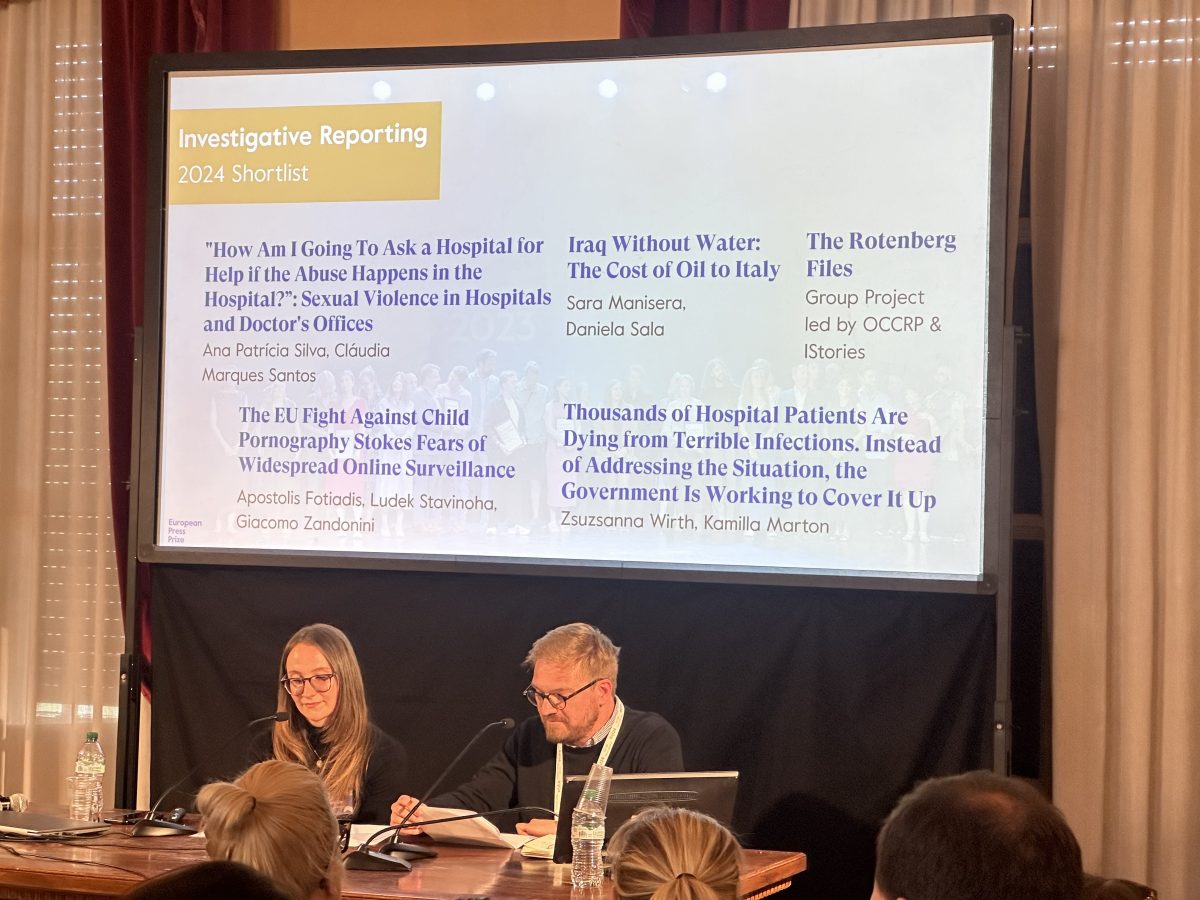
“Who Benefits?’ Inside the EU’s Fight over Scanning for Child Sex Content”, a BIRN investigation, is among 25 stories nominated for the European Press Prize 2024. The nomination was announced on April 19 in Perugia, Italy, during the International Journalism Festival (IJF).

An investigation published on Balkan Insight by BIRN’S investigative editor Apostolis Fotiadis, journalist Giacomo Zandonini and an associate professor in media and international development at the University of East Anglia, Luděk Stavinoha, gained a nomination in the Investigative Reporting Award category.

This investigation uncovers a web of influence in the powerful coalition aligned behind the European Commission’s proposal to scan for child sexual abuse material online, a proposal that experts say puts rights at risk and will introduce new vulnerabilities by undermining encryption.

It was one of the BIRN’s investigations that was most widely republished and cited across Europe – by Le Monde (France), El Diario (Spain), Solomon (Greece), Die Zeit (Germany), De Groene Amsterdammer (the Netherlands), Netzpolitik (Germany), IrpiMedia (Italy), and Domani (Italy), amongst others.

After BIRN published the investigation, the main political groups of the EU Parliament agreed on the draft law to prevent the dissemination of online child sexual abuse material (CSAM). Europol’s in-house research and development centre, the Innovation Hub, has already started working towards an AI-powered tool to classify child sexual abuse images and videos.

This year marks the 12th edition of the European Press Prize – the Awards for excellence in European journalism. The prize received almost 800 submissions from over 40 European countries. More than half of the 25 shortlisted projects tackle the lingering trauma of abuse, the PTSD of war, and the challenges Europe faces addressing mental health issues.

“An important part of the European Press Prize’s mission is encouraging journalists to keep holding power to account by being a source of pride and validation.

“Announcing our 2024 Shortlist at one of the biggest journalistic events in Europe fits in perfectly with that part of our mission. The IJF Perugia is a very fitting festival to celebrate the best of European journalism, together with so many journalists and media professionals – both from the Prize’s Community and beyond,” said Jennifer Athanasiou-Prins, Executive Director of the European Press Prize.

The European Press Prize is awarded yearly in five categories: Distinguished Reporting, Innovation, Investigative Reporting, Public Discourse, and Migration Journalism. The Panel of Judges also awards a Special Award to journalism that defies categories and disciplines. Each award is worth €10,000.

BIRN Became Partner of Journalism Cloud Alliance

The Alliance was launched on April 17 in Perugia, Italy, to democratize access to data storage and promote collaboration among various stakeholders – and so assist investigative reporting worldwide.

The Journalism Cloud Alliance aims to ensure watchdog journalism can perform its public service role by controlling the rising costs and constraints of cloud computing and developing collaborative solutions to collective challenges.

The Global Fund for Media Development (GFMD) and the Organized Crime and Corruption Reporting Project (OCCRP) spearhead the Alliance. Besides BIRN, the partners include Global Investigative Journalism Network (GIJN), International Consortium of Investigative Journalists (ICIJ), Pulitzer Center, Center for Journalism and Liberty, Big Local News, Distributed Denial of Secrets (DDoSecrets), Forbidden Stories, and Arab Reporters for Investigative Journalism (ARIJ), alongside philanthropic and academic organizations.

“The Journalism Cloud Alliance is crucial to building the blueprint for the future of investigative reporting. As journalists, we’re flooded with data we can’t process, analyze, and report on and it’s the public that loses because of this situation. We need to create a data infrastructure that allows us to create more trust with readers and help lead to more robust democracies,” said OCCRP Co-Founder Paul Radu.

Cloud services are infrastructural to journalism today and are likely to become even more important as the amount of data generated increases, as well as AI integration into the newsrooms.

The Journalism Cloud Alliance aims to democratize access to data storage and processing capacity by promoting collaboration among various stakeholders, and to make data resources more accessible and affordable for investigative and data-driven newsrooms worldwide.

Support will be provided to large and small newsrooms. The Alliance also prioritizes fostering accountability journalism and investigative efforts across the scale.

The next steps include conducting detailed cloud capacity and cost research on current and potential members of the Alliance and adding more members to build a robust coalition to secure long-term financial and technical support for these journalism costs.

BIRN Macedonia Holds Fourth Training for Young Journalists

The fourth in a year-long series of training courses for a dozen young journalists took place from April 12-14 in Strumica, North Macedonia.

A new round of training sessions on investigative journalism basics was held in Strumica, North Macedonia, with a focus on writing and storytelling.

The course titled “Weaving a Story” began with the young journalists’ reflections on the stories they’d worked on over the last two months with their BIRN Macedonia mentors.

They presented how their stories advanced and discussed their experiences in contacting sources, communication with state and local institutions, data selection, as well as difficulties encountered while working on the stories.

The day continued with sessions on the importance of observation and on how to make use of photos and videos, including basic editing tips and tricks.

On the second day, participants put into practice what they learned the previous day during a visit to the Smolare waterfalls, where they were tasked to write an intro for a feature story and put together a short video. These texts and videos were later presented and jointly discussed with BIRN’s mentors, who gave constructive feedback.

The final day was dedicated to sessions about storytelling where participants were presented with different case studies to illustrate the various ways and approaches they can use to “hook” audiences to their stories.

They were also given a puzzle exercise: they got nine paragraphs of a BIRN article, without the lead, that they had to rearrange logically and write their own lead.

The final event part of the year-long training series for investigative journalism will take place in June.

BIRN Kosovo and Radio Gorazdevac Hold Public Discussion With Residents of Gorazdevac About Public Services

On April 11, 2024, Radio Gorazdevac in partnership with BIRN Kosovo held a meeting with residents of Gorazdevac, on Radio Gorazdevac spaces, to discuss the needs of the Gorazdevac community regarding public services.

This interactive meeting gathered 13 residents of the village Gorazdevac near the municipality of Peja, out of which 6 were women. The participants shared their experiences of living in a rural part of Kosovo, by emphasizing the lack of essential living conditions such as a good sanitation system, electricity, and the lack of public institutions including kindergartens and youth centers where their residents conduct activities. Overall, the meeting shed light on a load of problems and poor public services in this area.

More specifically, Visar Prebreza, editor-in-chief at BIRN started this gathering by presenting the topic of the discussion and then invited residents to share their concerns and needs on public services. Residents listed several concerns starting from the lack of safety on the roads, especially around school areas and the lack of sidewalks, the troubles with bills on water and electricity, the lack of a proper sanitation system, and the lack of kindergartens that enroll children younger than 3 years old.

Moreover, Darko Dimitrijevic, the executive director of Radio Gorazdevac raised the problem about being the only media in the area and the difficulties to access the information from local or central institutions regarding open calls for subsidies or grants for citizens of Kosovo in agriculture, economy or other social aids as well as other important announcements from the Kosovo institutions. In addition, residents raised concerns about the exclusion of Serbian language in most of the announcements and official documents from Kosovo institutions.

This activity was implemented as part of the “Addressing the situation with public services in war-affected community of Gorazdevac” project implemented by BIRN Kosovo and Radio Gorazdevac supported by Community Building Mitrovica and the American people through USAID in Kosovo.

Transitional Justice Vital for Bosnia’s EU Path, Conference Says

Participants agree transitional judice is a priority for the EU and feelings of ‘fatigue’ must not get in the way.

A conference titled “Role of Transitional Justice in Bosnia’s European Path”, organised by the Balkan Investigative Reporting Network of Bosnia and Herzegovina, BIRN BiH, with support of the Belgian embassy, on April 4, put a focus on one of the five key priorities of the European Union, which advocates promoting an environment conducive to reconciliation and overcoming the legacies of the war.

Denis Dzidic, executive director of BIRN BiH, said the fifth priority of the EU should be additionally defined, especially in light of widespread hate speech, revisionism and denial of genocide and other crimes.

“All these things continue to deepen the gap between people and it is simply impossible to talk about other aspects of the European Union accession without making this segment clearer and more precise,” he said.

“For that reason, we wanted to open a discussion with a broad spectrum of people. Today, we have representatives of victims’ associations, who are manifestly living with the consequences of all that, but also representatives of judicial institutions and the international community,” Dzidic added.

He noted that, unfortunately, government representatives did not accept an invitation.

Benjamin Sturtewagen, acting charge d’affaires of the Belgium embassy, said his country had tried to affirm this topic as a priority in the UN Security Council a few years ago.

“Transitional justice is one of the priorities of the EU and that is especially highlighted in a Council of Europe’s decision of two weeks ago. So, this remains one of the focus points of our efforts and our activities. Just like with any other topic that is talked about a lot, public fatigue happens. That has happened with transitional justice too. But given it is the priority of the UN, European Union, BiH and all us actors, we must not let it be forgotten and the fatigue happen,” Sturtewagen said.

Results of an analysis of almost 30 years of work on prosecution of war criminals in Bosnia were presented at the conference by Dzana Brkanic, BIRN BIH deputy editor, and by Emina Dizdarevic Tahmiscija, BIRN BiH journalist.

Speakers included state prosecutor Ivan Matesic, Murat Tahirovic, president of the Association of Victims and Witnesses of Genocide in BiH, Joeri Maas, from the EU Office in BiH, Irma Zulic, political and development advisor at the United Nations in BiH, Mirza Buljubasic, a professor of Criminalistics, Criminology and Security Studies and Agnes Picod, senior human rights advisor at the Office of the UN Resident Coordinator in BiH.

The participants concluded that civil society organisations, jointly with associations of victims and with support of the international community, must insist on this matter with the holders of authority.