BIRN Montenegro Journalist Wins EU Journalism Prize

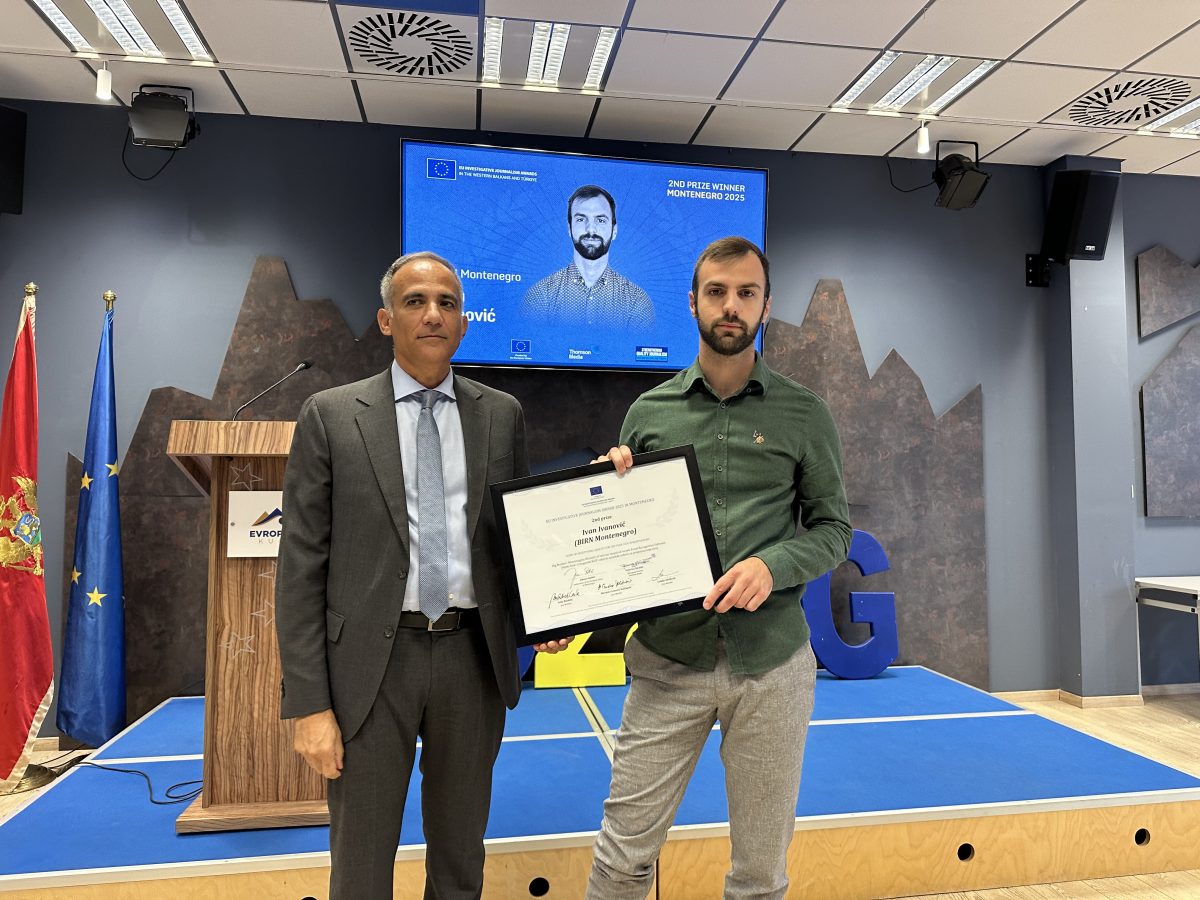
BIRN Montenegro journalist Ivan Ivanovic won second prize at the EU Award for Investigative Journalism 2025 on Wednesday.

Ivanovic received the award for his story Big Brother: Montenegro’s Interior Ministry purchased Israeli facial recognition software’. BIRN’s investigation revealed that Montenegrin Interior Ministry bought a facial recognition software product called ‘Better Tomorrow’ and deployed it in public spaces in the capital Podgorica and the coastal towns of Bar and Budva.

Following the story’s publication, the Agency for Personal Data Protection banned the use of the software.

“This investigation was the result of several months of work involving the analysis and processing of documents obtained mainly through freedom of information requests, which once again proves how essential this tool is for investigative journalism,” Ivanovic said.

The second prize was shared by daily Pobjeda journalist Jovan Nikitovic for his investigation of abuses during the reconstruction of a museum in the town of Bijelo Polje.

The first prize was awarded to TV channel Vijesti for the documentary ‘Target: Montenegro – A State of Relatives’. The documentary investigates cases of relatives of state and local officials being employed within the public administration.

The third prize went to Podgorica-based anti-corruption NGO, ‘MANS’ for its investigation into the assets of former National Security Agency official Dusko Golubovic.

The competition recognised the best investigative stories published in Montenegro during 2024, with 34 entries submitted.

Labor Rights for All – LRA

BIRN Kosovo

Lead Applicant’s Name: Advocacy Training and Resource Center – ATRC

Co-applicants:  Balkan Investigative Reporting Network – BIRN Kosovo & Jahjaga Foundation

Donor:  European Union Office in Kosovo

Short Summary:

Considering the emerging situation regarding the labor rights and the partner’s large impact on the field of labor rights, the project aims to enhance the role of the Labor Rights Consortium’s (LRC) to be a collective voice of the workers. The proposed action will strive to influence key sectors/cross-sectoral reforms, raise capacities of media literacy and improved access to information for all with a special emphasis on vulnerable groups, strengthen civil society participation and activism through LRC’s capacity building, advocacy campaigns and investigative reporting through the Kallxo.com platform and a sub-granting scheme.

Project goal:

The main objective of the project is to increase institutional responses and compliance regarding labor rights violations through strengthening the Labor Rights Consortium as a sustainable all-inclusive initiative, educating citizens and promoting the reporting of labor rights violations through investigative journalism based on citizen reporting.

Moreover, the action will progress the potential, effectiveness of the Labor Rights Consortium and promote its collective approach to increase advocacy and influencing key policy and legislative changes, therefore building direct collaboration with stakeholders such as the Labor Inspectorate.

Target Group(s):

Workers, women, and marginalized communities aiming to increase workers’ voices, educate public about their labor rights and enhance media literacy and journalistic reporting through which public institutions will be kept accountable.

Expected Results:

  • 1: Strengthened capacities of the Labor Rights Consortium and private sector workers through a comprehensive program, fostering increased activism and policy reforms.
  • 2: Increased tangible policy and legislative changes addressing labor rights violations through joint advocacy efforts of the Labor Rights Consortium through specific actions.
  • 3: Improved performance and response of institutions through up to Periodical research and analyses which will provide valuable insights and recommendations into labor rights, modern slavery, workplace security, and conditions on public projects.
  • 4: Increased visibility and citizen engagement of the Labor law updates and public education through social networks promoted through a comprehensive campaign.

Main Activities:

  • (30) investigative journalistic TV reports about practices at businesses that were reported to have violated the Labour Law on BIRN’s Kallxo.com platform will be broadcast.
  • (5) TV Programs based on citizens’ reports about criminal offenses related to the workplace will be broadcasted.
  • (3) documentaries will be produced on stories about labour rights violations
  • BIRN will publish 2 annual reports that will monitor the activities of institutions related to labour rights,
  • (15) educational materials (VIDEOS)
  • (6) TV Programs “Prosecution” in which selected prosecutors will appear to investigate the reported cases, each last for 10 to 30 minutes.
  • (5) educational campaigns (short videos)
  • (5) TV debates on labour rights violations
  • (6) In-depth investigative TV reports
  • (2) annual reports that will monitor the activities of institutions related to labour rights, including auditing the criminal cases handled by the Labour Inspectorate, Kosovo Police, State Prosecution’s Office, and Courts.

Media Integrity and Disinformation Watch – MIDWatch

BIRN Kosovo

Lead Applicant’s Name:

Balkan Investigative Reporting Network – BIRN Kosovo

Co-applicants:

Association of Journalists of Kosovo

Internews Kosova

Donor:

British Embassy in Pristina – Foreign Commonwealth & Development Office

Short Summary:

The project “Media Integrity and Disinformation Watch”, implemented by BIRN Kosovo in partnership with the Association of Journalists of Kosovo and Internews Kosova seeks to combat disinformation in Kosovo by enhancing media transparency, promoting investigative journalism, raising institutional awareness, and advocating for policy reforms to strengthen resilience against foreign influence and improve oversight of media financing.

Project goal:

The overall goal of the MIDWatch project is to strengthen efforts against disinformation and promote media integrity in Kosovo.

Target Group(s):

  • Independent journalists and media outlets.
  • Targeted law enforcement and regulatory institutions.
  • General public, including minority and vulnerable communities.
  • Women journalists and underrepresented groups.

Expected Results:

  • Contribute to increased transparency in media ownership and financing through journalistic reporting.
  • Strengthened investigative journalism and fact-checking debunking and pre-bunking disinformation.
  • Improve institutional ability to track and respond to disinformation.
  • Inform public discourse and policy reform recommendations.

Main Activities:

  • Media monitoring of TV, online media and social media platforms to track how foreign disinformation spreads and targets Kosovo’s institutions.
  • Production and publication of 25 fact-checking articles.
  • Production and publication of five thematic analyses related to foreign interference and disinformation.
  • Production and broadcast of five investigative documentaries that expose the impact of foreign disinformation, propaganda, and hate speech targeting Kosovo’s democracy and social cohesion.
  • Organization of four televised debates and one national conference, to publish main findings of the media monitoring report and discuss current challenges in the media environment as well as solutions and best practices.
  • Awarding grants to 15 journalists and media professionals, including 5 grants for women journalists and 5 grants for journalists from non-majority communities, that will investigate stories directly addressing disinformation.
  • In cooperation with the Association of Journalists of Kosovo, awarding three Journalism Awards for best stories addressing disinformation and fact-checking.
  • Conducting 4 institutional awareness programs, to strengthen institutional response towards disinformation that affects credibility of institutions
  • Drafting a policy brief for legal reform to enhance transparency, oversight, and protection against disinformation.

Call for Support for Journalists and Media Professionals: MIDWatch Fellowship

Between October 2025 and January 2026, BIRN will support 15 enthusiastic journalists in conducting investigations and producing journalistic content focused on fact-checking and disinformation.

Selected journalists will receive financial support of £2,000 for producing media content in various formats, including:

  • TV stories / TV documentaries
  • TV debates
  • Video stories for social media
  • Investigative articles for online media
  • Analytical pieces for online media
  • Radio productions

Application and Publication Criteria

  • All journalists and media professionals are eligible to apply for this support fund.
  • In line with the predefined criteria, the selection jury will ensure that at least five projects are led by women journalists and five by journalists from non-majority communities.
  • Media productions must be published in licensed media outlets in Kosovo or members of the Press Council of Kosovo (KMSHK).

Journalists will be supported to carry out research and reporting which aims to produce concrete results in the following areas:

  • The impact of foreign disinformation on security and inter-ethnic relations
  • The impact of gender-based disinformation and the discouragement of women’s participation in public life
  • The impact of disinformation and foreign influence on religious tolerance
  • The impact of foreign influence on Euro-Atlantic orientation
  • Transparency of media outlets and information channels reaching Kosovo audiences
  • Funding sources of channels spreading disinformation to audiences in Kosovo
  • Capacity of media and national institutions to address disinformation and foreign influence
  • The impact and sources of disinformation affecting public health and public life
  • The role of artificial intelligence and technology in amplifying disinformation
  • Identification of disinformation channels targeting Kosovo audiences

Journalists may also propose other relevant ideas related to the field of disinformation.

Applicants must propose at least one media product, though producing multiple pieces across different formats is highly encouraged.

BIRN will provide mentoring support throughout the entire publication process.

Application Period

The call will remain open from 8 October 2025 to 18 October 2025.

Evaluation

A professional jury, composed of independent experts and BIRN representatives, will evaluate and select the projects to be supported under this scheme.

About the Project

The journalist support scheme is part of the “Media Integrity and Disinformation Watch – MIDWatch” project, supported by the British Embassy in Kosovo, through financial support from the United Kingdom government.

Please send the application form and required documents (see below) to the email [email protected] with the subject line “Application MIDWatch Fellowship for Journalists”.

Application Form in Serbian Language

Application Form in Albanian Language

Promoting community engagement, public safety, and women empowerment for a resilient security sector in Kosovo

BIRN Kosovo

Lead Applicant’s Name:

Balkan Investigative Reporting Network – BIRN Kosovo

Co-applicants:

Advocacy Center for Democratic Culture (ACDC)

Jahjaga Foundation

The Institute for Security and Resilience – PREVENT

Internews Kosova (I/KS)

The Balkan Investigative Regional Reporting Network (BIRN HUB)

Donor:

The Matra and Human Rights Fund

Swiss Federal Department of Foreign Affairs, FDFA

Short Summary:

The project addresses the lack of trust between communities, civil society, and law enforcement in northern Kosovo, and the systemic underrepresentation of women in security institutions. It fosters community engagement, strengthens gender inclusion, and promotes inclusive dialogues with the K-Serb community including women to ensure their concerns shape security policies. These issues, identified in Kosovo’s National Strategy on Gender Equality and European Commission reports (2023), undermine public safety, trust, and institutional resilience as well as enhance accountability and community-police relations.

Project goal:

The project aims to enhance transparency and accountability of law enforcement in northern Kosovo by strengthening trust and cooperation between communities and police through inclusive dialogue, multi-ethnic monitoring initiatives, and the promotion of community policing principles. It encourages citizen reporting, supports institutional accountability, and reinforces the role of oversight bodies such as the Police Inspectorate to ensure more responsive and responsible policing. In parallel, the project works to advance gender equality in Kosovo’s security institutions by increasing women’s participation—particularly from underrepresented communities including northern Kosovo—advocating for gender-sensitive policies, and supporting women’s leadership development. By integrating these efforts, the project contributes to building safer, more inclusive, and resilient communities grounded in accountability and equal representation

Target Groups:

  • Citizens of Kosovo, with a specific focus on residents of the Mitrovica region
  • Media outlets
  • Civil Society Organizations
  • Kosovo Police

Expected Results:

Result 1 – Increased monitoring capacity of community members and CSO activists through specialized training, enabling them to effectively assess police compliance with legal standards and human rights.

Result 2 – Strengthened communication and cooperation between community members and law enforcement, fostering trust and promoting accountability.

Result 3 – Increased public understanding of the police’s role in ensuring public safety through targeted awareness campaigns and media initiatives.

Result 4 – Improved transparency and accountability of law enforcement through comprehensive monitoring and reporting.

Result 5 – Kosova Women Security Network is established and serves as a sustainable support system for women within security institutions.

Result 6 – Enhanced public awareness of the importance of women’s involvement in security institutions.

Result 7 – Improved policies and practices promoting gender-sensitive recruitment and workplace environments.

Result 8 – A regular Monitoring and Evaluation mechanisms to track progress and address barriers has been created and remains active.

Result 9 – Enhanced the professional and leadership capacities of women in the security sector.

Main Activities:

Activity 1 – Establishing Regional Community Center for Public Safety in Mitrovica (RCCPSMM)

Activity 2 – Establishing a Joint Multi-Ethnic Team and Specialized Training for Community and NGO Members

Activity 3 – Direct Monitoring of Police Work in the Field

Activity 4 – Periodical Reports on Monitored Cases, Including Press Releases, Press Conferences and awareness raising

Activity 5 – Periodical Reports on Monitored Cases, Including Press Releases, Press Conferences and awareness raising

Activity 6 – Identifying and Addressing Women’s Security Concerns in the Northern Part of Kosovo

Activity 7 – A regular Monitoring and Evaluation mechanisms to track progress and address barriers has been created and remains active
Promoting Social Audit for Local Transparency and Accountability

BIRN Kosovo

Lead Applicant’s Name:

Balkan Investigative Reporting Network – BIRN Kosovo

Co-applicants:

D+

Donor:

Decentralisation and Municipal Support – DEMOS

Short Summary:

Through the development of the Social Audit program, BIRN and D+ aim to build the capacities of six local organizations and 120 community activists to identify, monitor, and advocate for the improvement of 16 projects funded by the Municipal Performance Grant, by applying the Social Audit methodology.

Project goal:

Objective 1: Development of the capacities of local NGOs for implementing the Social Audit process

Objective 2: Development of the capacities of 120 community activists to participate in the Social Audit process

Objective 3: Improvement of conceptual and ongoing project designs

Objective 4: Involvement of Social Audit Groups in the monitoring of public procurement processes

Objective 5: Increase of citizen participation in the direct supervision of project implementation

Objective 6: Increase of citizen participation — with a focus on marginalized groups — in public consultations

Objective 7: Education of citizen groups to conduct project monitoring

Objective 8: Formalization and transformation of the Social Audit report into a working document for the municipality

Objective 9: Mass education of citizens about the role and work of Social Auditing

Objective 10: Change of local policies in the planning of investment projects

Target Groups:

– Social Audit Teams

– Decision-makers

– Contractors

– General Public

Expected Results:

Result 1: Promotion of Social Audit as a proven methodology for citizen engagement

Result 2: Development of local NGOs’ capacities for the Social Audit process

Result 3: Direct impact on audited projects by providing recommendations during the planning and implementation phases

Result 4: Increased standards of transparency and accountability among municipal mechanisms

Result 5: Number of citizens trained to be part of Social Audit groups

Result 6: Improvement in the planning and implementation of capital projects

Result 7: Involvement of Social Audit groups in discussions and decision-making processes

Main Activities:

– Signing of a joint agreement with the 6 local NGOs

– Signing the MoUs with the mayors of six municipalities

– Training of the 6 local NGOs

– Training of members of the Social Audit teams

– Field visits to monitor the works on investment projects

– Meetings with the works supervisors / implementing company / municipal director

– Meeting for collecting findings and drafting the structure and key findings of the report

– Drafting six Social Audit reports

– Publication of the reports and their submission to the Municipal Assemblies

– Production of a documentary on the progress of the Social Audit by the 6 teams

Public Information and Awareness Services for Vulnerable Communities in Kosovo (PIAKOS)

BIRN Kosovo

Lead Applicant’s Name:

Advocacy Training & Resource Center (ATRC)

Contracted Authority:

BIRN Kosovo

Donor:

World Bank through the International Bank for Reconstruction and Development (IBRD), acting as administrator of the State and Peace Building Multi-Donor Trust fund.

Short Summary:

The Targeted Analysis for Inclusion project, implemented by BIRN Kosovo within the Public Information and Awareness Services for Vulnerable Communities in Kosovo (PIAKOS) and funded by the World Bank through ATRC, aims to identify and address the barriers that prevent women and non-majority communities from realizing their property rights in Kosovo. By examining legal, institutional, and cultural obstacles, the project seeks to generate evidence-based recommendations to promote equality, transparency, and digitalization in land governance. The findings will help inform policy reform and strengthen inclusion, ultimately contributing to more equitable access to property rights across Kosovo.

Project goal:

The purpose of the Targeted Analysis is to assess and diagnose systemic barriers that hinder property registration for non-majority communities and women; develop and propose innovative, practical solutions tailored to Kosovo’s socio-political context; and generate comparative insights through case studies from other relevant jurisdictions.

Target Groups:

  • Women and Non-majority communities;
  • Kosovo Cadastral Agency;
  • Notaries;
  • Civil Society Organizations;
  • Ministry of Justice;
  • Ministry for Communities and Returns;
  • Kosovo Judicial Council;
  • Agency for Property Valuation and Verification;
  • Chamber of Notaries and professional associations;
  • Free Legal Aid Agency;
  • Agency of Information Society(e-Kosova);
  • Parliamentary Committees on Human Rights and Legislation.

Expected Results:

  • Two comprehensive analytical reports on property rights inclusion in Kosovo;
  • A set of actionable recommendations for institutional and legal reform;
  • A comparative study featuring successful international practices;
  • Enhanced understanding among policymakers and civil society of barriers faced by women and non-majority communities;
  • Contribution to more inclusive property governance and Kosovo’s progress toward EU standards on equality and rule of law.

Main Activities:

Activity 1: Desk research and analysis of legal framework;

Activity 2: Fieldwork and data collection;

Activity 3: Analysis of data gathering and drafting of 2 reports;

Activity 4 – Final report of two analysis/journal summaries and project conclusion.

Community Consequences of Energy Theft

BIRN Kosovo

Co-applicants:

N/A

Donor:

Kosovo Energy Distribution Services (KEDS)

Short Summary:

The project “Community Consequences of Energy Theft” by BIRN Kosovo, proposed to KEDS, aims to raise public awareness about the social, financial, and legal impacts of electricity theft in Kosovo. Running from July 2025 to June 2026, the initiative builds on BIRN’s long history of investigative reporting and public education campaigns in the energy sector. The project includes a broad media campaign, on-site filming with KEDS inspection teams, educational TV programs and social media videos, reports on court cases related to electricity theft, and journalist training. Its main goals are to educate citizens on how energy theft increases electricity prices, strengthen trust in accountability mechanisms, highlight criminal and safety risks, and improve the media’s capacity to report on energy-related issues. The expected outcome is greater public understanding, increased reporting of energy theft, and improved collaboration between media, institutions, and citizens in promoting responsible energy use.

Project goal:

The overall objective of the action is to educate the public about the financial, legal, and safety consequences of electricity theft in Kosovo, while encouraging citizens to report such cases and strengthening trust in accountability mechanisms.

Target Groups:

  • General public / electricity consumers
  • Citizens who may witness or engage in electricity theft
  • Journalists and media professionals
  • KEDS inspectors and employees
  • Public institutions involved in energy regulation and justice

Expected results:

1: Over 5 million views for the televised and online materials broadcast on TV and shared across social media platforms

2: 20 KEDS employees trained for public appearances and media communication

3: 15 journalists trained in reporting on issues related to the energy sector

4: Increase in the number of cases reported to KEDS regarding electricity theft

Main Activities:

1: Education Program on Energy Bills – A media campaign, including a 75-minute TV program (broken into 10 short videos), explaining how electricity theft affects energy prices for consumers.

2: Program to Increase Reporting on Electricity Theft – Filming 7 episodes (up to 15 minutes each) following KEDS inspection teams during field operations, re-edited into 30 short videos for social media. Includes training KEDS employees for media appearances.

3:  Education on Criminal Consequences – Producing 10 short TV reports from court cases where individuals are penalized for electricity theft, distributed via Kallxo.

4: Education on Safety Risks – Producing a 50-minute TV report and five short social media videos highlighting property damage and fire risks caused by illegal electricity connections, with interviews from fire experts and affected citizens.

5: Journalist Training Program – Two-day training for 15 journalists on professional reporting of energy issues, including study visits and guidance on media coverage of electricity theft.

BIRN Documentary Screened at International Film Festival

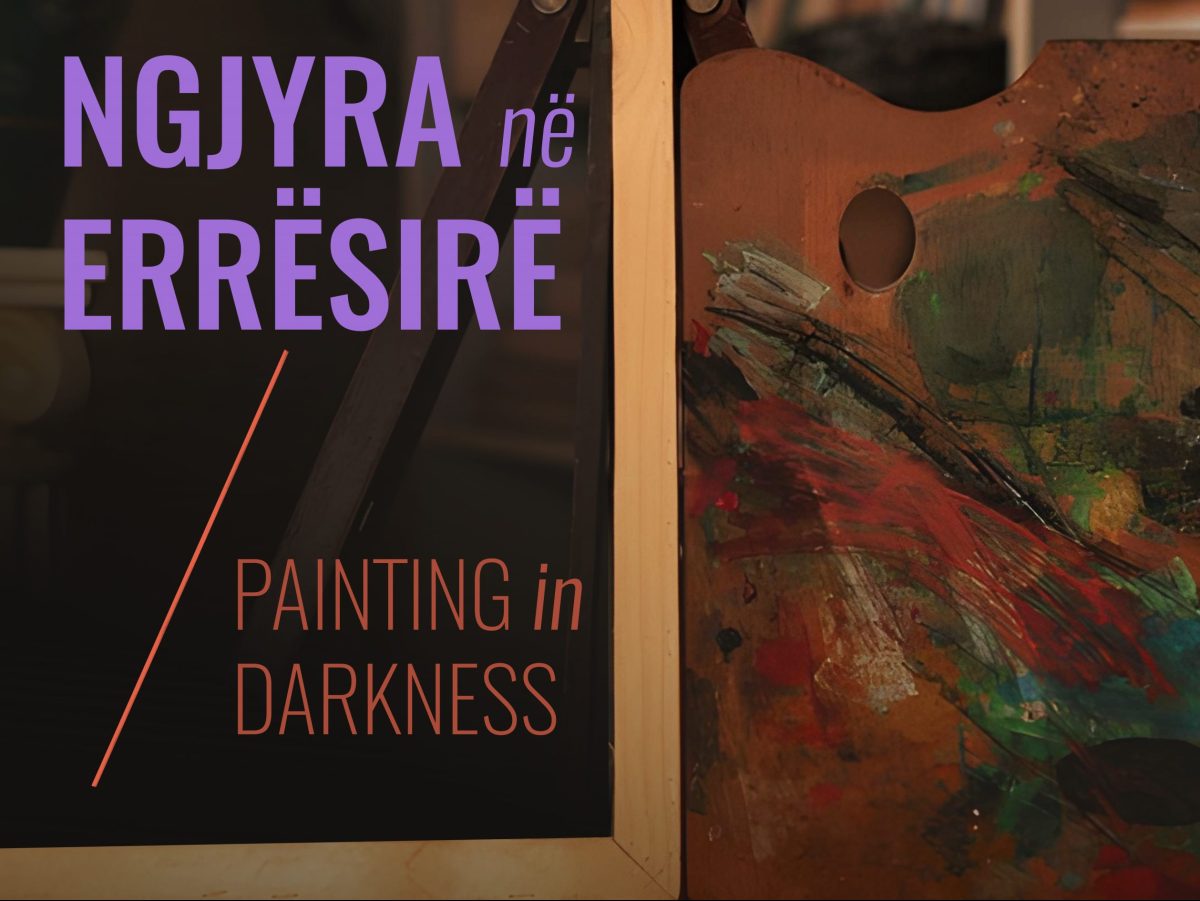
BIRN’s documentary “Painting in the Darkness”, which tells the story of an artist imprisoned as a political dissident and whose works were confiscated by Albania’s repressive communist regime, was screened on Thursday at the “NNW” International Film Festival in Gdynia, Poland.

The programme offers plenary sessions, panel discussions and workshops aimed at empowering, educating and contributing to greater engagement in the field of digital rights in the Western Balkans. This marks the third year of the IFM organised as part of the Reporting Digital Rights and Freedoms project.

The documentary is competing in the International Documentary Film Competition category.

With the 2025 theme “Roads to Freedom,” this Polish festival has, for years, been dedicated to cinema exploring history, freedom, and post-communist and post-dictatorial realities, becoming an international hub for this film genre.

The festival has a unique character, filling a thematic gap compared to major festivals by giving voice to “unwritten” experiences and personal stories of freedom, resistance, identity, internment, and memory.

Over the five days of this year’s edition, around 100 documentary and feature films are expected to be screened.

The short documentary “Painting in the Darkness,” directed by Elton Baxhaku, with screenplay by BIRN Albania journalist Blerina Gjoka, focuses on the story of Lulzim Beqiri, a painter imprisoned during the communist era because his art did not conform to the ruling party’s ideology.

Beqiri was arrested in February 1977 for “agitation and propaganda,” and his paintings were used against him in court as evidence of his opposition to the communist regime. Around 40 canvases he painted in 1976 were confiscated by the authorities.

Forty-six years later, Beqiri was able to recover two of his works thanks to Astrit Jegeni, an archive employee who had saved them.

The festival is organized by the organization “Culture Stage” and the city of Gdynia and supported financially by the Ministry of Culture and the Polish Institute of Film.

Applications Open: BIRN Internet Freedom Meet 2025 in Pristina

Internet Freedom Meet 2025 (IFM 2025) will take place in Pristina, Kosovo, from November 24 to 26. It will bring together experts in the field of digital rights and internet freedoms to exchange, learn and discuss ever-expanding digital rights and freedoms issues.

The programme offers plenary sessions, panel discussions and workshops aimed at empowering, educating and contributing to greater engagement in the field of digital rights in the Western Balkans. This marks the third year of the IFM organised as part of the Reporting Digital Rights and Freedoms project.

What’s on the agenda?

Speakers and experts in their field will lead discussions on pressing issues, such as digital legislation (reform, regulation, weaponisation), unpack online scams across the Western Balkans and Turkey & institutional responses, misuse of AI in the context of disinformation and digital violence, political dissent and resistance online, online manipulation during elections and its influence on democratic processes, and surveillance & censorship.

At this year’s edition of IFM, attendees will also have the opportunity to join the launch of the new Digital Rights Violations Annual Report. The report provides an in-depth look at key findings across all monitored regions, highlights emerging trends based on data analysis and offers concrete recommendations to uphold human rights both online and offline.

Please note that the programme will be held in English.

Reasons to apply

The IFM 2025 in Pristina is a unique regional opportunity to engage with experts from different internet governance stakeholder groups, gain insights, and personally contribute to a future digital environment which is freer, safer and open for all.

This space is for you, whether you’re a digital rights activist, tech enthusiast, academic, journalist, internet policy pasionato or engaged netizen. Applications are open for individuals from Albania, Bosnia and Herzegovina, Kosovo, Montenegro, North Macedonia and Serbia. Governing digital space means that each voice counts in discussions that concern us all.

How to apply

Applications are now open but please note that the seats are limited. You can apply by completing this application form by October 19th, 2025, at 23:59 CET. BIRN will cover accommodation and travel expenses for selected participants from the above-mentioned countries. Only selected applicants will be contacted.

Important note: Participants from Bosnia and Herzegovina, in order to enter Kosovo, have to have a new biometric ID card.

We are looking forward to your applications.

If you have IFM 2025-related questions, please contact [email protected].