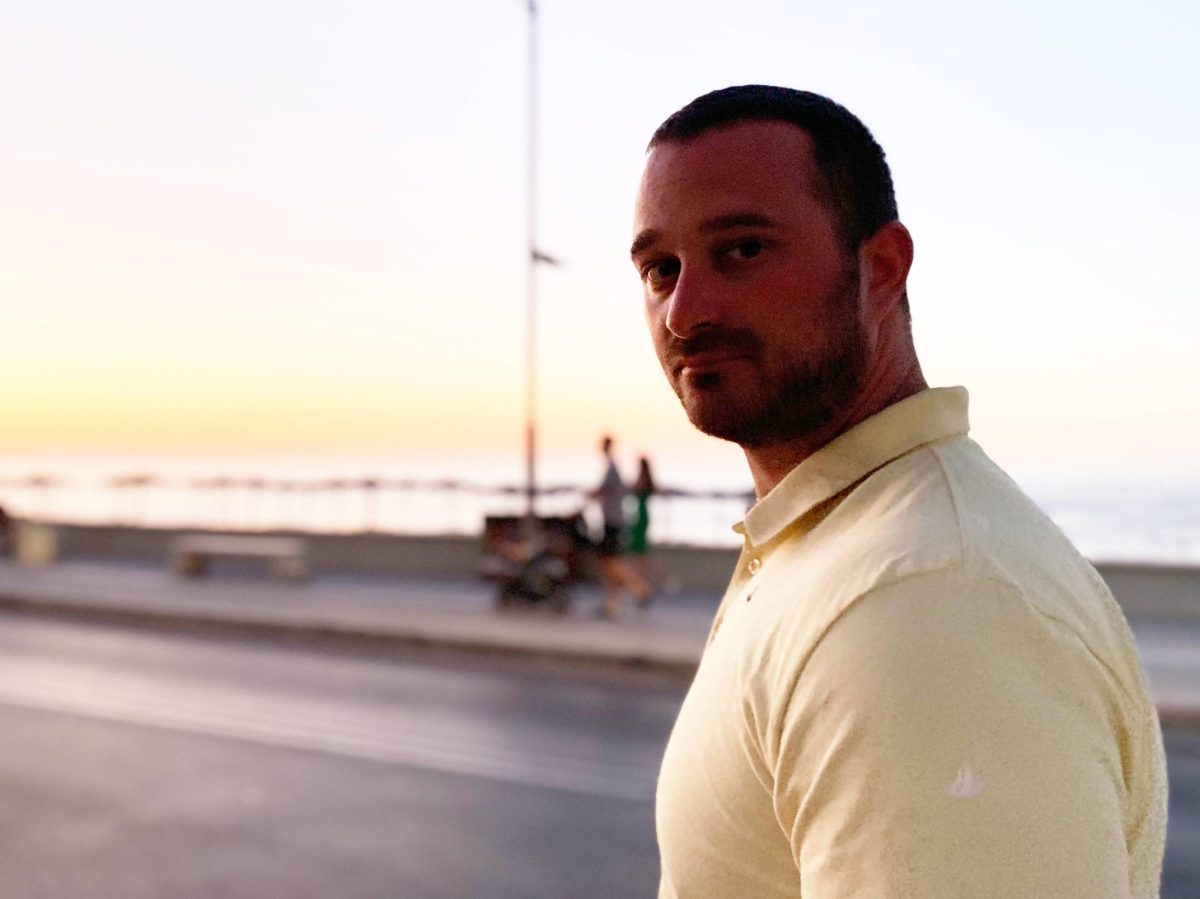
BIRN’s Sasa Dragojlo Wins ‘Dusan Bogavac’ Award for Ethics and Courage

Sasa Dragojlo, a BIRN journalist, won this year’s “Dusan Bogavac” Journalism Award for Ethics and Courage, which has been awarded by the Dusan Bogavac Foundation and the Independent Journalists’ Association of Serbia, IJAS, since 1991.

The announcement on the award said: “Sasa Dragojlo has been courageously and professionally investigating and informing the public about important topics of general interest for years, such as the corrupt business of selling ammunition production machines, the war of smugglers in the north of Vojvodina, money laundering through the construction of residential and commercial buildings throughout Serbia, and the recent armed conflict in Banjska.”

“I am really happy with the ‘Dusan Bogavac’ award I got since I was nominated by a jury made up of really respectable colleagues. It was a shock, since I was unaware it was happening; I learned about it half an hour before it got published. When I see all the people who got it before me, it is really an honour and a privilege.

“Working hard in a stressful job like journalism, every now and then I feel depressed, asking whether it is worth living a poor life with many pressures without much real effect in changing the deeply corrupted societies we live in. Awards like this are at least a glimpse of hope that someone cares and that our work matters,” Dragojlo said.

The jury members were previous award winners Dragana Peco and Snezana Congradin, as well as Branka Bogavac and Filip Mladenovic on behalf of the Dusan Bogavac Foundation, and Zeljko Bodrozic, president of the IJAS.

Recently, Dragojlo won third prize as part of a team of BIRN and the Centre for investigative journalism of Serbia, CINS, for an investigation into Serbian arms exports to Myanmar following the army coup in that country. He also won third prize in the EU investigative awards for a story on a Serbian police translator who led a people-smuggling gang.

As Dragojlo stated: “When I got my degree at the Faculty of Political Science, the future in journalism was not so clear. I wrote columns, essays and free-form prose in multiple online media but could not live off it, so I worked multiple ‘real jobs’ – from call centres to warehouses. I thought I would never find a media that wanted me, had enough money, or where I wanted to work (I would not want to work in 90 per cent of the media; a construction job looked more attractive). But in April 2015, I got a chance to work for BIRN, and since then, I have never quit this nutjob profession.”

The “Dusan Bogavac” Award ceremony will be held on Thursday, October 26, in Belgrade.

EU Awards for Best Investigative Journalism in Serbia Announced

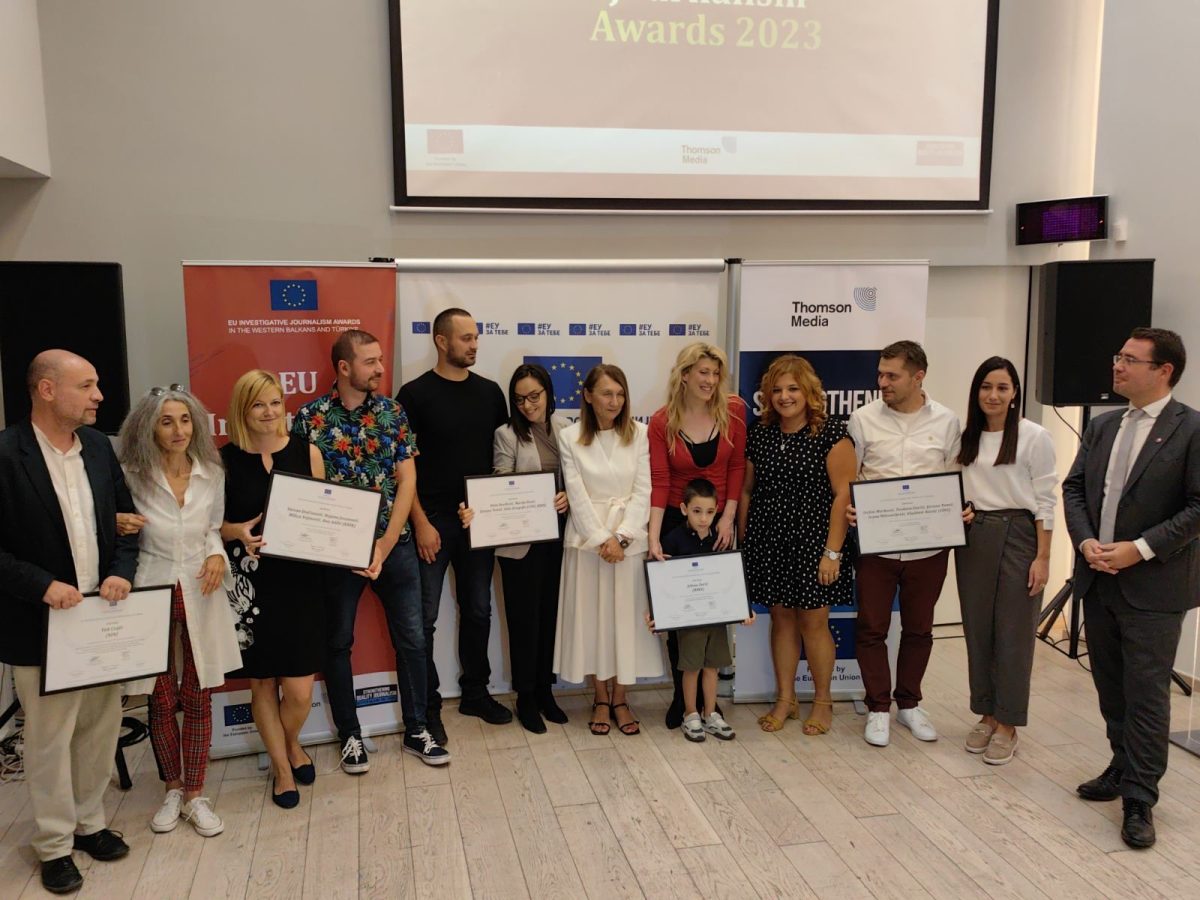
On September 28, in the EU info centre in Belgrade, the winners of the EU Awards for Investigative Awards for Investigative Journalism in Serbia were announced.

KRIK, CINS and a BIRN team of Jelena Zorić and Vuk Cvijić were selected from many colleagues as this year’s winners for their stories published in 2022.

The jury consisted of Tamara Skrozza a journalist who has worked for radio, press and TV productions and engaged with a number of different media outlets; Snjezana Milivojevic, a professor of public opinion and media studies who chaired doctoral and master’s programs at Bayan College in Oman and the University of Belgrade; and Sasa Lekovic, President of the Investigative Journalism Centre, based in Croatia, a reporter and editor and a licensed investigative reporting trainer and lecturer.

The first prize went to the KRIK team (Stevan Dojčinović, Bojana Jovanović, Milica Vojinović and Ana Adžić) for their stories on the Darko Šarić clan.

The second prize was shared between CINS and BIRN. The CINS team (Stefan Marković, Teodora Ćurčić, Jovana Tomić, Ivana Milosavljević and Vladimir Kostić) was awarded for their stories on political party financing.

Jelena Zorić from BIRN was awarded for her stories about medical malpractice in the sensitive area of psychiatric health.

The third prize went to Vuk Cvijić of NIN for his investigations into the connections between criminal circles and state officials, and CINS/BIRN (Dina Đorđević, Marija Ristić, Jovana Tomić and Saša Dragojlo) for “Paths of Serbian weapons”. Part of this series is the investigation “Serbian Rockets Sent to Myanmar Even After 2021 Coup”, a cross-border collaboration between BIRN, CINS, Myanmar Witness and Lighthouse Reports, originally commissioned at the BIRN Summer School of Investigative Reporting in Dubrovnik in 2021.

Manuel Munteanu, Head of Press and Info and Deputy Head of Political Section of the EU Delegation in Serbia, gave a speech highlighting the importance of independent media and extending congratulations to the winners.

Davor Marko from Thomson Media introduced the project and the importance of the EU awa for supporting investigative journalism in the Western Balkans and Türkiye. Snjezana Milivojevic, representing the jury, provided a detailed explanation of the award selection process and announced the recipients of each awarded position.

More information can be found here.

The EU Award for Investigative Journalism 2023 is part of the project “Strengthening Quality Journalism in Western Balkans and Türkiye II”. This aims to recognise and promote outstanding achievements in investigative journalism as well as improve the visibility of quality journalism in the Western Balkans and Türkiye.

The project is funded by the European Union and it is implemented by a consortium composed of Balkan Investigative Reporting Network – BIRN Hub, Central European University (CEU) – Hungary, the Association of Journalists (AJ) – Türkiye, Thomson Media (TM) – Germany, University Goce Delcev Stip (UGD) – North Macedonia, The Independent Union of Journalists and Media Workers (SSNM) – North Macedonia, Media Association of South-East Europe (MASE) – Montenegro, and Balkan Investigative Reporting Network Kosovo (BIRN Kosovo).

BIRN Journalists Win EU Investigative Journalism Awards in Serbia

Jelena Zoric and Sasa Dragojlo won prestigious EU investigative reporting awards for their stories on clinical trials and arms exports respectively.

BIRN Serbia’s Jelena Zoric was awarded second prize and BIRN Hub’s Sasa Dragojlo was awarded third prize at the EU Investigative Journalism Awards 2023 in Serbia.

The jury awarded Zoric for series of stories about a psychiatrist who has been recording false diagnoses into his patients’ medical records for the sake of a clinical trial he has participated in, and about the role Serbian state institutions played in this trial.

Dragojlo won third prize as a part of a team of BIRN and the Centre for investigative journalism of Serbia CINS, compromised of Marija Ristic, Dina Djordjevic and Jovana Tomic, who reported on Serbia’s arms exports to Myanmar following the army coup in the country.

First prize went to the team of journalists from Serbia’s Crime and Corruption Reporting Network, KRIK, for a series of articles on Serbian drug boss Darko Šarić.

This year, the jury in Serbia awarded two second and two third prizes. Along with Zoric, the second prize was also presented to the CINS team – Teodora Curcic, Jovana Tomic and Stefan Markovic – for their series of reports on political parties’ financing.

Along with BIRN and CINS, the third prize was awarded to Vuk Cvijic, journalist for the weekly NIN.

With a series of articles on the abuse of medical ethics, Jelena Zorić told the shocking story about the fate of people given false psychiatric diagnoses and the unwillingness of the system to investigate and sanction the actions of psychiatrist Aleksandar Miljatović at the health centre in Belgrade, who – for the sake of personal gain – manipulated a large number of people from particularly sensitive group of patients for months.

Drawing on testimonies and analysis of extensive documentation, Zoric’s first investigation, on how Miljatović gave false diagnoses to patients, revealed how he abused psychiatric patients, while the second article, “Health centre Palilula: Doubtful clinical trial of a drug approved by everyone”, dealt with the institutional responsibility of all who knew and approved, despite legal prohibitions, the clinical trial of the drug primavanserin to be conducted in one of Belgrade’s public health centres.

Saša Dragojlo, along with colleagues Dina Djordjevic, Marija Ristic and Jovana Tomic, received the award for an investigation into Serbia’s exports of millions of euros worth of rockets to Myanmar in 2021, days after a military coup that has since triggered a civil war – ignoring requirements that the government revoke any arms export permit should conditions in the destination country change and there be a risk that the arms might be used to violate human rights.

This year’s jury members in Serba were Snjezana Milivojevic, professor at the Faculty of Political Sciences at Belgrade University, Tamara Skrozza, journalist and a member of Serbia’s Press Council and Sasa Lekovic, president of the Centre for Investigative Journalist of Croatia.

The organiser of the award is Thomson Media, an organisation with decades of experience in media development and the promotion of media freedom on a global level.

The EU Award for Investigative Journalism 2023 is part of the project Strengthening Quality Journalism in Western Balkans and Türkiye II. It aims to recognise and promote outstanding achievements in investigative journalism as well as improve the visibility of quality journalism in the Western Balkans and Türkiye.

The project is funded by the European Union, and is being implemented by a consortium composed of Balkan Investigative Reporting Network – BIRN Hub, Central European University (CEU) – Hungary, Association of Journalists (AJ) – Türkiye, Thomson Media (TM) – Germany, University Goce Delcev Stip (UGD) – North Macedonia, The Independent Union of Journalists and Media Workers (SSNM) – North Macedonia, Media Association of South-East Europe (MASE) – Montenegro and Balkan Investigative Reporting Network Kosovo (BIRN Kosovo).


BIRN Serbia and IJAS Report: Journalists Feel Undefended From Online Attacks

Report says online abuse is becoming so ‘normalised’ that journalists often do not report it – or have any faith in institutional protection.

Online threats against journalists are more intense and common than physical ones, but most newsrooms have not set up safety protocols to help them respond to these attacks, while laws do not provide efficient protection, BIRN and IJAS’s new report reveals.

Working in an environment that is becoming primarily digital has left journalists and media more exposed to online to attacks, insults and threats, but many newsrooms have not established mechanisms to deal with such cases and legislation does not provide adequate protection either.

These are some of the findings from the latest report, “Journalists’ Safety in the Digital Environment”, which BIRN Serbia and the Independent Journalists’ Association of Serbia, IJAS, published on July 18.

Online attacks and threats impact journalists’ mental health and private lives and affect relations in the newsrooms and commitment to professional standards. Online abuse is typically “normalised” and considered as part of the job.

“The most striking finding is that hate speech, threats, insults,
intimidation, pressure and other forms of digital violence against
journalists are so widespread in Serbia that journalists believe that it has become a daily ‘normal’ environment in which they work and that it is the price they pay for their work.

“When faced with digital threats and insults, they generally
do not report them because they know that, at the institutional level of protection, things are rarely undertaken and resolved,” says Aleksandra Krstic, associate professor at the Faculty of Political Sciences of the University of Belgrade, one of the report’s authors.

Endangerment of journalists’ safety may lead to self-censorship and journalists may even abandon stories of public interest. which then lowers the quality of information the public receives and puts at risk media independence and freedom of speech, the report notes.

The report says many journalists rarely report insults and threats, warning that “the lack of trust that journalists have in the institutional protection system, the competent prosecutor’s office or the courts, is alarming”.

Marija Babic, lawyer at IJAS and another author of the report, says it is necessary to harmonise laws with developments in the digital space in order to prosecute attacks.

“Competent authorities should process attacks and threats to journalists as quickly as possible. It is also very important that such attacks are condemned by high-ranking state officials, who should stop pressuring and targeting journalists and the media as this is only making them [journalists and media] targets of very serious attacks,” says Babic.

The report also notes the lack of professional solidarity with attacked journalists and the fact that journalists and editors mainly turn to the public – which is the only thing they still trust – hoping that publicising attacks and threats will save them from potential attackers.

“All these findings should be read in a general, social context that is not conducive to the development of free and independent media. Threats and pressures, intense public campaigns led by representatives of the highest state authorities, a culture of impunity and weak institutions lead to a situation where journalists and the media are legitimate ‘targets’.

“Apart from the need to strengthen the capacities of the newsrooms themselves, we should insist on more effective protection mechanisms through amendments to the laws and a stronger response from institutions,” says Tanja Maksic, program manager and researcher at BIRN and one of the authors of the report.

The full report in Serbian and English is available on BIRN Serbia’s website.


Under the Spotlight: Infrastructure Projects in Serbia

BIRN Serbia

Donor:

National Endowment for Democracy (NED)

Main Objectives:

  • Overall objective of the project: to promote accountability of the government through quality media reporting based on the facts. Our reporting will put under spotlight the capacities of the Government and its relevant bodies to run infrastructure projects and their accountability to citizens.

Specific Objectives:

  • Establishing facts related to the planning, management and impact of infrastructural projects delivered in Serbia
  • Informing the public about infrastructure projects and their impact on society

Main activities:

  • Journalistic research and production – BIRN will produce at least 5 thematic packages annually (analytical and investigative content) to be published on the birn.rs platform. The content will be done in-house by BIRN’s journalists and editors. As proposed topics require extensive field work, we will also rely on local journalists to participate in the project if/when appropriate. In-depth stories will be specifically edited, following standards applied on the length, paragraphing and presentation of facts. We will make available additional multimedia materials, visualize data and documents, provide photos etc.
  • Extensive database creation and open documents to the public are BIRN’s mitigation method on the overall negative trend of closing institutions and denying access to data, supporting BIRN efforts to keep public institutions accountable and transparent. BIRN will provide a) interactive data and documents base creation: and b) production of multimedia material, such as illustrations, visualisations, videos and photo galleries.
  • Online promotion and raising awareness will enable the project findings’ promotion using multiple online communication platforms and formats.
  1. Target Groups:

State institutions: the Cadastre, relevant ministries, Treasury administration, Tax Administration

Main Implementer:

BIRN Serbia


Digital Media Action – Monitoring Deployment of Intrusive Technologies

BIRN Serbia

Donor:

DTI Fund – Independent Media

Main Objectives:

  • Independent media to influence public agenda through availability of quality information on underreported topics.

Specific Objectives:

  • to provide independent oversight of intrusive digital technologies with a focus on human rights and media freedoms in Serbia.

Main activities:

  • Monitoring will be based on the systematic mapping of the usage of potentially intrusive digital technologies in state institutions and will trace state funding through the public procurement of hardware and software for surveillance and AI, companies involved, services enabled, etc.
  • Media production will focus on the broader societal implications of the usage of intrusive digital technologies, including the implications for journalists and media.
  • Capacity building for journalists will provide understanding of the context on AI, digital/biometric surveillance, teach them the journalistic techniques needed to track developments in this field and its deployment in public sphere.
  • Production and mentoring scheme will serve as an extension of the workshop; it will be provided for at least 5 participants whose story pitches will be commissioned by BIRN.
  • Multimedia campaign will promote media production and the monitoring results and will raise the general public awareness about digital surveillance and algorithmic decision making, how they are governed, and what the potential consequences of their use are.
  • Round table will be organised, gathering various interested stakeholders and steering a public debate about the findings and key project results.

Target Groups:

Media, Journalists, CSOs, Journalists’ associations, Independent institutions: Commissioner for the Data Protection and Free Access to Information, Equality Commissioner, Ombudsman, State institutions and public enterprises.

Main Implementer:

BIRN Serbia


BIRN Serbia Holds Training on Illicit Financial Flows

BIRN Serbia organised a day-long training on investigating money laundering. The training, “Illicit Financial Flow and Money Laundering”, on June 22, in Belgrade, was designed to equip fellow journalists with the knowledge and practical tools required to detect and report on this type of crime.

Representatives of various national and local media organisations gathered in Belgrade for four distinct sessions on complementary methodologies presented by BIRN Serbia staff.

Participants underwent a comprehensive training program which examined the entirety of the investigative process.

Practical advice was presented on searching open source intelligence such as public registries and databases to identify potential money laundering cases, recognizing the means through which criminals attempt to clean “dirty” money, processing and visualisation of big data, and current legal practice regarding such criminal cases.

Working breaks between sessions saw presenters take the time to make themselves available for direct consultation. Participants engaged staff for suggestions on their own specific projects, thus enriching the training experience.

Reviews of the program were overwhelmingly positive.

“The attention to detail was immaculate, presenters were clearly experienced and sought to walk us through every step of the investigative process from top to bottom using concrete examples from their own work,” one attendee noted.

The training was held as part of the project “Uncovering Illicit Financial Flows in the Western Balkans”, financed by the Deutsche Gesellschaft für Internationale Zusammenarbeit, GIZ.

The overall goal of the project is to raise public awareness about illicit financial flows and provide a basis for decision and opinion makers to boost efforts to combat illicit financial flow.

It aims to increase the pool of journalists in Western Balkan countries equipped with tools and techniques in uncovering illicit financial flows, especially across borders.

BIRN Serbia Recognised for Journalistic Courage and Investigative Reporting

For only the second time since 2000, an entire newsroom – BIRN Serbia – has been awarded the prestigious Stanislav Stasa Marinkovic Award.

BIRN Serbia newsroom has been awarded the prestigious Stanislav Stasa Marinkovic Award by the daily newspaper Danas for journalistic courage and achievements in investigative and analytical reporting.

In a statement, the jury said BIRN Serbia newsroom said that the team had produced so many important stories over the past 12 months that it was impossible to select just one journalist for the award. Its work confirmed BIRN Serbia’s status “as one of the most influential investigative media in Serbia”, it said.

“BIRN newsroom, led by Dragana Zarkovic Obradovic, has been dedicated to furthering innovative ways of reporting on relevant media investigations, as well as nurturing young people who are just entering the world of journalism and that is why the jury decided that the award should belong to the whole newsroom,” the jury wrote.

It is only the second time since 2000 that an entire newsroom has won the award. The first to do so was N1 television.

Milorad Ivanovic, editor in chief of BIRN Serbia, said that the award holds special importance as recognition of the newsroom’s collective effort.

“Each and every one of our journalists has contributed to the publication of significant investigative pieces that serve the public interest,” said Ivanovic. “We firmly believe that this achievement is a testament to the exceptional teamwork within our organisation.”

The award is bestowed in honour of former Borba editor in chief Stanislav Stasa Marinkovic, one of the pioneers of Serbia’s free press and president of the Journalists’ Association of Serbia between 1983 and 1985.

It was first presented in 1993 by the daily newspaper Borba. Danas took over in 2000.

This year’s jury included 2022 winner Tamara Skroza, Marinkovic’s wife, Dragana, caricaturist Dusan Petricic, political sciences professor Aleksandra Krstic, and Danas representatives Safet Bisevac, Zoran Pavic and Dragoljub Petrovic, who was president of the jury.


Belgrade Mayor’s Chief of Cabinet Sues BIRN for Defamation

Nenad Milanovic filed a defamation lawsuit against BIRN Serbia for publishing an investigation on his negotiations with Turkish company Kentkart – the fourth SLAPP lawsuit it received this year.

Nenad Milanovic, chief of cabinet of Belgrade mayor Aleksandar Sapic, filed a defamation lawsuit against BIRN Serbia before the Higher Court in Belgrade, seeking 200.000 dinars (1,705 euros) in damages for mental anguish.

The lawsuit claims his reputation and honour has been damaged by the BIRN article, “Audios Reveal that Sapic’s Chief of Cabinet Offered to Fix Procurement to Kentkart”. The lawsuit states that the article is “full of absolute falsehoods”, but does not elaborate to explain which information Milanovic believes to be incorrect.

“The news published on website birn.rs was very disturbing to the plaintiff because the incriminating expressions used by the defendant were disparaging and have contributed to the damages for the plaintiff’s honour and reputation, especially in the plaintiff’s work environment, and then in the environment in which the plaintiff lives.

“Namely, the plaintiff is very successful in his job, and the insinuations mentioned in the text can have an extremely negative impact on the plaintiff’s reputation at his work and in the private sphere as well”, reads the lawsuit.

The lawsuit is filed against BIRN Serbia and its editor-in-chief Milorad Ivanovic.

Ivanovic says this is the fourth SLAPP lawsuit this year.

“This is forth SLAPP lawsuit filed against our newsroom this year. These lawsuits are not being filed in honest attempt to receive any kind of justice, but to exhaust journalists and newsroom.

“The lawsuit does not deny any fact we have published in the article. Mental anguish of public officials, their reputation and honour, cannot be above the truth,” said I.

So-called SLAPPs aim to drain the target’s financial and psychological resources and chill critical voices, to the detriment of public participation, according to a report on SLAPP lawsuits in Serbia published in 2022 by Article 19, the American Bar Association Centre for Human Rights and the Independent Journalists’ Association of Serbia, NUNS.

Aleksandar Sapic, the mayor of the Serbian capital, has filed two separate defamation lawsuits against BIRN Serbia, its editor and journalists in March, claiming that their reporting damaged his reputation and caused him mental anguish. He is seeking six million Serbian dinars (around 50,000 euros) in damages in each case – a total of around 100,000 euros.

Predrag Koluvija, who is on trial for alleged illicit marijuana production, in February accused BIRN of incorrectly reporting on one of his court hearings and thus damaging his reputation and causing him mental anguish. He is seeking 200,000 dinars (around 1,700 euros) in damages.

Meet the People Behind BIRN: Radmilo Markovic

Each month, BIRN introduces you to a different member of its team. For May, meet Radmilo Marković, journalist at BIRN Serbia.

Radmilo Markovic, 42, is working on breaking investigative stories and has won the Dejan Anastasijevic award for the best online article.

Radmilo, based in Belgrade, has been working for the last two years for BIRN Serbia. His report, “Illegally Legalised: The Corruption Involved in Building Belgrade”, was on buildings built without permits in Belgrade over the last seven years that were legalized by new construction legislation.

His report angered the Mayor of Belgrade, Aleksandar Sapic, who filed two separate defamation lawsuits against BIRN Serbia, its editor, and journalists, including Radmilo, claiming that BIRN’s report had damaged his reputation and caused him mental anguish.

Radmilo spoke to us about the award, his first defamation lawsuit, and about journalism in Serbia and its impact; sometimes he admits he feels that journalists’ work is almost meaningless, as investigative stories have little impact in terms of arrests or prosecutions in Serbia, where impunity is the king.

1. Why did you become a journalist and decide to work for an investigative media non-profit like BIRN Serbia? What do you like most in your job, and what is the most challenging thing?

It was an honour for me when BIRN called me to join them two years ago, as BIRN Serbia is one of the most respected media in the country. These days, when number of clicks is the main interest for media executives, joining one of the few organisations that play by the book was refreshing. The best thing – and the worst thing at the same time – is that you have the time to thoroughly explore the topic you are covering, which sometimes puts you in a rabbit hole of an endless network of people or companies, and you eventually end with a lot of information that you don’t use in a final article. On the other hand, since almost all other media outlets are focused on speed and measure only quantity, you could end up working on something that is forgotten and not in the spotlight of the general public.

2. What kind of stories do you prefer to work on? Do you have a story that you feel especially proud of?

Right now I’m working on the problem of illegal real estate construction in Belgrade, and I hope to be able to widen the scope of my research to the whole of Serbia. The problems here are that the state doesn’t have (or doesn’t want to share) a definite list of all illegal buildings, and the fact that these buildings are being built as we speak, so it’s like a snake chasing its own tail. 

3. You worked on an investigative story on corruption practices in building processes in Belgrade. More than 450,000 square meters of residential property, partially or completely built without permits since 2015, have escaped demolition and somehow been legalised. Tell us more about this investigation. What drove you to start doing it, and what was the impact?

My colleague Jelena Veljković initially found the first such case: under our law, you could legalise a building if it was built before 2015 and exists on the satellite image of Serbia from 2015. Jelena found one building, linked to the person responsible for issuing legalisation documents in Belgrade, that was built during 2017-2018 and still ended up being legalised, which was against the law.

So, she discovered the phenomenon, and after that it was relatively easy but also time-consuming; all we needed to do is to find buildings that weren’t on the satellite image in 2015, and which in spite of that were registered in the cadastre as “legalised”.

We never knew the magnitude of this malpractice, so it was a bit of a shock to see that there are literally hundreds of such buildings.

Sadly, this story – like almost all investigative stories – did not produce any impact in terms of arrests or prosecutions. In Serbia, when it comes to high corruption cases, impunity is the king.

4. Belgrade Mayor Aleksandar Sapic filed two separate defamation lawsuits against BIRN Serbia, its editor, and journalists, including you, claiming that BIRN’s reporting damaged his reputation and caused him mental anguish. Would you like to tell us more about this Slapp case? Has it affected you and your colleagues?

I can speak for myself on this topic. On the day we received the lawsuits I was a bit shaken. No one had ever sued me for something I wrote so it came as a shock. However, over the next few days, this shock became anger – anger that I must now go to court, and not him for all the things that he has done, that we wrote about.

In his lawsuit, he demanded around 50,000 euros per case, which is higher than the amount the court approves in such a cases, so there is a good argument that this indeed is a Slapp case, even if we don’t go to the facts that we have thoroughly researched and carefully wrote these articles, according to all the standards.

5. How would you advise fellow journalists from the regions to tackle Slapps?

I don’t have any idea; this is my first time. It’s useful if a local journalists’ association gives free legal assistance, like in our case.

6. Recently you won an award, would you like to tell us more about it?

Just a few days ago, the Independent Association of Journalists gave me the annual award named after our great late colleague Dejan Anastasijević. The award was for the best online article – that one I mentioned, about illegal legalization of illegally built buildings (good luck in trying to explain that to your public).

It was an honour for me to receive that award, but, as I said during the ceremony, the fact that nothing ever happens after we reveal crime and corruption is making our journalists’ work almost meaningless. But it’s a good feeling to receive such an award, there is no doubt about that.