BIRN Documentary ‘The Unidentified’ Showing in US

BIRN’s documentary about Kosovo war massacres and their subsequent attempted cover-up, ‘The Unidentified’, will be screened in New York and Williamsburg, Virginia.

The first US screening of the film is being staged on Monday at Columbia University in New York, organised by the Harriman Institute.

The screening will be followed by a panel discussion with the film’s director/producer Marija Ristic, author and human rights advocate Fred C. Abrahams, and sociologist, journalist and policy analyst Anna Di Lellio.

The film will then be screened a week later on February 29 at the College of William & Mary in Williamsburg, Virginia, which will also be followed by a discussion with Marija Ristic. 

‘The Unidentified’ is a feature-length documentary which follows two story lines that focus on large-scale state-sponsored wrongdoing – war crimes in four Kosovo villages and the subsequent cover-up operation.

Both victims and perpetrators recall gruesome memories of the attacks, when scores of ethnic Albanian civilians were killed by Serbian forces in the course of a few days in the spring of 1999.

The result of a two-year-long investigation, the documentary names the officers who ordered attacks on villages and those who were involved in the removal of victims’ bodies to mass graves at the Batajnica police centre near Belgrade in Serbia.

Beside disturbing testimonies never seen before, the documentary also features exclusive images and documents from the war.

The 10th Balkan Fellowship for Journalistic Excellence Competition Still Open for Applications

Become a BFJE fellow this year! To download and fill in the application to participate, please go to http://fellowship.birn.eu.com/en/page/home.

You have still two weeks to think about the topic you’d like to cover.

Journalists from Albania, Bosnia-Herzegovina, Bulgaria, Croatia, Kosovo, Republic of Macedonia, Montenegro, Romania, Greece and Serbia are eligible to apply for a bursary until March 1st.

Also this year, ten journalists from across the region will be chosen through open competition to receive funding and professional support to conduct in-depth research into a topic of regional and EU significance.

Send us your application with your proposal for a story based on this year’s theme of Trust by March 1st.

Applicants selected by an independent committee to take part in the fellowship will receive a €2,000 bursary and up to another €2,000 for travel and research expenses. They will also attend international seminars and receive continuous one-to-one mentoring for their stories.

Completed articles will be published in English and local languages by leading regional and international media. In addition, the top three articles will receive awards of €4,000, €3,000 and €1,000.

The closing date for applications is March 1st, 2016. The application form, guidelines and further information about the fellowship are available online: fellowship.birn.eu.com.

In order to foster quality reporting, initiate regional networking among journalists and advance balanced coverage on topics that are central to the region as well as to the EU, the Balkan Fellowship for Journalistic Excellence programme  is supported by the ERSTE Foundation and the Open Society Foundations, in cooperation with the Balkan Investigative Reporting Network, BIRN.


For more information contact:

Fellowship programme manager, BIRN

Kolarceva 7/V

11 000 Belgrade, Serbia

Email: [email protected] 

BFJE and Alumni Initiative Investigations Reach Big Audiences

Stories by reporters on the Balkan Fellowship for Journalistic Excellence and alumni of the programme have reached large international audiences in recent months.

An investigation into women from Kosovo who join ISIS, “Few but fanatical” by BFJE alumna Arbana Xharra, had a big impact in online media. The article was published in English, Serbian and Albanian — and the Albanian version alone has been read by more than 20,000 people and republished by most Albanian-language media in Kosovo and Albania. The article was also picked up by international outlets such as the EU Observer, Daily Mail, Al Jazeera Balkans and many others. Arbana spent six months last year working on her investigation. Previously she has reported on religious extremism and its links with non-governmental organisations and terrorist groups, which resulted in her receiving death threats. In 2015, the US Department of State honoured her with a Women of Courage Award.

Mariya Petkova, a BFJE fellow in 2015, investigated the use of Bulgarian arms in the war in Syria for her fellowship story. Her article was highlighted by Wikileaks and reached more than 40,000 readers. Mariya’s research involved extensive travel in Bulgaria and Turkey, taking her as far as the border with Syria. The story was also republished by Middle East Eye. Now a BFJE alumna, Mariya is a freelance journalist covering eastern Europe and the Middle East.

Other 2015 fellowship stories also reached broad audiences, with versions published by The Guardian, the New Statesman, Politico, programme media partners such as Austria’s Der Standard and other international outlets

“Hearts and Minds: The battle for Montenegro’s Mamula Fortress” by Nela Lazarevic was another story from the alumni programme to attract a lot of international attention. The article focused on plans to convert an island fortress used as a prison camp during World War Two into a tourist resort. The story was picked up by CNN, the New Statesman, the Daily Mail, the Independent and other international and local media. Following the attention generated by Nela’s story, state authorities and the project investor pledged that Mamula’s heritage would be respected as part of the development.

In all, thanks to the support of the Erste Foundation and Open Society Foundations, BIRN produced 17 in-depth stories as part of the Balkan Fellowship for Journalistic Excellence and the Alumni Initiative in 2015. Assisted by a team of local and international editors, 19 journalists tackled sensitive, complex and under-reported topics of regional and international importance.

Call for Balkan Fellowship for Journalistic Excellence 2016

Do you have an idea for a big story? Do you want to write and report it to the highest standards, with quality editorial support and a generous expenses budget that lets you explore your subject in depth? Would you like that story to be published across southeast Europe and perhaps make international impact?

If the answer to these questions is ‘yes’, now is the time to apply for the Balkan Fellowship for Journalistic Excellence.

Each year, ten journalists are chosen through open competition to receive funding and professional support to conduct in-depth research into a topic of regional and EU significance – for 2016 the subject is Trust.

It is a chance to advance your career and work on a story you can be proud of. You will be supported by experienced editors and journalists from around the region. Stories from the programme will be published by BIRN and by prominent regional and international media outlets. The top three stories, as selected by an independent jury, will also receive cash awards.

Experienced journalists from Albania, Bosnia-Herzegovina, Bulgaria, Croatia, Kosovo, Republic of Macedonia, Montenegro, Romania, Greece and Serbia are eligible to apply.

Send us your application with your proposal for a story based on the theme of Trust by March 01.

Applicants selected by an independent committee to take part in the fellowship will receive a €2,000 bursary and up to another €2,000 for travel and research expenses. They will also attend international seminars and receive continuous one-to-one mentoring for their stories.

For more information contact:

Dragana Žarković Obradović

Fellowship programme manager, BIRN

Kolarceva 7/V

11 000 Belgrade, Serbia

Tel: +381 11 4030 317

Email: [email protected]

BFJE Alumni Network Expands in 2015

Each year after the Balkan Fellowship for Journalistic Excellence programme ends, the BFJE Alumni Network grows, and in 2015 it produced seven in-depth articles.

This year’s seven in-depth articles were researched and written by nine BFJE Alumni Network journalists from across the region.

Juliana Koleva and Kostas Kallergis investigated Greek and Bulgarian baby-selling routes, Lina Vdovii wrote about Romanian international adoptees who try to find their biological families via social media, Lavdim Hamidi covered the problems of privatization in Kosovo, and Nela Lazarevic wrote a story about Mamula Island in Montenegro, whose future is causing much controversy between locals and the government.

After New Year, more BFJE Alumni Network will be published on Balkan Insight.

Arbana Xharra will publish a story about women from Kosovo who join ISIS, there will be a cross-border investigation by Aleksandar Manasiev and Mirko Rudic about police from Macedonia and Serbia suing their states, and an investigation by Erjona Rusi about children in Albania and Kosovo exposed to porn via social media.

The Alumni Initiative is designed to encourage and support continued cooperation between fellows who have participated in the Balkan Fellowship for Journalistic Excellence, which was established in 2007.

The Alumni Initiative is supported by Open Society Foundation and ERSTE Foundation in cooperation with the Balkan Investigative Reporting Network.

Balkan Fellowship for Journalistic Excellence Launched in Vienna

Ten fellows from Albania, Bulgaria, Croatia, Greece, Kosovo, Romania and Serbia have come to Vienna to take part in the opening seminar of the ninth Balkan Fellowship for Journalistic Excellence programme.

The fellows came to the Austrian capital to refine the story proposals which formed the basis of their applications for the programme.

The participants are receiving coaching and professional support in planning their research, carrying out their reporting and structuring their stories.

They also participate in story commissioning sessions led by BFJE programme editor Andrew Gray and Balkan Insight Editor in Chief Ana Petruseva.The purpose of these sessions is to brainstorm ideas in order to come up with new angles and sharpen the focus of the stories.

The seminar also includes a photography workshop and a visit to the newsroom of the prominent Austrian daily Der Standard.

The BFJE programme was established in 2007 and provides 10 journalists annually with training and mentoring, as well as the financial resources to travel and carry out research, in order to produce long investigative or analytical stories on topics important to the region’s development. The Balkan Fellowship for Journalistic Excellence is supported by ERSTE Foundation and Open Society Foundations.

Balkan Fellowship for Journalistic Excellence Winners Chosen

Zornitsa Stoilova was awarded first prize for the best story from the 2015 Balkan Fellowship for Journalistic Excellence programme at a closing ceremony in Tirana on Friday.

Zornitsa won the prize of 4,000 euros for her story about support for ISIS among some members of a marginalised Roma community in Bulgaria.

The second prize and 3,000 euros went to Damir Pilic for his article “Red revival: The fall and rise of Karl Marx”.

The third prize and 1,000 euros was awarded to Laura Stefanut for her story about clothing factories industry in Romania and Bulgaria.

Ten talented journalists from Albania, Bulgaria, Croatia, Greece, Kosovo, Romania and Serbia worked for more than six months on in-depth stories and investigations, exploring different aspects of this year’s fellowship theme, ‘Values’.

The Balkan Fellowship for Journalistic Excellence was launched in 2007 to promote high-quality, cross-border reporting. The programme provides fellows with financial and editorial support, allowing them to travel, research and write their stories and develop their journalistic skills. They also have the opportunity to work with colleagues from neighbouring countries to examine how different nations are tackling important social and political topics.

The jury members who selected the winners were Florian Hassel, Balkan correspondent for the German daily newspaper Süddeutsche Zeitung, Remzi Lani, executive director of the Albanian Media Institute, Gerald Knaus, founder and president of the European Stability Initiative, Milorad Ivanovic, executive editor of the Serbian edition of Newsweek, Martin Woker, correspondent of the Swiss daily newspaper Neue Zürcher Zeitung, Gerfried Sperl, columnist for the Austrian daily newspaper Der Standard. Allan Little, the veteran BBC foreign correspondent, was the selection committee’s annual member, serving for a one-year term.

For the first time in the fellowship’s history, the award ceremony was held in Albania, at Tulla Culture Centre in Tirana.

With this year’s programme concluded, fellows are invited to joint the BFJE alumni network, which already consists of more than 70 journalists from 10 Balkan countries who collaborate on stories and promote high professional standards.

The fellowship will issue a call for applications for next year’s programme in January 2016.

Balkan Fellowship for Journalistic Excellence is implemented by the Balkan Investigative Reporting Network, supported by ERSTE Foundation and Open Society Foundations.  

Fellowship Closing Seminar To Be Held in Tirana

Ten talented journalists from across the region will reunite in Tirana after eight months of hard work to discuss their cross-border stories, produced as part of the Balkan Fellowship for Journalistic Excellence.

The fellows taking part in the ninth year of the programme have travelled across the region and far beyond to gather material for in-depth articles based on the theme of ‘Values’. They have also attended editing sessions in Belgrade and Skopje with BFJE editor Andrew Gray to finalise their texts.

On Friday, December 4th, the fellows will present their stories to members of the programme’s selection committee, who will then vote for the three best articles. The winners will be awarded a cash prize of 4,000 euros for first place, 3,000 euros for second place and 1,000 euros for third place.

The winners will be announced at the Balkan Fellowship for Journalistic Excellence closing event and award ceremony in Tirana on the evening of December 4th.

The Fellowship programme is supported by ERSTE Foundation and Open Society Foundations. It was created to enable journalists to work on projects of their own choice with editorial and professional support to produce in-depth, cross-border stories on topics of importance both inside and outside the region.

BIRN Launches Balkan Extremism Reporting Project

BIRN Hub began a new project focused on online reporting on extremism in the Balkans with two days of training for journalists from across the region.

The two-day training session for 11 journalists from Albania, Bosnia and Herzegovina, Kosovo, Macedonia, Montenegro and Serbia was held in Belgrade from November 21-22 as part of Balkan Investigative Reporting Network’s new project, ‘Strengthening Media Reporting and Public Understanding of Extremism in the Western Balkans’.

The journalists heard lectures from Secunder Kermani, a BBC Newsnight reporter and producer, and Shpend Kursani, a researcher at the Kosovo Centre for Security Policy.

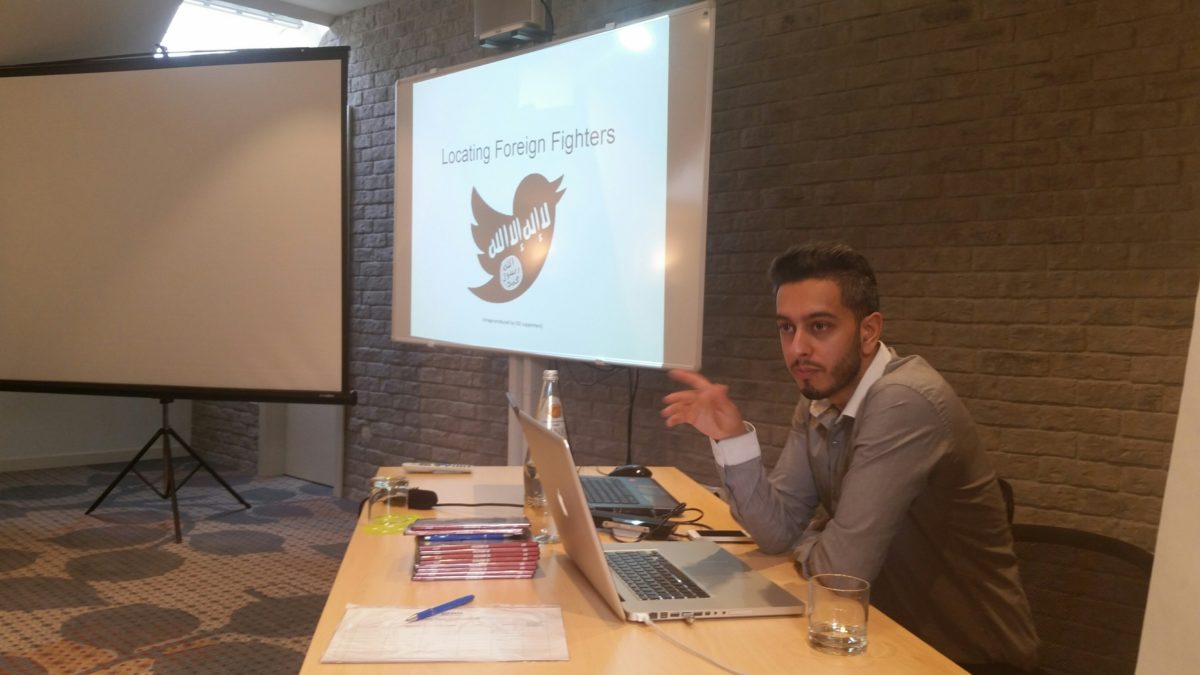
Kermani lectured on various aspects of Islamic theology, and presented an overview of different groups fighting in Syria and Iraq. He also provided journalists with tips on how to avoid the ISIS propaganda machine and how to locate foreign fighters.

Kursani meanwhile presented a report about the causes and consequences of Kosovo citizens’ involvement as foreign fighters in Syria and Iraq.

On the second day, the journalists work on story proposals with head of the project, Marija Ristic, editor Anita Rice and BIRN regional director Gordana Igric.

Besides training, the project involves the continuous production of news, interviews and analysis on a special focus page on the Balkan Insight website entitled ISIS in the Balkans.

The selected 11 journalists will also have continuous on-the-job training and mentoring as a regional journalistic team.

As part of the project, the journalists will produce six in-depth country-based analysis articles and one cross-regional research paper. 

At the end of the project, BIRN will organize a conference with key stakeholders at which they will debate the issue of violent extremism in the Balkans.

Serbian Minister Questions BIRN Credibility Due to Foreign Funding

Serbian interior minister questioned credibility of BIRN as the funding of organization comes only from abroad, after a week of campaign against independent investigative journalism organizations in tabloid media.

In an unprecedented live four hours long program on one of the most popular pro government national TV stations PINK, Balkan Investigative Reporting Network, BIRN, KRIK – Network for Investigating Crime and Corruption, CINS – Serbia’s Centre for Investigative Journalism, were one more time labelled as “foreign mercenaries” who are participating with other actors in what the station called attack on Serbian Prime Minister Aleksansader Vucic.

Serbian interior minister Nebojsa Stefanovic questioned the good intentions of BIRN investigations “as it is strange that all the funding comes from foreign donations” and that no domestic money was ever given to the organisation.

He also argued that investigations done by BIRN and other investigative organisations in Serbia should not be taken for granted.

Dragana Zarkovic, director of BIRN Serbia, says however her organization did reserve funding from Serbian instutitions.

“Office for cooperation with civil sector, which is body of Serbian government , is one of our funders. In 2015 they were supporting our Participative budgeting programme, which enables public consultations in local budgets drafting,” Zarkovic said.

  Owner and editor of pro-government tabloid Informer, Dragan Vucicevic, who was also part of the special program, said that BIRN is “financed to overthrow Vucic’s government, in order to fulfil their campaign to have a Serbia without a Prime Minister”.

“They (BIRN, CINS and KRIK) use lies to destabilize the country, I have proof of everything,” Vucicevic said on Sunday.

He also said that all investigations produced by BIRN and others are “invented affairs”, aimed to cause unrests like in the countries of the region, citing examples of Montenegro, Kosovo and Macedonia.

As a ‘prof’ Vucicevic took out financial records of BIRN, arguing that “direct payoff of the EU came in February”, just after the article BIRN published on alleged corruption in Tamnava mine.

Vucicevic was referring to a grant BIRN got through a fair competition at the EU tender for investigations as part of the program for Serbia, Media Freedom.