Meet the People Behind BIRN: Milica Stojanovic

Each month, BIRN introduces you to a different member of its team. For February, meet Milica Stojanović, journalist at Balkan Insight.

Milica Stojanović, 33, is based in Serbia and has been working as a journalist for Balkan Insight for the last four years. As a child in the 1990s, she remembers the grownups complaining about Yugoslavia’s and Serbia’s then leadership. Her dream then was to ask these people why they are so mean. Her dream did not come true, but she did learn that people who ask questions are called journalists, so she became a journalist and started writing stories among others and about multi-ethnic coexistence in Kosovo and Serbia.

Together with her colleague Serbeze Haxhiaj, in the context of the Peaceful Change Initiative competition, Milica won first prize for their article “Serb Monastery Shelters Kosovo Albanians”, which told of how a Serbian Orthodox Monastery provided shelter for Albanian civilians during the 1998-99 war in Kosovo.

That story is part of Balkan Insight’s new project, called “Solidarity Stories”, presenting stories of human compassion across the ethnic divides during the conflicts in former Yugoslavia.

Let’s meet Milica!

  1. Why did you decide to become a journalist?

When I was little, during the Nineties, the situation in Serbia was quite bad and chaotic looking from a child’s perspective and the grownups were mostly complaining about the Yugoslav and Serbian then leaderships. I wanted to grow up and ask these leaders why they are so mean and why they do not do better for us all. Later, I found out that the people that can ask them such things are called journalists. Later still, in the first years after the political switch in Serbia in 2000, the media scene was quite alive, and I liked the idea of being part of it. Unfortunately, the media scene by the time I started working was already broken, so my childhood wish did not come true, but my current job came out as even better.

  1. What do you like most in your job in Balkan Insight, and what is the most challenging thing?

What I like the most in BI is two things: the scope of topics I can work on and the freedom to do it. When it comes to scope of topics, a big part of my job is working on Balkan Transitional Justice program, one of BIRN and BI trademarks in this region and in Europe. On this program, I cover things like war crimes trials in Serbia but also wartime-related political life problems. Also, I am working on features, analyses and investigations about still unprosecuted war crimes as well as about the lack of responsibility either to prosecute them, or to compensate the victims and/or their families in any way.

Since the war in Ukraine broke out, we were also trying to cover some aspects of that for our audience, where our most important project is Eyewitness Ukraine.

  1. Solidarity Stories is BIRN’s new project, presenting stories of human compassion across the ethnic divides during the conflicts in former Yugoslavia. Tell us more about this project and your contribution.

Among hundreds of BTJ stories about crimes, perpetrators, suffering and lack of responsibility of any kind, Solidarity Stories is different. It is a series of stories about people who were brave and aware enough to help their neighbours and fellow residents, or even people they saw for the first time in their lives, risking their own security and in some cases losing their lives, like Refik Visca, Predrag Dacic or Tomo Buzov.

  1. Together with your colleague Serbeze Haxhiaj you have been awarded for your solidarity story ‘Serb Monastery Shelters Kosovo Albanians’. Tell us more about this story and the award.

Serb Monastery Shelters Kosovo Albanians” is about the Visoki Decani Monastery, near Decani/Decan in Kosovo, which sheltered Albanian families who’d fled their homes before Serbian paramilitaries at the very end of the NATO bombing in June 1999. Although this is the lead of the story, it is really a story about the longer-term efforts of Decani monks to protect endangered civilians in the area, which in different times from the summer of 1998 to the summer of 1999 were Albanians, Serbs and Roma. Shaban Bruqaj and his family were among the families saved in June 1999 and he still remembers Abbot Sava Janjic as person who helped them, so this is also a story about gratitude.

This story, together with another BIRN story, “Serb Saves Albanian Neighbours in Kosovo”, won first prize in the media award competition of Peaceful Change initiative. The ceremony is on March 16.

Serbeze and I have worked jointly on stories basically since I started working for Balkan Insight. For example, we were dealing with problems with opening wartime archives, problems of shielding commanders from Kosovo war atrocity cases in Serbia and still unprosecuted war crimes committed in the Kosovo villages of Meja and Korenica in 1999. We have experience in joint work and it has always been a pleasure.

  1. How difficult or easy is it for a Serbian journalist to report on such a sensitive period and collaborate with a Kosovar journalist?

I am not sure if there is any period in my life that was/is not sensitive when it comes to Serbia and Kosovo, so sensitivity is kind of permanent. Belgrade Balkan Insight’s team works very closely with Pristina Balkan Insight team both on today’s sensitive topics as well as on these from the war.

When it comes to BTJ stories especially, I would not say this is difficult, since I have many resources to do this type of job, and the most important would be editorial support and understanding. I cannot call it easy, either, because reading, watching or listening about people’s suffering, with a frustrating lack of responsibility for that, comes pretty hard.

  1. In the coming weeks, Serbia and Kosovo will attempt to finalize a deal to normalize their relations. Do you believe journalism like yours and Serbeze’s has any impact on how politicians and people think?

When it comes to politicians – and I have to emphasize especially this generation of politicians – I don’t think any journalism itself can impact them. They can be impacted only by the possibility of not being officials anymore, but with such lack of confidence in media these days, I am not sure journalism can contribute there, no matter how high quality it is.

On the other hand, I believe it can impact people. I think people, in general, are good and empathetic and that hate is not something immanent but is adopted due to campaigns via politics, culture and media, which all started years before the war itself. So, when they read something like our Solidarity Stories, I think they can realize our “heroes” do not have to be exceptions. A world in which they are standard is possible.


Call for Applications: From Personal Security to Surveillance Capitalism – Training Programme

BIRN invites journalists, Civil Society Organisation (CSO) representatives, legal professionals and IT experts with an interest in the issues where media and technology intersect to apply for a five-day digital rights capacity-building programme. Applications are welcomed from Albania, Bosnia and Herzegovina, Kosovo, Montenegro, North Macedonia and Serbia.

Over the last decade, journalistic techniques have evolved alongside new developments that require professional and accurate coverage. Meanwhile, disinformation and propaganda proliferate online. Rapid technological change needs professional journalism to respond to these emerging challenges without sacrificing ethics or standards. 

Journalists and media outlets in the region often lack the capacity to cope with the challenges of these new technologies, particularly at the local level. However this is not only a problem for the media: cross-sectional responses are often required. 

With this specific capacity-building programme, based on real-world journalistic workflows, BIRN strives to provide assistance, training and resources to media outlets and civil society groups in the region, in order to boost their capabilities for dealing with complex tech-driven challenges in their working lives.

Our capacity-building programme focuses on two main areas:

  • personal digital security of journalists and NGO workers in the field
  • the political aspect of surveillance capitalism, as seen from the point of view of media and NGO workers.

The programme aims to empower participants to defend themselves against surveillance capitalism and understand power relations between the public and private sphere.

The programme focuses on personal privacy protection and document handling, reporting on issues around surveillance capitalism and finally digital activism and lobbying for policy change. Our wrap-up sessions encourage debate and networking, so that participants can develop relationships and establish connections with media and NGO sector workers, and  ultimately benefit from these synergies to cover surveillance capitalism with a broad perspective. 

The programme is led by Državljan D (Citizen D), an NGO built on the foundational principle of inclusive promotion of human and digital rights. Državljan D is highly experienced in digital security training for local and regional journalists as well as giving insights into digital privacy and security issues: from state to corporate surveillance and secure data handling, to app and device usage. In addition, they provide help and guidance to citizens and journalists looking to improve their digital skills and habits, thereby securing their digital privacy and strengthening their digital security. For more information, see here.

Topics we plan to explore: 

(1st and 2nd of April): Personal digital security: aiming to explain the issues of surveillance capitalism that impact on our privacy and security, to offer effective ways to combat it, and to facilitate hands-on exercises that participants can replicate in their own environments.

(3rd and 4th of April): Reporting on surveillance capitalism: focusing on developing effective media reporting skills when tackling surveillance capitalism issues, from both theoretical and practical points of view, while referencing media reports from the region.

(5th of April): Digital activism: addressing digital policy development, the role and practices of digital activists, including examples from the region and real-world strategies.

Who can apply?

Local journalists, CSO representatives, legal professionals and IT experts interested in media. We welcome anyone who wants to improve their digital skills and habits, protect their digital privacy, and upgrade their digital security, regardless of whether they have extensive knowledge of the area, or merely the enthusiasm to know more. Our applicants are those people who want to get informed, learn methods for safely and confidently reporting on these topics to audiences and communities, and to ultimately use this knowledge to advocate for better solutions.

How to apply?

Applicants should complete and submit the application form attached to this CfA. All applications should be submitted in English to [email protected], along with a CV.

DATE OF TRAINING: April 1st – April 5th, 2022

TRAINING VENUE: TBC

LANGUAGE: The training sessions will be conducted in English, with simultaneous translation into local languages also provided.

DEADLINE: March 15th, midnight, Central European Time

Download the Application Form.


Fellowship 2022: Choices – Call for Applications

We are awarding 10 fellowships to journalists from Central and South-Eastern Europe who have an idea for a story that needs dedicated on-the-ground reporting, in-depth research, generous funding and sustained editorial attention to do it justice.

Applications are solicited under this year’s theme, Choices. Successful applicants will be selected by an independent committee to take part in our ten-month programme for professional development, culminating in the production of a compelling longform story to be published by BIRN and its media partners.

Our output takes the form of features, analysis and investigations, presented in depth for a global audience. We emphasise strong storytelling and rigorous, on-the-ground reporting – qualities traditionally associated with the best magazine journalism.

The Fellowship provides:

  • a bursary of €3,000
  • the chance to improve your reporting skills by working in close collaboration with world-class editors
  • ongoing mentoring and support from BIRN’s leading regional journalistic network, present in 14 countries of the Central and SEE region
  • the opportunity to participate in an introductory seminar focused on reporting and storytelling techniques
  • the chance to win additional awards worth between 1.000 and 3.000 euros for the best three stories
  • worldwide publication of reports in local languages and English through our network of media partners
  • membership of the Fellowship alumni network, designed to support networking between fellows who have participated in the programme since 2007
This year’s call is open until March 31st. Please send us your proposal using the official application form.

To maximize your chances of a successful application read more about the programme including the tips from our editors.

Here to inspire you is our editor, Neil Arun:

This year’s theme, Choices, asks you to picture your story along a pathway of options and decisions. We want to know a little bit about the events and the processes, the ideologies and the policies, that created the conditions for the story that you want to tell. In other words, as well as answering the usual questions – the who, what, where, how and why of your story – we want you to think about how we got here, and where might we be going next.

How is the problem that you want to examine a product of decisions taken in the past? How might this problem also reflect an ongoing failure to take the right decisions? What factors influence the decision-makers – what is their bias? The anthropologist, David Graeber, said: “the ultimate, hidden truth of the world is that it is something that we make, and could just as easily make differently.” Perhaps this view also holds true for your story; perhaps you disagree with it. Either way, it should get you thinking along the right lines.

The theme is broad, as always, in order to accommodate a broad range of your applications. Do not worry if the story you have in mind does not seem an obvious fit: we prefer a strong proposal that fits the theme loosely over a weak proposal that fits the theme neatly. The purpose of the theme is to inspire you, and to test your ability to argue the case for your story according to some external, and somewhat arbitrary, criteria.

We are looking above all for stories that tell us something new about the world – or that reveal the familiar in a new light. And as always, the best pitches establish a link between the specific and the general. So, where you only have a general idea for the story that you want to cover, please also think about the specifics – the incidents, institutions and individuals – that can illuminate your idea. Conversely, if you have a very specific story that you want to pursue, please also consider what it means in general terms, in a European context.

A good Fellowship story will be the product of months and months of your dedication as a reporter – meeting people, sifting through documents, revising drafts, and examining every possible angle with an editor. If your pitch holds the promise of just such a story, it has a decent chance of success.

About the Fellowship for Journalistic Excellence

The Fellowship has been providing journalists with editorial guidance and funding to pursue agenda-setting stories for more than 15 years. Aimed at promoting the development of a robust and responsible press, the programme has helped shape journalistic standards across the region while boosting the careers of participating reporters.

The Balkan Investigative Reporting Network and Erste Foundation set up the Fellowship in 2007 with a view to encouraging in-depth cross-border reporting in south-eastern Europe. In 2020, the programme was expanded to include four central European countries: the Czech Republic, Hungary, Poland and Slovakia.

To read our stories and find out more about the Fellowship please visit the Fellowship official page.

New Oral History Memorial Tells Srebrenica Survivors’ Stories

BIRN and the Srebrenica Memorial Centre opened a new memorial room containing the video testimonies of 100 Srebrenica genocide survivors and personal items that they donated for safekeeping.

The new memorial room, entitled ‘The Lives Behind the Fields of Death’, opened on Tuesday at the Srebrenica Memorial Centre, with the intention of highlighting survivors’ stories and combatting genocide denial.

A joint project by BIRN Bosnia and Herzegovina and the Srebrenica Memorial Centre, it contains 100 video testimonies from survivors and personal items that they donated to the Memorial Centre’s museum collection. The testimonies can also be watched online on a special BIRN site.

BIRN Bosnia and Herzegovina’s director Denis Dzidic said he was grateful to the 100 survivors and the family members of those who were killed in the July 1995 genocide for deciding to share their worst experiences and publicly speak about the consequences of genocide.

“This platform and memorial room aim to bring the Srebrenica story back to people’s personal experiences and contributing to reducing genocide denial and the misuse of genocide for political purposes. Nobody can remain unmoved by these stories,” Dzidic said.

The project was supported by the Netherlands, whose ambassador to Bosnia and Herzegovina, Jan Waltmans, told the opening ceremony that one reason why the exhibition is important because it gives “a human dimension” to the facts and figures about the genocide which have been determined by the International Criminal Tribunal for the Former Yugoslavia in The Hague.

“We must never forget the Srebrenica genocide, neither the victims nor the survivors. The second reason is that education remains a cornerstone in attempts to prevent future wars, atrocities and genocides,” said Waltmans.

“During the first six months of my term in office in Bosnia and Herzegovina, through conversations, I have learned a lot about the pain and sorrow of people who survived the genocide, about families of victims who miss the presence of their relatives every day,” he added.

He also said that he had met “many resilient people in Bosnia and Herzegovina, who believe in and fight for a country in which there is no room for inflammatory rhetoric and divisions, for a society in which children play together irrespective of their origin”.

High Representative Christian Schmidt, the senior international official responsible for overseeing the implementation of the peace process that ended the Bosnian war, said that the genocide continued to have an impact on life today in Bosnia and Herzegovina.

“I come from a society in which successive generations dealt with genocide legacy. This process was painful and continued for decades. It was often interrupted by denial, partly because the crime in itself is unimaginable – one doesn’t believe in it,” said Schmidt, who is German.

“For that reason, a court investigation and detailed and empirical historic investigations are necessary. The reconciliation process cannot go on without it,” he added.

Johann Sattler, the EU Special Representative in Bosnia and Herzegovina, who also attended the opening ceremony, warned that “the culture of genocide and crime denial continues to live”.

“The EU and many others here today are really working tirelessly and we are trying to learn lessons from the past and look towards the future, to preserve the future of Bosnia and Herzegovina,” said Sattler.

The president of the managing board of the Srebrenica Memorial Centre, Sefket Hafizovic, said that the memorial room would be “proof of genocide” but also proof that it was the consequence of “ethnic nationalism”.

“The crime of genocide is a crime against the whole of humanity,” added Hasan Hasanovic, oral history team leader at the Memorial Centre.

Watch the video testimonies at BIRN’s The Lives Behind the Fields of Death site here.


Report Details Orban’s Expanding Influence on Balkan, European Media

A new report by the International Press Institute, IPI, offers insight into the ways Hungary’s Prime Minister Viktor Orban, has expanded his influence in the Balkan and European media.

The IPI report, titled “Hungarian Capital in Foreign Media. Three Strategic Models of Influencing the Neighbourhood”, includes articles examining how, where and why Hungary has invested in foreign media in recent years.

Part of the report focuses on how businessmen close to Prime Minister Viktor Orban and his ruling Fidesz party have purchased media outlets in Slovenia and North Macedonia since 2017.

“While Fidesz politicians insist such investments are purely commercial, heavy investments in these media have been used to support Janes Jansa’s SDS in Slovenia and the fugitive former North Macedonia’s Prime Minister Nikola Gruevski’s VMRO DPMNE” the IPI said. [Jansa is a close ally of the Hungarian Prime Minister.]

Another part casts more light on Fidesz’s influence on media in Hungarian-minority communities in Serbia, Romania, and Slovakia, which have all received financial support from Budapest, bringing their media into close alignment with Orban’s populist narrative.

The third part of the report pays attention to the establishment in 2019 of a new international news agency, V4NA, in London, which projects Fidesz’s narrative further, onto a pan-European media landscape.

IPI is an international association of media professionals representing leading digital, print and broadcast news outlets in nearly 100 countries, dedicated to defending media freedom and the free flow of news.

The articles in IPI’s latest report were produced by IPI in cooperation with BIRN, the Hungarian investigative reporting outlet Átlátszó and its Hungarian-language partner in Romania, Átlátszó Erdély, as well as the Center for Media, Data and Society at the Central European University’s Democracy Institute.

Call for Registration: Online Training on Gender-Sensitive Reporting

Belgrade-based NGO Atina, together with the Balkan Investigative Reporting Network, is organising an online training courses focusing on gender-sensitive reporting on human trafficking and violence against women.

Journalists and writers from the Balkans are invited to register for a two-day online training course on practicing gender-responsive reporting on human trafficking and violence against women.

The main idea behind the training is to examine and expose worrying and increasing trends in the incidence and prevalence of gender-based violence, both in the offline and online sphere in the Balkan region, particularly during the COVID-19 pandemic.

The training will be led by experienced activists from NGO ATINA, an organisation that has been running a direct support programme for trafficking and gender-based survivors in Serbia for 18 years now.

Designed to offer a deep insight into ways to avoid the most common mistakes in reporting on human trafficking and violence against women, the training will also offer participants a chance to practice methods of communication with survivors of violence. They should also encourage journalists and writers to apply the methods and lessons learned in their everyday work, raising the quality of their journalism.

The training will be held on March 2nd – 3rd, 2022.

Applicants must register for the training by filling out the form located below. The number of participants is limited, so please register no later than February 28th. Scroll down for registration.

The training will be held in English language, from 10am to 2pm. Each training day will consist of two 1.5-hour-long sessions that will encompass interactive exercises, facilitated discussions, with an evidence-based approach to group work in practicing gender-responsive reporting on human trafficking and violence against women. At the beginning and at the end of the training course, there will be a questionnaire, and participants will be invited to keep a journalistic diary.

Agenda

Day I

10:00 – 10:30  Introduction of participants, topic and activities

10:30 – 12:00  Not victimhood reporting, but promotion of the agency of women

  • Proactive role of journalists in understanding the context of human trafficking and violence against women (meaning of the phenomenon, why it happens, who are the perpetrators and who are the victims, what are the main trends and statistics, involvement of journalists in the process of identification, referral, assistance and court proceedings)

12:00 – 12:30  Break

12:30 – 14:00  How to avoid the most common mistakes while reporting on human trafficking and violence against women

  • Deconstruction of stereotypes and prejudices

Day II

10:00 – 10:30  Warm-up and recapitulation of the previous day

10:30 – 12:00 Why wording matters

  • Communication with survivors and practicing preferred terminology for reporting

12:00 – 12:30  Break

12:30 – 14:00  Reporting on specific types of violence against women

  • Understanding of violence and abuse in the digital sphere

For more information, contact: Jelena Hrnjak ([email protected]).

Please register here and select a preferred slot. Upon registration, you will receive an email confirmation, and a Zoom link will be sent to all participants a few days before the training course.

The training is being organised with support from the Balkan Trust for Democracy, a project of the German Marshall Fund of the United States and the Royal Norwegian Embassy in Belgrade.

BIRN Macedonia Publishes ‘Media Uncovered’ Database

New database will give the public essential information about the media on which they rely for current events and developments in the country and worldwide.

BIRN Macedonia has published a new database focusing on media. About 30 media were selected in the first stage – those seen as the most popular according to rankings and public perception. They are divided into categories, TV, radio, print or websites.

Each media outlet has its own character and identity, determined by their ownership structure, editorial policy, the team working in it and its history. These were the criteria the database was built on, in order to become a source of information and a place for preserving the testimonies of and on key players in this industry.

Media Uncovered is a hybrid between a classic database and journalistic investigations, and is designed to help compensate for the lack of transparency and accuracy in data on the media.

The database will expand with new media outlets (local and regional) and with new information. With the first group of around 30 outlets, BIRN laid the foundations to which new profiles and new journalistic investigations will be added on hidden ownerships and undetected influences.

The database will give the public essential information about the media on which they rely for current events and developments in the country and worldwide. The quality of information directly influences citizens’ democratic decisions, their acceptance or disapproval of the public policies, as well as their contribution to achieving the common good.

Media Uncovered is a long-term endeavor aiming to collect, filter and present data on the media scene, which is publicly available, but rarely gets in the spotlight and is therefore often forgotten or ignored. Link: mediumi.prizma.mk

BIRN Presents Interactive Publication Within Local Journalism – European Perspectives Project

Learning and incorporating experiences from journalists from the region and beyond will help local media overcome difficulties they face that would otherwise be insurmountable, panelists told a BIRN debate.

At one of the series of Platform B events, on Friday, BIRN presented its interactive publication produced within the project Local Journalism – European Perspectives.

The publication was created in collaboration with nine local media outlets from Bosnia and Herzegovina, Montenegro and Serbia.

Among other things, the publication aims to help journalists learn about alternative financing models and the opportunities that online fundraising and crowdfunding provide – and learn how to recognize fake news and limit its distribution.

It also explains the importance of local media collaboration and cross-border stories in giving stories wider coverage and impact and so becoming societal gamechangers.

While local media face similar struggles everywhere, panelists discussed their resilience and how we can learn from colleagues from the region and beyond.

The focus of the first part of the event was on an exchange between media representatives and journalists from EU countries who face the same or similar problems in their work in the region.

Anna Petersen, editor at Landeszeitung Lüneburg from Germany, spoke about the struggles of local newspapers to satisfy the need for information in smaller communities and the effect of the transformation created by technological upheaval and digitalization.

But Petersen stated: “This should not be a burden. We should discover new possibilities there.”

She added that digitalization and platform development have their advantages because media can reach a broader audience more easily. She also undermined that she believes that print format has not reached the end of its existence. “I don’t like to say that paper format is out, that it is over. Maybe the paper format will be viewed as a medium of deceleration,” she suggested.

“It is important that people are interested in new formats and that they experience them as an additional value because they are an additional content to print edition,” she added.

Márton Kárpáti, founder and CEO of Telex.hu in Hungary, shared his experience of starting a new media outlet, and how he was able to finance and create an independent voice for open debate and democratic discussion.

Kárpáti stated that all Telex’s employees, around 70 of them, worked previously for Index.hu, Hungary’s biggest online news site.  After their independence and belief in what journalism should be were compromised, they had decided to start their own website Telex.hu.

“We had no money. We had nothing. We didn’t know what would happen. But we believed in our staff and believed in readers. Some days after we quit, we asked the readers and possible supporters to help us out, and support us with money,” he said.

In just a few days, they received around one million euros that gave them a safe start. “We were the first crowdfunded news site starting from zero,” Kárpáti added. Now they are the third or fourth biggest news site in Hungary.

Speaking of the importance of cooperation and cross border journalism, Brigitte Alfter, director of Arena for Journalism in Europe, said cross-border journalism should be utilized when it can bring something beneficial but should be used only when there is a shared interest of all participants.

“If there is not a shared interest, don’t use it,” she said, adding: “Use it as much as it helps you. Be sure that it will help you at some point, but don’t use it all the time. Use it when it is necessary.”

In the second part of the event, Amer Bahtijar, president of Tačno.net from Bosnia and Herzegovina, Darija Ranković, editor of Kolubarske from Serbia and Ivana Petrović, editor of City Smart Radio from Serbia, talked about issues they shared as independent local media outlets.

“We are all facing similar problems and issues but they have different phenomena,” said Petrović, adding that “political influence is also accompanied by a huge inflow of money into the pockets of the regime’s loyal media, which has made the marketing opportunities for independent media almost non-existent.”

This is still a lasting problem for local media outlets in the region, but by networking and through collaboration with other local media and beyond the region, some changes and positive results can be made, she said.

Platform B: Resilience of Local Media – What Can We Learn From the Region and Beyond?

Together with our partners, BIRN is continuing its series of online and offline events aimed at amplifying the voices of strong and credible individuals and organisations in the region that promote the core values of democracy, such as civic engagement, independent institutions, transparency and rule of law.

As primarily a media organisation, we want to open space and provide a platform to discuss and reshape our alliances in light of the challenges facing democracies in South-East and Central Europe.

This effort comes at a critical time when the region is seeing several troubling trends: centralized power, reduced transparency, assaults on media, politicized judiciaries, unchecked corruption, online violations, and social polarization – all amidst heightened geopolitical tensions and deep divisions in Europe.

Due to the ongoing pandemic, the Platform B event series will be organised in accordance with all relevant health measures. As the situation improves, we hope to be able to host some of the events in BIRN spaces in Sarajevo and Belgrade, and elsewhere in the region.

Platform B will be an opportunity for individuals and groups to meet monthly on selected topics.

Next event: Resilience of local media – what can we learn from the region and beyond?

Date: January 28, 2022 (Friday)

Time: 11am-1pm, CET

Local media in the region face a number of structural problems, which have got worse since the pandemic started. The aim of this online event is to discuss the perspectives of local journalism in the Western Balkans through a discussion of media professionals from the region and the EU. During the event, we will also present an interactive publication that will hopefully become an important resource for all local media in the region. 

The first part of the event aims at an exchange between media representatives and journalists from EU countries who face the same or similar problems in their work as media in the region. 

Panelists that will take part in the discussion include: 

Anna Petersen, editor at Landeszeitung Lüneburg, Germany

Márton Kárpáti, CEO of Telex.hu, Hungary

Brigitte Alfter, director of Arena for Journalism in Europe

The panel will be moderated by Besar Likmeta, BIRN’s editor in Albania. 

The second part of the event will be dedicated to tackling specific issues related to the local media in the region. By creating room for discussion on three specific topics, we will try to reach conclusions and come up with possible solutions to some of the problems that local media face. This discussion will be moderated by Amer Bahtijar, president of Tačno.net from Bosnia and Herzegovina, Darija Ranković, editor of Kolubarske from Serbia and Ivana Petrović, editor of City Smart Radio from Serbia.

More information can be found in the agenda.

You can register for the event HERE.  

This event is organized in cooperation with partner organization n-ost within the project “Local journalism – European perspectives”. 


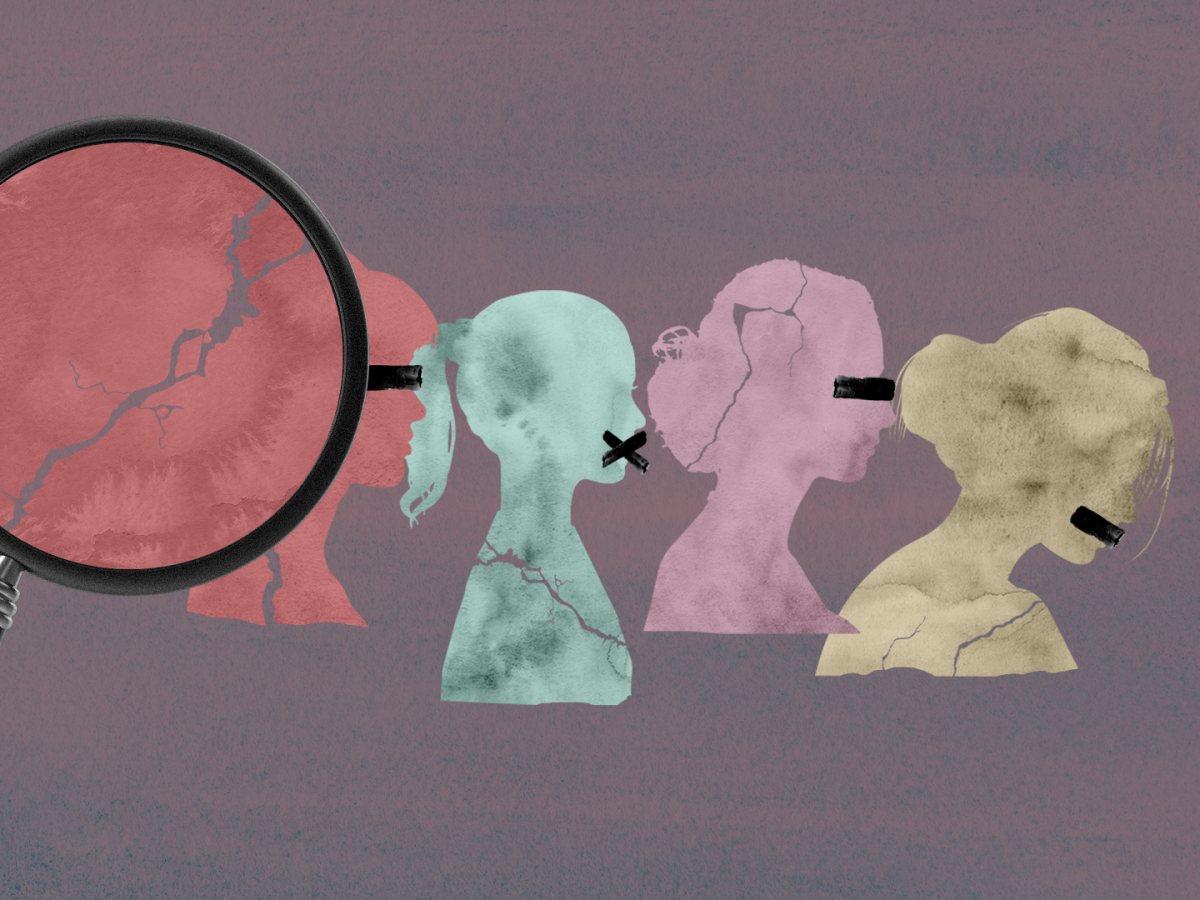
Women in Balkan Newsrooms: We’re Not a Monolithic Group

BIRN Platform B debate on Friday heard that, in a context of very diverse experiences, taking a “one-size-fits-all approach” towards fixing the issues women journalists face in the region is not practical.

At one of the series of Platform B events, on Friday, BIRN presented the main findings of its report on the position of female journalists in the Balkans, “Women in Newsrooms: Perspectives on Equity, Diversity and Resilience”, which concluded, among other things, that, a “one-size-fits-all approach” to fixing issues women journalists face is not practical, as these women are not a “monolithic” group.

The report includes 21 interviews and a survey filled in by 175 participants, whose responses highlighted trends, opportunities and obstacles, identified through the sharing of experiences and perspectives by women working in the media, to paint a more nuanced and complex picture of women’s role in newsrooms, news-making and the region’s societies more broadly.

“When it comes to women journalists, prevailing narratives have focused on almost exclusively online violence and women’s vulnerability, rather than on the systems that make this type of abuse prevalent, normalized and even profitable,” the report notes, adding that, “when women who are proven to create space for narratives that fall outside of mainstream dialogue are marginalized, the negative implications for society are compounded”.

The report’s six sections depict women as : a monolith; a liability; a workforce; a community; as accessories; and as guerrillas, as “an attempt to paint a picture that is more nuanced – to address the intersecting identities and diverse experiences that actually characterize women’s media – and newsroom more specifically – participation and representation in the Western Balkans”.

In BIRN’s debate on Friday, the co-authors of the report, Bojana Kostic and Jennifer Adams, emphasized the need for “solidarity zones  – spaces created by and for women for support, innovation and connection”, where women can support each other “online and minimize their exposure to social media” which, as the report reads, has “since its inception, failed to provide a safe space for women and marginalized populations”.

One of the panelists, Elida Zylbeari, ethnic Albanian editor-in-chief of the North Macedonian-based Portalb.mk, said that being a journalist can be difficult both as a woman and as part of a minority ethnic group in North Macedonia.

“There’s a (first) language barrier and privilege; the community thinks Macedonians are more important than Albanians, so, when it comes to government briefings, for example, you see even fewer Albanian female journalists,” Zylbeari said, adding that “other minorities (Turks, Bosnians, etc) are practically non-existent – left out, taken less seriously, and undermined”.

Elida Zylbeari at the BIRN Platform B debate on Friday, January 14, 2021. Photo: Zoom/Screenshot

Women journalists in the Western Balkans “are not taken seriously”, as Zylbeari points out. Katarina Radović, a journalist for a regional broadcaster from Novi Pazar in Serbia, agrees. Certain professions such as teaching are perceived as more suitable for women than “being a journalist”, she said.

Adams said international organisations that work in media and women empowerment should work more “to reflect change” and make sure increasing women’s safety in the newsrooms is not translated into a narrative about women being weaker.

“We [international organisations] wanted to push for women’s safety in the newsroom, but the lack of response had the opposite effect. Many women in international media were sent to smaller events because they are considered weaker,” Adams lamented, explaining that, “despite the online violence that is more towards women than men, the reality of women … is not one of weakness”.

Kostic called for more focus on “solidarity zones”, for women to “continue being outspoken”, and for stakeholders to “continue empowering women journalists” by learning lessons from existing women movements.