European Climate Foundation (ECF)

DONOR
The European Climate Foundation (ECF) is a major philanthropic initiative working to help tackle the climate crisis by fostering the development of a net-zero emission society at the national, European, and global level.

The ECF supports over 700 partner organisations to carry out activities that drive urgent and ambitious policy in support of the objectives of the Paris Agreement, contribute to the public debate on climate action, and help deliver a socially responsible transition to a net-zero economy and sustainable society in Europe and around the world.

It was founded in 2008 by philanthropists to develop solutions and activate political engagement and public consciousness around this global emergency. For the last 15 years, the ECF has been a galvanising force in promoting Europe’s climate leadership.

ECF is part of a highly supportive global network to stimulate climate-related policy work worldwide.

Web: https://europeanclimate.org/

BIRN’s Sasa Dragojlo Receives Prestigious ’Dusan Bogavac’ Award

Created in memory of Yugoslav-era journalist Dusan Bogavac, the annual award is given in recognition of ethics and courage in journalism.

BIRN journalist Sasa Dragojlo was awarded the prestigious ‘Dusan Bogavac’ Journalism Award for Ethics and Courage at a ceremony on Thursday, October 26, at the Belgrade Media Centre.

Zeljko Bodrozic, president of the Independent Journalists’ Association of Serbia, IJAS, said Dragojlo had been recognised for “courageously and professionally investigating and informing the public about important topics of general interest for years, such as the corrupt business of selling ammunition production machines, the war between smugglers in the north of Vojvodina, money laundering through the construction of residential and commercial buildings throughout Serbia, and the recent armed conflict in Banjska.”

Accepting the award, Dragojlo said it was “the best I have received in my short but intense career in journalism”.

The honour, created in memory of the prominent Yugoslav-era journalist Dusan Bogavac, has been awarded by the Dusan Bogavac Foundation and the IJAS since 1991, the year after Bogavac’s death.

“Dusan Bogavac is known for the solidarity fund and, considering the situation in the media in Serbia and globally, I think that solidarity is the key for us,” Dragojlo said.

“Few of us do this job professionally and well, and we need to stick together, considering that no one will help us survive in this job and that professional media are not required in this world,” he told the audience in the Belgrade Media Centre. “We have to fight for our place.”

Dragojlo dedicated the award to “my colleagues from BIRN”.

Bogavac’s sister, Branka Bogavac, said: “We need to emphasise the importance of consistent, courageous, and moral journalists who, with their unwavering engagement, not only save the profession’s image but set an example for all of humanity”.

“That is why I sincerely believe this year’s laureate, investigative journalist Sasa Dragojlo, will also be classified among such personalities and bright examples.”

Besides Bodrozic, the jury members were previous award winners Dragana Peco and Snezana Congradin, as well as Branka Bogavac and Filip Mladenovic on behalf of the Dusan Bogavac Foundation.

BIRN’s Sasa Dragojlo Wins ‘Dusan Bogavac’ Award for Ethics and Courage

Sasa Dragojlo, a BIRN journalist, won this year’s “Dusan Bogavac” Journalism Award for Ethics and Courage, which has been awarded by the Dusan Bogavac Foundation and the Independent Journalists’ Association of Serbia, IJAS, since 1991.

The announcement on the award said: “Sasa Dragojlo has been courageously and professionally investigating and informing the public about important topics of general interest for years, such as the corrupt business of selling ammunition production machines, the war of smugglers in the north of Vojvodina, money laundering through the construction of residential and commercial buildings throughout Serbia, and the recent armed conflict in Banjska.”

“I am really happy with the ‘Dusan Bogavac’ award I got since I was nominated by a jury made up of really respectable colleagues. It was a shock, since I was unaware it was happening; I learned about it half an hour before it got published. When I see all the people who got it before me, it is really an honour and a privilege.

“Working hard in a stressful job like journalism, every now and then I feel depressed, asking whether it is worth living a poor life with many pressures without much real effect in changing the deeply corrupted societies we live in. Awards like this are at least a glimpse of hope that someone cares and that our work matters,” Dragojlo said.

The jury members were previous award winners Dragana Peco and Snezana Congradin, as well as Branka Bogavac and Filip Mladenovic on behalf of the Dusan Bogavac Foundation, and Zeljko Bodrozic, president of the IJAS.

Recently, Dragojlo won third prize as part of a team of BIRN and the Centre for investigative journalism of Serbia, CINS, for an investigation into Serbian arms exports to Myanmar following the army coup in that country. He also won third prize in the EU investigative awards for a story on a Serbian police translator who led a people-smuggling gang.

As Dragojlo stated: “When I got my degree at the Faculty of Political Science, the future in journalism was not so clear. I wrote columns, essays and free-form prose in multiple online media but could not live off it, so I worked multiple ‘real jobs’ – from call centres to warehouses. I thought I would never find a media that wanted me, had enough money, or where I wanted to work (I would not want to work in 90 per cent of the media; a construction job looked more attractive). But in April 2015, I got a chance to work for BIRN, and since then, I have never quit this nutjob profession.”

The “Dusan Bogavac” Award ceremony will be held on Thursday, October 26, in Belgrade.

EU Awards for Best Investigative Journalism in Türkiye Announced

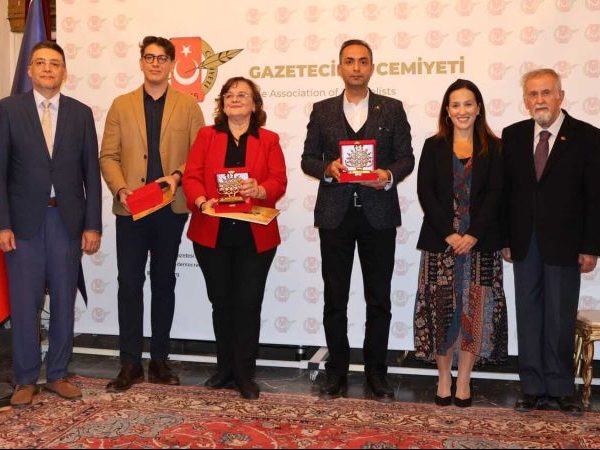
On October 16, the winners of the EU Awards for Investigative Journalism in Türkiye were announced.

Murat Ağırel, Doğu Eroğlu and Çiğdem Toker were selected from many colleagues as this year’s winners for their stories published in 2022 exposing crime and institutional failures to protect citizens’ rights.

The jury consisted of İsmail Bezgin, a reporter and news-broadcasting manager; Mehmet Vecdi Seviğ, a former expert in the Ministry of Finance’s Inspection Board who later transitioned into journalism, with working experience in Yankı magazine, ANKA news agency, Dünya newspaper, Cumhuriyet newspaper and Başkent TV; and Göksel Bozkurt, a reporter, news director and columnist, President of the Parliament Journalists Association and Executive Editor of ANKA news agency.

The first prize went to Murat Ağırel (Yeniçağ Gazetesi) for his story “Türkiye in the Grip of Drugs,” which unveiled the hidden web of crime that stretches from Türkiye to Europe, all while being concealed by influential figures within the country.

Second prize went to Doğu Eroğlu for “BTK-gate with Documents,” a thought-provoking tale that shed light on how constitutionally guaranteed freedom of communication is under siege by the Information Technologies Authority, BTK.

Third prize went to Çiğdem Toker (Sözcü Gazetesi), who uncovered the shocking damage done to the National Garden by dismantling the runway of Ataturk Airport.

Marija Vasilevka, Project Manager from BIRN, greeted all guests and highlighted the importance of BIRN’s partnership with the Association of Journalists from Türkiye.

“Investigative journalism is not an easy job to do, especially in the current situation in the world. But it is an important tool to hold institutions accountable and contribute to the development of democracy. Our project seeks to create a sustainable system for supporting journalists to produce quality and independent news,” Vasilevska said.

She handed the award to the third prize winner. The Vice-president of the Association of Journalists and a representative from the EU Delegation to Türkiye handed the second and first prizes respectively.

The EU Award for Investigative Journalism 2023 is part of the project “Strengthening Quality Journalism in Western Balkans and Türkiye II”, funded by EU. This aims to recognise and promote outstanding achievements in investigative journalism as well as improve the visibility of quality journalism in the Western Balkans and Türkiye.

Calling Balkan journalists: Apply for the Western Balkans Sustainable Energy Award for your stories on sustainable energy

BIRN is calling on Balkan journalists to apply for the Western Balkans Sustainable Energy Journalism Award 2023.

The Balkan Investigative Reporting Network (BIRN), in collaboration with the European Climate Foundation, will reward exceptional journalistic pieces focusing on sustainable energy in the Western Balkans through the award.

The award’s purpose is to honour journalists whose work published in media outlets from September 2022 to September 2023 has actively encouraged excellence and innovation in the field of sustainable energy.

The award celebrates excellence in journalism and fosters a sense of community and collaboration among those committed to informing the public about critical environmental issues.

Individual journalists, or a team of journalists, from the six Western Balkan countries (Albania, Bosnia and Herzegovina, Kosovo, Montenegro, North Macedonia and Serbia) can apply.

Applications should include journalistic pieces published in print, radio, TV or online format. Submissions in other formats, including podcasts, YouTube, TikTok and Instagram investigative series, are also welcome. Cross-border stories in which journalists from different countries collaborate are also eligible for this call. Among the topics expected to be covered are ones related to renewable energy sources, energy efficiency, sustainable urban planning, policy, and regulations related to sustainable energy, and others.

The best three stories selected by the international jury will receive prizes. The total prize fund for this year is €6,000. The first prize winner will receive €3,000, the second will receive €2,000 and the third, €1,000.

To apply, complete the Application Form in English no later than 19/11/2023.

Following the selection process, by the end of 2023, BIRN will organise the award ceremony in one of the Western Balkan countries.

More about the call can be found here.

Regional EU Awards for Best Investigative Journalism Announced

On October 5 in Europe House in Sarajevo, the winners of the Regional EU Awards for Best Investigative Journalism were announced. BIRN’s journalist Sasa Dragojlo was among the winners.

The Regional award was created and awarded for the first time this year with the goal of fostering collaboration and supporting stories with regional impact produced by journalists from different countries from the Western Balkans region and Türkiye.

The jury consisted of Brent Sadler, a multi-award-winning journalist, including a BAFTA for Gulf War coverage and an Overseas Press Club of America Award for reporting from South Lebanon, with 18 years of working experience in CNN; Janine Gibson, an editor of FT Weekend, and editor-in-Chief of BuzzFeed UK and Deputy Editor of The Guardian, who oversaw Pulitzer Prize-winning coverage of the Edward Snowden leaks; and Marko Milosavljević, a well-known academic at the University of Ljubljana, Slovenia.

The first prize went the journalists from the Investigative Reporting Lab from North Macedonia – Sashka Cvetkovska, Elena Mitrevska Cuckovska, Maja Jovanovska and Trifun Sitnikovski – for their documentary Bad Blood, which shows the deadly effects of state-sponsored COVID profiteering. This made them double winners; they received the award for best story also on a national level in North Macedonia.

The second prize went to Dragan Stanimirović from Al Jazeera Balkans, Bosnia and Herzegovina, for his story “Battle for Neretva II and III”. This documentary series is about the Bosnian government’s plans to build hydropower plants in the Neretva basin and the struggle of activists and citizens to protect their rivers.

Third prize went to Sasa Dragojlo from Balkan Investigative Reporting Network, BIRN,  for “With Police Connections, Serbian-Syrian Translator Turned People-Smuggler”, a story about an organised criminal group that smuggled refugees and migrants of all nationalities, and illegally organised the crossing of the borders of Croatia, Bosnia and Hungary.

“I am really glad that I was awarded for this story. The investigation I conducted was highly demanding and long-lasting, while the scope of evidence was quite diversified – from video evidence, secretly taped audio recordings of criminals, to interviews with insiders in the people smuggling business and security officers,” Dragojlo said.

He said the fact it is a story about the fate of refugees and migrants makes the award even more important, emphasizing that due to global problems migration to Europe will likely not stop but increase in the future.

“Migrants are the most endangered category on the planet. They do not have a territory that they can consider their own, they are not in the system, they have no documents that show they belong somewhere, and they are left to the chaos ruled by violent smuggling gangs and corrupt policemen with a license to beat them,” Dragojlo concluded.

Sadler, as representative from the jury, announced the winners, while the Head of the Delegation of the European Union to Bosnia and Herzegovina, Ambassador Johann Sattler, handed the certificates to the winners.

The EU Award for Investigative Journalism 2023 is part of the project “Strengthening Quality Journalism in Western Balkans and Türkiye II”. This aims to recognise and promote outstanding achievements in investigative journalism as well as improve the visibility of quality journalism in the Western Balkans and Türkiye.

BIRN Holds Training on Digital Rights Reporting in Sarajevo

For three days in Sarajevo, BIRN trained eight Balkan journalists in digital rights reporting as part of a training support by the United Nations Democracy Fund.

Journalists selected to participate in BIRN’s digital rights reporting training in Sarajevo, Bosnia, from September 26 to 28, came from various backgrounds.

The topics ranged from digital rights and their impact on journalism to multimedia storytelling using contemporary tools, employing the power of open-source intelligence, OSINT, in journalism, techniques, best practices in data journalism, fact-checking and verification techniques for digital rights reporting, among others.

Two journalists from Kosovo were unable to join the group due to clashes in the north of Kosovo but will be trained online.

The trainees singled out sessions on how to stay safe online when reporting on digital rights violations and fact-checking and verification techniques for digital rights reporting as particularly useful in their future work.

BIRN’s training program gave the participants a comprehensive understanding of the relevant issues around digital rights reporting, and allowed them to pitch story ideas during the workshop session on the last day of the training.

As a result, ten digital rights-related stories by trainees will be produced in collaboration with Balkan Insight’s editors, who will serve as their mentors. The trainees will also receive a stipend for their work on the stories. Upon editorial approval, these will be published by Balkan Insight in the coming months.

As part of the program, participants also visited BIRN’s exhibition in the Historical Museum in Sarajevo based on the recent project “Surveillance States”, which gave them insights into the experiences of journalists targeted by state-sponsored surveillance.

Journalists are key in raising public awareness and driving change in digital rights reporting. This training gave journalists the skills and knowledge they need to produce impactful stories to contribute to a more informed public debate and so protect and promote digital rights in the Balkans.

Numerous reports from international rights and media, civil society, international organisations, and BIRN’s own annual digital rights violations reports, indicate a worrying situation regarding digital rights in the Balkans.

The reports emphasize the need for continuous efforts to enhance the protection and promotion of these rights by improving journalists’ abilities to produce quality reporting on these issues.

Training in digital rights reporting in Sarajevo is part of BIRN’s attempts to educate, inform, and empower journalists interested in reporting on digital rights in the region.

The training was made possible through the support of the United Nations Democracy Fund.


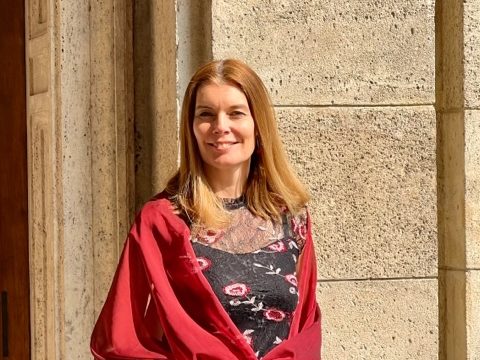
Aleksandra Vrbica

Based in Belgrade, Aleksandra joined BIRN in October 2023 as a Communications Manager. Her main responsibilities include developing and implementing communications strategies and work plans, designing promotional campaigns, and working closely with the programme departments, social media team and editorial team to ensure its content reaches target audiences.

Previously, Aleksandra worked as a journalist and a Social Media manager and has extensive experience in journalism, communications and Social Media.

For three years, she worked at the EU Info Centre in Belgrade as a Social Media Officer and was responsible for the EU Delegation’s SM accounts, amongst other things. During this period, she also gained valuable experience in project communications.

She has been awarded by the Serbian Public Relations Society and the 2020 EU Delegation to Serbia for the campaign “They Are Heroes”.

Aleksandra studied at the Faculty of Political Sciences, at the University of Belgrade. Her major was Journalism and Communications. Also, she has an MA degree in Social Policies. In addition to her formal education, she has attended various Social Media courses and seminars.

Along with her native Serbian, she speaks English.

BIRN’s Citizen Reporting Tool Presented in Greece

BIRN’s Engaged Citizen Reporting tool was presented at the International Journalism Forum in Greece for the first time.

In the context of the International Journalism Forum 2023, an annual journalistic meeting organised by Greek non-profit iMEdD (incubator for Media Education and Development), Balkan Insight’s Managing Editor, Dusica Tomovic, presented BIRN’s Engaged Citizen Reporting ECR tool.

“ECR tool is the fastest way to get to the real people, as our main scope is to report with them, not only about them,” Tomovic told the audience of journalists and journalism students from Greece and other countries.

ECR is not only a citizens’ engagement tool; it is an original, trustworthy and inspiring mechanism that creates bonds among society members and impactful stories that matter.

Presenting some of the most successful stories created through ECR, such as “Flight Delayed: Air Serbia Faces Capacity and Quality Questions,” “Childbirth Often Traumatic in CEE, But Few Women Seek Redress,” and “TikTok Balkans: Alarm Bells over Child Access to Video App,” Tomovic explained how it works. Besides the callouts for engagement, journalists must analyze the data they collect, verify and fact-check them and then produce the story.

In the past four years, BIRN has trained 75 media outlets from six Western Balkan countries on how to use the ECR; a total of more than 400 videos, articles, features, and podcasts on health, environment, social issues, etc, was produced through ECR.

Users of the BIRN investigative reporting tool say it has transformed the way they communicate with their audiences who feel empowered by helping shape the content of their own media.

BIRN continues to support local media to further develop their skills in engagement journalism and raise their editorial standards, with a focus on storytelling, data analysis, verification and fact-checking, contributing to the fight against misinformation and disinformation.

The International Journalism Forum 2023, an annual journalistic meeting organized by iMEdD, was held in Athens from September 28 to 30. iMedD is a non-profit founded in 2018 with the exclusive donation of the Stavros Niarchos Foundation.


EU Awards for Best Investigative Journalism in Serbia Announced

On September 28, in the EU info centre in Belgrade, the winners of the EU Awards for Investigative Awards for Investigative Journalism in Serbia were announced.

KRIK, CINS and a BIRN team of Jelena Zorić and Vuk Cvijić were selected from many colleagues as this year’s winners for their stories published in 2022.

The jury consisted of Tamara Skrozza a journalist who has worked for radio, press and TV productions and engaged with a number of different media outlets; Snjezana Milivojevic, a professor of public opinion and media studies who chaired doctoral and master’s programs at Bayan College in Oman and the University of Belgrade; and Sasa Lekovic, President of the Investigative Journalism Centre, based in Croatia, a reporter and editor and a licensed investigative reporting trainer and lecturer.

The first prize went to the KRIK team (Stevan Dojčinović, Bojana Jovanović, Milica Vojinović and Ana Adžić) for their stories on the Darko Šarić clan.

The second prize was shared between CINS and BIRN. The CINS team (Stefan Marković, Teodora Ćurčić, Jovana Tomić, Ivana Milosavljević and Vladimir Kostić) was awarded for their stories on political party financing.

Jelena Zorić from BIRN was awarded for her stories about medical malpractice in the sensitive area of psychiatric health.

The third prize went to Vuk Cvijić of NIN for his investigations into the connections between criminal circles and state officials, and CINS/BIRN (Dina Đorđević, Marija Ristić, Jovana Tomić and Saša Dragojlo) for “Paths of Serbian weapons”. Part of this series is the investigation “Serbian Rockets Sent to Myanmar Even After 2021 Coup”, a cross-border collaboration between BIRN, CINS, Myanmar Witness and Lighthouse Reports, originally commissioned at the BIRN Summer School of Investigative Reporting in Dubrovnik in 2021.

Manuel Munteanu, Head of Press and Info and Deputy Head of Political Section of the EU Delegation in Serbia, gave a speech highlighting the importance of independent media and extending congratulations to the winners.

Davor Marko from Thomson Media introduced the project and the importance of the EU awa for supporting investigative journalism in the Western Balkans and Türkiye. Snjezana Milivojevic, representing the jury, provided a detailed explanation of the award selection process and announced the recipients of each awarded position.

More information can be found here.

The EU Award for Investigative Journalism 2023 is part of the project “Strengthening Quality Journalism in Western Balkans and Türkiye II”. This aims to recognise and promote outstanding achievements in investigative journalism as well as improve the visibility of quality journalism in the Western Balkans and Türkiye.

The project is funded by the European Union and it is implemented by a consortium composed of Balkan Investigative Reporting Network – BIRN Hub, Central European University (CEU) – Hungary, the Association of Journalists (AJ) – Türkiye, Thomson Media (TM) – Germany, University Goce Delcev Stip (UGD) – North Macedonia, The Independent Union of Journalists and Media Workers (SSNM) – North Macedonia, Media Association of South-East Europe (MASE) – Montenegro, and Balkan Investigative Reporting Network Kosovo (BIRN Kosovo).