BIRN Albania Publishes Handbook for Journalists Reporting on the Environment

The Balkan Investigative Reporting Network in Albania has published a new handbook for journalists in the country on how to report on environment and climate change.

The manual was written by Lawrence Marzouk, a journalist, editor and trainer with almost 20 years’ experience in investigative reporting, and Mihallaq Qirjo, a professor of ecology at Tirana University and environmental activist. The publication was edited by Alken Myftiu, an expert on climate change, renewable and clean energy policies and environmental Issues.

The manual aims to provide journalists with a better understanding of climate change and looming environmental crises, as well as explaining the legal and financial situation in Albania as regards environmental issues and the country’s path towards harmonisation with EU standards.

It also provides Albanian journalists with the latest practical, cutting-edge tools to investigate and report on the subject, while suggesting useful open sources of information.

The publication of the manual was supported financially by Sweden and the Democracy Commission Small Grants Program of the US Embassy in Tirana as part of the project ‘Building Resilience Through Environmental Journalism’.

To download a copy of the report in English, click here.

To download a copy of the report in Albanian, click here.

BIRN Macedonia Holds Second Training for Young Journalists

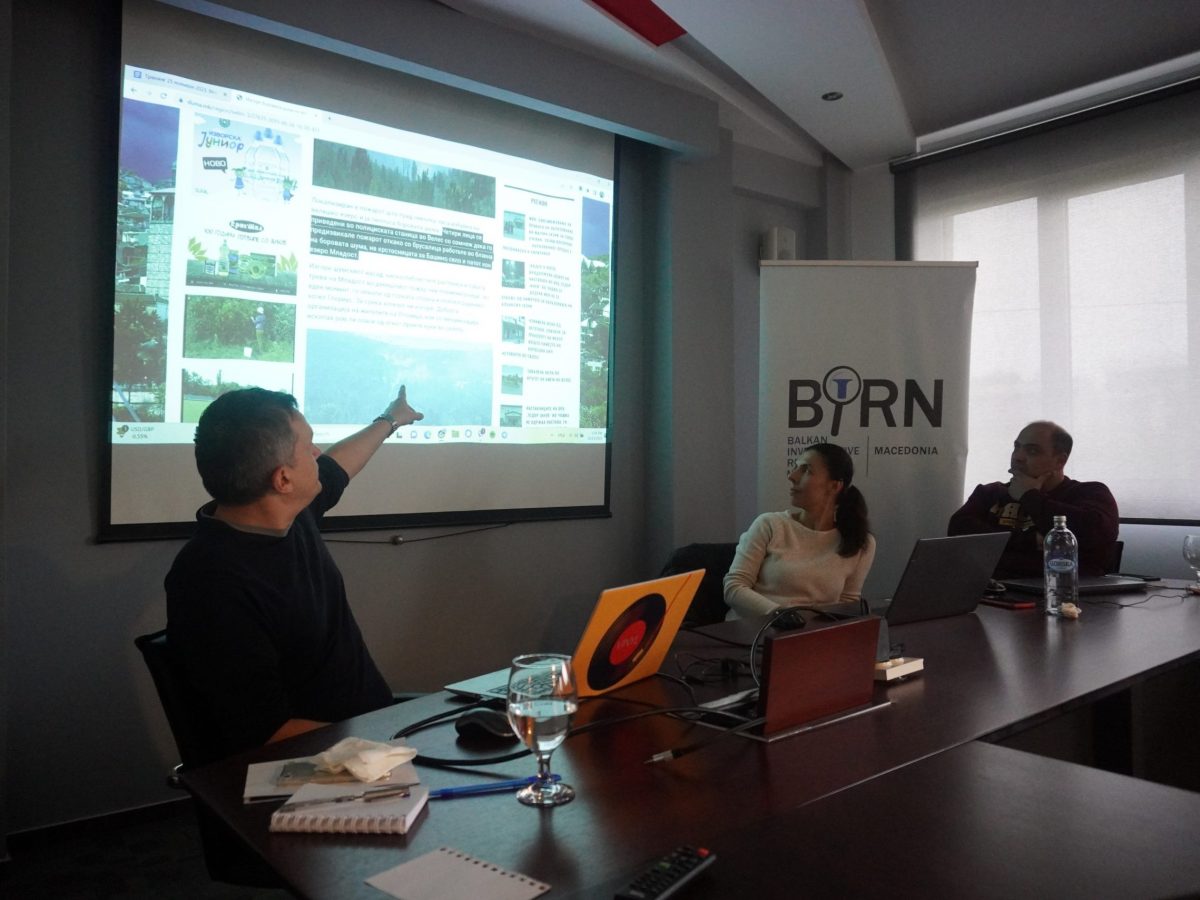
The second training in a year-long series of trainings for a dozen young journalists took place on November 24-26 in Veles, North Macedonia.

The aim is to empower participants with essential journalistic skills, focusing on sourcing, interviewing techniques and effective information gathering. The training also covered the significance of documents, planning and structuring research, as well as story-pitching to editors.

The entire training was designed to simulate a newsroom and show trainees how journalists find, identify and research stories.

Trainees were divided into groups to research different topics to find a story, online and in the field, learned how to find sources for their story (both human and data, documents), how to perform customized search and how to navigate their way through various open databases.

They learned also how to assess source reliability through case studies and did practical exercises, such as simulated interviews. Under the guidance of the trainers, they conducted local field and online research, defined their story hypothesis, and identified sources and necessary documents.

Participants received a practical crash course how to use open datasets and were shown various tips and tricks on where to find useful data (from local institutions to international organizations, CSOs, etc), how to map read Google satellite imagery and find their way in land registries and other databases.

A dedicated session highlighted the significance of the Freedom of Information Act, providing participants with insights on how to access government records and documents. The practical exercise guided them through the legal procedures required to obtain necessary information from government and other institutions.

The trainees were invited to submit story proposals and prepare a story that would be published by BIRN, with support and guidance of BIRN mentors in the coming period. The next training is set to take place in February 2024.


BIRN publishes Report on Labour Rights in Kosovo’s Private Sector

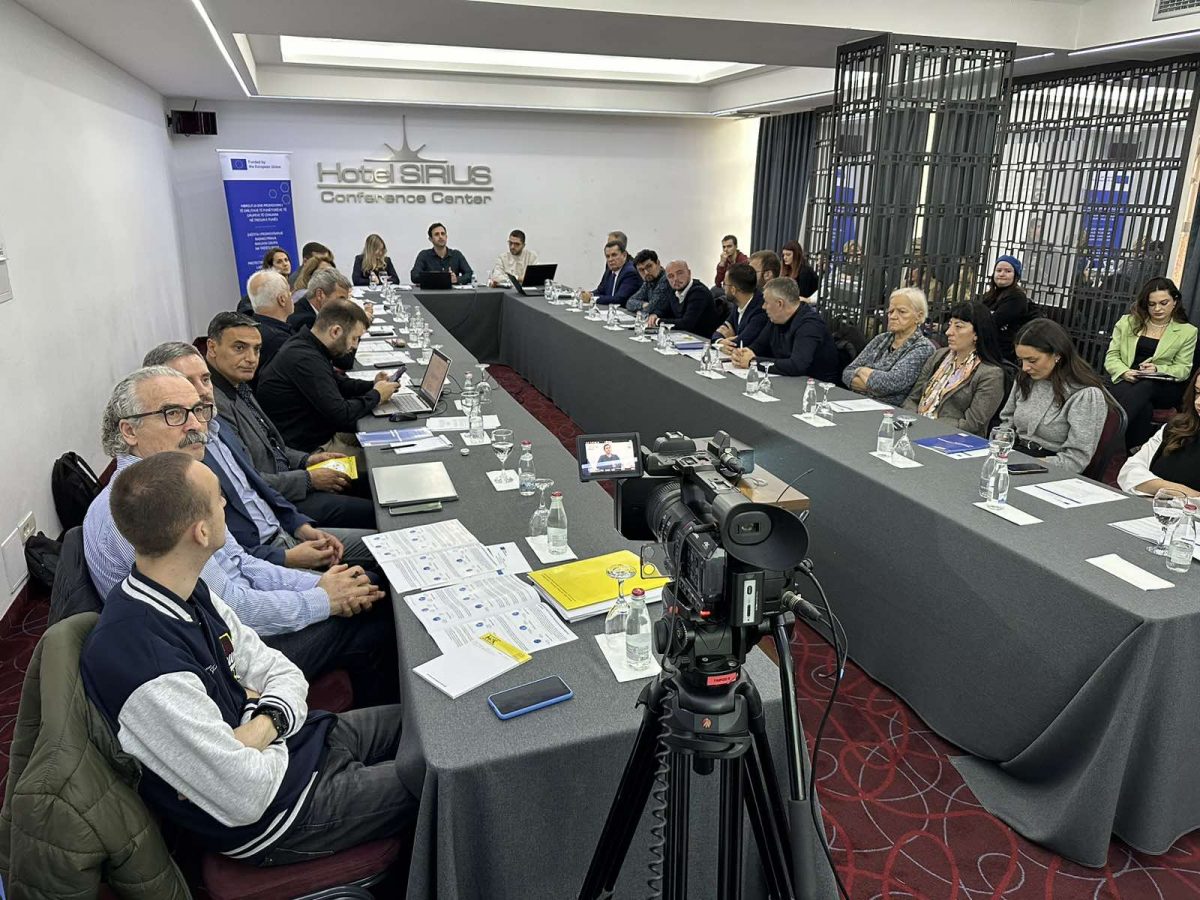
On November 24, BIRN held a conference for the launch of the report titled “Management of Workers without Procedures”.

Working conditions and violation of labour rights continues to be a challenge for the labour market in Kosovo. The number of accidents in the workplace in Kosovo is high and the level of implementation of labour rights is poor.

From the beginning of 2023, BIRN Kosovo collected data from businesses and workers in Kosovo in order to analyze implementation of the Labour law, including compliance with the requirements on contractual agreements, employment regulations, employment of persons with disabilities and knowledge of safety rules at work, among others.

Findings from the report show that, from 2016 until June 2023, there were 1,072 accidents in the workplace; 102 employees died as a result.

In the first six months of 2023, Kosovo’s Trade Inspectorate inspected over 23, 524 employees. Findings of this inspection showed that about 20 per cent of these employees were working without health certificates and 5 per cent were working without employment contracts.  This report also found that a high percentage of businesses do not fulfill the minimum standards for the legal guarantee and implementation of safety and insurance rights in the workplace.

The findings of the report were discussed by a panel including different actors from public institutions.

The panel was moderated by Kreshnik Gashi, managing editor of KALLXO.com. Panelists included: Avni Zogiani, Deputy Minister in the Ministry of Finance, Labour and Transfers;

Mimoza Kusari Lila, Head of the Vetevendosje Parliamentary Group; Naim Hajra, Deputy Chief Inspector in the Trade Inspectorate; Brahim Selimaj, Chairman of the Association of Builders of Prishtina; and Nalan Malësia, of the Union of Independent Trade Unions of Kosovo.

Kreshnik Gashi stated that findings show businesses need to improve regulations and procedures to create a better and safer working environment. Advancing regulations that emphasize security and safety within the structure of businesses will improve the fight against people dying of accidents at workplaces, he said.

The report is published as part of the project “Protection and Promotion of the Labour Rights of Vulnerable Groups in the Labour Market” financed by the European Union in Kosovo. It aims to improve the working conditions for vulnerable categories of workers, especially within the private sector, including health and safety in the workplace for women and men, through the promotion of social dialogue between workers and duty bearers.

The overall report can be found at these links:

English

Albanian

Serbian

BIRN to Hold Digital Rights Conference in Sarajevo

BIRN’s Digital Rights Annual Conference 2023 is taking place on December 5-6 in Sarajevo – and may be joined online through live streaming. Experts will discuss the challenges of digital rights in our increasingly connected world, focusing on the Balkans and South East Europe.

The BIRN Digital Rights Annual Conference 2023 will begin on December 5 with opening remarks from Diedon Nixha, Reporting Digital Rights & Freedoms Project Manager at BIRN Kosovo. This will set the stage for a day filled with insightful presentations and discussions.

Everyone can follow and participate in the panels and discussions on the first day of the conference through live streaming: Join us online by registering to follow and participate in the conference live.

In the first session, Ivana Jeremic, journalist and an editor at Balkan Insight, will present main findings from BIRN’s 2022-2023 Digital Rights Violations Annual Report. This covers the state of digital rights in ten countries in which BIRN continuously monitors digital rights violations: Albania, Bosnia and Herzegovina, Croatia, Hungary, Kosovo, Montenegro, North Macedonia, Romania, Serbia, and Turkey.

The day will feature several panel discussions: The first one, moderated by Ivana Jeremic, will explore the major trends and underlying factors of digital rights violations. Panelists include: Hamdi Firat Buyuk, journalist and Turkey correspondent at Balkan Insight; Aida Trepanic of BIRN BiH, BIRN’s digital rights monitor for BiH; Nensi Bogdani of BIRN Albania, BIRN’s digital rights monitor for Albania; and Tijana Uzelac of BIRN Serbia, BIRN’s digital rights monitor for Serbia.

The next panel will discuss the political and social influences on the rise in digital rights violations across the Balkan and Southeast Europe. Hamdi Firat Buyuk will moderate this session, with panelists: Leila Bicakcic, Director of the Center for Investigative Reporting (CIN); Megi Reci, Researcher, Institute for Democracy and Mediation; and Maida Culahovic, Head of the Department for Program Content and Analysis at the Regulatory Agency of Bosnia and Herzegovina.

In the afternoon sessions, the focus will shift to youth and digital rights in Bosnia and Herzegovina. Anes Cerkez of Civitas BiH, author of the research paper “Bosnia and Herzegovina’s Youth Online: Victims and Perpetrators of Digital Rights Violations,” will moderate a panel including: Azem Kurtic, journalist at Balkan Insight and BIRN’s digital rights monitor for BiH; Anida Sokol, Researcher and Project Coordinator at Mediacentar; Ahmed Kosovac, Council Member of the Municipality of Novo Sarajevo; and Slobodan Blagovcanin, Project Manager, Omladinski Resursni Centar Tuzla and Citizens Against Terrorism (CAT) Initiative.

On the second day, December 6, the conference will host the first regional meeting of Southeast Europe Digital Rights Network [SEE Digital Rights Network] members, an informal network of more than 35 organisations established by BIRN and SHARE Foundation.

Discussions will begin with a panel on the digital rights landscapes in the Balkans and Southeast Europe, moderated by Milos Ciric, BIRN Digital Rights Programme Manager. Panelists will include: Orkidea Xhaferaj, a Digital and Innovation Policy Expert, from SciDev in Albania; Rasid Krupalija, from Zasto ne, Bosnia and Herzegovina; Donika Elshani, a Researcher at KCSS in Kosovo; Dejan Georgievski, Programme Coordinator at Macedonia Media Development Center in North Macedonia; and Ana Martinović, of Serbia’s SHARE Foundation.

The day will continue with sessions dedicated to SEE Digital Rights Network and will be focused on creating a joint statement on the state of digital rights in the Balkans, moderated by Melisa Gazdic, with participation from all SEE Digital Rights Network Members’ Representatives.

The conference will conclude with a workshop to outline the SEE Digital Rights Network’s priorities for 2024, again led by Melisa Gazdic.

Join us online by registering to follow and participate in the conference live.

 This event is co-funded by the European Union and was also made possible through support from the UN Democracy Fund.

BIRN to Hold Digital Security Trainings for Journalists

To help journalists, journalism students and newsrooms across the Balkans deal with growing threats in their digital surroundings, BIRN is running a series of cyber security sessions throughout December.

The Balkan Investigative Reporting Network (BIRN) is organising online training sessions on digital security, aiming to equip journalists and journalism/communication students with practical tips and tools on: how to stay safe online; how to protect a computer; how to create strong passwords; ethical considerations of the digital sphere; how to avoid surveillance; how to counter malware attacks, etc.

Four one-hour training sessions will take place in the weeks of December 11-15 and December 18-22 for up to 30 participants from Albania, Bosnia and Herzegovina, Kosovo, Montenegro, North Macedonia and Serbia. Eligible participants are journalists from local media and journalism students from both public and private universities in the Balkans.

BIRN has been training journalists across Southeast Europe on these topics for several years to raise awareness about the importance of staying safe in an online sphere, about the concepts of secure internal communications and safe searching and browsing the internet. BIRN also has daily coverage of cyber security across SEE countries.

Training sessions will be conducted by Milica Stojanovic, an award-winning BIRN journalist and digital security expert. She has also been running digital security sessions at BIRN’s Summer School of Investigative Reporting since 2022.

To take part in the workshop, fill out the following form no later than Monday, December 4, 2023.

For additional information, reach out to us at [email protected] with the subject: Applications for Digital Security Training.

All sessions will take place on Zoom. The working language is English.

This workshop is part of BIRN’s project “Paper Trail to Better Governance”, funded by the Austrian Development Agency (ADA), the operational unit of the Austrian Development Cooperation since 2013. Among other things, this project aims to increase the capacities of journalists, media outlets and journalism and communication students in the six countries of the region.

BIRN to Support Development of Masters Programme in Investigative Journalism

BIRN will facilitate the development of a masters programme in investigative journalism together with its partners, the Central European University and University of Goce Delchev, aiming to secure the long-term and sustainable education of future generations of journalists in the Western Balkans.

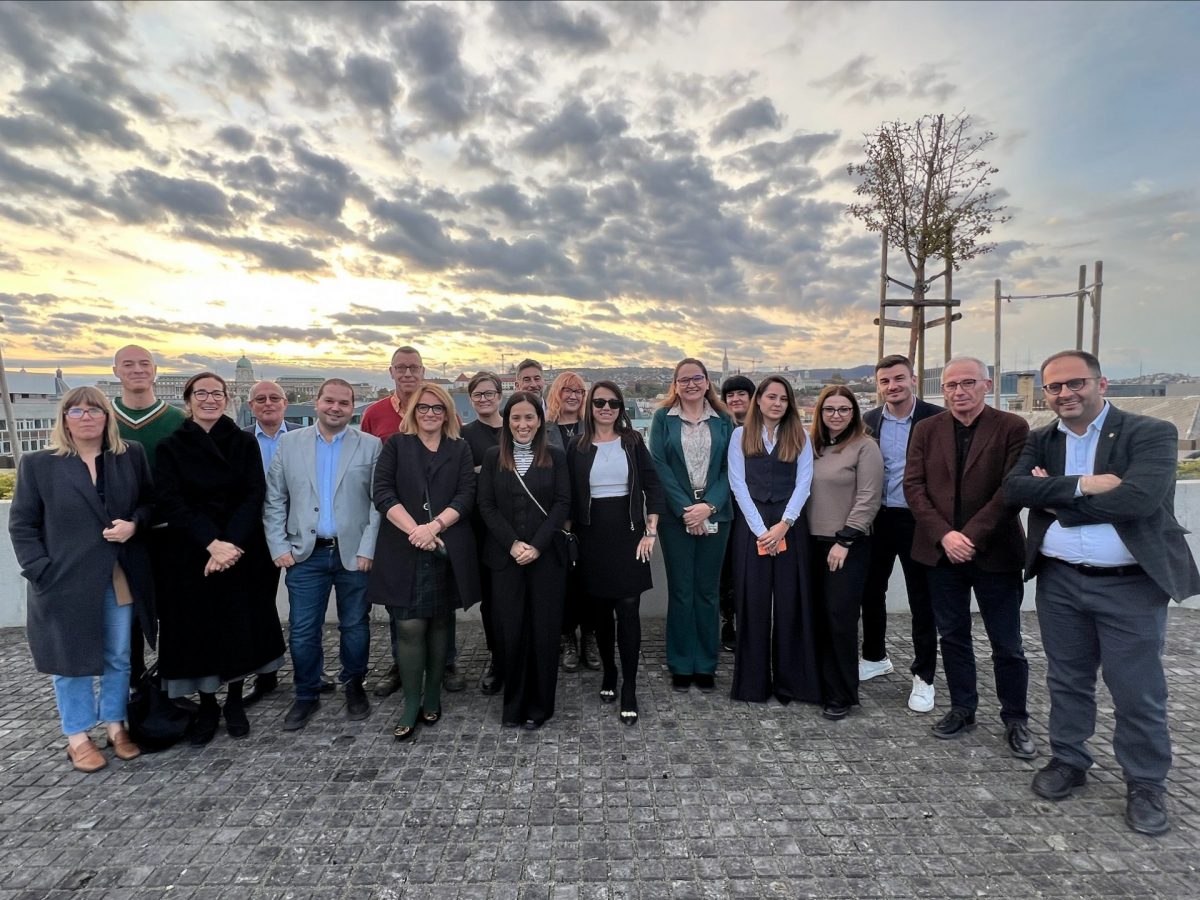
On November 16-17 in Budapest, Hungary, a team of academic staff, experts, and practitioners from the media sector from Western Balkans and Europe settled the foundation for the development of a masters program in investigative journalism and discussed its structure and target audiences.

This collaborative effort aimed to shape the curriculum of the program and underscored the significance of such an initiative as an investment in the field of journalism. Valuable insights were gleaned from lessons learned through the examination of existing programs across Europe. Currently, only one Faculty from the Western Balkan region has initiated such programme, and its practices and experience were taken into consideration during the workshop.

Discussions encompassed crucial aspects, including identifying the intended audiences for the program, determining the relevant topics to be included in the curriculum, addressing its cross-border dimensions, formulating its structural framework and identifying suitable accreditation avenues.

These discussions served as a comprehensive exploration of the fundamental elements necessary for the successful establishment and implementation of a master’s program.

“Through the project Strengthening Quality News and Independent Journalism in the Western Balkans and Turkey, BIRN aims to improve quality and professionalism in journalism in the Western Balkans and Turkey through the development of a sustainable system for support of the current journalists and the future generations of journalists. Developing an academic masters program in investigative journalism is long-term investment in future journalists,” Marija Vasilevska, the Project Coordinator, said.

After the Budapest meeting, extensive consultations with academic institutions in the region are to take place. These will play a pivotal role in the development and implementation of a pilot program for academic training in investigative journalism. Simultaneously, a roadmap will be crafted to guide the formal accreditation process for the Master of Arts, MA, program in the future.

To facilitate progress, an advisory board has been established by the Central European University. This comprises a dedicated team of academic staff and practitioners who are committed to collaboratively shaping the curriculum for the program. Their collective expertise will be instrumental in ensuring the program’s robust foundation and alignment with the evolving needs of the journalistic landscape.

Anticipation surrounds the forthcoming stages of this initiative, with the expectation that the master’s program will not only address the current challenges faced by the industry but also foster a new generation of skilled journalists equipped to navigate the complexities of the media landscape.

As this collaborative effort unfolds, it is poised to make a lasting impact on the field of investigative journalism, nurturing a community of professionals dedicated to upholding the principles of truth, transparency, and ethical reporting.

Calling CSOs and Media from Montenegro: Open Call for Proposals – Society Against Corruption in Montenegro

Balkan Investigative Reporting Network (BIRN) and Civic Alliance (CA) announce a new opportunity for local Civil Society Organizations (CSOs) and media outlets in Montenegro. Funded by the US State Department, the initiative seeks to combat corruption, a major impediment to establishing the rule of law in Montenegro.

Background:

Montenegro faces significant challenges related to corruption, impacting its economy and human rights. Despite the government prioritizing the fight against corruption, results are often inadequate, contributing to political instability and societal divisions. The project aims to bridge the gap between citizens, civil society and local media, empowering them to collaboratively identify, report and combat corruption, particularly in healthcare, education and the environment.

Objectives:

  • Strengthen capacities of local media, civil society and citizens to identify and report corruption in healthcare.
  • Empower civil society and media to report and counter corruption at national and local levels.
  • Improve constructive engagement between civil society, government and private sector on policies related to healthcare.

Outputs and Activities:

  • For Media Outlets: Cases of corruption in healthcare throughout Montenegro identified and revealed though developing factual and objective in-depth articles on healthcare based on the needs of local communities
  • For CSO’s: Improved anti-corruption policies, laws and/or practices in healthcare through developing anti-corruption policy papers based on the needs of local communities
  • Increased public awareness in Montenegro regarding the significance of anti-corruption efforts and the mechanisms for public interaction through enforcing anti-corruption campaign via mainstream and social media

Eligibility and Grants:

  • Maximum grant amount: $12,430.00
  • Number of grants: 6
  • Total estimated amount: $74,580.00
  • No co-financing required from applicants.

Application Process:

  • Eligible entities: Registered CSOs and media outlets in Montenegro.
  • Eligible activities: Development of anti-corruption stories/policy papers, implementation of promotional campaigns, participation in capacity-building initiatives.

Evaluation Criteria:

  • Relevance of proposed story/policy paper
  • Capacity
  • Financial proposal
  • Potential and social impact

Timeline:

  • Call issued: November 20, 2023
  • Deadline for submission: December 15, 2023
  • Information sessions: November 30, 2023
  • Notification to successful applicants: January 2024

To read the full call to apply, click HERE.

For more details, download the application form and budget template.

Join the fight against corruption in Montenegro – Apply now!

Contacts: Vuk Maraš and Gentiana Murati Kapo at [email protected]

Stay tuned for updates and follow our progress in creating a more transparent and accountable society in Montenegro on BIRN Facebook and Twitter.

BIRN Albania Opens Call for Investigations on Human Rights Abuses

BIRN Albania launched a call for investigative stories on November 10, offering grants for three journalists to produce articles on human rights abuses in Albania.

BIRN is offering grants for three journalists to cover stories on human rights abuses, as well as mentoring by experienced editors.

The call is part of the project ‘Promoting Accountability through Investigative Journalism’, supported by the National Endowment for Democracy, NED.

This project aims to build bridges between journalists, experts and civil society activists so they can strengthen the fight against corruption and impunity through investigative journalism.

Three journalists will be awarded grants to cover their expenses while conducting investigations and writing stories on topics related to human rights abuses in Albania.

The journalists will have around three months to dig deeper and research their ideas, and will also have the opportunity to work with experienced editors as mentors to guide them through the process of writing in accordance with BIRN standards.

The call only applies to journalists from Albania and closes on November 25, 2023.

Click here for more information (in Albanian) about the application procedure.

Click here to download the application form (in Albanian).

BIRN Albania Holds Roundtable on Human Rights

On November 7, the Balkan Investigative Reporting Network in Albania held a roundtable on the state of human rights in the country.

The roundtable was moderated by human rights activist Xheni Karaj, who presented a review of the uphill battle human rights defenders and journalists often face in Albania to advance causes and report abuses.

Two dozen journalists, civil society activists and experts in the field of human rights attended the roundtable in Tirana as part of the project: “Promoting Accountability through Investigative Journalism,” financed by the National Endowment for Democracy, NED.

This project aims to build bridges between journalists, experts and civil society activists, so that they can strengthen the fight against corruption and impunity through investigative journalism.

The aim of the roundtable was to identify important issues or problems that civil society believes should be investigated in the respect of human rights and freedoms in Albania.

The findings of the roundtable will guide the main areas of BIRN Albania’s upcoming open call for three journalists to produce investigative articles focused on human rights.

During the roundtable, the participants discussed the following themes and topics: sexual violence and off-line bullying of children in school; digital rights violations; smear campaigns against journalists and media disinformation against human rights activists; labour rights; marginalized communities’ and migrants’ access to healthcare; reintegration of victims from conflict areas; lack of institutional capacity; migrants’ access to social services; human rights in prison and other closed institutions; access to vaccines for children’ access to information and digital services; sexual harassment, etc.

Meet the People Behind BIRN: Lamija Grebo

Each month, BIRN introduces you to a different member of its team. For October, meet Lamija Grebo, a BIRN BiH Journalist.

Lamija joined BIRN BiH in January 2014 as a web archive assistant and intern. She wanted to contribute to the betterment of society and to changes in the postwar country and was recently awarded by the EU. Let’s meet her!

  1. Why did you decide to become a journalist?

I became a journalist probably because I wanted somehow to contribute to the betterment of society and to the changes we faced as a postwar country. I guess that’s something that motivated most of my colleagues in those early days. Love for this job, even with all the difficulties, is something that still makes me want to do my job the best I can.

  1. What was the most challenging situation during your career so far?

I can’t think of a specific one, but I think it is normal that now and then, with the situation in the country, region, or even on a global level, you ask yourself, is it all in vain, is it worth it, if they come, then why are the changes so slow? The stories that we do are worth it. They matter and should be told. The people we talk about within our stories should have a way for their voices to be heard, and we can give them that space and tell their stories in the most professional way.

  1. What are the three words that should describe journalism?

Truth, freedom, professionalism.

  1. You recently won the EU Investigative Journalism Award for an investigation into court verdicts over the past ten years for hate crimes (but that’s not the only award you won). Can you tell us more about this and its importance?

This is my first individual award that I share with my deputy editor, Džana Brkanić. For its groundbreaking work in covering transitional justice topics, BIRN Bosnia and Herzegovina was given the European Press Prize Special Award for 2020, so that is the one that I share with all my coworkers.

When it comes to the EU Investigative Journalism Award for 2023, Džana and I appreciate that the jury recognized the importance of our investigative story. Many hours of browsing through hundreds of court and prosecutorial decisions, numerous queries, and interviews with experts, but also with our fellow citizens who have still not seen justice after 20 years, stand behind this investigation. The value of the award is reflected in the additional visibility of investigative stories, which bring changes to society.

The awarded investigative story is a multimedia data research, which showed that hate crimes were mostly sanctioned with suspended sentences, with only one-quarter of those convicted being imprisoned, and investigations in some cases taking more than 20 years.

Suspended Sentences Do not Prevent the Spread of Hate” was based on verdicts passed down before all courts in Bosnia over ten years. It also revealed that there was no unified system for registering such crimes, which has made the monitoring and investigating of those cases more difficult.

  1. Do you have a story that you feel especially proud of, and what do you like most in your job?

Over the past almost ten years, there have been a lot of stories, and I take special pride in all of my stories. Most of my stories are about transitional justice, war crimes, and how the war affected and still affects people’s lives 30 years afterward. Every time I do a story and see that I have justified the trust that the people I’ve talked to gave me, I feel very proud. These are very delicate stories, and their importance for our society is enormous. After some of my stories were published, some indictments were filed for war crimes. A permanent exhibition is opened in Srebrenica Memorial Center as a part of the project I was involved in called “The lives behind the fields of death,” where we filmed testimonies of surviving witnesses of the 1995 genocide – a project BIRN BiH did with the Srebrenica Memorial Centre.

  1. What is your advice to someone who wants to work as an investigative journalist in our region?

Working on investigative stories is not an easy job, but with a lot of professionalism, courage, and knowledge, it is a rewarding one. Ask for help from your coworkers and editors, stick to our professional standards and ethics, tell those important stories, and try to make a tiny shift in our society.