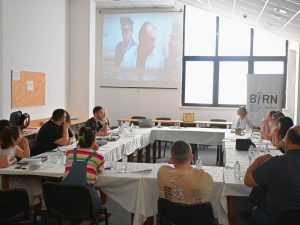
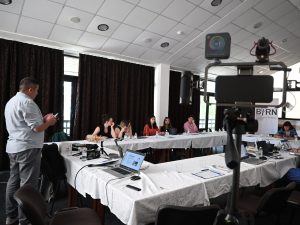
BIRN Bosnia Signs Collaboration Deal with University in Sarajevo

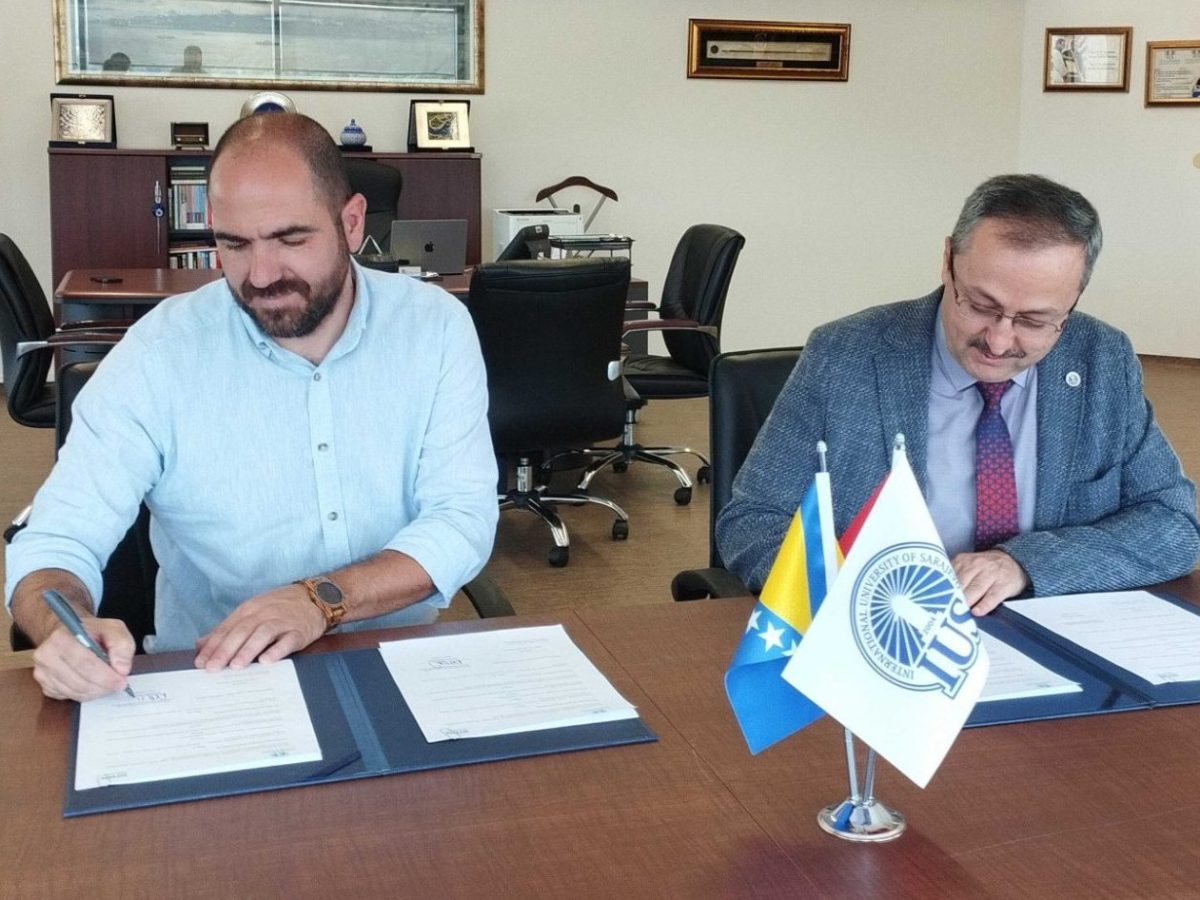
The Balkan Investigative Reporting Network of Bosnia and Herzegovina, BIRN BiH, has signed a deal with the International University of Sarajevo with the aim of mutually enhancing activities and information exchange.

Improving knowledge in the field of law and exchanging specialist and scientific information are some of the goals in a new collaboration between BIRN and the International University of Sarajevo.

The deal, signed by IUS rector Ahmet Yıldırım and BIRN BiH director Denis Dzidic, aims to improve science, practice, and education in the field of law, implement new projects and increase the  exchange of experiences between the two organisations. 

IUS assistant professor Mirza Ljubovic said the deal originated from a desire for increased collaboration within the NGO sector among institutions that promote media values, develop a culture of research and expertise in media law. This was why BIRN BiH was chosen as  a partner.   

Ljubovic said that, through this collaboration, joint lectures, conferences, and other activities offering students practical experiences outside the classroom would be set up. 

“We want to offer students this practical experience too, because of very important projects and lectures, which will be significant for the public, too – on transitional justice, restorative justice, and development of a culture of remembrance,” Ljubovic said. 

Dzidic said BIRN BiH was happy to build as many partnerships with academic institutions as possible in order to ensure synergy between the academic community and researchers, alongside investigative journalism and BIRN’s experiences, especially in the areas of transitional justice and the rule of law. 

“This is the best way for our materials to be used for educational purposes and for assisting in building a better society long-term,” Dzidic said. 

Previously, BIRN BiH signed several memoranda in different cantons, enabling teachers and professors to use an interactive platform when implementing programme content in history teaching.

BIRN Bosnia Helps Mark 30th Anniversary of Srebrenica

Documentaries, a summer school and a memorial room are part of a collaboration between BIRN and the Srebrenica Memorial Center to mark the anniversary in 2025.

This year the Balkan Investigative Reporting Network of Bosnia and Herzegovina (BIRN BiH) will be a strategic partner of the Srebrenica Memorial Center in order to mark the 30th anniversary of the genocide.

This year the Balkan Investigative Reporting Network of Bosnia and Herzegovina (BIRN BiH) will be a strategic partner of the Srebrenica Memorial Center in order to mark the 30th anniversary of the genocide.

The centre will screen three documentaries, hold a summer school, run sample classes and open a memorial room based on a long running project, entitled ‘The Lives Behind the Fields of Death’, alongside other activities.

BIRN BiH has cooperated with the Srebrenica Memorial Center previously. The largest project has been “The Lives behind the Fields of Death”, which began in October 2020, when 100 testimonies of surviving genocide witnesses were filmed. They are now part of a permanent exhibition alongside items the survivors donated for preservation in the memorial room set up in the Memorial Center in February 2022. Following a series of positive reactions, the project continued by filming another 100 oral histories.

Earlier this month the Memorial Center and BIRN BiH opened an exhibition titled “From Words to Violence: The Lives Behind the Felds of Death” at the United Nations Headquarters in New York to mark the International Day of Reflection and Commemoration of the 1995 Genocide in Srebrenica. The exhibition consists of 12 displays from the material previously recorded by BIRN BiH and the Memorial Center, alongside around 200 more testimonies during an oral history project.

The memorial room previously placed in the administrative building will be relocated to a separate exhibition space in a former battery factory, where visitors will have the opportunity to listen to 100 short interviews with genocide survivors, in addition to visiting a small cinema space and see artifacts donated or found in mass graves.

The space will be multimedia-equipped, and BIRN BiH’s documentary “Samir Mehic Bowie – Letters from Srebrenica” will also be exhibited there.

The film follows written conversations between members of a rock’n’roll band from Srebrenica, whom the war separated in the spring of 1992. Drummer Faruk left Srebrenica, while guitarist Samir stayed in the town. Through their letters, they dreamt of reuniting until July 1995. As part of the 30th anniversary, the documentary was screened in Zagreb, Tuzla, Mostar, and Visoko.

“Visitors to the memorial room in Potocari contact us every day with positive experiences, and we are really proud and satisfied that this exhibition will become a permanent exhibition at the Memorial Center. But also that we have managed to tell the stories of survivors in a way that we have managed to preserve their voices,” Dzidic said.

Emir Suljagic, director of the Srebrenica Memorial Center, pointed out the importance of this collaboration, especially given the sensitivity and complexity of reporting on genocide.

“This year, on the 30th anniversary, our message is that the story of Srebrenica will be told by survivors from Srebrenica. This is our story. That is why it is important for us to have partners who are proven friends, and who have the respect and trust of our community, and these are certainly the journalists and editors of BIRN BiH, who have a proven sensibility for such topics,” Suljagic said.

BIRN BiH’s documentary “Pravda i правда” [Justice and Truth] which deals with peace and transitional justice, as well as experiences of Bosnia and Herzegovina and war-torn Ukraine, will be screened at the SrebrenicaDocs Festival on June 25.

The third film by BIRN BiH to be screened in Srebrenica and Sarajevo is an animated documentary titled “Fahrudin”. The story of Fahrudin Muminovic, a boy who survived a massacre in Orahovac, is one of the most devastating testimonies of the brutality of the genocide and the power of human survival. Fahrudin was only seven when he and his father were taken to be shot together with other men and boys from their community. His father did not survive, while Fahrudin, who was hit with bullets and covered with bodies of the dead, stayed alive.

The films “Fahrudin” and “Samir Mehic Bowie – Letters from Srebrenica” will be screened for participants in the Memorial Center’s summer school in Srebrenica.

As a contribution by BIRN BiH to the commemoration of the 30th anniversary of the genocide, sample classes on the Srebrenica genocide were held in Tuzla and Srebrenica using materials available in the Database of Judicially Established Facts about the War in Bosnia and Herzegovina.

Detektor will report on these and other activities of the Memorial Center, and during the commemoration in Potocari on July 11.

BIRN Summer School of Investigative Reporting: Applications Open

BIRN Summer School brings top investigative journalists to Pristina this August.

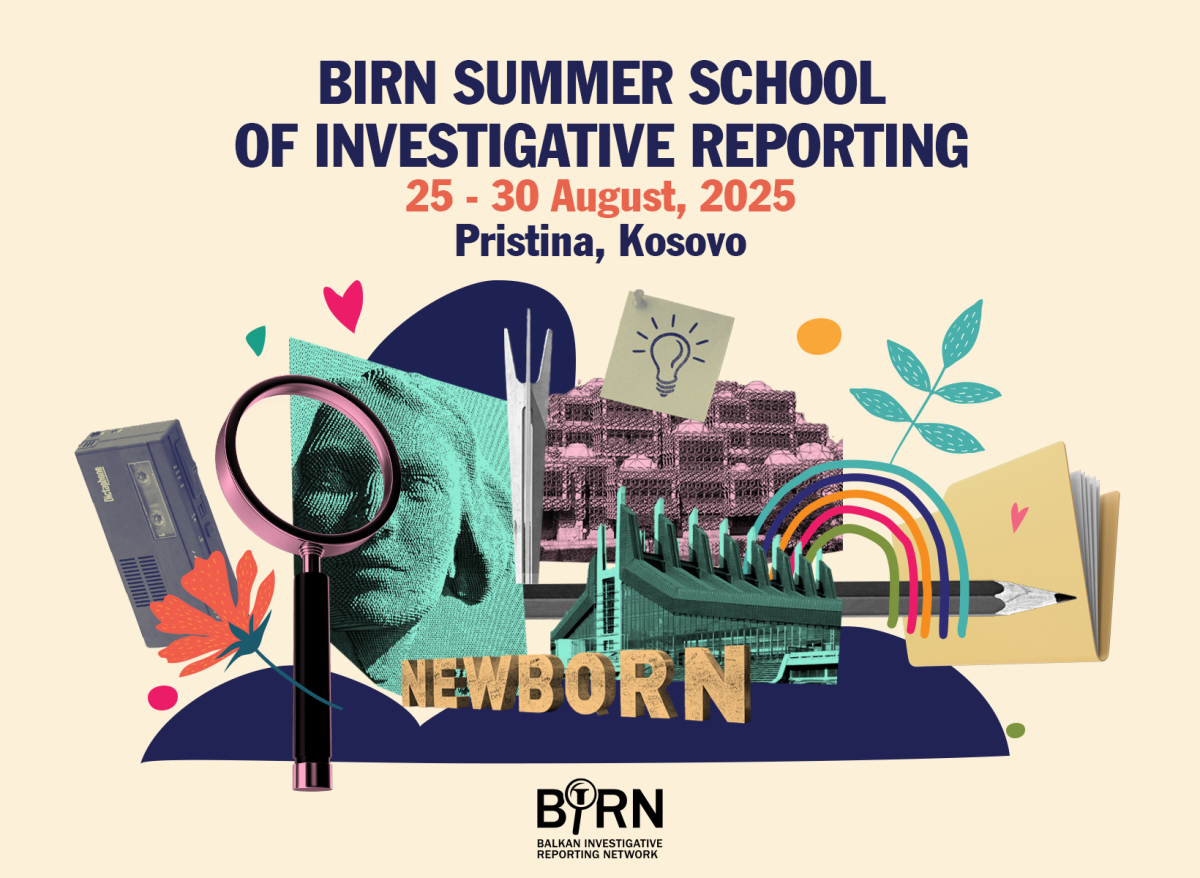
This August, Pristina becomes the epicentre of investigative journalism as the 15th BIRN Summer School of Investigative Reporting takes place between August 25 to 30, 2025.

Over the course of six days, 30 journalists will dive deep into the art of investigative reporting, guided by some of the most acclaimed editors and award-winning journalists.

Whether you’re chasing your next big story or aiming to take your reporting to the next level, this is where promising investigative journalists connect with leading professionals in the field. 

Pristina awaits. Are you ready to learn more about investigative journalism?

Journalists will sharpen their investigative skills under the guidance of award-winning editors, data experts, and seasoned reporters. The lead trainer for the week is Blake Morrison, Investigative Projects Editor at Reuters in New York, whose Pulitzer-nominated stories have driven policy changes and criminal convictions. From shaping story ideas to structuring impactful narratives, Blake will work closely with participants throughout the programme.

Investigative techniques using data will be a strong component of the curriculum. Jonathan Soma, Professor of Data Journalism at Columbia University and director of its Data Journalism and Lede Programs, will teach advanced methods for analysing and visualising data, and explore how artificial intelligence is transforming the way we investigate complex stories.

Participants will also look at how to access and investigate public records, particularly in the areas of environmental and climate reporting. Alexenia Dimitrova, an ICIJ member, Pulitzer-winning journalist, and author of five acclaimed books, will share her open-source intelligence (OSINT) expertise and demonstrate how public documents and datasets can be turned into compelling investigations.

Further developing OSINT skills, Reade Levinson of Reuters will lead practical exercises in geolocation and satellite image analysis, helping participants verify information and uncover wrongdoing with digital tools used in leading international newsrooms.

Pristina, a city full of energy, culture, and contrasts, offers the perfect setting to strike that vital balance between intense investigative work and self-care. From lively cafés and historic streets to vibrant debates in the classroom, the city invites you to both dig deep and breathe out.

Recognising that powerful journalism depends on journalists’ well-being, the Summer School will also include sessions on mental health, resilience, and communication. In partnership with The Self-Investigation foundation, Emma Thomasson, a journalist and certified coach, will lead training on managing conflict, stress, and burnout — equipping participants with strategies to sustain their careers in a high-pressure profession.

Set in the heart of Kosovo, the Summer School offers not only high-calibre training but also a meaningful connection to the region’s post-conflict context. Leading the local dimension of the programme is Jeta Xharra, Director of BIRN Kosovo and one of the region’s most prominent investigative journalists. Drawing on her work in transitional justice and her role as anchor of Life in Kosovo, Jeta will guide participants through the ethical and practical challenges of uncovering hidden truths in transitional societies. Participants will also visit The Reporting House and Kallxo.com, gaining first-hand insight into one of Southeast Europe’s most active anti-corruption platforms.

Beyond the workshops and lectures, BIRN will also provide dedicated space for networking, collaboration, and community building, because some of the best stories start with a shared coffee or a cross-border connection made in moments between the hard work.

In Pristina, you won’t just grow as a journalist — you’ll connect with a community that shares your passion!

As every year, BIRN is providing 30 full scholarships for selected participants. Journalists from the following countries are eligible to apply: Albania, Bosnia and Herzegovina, Bulgaria, Croatia, Czech Republic, Georgia, Greece, Hungary, Kosovo, Montenegro, North Macedonia, Ukraine, Poland, Romania, Russia, Serbia, Slovakia, Turkey, Tajikistan and Uzbekistan. This will cover a full stipend for participation in the programme, accommodation, meals, as well as transportation expenses of up to €200.

In addition to training, editorial support, and mentorship, BIRN will offer selected participants funding through our Investigative Initiative Story Fund to support the development and production of their investigative stories.

Participants are expected to arrive at the School with an initial idea for an investigative story, which they will develop further during the week in Pristina. 

Throughout the sessions, participants will receive mentoring and guidance to refine their story proposals. By the end of the week, each participant or cross-border team will pitch their investigative story idea to a jury composed of BIRN editors and trainers. The best pitches will be awarded with editorial guidance, financial support, and publication opportunities to carry out the investigation in the months following the BIRN Summer School.

Limited spots are also available for international participants who want to take part in the training and cover their own costs. They need to cover an all-inclusive fee of €1,500, covering full board at the Mercure Hotel in Pristina, where the BIRN Summer School is taking place. No extra charges are requested for tuition.

Applications close on July 13, 2025.

Click here to apply!
BIRN Kosovo Conducts Training on Countering Extremism and Terrorism

BIRN Kosovo last week conducted a one-day training session on countering terrorism and security threats at a local level.

Training was given to officials from the Municipality of Deçan on the state strategy for preventing and countering terrorism and strengthening local capabilities in addressing these security challenges.

Present at the one-day training were Labinot Leposhtica from the Legal Office and Monitoring Coordinator at BIRN Kosovo, a member of the Working Group for the National Strategy for Preventing and Countering Terrorism, and Milot Sfishta from the Ministry of Internal Affairs. 

Labinot Leposhtica emphasized the crucial role local communities play in combating extremism and terrorism, particularly through public pressure and grassroots initiatives.

Milot Sfishta highlighted the vital role that local authorities play in achieving the goals of the Strategy, informing participants about the latest developments in this field, and the work done at a more central level on countering various forms of extremism. 

During the training, participants discussed the challenges of preventing terrorism and violent extremism in Kosovo and shared their views on how terrorism and extremism should be dealt with and how important it was to be cautious, both at a local and central level, in order to tackle various forms of extremism.

The training was part of the Resilient and Inclusive Community Programme funded by Global Community Engagement and Resilience Fund (GCERF), through Advocacy Training and Resource Center (ATRC), and implemented by BIRN Kosovo.

BIRN Albania Holds Project Management Training

The Balkan Investigative Reporting Network in Albania held a training session on project management for civil society and media organisations in Tirana in May.

As part of this project, six civil society organisations and non-profit media outlets received grants that aim to strengthen media freedom, resilience and professional reporting.

Sessions focused on key aspects of the project management, such as monitoring and evaluation, record keeping, narrative and financial reporting procedures, and visibility standards.

The organisations were grantees of the second phase of an EU-funded project called ‘Strengthening Media Freedom, Professionalism and Journalists’ Safety in Albania’.

The project was launched in January 2024 and is being implemented by BIRN Albania, in partnership with the Center for Science and Innovation for Development (SCiDEV) and the Faktoje Center, both also based in Albania. Its goal is to strengthen the resilience of local media and journalists to provide independent, fact-based information in order to aid people’s understanding and inform participation in public debate.

The sub-grantees will later receive training on fact-checking provided by Faktoje, and on digital security and safety of journalists provided by SCiDEV. Each training session will be followed by on-the-job mentoring.

‘Serbia on the Streets’: BIRN Publishes Free E-Book of Protest Reporting

Months of reports published by Balkan Insight about the student-led protest movement in Serbia have been compiled into a new e-book for free download.

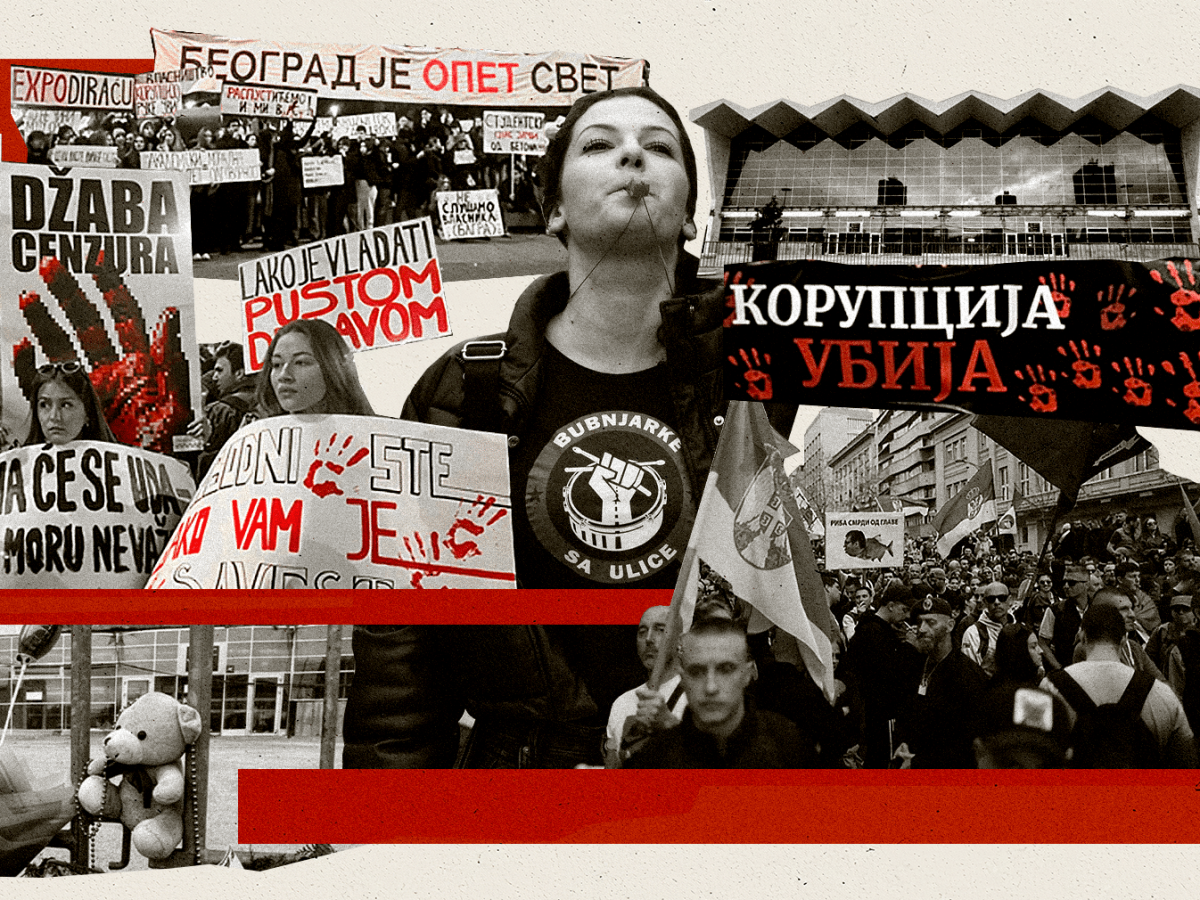
BIRN on Thursday published “Serbia on the Streets”, a comprehensive collection of reports by Balkan Insight about Serbia’s mass protest movement from November 2024 to May 2025.

The e-book is free to download in PDF and EPUB formats. It opens with the first report published by Balkan Insight about the Novi Sad railway station disaster of November 1, 2024, which left 16 people dead – the initial spark for the protest movement.

In the aftermath of the disaster, people took to the streets all over Serbia, accusing the authorities of corruption and negligence.

The reports compiled in the e-book document how students took the lead in the movement with faculty occupations, street blockades, pickets, marches and rallies. Analysis pieces, interviews and on-the-spot reportage articles look deeper into the issues raised by the protests.

“Balkan Insight’s journalists have covered the protest movement since the beginning and have produced a wealth of in-depth reportage and analysis as it developed. The material compiled in this e-book represents an important document of a complex period,” Gentiana Murati, BIRN’s deputy regional director, said.

“It includes numerous voices from the streets and squares, but also valuable expert views on the crisis, which is still ongoing,” Murati added.

The e-book is available to download here.

Exhibition of Srebrenica Genocide Testimonies Opens at UN Headquarters

New exhibition of survivors’ testimonies, organised by the Srebrenica Memorial Centre and BIRN Bosnia and Herzegovina at UN headquarters in New York, is ‘a moral call for humanity to not forget’.

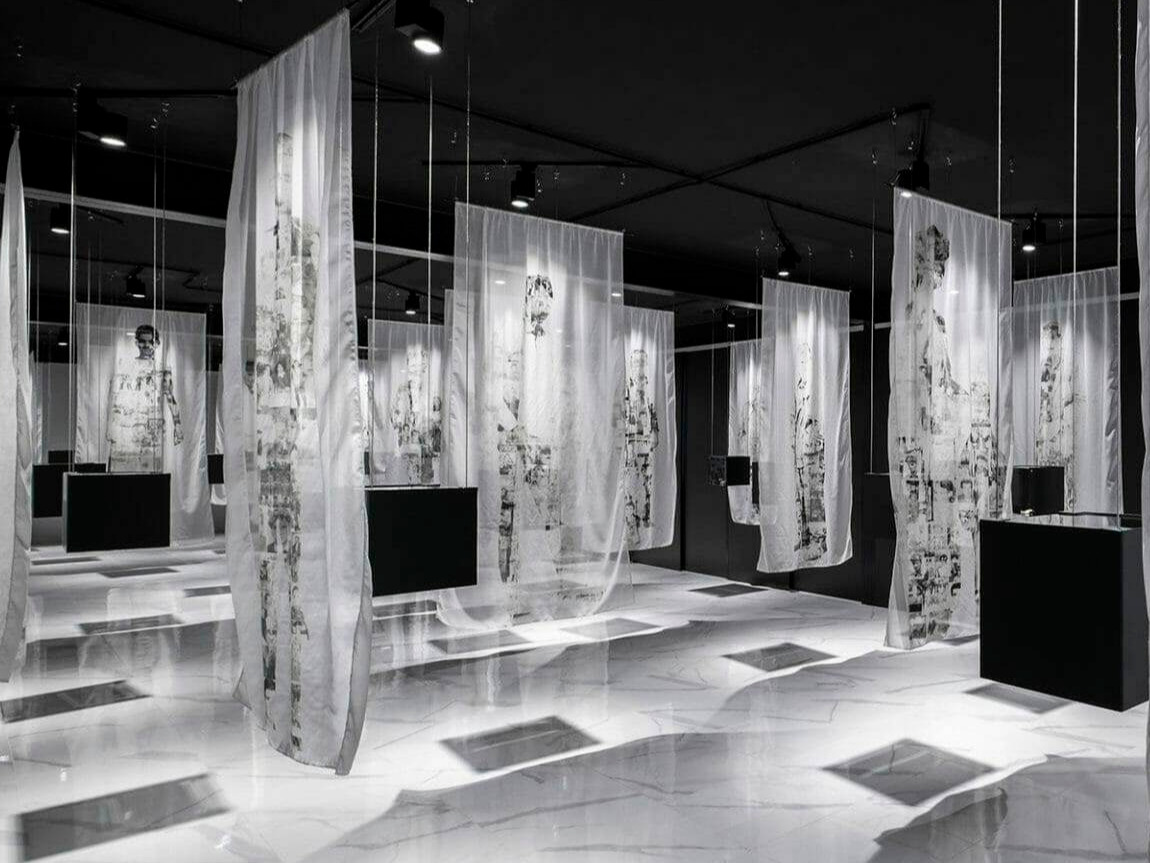
“From Words to Violence: Lives Behind the Fields of Death” opened on Tuesday at UN headquarters in New York to mark the 30th anniversary of the Srebrenica genocide in eastern Bosnia.

The exhibition includes 12 displays based on testimonies collected from survivors during an oral history project led by BIRN Bosnia and Herzegovina and the Srebrenica Memorial Centre.

During the process, surviving family members donated items belonging to loved ones who were killed in the genocide and shared their stories, so they can be preserved for a historical record.

Denis Dzidic, director of BIRN Bosnia and Herzegovina, said at the opening of the exhibition that he was proud of the journalistic work done on the project but felt most grateful to everyone who told their own stories and the stories of those killed in July 1995.

“Thirty years after the genocide, at the very location where the [UN General Assembly] resolution on Srebrenica was adopted, there is nothing more appropriate than to put the focus on the personal stories of those who are no longer with us and on those who have dedicated their lives to ensuring their loved ones are remembered and honoured,” Dzidic said.

In May last year, the UN General Assembly voted to designate July 11 as an annual International Day of Reflection and Commemoration of the 1995 Genocide in Srebrenica.

Emir Suljagic, head of the Srebrenica Memorial Centre, said people had fought for the right to tell their stories and speak the truth.

“We had the privilege of experiencing justice as people, at least partially. We saw the generals and presidents who were behind the genocide, as they stood before the face of justice [in court],” Suljagic said.

“And today, when July 11 is on the United Nations calendar, we know we are not forgotten, neither us nor our truth. That is the message we’re sending for the 30th anniversary of the genocide,” he added.

Bosnia’s UN representative, Zlatko Lagumdzija, said the exhibition was “more than an artistic and documentary display – it is a moral call for humanity to not forget.

“Srebrenica is not only a symbol of genocide but also a symbol of the responsibility of all of us to prevent future crimes,” Lagumdzija said, adding that, in a time of denial and revisionism, the exhibition stands as proof of established facts.

The “Lives Behind the Fields of Death” project started in October 2020, when 100 testimonies from surviving witnesses of the genocide were recorded.

These formed part of a permanent exhibition, along with items donated by survivors, at the Srebrenica Memorial Centre, opened in February 2022. After drawing positive reactions, 100 more oral testimonies were recorded.

The exhibition at UN headquarters was organised by Bosnia’s Permanent Mission to the United Nations, with the support of the Office of the Special Adviser for the Prevention of Genocide and the UN Global Communications Department.

BIRN Montenegro Holds Training on Crypto Investigations

On June 9, BIRN Montenegro organised a capacity-building programme, titled “State Threats in Digital Assets: Assessing the Malign Influence”, in Budva, presenting investigative models for tracking cryptocurrency use in the context of financial crime.

During the two-day training for journalists, civic activists and IT experts, Israeli crypto expert Amit Levin presented models of how cryptocurrencies can be misused for money laundering and suspicious transactions.

Levin introduced participants to the fundamentals of blockchain technology and provided an overview of cryptocurrencies in the context of financial crime. He presented models explaining why virtual assets are appealing to illicit actors and demonstrated methods to trace basic transaction flows and identify linked addresses.

Levin is a former prosecutor in Israel’s State Attorney’s Office, where he led the Economics Department of the Cyber Unit. He prosecuted cases involving money laundering and terrorist financing using virtual currencies.

During the training, participants also shared ideas for investigative stories and a policy paper on threats posed by digital assets and malign foreign influences.

On June 14, BIRN Montenegro organised a follow-up training for representatives of the state prosecution and judiciary during which Levin presented models of financial investigations involving cryptocurrencies in Israel. This training was organised in cooperation with the Centre for Education in Judiciary and State Prosecution.


BIRN Macedonia Wraps up Year-long Investigative Journalism Programme in Ohrid

Four-day Summer School in Ohrid concludes programme aimed at training young journalists in key aspects of investigative journalism, which started last September.

From June 12 to 15, 2025, BIRN Macedonia organised a Summer School in Ohrid, marking the final stage of its year-long investigative journalism training programme. The intensive four-day training gathered young journalists who have been part of the programme, offering them an opportunity to deepen the skills they have developed throughout the year.

The Summer School provided a diverse set of trainings, combining lectures, group discussions, and hands-on exercises aimed at enhancing participants’ practical knowledge. The participants explored key aspects of investigative journalism, such as planning and conducting resilient investigations, handling complex interviews and verifying information under challenging conditions. Special attention was given to developing technical skills in mobile journalism, allowing participants to practice producing content using only mobile devices, as well as to the growing role of artificial intelligence, AI, in journalism, discussing both its potential and its risks.

The training also included open discussions on ethical dilemmas, protection of sources, and the realities journalists face when working on sensitive investigations. Through practical exercises and real-life case studies, participants could apply the knowledge they had gained during the programme and reflect on their individual approaches to investigative work.

The Summer School concluded with the selection of one investigative story proposal, which will be developed under the mentorship of BIRN Macedonia’s team in the coming months.

The Ohrid Summer School was the fifth stage of a year-long programme which started in September 2024. Over the past four training sessions, held in four different locations, the participants learned about the basics of investigative journalism, data and public databases, writing investigative stories and advanced investigative techniques.

With this final event, BIRN successfully completed another cycle of its investigative journalism programme, continuing its mission to support young journalists and strengthen investigative reporting in North Macedonia.

BIRN Kosovo Concludes Series of Property Rights Workshops

Several hundred participants upped their skills and knowledge on property-related issues at BIRN-led workshops held all over the country.

Over 100 participants took part in seven one-day workshops on property rights led by BIRN Kosovo in early June across different regions of Kosovo in cooperation with the Chamber of Private Enforcement Agents and other institutional actors.

Guided by Professor of Legal Relations Isuf Jahmurataj, attendees – including enforcement agents, notaries, cadastral officers, lawyers and mediators – shared common practices and enhanced inter-institutional cooperation in line with the legal framework and practical realities.

The goals were to improve inter-institutional cooperation between enforcement agents and other relevant institutions, such as cadastral offices, notaries, mediators, courts and municipal administrations; and to deepen knowledge of enforcement procedures and relevant legal documents, including executive titles, notarial documents, mediation agreements, property decisions, etc.

The workshops were held on June 2, 2025, in Gjakova; on June 3 in Prishtina; June 4 in Ferizaj; June 5 in Gjilan; June 9 in Peja; June 10 in Prizren; and June 12 in Mitrovica. Of the 106 participants, 43 were women and 63 were men.

This followed seven earlier one-day workshops held in May with the Chamber of Notaries and other actors under Bashkim Preteni, Professor of Notarial and Contract Law at the Faculty of Law. During these workshops, over 110 participants, including 55 women and 56 men, responded to the invitation to contribute to discussions on property issues.

At the end of April, BIRN concluded a training session with cadastral officers and one-day workshops in seven municipalities of Kosovo, bringing together municipal cadastral officers, lawyers, private enforcement agents, geodesists and notaries to discuss the role of Cadastral Offices in property issues, promote cooperation among institutions and reduce barriers.

About 150 participants took part in these workshops, held in Prishtina, Prizren, Ferizaj, Gjilan, Mitrovica, Peja, and Gjakova, led by senior legal expert and professor Haxhi Gashi.

A BRN workshop in February with cadastral officers, lawyers, enforcement agents and other actors fostered discussion among participants from various municipalities and professional backgrounds, aiming to develop communication skills across professions on property-related matters.

Participants learned more about property registration procedures, legal documents, ownership types, mortgages, long-term leases, servitudes, transparency, privacy, and inter-institutional coordination.

In parallel with this, in early February, BIRN Kosovo also launched capacity-building training sessions with municipal cadastral officers. The sessions, delivered by legal expert Xhevat Azemi and cadastral specialist Drenushë Jonuzi Kukaj, were also attended by cadastral officers from the Serbian community at a one-day training in Gračanica.

BIRN Kosovo also organised seven trainings in December 2024 on property rights with journalists, influencers, civil society organisations, etc., enhancing their knowledge of property issues, identifying challenges and improving the reporting and coverage of publicly relevant topics.

In October and November 2024, two trainings were organised with women held at the Lipjan Correctional Centre on property rights. Attendees were informed about the services of the Free Legal Aid Agency and, among other things, developed skills to address the property-related challenges faced by their families.

These activities were held as part of the “Public Information and Awareness Services for Vulnerable Communities in Kosovo (PIAKOS)” project, funded by the World Bank – State and Peacebuilding Fund.