Request for Quotes for Digital Rights Policy Papers Development

The Balkan Investigative Reporting Network (BIRN) is seeking highly skilled experts to contribute to the Reporting Digital Rights and Freedoms project and to develop Policy Papers that will outline regulatory and policy paths to prevent digital rights violations, focusing on countries from the Western Balkans (Albania, Bosnia and Herzegovina, Kosovo, Montenegro, North Macedonia, and Serbia) and Turkey.

We specifically welcome applications from Turkey to explore the particular dynamic and evolving context in terms of digital rights and freedoms. Current policy and legislative framework in this field in the region is underdeveloped and/or obsolete. It fails to address existing challenges, let alone anticipate changes driven by the fast-changing world of technology. The aim is to identify existing regional policies that do not meet international standards and require significant changes, as well as highlight missing policies that need to be developed. These papers should offer structured, multi-sectoral approaches to identifying needs and opportunities for policy change and propose recommendations to prevent violations of digital rights.

Role Overview

BIRN is seeking proposals from qualified individuals or groups of individuals to develop a comprehensive policy paper on digital rights. The selected experts will be responsible for proposing relevant topics for the paper, conducting thorough analyses, engaging with stakeholders, and developing the policy paper. Their work will focus on providing recommendations to enhance digital rights governance, address policy gaps, and align policies with international standards.

This role requires a multi-sectoral approach, which will contribute to a deeper understanding of the needs of all stakeholders from diverse backgrounds, including journalists, researchers, activists, academics, industry players, vulnerable groups as well as decision makers. Furthermore, the selected experts will work closely with the BIRN team to incorporate insights from previous findings and monitoring cases into their work.

Main Tasks and Responsibilities

  • Conduct Desk Research: The expert will conduct desk research on digital rights issues, regional policies and the legislative framework relevant to the proposed theme. This includes reviews of existing regional and international frameworks related to digital rights and analysis of different regional case studies. The expert will analyse gaps, identify weaknesses and challenges within the current landscape, offering in-depth analysis to support further advancements in this field.
  • Conduct Interviews with Relevant Stakeholders: The expert will engage with all relevant stakeholders to gather necessary insights, which will serve to address the identified needs based on the feedback received and to incorporate them into the paper.
  • Develop the Policy Paper: The expert will develop the policy paper, ensuring it is structured, evidence-based and clearly understandable for all stakeholders. It is essential that the policy paper includes realistic and feasible recommendations, such as proposing specific amendments, new policies or legislative frameworks that can enhance digital rights protections to prevent digital rights violations in the region. Additionally, the policy paper must be grounded in international human rights standards, while being tailored to the specific context of the region.

Timeline

Work on this assignment shall start in June 2025.

Remuneration

The compensation for each Policy Paper may reach a maximum of 1,000 EUR.

Eligibility Criteria and Offer Evaluations

Applicants should have a proven experience in digital rights research, policy analysis, as well as strong understanding of digital rights. Also, applicants should demonstrate ability to produce high-quality policy papers or similar reports.

Selection Criteria:

Selection Criteria Points
Work Experience: proven experience in digital rights research and/or policy research with strong understanding of digital rights concepts 40 points
Proposed topic: relevance, clarity and feasibility of the proposed topic, demonstrating originality 40 points
Cost: Reasonable and lowest pricing in relation to the proposed Scope of Work 20 points

Offer Submission

To submit the offer, you must sign and complete Annex I – Procurement Form, Content Offer, Financial Form and Annex 2 – Declaration for Responsible Procurement. The Request for Quotes, along with the Annexes, can be downloaded here.

The complete offer with both Annexes filled and your CV must be returned to [email protected] by June 15, 2025 at 23:59 CET with the subject line: RfQ: Digital Rights Policy Paper Development.

Only shortlisted candidates will be contacted.

Tijana Dupanovic

Tijana joined BIRN Hub in August 2024. She is based in BIRN Hub’s Sarajevo office and provides support to the Social Media Team.

Her main responsibilities include production of digital and social media content, developing new digital products and boosting the presence of BIRN Hub and its websites, on a number of digital platforms.

Before joining BIRN, Tijana worked in the NGO and marketing sectors, and has extensive experience in communications, project coordination, content creation and social media management.

Tijana holds a degree in Civil Engineering from the University of Bihac, Bosnia and Herzegovina. In addition to her formal education, she continues to build her skills in digital marketing, communications, and social impact work.

Besides Bosnian, she is fluent in English.

Megi Reçi

Megi joined BIRN Hub in March 2025. Based in Tirana, Albania, she leads BIRN’s research and monitoring efforts on digital rights violations across Southeast Europe, covering Albania, Bosnia and Herzegovina, Croatia, Hungary, Kosovo, Montenegro, North Macedonia, Romania, Serbia, and Turkey.

Prior to joining BIRN, Megi was a Researcher and Program Officer at the Institute for Democracy and Mediation for four years. She authored and contributed to a range of national and regional studies, policy papers, and legal analyses, focusing on governance, anti-corruption, civic space, human and digital rights, and the harmonisation of the EU digital acquis.

Earlier, while working with Civil Rights Defenders, an international human rights advocacy organisation, Megi supported initiatives aimed at protecting human rights defenders and journalists in Albania and the Western Balkans.

Megi holds a Master of Science in Public Law from the University of Tirana, where she also completed a Bachelor of Laws. In addition to her formal education, Megi has completed the Benjamin Franklin Transatlantic Fellowship at Wake Forest University, and has also received intensive training with a specific focus on human and digital rights.

Along with her native Albanian, she speaks English and Italian.

Regional Camp in Sarajevo Boosts Journalists’ Skills in Crisis Reporting

Journalists from across the Western Balkans participated in a three-day training course on safe reporting, crisis journalism, and digital security.

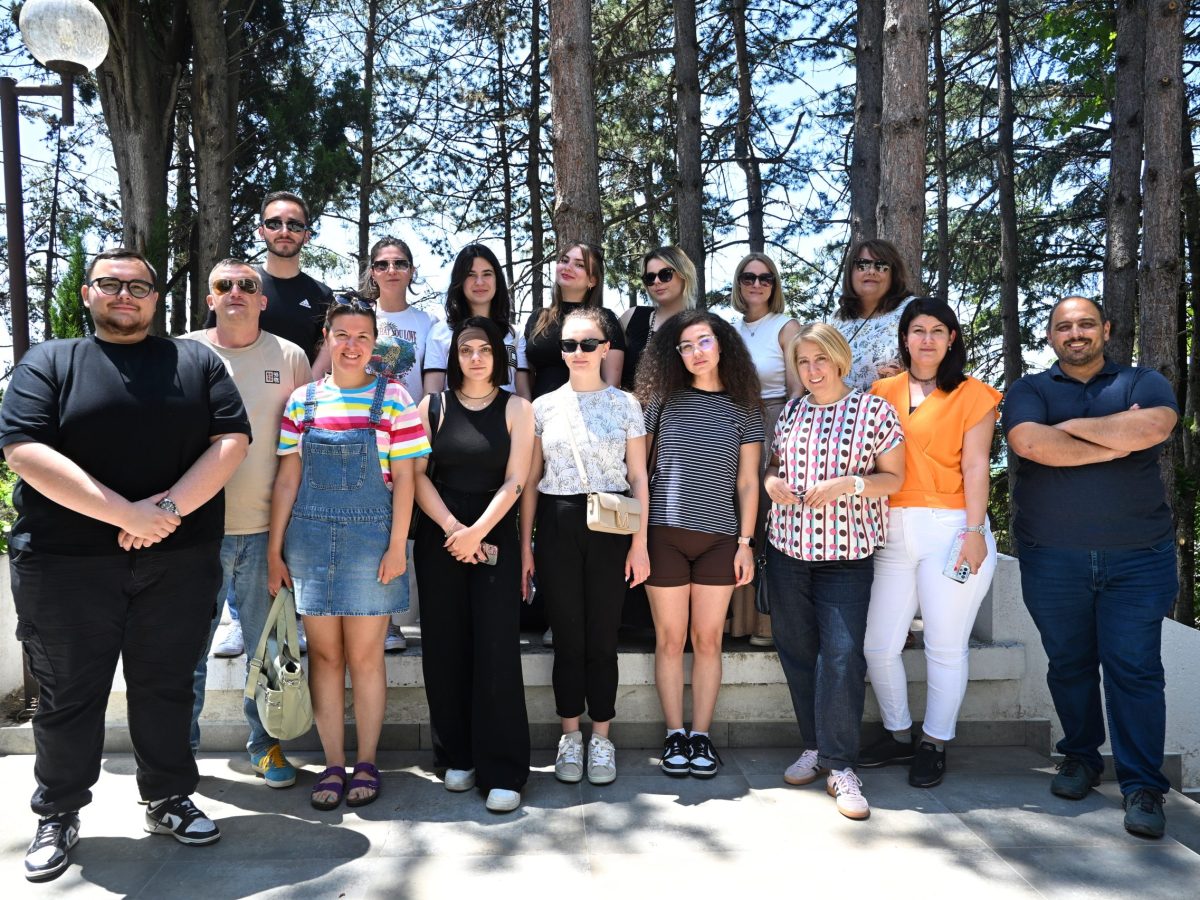
From April 28 to 30, a regional journalism camp was held in Sarajevo, focusing on legally safe reporting, crisis journalism and digital security. The three-day training brought together 25 journalists from across the Western Balkans, providing them with essential tools to navigate a complex and increasingly hostile media landscape.

Participants engaged in dynamic hands-on training sessions, expert-led panel discussions and interactive risk assessment exercises. The sessions offered practical knowledge in legally safe reporting, coverage of crises such as protests and elections and strategies to defend themselves against digital surveillance and censorship.

The training was led by three international safety experts, Sharbil Nammour, Russ Draycott and Michael Buddle, in collaboration with the ACOS Alliance.

Sessions focused on risk assessment and building real-world resilience, emphasizing both physical preparedness and digital threat mitigation.

“Our approach is very much hands-on,” Draycott said. “This is real-world training. We’re getting delegates out of their seats, onto the floor, and teaching life-saving medical skills. These experiences prepare journalists for the real problems they face today.”

Journalists in the region frequently face defamation in tabloid and social media, alongside challenges in maintaining both digital and personal safety. The camp addressed these risks through a cross-sectoral approach, drawing on expertise from multiple fields. With such training, journalist are better prepared to find interesting and hard-reaching stories.

“Sometimes these stories bring them in to conflict and even danger and what we are trying to do is to make them understand and have tools to mitigate those dangers and threats against them, whether they are personal, security or digital. Medical training is a great life skill and something that will hopefully make them feel better to cope with anything they deal with,” Draycott added.

One of the highlights was the presentation of the new BIRN report, “Surveillance and Censorship in the Western Balkans.”

The findings, presented by Megi Reçi, BIRN’s Digital Rights Research Lead, paint a troubling picture. The report reveals that governments in the region are increasingly leveraging technology to suppress dissent, censor online content, restrict access to digital platforms and carry out both mass and targeted surveillance. Read more about it here.

The camp was a joint initiative of the EU-funded project “Strengthening Quality News and Independent Journalism in the Western Balkans and Turkey II”, the Open Society Foundation-funded project “Surveillance and Censorship in the Western Balkans”, and the Austrian Development Agency funded-project “Paper Trail for Better Governance IV”. It was organised by the Balkan Investigative Reporting Network (BIRN).

The training programme has been developed in partnership with A Culture of Safety (ACOS) Alliance. ACOS works to embed a culture of safety within journalism, advance safety standards, and help journalists and newsrooms implement the Freelance Journalist Safety Principles through their safety training initiatives and resources.

Montenegro Still Awaiting Unlawful Surveillance Verdicts, BIRN Panel Hears

A BIRN Montenegro conference highlighted that court proceedings against those responsible for unlawful surveillance measures have dragged on for years – without reaching verdicts.

On April 28, BIRN Montenegro organised a panel discussion titled “Surveillance Measures and Censorship in the Digital Space,” which noted that no verdicts have been reached in cases concerning secret surveillance operations.

Former Prime Minister Dritan Abazovic recalled that court proceedings over unlawful surveillance conducted by the National Security Agency, ANB, in August 2020, have yet to conclude.

“To this day, we have no final court decisions regarding the wiretapping and surveillance activities carried out during the rule of the Democratic Party of Socialists … We exposed cases of unlawful monitoring by the ANB, and we [still] await the judiciary’s results,” Abazovic said.

Ahead of parliamentary elections, in August 2020, the portal Udar was launched, publishing articles aimed at discrediting opposition politicians, civic activists, clergy and journalists, calling them collaborators with foreign intelligence services, traitors and members of organised crime groups.

Authorities have never determined who was behind the portal, although some individuals targeted by Udar have been awarded compensation for violations of their reputation and dignity.

Journalist Petar Komnenic called the indicted former ANB director, Dejan Perunicic, “merely a pawn in the whole affair”. The indictment against Perunicic notes that ANB agents monitored Komnenic.

“These individuals certainly were not working for a private archive. It is essential to establish on whose orders they were operating,” Komnenic said.

Deputy Ombudsperson Mirjana Radovic emphasized that institutional reforms have not been swift enough – but noted that some individuals in the institutions are doing their jobs properly.

“We must find a way to overcome these challenges together, and we can only do so if institutions operate securely, efficiently and transparently,” Radovic said.

BIRN BiH and Partners Team up to Help Teach Facts about War

BIRN BiH, Srebrenica Memorial Centre and Forgotten Children of War Association launch joint initiative designed for students and teachers on judicially established facts about the Bosnian war.

This year, three organisations dedicated to transitional justice are leading study trips for students on the events of the 1992-5 war in Bosnia and are preparing materials for history teachers to teach about the past based on judicially established facts.

These facts will be supplemented by the verdicts of domestic courts, as part of activities within a broader project for building long-term peace in Bosnia and Herzegovina.

In collaboration with the Srebrenica Memorial Centre and the Forgotten Children of War Association, this year, the Balkan Investigative Reporting Network of Bosnia and Herzegovina, BIRN BiH, is launching an educational initiative for senior class students and teachers on judicially established facts about the war in order to foster dialogue and the fight against denial of judicially established facts about the war.

BIRN Bosnia and Herzegovina will draw on its experience from the past 20 years, during which it has focused on issues of transitional justice and reporting on war crimes.

“Although the prosecution of war crimes cases is now coming to a close, we continue to see historical revisionism, genocide denial, war crimes denial and relativization, as well as glorification of perpetrators, even among young people,” BIRN BiH director Denis Dzidic explains.

Following a recommendation of the Council of Europe to temporarily suspend teaching on the 1992-1995 period, since 2018 the topic has returned to curricula and textbooks.

“Research shows that there is no universal approach to this issue in schools throughout Bosnia and Herzegovina,” Dzidic notes.

It is for this reason that the three organisations wish to encourage critical perceptions among young people about the war in Bosnia through the education system and oppose historical revisionism, as well as emphasize the importance of factual knowledge of war circumstances.

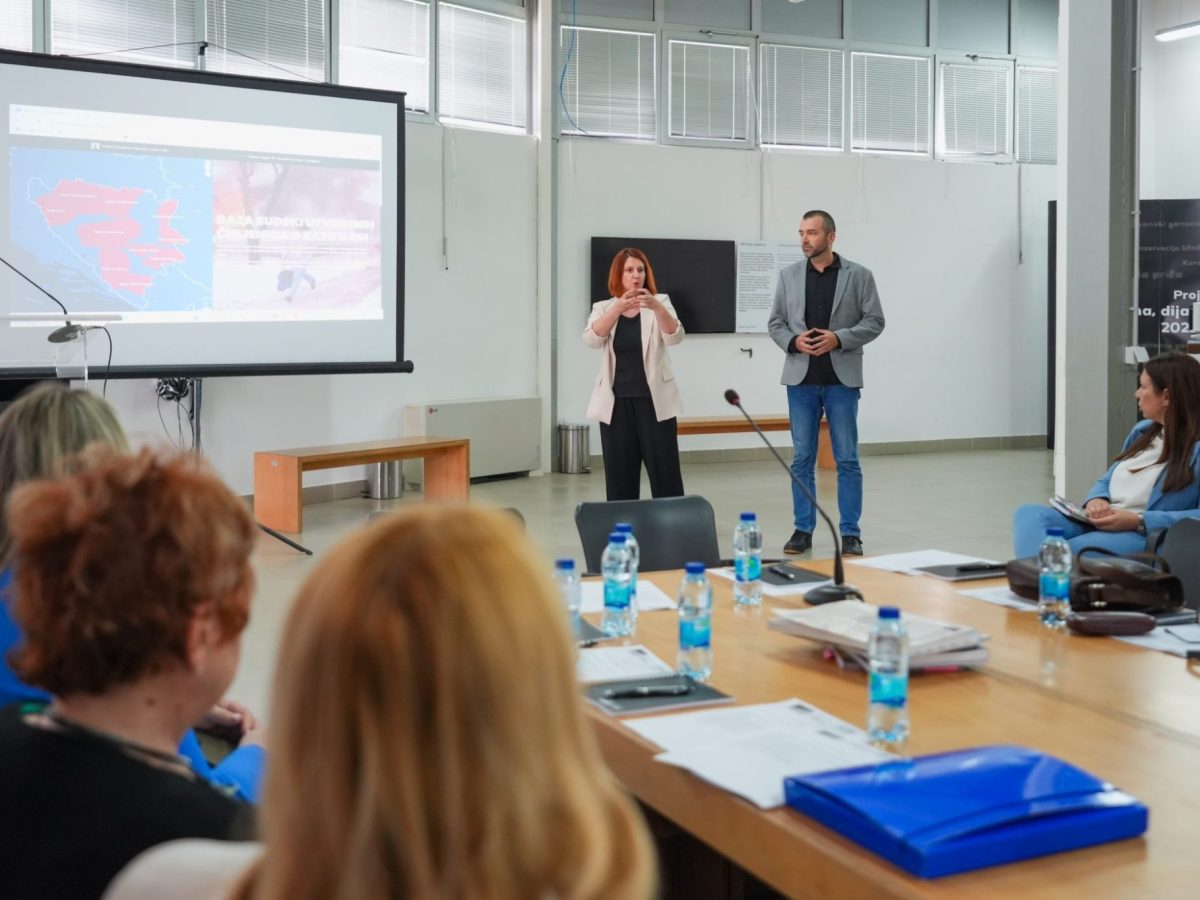
BIRN BiH will expand its database of judicially established facts that includes verdicts of the International Criminal Tribunal, ICTY, in the Hague, with verdicts passed down by courts in Bosnia, Serbia and Croatia, with a focus on the suffering and war crimes rather than on the perpetrators. A new digital platform of the database will be developed, making it more accessible to children and young people.

“Based on this database, a handbook for history teachers on how to teach about the war in Bosnia and Herzegovina will be developed. This project is implemented in cooperation with education ministries across Bosnia and Herzegovina, and in consultation with history teachers. We want to create a space for dialogue, critical reflection on the past, and a healthier future for young people in Bosnia and Herzegovina,” Dzidic explains.

BIRN BiH, together with its other partners, will also organise study tours to Srebrenica, Tuzla and Sarajevo, and prepare trainings for history teachers on how to use the materials derived from this database in class when teaching about the past.

The project “Building Long-Term Peace in Bosnia and Herzegovina: Investing in the Future”, supported by the United Nations Secretary-General’s Peacebuilding Fund, PBF, promotes fact-based learning, the development of critical thinking, and intergenerational dialogue – to strengthen trust and build a more resilient and inclusive future for Bosnia and Herzegovina.

Since becoming eligible for the UN’s Peace Building Fund’s support, Bosnia has advanced six active peacebuilding initiatives focusing on social cohesion, transitional justice and the engagement of women and youth, with a total investment of about 16 million US dollars, Ingrid MacDonald, Resident Coordinator of the UN in Bosnia, explained.

“By fostering fact-based multi-perspective education about the past conflicts, this initiative in particular equips young people with the tools to think critically, confront denial and engage with diverse narratives, laying the groundwork for more informed, inclusive and resilient society,” MacDonald added.

This initiative is not only an investment in education, but in the future of Bosnia and Herzegovina, she added.

PBF is the UN’s leading instrument to invest in prevention and peacebuilding, in partnership with the wider UN system, national and subnational authorities, civil society organisations, regional organisations and multilateral banks. The Fund supports joint UN responses to address critical peacebuilding opportunities, connecting development, humanitarian, human rights and peacebuilding pillars.

BIRN Kosovo Trains Judges and Prosecutors on Violent Extremism and Terrorism Challenges

BIRN Kosovo, in cooperation with the Kosovo Academy of Justice, organized a four-day intensive training on the challenges of violent extremism, radicalism, and terrorism in Kavajë, Albania, from 13-16 April.

This training brought together judges and prosecutors, aiming at strengthen their professional capacities in identifying, prosecuting, and adjudicating terrorism-related offenses and enhancing their understanding of the evolving dynamics of violent extremism in Kosovo and the broader region, with a particular focus on right-wing and religious extremism.

The program was led by a distinguished group of experts, including Supreme Court Judge Burim Ademi, Basic Court Judge Valon Kurtaj, Special Prosecution Office Prosecutor Naim Abazi, and senior officials from the Kosovo Police, including Mensur Hoti, Fatos Makolli, and Nexhdet Haxhaj.

The start of the training was focused on the strategic objectives of Kosovo’s counter-terrorism efforts, presented by National Coordinator Mensur Hoti, followed by a documentary screening on right-wing extremism in Kosovo and a discussion moderated by Kreshnik Gashi.

Day two focused on the legal framework addressing violent extremism, an in-depth analysis of far-right extremism and its manifestation in public incidents, and a practical group exercise to analyze the push and pull factors behind radicalization.

On the third day, participants examined the overlap between terrorism and other criminal offenses and attended case studies on the spread of religious extremism and recruitment tactics in Kosovo.

The final day addressed investigative techniques and the use of alternative sentencing for cases regarding terrorism and identifying signs of extremism during the investigative phase. Participants were also presented with alternative sanctions and the sentencing process in terrorism trials, including the role of pre-sentencing reports. The training concluded with a discussion on the use of social media in spreading extremism and the balance between strategic communication and personal data protection.

By combining legal analysis, real case presentations, documentary screenings, and group exercises, the training provided a comprehensive and interactive environment for enhancing cross-sectoral collaboration in Kosovo’s response to violent extremism and terrorism.

This training was attended by 31 participants, including 14 women. The participants have actively engaged in this training by sharing experiences and asking questions on how to effectively deal with terrorism and violent extremism.

The training was part of the ‘Resilient and Inclusive Community Programme’ funded by GCERF, through ATRC and implemented by BIRN Kosovo.

BIRN Macedonia Launches Call for External Evaluator/s

BIRN Macedonia is inviting external evaluators or evaluation teams to submit a proposal for assessment of the implementation and impact of the ongoing project ‘Credible journalism for real changes’.

Balkan Investigative Reporting Network (BIRN) Macedonia has an ongoing agreement with Sida within Sweden´s strategy for reform cooperation with the Western Balkans and Turkey for the period 2021–2027. BIRN Macedonia together with its three partner organizations implements the project from October 2022 to March 2026. The objectives of the project are:

  • provide the public with access to credible information that enables them to make informed decisions and participate in democratic processes and hold authorities accountable
  • contribute to strengthening capacities of media, strengthen professional reporting standards and ethics that leads to higher quality reporting and restore interest in the profession

About the Assignment

The evaluation will be conducted remotely and/or a field mission to Skopje if the evaluator considers necessary. The available budget for the assignment is up to SEK 120 000 (including travel and accommodation).

The deadline for applications is May 2, 2025.

The evaluation process will involve a review of program documentation, interviews with key stakeholders, analysis of monitoring and evaluation data, and field research. The approach must adhere to OECD/DAC evaluation criteria and be guided by a participatory and utilization-focused methodology.

Required Qualifications

  • Good knowledge of the media and political context in North Macedonia
  • At least 5 years of working experience in monitoring and evaluation
  • Knowledge of development perspectives and OECD/DAC standards
  • Very good skills in writing and speaking English
  • Be able to communicate clearly and effectively
  • Strong time-management and organizational skills
  • To be able to ensure confidentiality of project information
  • Proven experience in evaluating similar interventions on media programmes and/or non-for-profit organizations
  • Experience/knowledge on google analytics

How to Apply

Interested candidates or teams should submit the following documents by May 2, 2025 to [email protected] with the subject line: Application – External Evaluation BIRN Macedonia, project “Credible journalism for real changes”:

  • Letter of Interest
  • Technical proposal (max. 2 pages)
  • Financial offer (in SEK)
  • CV(s) of the expert(s)
  • Contact details of two references

To read the full Terms of Reference, click here.

BIRN’s Sasa Dragojlo to Join Panel on Corruption and Arms Diversion

On April 16, at 2.30 p.m., Transparency International US and Transparency International Defence & Security will launch a new report, “Under the Radar: Corruption’s Role in Fuelling Arms Diversion”.

The report sheds light on the often-overlooked threat of weapons falling into the wrong hands. States are realising that corruption significantly drives arms diversion, which undermines security, fuels violence and weakens military readiness.

Drawing on 400 cases of arms diversion across 70 countries, the report identifies common corruption schemes and uncovers how weak systems can be corrupted to divert weapons.

BIRN journalist Sasa Dragojlo is one of the panelists at this event, having worked as a consultant on this report. Serbia’s arms trade and corruption issues are often topics of his investigations.

“Serbia has a significant role in the global arms trade. Serbian-made weapons have found their place in many battlefields all over the world, including proxy wars,” he says.

“In that regard, for Serbia’s ruling elites, profits are the most important, as is fostering good relationships with powerful governments – mostly Western, but also those considered allies to Western powers.

“When that is the goal, turning a blind eye on corruption, or diversion of arms that end up in the wrong hands, is a small price to pay,” Dragojlo adds.

Other panelists include Colby Goodman, Senior Researcher; Mario Blanco, Project Coordinator, Transparency International Colombia; Kyrre Knutsen, Senior Adviser, Norwegian Ministry of Defence; Ara Marcen Naval, Independent Consultant, and Sarah Detzner, Independent Consultant, Security Sector Reform and Governance.

The panel will discuss the report’s main findings, share other important insights and suggest actionable steps to improve arms transfer risk assessments and strengthen institutional resilience against corruption.

The panelists will also consider the significance of international cooperation in ensuring that arms trade practices align with the objectives of the Arms Trade Treaty, ATT.

This cooperation is essential for promoting transparency and accountability, as well as for reducing the global risks associated with arms diversion.

Register HERE to attend this free online event.

Romania Faces Hidden Water Crisis, BIRN Investigation Reveals

Rural communities in Western Moldavia, a region of north-eastern Romania, face a growing water crisis, mainly due to depleted groundwater reserves and the poor management of water mains. A BIRN investigation shows that the people impacted attempt to adapt, but resolving this issue requires political solutions.

“The groundwater crisis, which particularly affects people in UW Moldova (a region in eastern Romania), did not emerge out of the blue,” says journalist Adina Florea, the author of the recent investigation published by the Balkan Investigative Reporting Network (BIRN) Fellowship program.

“Researchers have been warning for years about falling groundwater levels. But what I’ve seen is that this water crisis is also a crisis of social inequality—the most affected are people in rural areas.”

Drawing on interviews with residents and scientific experts, and supported by a comprehensive analysis of official data, Florea’s investigation presents a sobering reality: climate change is compounding the long-term effects of poor groundwater management and a broader societal failure to recognize water as a finite, vulnerable resource.

Last summer, Florea spent several weeks in over a dozen rural communities across Western Moldavia, documenting the challenges faced by locals.

Her findings reveal stark regional disparities. Nearly half the region’s population is not connected to a centralized water distribution system, relying solely on private wells or springs – more than double the national average of 23 percent. Furthermore, nearly 10 percent of the region’s rural population that relied on aquifers was facing disruptions to supply because their wells were close to drying up.

Strikingly, many of the villages hardest hit by water shortages are located just kilometers away from urban centers where water access is stable, underscoring the deepening social inequality tied to infrastructure and public investment.

Florea presented her findings during a public debate in Bucharest last week, hosted by Fundatia 9, a Romanian nonprofit that supports youth through cultural and educational programs. The event drew significant interest, particularly from attendees eager to understand what solutions might be implemented to combat water insecurity – an issue many rural residents are already trying to adapt to on their own.

In response, Florea emphasized that both central and local authorities must take the lead in developing long-term strategies for more efficient use of existing water resources. These could include rainwater harvesting systems and improved soil protection measures, aimed at enhancing natural groundwater recharge.

Citing expert insights, she also warned that “if extreme climate change causes groundwater levels to drop too far, reversing that trend may become impossible.”

Another critical challenge is water loss through deteriorating infrastructure. Official figures show that around 40 percent of water is lost through leaks and inefficiencies in Romania’s distribution networks – a figure that climbs above 50 percent in Western Moldavia. The causes, Florea noted, include aging pipes in urgent need of replacement and a system originally built for a smaller, less water-dependent population.