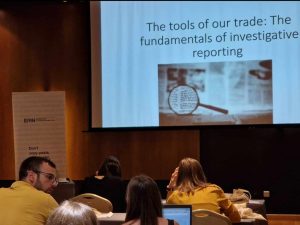
More than 50 journalists and editors from across the Western Balkans and Visegrad countries participated in a four-day online training from July 21-24 focused on audience-engaged journalism.
The training was organised as part of the projects Media Innovation Europe and Paper Trail for Better Governance, supporting grantees from calls for Audience-Engaged Journalism Grants.
The interactive sessions were led by a combination of international and regional trainers and provided grantees with tools to deepen audience engagement through crowdsourced journalism, storytelling and community-focused investigations.
The training kicked off with an introduction to engagement journalism by Asia Fields, an engagement reporter at ProPublica. She walked participants through core concepts of crowdsourcing, identifying community needs, and building trust with underrepresented groups. Fields shared her experience in reporting on neglected school infrastructure and homelessness in the US, sparking a discussion among the participants about how to apply similar methods in their own contexts.
“ProPublica engagement reporters crowdsource evidence, anecdotes and input at scale to fuel important accountability-focused journalism,” Fields explained.
Recognising the linguistic diversity of the participants, the training featured multiple parallel sessions conducted in different languages.
Regional trainers Besar Likmeta (BIRN Albania), Katarina Zrinjski (BIRN BiH), Gyula Csak (BIRN) and Milica Stojanović (Balkan Insight) led targeted workshops on callout design, crowdsourcing techniques and community engagement strategies, culminating in a session on use of the specialised audience-engaged journalism tool facilitated by Karla Juničić, ECR tool coordinator.
Participants practiced developing engagement callouts tailored to their audiences, conducted case study analysis and learned how to incorporate community feedback into editorial planning.
The final days of the training focused on practical application – guiding participants on turning audience input into impactful investigative stories. Journalists worked in language-specific groups to develop plans for future stories using real data and community responses.
They also explored how to analyse callout responses, assess editorial potential, and structure community-driven narratives.
The four-day programme was part of the broader Audience-Engaged Journalism Grants scheme of the Media Innovation Europe and Paper Trail for Better Governance projects, which are designed to foster more inclusive, community-oriented journalism across Europe. The grantees will continue to receive mentorship as they implement their projects in the months ahead.
Media Innovation Europe: Independence Through Sustainability, co-financed by the EU Commission, is led by a consortium of media support organisations working to bolster the resilience, innovation and audience reach of independent media in Central and Southeastern Europe. Among them are the International Press Institute, The Fix Foundation and Thompson Foundation.
The Paper Trail for Better Governance initiative, led by BIRN and funded by the Austrian Development Agency, supports media freedom, transparency and accountability across the Western Balkans. Through investigative journalism and audience-engagement practices, the project empowers local media and communities to spotlight corruption and advocate for stronger democratic institutions.
Join us for an insightful webinar on July 17, 2025, to explore the key findings of BIRN’s comprehensive regional report on surveillance and censorship in the Western Balkans.
In an era of rapidly advancing technology and increasing exposure to digital risks, this webinar will delve into the main trends, challenges and implications of surveillance and online censorship highlighted in the report. The event brings together leading researchers, digital rights experts and representatives from BIRN’s local offices, offering diverse country perspectives and discussing future directions and priorities for protecting digital rights across the region.
Date: July 17, 2025 (Thursday)
Time: 12:00 PM (CEST)
The webinar will be conducted in English, with simultaneous interpretation available in Albanian, BCS and Macedonian.
Don’t miss the opportunity to review the full report, Surveillance and Censorship in the Western Balkans, here.
AGENDA
12:00 – 12:05 Welcome and Opening Remarks
Azra Milić, Digital Rights Programme Coordinator, BIRN
12:05 – 12:25 Presentation of BIRN Regional Report Findings
Megi Reçi, Digital Rights Research Lead, BIRN
12:30 – 13:20 Panel session: Behind the Curtain: Surveillance & Censorship in the Western Balkans
Moderator: Ivana Jeremić, Digital Rights Content Lead
Speakers:
Blerta Thaçi, Executive Director, Open Data Kosovo
Azem Kurtić, BIRN Journalist, Bosnia and Herzegovina
Milica Tosić, Attorney-at-Law, Partners Serbia
Sara Kelmendi, Researcher on Cyber-Civic Space, Institute for Democracy
and Mediation Albania
Ivan Ivanovic, BIRN Journalist, Montenegro
13:20 – 13:50 Panel session: Digital Rights Tomorrow: Lessons, Challenges, and New Directions
Moderator: Azra Milić, BIRN Hub
Speakers:
Aida Mahmutović, Project Manager, Reporting Digital Rights and Freedoms
Besar Likmeta, BIRN Albania
Tanja Maksić, BIRN Serbia
Mirza Halilcevic, BIRN BiH
13:50 – 14:00 Q&A and Closing Remarks
This public event is part of the “Surveillance and Censorship in the Western Balkans” grant supported by the Open Society Foundation Western Balkan and implemented by BIRN.
What is the place of long-form journalism in an age of shrinking newsroom budgets and democratic decline? On the Long Exposure podcast, journalists from central, eastern and south-eastern Europe reveal how they are breathing new life into an old format.
The podcast examines the craft of long-form journalism, and its ability to uncover hidden truths about society and politics in the region. “The Fellowship has been producing revelatory features, analysis and investigations for nearly 20 years,” said the programme manager, Dragana Zarkovic-Obradovic. “The new podcast showcases some of the journalistic talent that has been nurtured by the programme over the years, and offers their insights into the events and processes behind the headlines.”
The first seven episodes are now available online. Follow the links below to hear:
The Fellowship of Journalistic Excellence is an annual bursary for long-form journalism supported by the Erste Foundation and implemented by BIRN. The Fellowship emphasizes strong storytelling and rigorous, on-the-ground reporting – qualities traditionally associated with the best magazine journalism.
But unlike the legacy outlets that dominate the global market in long-form journalism, the Fellowship works exclusively with reporters who belong to the societies they are examining. The programme is open to journalists from a region spanning 14 countries, from Poland and the Czech Republic to Greece and Romania.
On July 7 and 8, a training on AI and journalism was held at Global Village in Berlin led by two professionals from Maldita.es and a digital transformation expert.
It combined expertise in the development and application of AI technologies, as well as the governance, ethics and communication of AI systems within the media sector.
The training for 30 journalists from various European countries was organised with the goal of exploring the possibilities, potential and shortcomings of AI for non-profit media.
On the first day, the trainers from the Maldita.es team, Pablo Pérez Benavente and Patricia Ruiz Guevara, guided participants on the responsible use of AI in newsrooms.
Benavente showcased an overview of predictive models, embedding and large language models (LLMs), showing participants how to extract narratives and trends using AI-generated synthetic data and build and test a document-grounded chatbot.
Guevara discussed the challenges of working with AI-generated content in journalism and how to talk about AI in reporting.
They also addressed the legal implications of AI use in journalism, including the EU AI Act, data protection (GDPR), liability and transparency.
On day two, training continued with Camila Reed, a communications and digital transformation expert.
She guided participants on developing customised AI ethics guidelines for their newsrooms and how to integrate such guidelines into the newsroom workflow and culture.
The training was organised as part of the MOST project.
This year marks BIRN’s 20th anniversary. From exposing corruption to promoting human rights, BIRN’s investigative journalists collaborate across borders to find out the facts and tell people’s stories.
It all started in 2005, when five women from countries recovering from brutal wars defied the odds to establish what would become a major independent media organisation – the Balkan Investigative Reporting Network – in the traditionally patriarchal region of the Western Balkans. They were Gordana Igric, Nerma Jelacic, Ana Petruseva, Dragana Solomon and Jeta Xharra.
Jeta has been Country Director of the BIRN office in Kosovo since then. She says the media landscape in Kosovo and the energy of the country back then were frustrating.
“We had just had the March [2004] riots and the media was seen as complicit, by fueling inter-ethnic violence. People were generally frustrated that Kosovo was not yet being allowed to become a [free] country, even though it was clear that from the rise of [Serbian leader Slobodan] Milosevic that is what the majority of people wanted.
“The 2004 March riots were a particular warning for me, that we urgently needed to provide unbiased, balanced, independent, watchdog and scrutinizing journalism that would broadcast to the masses – and not just in an online portal in English, where only the most sophisticated people who read English would be informed,” Jeta explains.
“I collaborated with Faik Ispahiu, a brilliant theatre director in Kosovo, to produce this programme, for which I spent one year fundraising. When one out of the 20 donors I contacted said ‘yes’ to funding the programme, I pleaded with the director of the public TV for months to give me a TV time slot,” she recalls.
“He gave me a 23:30 time slot, which was so late, a type of grave slot, but I knew we’d address topics nobody else was brave enough to address like the secret services of the different political parties existing at the time, corruption, violence against women etc.,” Jeta says.
After a year, when viewership figures were measured, it was the second most-watched informative programme after the evening news.
“That public TV director who’d first spent so much time avoiding me and gave me such a late schedule called and said: ‘We have to do something about putting your programme on prime time because way too many people are watching it.’ So, we earned our right to a 20:30 TV slot and were the only BIRN product that was weekly on any television in the region, talking to a mainstream audience, which we tried hard to educate and emancipate, not just inform,” she recalls.
“We broadcast on public TV until May 2020, when we were kicked out because of pressure from an oligarch [Blerim Devolli] we were investigating who ordered the then RTK Director to kick us out. Today, that RTK Director, Ngadhnjim Kastrati, works for a television close to that oligarch. Clearly, he was rewarded for throwing us off the public TV, but on the other hand, our investigation saved 17 million euros of Kosovo public funds and won the best EU Investigative story in 2021,” she says.
“So, there is a price to pay for investigations but there is also a lot of impact. After we were kicked out of public TV, a very vibrant young TV channel, RTV Dukagjini, acquired our programmes and today, BIRN Kosovo, with a local partner organisation, Internews Kosovo, co-produces three programmes a week in primetime in this private TV station.”
Struggles over funding and security
For all this hard and dedicated work, the founders still confront obstacles in working as an independent regional media organisation.
“Our struggle is largely about securing funding for investigations, which are time-consuming and costly. After funding, training people to do the job professionally is also a challenge – we basically train everybody on the job, as our educational system in the Western Balkans does not prepare people to be critical thinkers
“Thirdly, clearly, the security of our staff is a challenge, as they are sometimes intimidated and harassed for the work they do. Protecting our whistleblowers is also a challenge because they have been known to lose their jobs and even risk being arrested for exposing corruption in our investigations. We do our best to support journalists and whistleblowers, and in BIRN Kosovo we do this with a very strong legal office that can assist these people in court.
“Ultimately, our work is worth it because we have some very brave and brilliant journalists working for us. For example, Kreshnik Gashi’s investigation, which started from a tip that a Serbian smuggler gave us from north Kosovo, resulted in the arrest of more than 10 Albanian and Serbian police and customs officers as well as smugglers who were doing contraband trade in the north of Kosovo.
“It gives me peace to know that there is a generation of journalists out there, beyond us, the ‘founding mothers’ of BIRN, that are carrying the flame of brave work in post-war Western Balkans. We are incredibly honoured that these journalists are a part of the BIRN team and I get such great energy working with them every day,” Jeta says.
Speaking of what BIRN represents to her personally, Jeta calls it “a community of fighters for accurate, unbiased and independent journalists who will not bow down to financial and political pressures.
“BIRN also tells the story of media professionals who do not need to be run by internationals to be brave and impartial enough to produce top-class journalism meeting international standards. We are largely run by a mantra that Goca Igric, the main founding mother of BIRN, installed in our brains: ‘Don’t write what you know, write what you can prove’,” she says.
Hope in the younger generation
When she thinks of BIRN today, she thinks of the younger generation of people in Kosovo. They include Albulena Sadiku, Deputy Director of BIRN Kosovo, who is the force behind fundraising for paying salaries of 70 people that work for BIRN in Kosovo, Kreshnik Gashi and Visar Prebreza, “both award-winning investigative journalists who have faced threats for the work they do but have never bowed down to this, and continue to produce work that makes the powerful uncomfortable.
“BIRN represents the watchdog that our countries need to lead them into modernity and closer to EU standards – so I would best call BIRN ‘an organised civil society’ that is fighting ‘organised crime’ in the Western Balkans. Finally, what BIRN represents most is credible information – if you read us, you are most likely to find the most truthful version of the story possible, and accurate information is worth a fortune these days, and it always has been,” Jeta adds.
But, what were her expectations in 2005, and has she met them?
“In terms of what the media is capable of doing, I think we have exceeded expectations because of the impact we have had in the society by ensuring public money is better spent, that culprits are often arrested, and the powerful are more fearful … because of our existence.
‘However, as Kosovo was the least developed part of former Yugoslavia with the least investment, I’m not happy with how slowly my country has developed and that we have not managed to speed up our country’s progress more than we have. I believe the media is very powerful and truly a ‘fourth pillar’, so I feel we need to take some responsibility for our Western Balkan societies, which are still so far away from EU membership in 2025,” Jeta explains.
In her opinion, the network’s totally unexpected growth was one of the most significant changes in the organisation in the first 20 years.
“We were a team of five aficionados that founded BIRN in 2005, never imagining that we would have a team of 300 people working for us throughout the region. The change is obvious. Most people thought we would fizzle out – that we would run out of money and would not have the energy to withhold our journalism that was expensive, fearless and independent. Not only did we not fizzle out and close down but we grew and are still growing. We were five individual journalists who knew what we wanted in 2005 – and today we are unquestionably an institution for credible journalism,” Jeta says.
In addition to all her work as Country Director, she still hosts the award-winning current affairs TV programme Life in Kosovo. Explaining how she manages everything, she explains: “I can host the programme because I work with such a capable team. De facto, Albulena Sadiku [Deputy Director of BIRN Kosovo and Head of Development] runs BIRN while I do the journalism. Because we have so many good journalists who work for us, I have been able to set up a completely new project, a museum of the resistance of the 1990s, called Reporting House. I invite you all to come and see it in central Pristina.”
Huge debt owed to Gordana Igric
Would Jeta have done anything differently in her professional path during the past 20 years?
“If I’d changed that path, probably a lot of things that have happened may not have happened, so this is a tricky ‘what-if’ question,” she says.
“All the good and the bad I did professionally have led to this incredibly vibrant organisation that we have today, which is alive and kicking, feared by all officials in Kosovo, and an address for corruption reporting. This was done with such amazing teamwork that it was simply not possible to be done by one person. I almost have a feeling that even if I’d done something differently, these 50 or so people who work now in BIRN would have made the organisation what it is, with or without me. Society needed BIRN Kosovo to do what it does, and that is why it exists, despite what I may or may not have done.”
But, she would have done one thing differently.
“What I would seriously have liked to have done differently, and maybe there is still time to correct that, is create a retirement fund for our founding mother of BIRN, Goca Igric, who retired early, after setting up BIRN, often sacrificing her own salary to pay journalists in the early days when we were not heavily funded. I feel we owe her a lot…. I want to make this better somehow.”
Speaking of the future, Jeta says: “Hopefully, [we are] even more relevant than today because we are heading into uncharted territories where a lot of what should be journalism is now ‘content production’, social media and AI influenced, short clipped, angled to a short attention span audience. In this kind of bombardment of information, we are facing a blunted audience that is finding it hard to differentiate fake news from truth, and credible from suspicious sourcing of information, so the industry is saturated with just information.
“That is why credibility, accuracy and fact-checking are more important than ever. We have the right, skilled people to tackle this challenge in this era, so I think we are going to be even more relevant in the future than in the past. Also, we are the only true cross-regional outlet in English that has people all over the Western Balkans. You can’t find a medium like Balkan Insight in the region, so it is not going anywhere soon!”
‘Tour guide’ in her spare time
At the end, Jeta discusses what she likes to do during her spare time.
“I build museums in my spare time. I am digging through archives. Recently, I went down the Trepca mine, almost 1 km underground, walking in the tunnels for hours with our museum curator, Gazmend Ejupi, in order to tell its story and produce this incredible installation with Trepca minerals, which marks the 100-year anniversary of when Trepca ore started to be explored in the industrial age.
“So, I am interested in preserving the collective memory of Kosovo in my spare time and working with artists, not just journalists and researchers in this field. This has been so refreshing, to occupy my brain with periods of history that are not ‘current affairs’ and look at this material with creative and talented artists who think in a completely different way from journalists.”
Jeta says this project her helped “stretch” her brain in different directions.
“That is why I am also thankful to BIRN – it is an organisation that allows you the freedom to develop such projects. It is now in the BIRN mandate to build museums; it is in the statute of our organisation. That’s why I believe we will become even more relevant in the future because so many people from different fields are interested in collaborating with us and contributing their archives to our museum.
“It’s become a community museum. Almost 11,000 people have visited Reporting House since it opened in June 2024, on the eve of the 25th anniversary of the NATO bombing. It is becoming part of the city, telling the story of how Kosovo came to be a country, and students, pupils, and lots of tourists are all visiting. So, I have become a museum guide in my free time. What fun!” she concludes.
Investigative journalists, rights campaigners, political analysts, justice experts and representatives of international NGOs explain why the Balkan Investigative Reporting Network plays such an important role in the region.
For our 20th anniversary, we asked some of our leading supporters, international colleagues, journalistic collaborators, donor organisations and project partners to send a few words offering their view of BIRN’s significance in the Balkans. This is what they told us.
Slobodan GeorgievDirector of NewsMax Adria in Serbia, former BIRN journalist
“BIRN was founded to preserve and develop professional journalism in this region, to train journalists to be real journalists – seekers of truth and uncompromising guardians of this important profession. In 20 years, BIRN has not only achieved this but has become a medium without which true journalism in the entire region cannot be imagined and which has become the main source of information about the region for the entire world.
“What was the initiative of a few brave women 20 years ago is now an institution that literally shows every day, especially in Serbia, that it is an indispensable institution for the best possible journalism. I am proud to have been a part of BIRN for 13 years, and for me, those are the most important years in my professional work so far.”
Milka Tadic Mijovic Director, Centre for Investigative journalism of Montenegro
“BIRN is special to me, professionally and emotionally. I was involved in the work of BIRN in various ways from the first days. I occasionally wrote for the network, but my friendship with Gordana Igric [one of BIRN’s founders], with whom I have collaborated since the nineties, tied me in a special way to the organisation, which I experienced as something of my own. I was impressed by Goca’s energy, which she invested in the project, and the professional ethics on which BIRN was based, which grew into a witness to the stormy history of the region in the last two decades.
“I think witnessing and writing about the most difficult topics, an authoritarian culture and a corrupt society, where political elites rule mainly by abusing power, is BIRN’s most significant value. BIRN is especially important because of the transitional justice project, because dealing with a complicated past does not go well for these societies, and the written pages, testimonies, and collected documentation in BIRN’s archive about wars and crimes are also valuable for those who will come after us.”
Stavros MalichudisInvestigative reporter at Greek media outlet Solomon
“It’s been a pleasure working with BIRN; I’ve always admired their fearless reporters and talented editors who are dedicated to public-interest journalism. I trust their integrity and commitment to quality. I see BIRN as an investigative powerhouse for the entire Balkan region, producing work that is vital for all our countries.
“Moreover, BIRN gave me a pivotal opportunity. In 2019, during my fellowship with the Balkan Fellowship for Journalistic Excellence, I realised that a different kind of journalism is possible. It showed me that journalism can take the time and resources to delve deeply into a topic, creating content that truly resonates with readers and benefits society as a whole.”
Vesna Terselic. Photo courtesy of Vesna Terselic.
Vesna TerselicHead of Documenta – Centre for Dealing with the Past, Zagreb
“BIRN is one of the rare media outlets interested in the fate of victims and survivors. It restores my faith in journalism, which is motivated by concern for people and facing the past to build sustainable peace. Investigative stories by journalists who reflect on the motives of the perpetrators of crimes, as well as those who still support them today, capture the attention of everyone who is concerned about today’s growing dehumanisation and militarisation.
“It is especially important that BIRN fearlessly recalls the judgments of the Hague Tribunal and domestic courts at a time when there are fewer and fewer reports from war crimes trials, and some of the highest officials of the post-Yugoslav countries question the facts established by the courts about the killed, missing and detained.”
Afrim KrasniqiPolitical expert, Albania Institute for Political Studies
“In my personal opinion, BIRN represents a different media model for countries like Albania: it was established, funded, and supported by Western institutions, in contrast to the local media landscape, which is largely created, financed, and controlled through connections between politics and domestic oligarchies. This form of ‘media import’ may not be a permanent solution, but it is necessary as a transitional mechanism until the Western Balkans complete their integration cycle.
“This approach has proven successful because the BIRN model in countries like Albania has not become subject to censorship, has emerged as a credible source of reference, and has sent a clear message: that a professional media outlet based on the principles of journalism can have a positive impact on the image of the media himself and the broader democratic culture. In essence, it represents a model of the kind of media we do not yet have within our own countries.”
“With the closure or downsizing of outlets such as Voice of America, the BBC and Radio Free Europe in the region, the value of BIRN – and the need for such models at the current time – has only increased. This experience also underlines the vital need for an EU-led media reform package in the Western Balkans to help establish more mechanisms and safeguards for free thought, professional reporting, public interest journalism, and news that is free from political or clientelist influence.”
Alexia KalaitziGreek TV journalist
“BIRN supports and promotes the kind of journalism we want to see – and need – in the Balkans: journalism produced by Balkan journalists for both regional and international audiences. At the same time, it is committed to fostering a new generation of investigative reporters.
“As a BIRN [Fellowship for Journalistic Excellence] fellow, I was given the rare opportunity to cover in depth a story that affects Greece and many of its people. Working with the Network’s editors and staff not only made me a better journalist, but also allowed me to build a strong network of Balkan colleagues with whom I share common values and a shared vision for quality reporting across the region.”
Leila Bicakcic. Photo courtesy of Leila Bicakcic.
Leila BicakcicDirector, Centre for Investigative Reporting, Bosnia and Herzegovina
“BIRN brought a new perspective on journalism in the region and showed that journalism can contribute to a better society, a better understanding of complex topics, and the building of a democratic foundation in the countries created by the break-up of Yugoslavia.
“Transitional justice, corruption, social transition and other areas would still remain abstract topics for citizens today if BIRN journalists did not contribute to their understanding by slowly introducing them as mainstream topics and clarifying unfamiliar concepts.
“In Bosnia and Herzegovina, BIRN is the only newsroom that continuously reports on war crimes, monitoring war crimes trials, and transitional justice. Children in schools will learn about these issues, among other things, based on materials collected by BIRN. It is an immeasurable contribution to reconciliation and dealing with the past, which would not have been possible without BIRN. On the other hand, without reconciliation and facing the events of the 1990s, democratic societies in the Balkans are not possible.”
Nora AhmetajTransitional justice expert, Kosovo
“I wanted to take a moment to express my admiration for the exceptional work that BIRN has been doing in the region for decades now. As someone who has closely followed your coverage of transitional justice issues and contributed, I believe that BIRN is truly unique in its approach. Your commitment to tackling these complex and sensitive topics in a professional and nuanced manner is unparalleled.
“What I appreciate most about BIRN is its ability to serve as a valuable resource for both locals and foreigners interested in transitional justice in the region. Your website is an indispensable guide for those seeking to navigate this complex field, and your work provides a vital foundation for further exploration and research.”
Christoph PlateDirector of Media Programme South East Europe, Konrad-Adenauer-Stiftung
“Throughout the years we at the KAS Media Programme Southeast Europe have seen BIRN’s dedication to empower journalists to work independently, even in challenging environments where media freedom is sometimes under pressure. For us as a regional programme, BIRN’s cross-border collaboration between journalists from different countries is highly valued. Furthermore, the English-language website Balkan Inside is a source for trustworthy news from the whole region.
Jakub Gornicki. Photo courtesy of Jakub Gornicki.
Jakub GórnickiCEO of visual storytelling platform Outriders, Poland
“BIRN has become an essential voice for accountability, transparency, and truth in Southeast Europe. Over the past 20 years, its courageous journalism and commitment to public interest reporting have built a trusted platform that not only informs but empowers citizens and challenges those in power. BIRN’s work is a cornerstone of democratic resilience in the region – and more important than ever in today’s complex information landscape.”
Maribel KönigerDirector for journalism and media, ERSTE Foundation
“In regions where media freedom is often under threat, BIRN provides an important platform for independent journalism. For almost 20 years, BIRN has been a trusted partner of ERSTE Foundation, supporting countless journalists who conduct cross-border research and quality journalism. It is the network that all journalists are looking for, a rock in the storm and a victorious champion in pointless SLAPP lawsuits, a hub for knowledge and further training with the best editors. BIRN is not just important. It is a benchmark in the sector. It reveals the facts.”
Gurkan Ozturan Media freedom monitoring officer, European Centre for Press and Media Freedom
“While democratic backsliding, media capture, and disinformation remain a challenge in the Balkans, BIRN plays a crucial role in advancing the understanding of transparency and accountability. Both news readers and civil society organisations that follow BIRN’s committed cross-border investigative journalism and regional news coverage as well as inclusive storytelling, feel the encouragement to hold power to account and demand transparency, justice and respect for democratic principles.”
Ryan Powell. Photo courtesy of Ryan Powell.
Ryan PowellHead of innovation and media business, International Press Institute
“BIRN is a critical voice, network, and publisher moving the dial on journalism in the Balkans. BIRN brings a critical source of solidarity for investigative journalists across the region doing the time intensive and challenging work of data collection, research and verification that goes into long form, accountability reporting. More than that, BIRN regularly rethinks and reviews their strategy – seeking to answer how to best nurture the space for quality and independent investigative reporting. They are also a great partner of the International Press Institute and a close connection as we monitor press freedom and support independent journalism in South East Europe.”
Renate SchroederDirector, European Federation of Journalists
“In the Balkan region and in South Eastern Europe, the people’s right to accurate and reliable information is even more under pressure with media capture, weakened business models and autocratic leaders using smear campaigns against journalists and a shrinking public sphere. BIRN is a precious pearl of independent investigative local journalism providing accurate information and thereby serving as a great antidote to disinformation and propaganda.”
Kurt BassuenerPolitical expert, Democratisation Policy Council, Berlin
“Over the past two decades, BIRN correspondents have delivered readers both broad and deep, informed coverage of what now is called ‘the Western Balkans.’ Its investigative reporting has often broken new ground – and presented ‘the international community’ with realities about ‘partners’ in the political realm which they would prefer to ignore.
“In addition, BIRN has remained a pillar in a media landscape which has changed and fragmented radically since its foundation, with ever greater traction of disinformation in the social media space (including emanating from ‘the West’). Therefore, fact-based reporting and analysis is more important than ever. Furthermore, the region has diminished in the Western public policy consciousness over the past 20 years, making BIRN’s role all the more vital.”
Michael Montgomery. Photo courtesy of Michael Montgomery.
Michael MontgomeryInvestigative journalist, Centre for Investigative Reporting, San Francisco
“In a region still dealing with the legacy of war, corruption and constant attacks on civil society, the Balkan Investigative Reporting Network provides in-depth, fact-based journalism that holds the powerful accountable, whether governments, corporations or other actors and institutions.
“Its reporting on war crimes, misuse of public funds, political abuses, the environment and other issues helps empower citizens with the information they need to demand justice and good governance. By filling the severe gaps left by state-controlled media, BIRN serves as a key watchdog and a voice for the public interest. To accomplish all this over two decades, BIRN’s journalists have displayed unflinching courage and resilience.”
Kenneth MorrisonProfessor of history and the director of the Institute of Humanities and Political Studies at De Montfort University, UK
“For two decades, BIRN has been an important pillar of quality journalism. With a focus not just on daily news, but on human rights, geopolitics, and transitional, social, gender and environmental justice, it has become the most reliable source of information and analysis in the region. This makes it more than merely a news website – it is a vital source of information for those that want to look beyond the headlines and to access high quality, objective investigative journalism, and sharp, well-informed analysis. It is impossible to imagine the regional media landscape without BIRN, and 20 years on from its creation – and in a time of widespread misinformation, denial of war crimes, and unrelenting pressures on media freedom – its work and ethos is more important than ever.”
Fred AbrahamsAuthor and human rights researcher
“BIRN’s most enduring contribution has been its commitment to independence. In a region where media outlets are often influenced by political or financial interests, if not controlled by them, the pursuit of fact-based journalism remains essential – especially on sensitive issues like corruption and war crimes trials, where public perception and political sensitivities complicate efforts to report with balance.”
Eric Gordy. Photo courtesy of Eric Gordy.
Eric GordyProfessor of political and cultural sociology, University College London
“BIRN is the most comprehensive and regularly updated site for news and analysis on Southeast Europe, and the quality is consistently high: it is reliable, rigorously independent, and frequently, in its research-based feature articles, deep. For students studying the region I maintain a list of media sites in the region, and the BIRN site Balkan Insight is, especially for the students using English-language sources, the one they depend on the most. BIRN is providing a real service, and it has continued providing it regularly regardless of whether the region is getting a lot of international attention or not.”
Blake MorrisonInvestigative journalist at Reuters, BIRN Summer School lead trainer
“For 20 years, BIRN has played a critical role in seeking the truth, delivering the facts and bringing hope for better tomorrows to its ever-growing audience. Its journalists have gone to extraordinary lengths to hold power to account, regardless of risk or challenge. ”
Maria GeorgievaSwedish investigative journalist and documentary maker
“In my view, BIRN is vitally important because it stands as a beacon of independent, high-quality investigative journalism in a region where media often face political and economic pressures. By empowering journalists through training, mentorship, and resources, BIRN strengthens the capacity of the media to hold power to account, promote transparency, and foster public debate on critical issues such as democracy, human rights, and European integration. Its regional network approach uniquely combines local expertise with cross-border cooperation, helping to build a more informed and engaged citizenry while supporting media freedom and integrity.”
“BIRN’s commitment to rigorous, fact-checked reporting and its role in nurturing a new generation of journalists make it an indispensable actor for democratic development and social justice in Eastern and Southeast Europe. It is not just a media organisation but a catalyst for positive change and accountability in societies that continue to face complex post-conflict and transitional challenges.”
Lena Klopcic. Photo courtesy of Lena Klopcic.
Alenka Lena KlopcicEnergy and climate consultant
“BIRN is important as a corruption watchdog, as a guardian of the truth, which is the highest power, and hence as a great defender of social balance.”
Aljosa Ajanovic AndelicPolicy adviser, European Digital Rights
“At European Digital Rights (EDRi), we deeply admire the incommensurable work BIRN does in shedding light on digital rights abuses, corruption, surveillance, and broader human rights violations across the Balkans, at its borders, and beyond. As an investigative journalism network, BIRN plays a crucial role in holding power – whether corporate or governmental – to account and in giving voice to those too often silenced.
“We share important spaces, such as the Civic Journalism Coalition, and your reporting has proven essential for advocacy-focused organisations like EDRi. In some cases, your investigations are the only available evidence of otherwise hidden human rights violations.”
Ali FeganInvestigative reporter at SVT
“When crime and corruption flourishes BIRN is not only the most important watchdog, it also guarantees the growth of new talented investigative reporters in the Balkans.”
Nicolas GrossmanGlobal Center on AI Governance
“BIRN is an important reference for research and analysis in the region, providing highly valuable insights into the governance and implementation of new technologies to ensure they protect and promote human rights. We have had the privilege of working with them through the Global Index on Responsible AI and have seen first-hand the excellence of their team and their extensive network, which reaches across the entire Balkans.”
Ahmet Erdi OzturkExpert on Turkey, the Balkans and religion at London Metropolitan University
“Celebrating the 20th anniversary of the Balkan Investigative Reporting Network is not merely about marking the longevity of a media outlet – it is about acknowledging the essential role BIRN plays as a semi-academic platform and a unique network of experts working across one of the most complex and historically rich regions in the world: the Balkans.
“A region that continues to shape both peace and conflict in Europe, the Balkans demand nuanced, deeply informed analysis. BIRN offers just that – bringing together local insight and regional expertise to uncover what often escapes the headlines and presenting it with clarity, integrity and depth.”
Davor Gjenero. Photo courtesy of Davor Gjenero.
Davor GjeneroCroatian political analyst
“At the beginning of the democratic transition, in ‘A Letter to a Polish Friend’, [political scientist] Ralf Dahrendorf taught us that a democratic constitutional model and a system of economic freedoms based on a free market will be relatively easy to build in the new democracies but that the most problems will be with the construction of civil society and that it will take the most time.
“When BIRN and the Balkan Insight platform were founded, the democratic deficit of the Balkan states and economic problems were discussed. Nevertheless, the key issue that Dahrendorf warned us about – about the construction of civil society institutions – was on the back-burner for many. That is why the fact that BIRN created a network of non-governmental organisations in the Balkans aimed at the development of media freedom, with a focus not only on democratic institutions and economic processes but also on building civil society, was extremely important.”
Shqipe GjocajBalkan Fellowship for Journalistic Excellence alumnus, gender specialist, Kosovo
“One of BIRN’s core roles is empowering journalists through development programs. With the support of experienced editors and practical, hands-on editorial sessions, these programmes make the journalistic process more effective, safer, and higher in quality, for both emerging and experienced journalists. Beyond enabling the production of independent and impactful stories, the skills gained through BIRN’s programmes are long-lasting and essential for a strong and resilient career in journalism.”
Milorad PupovacHead of the Serbian National Council in Croatia
“On the occasion of the 20th anniversary of your hard work, above all, on the reporting of war crimes trials, I want to emphasise how important and valuable that mission is in the current global difficulties.
“As I have emphasised on numerous occasions commemorating the victims of war crimes, one should be ashamed of the crime committed by someone in the name of the people to which I belong and never incite hatred towards others just because someone committed a crime against your people. Building peace and trust has no alternative. I think your role is invaluable in that regard; persevere on that path; it is important for all people who have experienced the weight and tragedy of war in this area of ours.”
Fatos LubonjaAuthor and former political prisoner under the communist regime in Albania
“BIRN has become important, a point of reference in Albania as it stands outside our media system, which is almost entirely part of the triangle of political power, financial power and media power that rules Albania. In a kingdom of lies, BIRN still keeps the voice of truth and the courage of reason somewhat alive.”
When BIRN was founded in 2005 to promote a strong, independent and free media in the Balkans, media freedom reports on the region’s aspiring democracies painted a grim picture.
Political and economic pressures on the free press, illicit state subsidies, often disguised as government advertising, poor working conditions for journalists, lawsuits and verbal and physical attacks filled reports compiled by media watchdogs.
Yet, hopes were also high – that the internet era would bring more pluralism in to the media space, and that as the region was trod its path towards the EU, European funds and policies to strengthen and protect free media would bear fruit.
Two decades later, the types of pressures listed in media freedom reports may be different, but most of the core challenges that plagued the media landscape back then persist.
The internet brought more media outlets; it did not bring true pluralism. And while laws and strategies intended to safeguard media independence are now usually in place, they have largely hit a brick wall when it comes to implementation.
In a sea of fake news, AI and copy-paste journalism, handfuls of investigative teams still hold the torch for proper journalism that serves the public interest and has an impact.
But, as funds for these outlets dwindle, the question of their sustainability and survival is more pressing than ever.
“Technology has changed and the people who want to influence the media have just adapted to the new technology, that’s all,” observes Tim Judah of The Economist, who has been covering the Balkans for decades and is also president of the BIRN Assembly
“A lot of the issues we have today are pretty much the same as before,” Judah says.
More media, not more pluralism
In the early 2000s, when big and established electronic and printed outlets dominated the Balkan media landscape, and when their websites drew by far the most traffic, BIRN’s Balkan Insight was launched as one of the first primarily online media in the region.
The shift towards online was already visible, but many traditional outlets failed to see the writing on the wall.
“They ignored the fact that their websites were the most visited and were afraid that if they invested more in online production, their circulation or viewership would decrease,” explains Goran Rizaov, journalist and project manager at Metamorphosis, a non-profit from North Macedonia focused on democracy and digital media.
Many of these once prominent outlets are now history, and with them vanished their biggest potential value – their “big newsrooms, with many professionals and editorial teams that are unimaginable today”, Rizaov says.
In their place, Balkan readers and viewers now have a slew of new, smaller online outlets that lack the capacity of big newsrooms to produce original content and hold those in power accountable.
“Now we have hundreds if not thousands of online media but pluralism remains only a mirage. In fact, we only have a few narratives that everyone obeys because journalism has been reduced to copy-paste,” Rizaov comments.
These outlets are “struggling to survive, their sustainability is shaky and the salaries of journalists, workers’ rights and job safety are exceptionally low”, he adds, so “they make themselves available and subservient to anyone who sends them a ready-made text, a finished product”.
These ready-made products often come from state institutions and politicians, as well as private firms, who now hire more journalists, photographers and cameramen than media outlets, to maintain their PR image on social networks, Rizaov argues. This slew of small media simply amplify their patrons’ narratives without critical filtering.
“That’s where we come to a paradox – where media workers are hired to create PR for them and real newsrooms don’t have the resources to put this PR under scrutiny. In other words, it’s unfair competition,” he continues.
Competing with algorithms
Over the past two decades, the advent of largely unfiltered social media and of algorithms picking and ranking news based on their shock factor and potential for clicks and profits have diminished the role and capacity of media desks and of editorial teams. These are now playing catch-up with these faster and flashier competitors.
Media outlets struggle to compete, be more “likable” to the algorithms and publish news based on unchecked social media posts at high speed, media experts say.
Croatian journalist and editor Maja Sever, also president of the European Federation of Journalists, told BIRN that she still believes that people are interested in quality reporting.
But quality news has become harder to produce and promote, as “it is hard to penetrate the algorithms that impose profits”, she says.
She laments a chronic lack of political will in Balkan countries to educate audiences on. how to recognise original content.
“Unfortunately, readers have learned that they can get anything they want online for free – and most of them are not asking who the journalists who made that content are, what their working conditions are, and so on,” she says.
Sever adds that, by working in smaller and weaker newsrooms, over time, “workers have lost the power to unite and organise themselves to advocate for all they need”.
Another big problem, she says, is that employers increasingly hire freelancers whose rights are completely unprotected, “and so we are weakening the position and strength of the profession”.
Fears that ‘Hungarian model’ could spread
Photo: BIRN
The remaining relatively big and well-staffed newsrooms are mainly concentrated within prominent private TV stations and national broadcasters.
Things have not changed there much over the past decades in Balkan countries, experts and journalists say.
Political control over electronic media remains a pervasive and deeply entrenched issue, they note.
Despite formal legal frameworks often aligning with EU standards, their implementation is consistently undermined by political influence and “media capture”.
Control exerted through financial leverage, by pouring state money into advertisements remains a well-practised way to exert pressure. National advertisement markets are small and TV stations are expensive to operate. Starved for money, they are susceptible to the lure of state funds.
Weak and sometimes politically appointed regulatory bodies as well as obscure ownership structures exacerbate the problem, experts and media freedom reports indicate.
When it comes to state-funded public broadcasters, Judah says, they “have always to an extent been under government or political control” in Balkan states.
But, unlike the situation some 20 years ago, Judah is less optimistic now about positive change in them, and in the Balkan media sphere in general.
Developments even within the EU, as in Hungary, where Viktor Orban’s regime has obtained a tight grip on the media, he notes, “provide a model for the Western Balkans that many Balkan political leaders try to emulate”.
Reporters Without Borders’ latest media Freedom Index confirms those concerns.
Maja Sever says that with their secure funding, public broadcasters are in theory in best position to be “the focal point of public-interest-based journalism – a hub and a backbone of the media system when it comes to journalism”.
But that is if only they turn to true, professional journalism, while keeping people’s interest with their good reporting, she adds.
Dwindling funds threaten free media’s survival
It is not all doom and gloom, though, Rizaov from Metamorphosis points out, as each country has at least a few persistent outlets that act as hubs for real investigative journalism, which can strike the nerves of politicians or power groups and have a societal impact.
However, the question for their survival is finding sustainable funds. “So far, they have mainly survived thanks to project funding from abroad – but with dwindling funds, this is no longer an option,” he warns.
“The sustainability model of these investigative media no longer works. They cannot go fully commercial either,” he adds.
“We must explore the crowdfunding model, or form some national public fund, as finding a way for these serious media to be financed and continue their work is imperative, because the public interest lies there,” Rizaov says.
Sever agrees that “lack of thought about the sustainable financing of public-interest journalism is one of the key problems”, adding that while the European Commission has allocated funds in the last two or three cycles, “that is not enough”.
In the end, Sever says, if media freedom and professional journalism continue on their downward spiral, “the greatest damage will be suffered by citizens – because journalists will find other jobs, as they are often resourceful people.
“Citizens are finding it increasingly difficult to navigate the flood of disinformation, AI and what not,” she concludes.
From documentaries exposing war criminals to TV shows setting national political agendas, BIRN has produced hundreds of hours of television programmes and documentaries guided by the same principles that shape its investigative journalism.
BIRN’s journey into visual storytelling began as an extension of its reporting, a way to bring complex stories to life and reach new audiences.
Over the years, BIRN’s film and television productions have explored the region’s contemporary history, told through the voices of people affected by it.
“From documenting war crimes and trials in The Hague to following local rights campaigns in remote towns, BIRN’s productions – cross-border and country-based – have sought to prioritise accountability, justice and the human perspective on events,” says Gentiana Murati, BIRN’s deputy regional director.
Many of the documentaries and TV shows have tackled subjects avoided by mainstream broadcasters, from political corruption and environmental destruction to gender-based violence and the silencing of dissent.
While some of these productions have aired on regional and international television, others have been screened at festivals, in classrooms, and community halls, often sparking public debate and civic engagement.
The first full-length documentary produced by BIRN was ‘Does Anyone Have a Plan?’, about the future status of Kosovo. It premiered in February 2006, focusing on the dilemmas facing ordinary people from Kosovo before it declared independence from Serbia. It was directed by award-winning filmmaker Lode Desmet.
BIRN’s most-awarded film so far has been ‘The Unidentified’, directed by Marija Ristic in 2015, a powerful feature-length documentary that uncovered the identities of commanders behind brutal atrocities during the Kosovo war. Based on a two-year investigation, it named officers who ordered attacks on villages in 1999 then helped cover up the crimes by transferring victims’ bodies to mass graves in Serbia. Using unseen testimonies and documents, the film placed the crimes in the context of Slobodan Milosevic’s campaign to ethnically cleanse Kosovo.
Writing in the New York Review of Books, veteran Balkans correspondent and BIRN associate Tim Judah said that films like ‘The Unidentified’ showed that some people are “beginning to reassess what took place in their countries during the 1990s, even as there appears to be little political will in their countries to see that justice is fully done”.
Calling it an “extraordinary film”, Judah praised the inclusion of a dramatic interview with Zoran Raskovic, one of the Serbian perpetrators of the attacks.
‘Humane displacement’
The wars of the 1990s were also the context for ‘Your House Was My Home’, a documentary from 2017 that depicted the so-called “humane displacement” during the 1991-95 conflict in Croatia. It examined how Serbs and Croats from the villages of Kula in Croatia and Hrtkovci in Serbia voluntarily swapped homes during the campaign, which aimed at having ‘ethnically clean’ villages.
Veteran Croatian journalist Drago Hedl worked on the half-hour documentary after writing a series of features on the topic while working for the iconic Feral Tribune magazine.
“I was travelling around Slavonia [eastern Croatia] and saw men with professional fishing rods in the village of Kula,” Hedl told BIRN. It was a scene which did not fit the geography of the area, as there was no proper body of water anywhere near. Instead they were using them in small nearby creeks.
“After engaging in conversation with them, they told me that they are originally from Hrtkovci village, where they used to go fishing in the Sava river,” says Hedl. They told him in detail about how the displacement process worked. “So it was more about keeping the habit than catching fish for those men. But it was also a moment when I discovered this story and decided to work on it.”
Testament of the time
Poster for the film ‘The Majority Starts Here’. Photo: BIRN.
While uncovering crimes and corruption, each of the BIRN’s productions serves to document the stories of those who feel the direct consequences of these actions. These are stories resulting from war crimes, including victim’s testimonials and genocide survivers. They are stories of victims of domestic violence, and of those who stand on the side of activism and fight for human rights and the environment.
‘The Majority Starts Here’, a feature-length film and TV series, followed six youngsters from ex-Yugoslav republics as they travel through the Balkans, exploring the enduring consequences of 20th century wars in the region.
In Sarajevo, they listened to reminiscences of life under siege during the 1992-95 war. In Montenegro, they found out about the legacy of the World War II Chetnik-Partisan divide in contemporary society. In Serbia and Kosovo, they examined the aftermath of the 1990s conflicts, meeting refugees and veterans, and confronting the horrors of the 1999 war.
While in Skopje, they witnessed Macedonia’s fixation on Alexander the Great through its towering monuments, and in Croatia they explored the wars’ economic toll on today’s youth. Like ‘Does Anyone Have a Plan?’, it was directed by Desmet.
Small-screen productions
Besides documentaries, BIRN’s organisations in Bosnia and Herzegovina and Kosovo have been producing television programmes for many years.
“We’ve done over 170 monthly episodes so far,” says Semir Mujkic, BIRN Bosnia and Herzegovina’s editor-in-chief.
Under the name Detektor TV, the show airs on more than 20 TV stations in Bosnia and Herzegovina. It mostly focuses on war-related transitional justice issues, but also follows current events.
“When the refugee crisis started in Bosnia and Herzegovina, there was a lot of animosity coming from the local population,” Mujkic says. It was a perfect opportunity to remind everyone of Bosnia’s 1992-95 war, and that many people in the country have been refugees themselves, he says.
“We found a family that fled from Bosnia to Syria during the war here, while at the same time we found a family that fled from Syria to Bosnia. They basically went the same way, just in opposite directions, which, I think, started changing the perception of the people towards refugees and migrants.”
In addition to the TV productions, a host of documentaries have come out of the newsroom in Bosnia in the past two decades, such as ‘Missing You’, which depicts the suffering of people whose family members disappeared during times of war and peace; ‘Silent Scream’, focusing on the trauma still affecting victims of wartime sexual violence 20 years after the end of the Bosnian conflict; ‘Underground’, a film about an underground hospital in the town of Olovo where wounded were treated and babies delivered during the war.
Last year, there was also ‘Pravda and Правда’, whose title combines the word pravda (justice) in Bosnian and правда (truth) in Ukrainian, released on November 5 to mark the 20th anniversary of the founding of BIRN Bosnia and Herzegovina. The film looks into transitional justice processes through the lens of former Ukrainian soldiers who served with peacekeeping missions in Bosnia.
BIRN Bosnia and Herzegovina has also produced several special video projects, like ‘Lives Behind the Fields of Death’, which recorded 100 testimonials from Srebrenica survivors and genocide victims’ families. The project became a permanent exhibition in Srebrenica Memorial Centre, where each of the testimonials is connected to one personal item displayed.
From that project, the crew found out about Samir Mehic, a rock musician from Srebrenica, nicknamed ‘Bowie’, who was killed in the genocide of Bosniaks by Bosnian Serb forces in July 1995. The story of his life in the town before and during the war became a film, ‘Samir Mehic “Bowie” – Letters from Srebrenica’.
“We did a full production, we produced music, we had more than 20 extras on the set. One of our biggest fears was that we were putting a face to a man who was killed in a genocide,” Mujkic admits.
After premiering at Sarajevo Film Festival last year, the film “carried living on its own” and has had screenings across Europe and the US, he adds.
Bearing the consequences
Jeta Xharra hosting ‘Justice in Kosovo’ with pulmonologist Sphetim Thaqi. Photo: BIRN/Urim Krasniqi.
Considering the issues tackled, it is no surprise that BIRN’s productions sometimes attract negative responses such as threats and attacks from war crimes deniers or people whose corrupt activities have been exposed.
‘Life in Kosovo’ and ‘Justice in Kosovo’ are two of BIRN’s current affairs series, and have been on air since October 2005. Hosted by BIRN Kosovo director Jeta Xharra, they are the most popular programmes of their kind in Kosovo, and tackle issues from politics and corruption to human rights and the environment. They were the first shows to bring ethnic Albanians and Serbs to the same table, giving them the opportunity to speak in their mother tongue.
Xharra is proud of her work. She says it is also the work of others, such as Faik Ispahiu, executive producer of BIRN Programmes, Kreshnik Gashi, author of the ‘Justice in Kosovo’ programme, and Albulena Sadiku, the deputy director of BIRN Kosovo, who fundraised for the TV programs.
Gashi himself was responsible for numerous TV investigations and documentaries, one of which resulted in the arrests of 40 police officers in Kosovo in 2019. Of these, 13 were convicted in 2023 of involvement in abusing their official positions to collude in the smuggling of various goods from the territory of Serbia into Kosovo and vice-versa.
“Kreshnik went overnight to a secluded area at the time where people didn’t dare to go during the day,” Xharra says. “He found evidence of this multi-ethnic smuggling scheme, which was later used in the investigation.”
A 2020 investigation into a solar park owner who stood to make almost 27 million euros of taxpayers’ money over the 12 years – in violation of rules drawn up to prevent the emergence of monopolies in the energy sector – resulted in the series being axed by Kosovo’s public broadcaster, RTK.
The episode started a chain reaction of investigations which led to changes in how subsidies work, but it proved too hot to handle for RTK. “In May 2020 we broadcast this episode and that month we were cut off. The director of public TV called me and said ‘that show created problems for us’”, remembers Xharra. From that moment the TV channel’s 15-year cooperation with a multiple award-winning programme was stopped.
As a result, both shows moved to another, private TV station, TV Dukagjini, and is now airing primetime three times a week under the name ‘Kallxo Pernime’. Co-produced by the media NGO Internews Kosovo, it employs more than 70 people to run the show.
“We did not want to go out under the same name, we are still the same people, tackling the same issues, just under a new name,” she said. “We want to save the name if one day the ‘weather changes’ and we are able to come back to the public TV [station].”
As BIRN marks its 20th anniversary, here’s a diverse selection of investigations picked from two decades of in-depth reporting on one of Europe’s most complex and challenging regions.
From exposing corruption and human rights violations to uncovering war crimes and tracking disinformation, BIRN has consistently held power to account – often while facing intimidation, smear campaigns, and legal threats.
From 2005 onwards, BIRN has expanded its work across more than 17 countries, building a network of reporters, editors, researchers and media partners. BIRN journalists have uncovered cross-border criminal networks, tracked disinformation campaigns, and reported on key issues shaping public life across the Balkans and Central Europe.
BIRN’s Transitional Justice programme has earned global recognition for its efforts to document the legacy of the 1990s conflicts and promote truth and accountability. Our Reporting Democracy programme expanded our coverage to include Central Europe, highlighting how political trends connect across the region. Our Digital Rights programme has become a trusted source of reporting on how technology is affecting rights and freedoms online.
As we celebrate 20 years of investigative journalism, here are some of the most significant stories we’ve produced over the years.
A BIRN cross-border investigation in 2007 uncovered a booming black market for illegally obtained personal documents and passports in Kosovo, Serbia, and Montenegro – one that used the bureaucratic challenges faced by many Kosovars seeking to travel abroad. While legal channels were slow and often inaccessible, a network of mediators and former police officers offered expedited services for hefty fees, supplying forged or fraudulently obtained Yugoslav-era documents that are still valid in parts of the region.
The investigation revealed that these intermediaries, many of them ex-policemen, use long-standing ties with Serbian municipal offices to bypass legal requirements. Despite Serbian law mandating in-person applications, mediators were able to secure full sets of documents – including birth certificates, citizenship papers, IDs, and passports – within days.
Montenegro, especially the town of Rozaje, played a critical role in this illicit trade, serving as a discreet meeting point and operational hub. Here, former police officials used old networks and institutional connections to provide services to both Albanians and Serbs, despite the legal risks and Serbia’s post-Yugoslav administrative restrictions.
In this multiple award-winning cross-border investigation, BIRN and OCCRP uncovered a vast, largely hidden arms pipeline from Central and Eastern Europe to the Middle East, fuelling the conflicts in Syria and Yemen. Over just 13 months, at least 68 cargo flights – one notably from Belgrade in November 2015 – transported weapons and ammunition to Saudi Arabia and Turkey, which then funnelled them into war zones. This arms flow was part of a larger 1.2-billion-euro trade in weapons from eight Balkan and Eastern European countries since 2012, coinciding with the militarization of the Arab Spring uprisings.
The investigation, based on arms export data, flight records, contracts, and UN documents, revealed that weapons – including assault rifles, rocket launchers, and heavy machine guns – originated from Bosnia, Bulgaria, Croatia, the Czech Republic, Montenegro, Romania, Serbia, and Slovakia. These arms, often approved for export under official licenses, were then diverted to groups accused of serious human rights violations, in potential breach of the UN Arms Trade Treaty and international law.
Despite the massive human toll of these conflicts the arms trade remains highly profitable and largely unregulated. Arms experts and human rights organisations, including Amnesty International, asserted that this diversion of weapons was almost certainly illegal. Yet the trade persisted, driven by political interests, powerful arms industries, and covert coordination involving the CIA, Turkey, and Gulf states, often bypassing formal oversight mechanisms.
BIRN’s feature-length documentary ‘The Unidentified’, which premiered in 2015, revealed the untold story behind the brutal atrocities committed during the Kosovo war, told from the perspective of the victims and of the commanders who ordered the attacks.
During their campaign in Kosovo, Serbian forces committed some of their worst crimes in the town of Peja/Pec and surrounding villages. Women, children and elderly people were driven out of their homes, while men were murdered and their bodies burned or buried in mass graves.
Many of the commanders who ordered the attacks continued to live free in Belgrade. ‘The Unidentified’ named these officers and poses the question of whether, nearly two decades after the war, justice could finally be done.
The film won the Best Short Documentary award at the South East European Film Festival in 2016. It was screened at seven film festivals in 2016, and at ten debates and lectures. The film has reached an estimated one million people via its broadcasts on Al Jazeera Balkans.
A screening of the film ‘The Unidentified’ in Pristina. Photo: BIRN.
Dozens of Albanian children were stuck in Syria during the war there, held by radical Islamist groups that refused to allow their return. BIRN’s investigation revealed that from 2012 to 2014, a total of 13 Albanian women and 31 children were taken to Syria by jihadist fighters who joined groups like the so-called Islamic State (ISIS) and al Qaeda. Many of the children have been orphaned after their fathers were killed in combat, and at least 23 of them are minors.
One high-profile case involved Eva and Endri Dumani, ages nine and seven, whose father Shkelzen Dumani took them to Syria without the mother’s consent. Dumani, under surveillance by Albanian intelligence at the time, was able to smuggle the children out of the country with the illegal assistance of two police officers. He later died in battle fighting for ISIS, and the children remained in ISIS-controlled territory, unable to return.
The Albanian government faced criticism for failing to prevent jihadists from taking children abroad and for the involvement of law enforcement in facilitating illegal departures. Meanwhile, several families, including grandparents, were trapped in ISIS camps, waiting for permission to leave with the orphaned children.
The grand urban renewal initiative known as ‘Skopje 2014’ began in 2010 with the promise of transforming North Macedonia’s capital through the addition of roughly 40 monuments, sculptures, facades, and public buildings. Initially, the government announced the project would cost around 80 million euros.
However, by 2015, the scale and cost of the project had dramatically escalated. A BIRN investigation revealed that the total expenditure had ballooned to approximately 560 million euros – seven times the original estimate – while the number of new structures and monuments had more than tripled.
The findings were based on an eight-month investigation by BIRN, which used documents obtained through the Access to Public Information Act, public procurement data, audits, and reports from various levels of government. The investigation showed a pattern of repeated funding awards to the same entities, raising concerns about transparency, accountability and the potential misuse of public funds.
In his final interview with BIRN before his assassination in January 2018, prominent Kosovo Serb politician Oliver Ivanovic named Milan Radoicic as a central figure in a shadowy, informal power structure operating in northern Kosovo. Ivanovic, who was increasingly critical of Belgrade-backed influence in the region, said real authority did not lie with elected institutions but with individuals like Radoicic, a businessman and alleged enforcer with close ties to Serbia’s ruling party.
Although Ivanovic asked for this part of the interview to remain off the record out of fear of retaliation, he insisted the journalist remember Radoicic’s name. He expressed deep concern that Serbian President Aleksandar Vucic had publicly praised Radoicic as a protector of Serbs in Kosovo, calling this “horribly worrying.”
Ivanovic was gunned down outside his party’s offices in Mitrovica, after previously reporting threats against him and his family to authorities in both Kosovo and Serbia. Court proceedings were subsequently launched for the murder, but Radoicic, who fled to Serbia, was not indicted.
BIRN’s investigation revealed evidence that a growing number of minors in Albania were being exploited by drug gangs to distribute their illegal products. Experts and officials said criminal groups are targeting minors from poor families, knowing that even if they are caught, if they are able to prove they are using the drugs themselves, they are unlikely to face heavy penalties.
Between 2018 and 2021, the number of minors investigated or arrested on drug-related charges almost doubled, according to police data seen by BIRN. Several cases investigated by the authorities show that crime groups use minors to steal, pay them in cannabis and then exploit their dependency and need for money to recruit them as distributors of drugs.
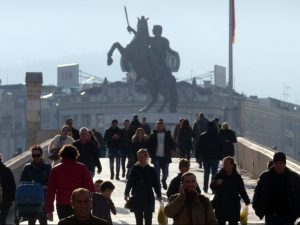
People crossing the Stone Bridge in central Skopje, overlooked by a giant equestrian statue depicting ancient warrior king Alexander the Great. Photo: BIRN/Sinisa Jakov Marusic.
As restrictive COVID-19 measures provoked mass protests in Serbia, BIRN reported in June 2020 that from March 19 to June 1 that year, a total of 632 people died in the country after testing positive for COVID-19, more than twice the official figure of 244.
By analysing data obtained from the state’s own COVID-19 information system, BIRN also reported that the number of people infected in Serbia from June 17 to June 20 was at least 300 per day, far more than the official numbers which at their highest reported 97 new cases in a single day.
The story contributed to rising public frustration over the government’s handling of the pandemic, erupting in protests in July after the government – having lifted the lockdown ahead of a June 21 election – tried to re-impose stricter measures. The opposition accused the ruling Progressive Party of hiding the real numbers in order to hold an election that it won in a landslide.
However, in September, after months of denial, a member of the Serbian government’s Crisis Staff conceded that, up till June, the number of deaths related to COVID-19 and officially announced by the government was three times lower than the real number.
A recent investigation exposed the brutal rise of an armed Afghan gang, known as BWK, operating in Bosnia and Herzegovina. Amid tightening European borders and unstable smuggling profit, the group turned to kidnapping asylum seekers and demanding ransoms from their families. Victims reported being abducted, starved, beaten, and tortured for days while captors request payments, often through videos sent to relatives.
BWK emerged in 2023, gaining control over key migrant routes along Bosnia’s borders with Montenegro and Croatia. Their operations are sophisticated, and involve international money transfers, fake identities, and tip-offs from insiders in refugee camps. Some members hold valid European ID documents, allowing them to move freely.
A joint four-month investigation by BIRN and Irish outlet Noteworthy revealed troubling working conditions faced by migrant labourers, primarily from Eastern Europe, employed in Ireland’s soft fruit and mushroom industries. Despite higher wages compared to their home countries, workers from countries like Bulgaria described their time picking fruit for major companies as gruelling, with poor working conditions.
Documents and data obtained through Freedom of Information requests showed the horticulture sector in Ireland struggled with worker retention due to poor conditions.
This investigation into ‘revenge porn’ in Serbia discovered 16 Telegram groups that posted explicit photos and videos of women without their consent.
Coupled with months of monitoring of Telegram groups and data from police and prosecutors, the picture that emerged was one of systematic failure on the part of the Serbian legal system to protect the victims of revenge porn, a form of gender-based violence. Victims were being exposed to blackmail, public shaming and emotional trauma, and only a few had the resources to fight back.
After the investigation was published, the Telegram group Oralna podrška (Oral Support), with over 50,000 members – one of the largest Serbian Telegram groups that shared women’s intimate photos and videos, as well as porn content – was removed. Twelve other groups that published revenge porn were also closed.
This investigation uncovered a web of influence in the powerful coalition aligned behind the European Commission’s proposal to scan material online for child sexual abuse – a proposal that some experts said puts rights at risk and will introduce new vulnerabilities by undermining encryption.
The regulation would obligate digital platforms – from Facebook to Telegram, Signal to Snapchat, TikTok to clouds and online gaming websites – to detect and report any trace of child sexual abuse material, CSAM, on their systems and in their users’ private chats. It would introduce a complex legal architecture reliant on AI tools for detecting images, videos and speech – so-called “client-side scanning” – containing sexual abuse against minors and attempts to groom children.
While welcomed by some child welfare advocates, it was met with alarm by privacy advocates and tech specialists who said it could unleash a massive new surveillance system and threaten the use of end-to-end encryption. Following the investigation, an inspection by the European Ombudsman identified oversights in the way European police agency Europol handled a move into the private sector by two former officials working on cybercrime.
Exploring systemic corruption in Moldova’s healthcare system, especially in cancer care, the investigation showed how graft continues to flourish despite public scandals.
In 2023, senior doctors at the Oncological Institute in Chisinau were detained for demanding bribes for free medical services. The case highlighted the slow pace of justice and ongoing exploitation of vulnerable patients in Moldova’s healthcare sector.
A court found that one of the doctors, a breast cancer surgeon, had received bribes to enable some patients to bypass the waiting list to receive medical consultations and appointments for consultations and surgeries. But BIRN’s investigation showed that the surgeon continued to work in several private medical clinics after voluntarily retiring from the Oncological Institute.
This investigation used survivors’ testimonies, official documents and Hague Tribunal verdicts from trials from the Srebrenica massacres to show how – despite strong evidence that three Bosnian Serb military police units were involved in capturing Bosniaks from Srebrenica and escorting them to mass execution sites – their commanders were never charged.
Survivors told BIRN how they escaped from the mass executions in July 1995, which were classified as genocide by international courts, and identified their persecutors. The article was one of a series by BIRN Bosnia and Herzegovina journalists that won second prize in the ‘Outstanding Contribution to Peace’ category in the Fetisov Journalism Awards 2021.
The Montenegrin government secretly sold its major defence company, Montenegro Defence Industry (MDI), for just 680,000 euros to a consortium of Israeli and Serbian firms linked to businessmen under criminal investigation. The buyers included CPR Impex, owned by Petar Crnogorac, and Israeli firm ATL Atlantic Technology Ltd, which has ties to Serge Muller, a Belgian arms and diamond dealer wanted by Belgian authorities on drug trafficking, money laundering and organised crime charges.
Muller, known for controversial involvement in blood diamond trading and supplying weapons during Sierra Leone’s civil war, was arrested shortly after the sale ceremony. Meanwhile, Crnogorac faces investigations for abuse of office in military tenders.
The MDI privatisation raised serious concerns about corruption, illegal arms trafficking and the opaque dealings that allowed a strategically important defence company to be transferred into the hands of figures entangled with illicit activities.
The Psychiatric Hospital for Children and Youths in Zagreb, known to many children in care as ‘Kuksa’. Photo: Kristijan Dimitrijevic.
First-hand accounts collected by BIRN revealed that children in state care in Croatia are often hospitalised for psychiatric treatment unnecessarily, sometimes as a form of discipline rather than for genuine medical need.
Several former residents of children’s homes shared their experiences of being sent to the Psychiatric Hospital for Children and Youths in Zagreb, known locally as ‘Kuksa’. Many described the hospital as a frightening place with restrictive conditions like barred windows and surveillance cameras. Some reported being forcibly medicated, while others spent time there despite showing no aggressive behaviour.
This investigation revealed how fraudsters manipulated the citizenship process in Romania by producing genuine-looking documents for fake applicants, enabling them to obtain Romanian passports – and with them, access to the European Union job market. People like ‘Vladimir’, who claimed to be the great-grandson of Soviet leader Stalin, can gain Romanian citizenship through networks of brokers and complicit bureaucrats in Bucharest and Chisinau.
Since Romania passed a law allowing foreign nationals of Romanian descent to apply for citizenship, over 225,000 Moldovans have sought Romanian citizenship, especially after Romania joined the EU in 2007. For many Moldovans, a Romanian passport is a valuable ticket to work and travel freely within the EU, as Moldova remains one of Europe’s poorest countries. However, this demand has also opened the door to corruption and fraud, with networks exploiting loopholes to expedite or fake citizenship claims.
Greece’s prolonged financial crisis severely weakened its public healthcare system, leaving many citizens without adequate medical care. People like Vasiliki Katsoula, who lost her job and health insurance, are forced to ration medications between family members, cut pills to adjust dosages, or go without treatment altogether. Her family lives mostly off her father’s reduced pension, but still struggles to afford essential medicines. This desperate improvisation has become commonplace, especially among the uninsured, many of whom turn to volunteer-run “solidarity clinics” for help, where doctors report seeing patients taking incorrect or shared medications due to financial hardship.
There is also a growing trend in Greece for people to bypass formal healthcare and embrace over-the-counter alternatives. Years of deep budget cuts have left millions uninsured or underinsured, increasing out-of-pocket costs and forcing citizens to make dangerous compromises while looking after their health.
This investigation examines the aftermath of the failed coup attempt in Turkey in July 2016, and President Recep Tayyip Erdogan’s subsequent crackdown on the network run by his exiled archfoe, Fethullah Gulen. Suspects have been forcibly returned to Turkey from dozens of different countries. Some have arrived via approved extradition requests, others by capture and rendition.
Prominent cases include seven Turkish teachers in Moldova and six in Kosovo in 2018. Many other Turkish citizens, including teachers and school directors at Gulen-run schools around the world, live in fear of being captured. Turkey’s campaign of intimidation, harassment, extradition and abduction has been expanded to anyone deemed hostile to the government in Ankara. The authorities call Gulen’s supporters terrorists – and put them on trial as such. Although Gulen later died, Turkey’s hunt for his sympathisers continued.
This investigation looks at how the government led by Poland’s Law and Justice (PiS) party shifted its political focus from vilifying refugees to targeting the LGBTQ+ community to mobilise its conservative voters ahead of the 2019 elections. The party frequently portrayed LGBTQ+ rights as a threat to traditional Polish values and Catholic norms.
Its political strategy intensified public hostility toward LGBTQ+ people, as seen in the city of Rzeszow when PiS city councillors tried to ban the Equality Parade because it ‘promoted a dangerous ideology’. The parade went ahead under police protection but was marred by hostility, with far-right counter-protests and masked men hurling eggs.
The attempt to suppress LGBTQ+ events is part of a broader pattern. In several cities, local officials – often backed by PiS – tried to outlaw Equality Parades, sometimes citing security concerns or perceived moral threats. While courts overturned these bans, the political pressure and public discourse became increasingly hostile.
Over the two decades since BIRN was founded, it has grown into a leading media NGO in the Balkan region, working across borders to produce high-quality investigative journalism but also supporting the development of independent media.
When the Balkan Investigative Reporting Network was established in 2005, it was a small, struggling initiative that some believed would not succeed.
But over the 20 years that followed, BIRN succeeded in becoming one of the leading regional media NGOs in the Balkans, with its headquarters in Bosnia as well as branches in Albania, Bosnia and Herzegovina, Kosovo, Montenegro, North Macedonia, Romania and Serbia.
“They have created a powerful organisation which holds the powerful to account, and it has played a significant role in the media landscape of the region ever since it was formed, and increasingly does so,” said Tim Judah, a British journalist who is president of the BIRN Assembly and special correspondent for The Economist.
BIRN produces in-depth investigative journalism, trains and mentors journalists, and promotes media freedom, transparency and accountability across the Balkans through independent reporting and public interest projects.
BIRN also produces Balkan Insight, its flagship English-language publication, which has grown from a weekly email newsletter to an internationally respected website, and runs dozens of projects at the local, regional and international levels.
Influencing decision-makers
Journalists attend BIRN’s Summer School of Investigative Reporting in 2023 in Thessaloniki, Greece. Photo: BIRN.
Gordana Igric was one of the five founders of BIRN in 2005, and the organisation’s regional director until 2018. “The five people at the beginning have grown up to some 200 people across the region now,” Igric said.
BIRN country offices produce investigative reports, train local journalists, monitor courts and public spending, and support press freedom and civic accountability through workshops, data tools and legal reporting on issues such as corruption, war crimes and public procurement. They also publish their own reports in local-language websites across the Balkans: Reporter in Albania, Detektor in Bosnia and Herzegovina, Kallxo in Kosovo, Birn.me in Montenegro, Prizma in North Macedonia, Sinopsis in Romania and Birn.rs in Serbia.
Over two decades, Balkan Insight has published more than 70,000 items in English. In 2024, the website had 5.5 million views, one and a half times more than in 2023.
It has become a key source of information about developments in the region, said Nerma Jelacic, one of BIRN’s founders, who went on to become a leading global expert in transnational justice.
“I see from New York to London or when you go to elsewhere that Balkan Insight has the ear of the policy-makers and the decision-makers, and they do read what is being reported,” Jelacic said.
While providing coverage of news and current affairs in the Balkan countries, BIRN has also widened its focus to report from Czechia, Hungary, Poland and Slovakia as part of its Reporting Democracy programme, which scrutinises the issues shaping the future of democracy in Central European EU member states, including the rise of political populism and illiberal regimes.
Multiple awards
Aleksa Tesic and Sasa Dragojlo of BIRN among the recipients of the Dejan Anastasijevic Award for investigative journalism in Serbia in 2024. Photo: BIRN.
One of BIRN’s landmark programmes is the Fellowship for Journalistic Excellence, which aims to nurture high-quality journalism across a region spanning 14 countries, from Poland and the Czech Republic to Greece and Romania.
The Fellowship has been running since 2007 and more than 150 journalists from the region have so far participated in the programme winning multiple local, regional and international awards.
“We needed to train journalists, first of all, in order to have somebody to work with, honestly,” said Dragana Zarkovic Obradovic, the director of BIRN Serbia and the regional director of the Fellowship programme. The programme focuses on in-depth, long-form articles and helps participants improve their skills through mentoring by experienced international editors.
Zarkovic Obradovic said it provides “enough resources and enough time for mid-career journalists to take their careers to the next level through this quite unique experience”.
Kosovo-based journalist Serbeze Haxhiaj was selected to participate in the Fellowship in 2016.
Since then, she has won a total of 19 journalism awards for pieces published by BIRN including one about babies born to Kosovo Albanian women raped by Serbian forces during wartime in Kosovo. The story won the first prize in EU Investigative Journalism Awards in Kosovo in 2019.
Since its foundation, BIRN has won 155 local, regional and international awards for its reporting on issues like war crimes, corruption and human rights violations, including prizes for journalism awarded by the European Union, the United Nations, Reporters Without Borders and the Organisation for Security and Co-operation in Europe (OSCE).
But the organisation’s journalistic success over 20 years would not have been possible without people who work in areas like programmes, logistics and finance.
Maida Selmanovic, financial manager at BIRN Hub in Sarajevo, is one of them. Over the past 16 years, she has watched the organisation grow.
“I joined BIRN in January 2008 as a financial officer. At that time, BIRN was still a relatively young organisation, and I was excited about the opportunity to be part of a dynamic team working to make a difference through investigative journalism and media development,” Selmanovic said.
“It has been inspiring to see how BIRN has grown from a smaller regional initiative into a robust network with a wide range of activities across multiple countries.’
There were, of course, many challenges during those years.
“One of the biggest challenges has always been managing complex donor requirements, financial reporting, and compliance in an ever-changing environment. Each project comes with its own set of rules and expectations, which requires precision, flexibility, and constant coordination,” Selmanovic explained.
New challenges
BIRN’s Digital Rights Annual Conference in Tirana in 2024. Photo: BIRN.
The media environment in the Balkans has changed significantly over the past two decades, with the rise of social media, tabloid-style TV channels and clickbait ‘news’ websites. In many countries, growing authoritarianism, right-wing populism and pressure on the media from governments have posed additional challenges, while the funding of independent media has remained a critical problem for its continued survival.
Selmanovic cites BIRN’s “ability to adapt to new challenges while maintaining a commitment to high-quality investigative journalism” as key to its success.
High-quality reporting is the focus of BIRN’s annual Summer School of Investigative Journalism, which brings journalists together with award-winning editors, top investigative reporters and data journalism experts to explore new developments and boost skills. This year’s Summer School will be held in Pristina, Kosovo.
But as well as programmes aimed at increasing journalistic capacities, BIRN maintains its focus on rights and freedoms with initiatives like its Digital Rights Programme, established in 2019 to promote and protect human rights online.
“The main motivation behind launching the Digital Rights Programme was the growing need to protect citizens and journalists’ digital rights – which are in essence human rights in the digital space – in a time when freedom of expression and access to information are increasingly shifting into the digital sphere,” said Azra Milic, BIRN’s digital rights programme coordinator.
Milic said that as technology advances, so do challenges like surveillance, censorship, disinformation and the misuse of personal data.
“BIRN recognised the importance of these issues and the need for journalists, activists and citizens to be informed and empowered to protect themselves in the digital environment,” she said.
BIRN regularly monitors digital rights violations in ten countries in south-east and central Europe, publishes a Digital Rights Violations Annual Report, prepares policy papers, trains local journalists via grants and fellowships, organises conferences and contributes to Balkan Insight’s coverage of the issues.
As an organisation that grew up in the internet era, in a highly challenging region for independent media, BIRN has come a long way since it was founded in 2005 – but even as the organisation adapts to changing times, its focus on human rights and democratic values remains constant.